
I like to have memories and nowdays even more. I remember Fontainebleau as it is in the Seine et Marne dept 77 that my dear late wife Martine, took me first to show me her department/region back in 1990. We have come here ever since,and it is one of my favorite cities in my belle France. I am friend of the castle since 2007 ,and have written many posts in my blog. These are new pictures found again in my cd rom vaults that should be in my blog for you and me, Therefore, here is my take on curiosities of the Château de Fontainebleau, part III !!! Hope you enjoy the post as I
The Cour d’Honneur, enclosed on three sides and facing towards the town since the demolition of the fourth wing and the installation of a gate in 1809-1810, gradually established itself as the new Cour d’Honneur of the château, competing over the centuries with the old Oval Courtyard. Admire the historic façade and its impressive Horseshoe Staircase; it took its current form under Napoleon I, who had the famous ceremonial gate installed. This courtyard, also known as the Cour du Cheval Blanc (White Horse Courtyard) since the 16C, is bordered by remarkable façades and offers privileged access to the royal apartments of the château. Surrounded by gardens and vast green spaces, it is an ideal place for all to mingle and admire the facades of the castle. The Cour d’Honneur captivates with its unique atmosphere, blending medieval, Renaissance and classical heritage, and invites the discovery of an exceptional heritage within a prestigious setting. Indeed awesome !!! From the outside looking in as in the picture you see this wonderful castle at its best from Bd Gambetta,
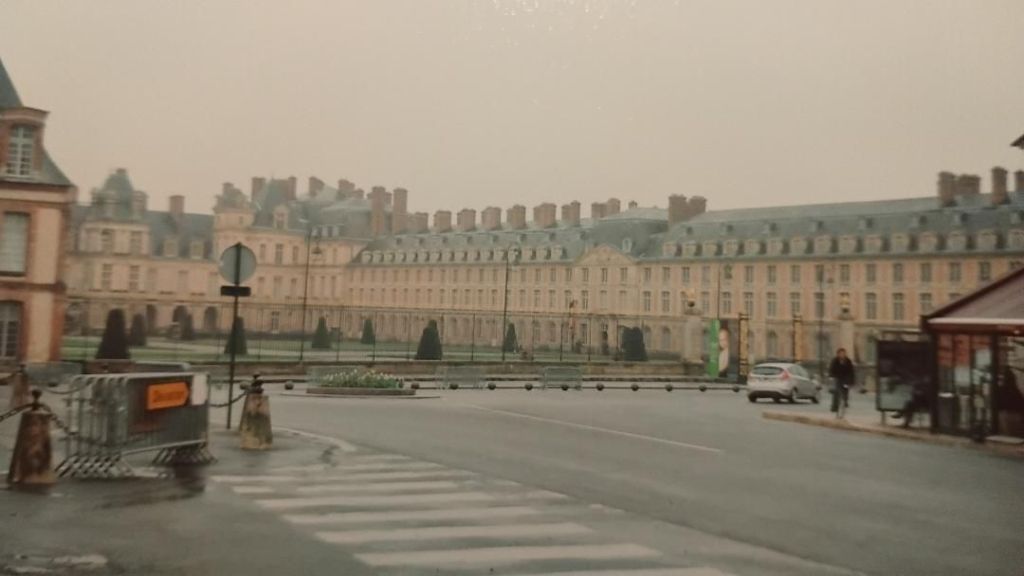
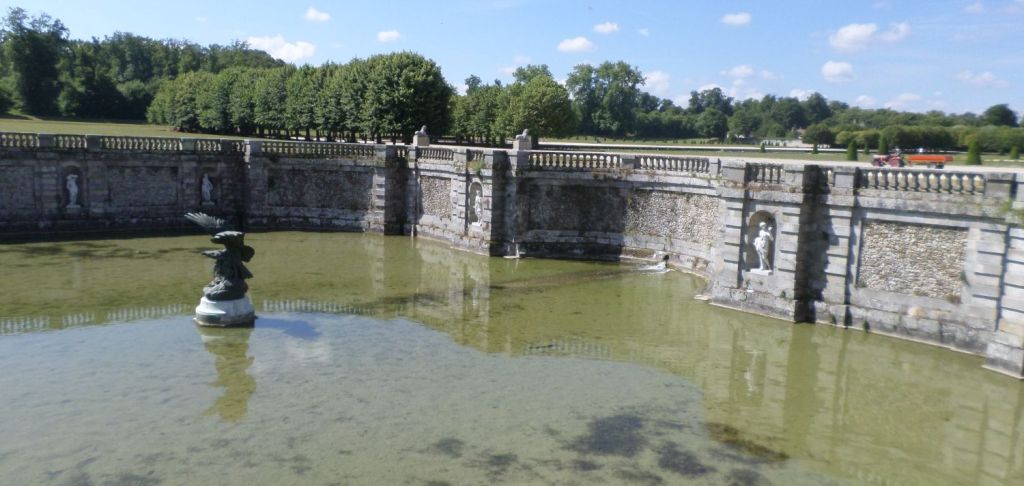
Set within a 130-hectare estate, the château’s various buildings are arranged around four main courtyards, three gardens, and a park. The overall design was completely revised during the 19C: the Diana Garden and the English Garden adopted English landscape styles. The Grand Parterre, a classical garden designed by André Le Nôtre, a formal French garden, offers a completely different experience of space and perspective. Beyond the Cascade Basin, it extends into a long park traversed in its entirety by the Grand Canal of Henri IV. The creation of the Grand Parterre between 1660 and 1664, the largest in Europe, encompassing 14 hectares, by André Le Nôtre and Louis Le Vau, reflects the spatial clarification desired by Louis XIV at Fontainebleau. The boxwood parterres of this formal French garden disappeared during the reign of Louis XV. The general layout of the grassy sections remains, as do the basins adorned with statues, including the Cascades Basin (17-19C), which faces east towards the Henri IV Canal. Since 1817, a large basin, known as “the boiling pot,” has stood in its center, while to the south, on the forest side, the water feature is decorated with a statue of the Tiber. Four sandstone sphinxes, lion goddesses sculpted by Lespagnandelle in 1664, have marked the boundary between the Parterre and the park since the reign of Louis XIV.
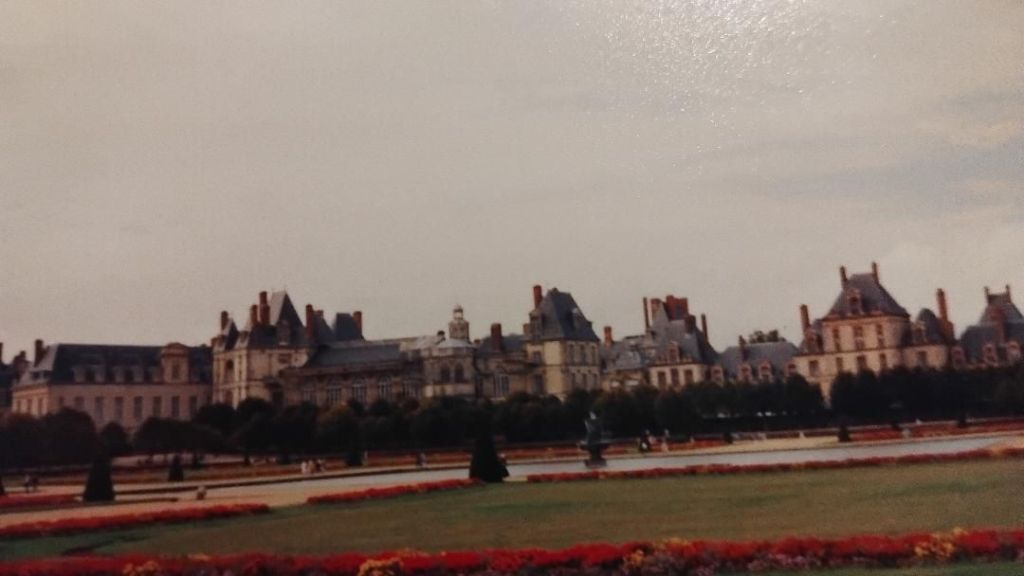
In the Grand Parterre then in the courtyards of the Castle, you can walk along the aqueducts of François I and Henri IV, and will see the very complex water networks that are in particular the Cour Henri IV, Place d’Armes and Cour des Adieux. You can trace where the foundations of the first Saint Saturninus Chapel consecrated by Thomas Becket, Archbishop of Canterbury are located, foundations that have been sought for a long time. In the Jardin de Diane, it has been found the bases of the Fontaine de la Volière, the foundations of another chapel, the limits of the Orangery and the Galerie des Chevreuils, as well as an underground passage starting from the Oval Court and going towards the Porte des Mathurins.
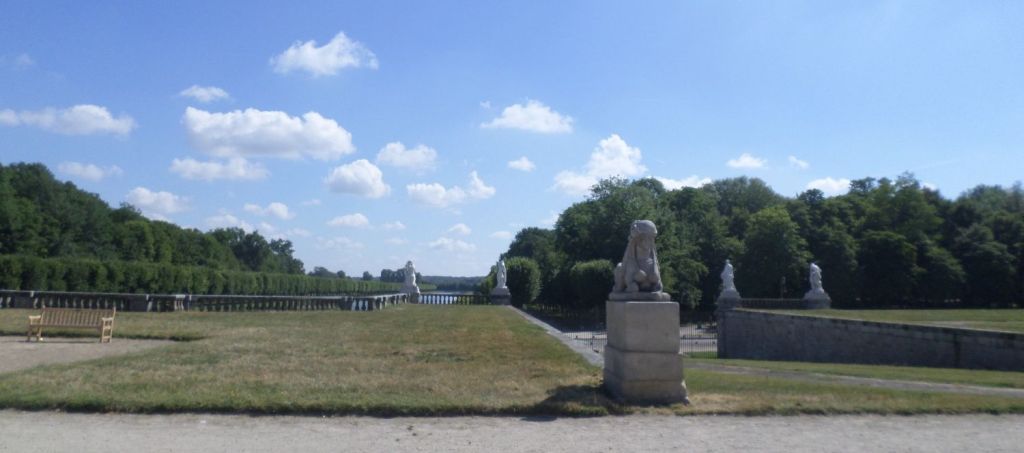
At Fontainebleau ,the water follows a fairly complex topography between high points and low point: the Grand Canal occupies the course of the Changis stream or creek and is located with the Grande Prairie at the bottom of three steep slopes. The Porte Blanche or white gate and the Porte Rouge or red gate, which have kept their original names, are located about 17 meters and 14 meters above the level of the Grand Canal respectively. The Miroir is at about 11 meters, the Pépinière at 12.5 meters, and the Grand Parterre at about 5 meters. The Ponds are at an altitude of 20 meters lower than that of the Porte Blanche. The Porte Blanche becomes a very frequented entrance to the Castle from the moment the train arrives at Avon in 1849. From the Porte Blanche veins leave at high volume towards the Porte de Changis, towards the Ponds, both at a altitude 20 meters lower, and towards the Napoleon’s Fountain where you can observe a change in the direction of flow of the waterfalls.
The official Château de Fontainebleau on its courtyards and gardens: https://www.chateaudefontainebleau.fr/en/explore-the-castle-and-gardens/discover-the-courtyards-and-gardens/
The City of Fontainebleau on the castle: https://www.fontainebleau.fr/bouger-et-sortir/decouvrir-fontainebleau/la-vraie-demeure-des-rois-la-maison-des-siecles-524.html
The Fontainebleau tourist office on the castle’s gardens : https://www.fontainebleau-tourisme.com/en/discover-the-region/patrimoine-2/the-chateau-a-grand-history-book-of-france/the-chateau-gardens/
There you go folks, enjoy Fontainebleau as we always do. The city has history architecture and more to show you around outside the famous castle property, Do walk the town and be amazed of its beauty, Again, hope you enjoy this post on curiosities of the Château de Fontainebleau, part III !!! as I
And remember, happy travels, good health, and many cheers to all !!!


