
This time took my road warrior skills to go again to jolly England with the Le Shuttle train service (see post), and my Ford ; towing along my good boys and wonderful Rex! It was a very nice trip going into the countryside and seeing several towns of wonderul architecture and history, This one is a must and one of our highlights of the trip, we will be back, eventually, Therefore, let me tell you about the University of Oxford libraries !!! Hope you enjoy the post as I.
The Bodleian Library, officially Bodley’s Library, is the most prestigious library at the University of Oxford. Formally established in 1602 from older collections, it takes its name from its founder, Thomas Bodley, librarian of Merton College. Across its various sites, the Bodleian Library houses over 12 million printed books and provides electronic access to more than 80,000 scholarly journals. It also preserves important collections of ancient documents: manuscripts, papyri, maps, and drawings. It is the second largest library in the United Kingdom, after the British Library.
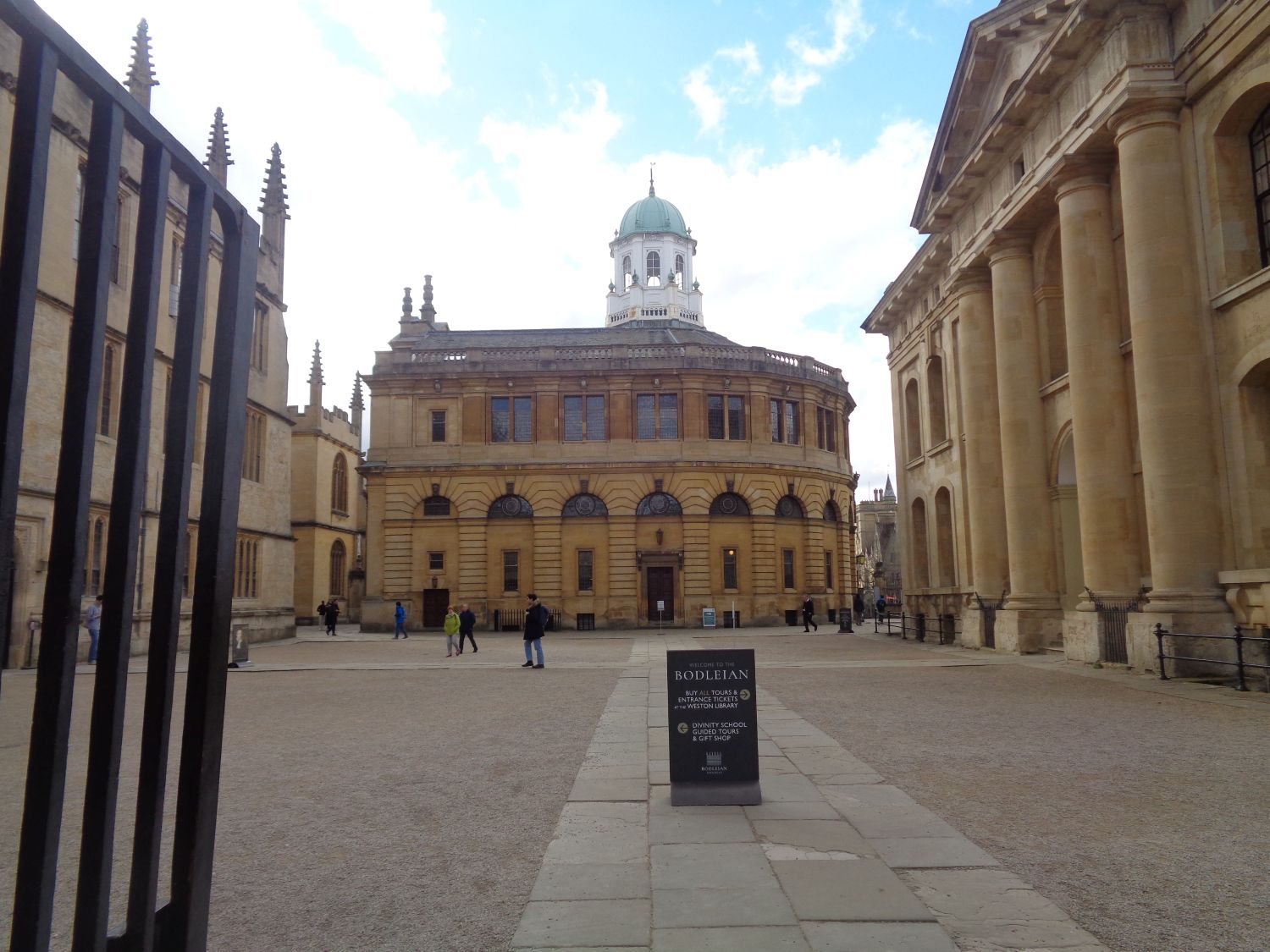
The Bodleian Library’s collections are distributed across several external storage sites, in addition to its nine branch libraries, all located in Oxford: the Bodleian Japanese Library; the Bodleian Law Library; the Hooke Library; the Indian Institute Library; the Oriental Institute Library; the Philosophy Library; The Radcliffe Science Library; the Bodleian Library of Commonwealth and African Studies at Rhodes House; the Vere Harmsworth Library. At the beginning of the 21C, the various Bodleian Library sites housed 12 million volumes arranged on 176 km of shelving, and offered 2,500 seats for readers at any given time.
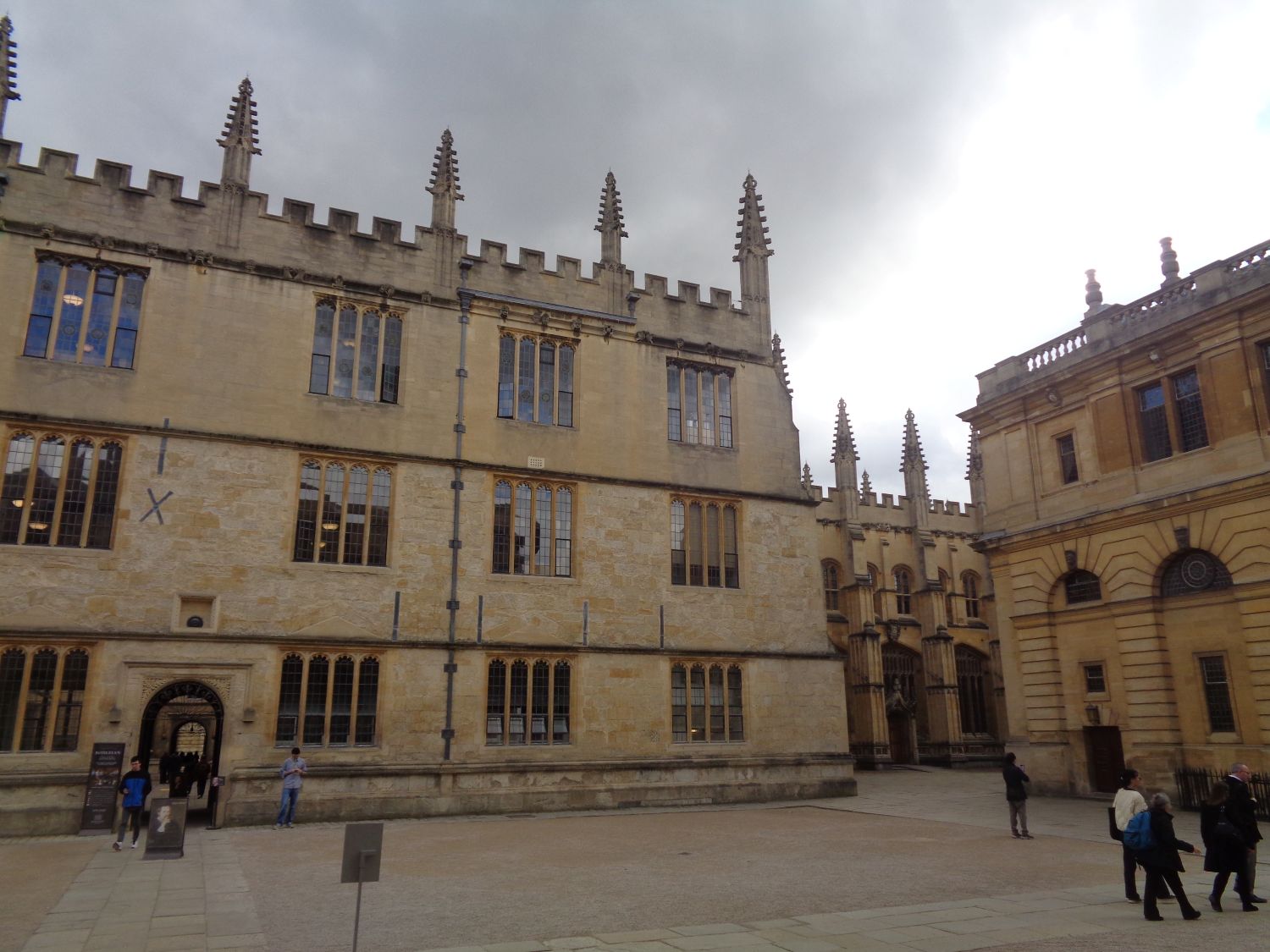
A bit of history I like tell us that the Bodleian Library is colloquially known as The Bod by students, but also by those outside their circle. It partly traces its origins to the Duke Humfrey Library, founded in Oxford in 1488, following an initial donation of illuminated manuscripts by Humphrey of Lancaster, Duke of Gloucester, to the Divinity School, but which were partially dispersed during the 16C. The collections of Duke Humphrey’s Library and the Divinity School (theological school) were reconstituted and enriched by Thomas Bodley (of Merton College) until they reached 2,000 volumes, which served as the basis for the formal establishment of the Bodleian Library in 1602. Two underground storage spaces were built in 1913 beneath the Radcliffe Camera and Radcliffe Square, while in the 1930s a new building combining storage and reading rooms was opened. Linking the old and new buildings, a tunnel was dug under Broad street, equipped with a moving walkway, a mechanical system for conveying the structures and a pneumatic tube system for controlling the structures.
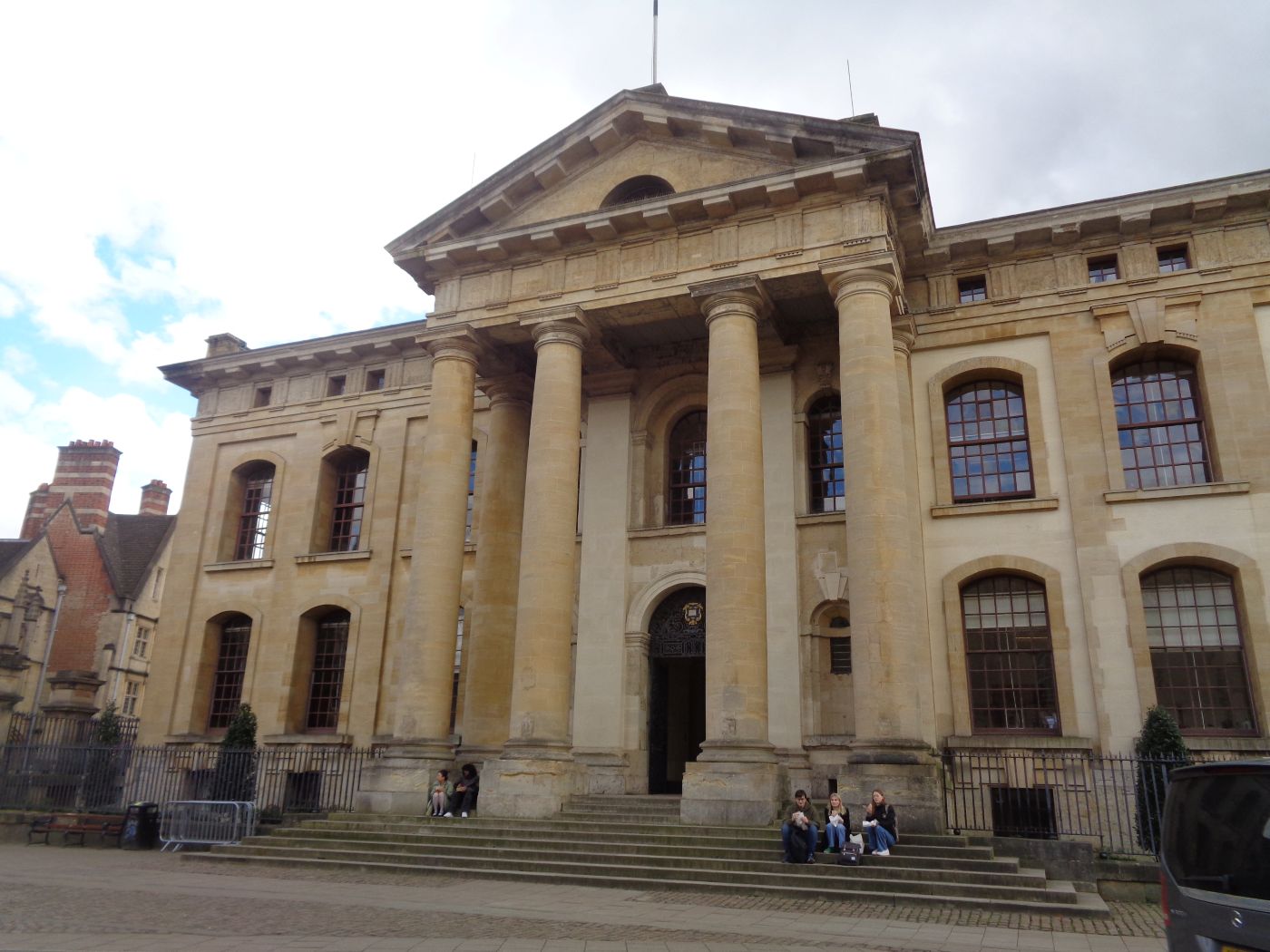
The Clarendon Building is an early 18C neoclassical building of the University of Oxford. It is in Broad Street, next to the Bodleian Library and the Sheldonian Theatre and near the centre of the city. It was built between 1711 and 1715, Until the early 18C, the printing presses of the Oxford University Press (OUP) were in the basement of the Sheldonian Theatre. This meant that the compositors could not work when the Theatre was in use for ceremonies. Therefore, the University commissioned a new building to house the OUP. In the 1820s, the OUP moved to new premises in Walton street, after which the University used the Clarendon Building for administrative purposes. In 1975, the building was transferred to the Bodleian Library, for which it now provides office and meeting space for senior members of staff
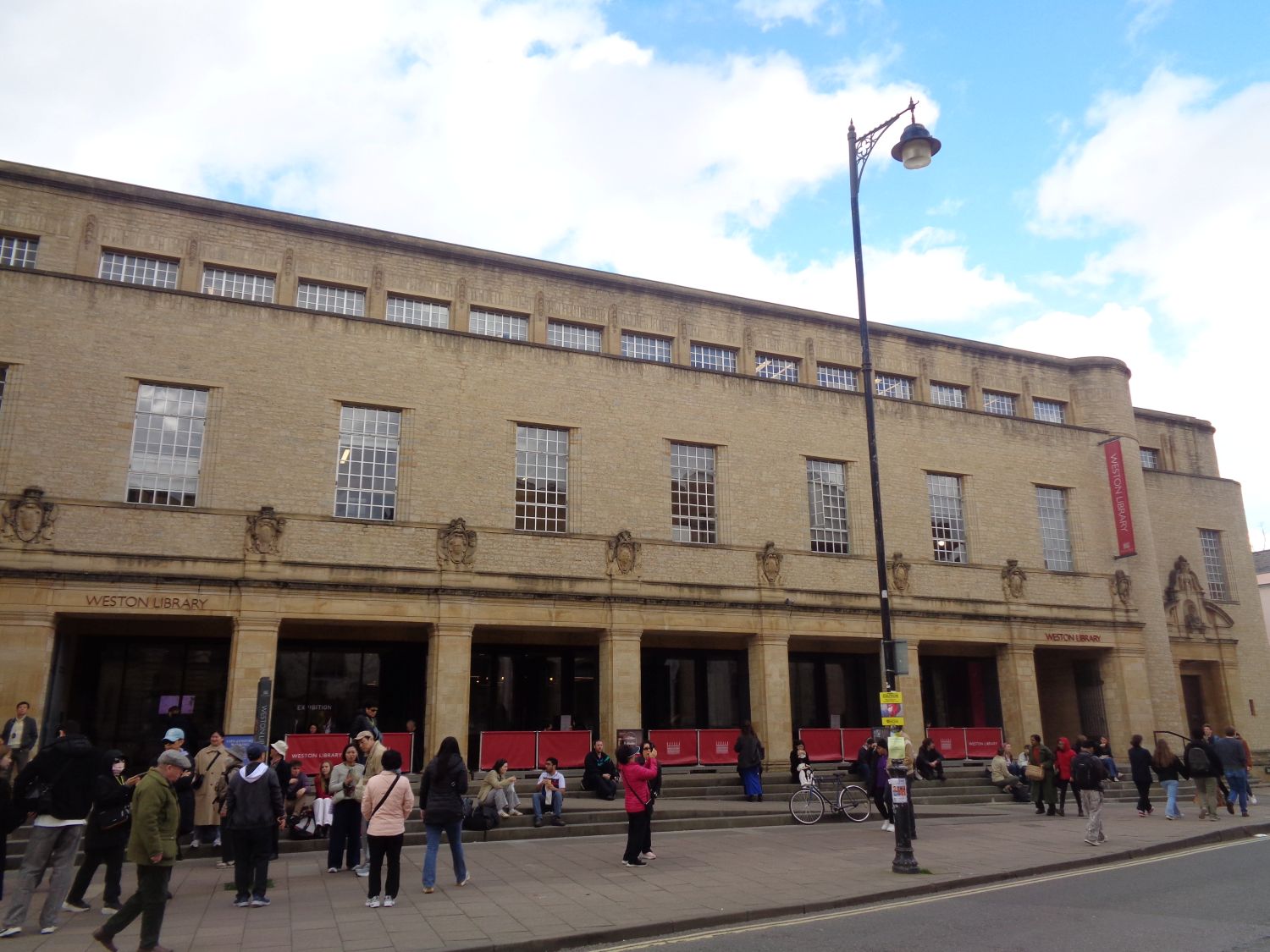
The Weston Library is part of the Bodleian Library, the main research library of the University of Oxford, reopened within the former New Bodleian Library building on the corner of Broad Street and Parks Road The building was opened by King George VI. with a large donation by the Rockefeller Foundation It included administrative and reading rooms, together with an 11-storey bookstack, three of which are underground. This was connected with the original Bodleian Library underground by a conveyor belt system for books. It is still possible to walk underground between the Radcliffe Camera and the new library building.It reopened to readers as the Weston Library on 21 March 2015
The official Bodleian libraries : https://www.bodleian.ox.ac.uk/libraries/old-library
The official Bodleian on the Weston Library : https://www.bodleian.ox.ac.uk/libraries/weston
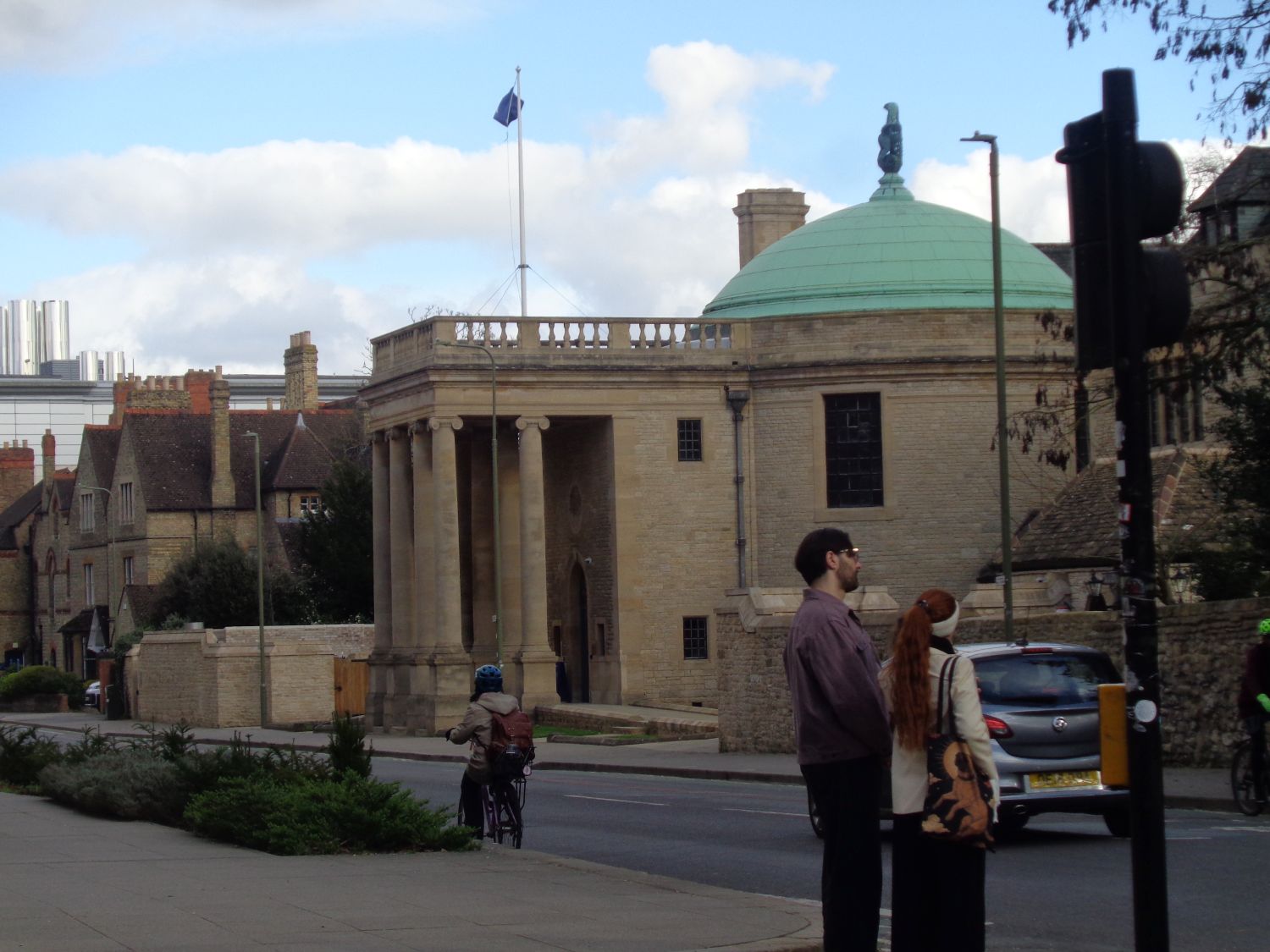
The Rhodes House is a building part of the University of Oxford. It is located on South Parks Road in central Oxford, and was built in memory of Cecil Rhodes, an alumnus of the university and a major benefactor.The will of Cecil Rhodes created scholarships that became known as Rhodes Scholarships, administered by the Rhodes Trust. Construction of Rhodes House began in 1926 after the Rhodes Trust purchased the two-acre plot from Wadham College the previous year. It was modelled on the Cape Dutch farmhouse design and traditional English Country mansions. This is reflected in the large beams, trans-domed windows and its Tetra-style portico. The square rubble walls were designed to be consistent with the Western European 17C architecture of the Oxford University campus. Other features include the open-well staircase constructed from oak, featuring shaped balusters and carved eagle finials. Construction was completed in 1928 and the building and its library were handed over to Oxford University.
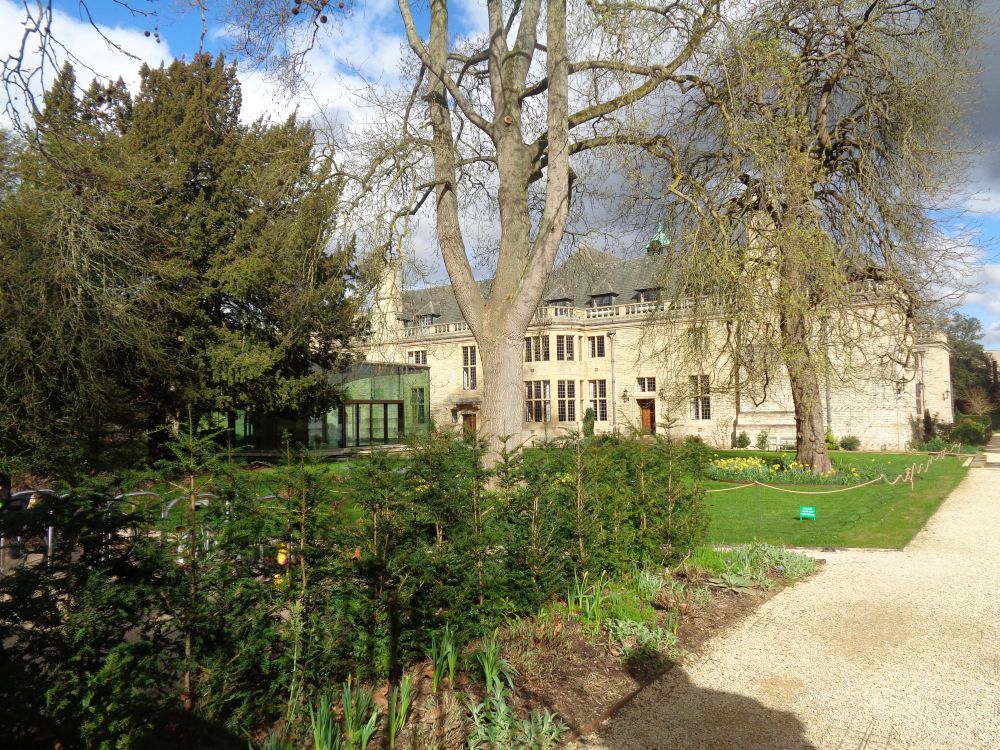 Rhodes House was commissioned by the Rhodes Trust as a memorial to Cecil Rhodes, to act as a centre for research for the “British Empire and Commonwealth, of African and the United States of America”, and to be the headquarters of the Rhodes Scholarship system and Rhodes Trust. During 1931, Albert Einstein delivered a series of three lectures at Rhodes House. Edmund Bowen, a chemistry don at the university, saved the blackboard used in the second lecture (on 16 May). Einstein’s Blackboard, now an iconic object, can still be seen at the Museum of the History of Science , When Rhodes House was completed all the material relating to the British Empire and U.S. were transferred from the Bodleian Library. Aka the Bodleian Library of Commonwealth & African Studies at Rhodes House. In 1990 the library held more than 330,000 books and the archives relating to US and other former colonies and dominions of the British Empire. The Library was a key research centre in the UK. In 2014 the Library moved to the Weston Library. The Library is now known as the Commonwealth and African Studies Collections. The Rhodes Trust is based at Rhodes House. The Rhodes Trust, established in 1902 under the terms and conditions of the will of Cecil Rhodes, and by subsequent acts of Parliament, is an educational charity whose principal activity is to support scholars selected from the citizens of 14 specified geographic constituencies to study at the University of Oxford.
The official Rhodes House : https://www.rhodeshouse.ox.ac.uk/
The official Oxford University : https://www.ox.ac.uk/about/facts-and-figures
The City of Oxford on its heritage : https://www.oxford.gov.uk/visit-oxford
The Oxford University on sights of Oxford : https://www.ox.ac.uk/visitors/visiting-oxford
The Oxford tourist office on its heritage : https://www.experienceoxfordshire.org/
There you go folks , do dare drive in jolly England, it’s an adventure of a lifetime, and you will be back !!! as we have lol! Until another round chasing Sherlock we will be saying elementary my dear Watson to you all. Again, hope you enjoy this post on the Unviersity of Oxford libraries !!! as I
And remember, happy travels, good health, and many cheers to all !!!


