
This time took my road warrior skills to go again to jolly England with the Le Shuttle train service (see post), and my Ford ; towing along my good boys and wonderful Rex! It was a very nice trip going into the countryside and seeing several towns of wonderul architecture and history, This one is a must and one of our highlights of the trip, we will be back, eventually, Therefore, let me tell you about the museums of Oxford !!! Hope you enjoy the post as I.
The Natural History Museum of the University of Oxford located on Parks Road is a museum presenting numerous natural science collections. The construction of a building bringing together all the collections was initiated in 1855 ,and was officially opened in 1860, although various departments had occupied their premises from as early as 1858.
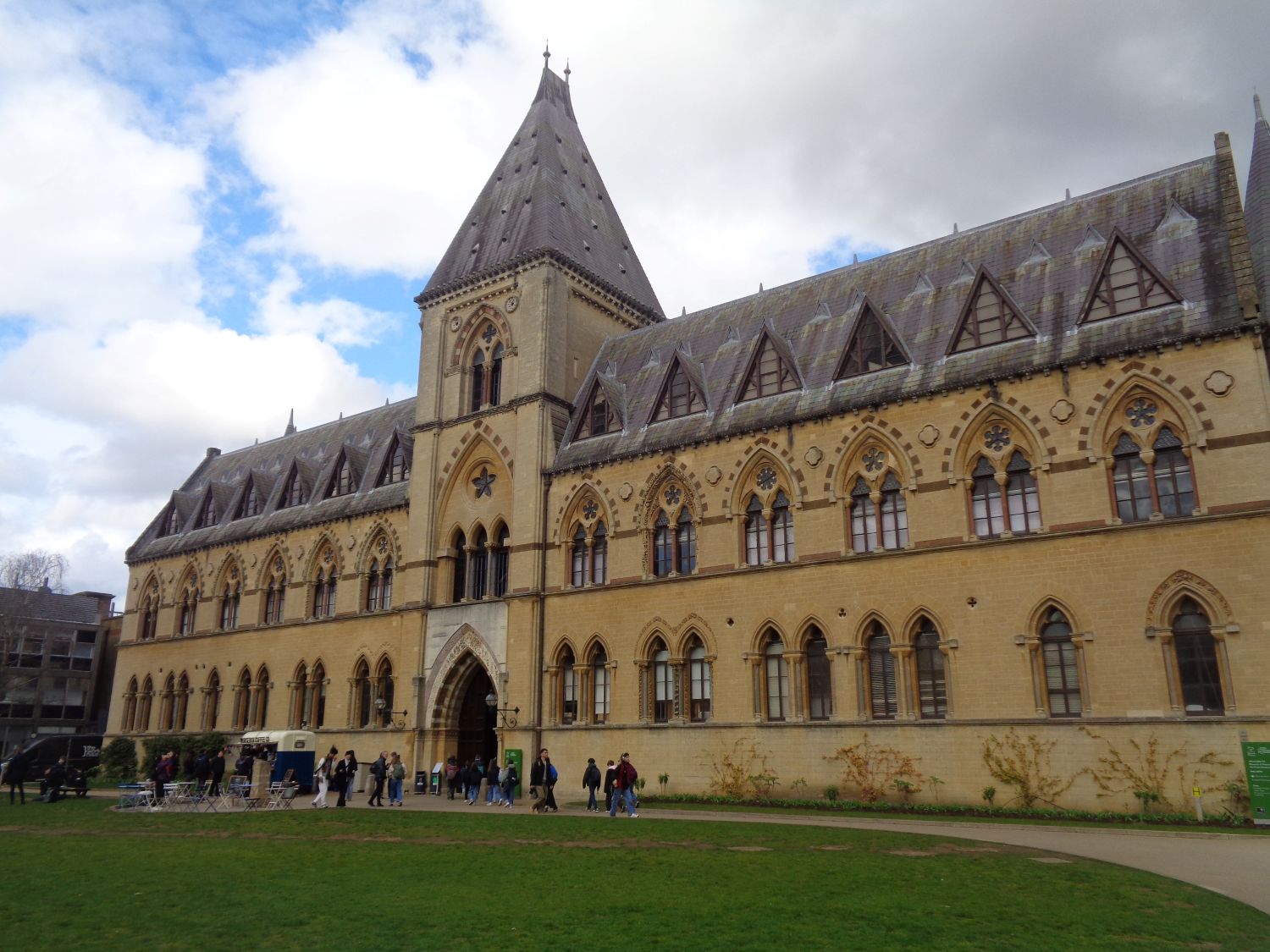
it also contains a lecture theater which is used by the university’s chemistry, zoology and mathematics departments. The museum provides the only public access into the adjoining Pitt Rivers Museum (displaying the archaeological and anthropological collections of the University of Oxford) The university’s Honor School of Natural Science started in 1850, but the facilities for teaching were scattered around the city of Oxford in the various colleges. The university’s collection of anatomical and natural history specimens were similarly spread around the City, The largest portion of the museum’s collections consists of the natural history specimens from the Ashmolean Museum, including the specimens collected by John Tradescant the elder and his son of the same name, William Burchell and geologist William Buckland. The Christ Church Museum donated its osteological and physiological specimens, many of which were collected by Acland.
The neo-Gothic building consists of a large square court with a glass roof, supported by cast iron pillars, which divide the court into three aisles. Cloistered arcades run around the ground and first floor of the building, with stone columns each made from a different British stone, The ornamentation of the stonework and iron pillars incorporates natural forms such as leaves and branches, combining the Pre-Raphaelite style with the scientific role of the building.Statues of eminent men of science stand around the ground floor of the court—from Aristotle and Bacon through to Darwin and Linnaeus.The museum collections are divided into three sections: Earth Collections covering the Palaeontological collections and the mineral and rock collections, Life Collections which include zoological and entomological collections, and the Archive Collections. The Hope Entomological Collections, numbering over five million specimens are held by the museum.
The official Museum of Natural History of Oxford : https://www.oumnh.ox.ac.uk/
The Ashmolean Museum, established in 1683, is the second oldest university museum in the world. The first building, located on Broad Street, was opened on May 24, 1683, after five years of construction, to house the collections donated by Elias Ashmole to Oxford University: ancient coins, books, engravings, geological and zoological specimens, including the stuffed body of the last dodo known in Europe. Later, the collections were moved, and the building was used by the team behind the Oxford English Dictionary. Since 1935, the building has housed a museum of the history of science. It notably houses the scientific instruments donated by Lewis Evans to Oxford University, including the world’s largest collection of astrolabes. The current Ashmolean building dates from 1845. Located on Beaumont Street, it is designed in a neoclassical style.
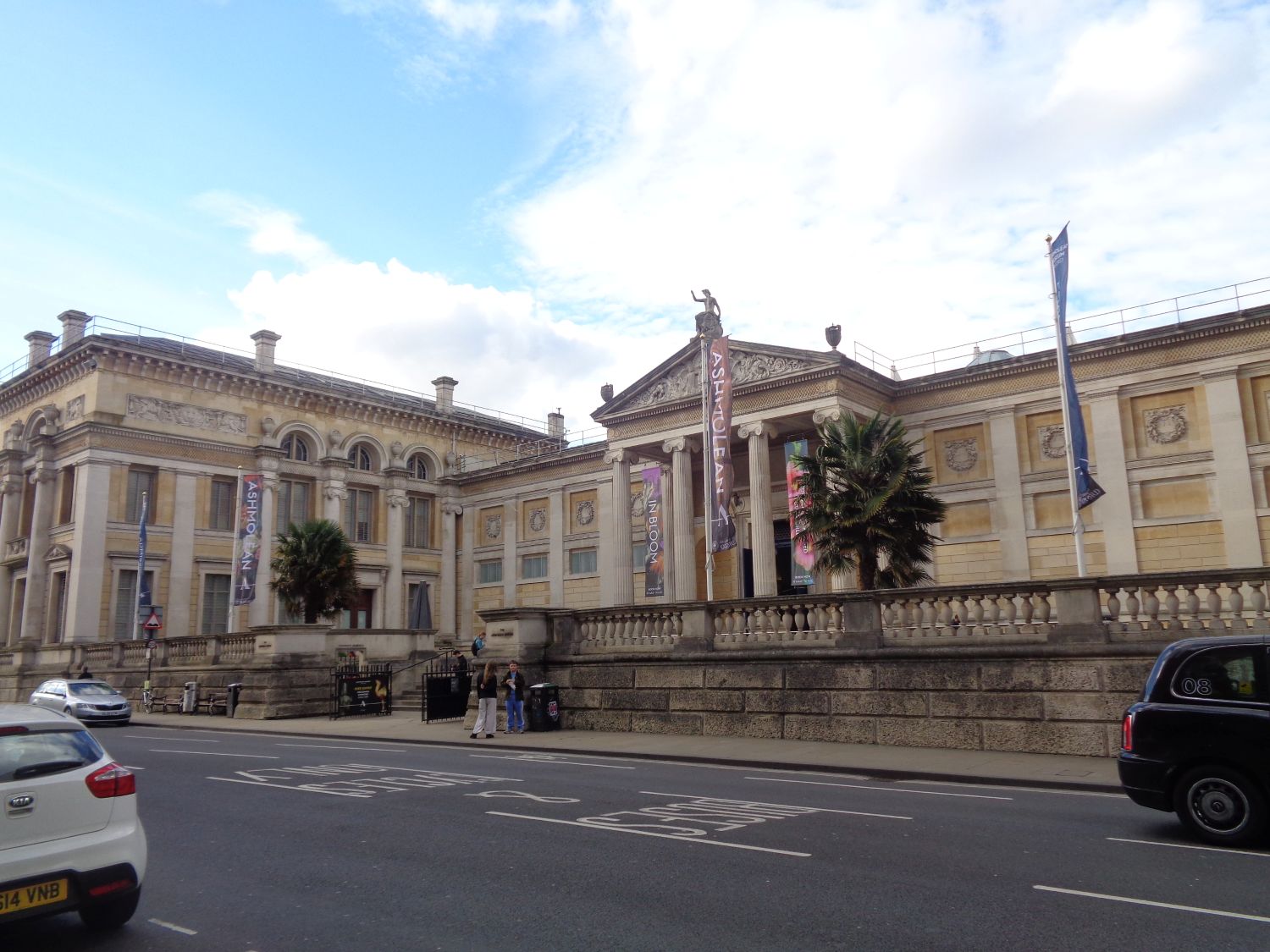
The main museum houses the original Elias Ashmole donation as well as extensive archaeological and artistic collections. Thanks to the bequest of Sir Arthur Evans, the archaeology department also possesses a wide range of Minoan and Mycenaean ceramics; drawings by Raphael (the world’s largest collection), Michelangelo, and Leonardo da Vinci; watercolors by Turner; Paintings by Piero di Cosimo (The Forest Fire), Paolo Uccello (The Annunciation, The Night Hunt), the Maestro dei Baldraccani, Titian (Venus and Adonis, Portrait of Giacomo Doria), Anthony van Dyck (The Deposition from the Cross, c. 1619), John Constable, Claude Lorrain (Landscape with Ascanius Killing Silvia’s Stag), Nicolas Poussin (Moses Exposed on the Nile), Camille Corot, Camille Pissarro (fourteen canvases, including The Tuileries Garden), Pablo Picasso, and Ludovico Rodo Pissarro; 20C sculptures by Elisabeth Frink, Aristide Maillol, Henry Moore, Lucile Passavant, and Ossip Zadkine; the Chronicle of Paros, a chronological table discovered on the island of Paros; and the death mask of Oliver Cromwell. Arab ceremonial robes worn by Lawrence of Arabia. In 2012, the museum acquired the Portrait of Mademoiselle Claus, painted by Édouard Manet in 1868.
The official Ashmolean museum of Oxford : https://www.ashmolean.org/
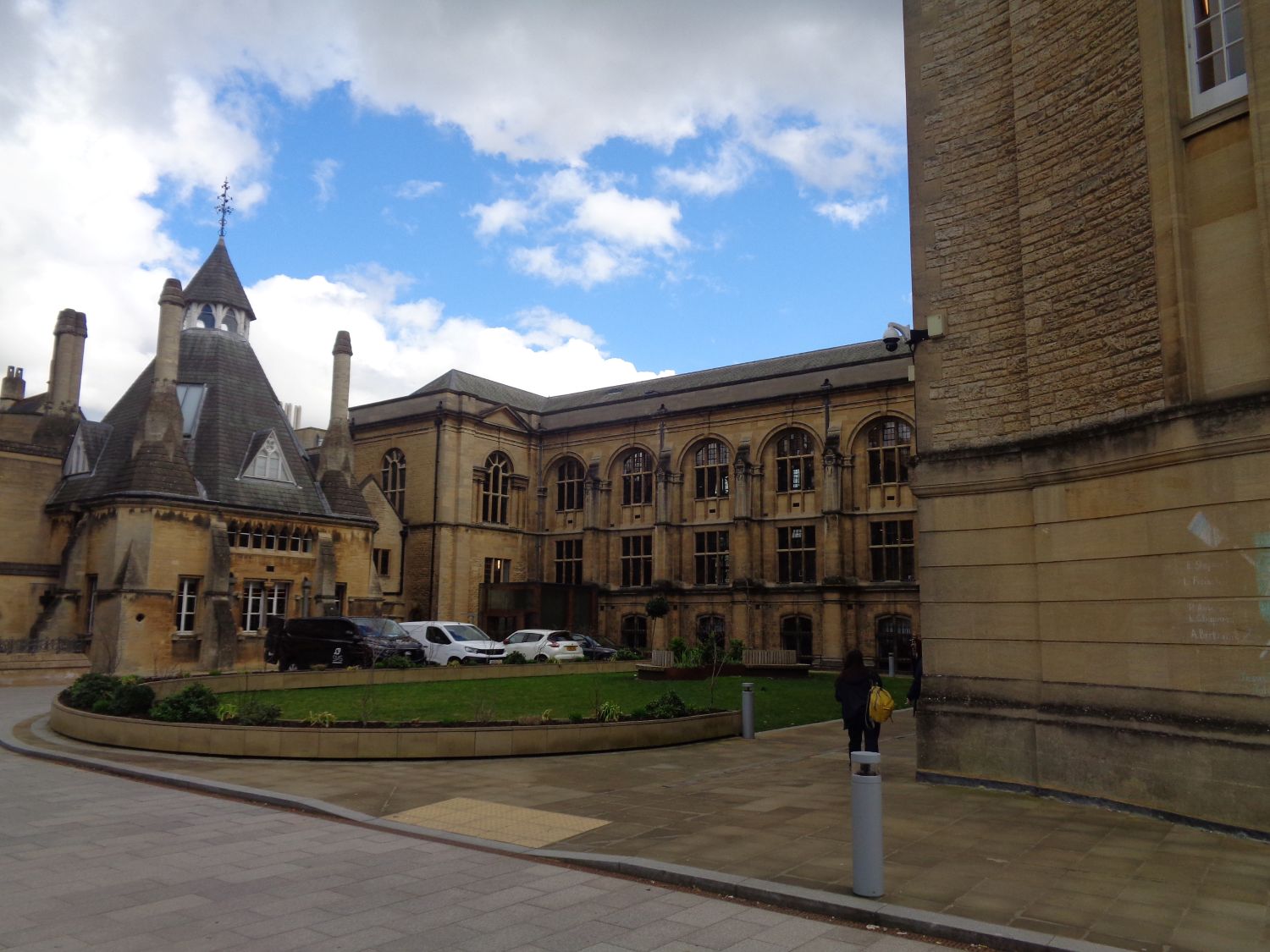
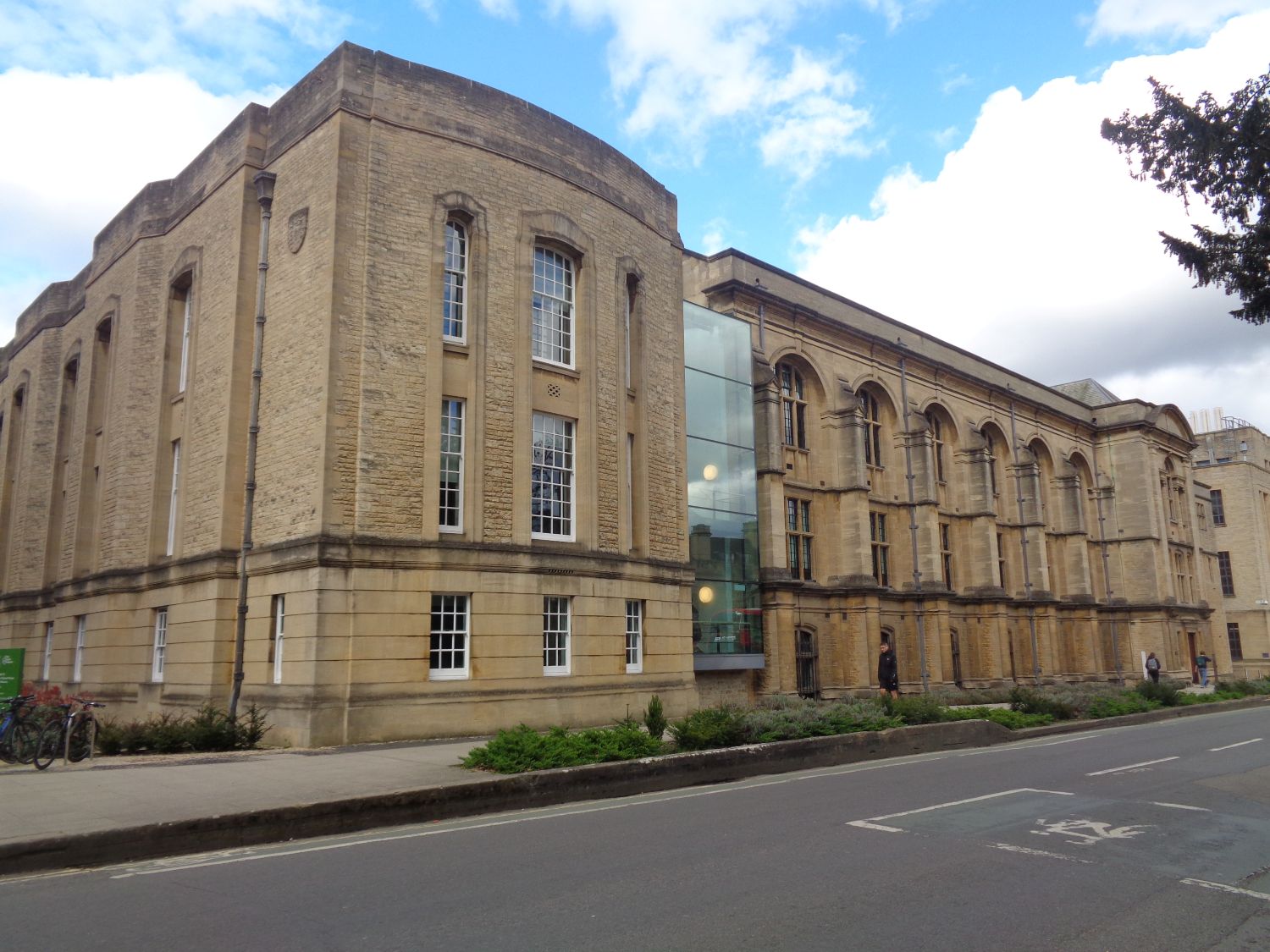
The History of Science Museum in Broad street,holds a leading collection of scientific instruments from Middle Ages to the 20C, completed in 1894. The museum was built in 1683, and it is the world’s oldest surviving purpose-built museum. Built to house Elias Ashmole’s collection, the building was the world’s first purpose-built museum building and was also open to the public. The original concept of the museum was to institutionalize the new learning about nature that appeared in the 17C, and experiments concerning natural philosophy were undertaken in a chemical laboratory in the basement, while lectures and demonstration took place in the School of Natural History, on the middle floor.In 1924, Lewis Evans donated his collection of historic scientific instruments, creating the Lewis Evans Collection. In 1935, with more donations, the museum’s name was changed to the Museum of the History of Science. In 2018, the museum was renamed the History of Science Museum
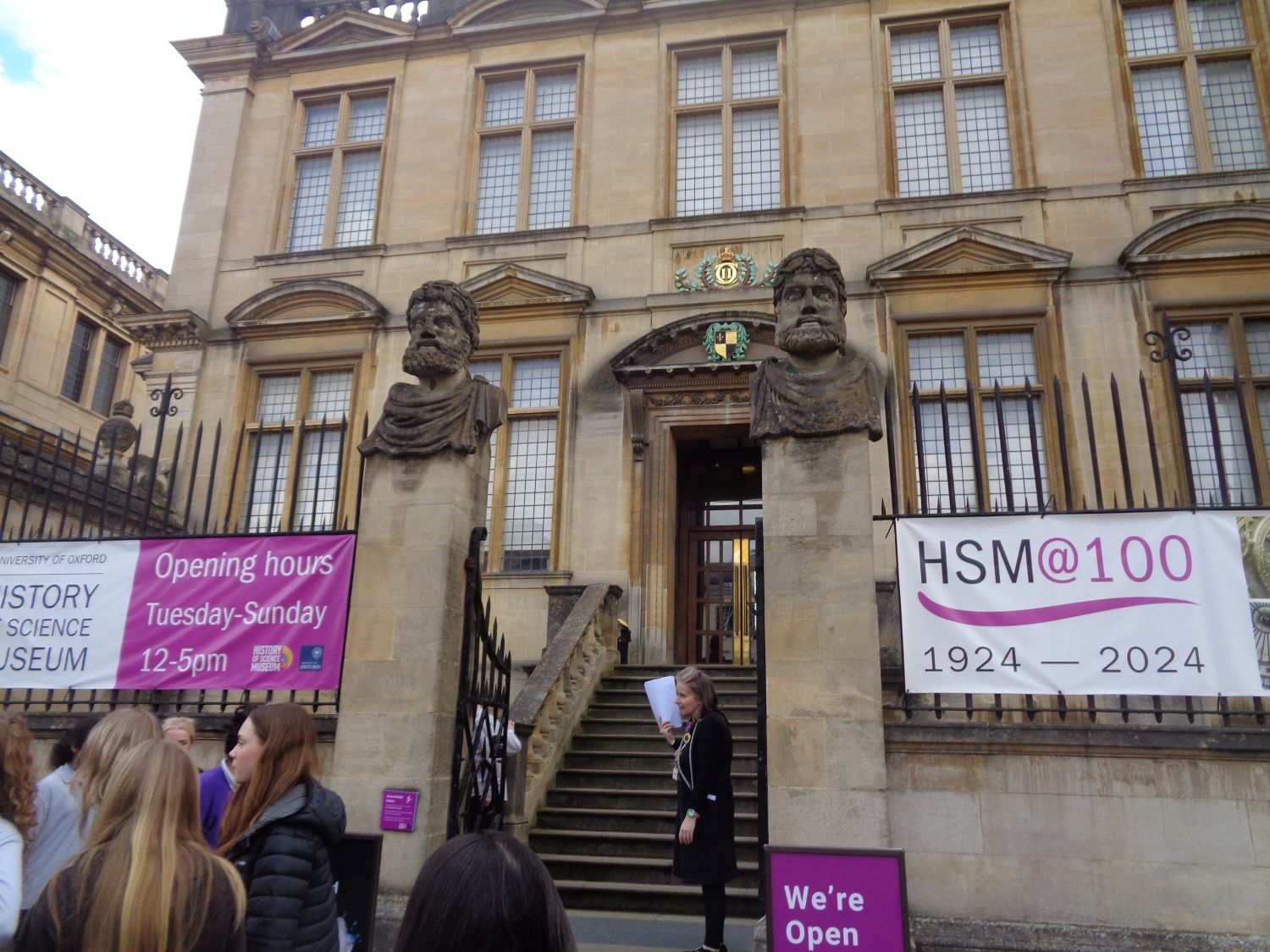
The collection and the building itself now occupies a special position in the study of the history of science and in the development of western culture and collecting. One of the most iconic objects in the collection is Einstein’s Blackboard that Albert Einstein used on 16 May 1931 in his lectures while visiting the University of Oxford,The current collection contains around 18,000 objects from antiquity to the early 20C, representing almost all aspects of the history of science and is used for both academic study and enjoyment by the visiting public. The museum is also home to the Rochester Avionic Archive, which includes a collection of avionics that originated with the Elliot Brothers, but also includes pieces from Marconi and BAE System
The official History of Science Museum of Oxford : https://hsm.ox.ac.uk/
There you go folks , do dare drive in jolly England, it’s an adventure of a lifetime, and you will be back !!! as we have lol! Until another round chasing Sherlock we will be saying elementary my dear Watson to you all. Again, hope you enjoy this post on the museums of Oxford !!! as I
And remember, happy travels, good health, and many cheers to all !!!


