
This time took my road warrior skills to go again to jolly England with the Le Shuttle train service (see post), and my Ford ; towing along my good boys and wonderful Rex! It was a very nice trip going into the countryside and seeing several towns of wonderul architecture and history, This one is a must and one of our highlights of the trip, we will be back, eventually, Therefore, let me tell you about the St Albans Cathedral !!! Hope you enjoy the post as I.
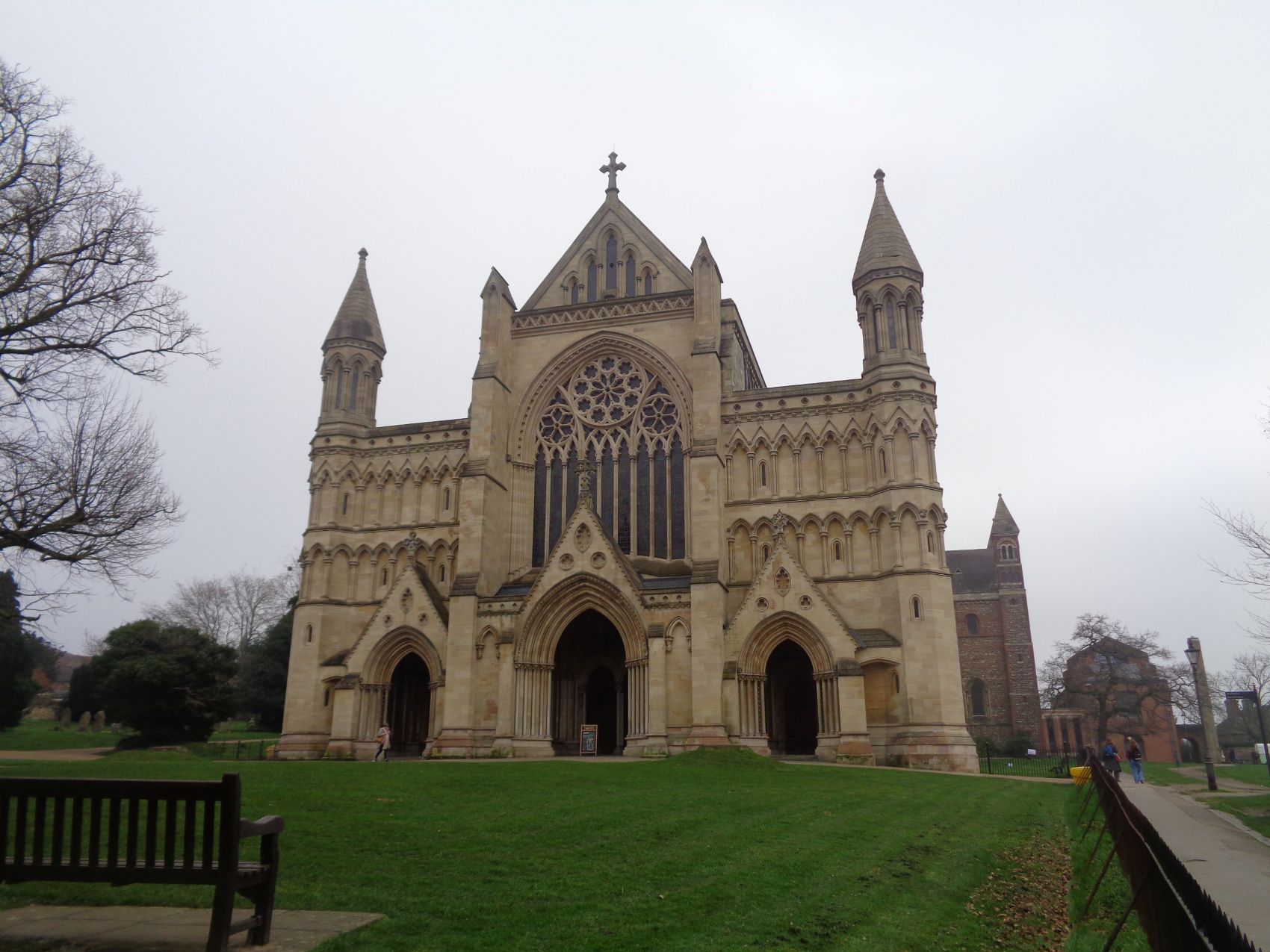
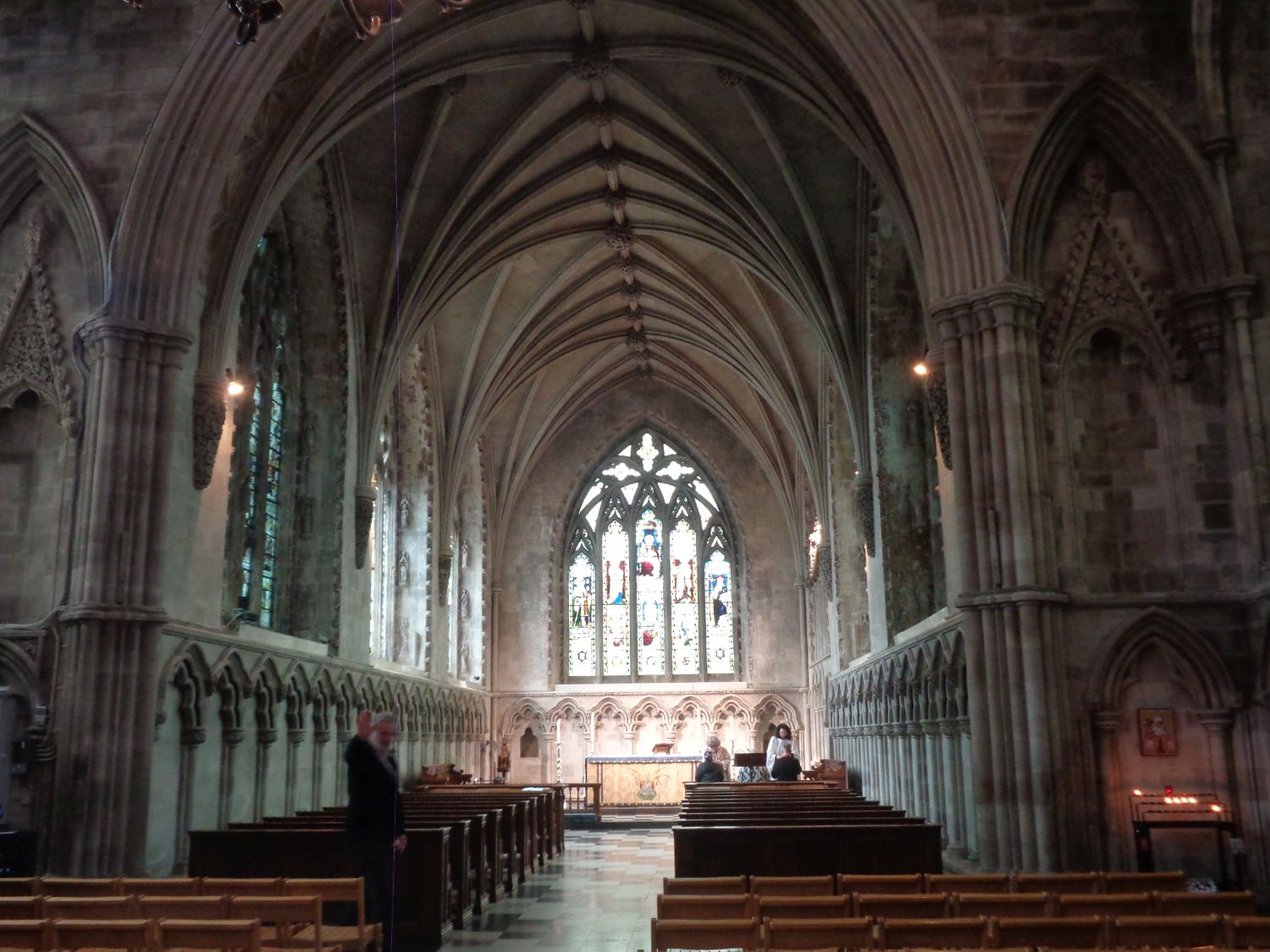
The St Albans Cathedral is located at Sumpter Yard ,unfortunately visitor parking is not available : you need to park as us on nearby st near the St Albans school (old abbey), However, do come is a must, one beautiful cathedral indeed, Immerse yourself in 1700 years of history on a visit to St Albans Cathedral. From Britain’s longest nave and a stunning collection of medieval wall paintings, to a Norman crossing tower and two beautifully restored medieval shrines
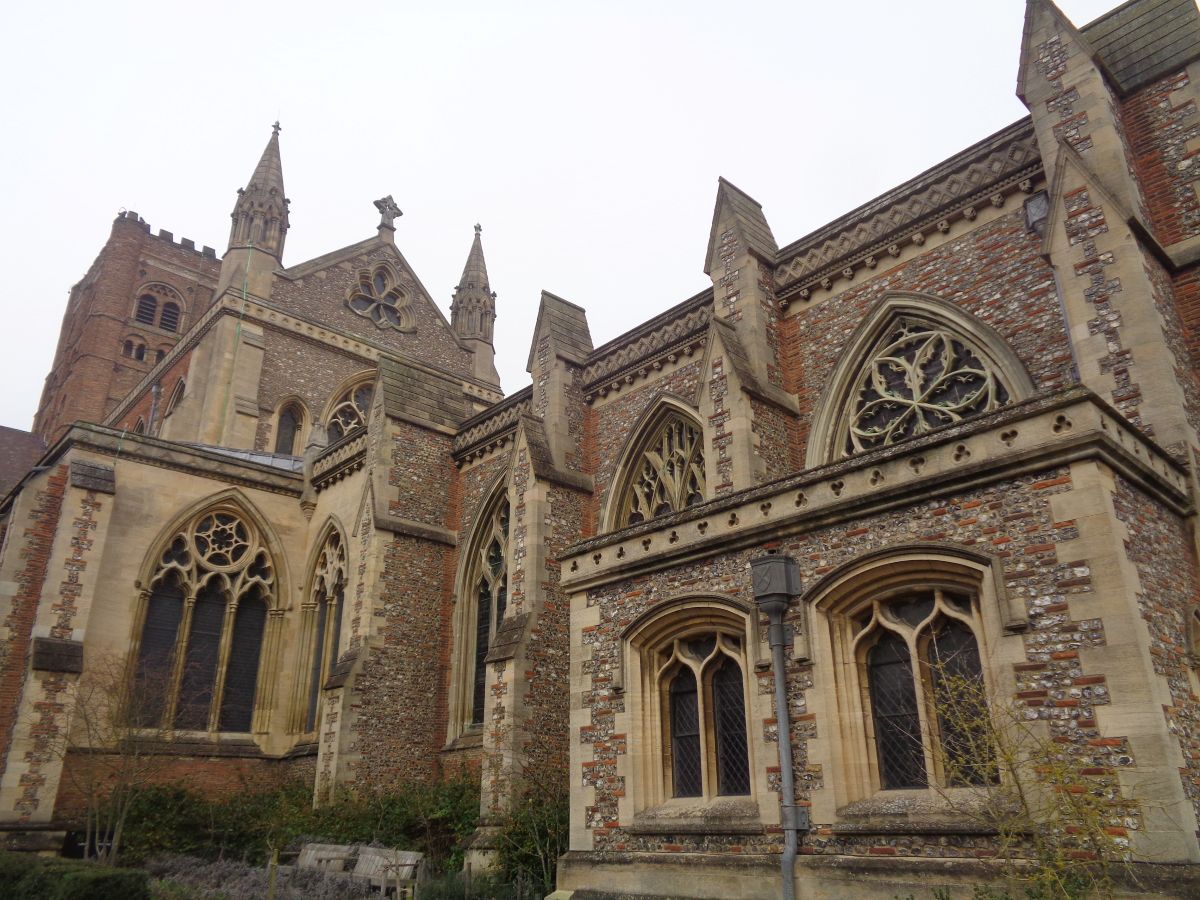
The tower is the only large 11C crossing tower still standing in England. The four-tiered tower terminates at each level with closely spaced buttresses on the three lower levels and circular buttresses on the fourth. The entire structure weighs 5,000 tons and is 44 meters high. The Shrine of St Albans known as Britain’s first saint and was buried on this site 1700 years ago. There has probably been a shrine here since then. A new shrine was built in 1308 but was destroyed when the Abbey was closed down in 1539. Pieces from this shrine were used to restore the shrine in 1872 and again in 1993. There is also a small memorial chapel underneath the main shrine chapel. This belongs to Duke Humphrey of Gloucester , the only royal to be buried at St Albans Cathedral. This part of the Cathedral continues to be a place of pilgrimage, prayer and reflection.
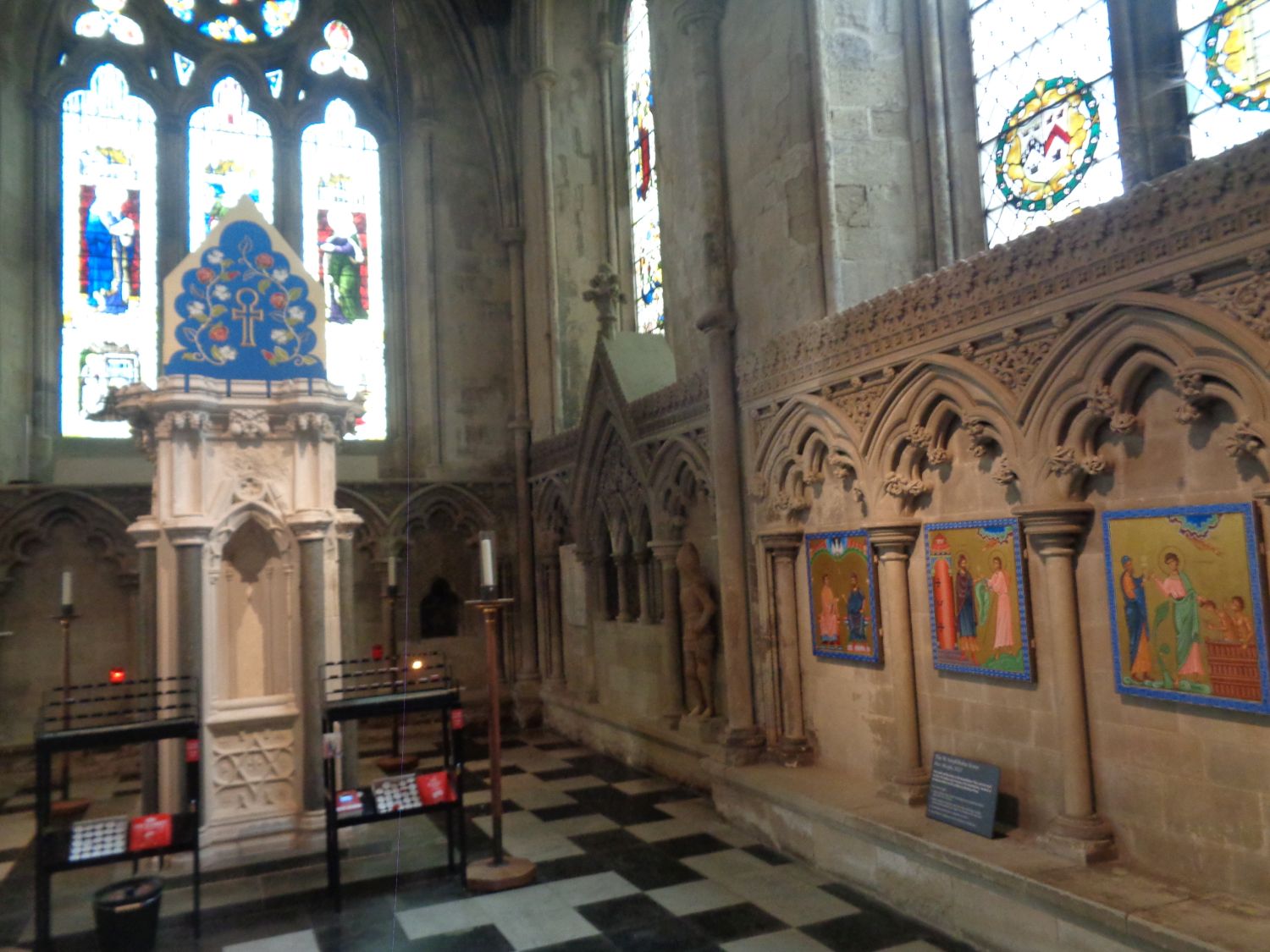
The Shrine of St Amphibalus ,the Christian priest that St Alban sheltered from persecution. Tradition says the priest was later martyred at Redbourn. This shrine base was built for his relics in the Middle Ages but was smashed into pieces at the Reformation, as was St Albans shrine. These pieces were rediscovered in 1872. In 2020 this shrine was cleaned and restored with new carvings to replace some of its lost stones. St Albans is the only Cathedral in the country to house two medieval pedestal shrines – belonging to St Alban and St Amphibalus.
Experience the wonder of our medieval wall paintings – the best preserved collection in any English Cathedral. They are rare survivals, the earliest dating from the early 1200’s. You can see the wall paintings in the Nave “restored” to their former glory with unique light projections during Daily Guided Tours. At 85 metres, the Cathedral has the longest Nave in England.
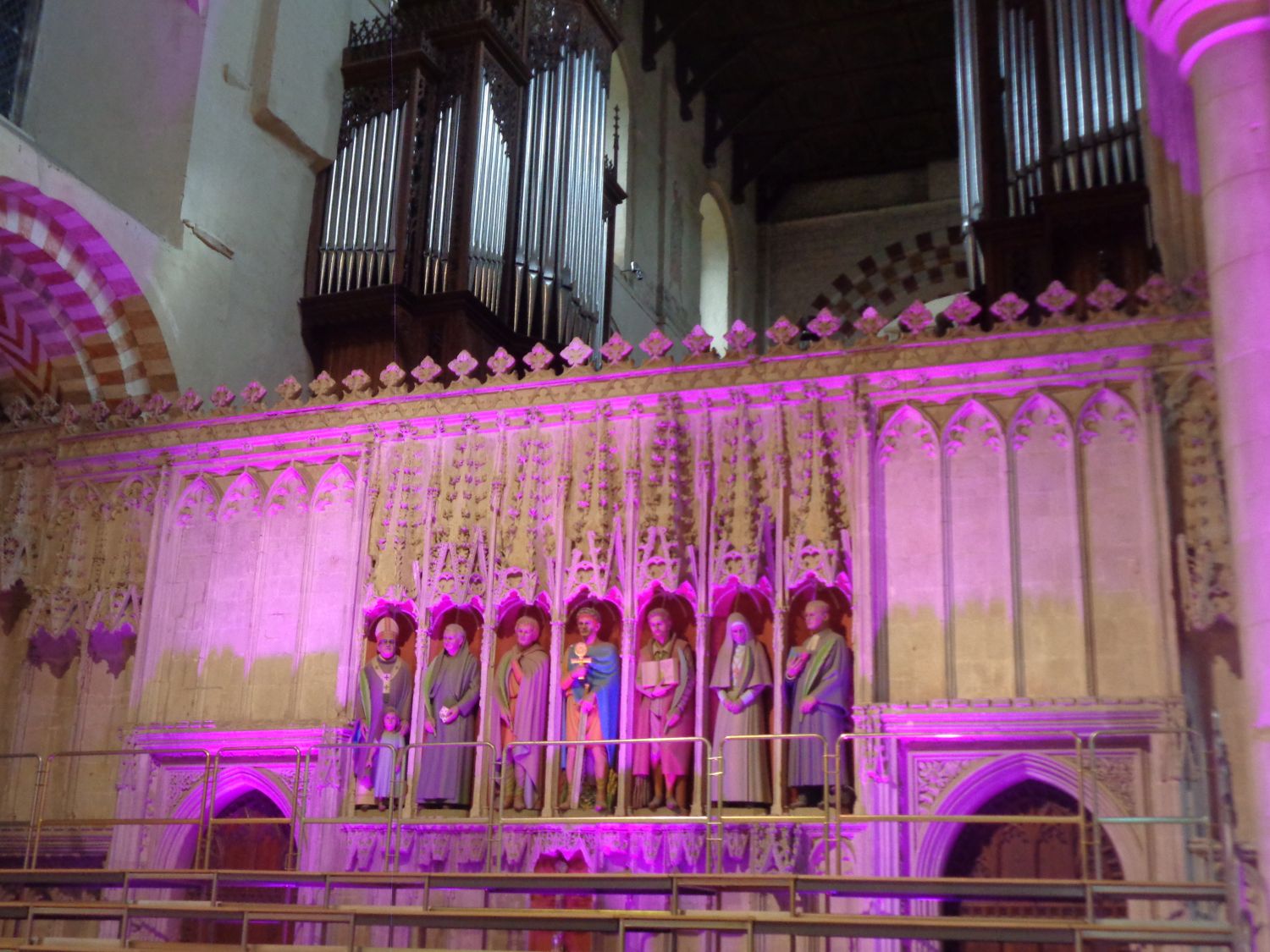
The pillars in the Nave are decorated with stunning medieval wall paintings. The best preserved collection in any English Cathedral. A screen with carvings and statues was added to the Nave in the 1300s. The original statues were destroyed during the Dissolution. Today this screen is home to statues of seven martyrs, which represent different Christian traditions. The word ‘Nave’ comes from ‘navis’ ; the Latin name for ship since medieval people thought the ceiling looked like an upside down ship.
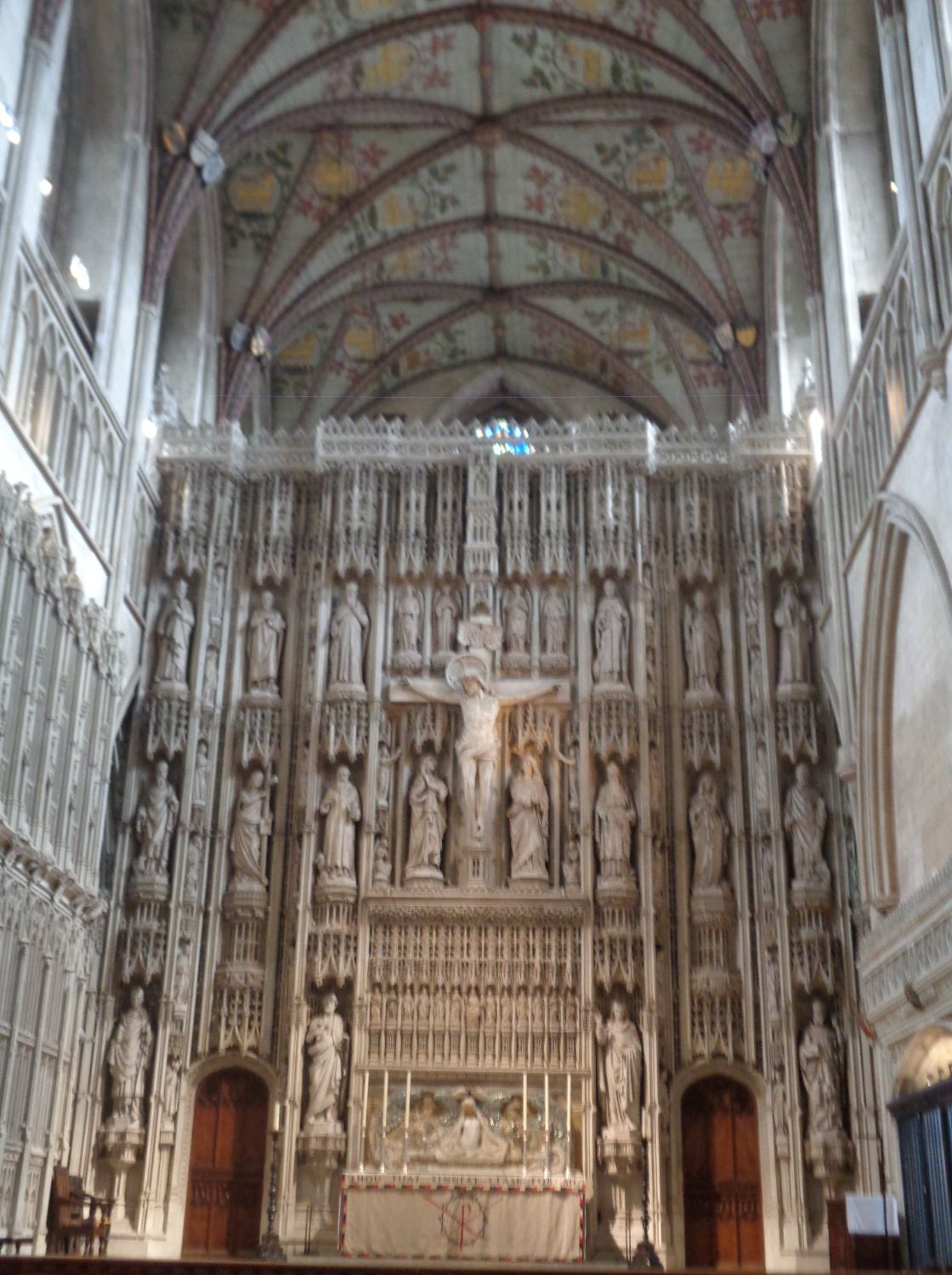
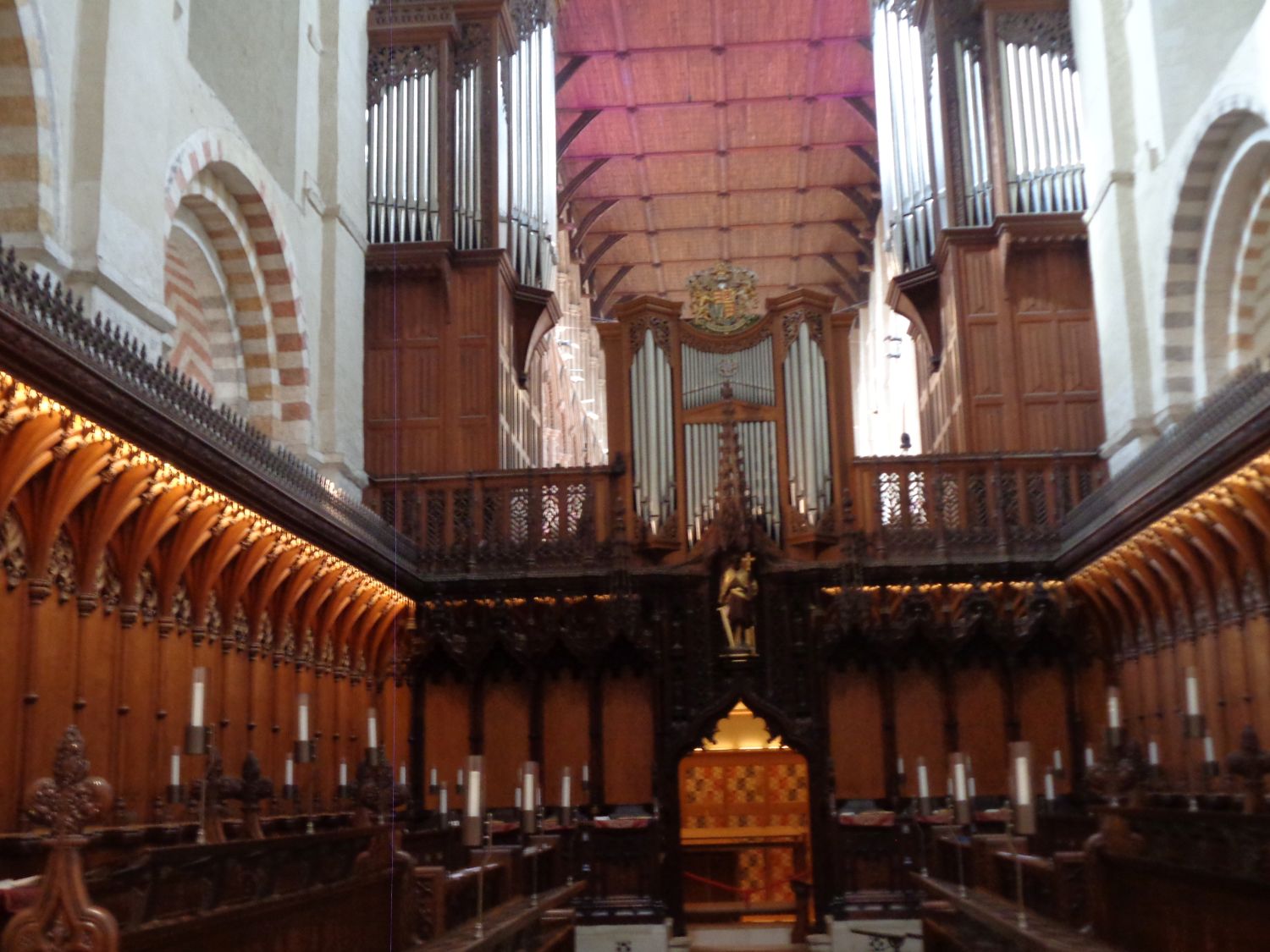
The Quire was the main monastic area during the medieval period. This is where monks would have sung their services. Services still take place here every day. St Albans is the only major church in England with an 11C great crossing tower still standing. It is also the only cathedral tower in England to be built using Roman bricks. In some places, the walls of the tower are seven feet thick and the whole structure weighs 5000 tonnes.
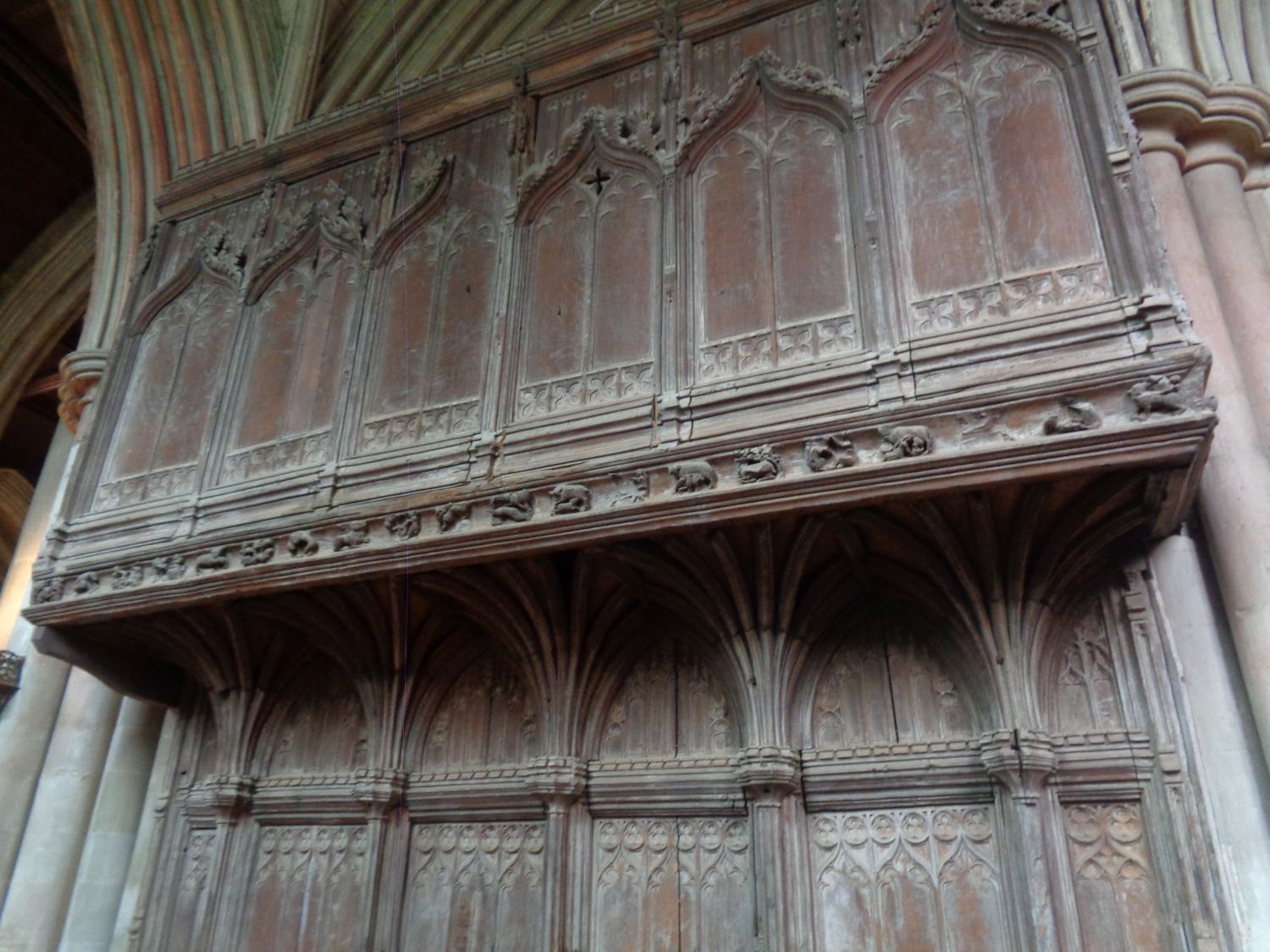
The Watching Loft was constructed in c. 1400 and is the only surviving medieval wooden watching loft in England. Monastic officials or tenants would sit in there and keep an eye on pilgrims visiting the Shrine.
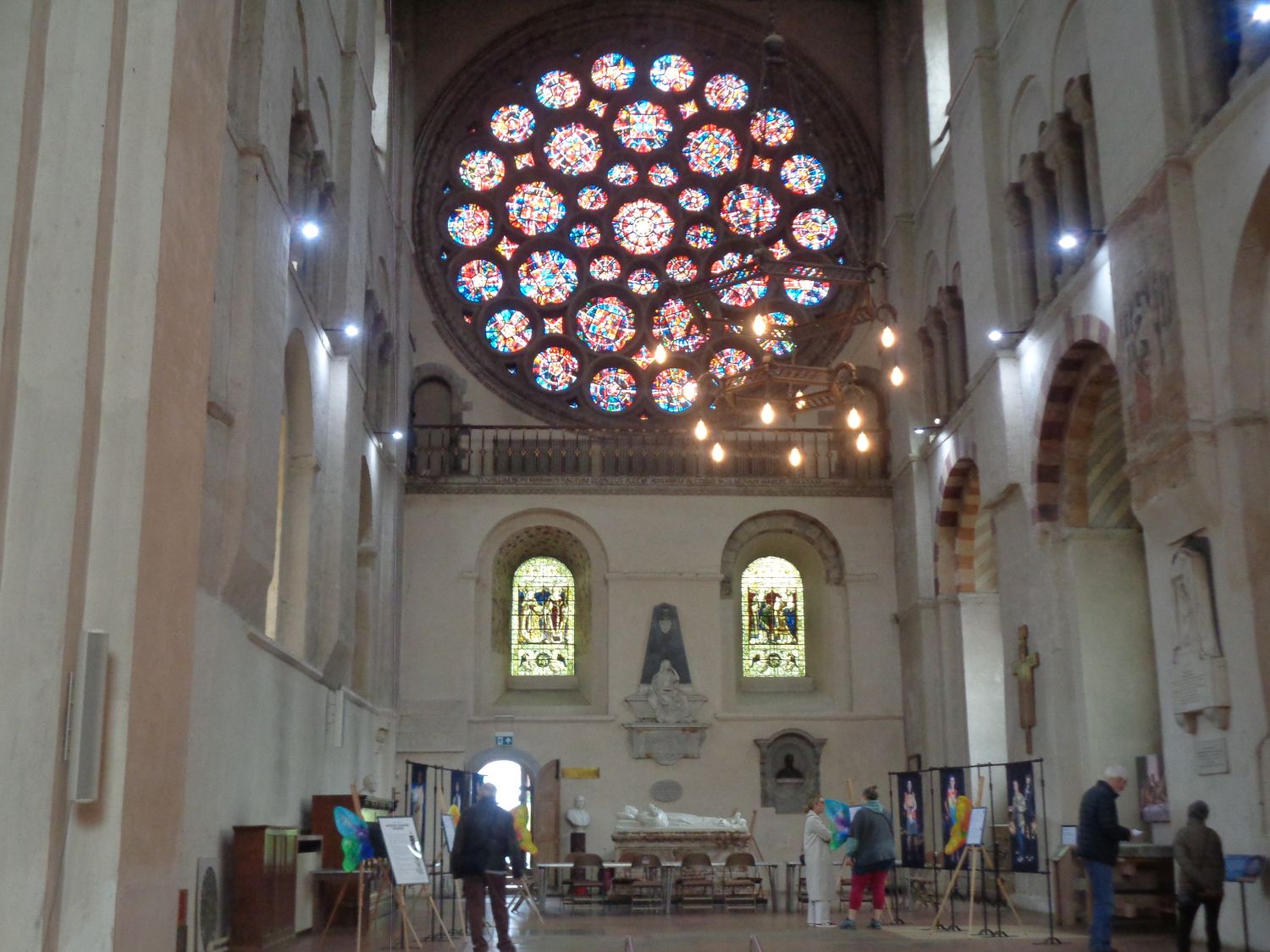
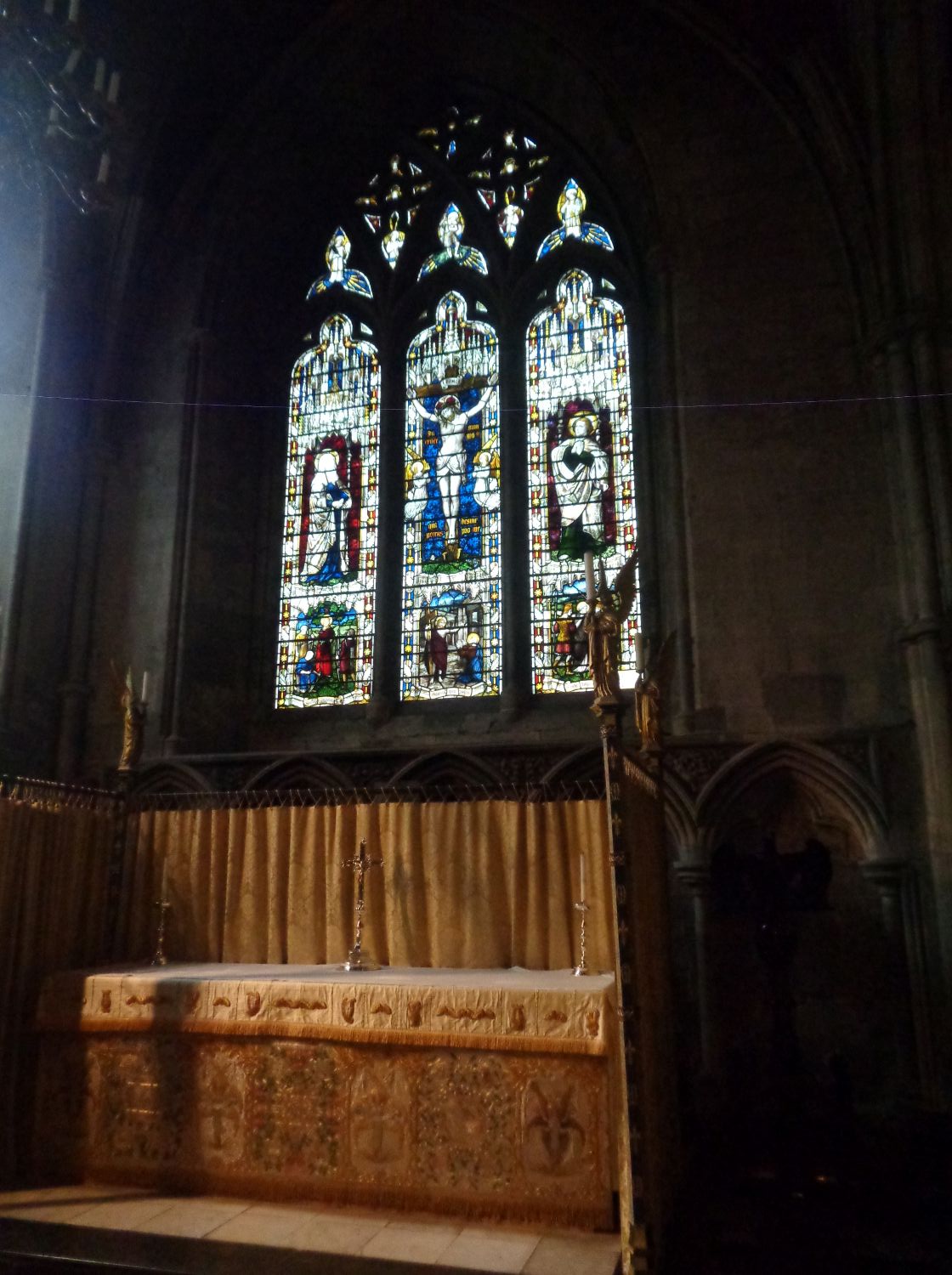
See some spectacular stained glass windows around the Cathedral, including the magnificent Rose Window. The colourful design you see today was added in 1989, replacing an earlier Victorian plain glass window. The stained glass windows date from between 1376 and 2006 and include a nod to royalty, a tribute to those who fought in WWI and more.
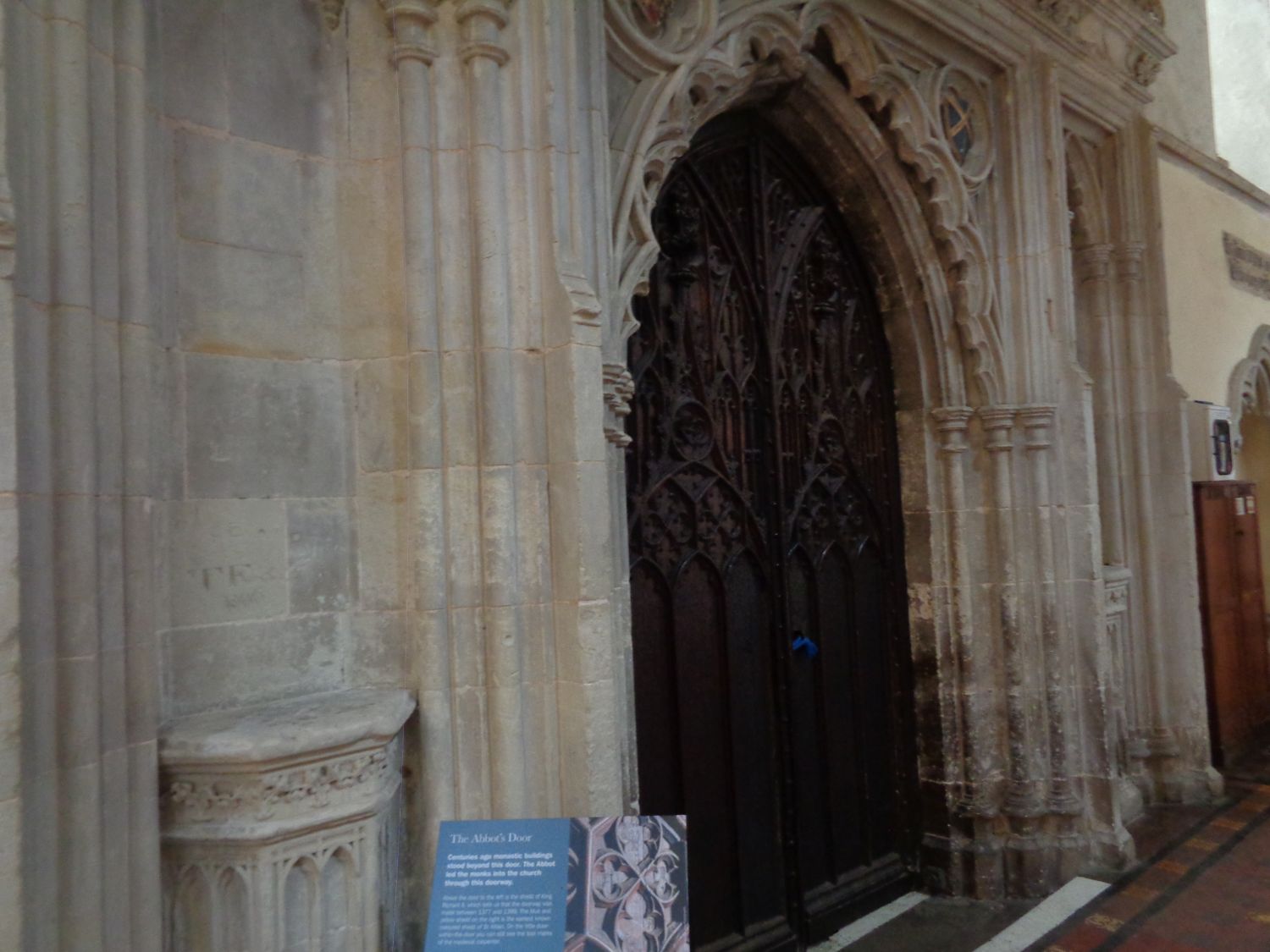
A bit of history I like tell us that St Albans Cathedral was originally the abbey church of a Benedictine monastery founded by Offa, King of Mercia, in 793 to house the remains of Alban of Verulamium, the first British martyr, who died during Diocletian’s persecution around 303. The abbey was adjacent to a magnificent church. The Saxon abbey church is no longer visible because the first Norman abbot, Paul of Caen, had it completely rebuilt from 1077 onwards in the Romanesque style, reusing bricks recovered from the site of the Roman town of Verulamium. The cruciform abbey church was the largest built in England at the time. It has a four-bay chancel, a transept with seven apses, and a ten-bay nave, making a total of fifteen bays. Throughout the Middle Ages, the abbey attracted pilgrims to the reliquary of the saint, who hoped for healing of body and soul, thus perpetuating a tradition first mentioned by Saint Germain, Bishop of Auxerre, who visited the tomb in 429. The abbey church was completed in 1089 but was not consecrated until December 28, 1128. The ceiling of the bell tower, which houses 12 bells, is particularly remarkable for its panels depicting the red and white roses of the royal houses of Lancaster and York, which clashed at the Battle of St Albans. In the 11C, Nicholas Brakespear, who studied at St. Albans in his youth, became Pope Adrian IV. In gratitude, he placed the abbey under his protection and gave it precedence over other English abbeys. It was enlarged, first in the 13C, then a second time in the 14C after part of it collapsed in 1323. The ceiling of the bell tower, which houses 12 bells, is particularly remarkable for its panels depicting the red and white roses of the royal houses of Lancaster and York, which clashed at the Battle of St Albans. In 1521, Thomas Wolsey, Cardinal of York, received it under the commendatory system, a unique instance in English history of a practice widespread in Europe. In 1539, following the Dissolution of the Monasteries ordered by King Henry VIII, the building entered a difficult period that lasted nearly 300 years. It was sold as a parish church to the town, which, lacking sufficient funds, allowed it to fall into disrepair. The only surviving buildings are the old gate (1365) and the abbey church, repurchased in 1553 by the English Crown and thus preserved from destruction. In 1877, the former abbey church was consecrated as a cathedral and completely restored.
The official St Albans’ Cathedral of St Albans :https://www.stalbanscathedral.org/
The St Albans tourist office on its heritage : https://www.enjoystalbans.com/things-to-do/
The Herfordshire area tourit office on St Albans : https://www.visitherts.co.uk/see-and-do/destinations/st-albans/
There you go folks , do dare drive in jolly England, it’s an adventure of a lifetime, and you will be back !!! as we have lol! Until another round chasing Sherlock we will be saying elementary my dear Watson to you all. Again, hope you enjoy this post on the St Albans Cathedral !!! as I
And remember, happy travels, good health, and many cheers to all !!!

 Paris1972-Versailles2003