
This time took my road warrior skills to go again to jolly England with the Le Shuttle train service (see post), and my Ford ; towing along my good boys and wonderful Rex! It was a very nice trip going into the countryside and seeing several towns of wonderul architecture and history, This one is a must and one of our highlights of the trip, we will be back, eventually, Therefore, let me tell you about curiosities of St Albans !!! Hope you enjoy the post as I.
The St Michael’s Church was built on the site of Verulamium’s basilica, this church marks the place where Alban was tried for being a Christian. The most extant Anglo-Saxon building in Hertfordshire, it contains architecture and art in stone, wood, metal and glass from across a millennium. The oldest parts of the present church date to before the Norman Conquest.Much of the church is late 10C or early 11C The building includes much Roman material salvaged from the surrounding ruins of Verulamium, including Roman brick used in the splays of the nave windows. Early in the 12th century a north aisle and then a south aisle were added, linked with the nave by arcades of plain round-headed arches cut in the latter’s north and south walls, leaving sections of Saxon wall as piers. The arcades do not match: the earlier north arcade has three bays spaced irregularly; the later south arcade was built with four bays. The round-headed Norman window at the east end of the north aisle may also be 12th-century n the 13th century a clerestory with six Early English lancet windows on each side was added to the nave to increase the amount of natural light, Slightly later in the 13th century the south chapel was added, and the easternmost arch of the south aisle became the entrance to the chapel. Three of the chapel’s windows are round-headed 13th-century late Norman ones: two in the east wall and one in the south wall. The tower is believed to have been remodelled in the late 15th or early 16th century. In its final form it had paired bell-openings, an embattled parapet and a polygonal stair-turret that was taller than the tower. In 1872, a pipe organ was built and in 1950 a new organ was built.
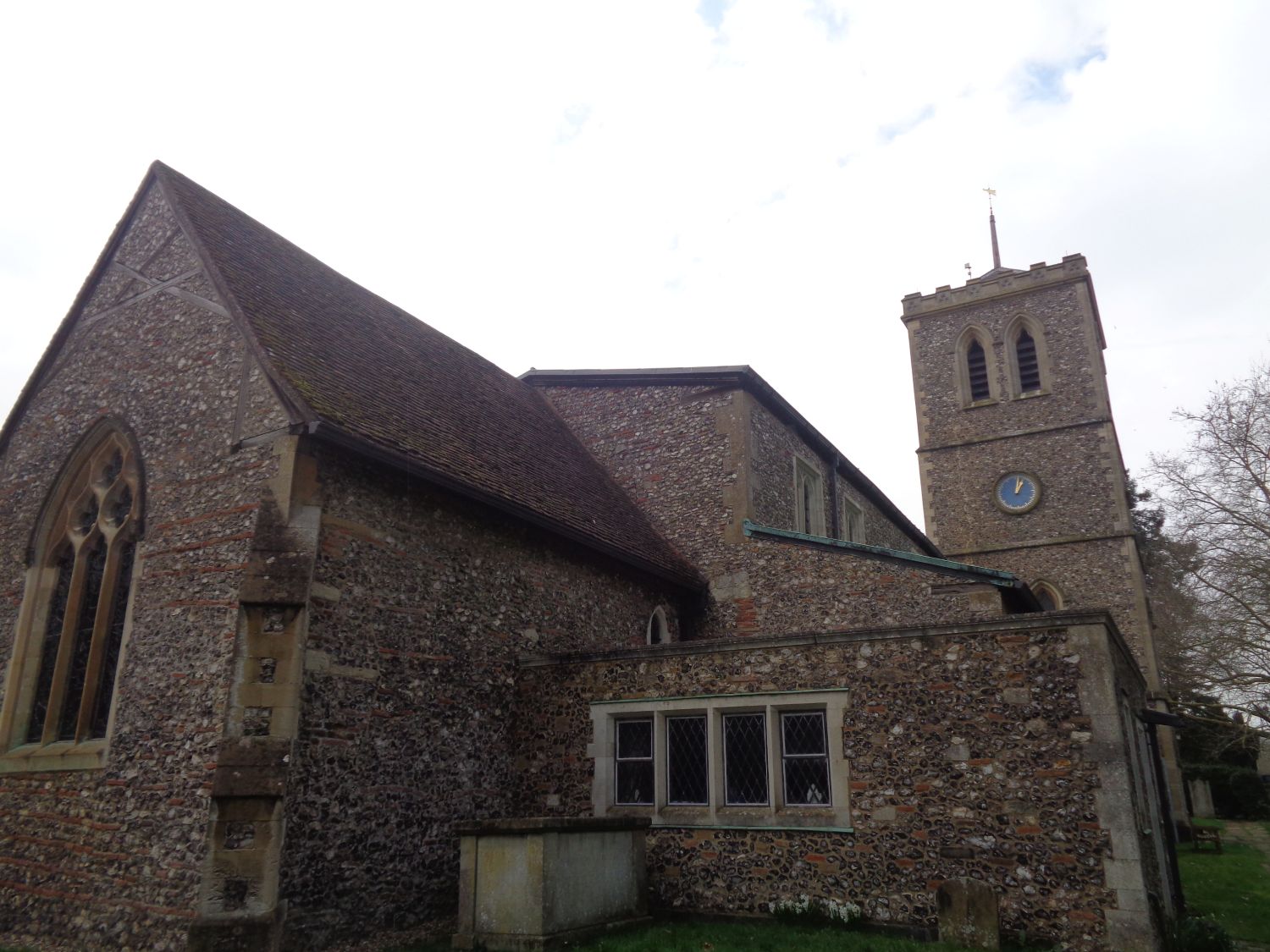
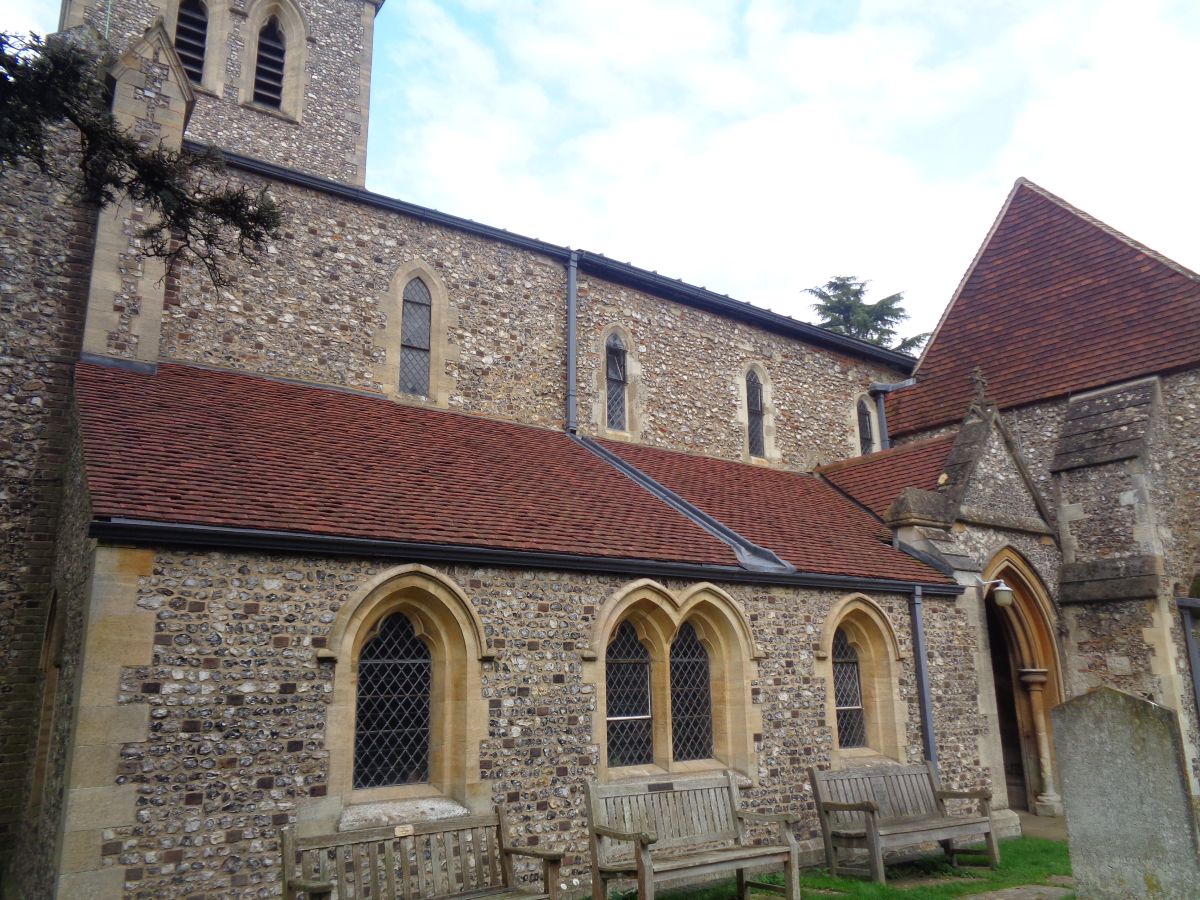
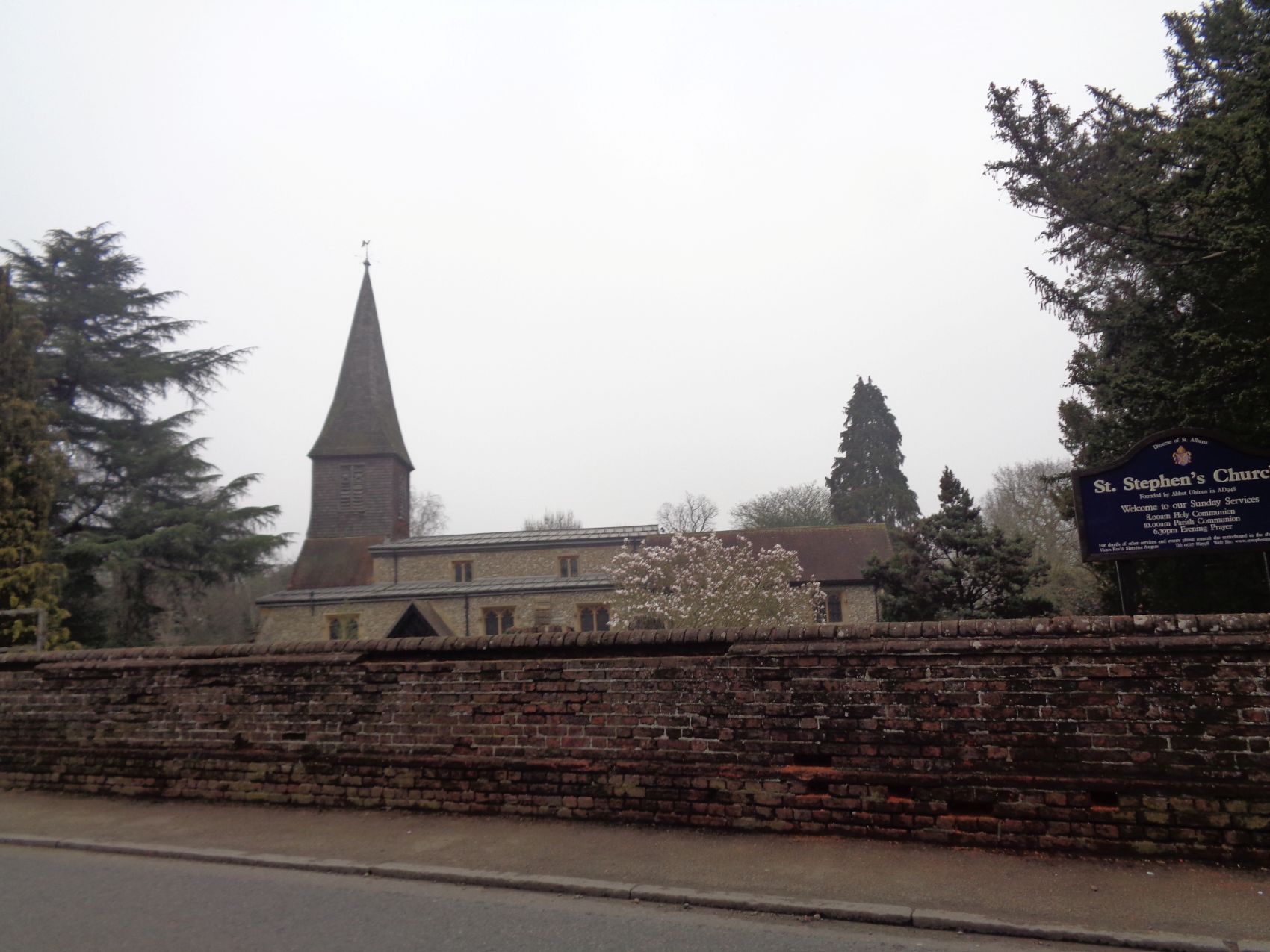
The St Stephen’s Church is a Church of England parish church. It is located to the south of the town centre, at the top of St Stephen’s Hill . It is believed to have been founded in 948 by Abbot Ulsinus of St Albans, The church was built at about that time to receive pilgrims and to prepare them for their visit to the shrine of St Alban within St Albans Abbey (see post). About 50 years after the Norman Conquest of 1066, the church was enlarged, The new church was consecrated, around 1101 to 1118. From documentary evidence it would appear that a north aisle was added in about 1170, The church today is largely medieval, but was restored from near-ruinous conditions in the 1860s The present spire, replacing a Hertfordshire spike on the tower, dates from this time It consists of a nave with a south aisle and a chancel with a south chapel. There is a belfry over the end of the nave, There is a ring of bells which were recast in 1957 to make them lighter as the previous bells, from 1892, were too heavy for the frame. The pews and ornamental woodwork are Victorian, and the present pulpit and canopy date from 1936. The eagle lectern is a copy of a much earlier famous Dunked Lectern, which it replaced. The octagona Baptismal fontis from the 15C. There is a 13C piscina.
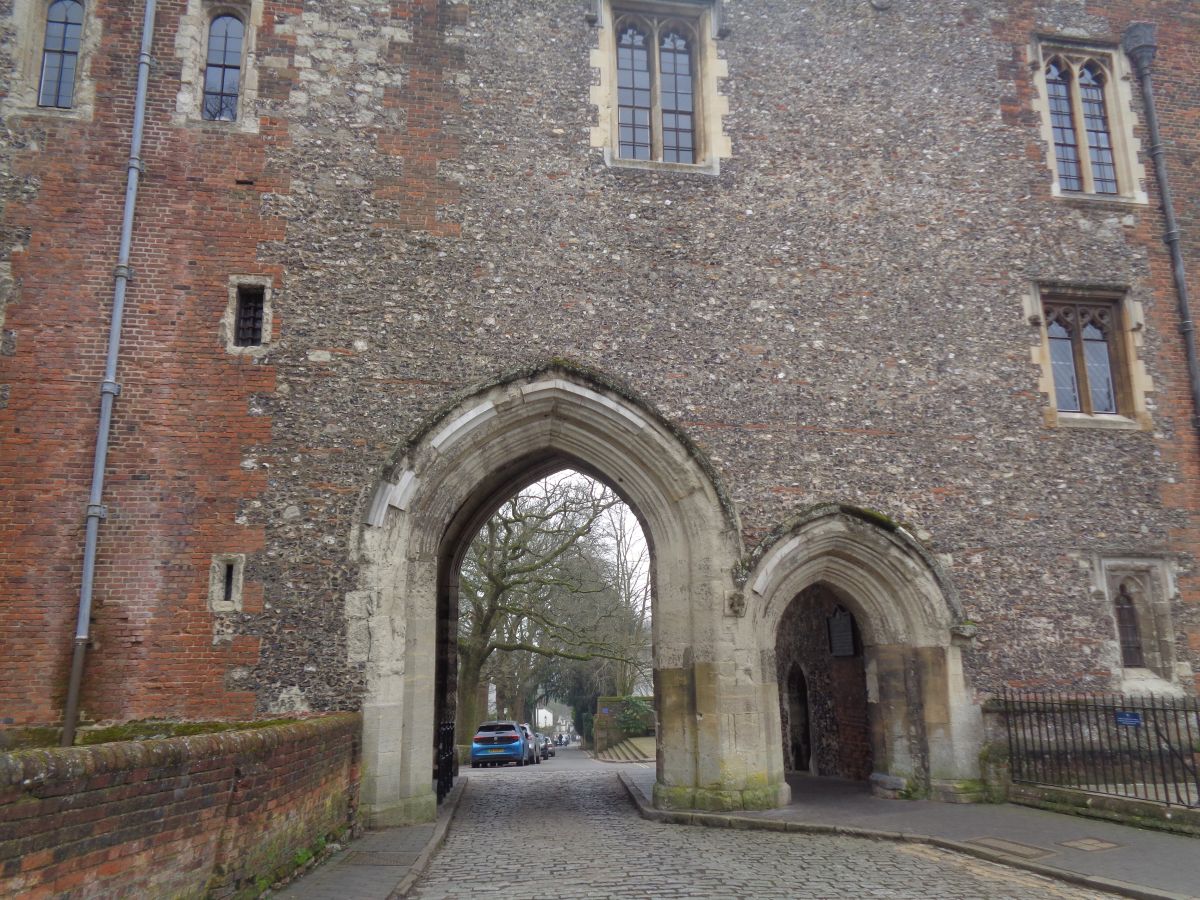
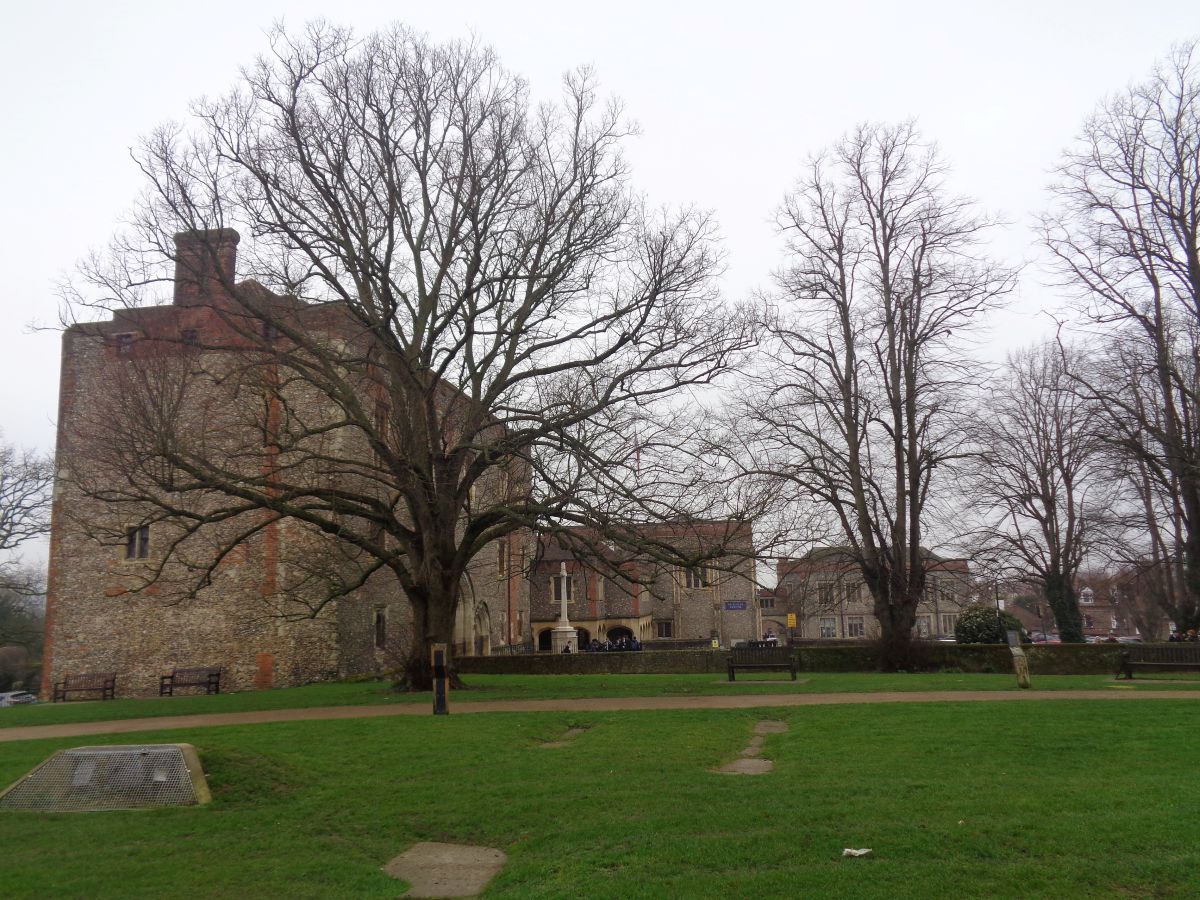
St Albans School was founded in 948. Until 2025 it was the only school in the English-speaking world to have educated a Pope (Adrian IV). Now a public school it has, since 1871, occupied a site to the west of the Abbey and includes the 14C Abbey Gateway. One of its buildings was a hat factory, a link with the city’s industrial past.
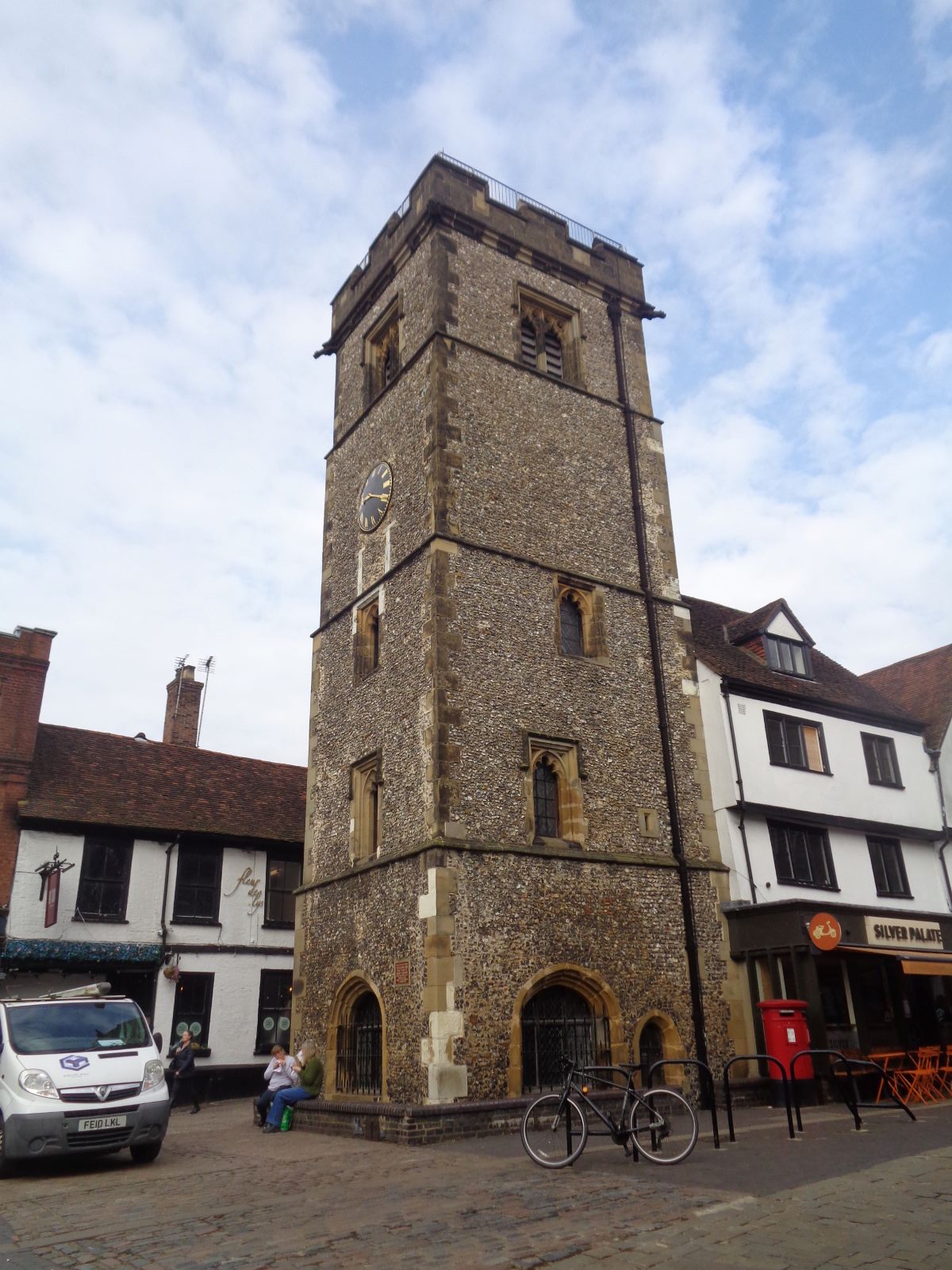
Between 1403 and 1412 Thomas Wolvey was engaged to build a clock tower in the Market Place. It is the only extant medieval town belfry in England The ground floor of the tower was a shop until the 20C. The first- and second-floor rooms were designed as living chambers. The shop and the first floor were connected by a flight of spiral stairs. Another flight rises the whole height of the tower by 93 narrow steps and gave access to the living chamber, the clock and the bell without disturbing the tenant of the shop.
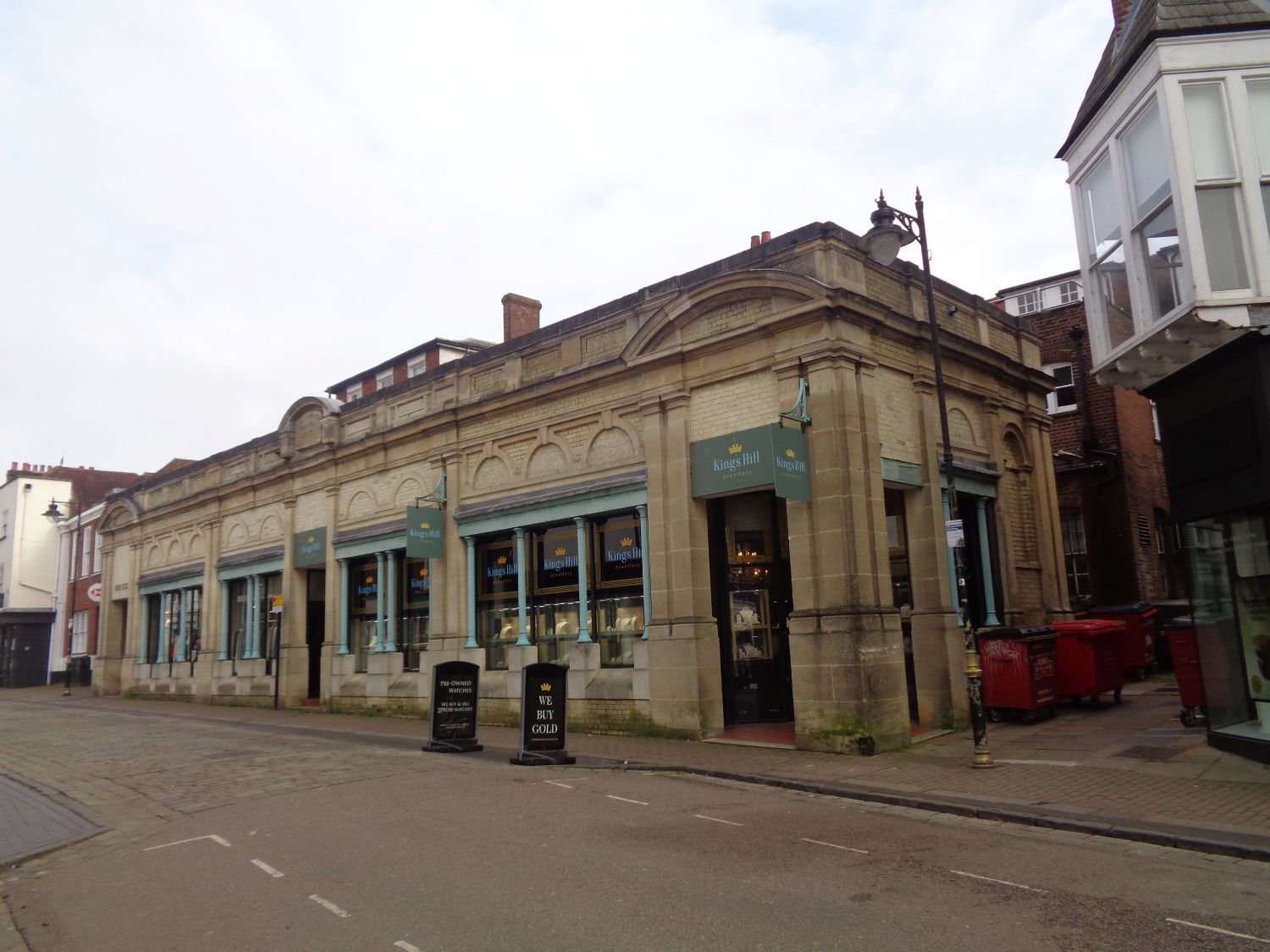
A street market on Wednesdays and Saturdays, founded by Abbot Ulsinus, still flourishes, In 1553, Henry’s son Edward VI sold the right to hold the market to a group of local merchants and landowners via letters patent which also incorporated St Albans as a borough. The old market hall, which dated from around 1596, was replaced by the Corn Exchange in 1857
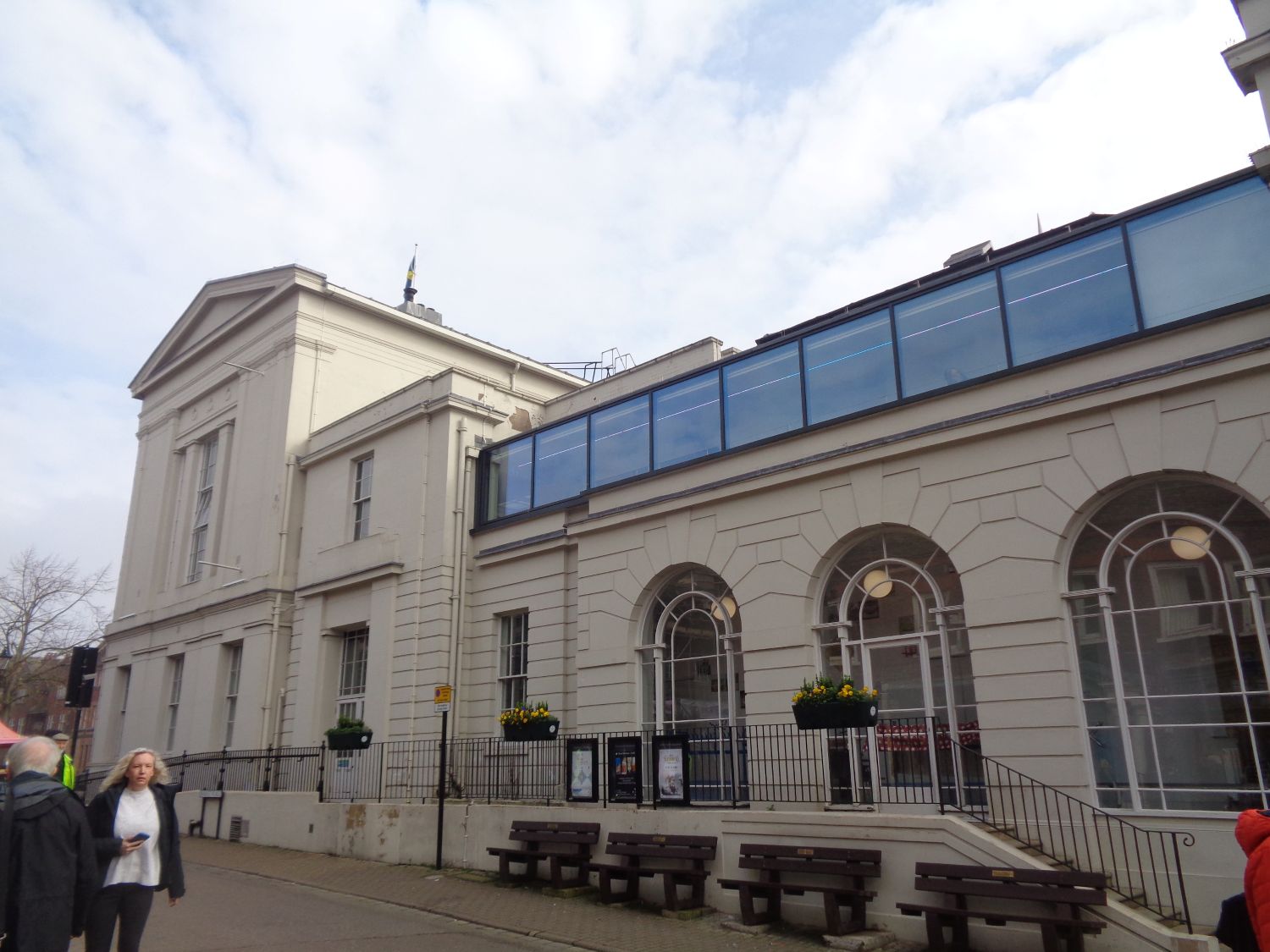
In 1932, theatre in St Albans had reached its lowest point.In 1934 eight others members of the Fellowship with similar interests decided to put their performance group on a slightly more formal footing, and the Company of Ten was born.In 1934 eight others members of the Fellowship with similar interests decided to put their performance group on a slightly more formal footing, and the Company of Ten was born. The foundation stone of the first purpose-built theatre to be built in St Albans since Roman times was laid in 1967. In April 1968 Her Majesty Queen Elizabeth the Queen Mother came to the opening performance of The Recruiting Officer. The Studio was added in 1980, initially to provide better space for rehearsals. But by the 1990s it had been developed for its own productions, particularly experimental drama.
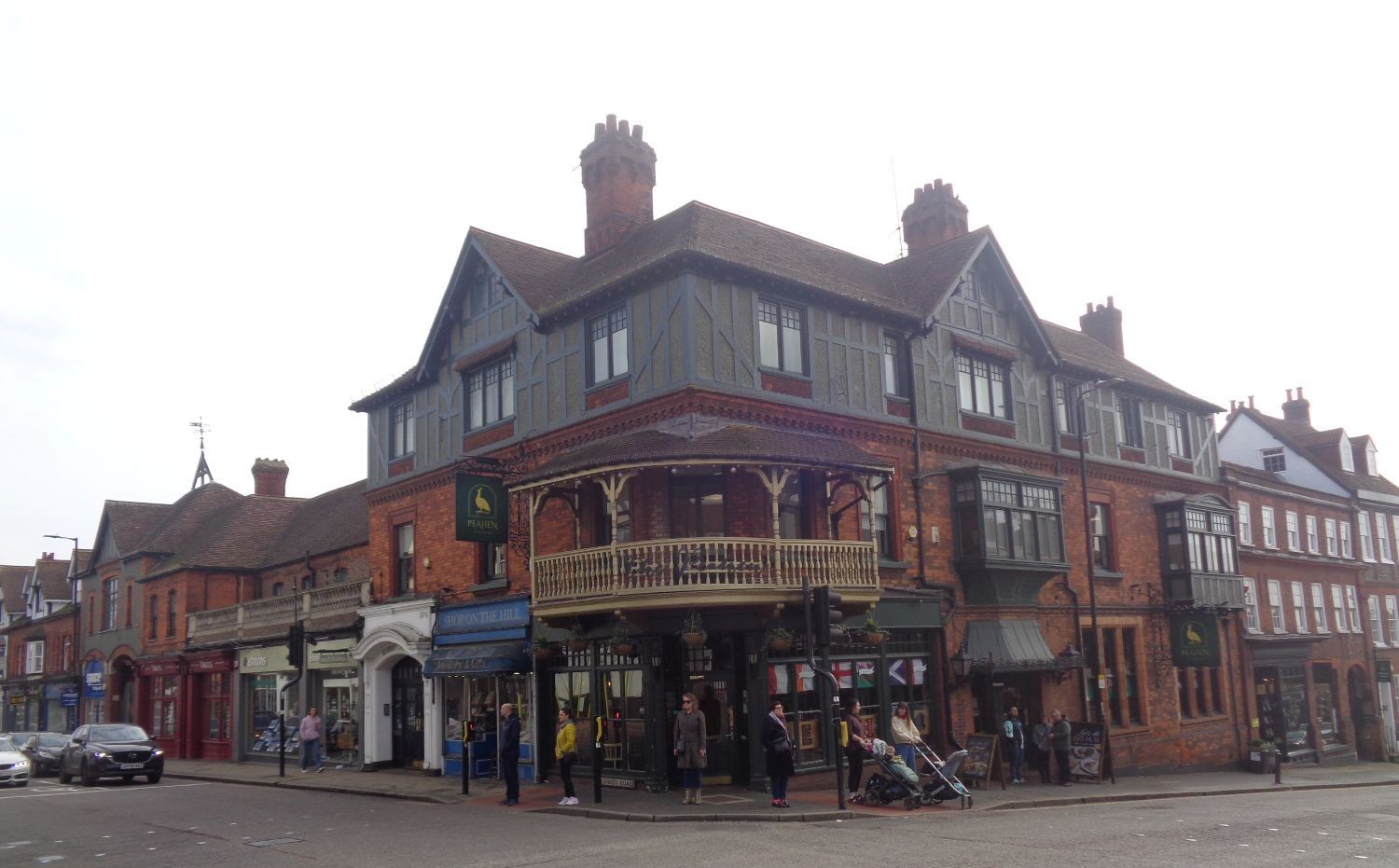
On Abbey Mill Lane, the road between the Abbey and the school, are the palaces of the Bishops of St Albans and Hertford and Ye Olde Fighting Cocks, claimed to be the oldest pub in England However, we rather took a pic of Peahen pub lovely A McMullen pub since 1936, the Peahen was reborn in 2005, with a further refresh in 2024. They have a 1am licence on Fridays & Saturdays, giving you and your friends the chance to enjoy the lively late evening atmosphere of a weekend night in St Albans city centre, without deafening music making conversation impossible! When the sun shines, dine alfresco in St Albans’ best courtyard
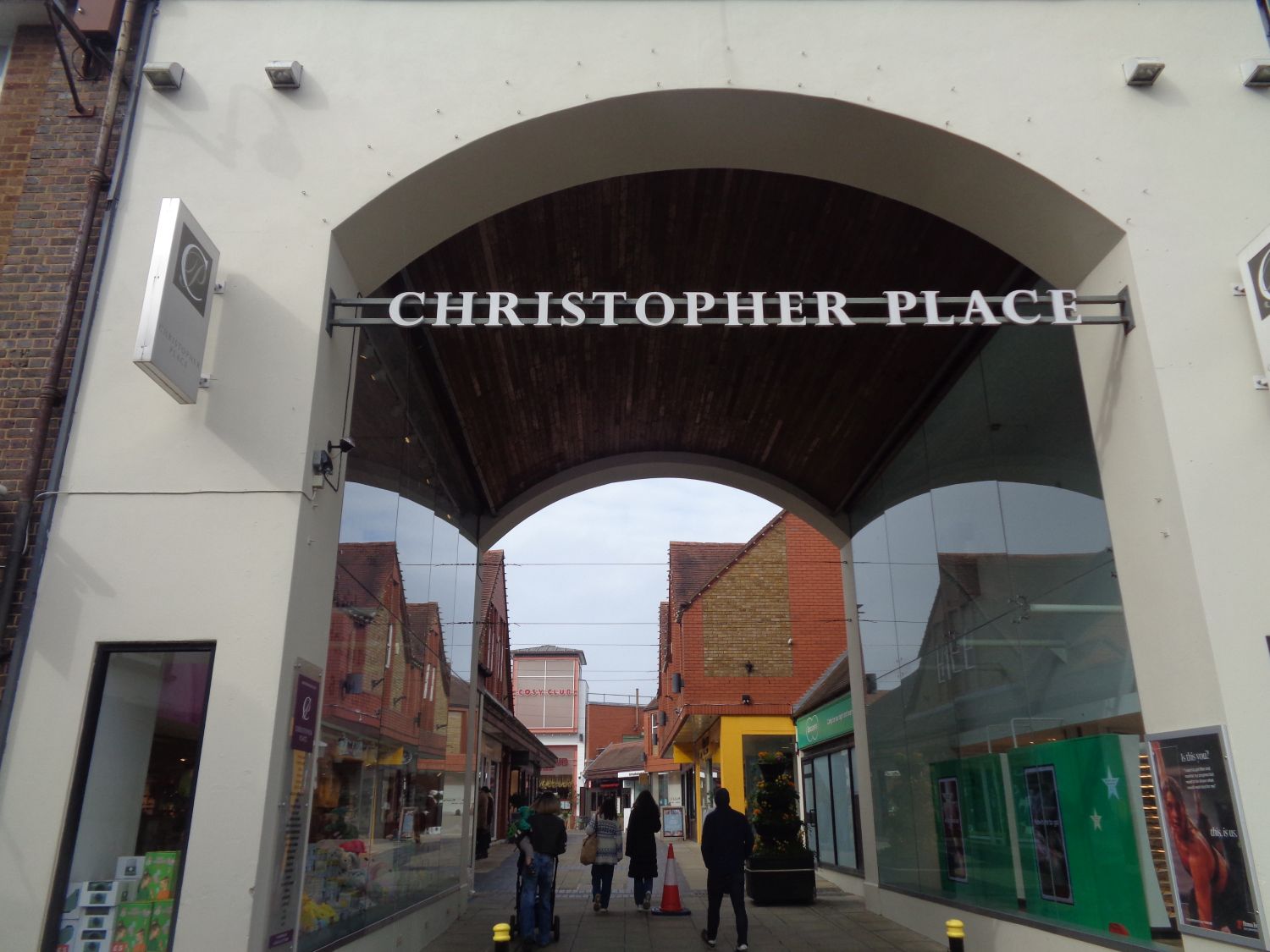
For an outdoor shopping and eating paradise head for Christopher Place, we took a peek and it is awesome worth to be back, eventually, We parked by the Cathedral and came walking along Market Pl and into Place Christopher ,by car come off Verulam Road (A5183) you have car park, located on Upper Dagnall street,
Other thing to see with more time is the St Albans Museum + Gallery, located in the old St Albans Town Hall, which focuses on the history of the town and of Saint Alban
The Parish of St Michael’s on the church : https://www.parishofstmichaels.org.uk/
The official Church of St Stephens in St Albans: https://www.ststephenandstjulian.org/
The St Albans tourist office on its heritage : https://www.enjoystalbans.com/things-to-do/
The Herfordshire area tourit office on St Albans : https://www.visitherts.co.uk/see-and-do/destinations/st-albans/
The official Christopher Place shopping and eating paradise in St Albans: https://www.christopher-place.co.uk/
The official Abbey Theatre of St Albans :https://www.abbeytheatre.org.uk/visit/
There you go folks , do dare drive in jolly England, it’s an adventure of a lifetime, and you will be back !!! as we have lol! Until another round chasing Sherlock we will be saying elementary my dear Watson to you all. Again, hope you enjoy this post on curiosities of St Albans !!! as I
And remember, happy travels, good health, and many cheers to all !!!

 Paris1972-Versailles2003