
This is something wonderful of another dear town of mine. I have been coming here for so many years lost count, this is Amboise, and Da Vinci was here ! There is a whole lot more to see here and even more than what I have written before, I was again last week and again wonderful road warrior trip with my boys and Rex, our dog ! For the memories of always with my dear late wife Martine, Therefore, let me tell you about the Château du Clos Lucé of Amboise,interiors !!! Hope you enjoy the post as I.
You come over the museum house of Leonardo da Vinci at Clos Lucé, its just a walk away about 500 meters away from the castle. The Chateau du Clos Lucé-Parc Leonardo da Vinci is where he lived his last 3 years of his life and worked on his passions furiously, you can see his bedroom, kitchen, work cabinet, and beautiful rooms in brick and stone as well as a chapel. You will discover in its park about 40 wonderful machine inventions that he created such as the first airplane, submarine, auto, helicopter, tank, parachutes, etc. All vividly display in the house and throughout the park.
The Château du Clos Lucé is located in the heart of a 7-hectare park crossed by the Amasse river, a small tributary of the Loire. The façade, made of pink brick and white stone, has remained virtually unchanged since the Renaissance. Some of the château’s rooms were decorated in the 20-21C to evoke 16C rooms as Leonardo’s might have appeared. Forty models created by IBM based on Leonardo da Vinci’s drawings are presented in four rooms in the basement. 3D animations are also presented in the model rooms. They allow visitors to understand how Leonardo’s inventions worked and to see them come to life.
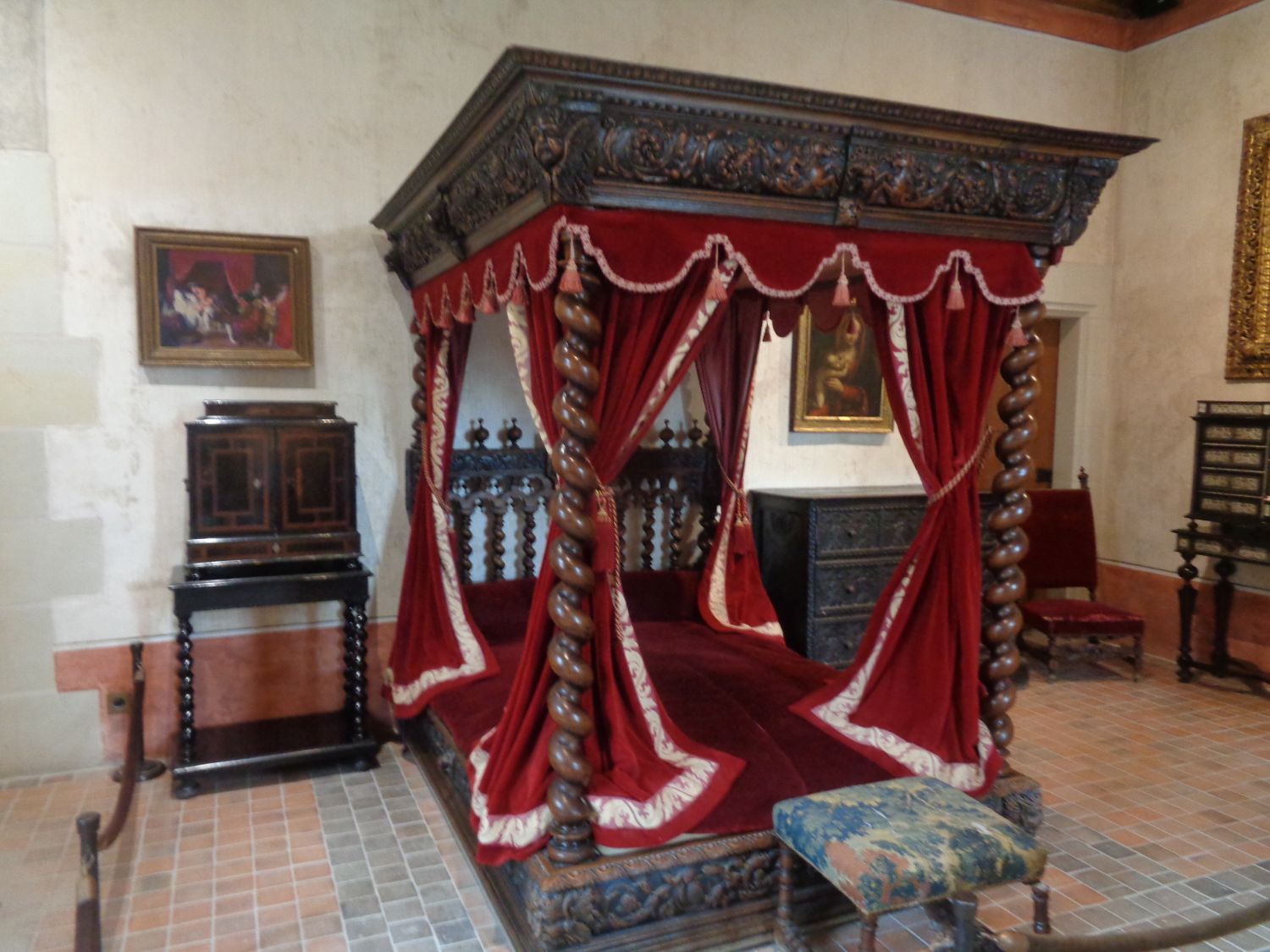
The room where Leonardo da Vinci died and the room of Margaret of Navarre, restored in 2011 and decorated with period furniture and objects of various origins, are located on the first floor. Leonardo’s bedroom overlooks the Royal Château of Amboise. It was within its walls that he wrote his will, bequeathing his manuscripts, sketchbooks, and sketches to his beloved disciple, Francesco Melzi. He died in his bedroom on May 2, 1519.
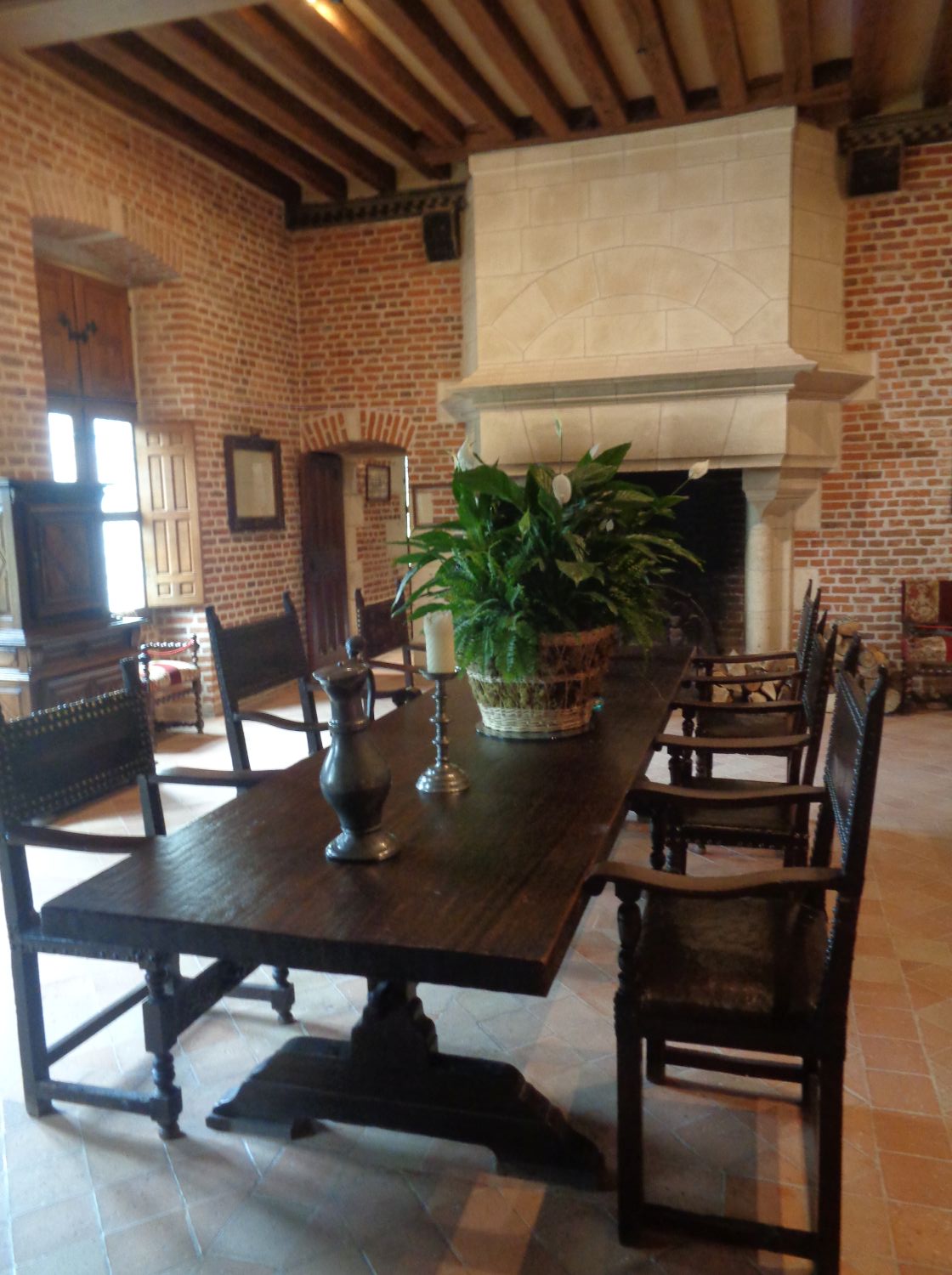
Entering the untouched kitchen, Léonard warms himself by the tall stone fireplace while Mathurine, his servant from Tours, prepares his vegetarian meal. On the ground floor, the medieval kitchen retains its imposing fireplaces where meals for distinguished guests simmered. Dominic of Cortona, known as the Boccador, the royal architect, rubbed shoulders with Margaret of Navarre there during diplomatic visits. A sumptuous setting that, five centuries later, continues to tell the story of this ancient medieval fortress transformed into a jewel of the Loire Valley.
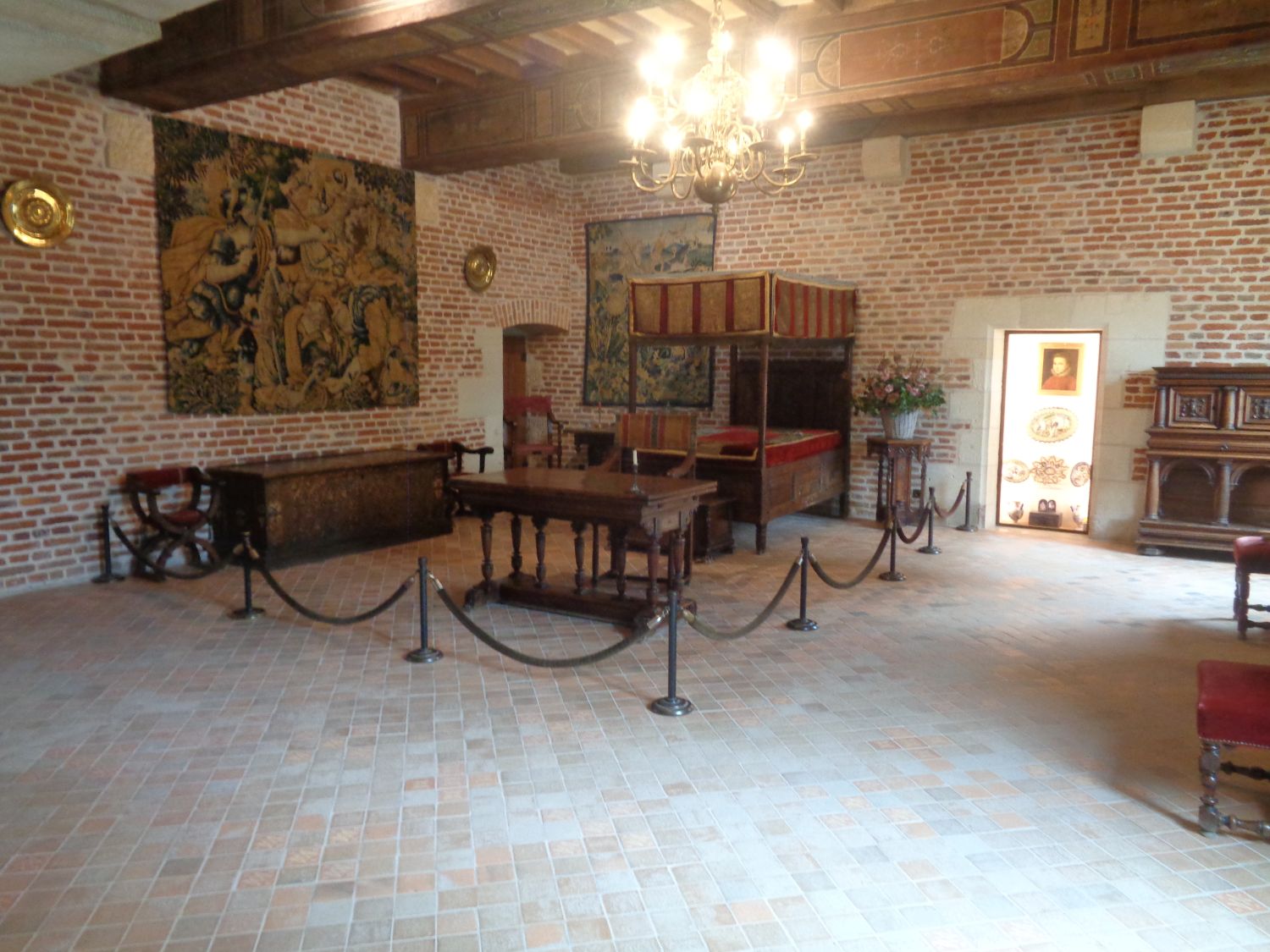
The bedroom of Marguerite de Navarre, Francis I’s elder sister, has been completely restored and furnished in the style of the 16th century. Her portrait, by François Clouet, the King’s official painter, is displayed in one of the display cases.
The painter’s studio, on the ground floor, has been recreated in the typical Renaissance Bottegas style. The library features facsimiles from the Institut de France and ancient works, alongside a stunning cabinet of curiosities. In the study, visitors experience an immersive and emotional encounter with Leonardo da Vinci through an audiovisual production using “ghost technology.” From his workshop, Leonardo da Vinci thinks, invents, designs and carries out royal commissions: The ideal city of Romorantin destined to become the capital of the kingdom, The double-spiral staircase of the Château de Chambord which he inspired, A network of canals and locks to connect the Loire Valley to Lyon in order to reach Italy more quickly, The draining of the marshes of Sologne, The staging of spectacular royal festivals for which he imagines automatons like the “Lion spitting fleur-de-lis”, Demountable houses for the Court which was still itinerant at the time.
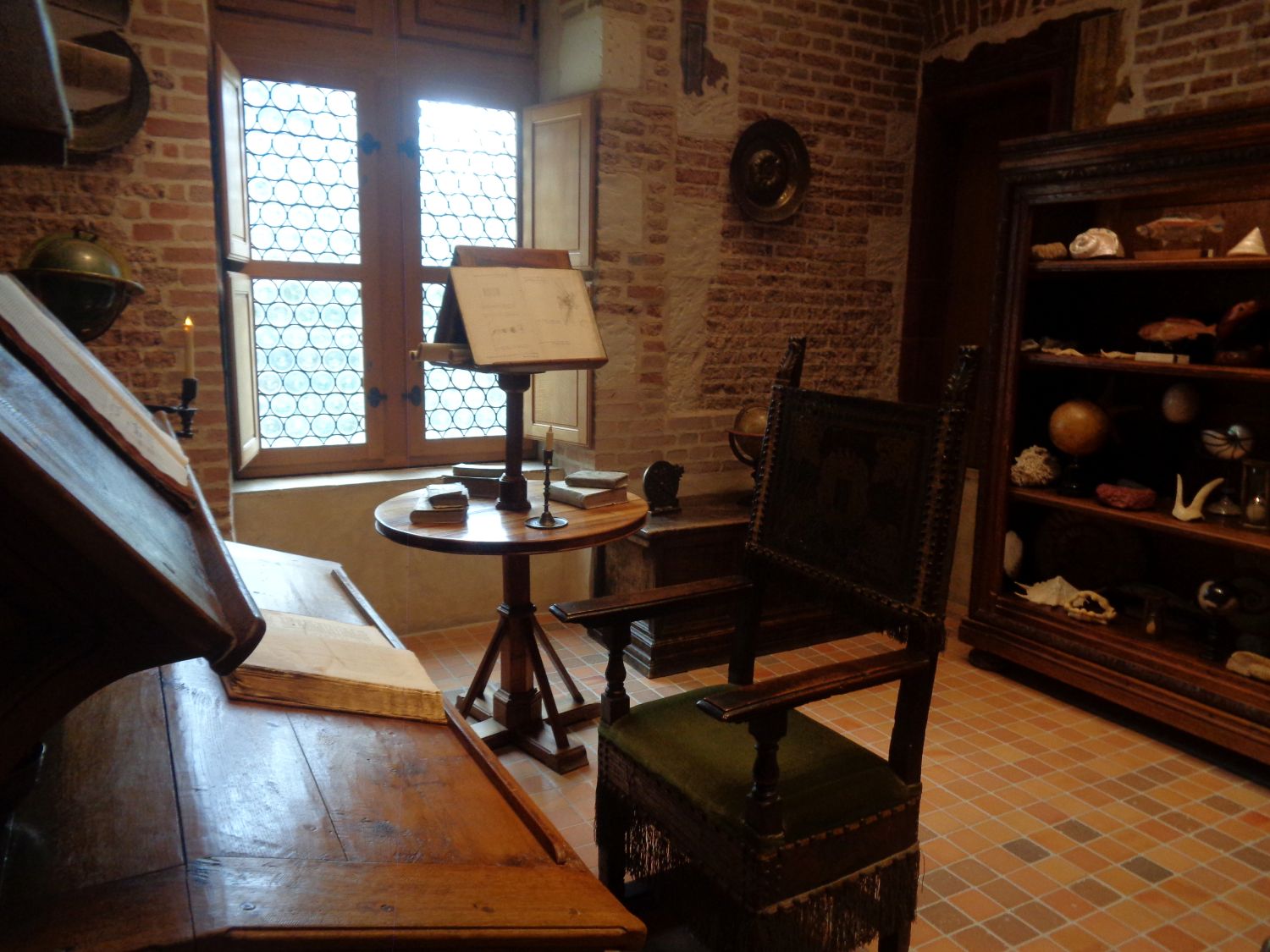
Leonardo da Vinci’s workshops are the final touch to the immense restoration project undertaken by the Saint Bris family. Located on the ground floor and spanning 100 square meters, these three rooms, previously closed to the public, have been restored with the aim of immersing visitors in the creative profusion and work atmosphere of the time. Light and shadow, a central theme dear to Leonardo da Vinci , guide visitors through a day in the life of the master, from morning to evening. In each room, the decor has been reconstructed with incredible meticulousness. Original wall frescoes repainted with pigments used during the Renaissance, furniture made according to period plans, and stained-glass windows bathed in a captivating atmosphere of light and shadow so beloved by the master.

The oratory of Anne of Brittany, wife of Charles VIII, is adorned with four frescoes, including an Annunciation, painted by Leonardo da Vinci’s disciples. Above the door, the Virgin of Light, “Virgo Lucis,” is said to have given the château its name: Clos Lucé.
The official Château du Clos Luce : https://www.vinci-closluce.com/en
The City of Amboise on its heritage : https://www.ville-amboise.fr/88/monuments-a-visiter.htm
The Amboise tourist office on the Château du Clos Luce: https://amboise-valdeloire.com/en/leonardo-da-vinci-at-the-chateau-du-clos-luce/
The localTouraine Val de Loire tourist office on the Château du Clos Luce :https://www.tourainevaldeloire.com/en/offers/chateau-du-clos-luce-parc-leonardo-da-vinci-amboise-en-5153575/
The Centre Val de Loire region tourist office on the Château du Clos Luce : https://www.loirevalley-france.co.uk/discover/loire-chateaux/chateau-clos-luce-parc-leonardo-vinci/
There you go folks, a masterwork place to make it a must to visit in Amboise, the Château du Clos Lucé is wonderful, and the park displays are as unique as what is inside. Again,hope you enjoy this post on the Château du Clos Luce of Amboise,interiors !!! as I,
And remember, happy travel, good health, and many cheers to all !!!


