
Let me tell you about a dandy in my road warrior rounds in the wonderful sublime Loire Valley. This is a spot have come several times to the gorgeous castle, I came by again this week and took nice pictures for you and me. It was a great experience, and always looking forward to be back,eventually, Do read my several posts on the castle and City in my blog, This time let me tell you again on the Château d’Amboise, part V !!! Hope you enjoy the post as I.
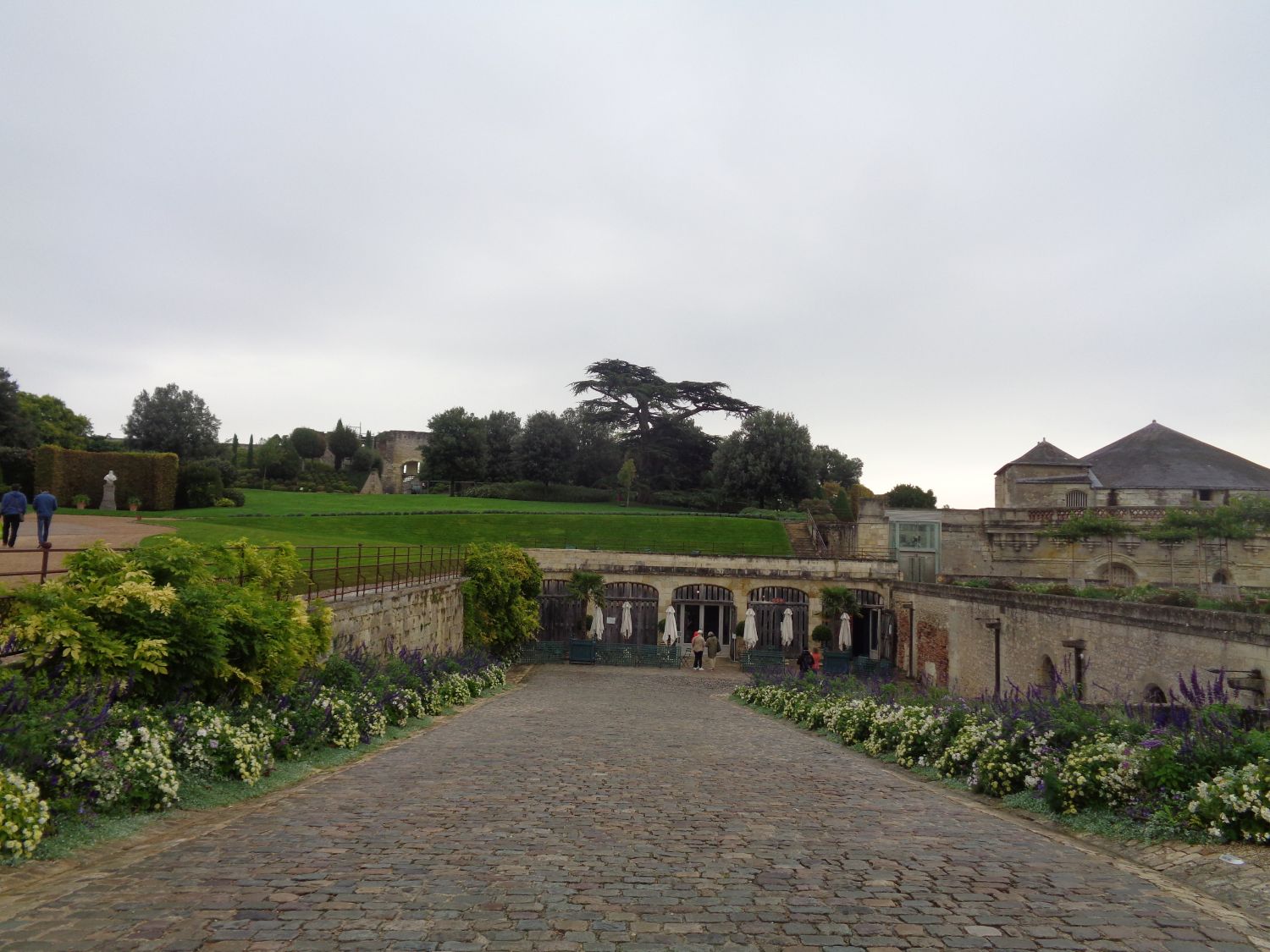
The Royal Château of Amboise, you first arrive at the Terrases from the 15-16C as it was the first castle to introduce the Italian renaissance style in France. From the outside the castle is a prime example of the Renaissance of which king François I was the initiator. The castle, of course, is in Amboise, in Indre-et-Loire dept no, 37, in the Centre Val de Loire region of my belle France, It is located 23 km from Tours, 94 km from Orléans, 222 km from Nantes, 219 km from Versailles, and 380 km from my current home. I have come here from Versailles and from my current home this week,
The Aile Louis or Louis XII Wing you have amongst other things the Henry II’s bedroom featuring a large, ornate Henry II-style bed. Also notable is a jewel chest with a false bottom, as well as portières and tapestries from Brussels and Tournai from the late 16C to early 17C.
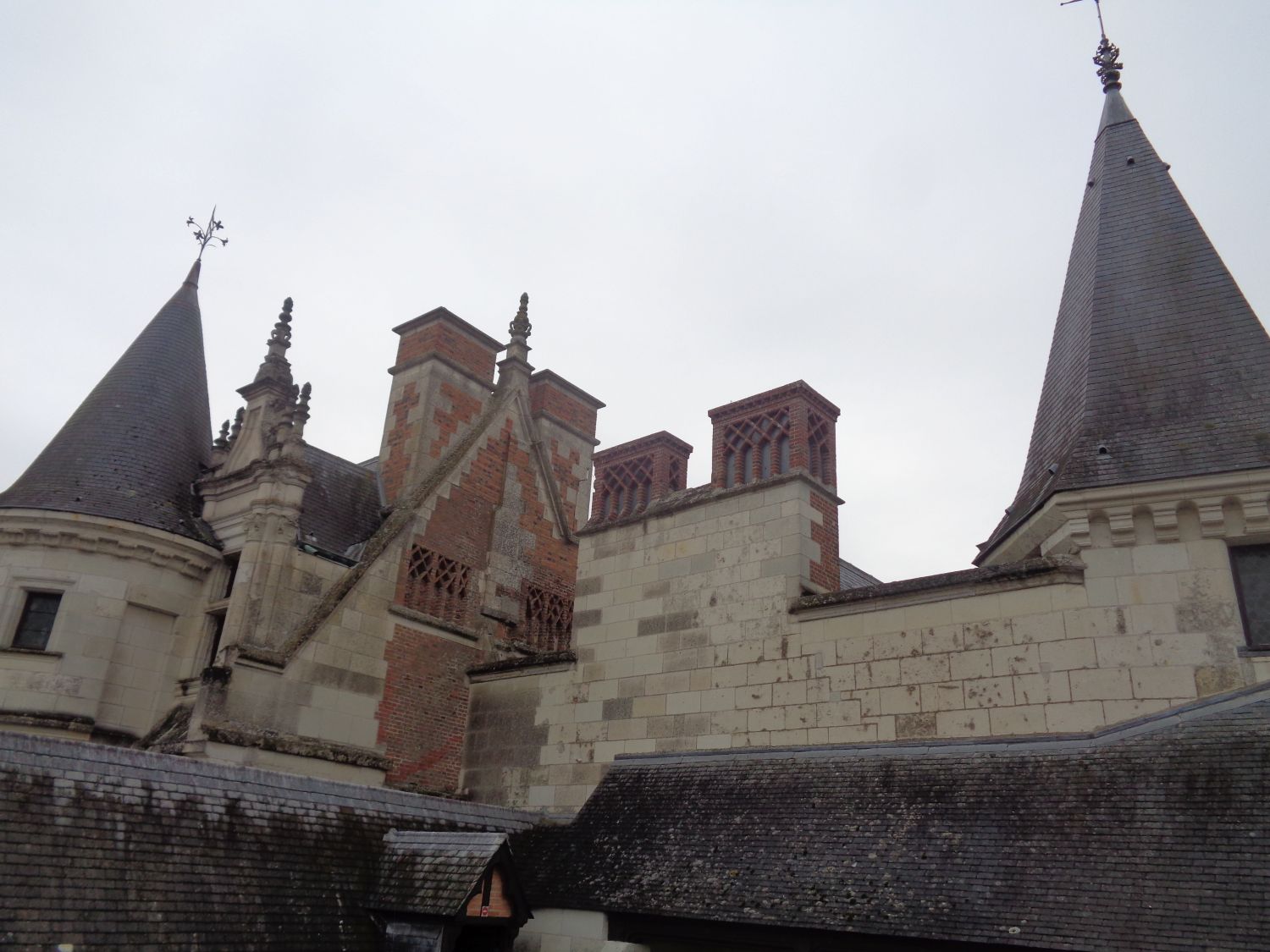
In 1763, the Duke of Choiseul obtained Amboise from King Louis XV, which he elevated to a duchy-peerage. However, he abandoned the château in favor of the nearby Château de Chanteloup (now disappeared). Upon his death, the château was purchased in 1786 by the Duke of Penthièvre, cousin of King Louis XVI and legitimate grandson of King Louis XIV. In 1789, he had the royal residence and new English-style gardens laid out, the winding paths of which have been preserved. On the western tower known as “Garçonnet” was built an octagonal pagoda in the Chinese style, very fashionable in the 18C. During the French revolution, the château suffered a fire and then several phases of demolition organized by Pierre-Roger Ducos, consul of the Empire. At the Restoration in 1815, the château returned to the sole heiress of the Duke of Penthièvre, Louise-Marie Adélaïde de Bourbon, Duchess of Orléans, widow of Louis-Philippe,
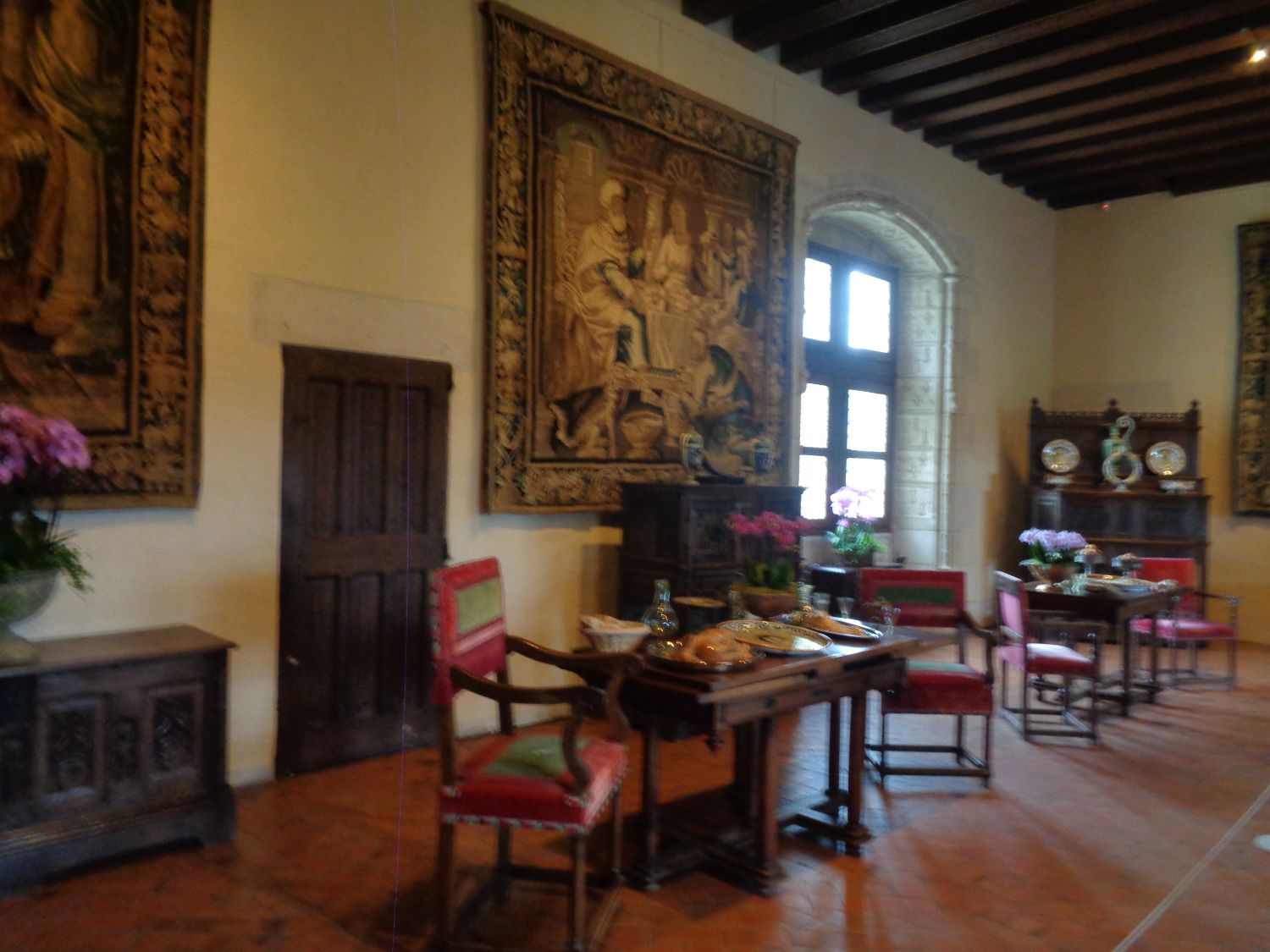
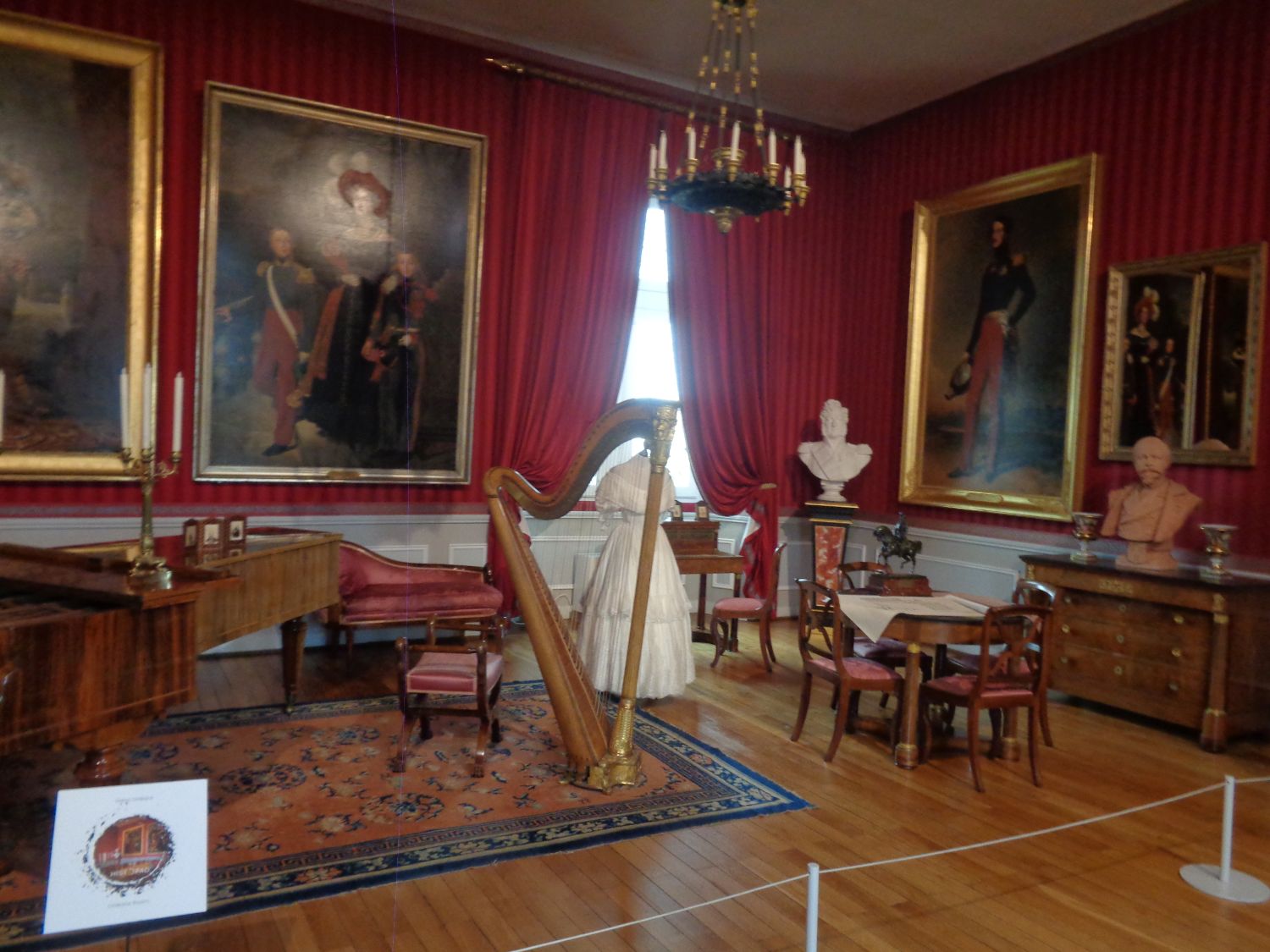
The Grande Chambre or Great bedroom of the Orléans apartments: the Orléans-Penthièvre Cabinet which presents a succession of portraits from the end of the 18c; the Chambre Orléans or Orléans beroom, in which the dress of the Duchess of Orléans is kept, then the Salon de musique or Music Room, in which the memorabilia of the Orléans family are kept. This room was originally a state room where the king received his entourage. Today it presents a collection of furniture and objects related to the customs at the king’s table. The medieval trestles give way to the Italian table. It is richly decorated and has extensions. The art of the table evolves slowly with the still timid use of the two-pronged fork as the knife and spoon were more easily used until Henri III.
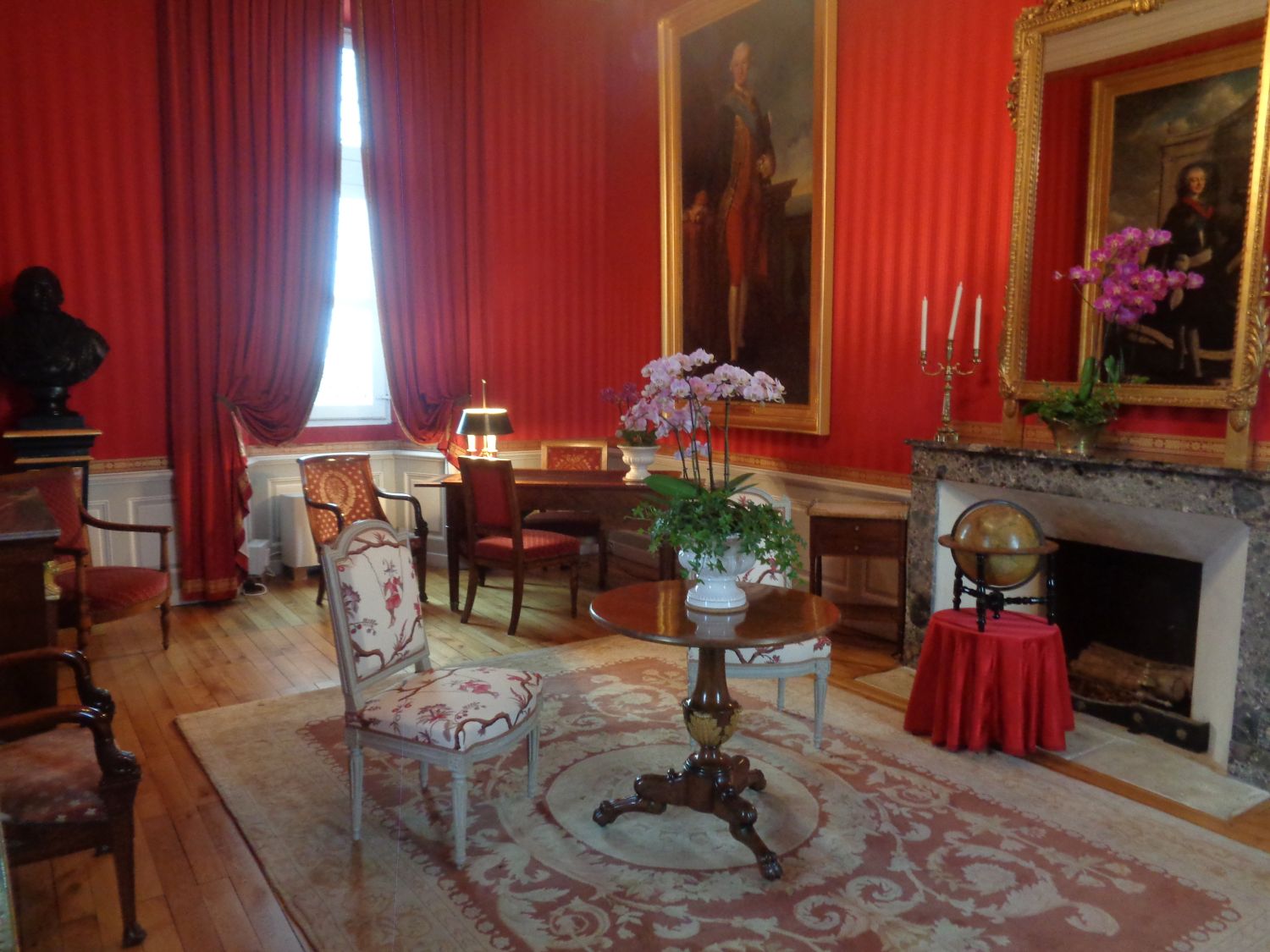
The Cabinet Louis-Philippe is a reconstructed study under Louis-Philippe. There you can admire a portrait of the Duchess of Orléans, mother of Louis-Philippe, as well as, on a chest of drawers, the model of the Belle Poule, a ship commanded by the Prince of Joinville, son of Louis-Philippe, during the return to France of the ashes of Napoleon I. The cabinet de travail or work study room presents a succession of portraits from the end of the 18C representing the maternal grandfather and the parents of the future King of the French Louis-Philippe I. See portrait of the Grand Admiral of the Kingdom of Louis Jean Marie de Bourbon, Duke of Penthièvre, son of the Count of Toulouse and grandson of King Louis XIV.Portrait of Louis-Philippe Joseph d’Orléans known as “Philippe-Egalité”, father of Louis-Philippe I. More frequently Louis XIII and Louis XIV in 1650 and 1660. To continue the visit of the 2nd floor (ask the room supervisors if necessary) in the Grande Salle or Great Hall. The room attendants will then provide access to the ramp leading to the Galerie d’Aumale gallery See the bust of Louis Jean Marie de Bourbon, Duke of Penthièvre . Portrait (to the right of the fireplace) of Adélaïde de Bourbon-Penthièvre , Duchess of Orléans, widow of Louis Philippe Joseph d’Orléans, heiress of the Château d’Amboise in 1793. Portrait after Louise Vigée Lebrun , Empire armchairs chairs with 18C chinoiserie decoration signed Boulard, on either side of the fireplace. Furniture from the Château d’Amboise made from around 1787-89 on the orders of the Duke of Penthièvre. • Engravings by Rigaud representing the Château d’Amboise around 1740.
The Chambre Louis-Philippe or Louis-Philippe bedroom , Louis-Philippe, Duke of Orléans, received the castle from his mother Louise-Marie Adelaïde de Bourbon-Penthièvre in 1821. The future King of the French acquired 46 houses surrounding the Castle to have them demolished and thus cleared the ramparts. The King’s residence was decorated in the taste of the time , see the official portrait of Louis-Philippe 1st It has mahogany chest of drawers, chairs with openwork crosspieces in the “Louis-Philippe” style “First Empire” style furniture: boat bed or “Récamier”; writing desk; pedestal table with four-column base; mahogany-veneered chest of drawers; bonheur du jour. Cradle ,Bust of King Louis-Philippe I , Portraits of Ferdinand-Philippe of Orléans, Duke of Orléans (eldest son of Louis-Philippe I and Marie-Amélie of Bourbon-Sicily) and Hélène of Mecklenburg-Schwerin, Duchess of Orléans, after Franz-Xaver Winterhalter. Painting “Louis-Philippe accompanied by his sons” leaving Versailles on June 10, 1837, after Horace Vernet (1846).
The Salon de musique or Music Room has furniture in this vast music room includes a 19C Érard grand piano in Rio rosewood veneer, a Restoration-style writing desk and console table, and a mahogany barrette-backed chair stamped Jacob. Displayed on the walls are a Portrait of Louis-Philippe I, depicted with the insignia of the monarchy and the Constitutional Charter of 1830, a Portrait of Queen Marie-Amélie with two of her sons, the Duke of Aumale and the Duke of Montpensier, and a Portrait of Louis-Philippe-Joseph, known as “Philippe-Égalité.” There is also a Portrait of Abd El Kader, on an easel.
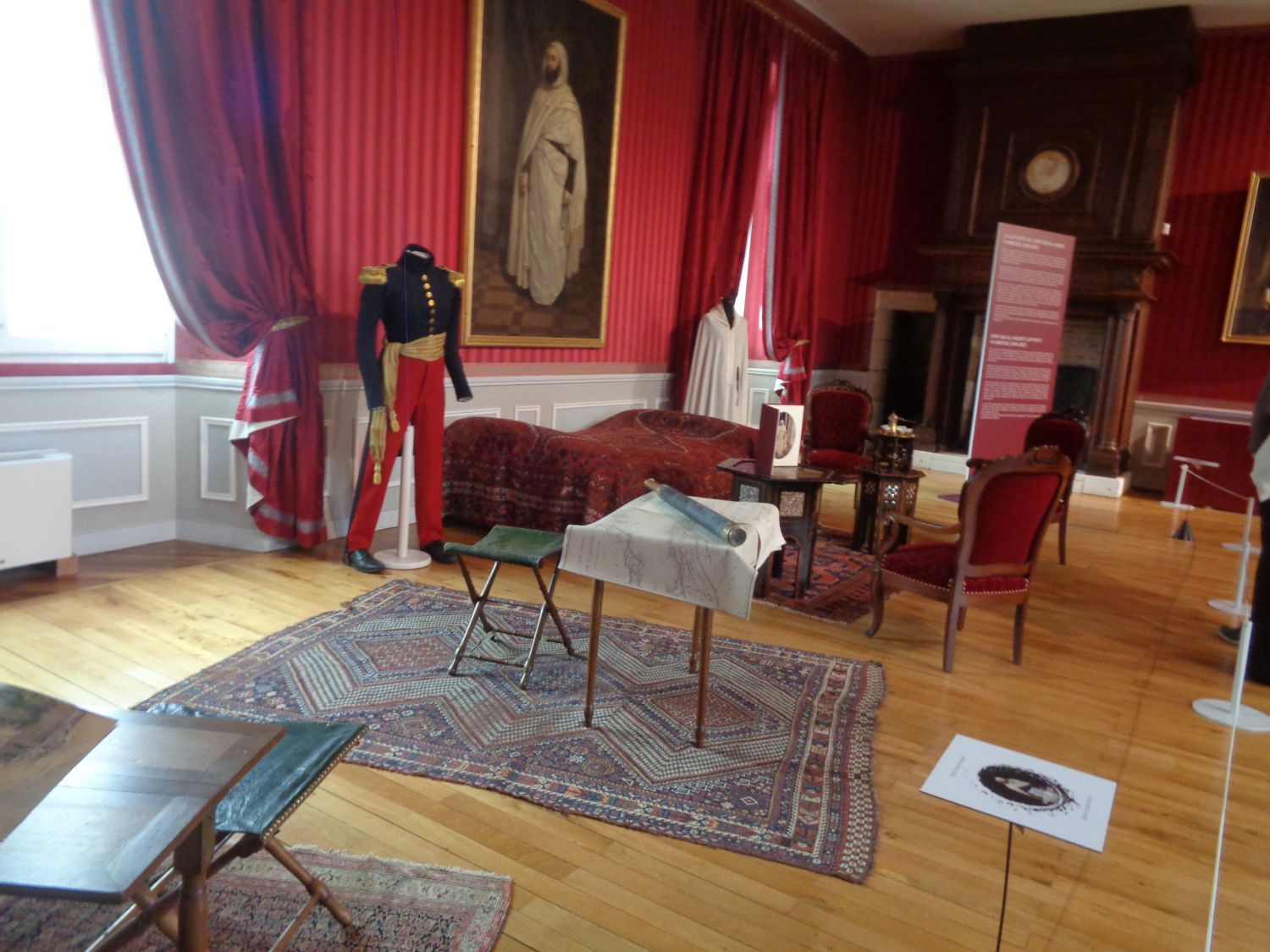
As soon as Louis-Philippe I went into exile, the private property of the Orléans family was sequestered by the provisional government of the French Republic (France). The château was conveniently made available to the Ministry of War, which was looking for a residence capable of accommodating a state prisoner, Emir Abd-el-Kader, who stayed there with his entourage from November 1848 to October 1852. Portrait of Emir Abd-el-Kader in charcoal, after Ange Tissier. Photograph of Emir Abd-el-Kader on a doorstep of the château, by Gustave Le Gray, on an easel. Portrait of General Henri d’Orléans , Duke of Aumale, after Léon Bonnat.
The official Château d’Amboise : https://www.chateau-amboise.com/en/
The city of Amboise on its heritage: https://www.ville-amboise.fr/88/monuments-a-visiter.htm
The local Val de Loire tourist office on the château d’Amboise : https://www.tourainevaldeloire.com/en/offers/chateau-royal-damboise-amboise-en-5153576/
The Centre Val de Loire region tourist office on the Château d’Amboise : https://www.loirevalley-france.co.uk/discover/loire-chateaux/royal-chateau-amboise/
There you go folks, another dandy town and beautiful castle, always great memories of always ! . It was a great experience to know it, always wonderful uplifting and with great history and architecture I like. Again, hope you have enjoy the post on the Château d’Amboise, part V !!! as I.
And remember, happy travels, good health, and many cheers to all !!!

 Paris1972-Versailles2003