
Let me tell you about a dandy in my road warrior rounds in the wonderful sublime Loire Valley. This is a spot have come several times to the gorgeous castle, I came by again this week and took nice pictures for you and me. It was a great experience, and always looking forward to be back, eventually, Do read my several posts on the castle and City in my blog, This time let me tell you again on the Château d’Amboise, part II !!! Hope you enjoy the post as I.
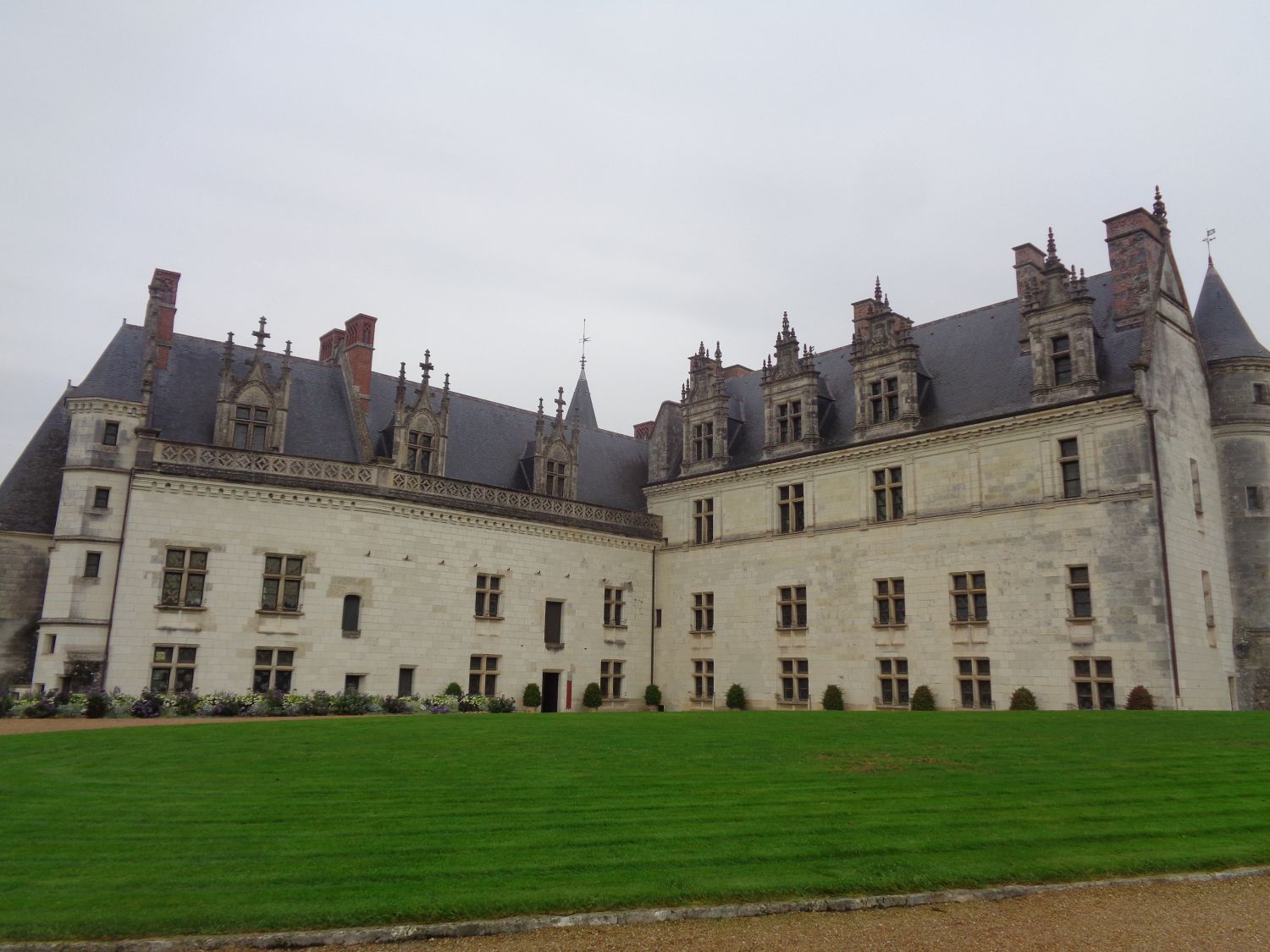
The Royal Château of Amboise, you first arrive at the Terrases from the 15-16C as it was the first castle to introduce the Italian renaissance style in France. From the outside the castle is a prime example of the Renaissance of which king François I was the initiator. The castle, of course, is in Amboise, in Indre-et-Loire dept no, 37, in the Centre Val de Loire region of my belle France, It is located 23 km from Tours, 94 km from Orléans, 222 km from Nantes, 219 km from Versailles, and 380 km from my current home. I have come here from Versailles and from my current home this week, by N165 A85, D751 roads,
Now you are going inside the castle, you see the salle des gardes, where the kings guards were kept to control access to his bedroom. You go up unto the promenoir des gardes or the walkway of the guards where they can surveyed the Loire, passing into the salle des gardes nobles, where the nobles kept guard of the king and control the stairs leading to his rooms. Continue on to the salle des tambourineurs where the feast ,parties were held as to the wishes of the king. You reach the salle du conseil, the most important room of the castle where the king give his orders and received advised from his counselors, a notion of modern government.
You go now into the salle de l’échanson, where you drank with the king, and eat; then la chambre Henri II, or bedroom; passing into the antichambre de la cordeliére where the entrance today has disappeared. Then you transposed into the appartements of Louis-Philippe of which he made several changes to the castle, king of the French from 1830. You see the cabinet Louis-Philippe where he did his studies and pass laws, to his bedroom or chambre style premier empire, and continue to the Salon de musique, with piano . You come back to the parks with the tour des Minimes with a great view of the river Loire ,and you exit the castle. Wonderful castle indeed !!!
The royal castle of Amboise has an exceptional collection of furniture, testifying to the artistic refinement of the first French Renaissance. From room to room, precious pieces of French history are discussed during the visit of the house. We also discover an astonishing architecture. The castle of Amboise belongs to the Saint-Louis foundation.
The Royal Logis faces the Loire at the end of the Châteliers spur. Its architectonics is international Gothic. From the outside the castle is a prime example of the Renaissance of which king François I was the initiator.
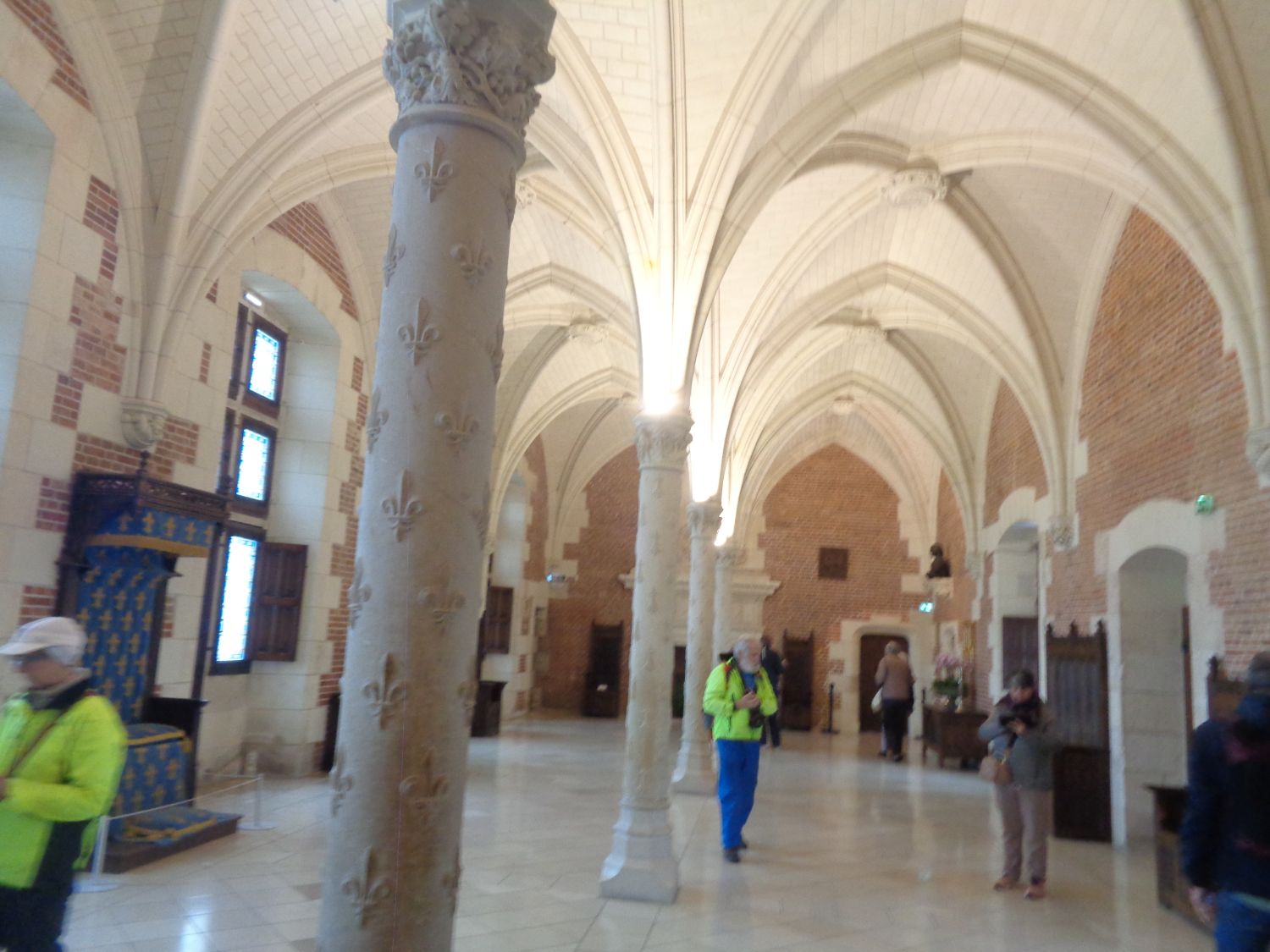
The Salle des gardes nobles or Noble Guard Room as the sovereign’s close guard was composed mainly of nobles. The Noble Guard Room controlled access to the staircase leading to the upper floor. The room is structured around a central pillar or Gothic palm tree supporting the whole. There are copies made in the 19C of 16C armor. A battle armor called “à côté” and a lighter parade armor. There is also a 17C naval chest. This room, housed the king’s or queen’s outfits in the immediate vicinity of their bedroom.
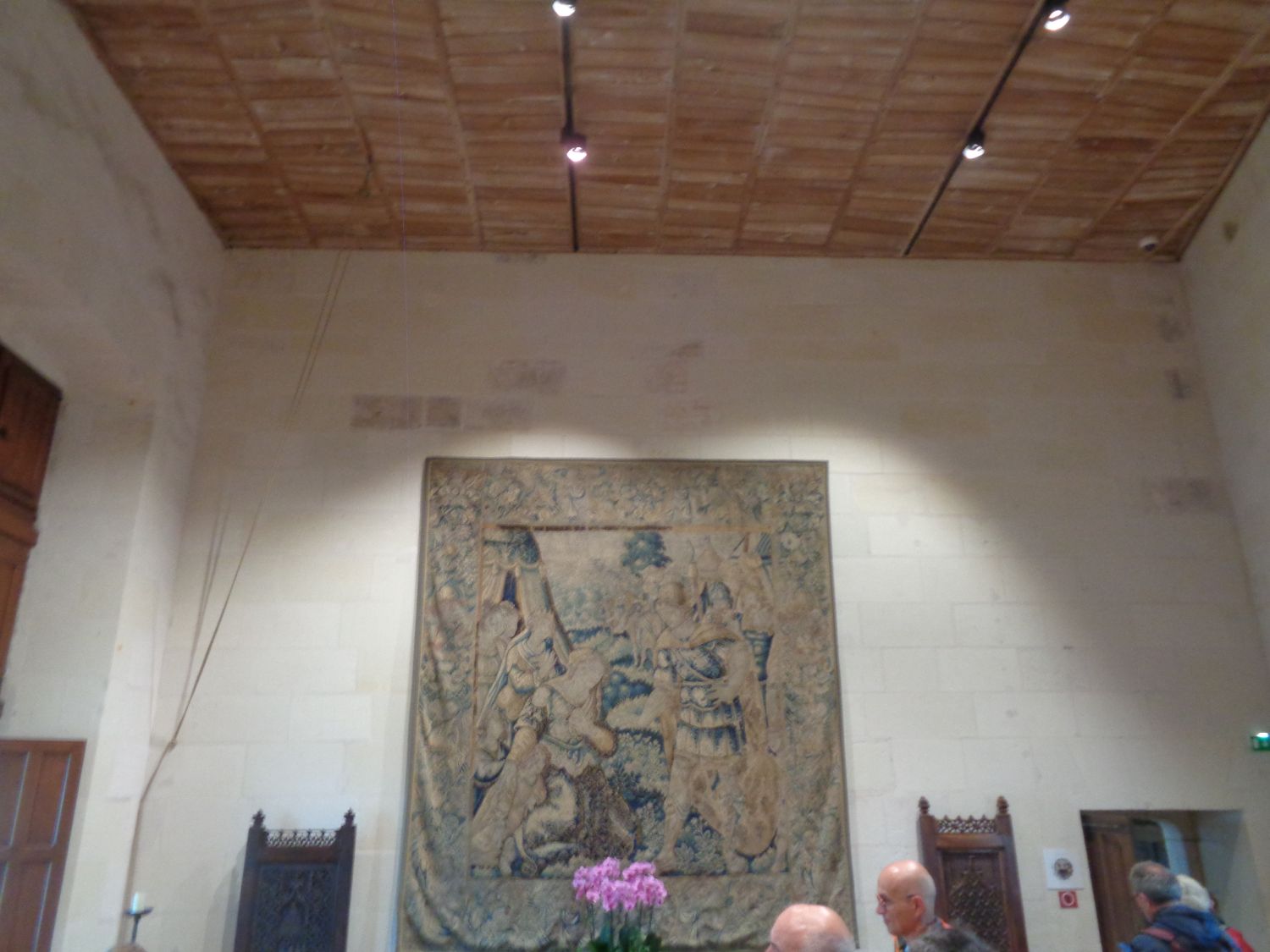
The Salle des tambourineurs or Drummers’ Room corresponds to the location of a “dressing room” of the king. Its name refers to the many parties and balls given at the castle during the reign of the Valois. The floor is made of fleur-de-lis terracotta tiles inspired by the 15C. The furniture consists of a Renaissance table, a pulpit, or Gothic cathedra decorated with the arms of Cardinal Georges d’Amboise,who negotiated the marriage of Charles VIII and Anne of Brittany in 1491 and was appointed prime minister under his successor in 1498, and a chest dating from the reign of Charles VIII. Corbelled statue of Saint Louis (Louis IX) from the early 14C, On the walls, a 16C Flemish tapestry representing the Homage of the family of Darius to Alexander the Great as well as unsigned portraits of Charles VIII and Anne of Brittany. Book of Hours (collection of prayers and religious festivals) of Charles VIII based on the original from 1484 kept at the National Library of Madrid, Wooden door, courtyard side, opening onto the suspended exterior gallery (no longer there) which served the adjacent rooms and the exterior spiral staircase.Gothic dresser • Portrait of Maximilian of Austria,
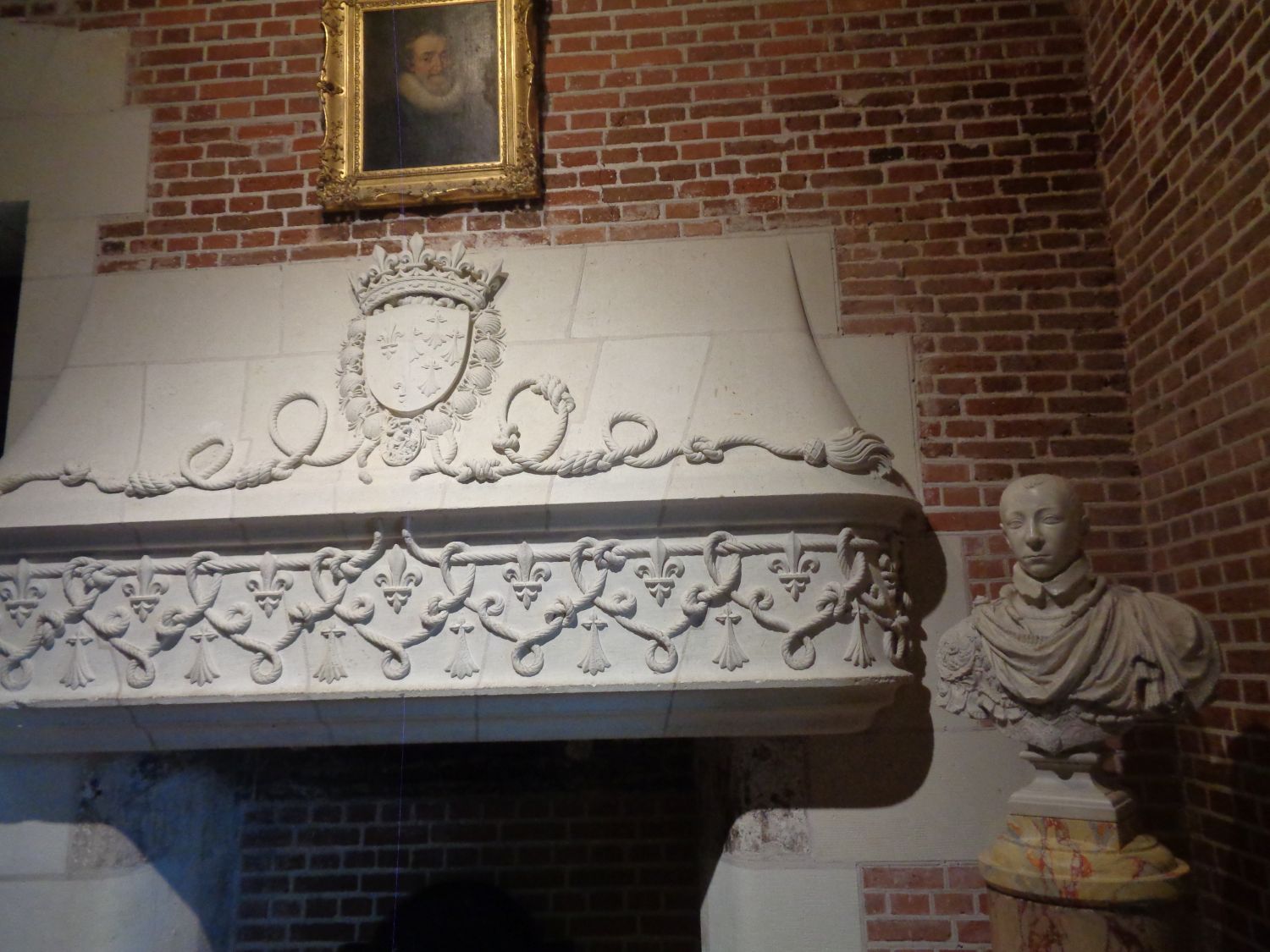
The Salle des États (dite du Conseil) or the Hall of Estates (aka the Council Hall) , This vast room ,the largest in the castle is where the king convened his council, a true center of royal power. The room has two fireplaces: the first, with a trapezoidal hood, is still marked by the Gothic tradition, while the second illustrates the Renaissance style. The coat of arms of Anne of Brittany (fleurs-de-lis and ermine flecks) decorates many elements of the room: the hood of the first fireplace, central pillars, and stained-glass windows overlooking the Loire. The emblem of Charles VIII (flaming or palmate sword) also adorns the hood of the first fireplace. The ceiling bears the monograms of Charles VIII (interlacing Cs) and Anne of Brittany (letter A). On the sides, against the walls, are large chayères, benches with backs adorned with Gothic-style napkin folds. On the walls are displayed portraits of Bourbon kings: Henry IV, and Louis XIII.
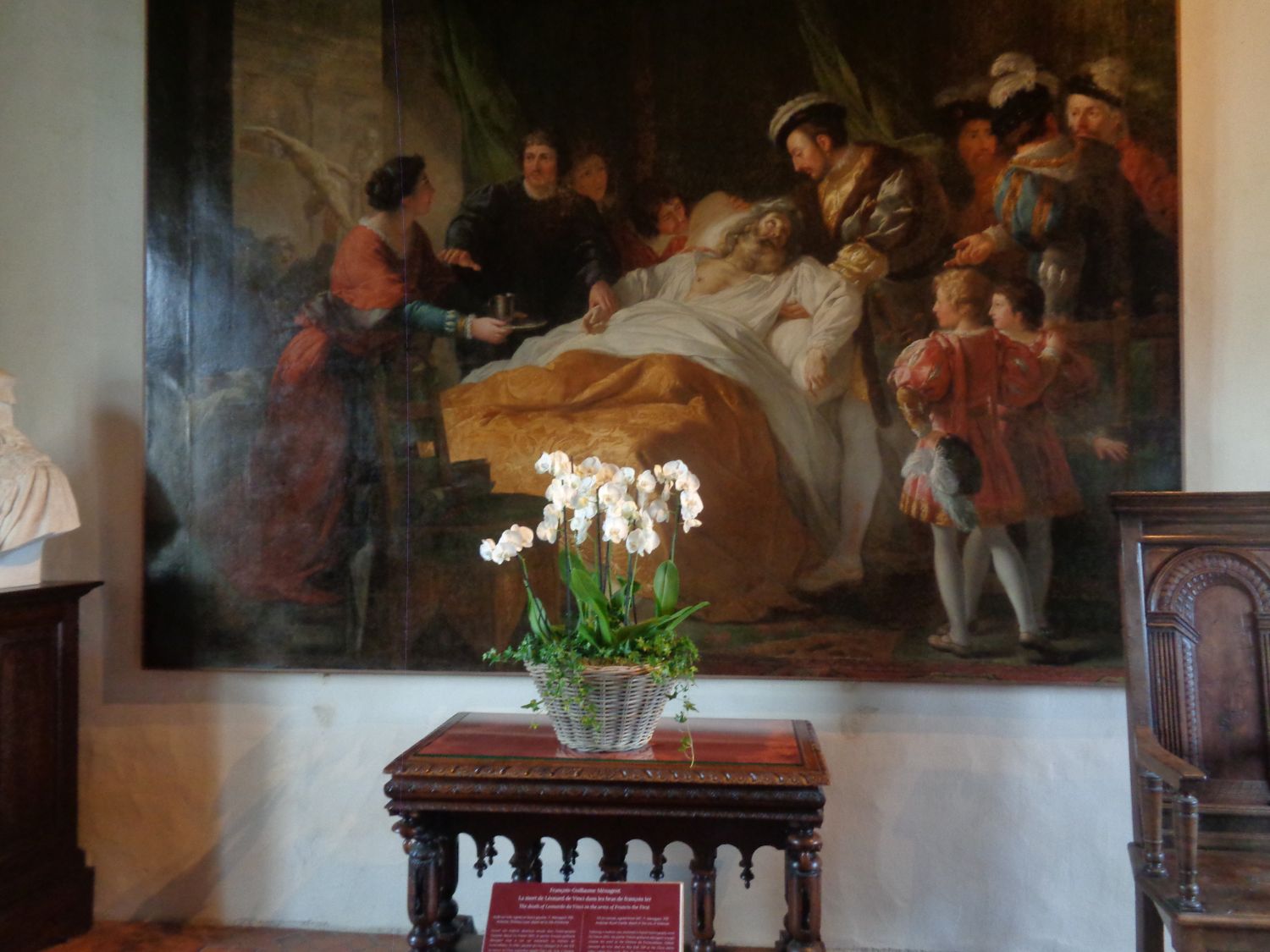
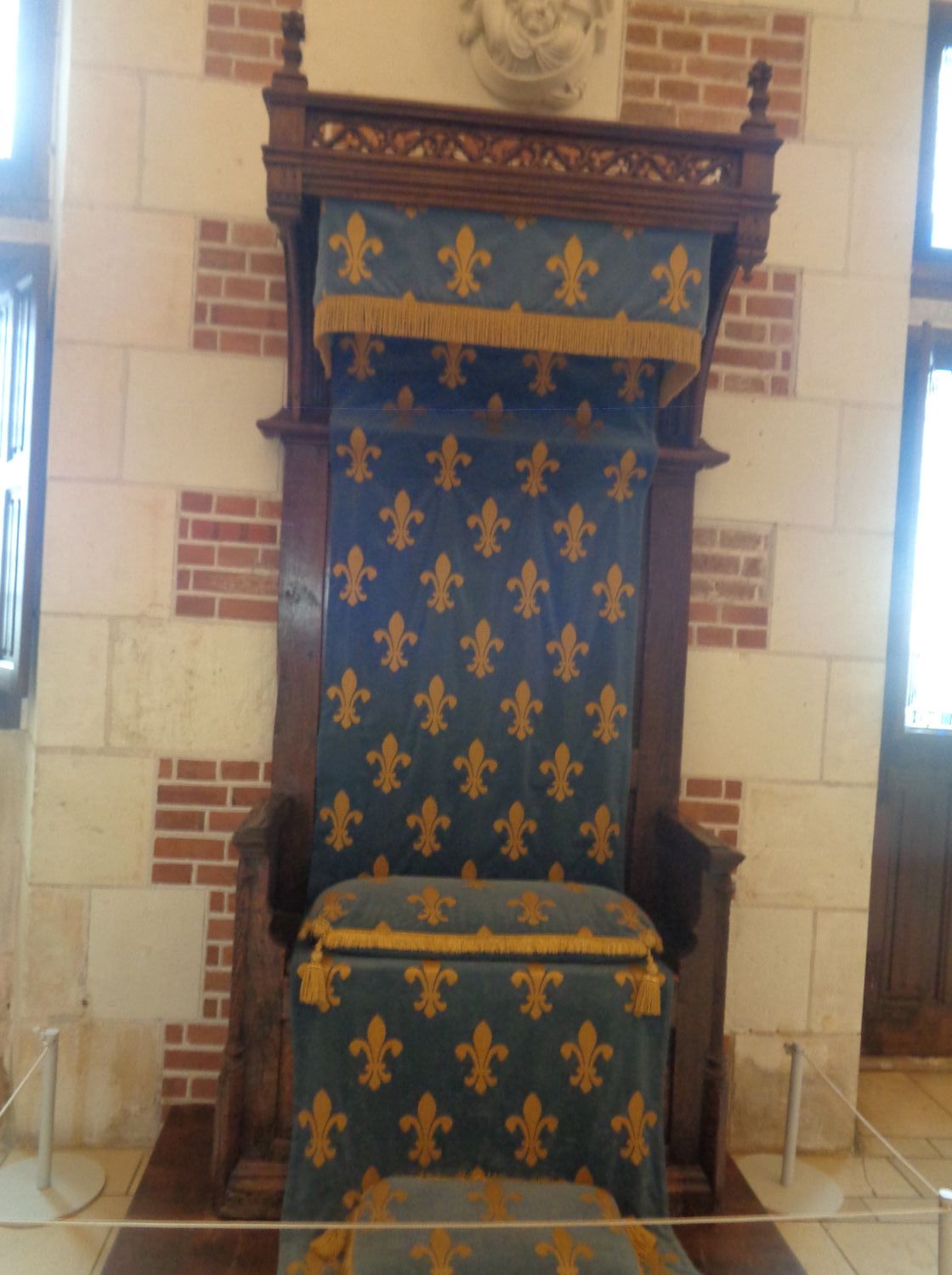
During the Renaissance, the King of France gradually extended his power over the kingdom, notably by ensuring the loyalty of governors, officers, and clergy dignitaries. He also required that the great lords remain at his side for several months, accompanied by their wives. Women thus made their entrance into the Royal Court. Solemn audiences and festivals were henceforth part of the essential pleasure of court life. The Grande Salle or Great Hall was one of the first of these dimensions to serve as a setting for these festivities. It adjoins the courtyard where the royal festivities were organized in 1518 for the baptism of the Dauphin and the marriage of Pope Lorenzo II de’ Medici’s nephew to Madeleine de la Tour d’Auvergne. This alliance contributed to the rapprochement of Francis I, crowned with his victory at Marignano, with the Holy See and the principal European courts, particularly the Italian ones.
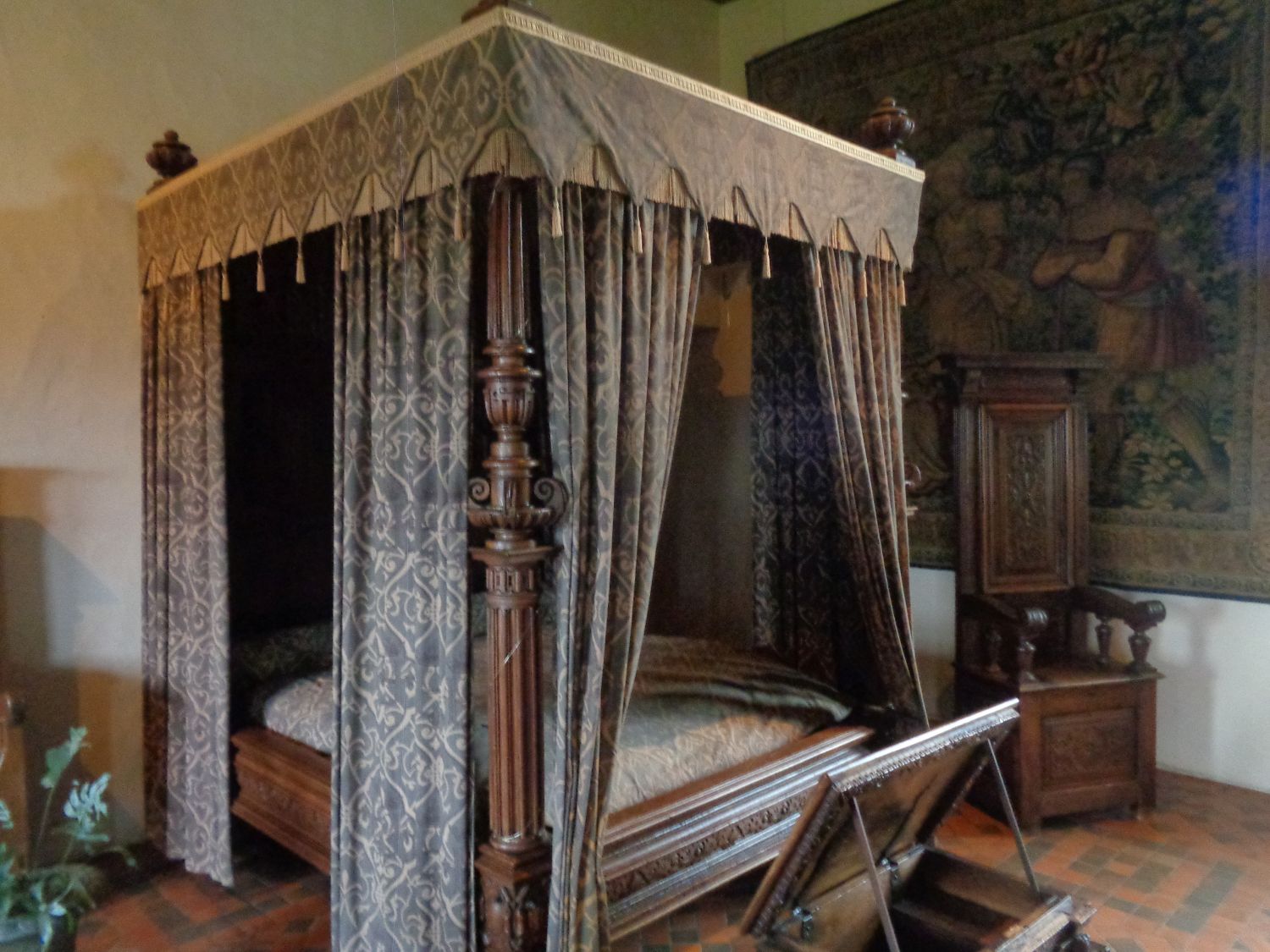
This room was the Chambre du roi or bedroom of King Francis I and his son Henry II . It was occupied by his wife Catherine de Medici , who, after her tragic death, played an active role in the affairs of the kingdom under the successive reigns of her sons. The room’s decor perfectly illustrates the introduction of perspective into the decorative arts of the 16C. At the age of 40 Henri I was participating in a jousting tournament on what is now rue St Antoine, near Place des Vosges in Paris. As usual, he was wearing his mistress Diane’s colors ; black and white. He was accidentally injured and died ten days later on July 10 1559.
The official Château d’Amboise : https://www.chateau-amboise.com/en/
The city of Amboise on its heritage: https://www.ville-amboise.fr/88/monuments-a-visiter.htm
The local Val de Loire tourist office on the château d’Amboise : https://www.tourainevaldeloire.com/en/offers/chateau-royal-damboise-amboise-en-5153576/
The Centre Val de Loire region tourist office on the Château d’Amboise : https://www.loirevalley-france.co.uk/discover/loire-chateaux/royal-chateau-amboise/
There you go folks, another dandy town and beautiful castle, always great memories of always ! . It was a great experience to know it, always wonderful uplifting and with great history and architecture I like. Again, hope you have enjoy the post on the Château d’Amboise, part II !!! as I.
And remember, happy travels, good health, and many cheers to all !!!

 Paris1972-Versailles2003