
I was on my by now monthly road warrior trails of my belle France, I was out with my boys and my good dog Rex riding into the wonderful regions near me. This even if passed by before, is my first time in the town of La Fléche, full of architecture and history monuments , The town of La Flèche is located in the Sarthe department 72 in the Pays de la Loire region of my belle France , Therefore, here is my take on the National Military Prytanée of La Fléche !!! Hope you enjoy the post as I.
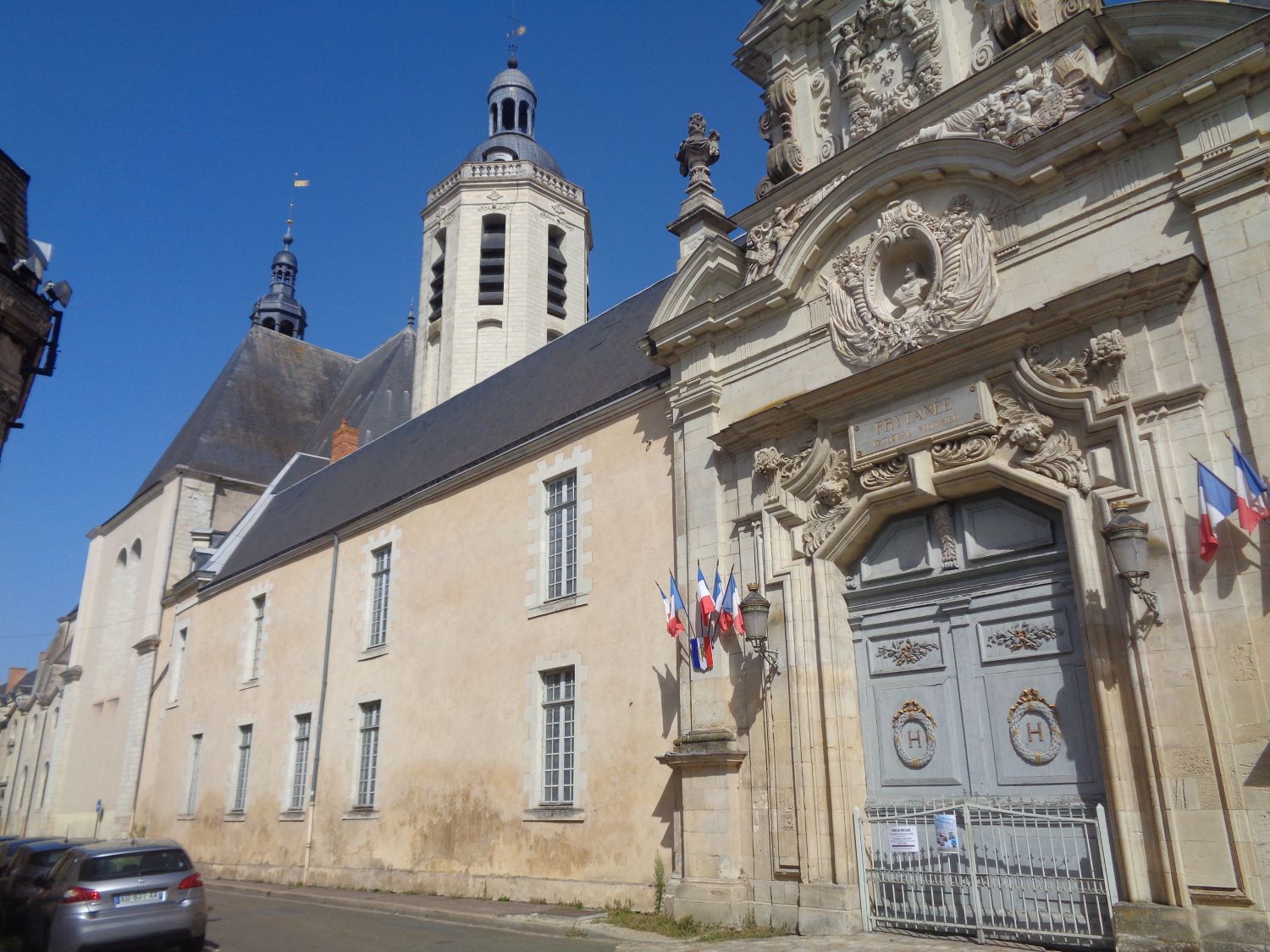
The Saint-Louis Church is located within the walls of the National Military Prytanée. This chapel, whose construction began at the beginning of the 17C and was completed in 1621, to establish the “Collège royal Henri-le-Grand” (Royal College of Henry the Great). The king entrusted its creation to the Jesuits. Becoming a “Prytanée militaire” in 1808 under the leadership of Emperor Napoleon I, it now houses within its walls one of the six military high schools in France, called “lycées de la défense” (defense high schools) since 2006.
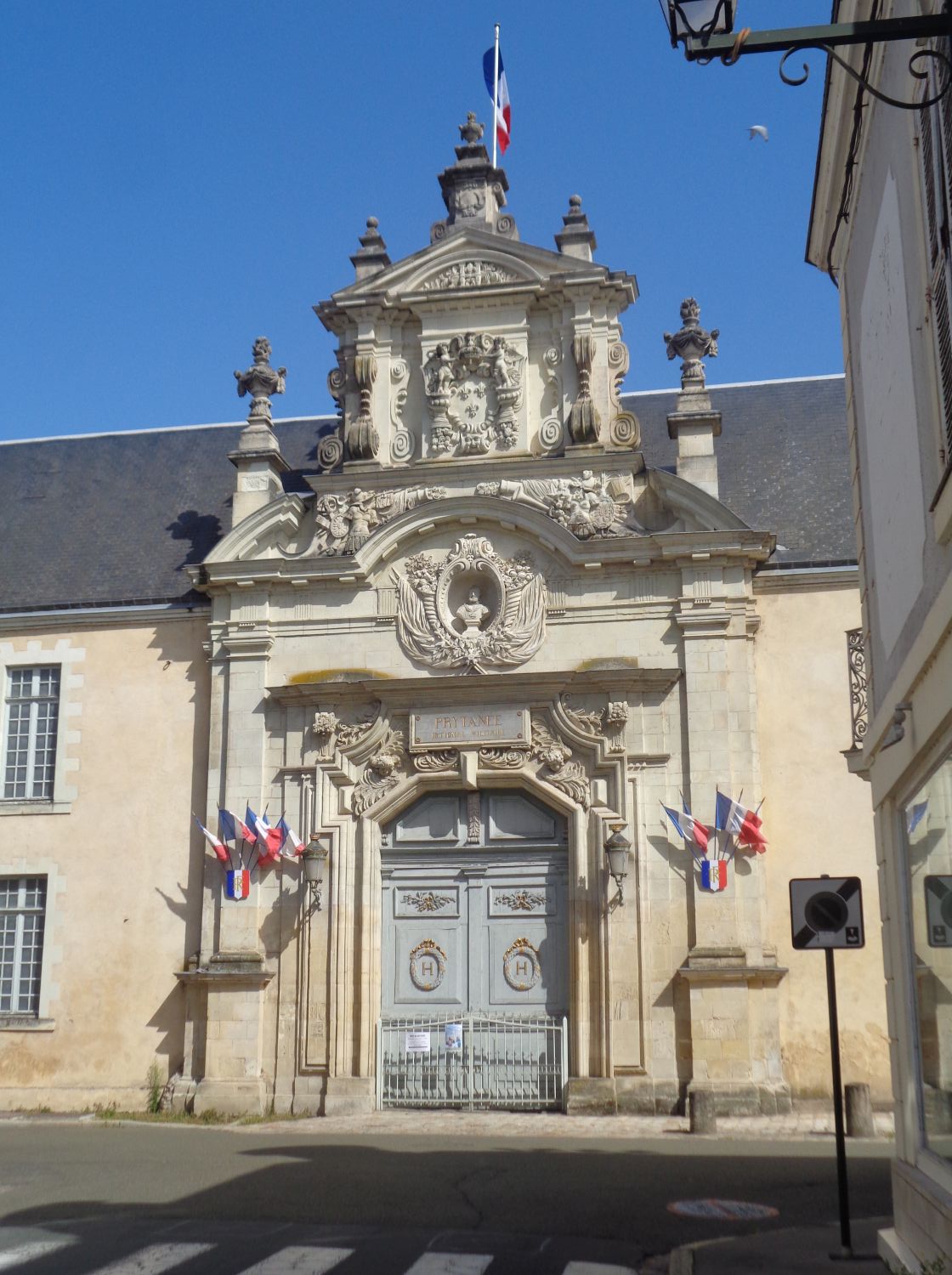
The college was founded in 1603 by Henry IV: Guillaume Fouquet de la Varenne, a native of Fléchois, close to the king, is said to have suggested that he give the Jesuits the new château, built in 1540 by Françoise d’Alençon, grandmother of Henry IV. The Jesuits immediately launched an exceptional architectural program based on plans by Louis Métezeau, centered around five adjoining courtyards. This layout is still intact today, although the old château underwent a complete reconstruction in 1784. The first phase saw the construction of the Salle des Actes building and the Saint-Louis Church, both completed in 1621. It wasn’t until 1655 that the entire project was completed, with the Royal Courtyard, along with the royal gate. This majestic gateway stands on the axis of what is now Rue Henri IV and marks the end of a half-century of construction.
Its careful composition is characteristic of French architecture of the time: a search for symmetry, an emphasis on vertical movement, and the use of elements from ancient architecture. The bust of Henri IV, in the niche above the door, the royal coat of arms, and the royal crest testify to the Jesuits’ desire to preserve the memory of the college’s founder.
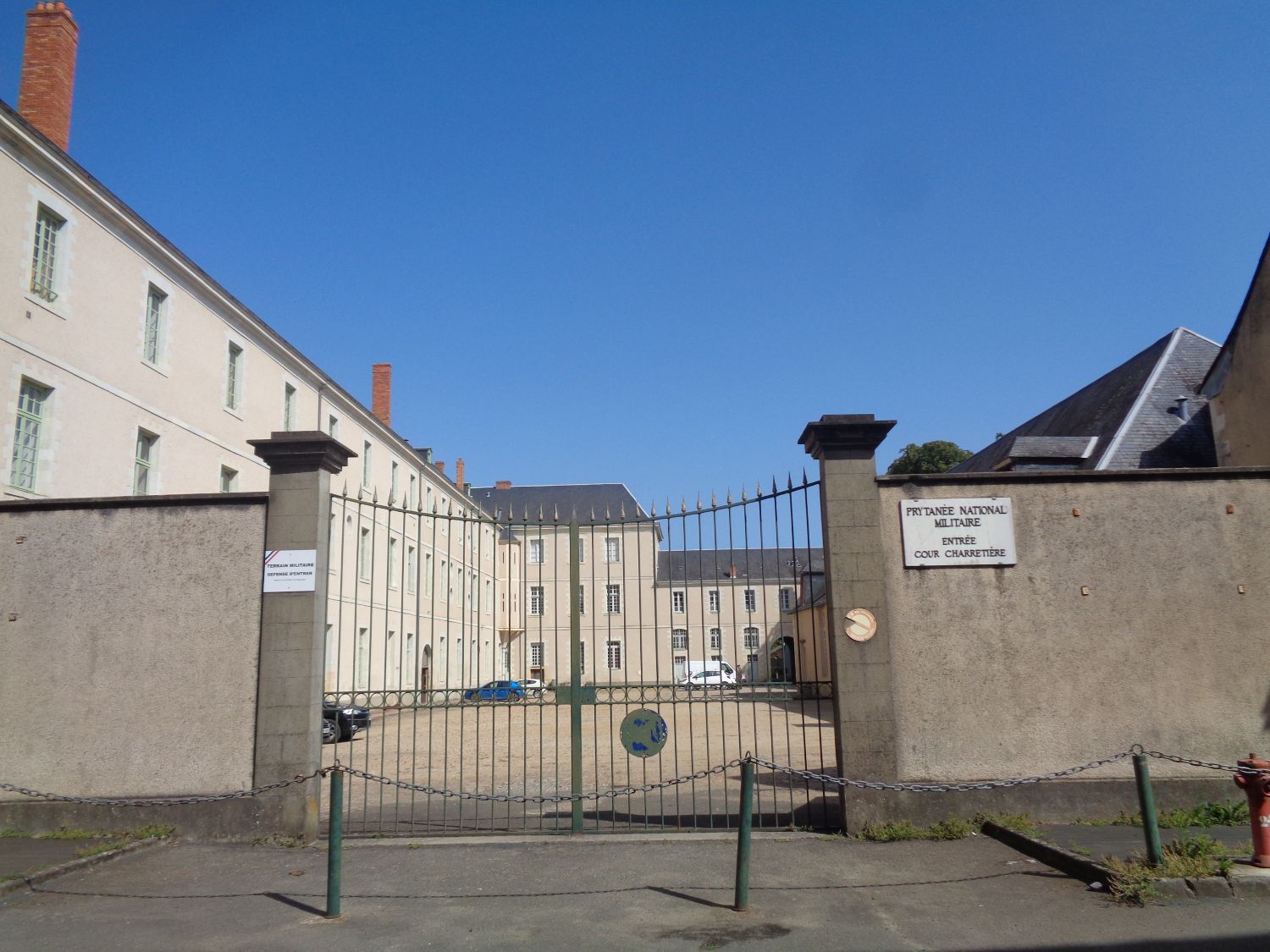
Then Father Étienne Martellange, the Jesuit architect, revised Métezeau’s plans and completed the church on a Latin cross plan. Henri IV promised the Jesuits that upon his death, his heart would be transported to the church under construction. On June 4, 1610, the king’s heart arrived, escorted by nearly 1,200 horsemen. It was joined in 1643 by the heart of Queen Marie de Medici. Both were burned in public in 1793 by the revolutionaries. A former surgeon at the college collected some of their ashes, which were returned in 1814 to the National Military Academy, which had succeeded the college.
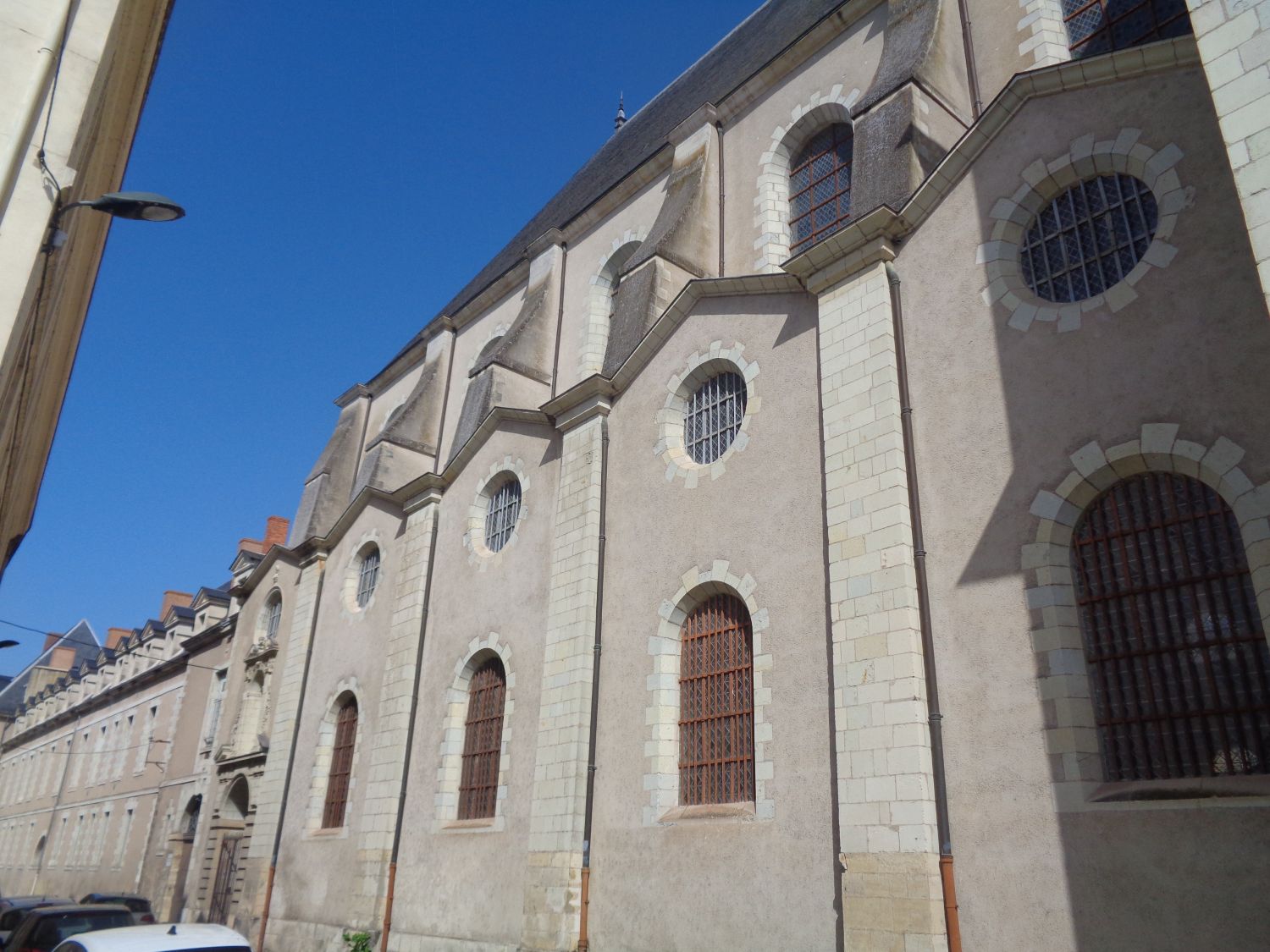
The Jesuits were expelled from the kingdom in 1762. The college buildings then housed the Military School for the King’s Gentlemen-Pupils, then in 1776 the Royal and Academic College. With the military schools abolished in 1793, the buildings housed the La Flèche district administration and the town. The church was converted into a meeting hall for a revolutionary club. Finally, in 1808, on the orders of Napoleon I, the French Military Academy was transferred from Saint-Cyr to La Flèche. The school provides secondary education as well as preparation for the entrance exams for the major military schools. Many illustrious figures have passed through this institution in La Flèche: the philosopher René Descartes, Abbé Prévost, the Chappe brothers, Marshals Bertrand and Galliéni, astronauts Patrick Baudry and Jean François Clervoy, and actor Jean Claude Brialy. The historic buildings of the Prytanée and the park are open to visitors in the summer.
The town of La Fléche on its heritage : https://www.ville-lafleche.fr/loisirs/tourisme/patrimoine/
The town of La Fléche on its history: https://www.ville-lafleche.fr/la-ville/lhistoire/
The local Loir Valley tourist office on La Fléche : https://www.loir-valley.com/things-to-see-to-do/sites-to-visit/
There you go folks , a nice quant town worth a detour me think. The area is wonderfully located to visit other wonders of my belle France, Again ,hope you enjoy this post on the National Military Prytanée of La Fléche !!! as I
And remember, happy travels, good health, and many cheers to all !!!

 Paris1972-Versailles2003