
I was on my by now monthly road warrior trails of my belle France, I was out with my boys and my good dog Rex riding into the wonderful regions near me. This even if passed by before, is my first time in the town of La Fléche, full of architecture and history monuments.The town of La Flèche is located in the Sarthe department 72 in the Pays de la Loire region of my belle France , Therefore, here is my take on curiosities of La Fléche !!! Hope you enjoy the post as I.
The town is 42 km from Le Mans, 49 km from Angers, 92 km from Tours, 71 km from Laval, 263 km from Paris, and 275 km from my current home.The town is a member of the Pays d’art et d’histoire network. The town is accessible from the A11 motorway, the “Océane,” which connects Nantes to Paris via exits 10 Sablé-La Flèche, near Le Bailleul, and 11 Durtal-La Flèche; the former is preferable when coming from Paris, and the latter when coming from Nantes. La Flèche is an important crossroads, at the intersection of the RD 323 linking Paris to Nantes via Le Mans and Angers, and the RD 306, linking Tours to Laval, which connects the town to Sablé and Le Lude. Other less important departmental roads serve the town such the RD 308 leads to Baugé and Saumur, the RD 37 leads to Fougeré and the RD 104 leaves La Flèche in the direction of Savigné-sous-le-Lude; To the north, D41 leads to Villaines-sous-Malicorne, and the RD12 connects the town to La Suze-sur-Sarthe. We came from Pluvigner along the N24 to Rennes, N136 rocade then N157 to D57 by Laval to D21 dir Sablé sur Sarthé here took the D306 to rond point already in town took left into the D323 voie de la Liberté then promenade du Maréchal Foch and parked next to it on Rue du Maréchal Foch, walking distance easy to all sights,
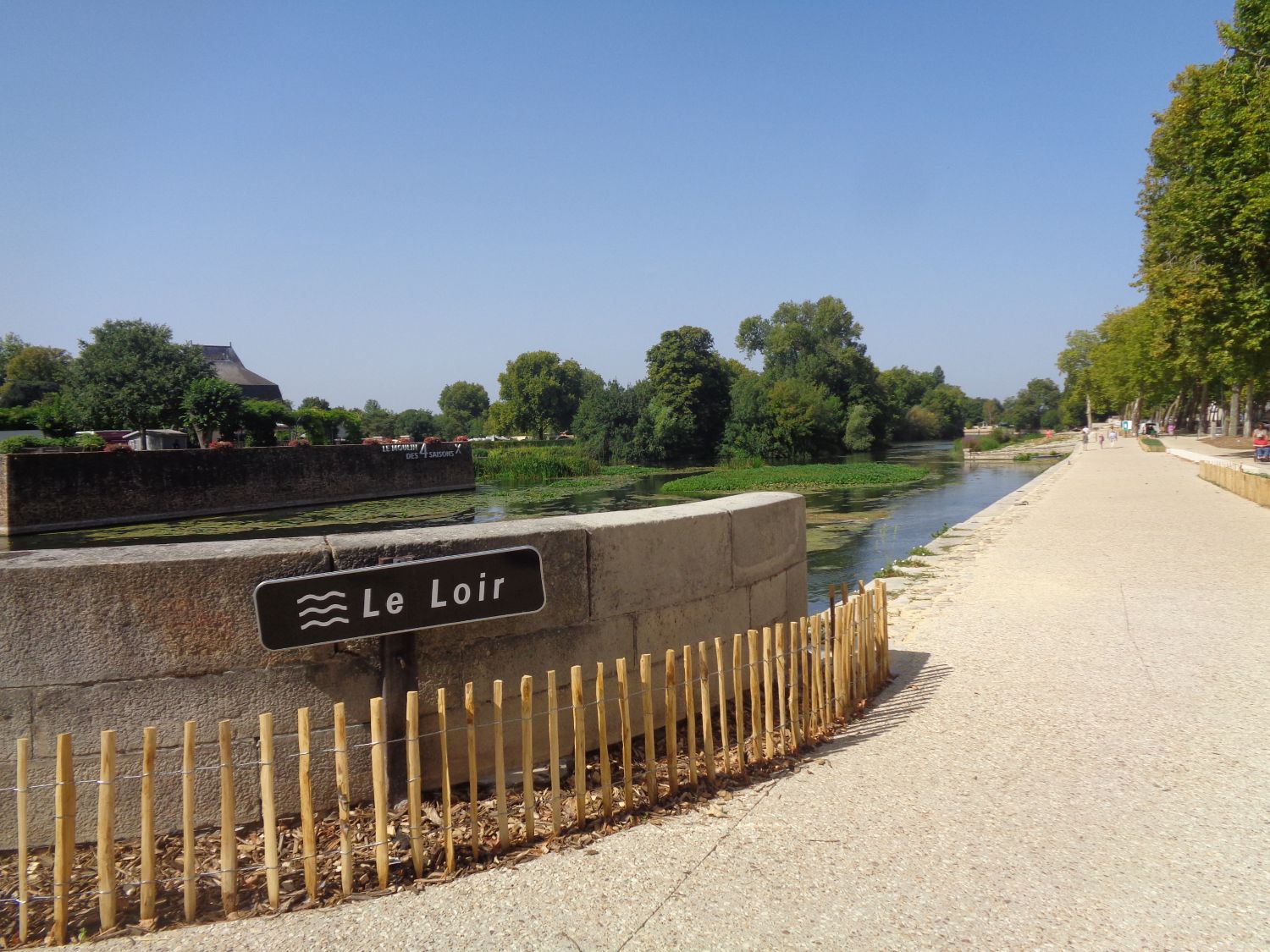
All along the Rue du Maréchal Foch you have the tourist office and plenty of parking by the Loir river near it is the Proménade de Maréchal Foch or Voie de la Liberté and we found easy parking here for all our walks,
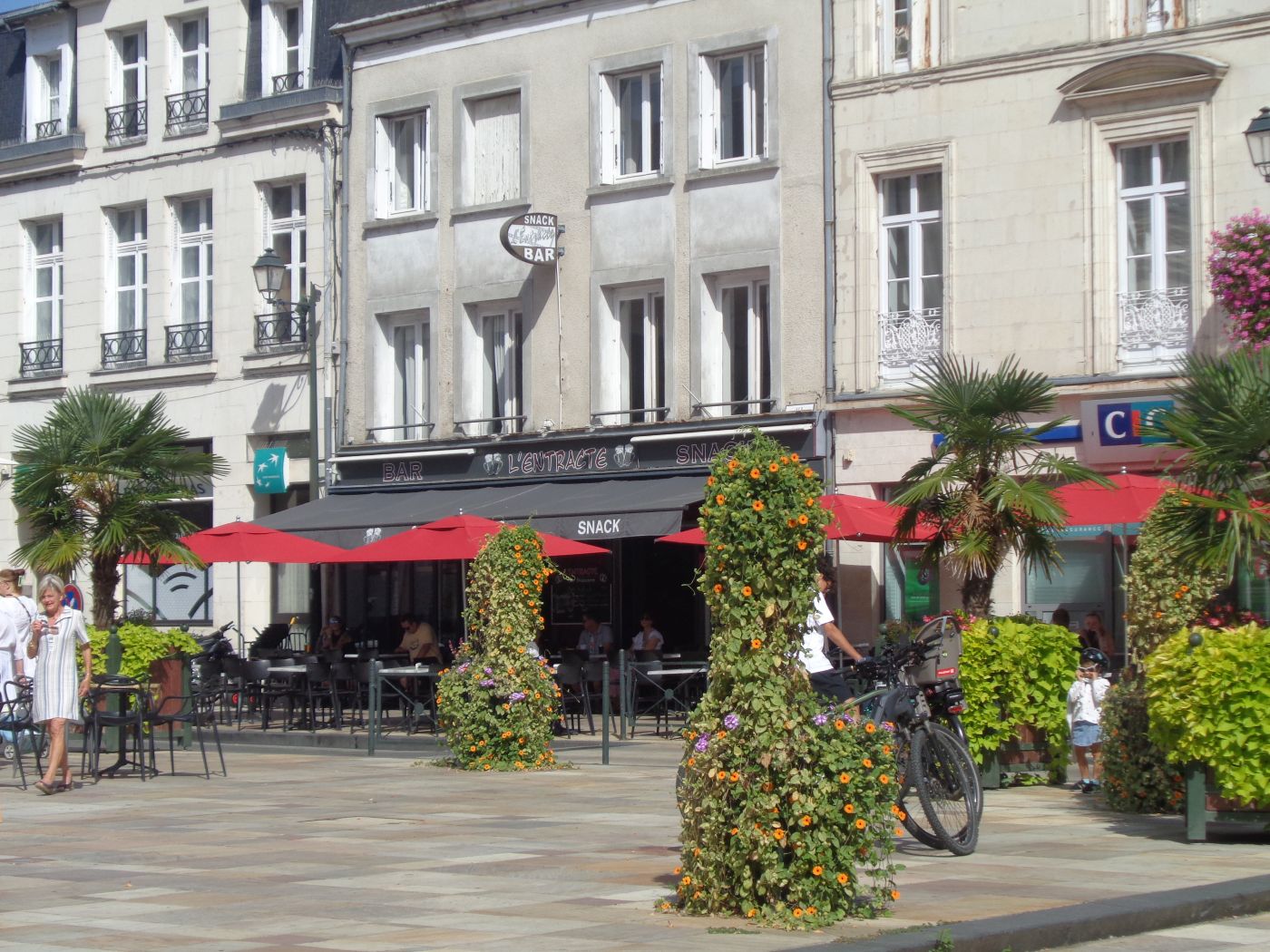
And we had lunch at L’Entrade bar brasserie on 4 Rue Carnot off the place Henri IV another on sight resto that we hit it on the nail very good indeed, Traditional cuisine. Very good brasserie, super friendly waiter. The welcome is very friendly and the service is fast., It was a hot day so we had sirloin steaks tender and tasty piece of meat with ice creams for dessert with a rosé of the house all very nice, I recommend it. We will be back eventually.

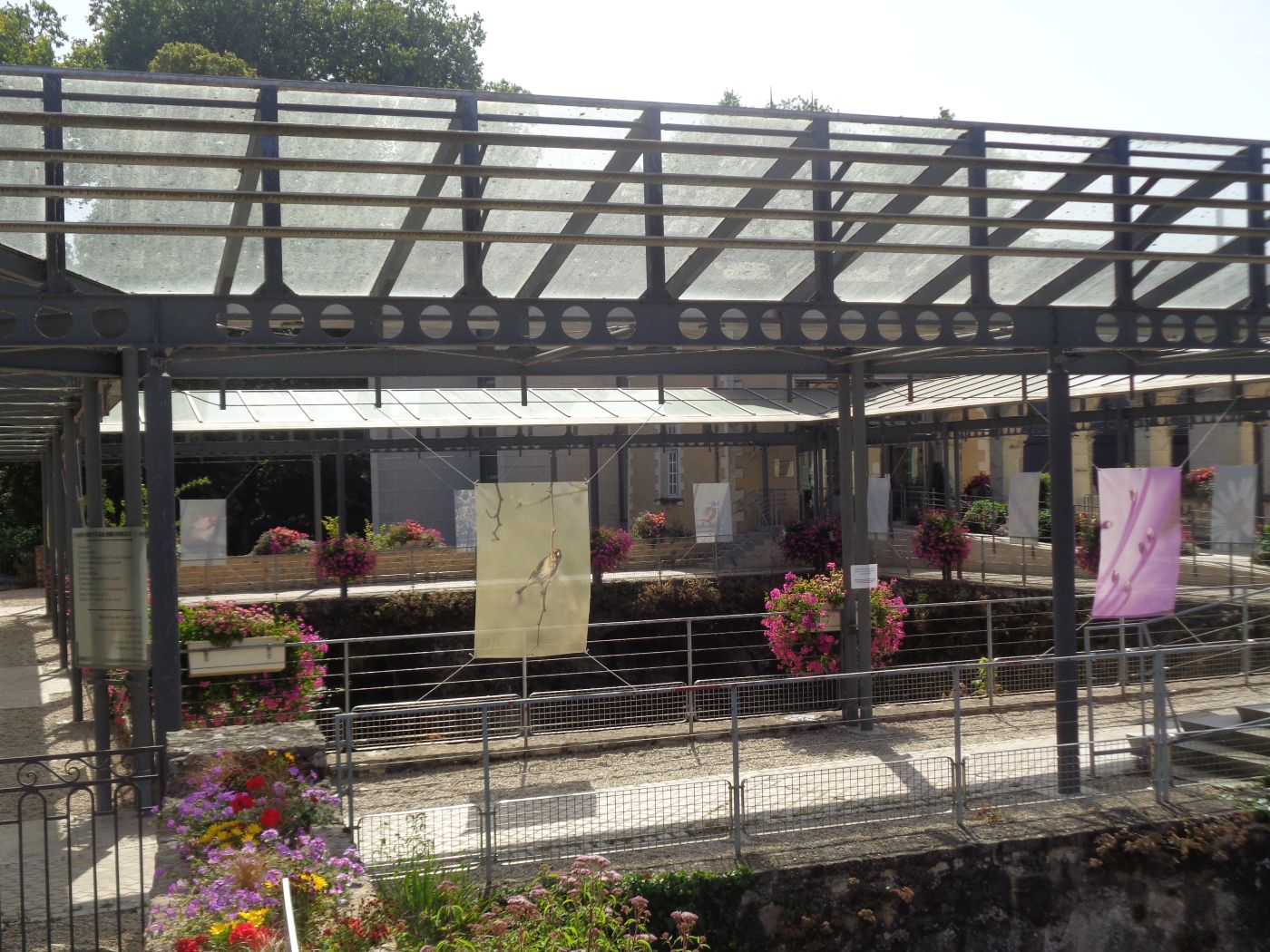
The Hôtel de Ville or City/town hall is a contemporary-style building completed in 1994.
Built on piles, this choice recalls the origins of La Flèche when houses near the Loir were raised on stilts to protect against possible flooding. The City/town hall’s glass structure allows the building to blend into its surroundings, serving as a bridge between the Château des Carmes, the Loir, and the Parc des Carmes. Their subtle reflections and light on the town hall are a reminder that La Flèche has gradually transformed throughout history, step by step. A water cloister connects the various buildings and establishes the true entrance to the City/town hall. This ambulatory is sheltered by a lightweight structure: its transparent roof reveals the abundant foliage of the Parc des Carmes.
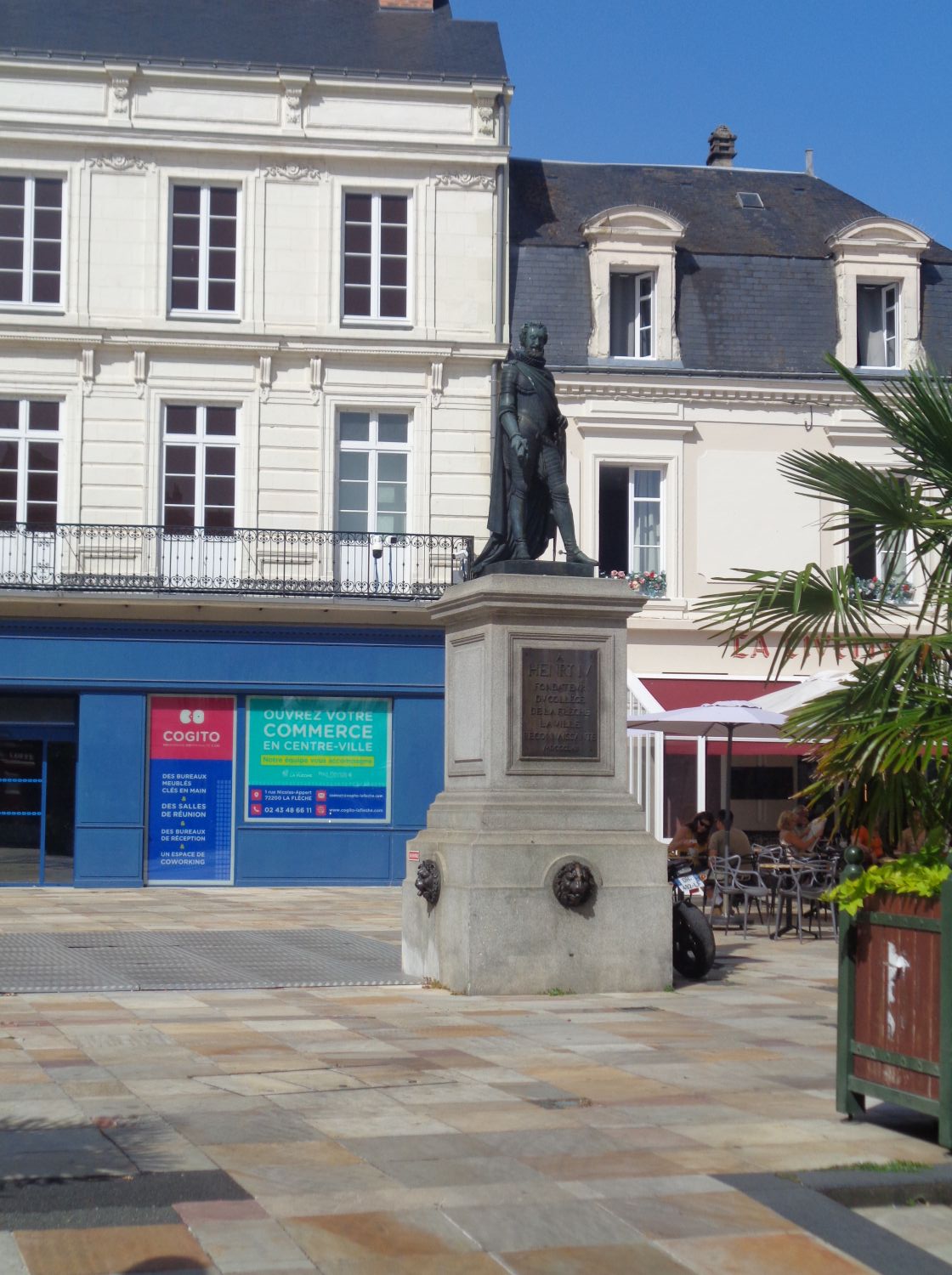
The Place Henri-IV, formerly called Place du Pilori under the Ancien Régime(monarchy), is the oldest of the squares in town. Since 1857, it has housed a monumental fountain in its center, topped with a bronze statue representing Henri IV.
In the 1970s, La Flèche lacked a hall to host large-scale events. As part of the renovation of the town center, the Salle Coppélia hall was built on the site of a former tannery and a printing house that had become a café. 105 foundation piles support the hall. The work lasted eighteen months. Coppélia ,is the name of a ballet by Léo Delibes, On September 25, 1982, the new 1,200 m2 hall opened with retractable bleachers with 600 to 800 seats, fully automated stage machinery. It hosts shows during the cultural season, end-of-school year shows, balls, general assemblies, fairs, exhibitions… The latest development: an artists’ lounge.

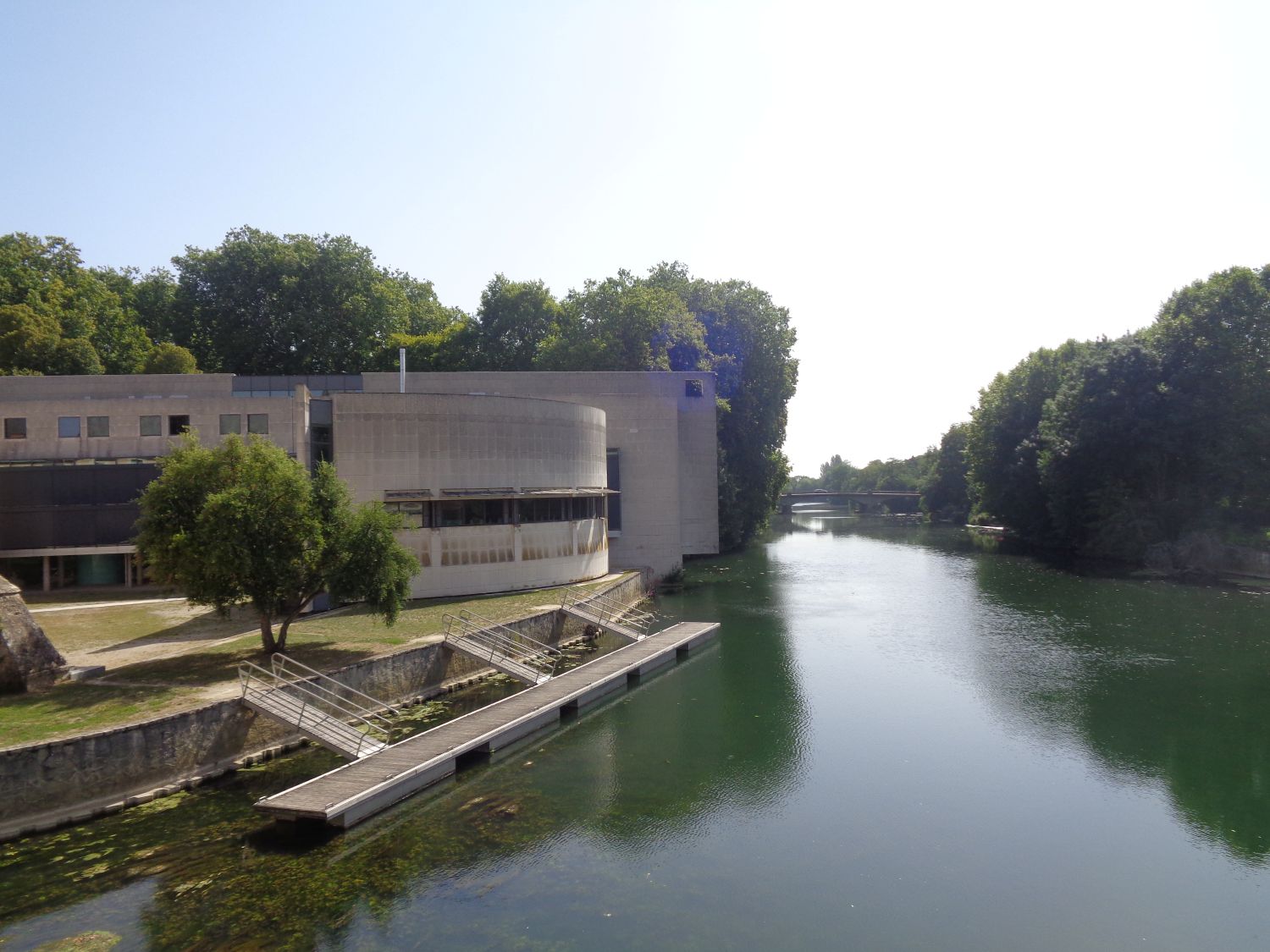
The Bibliothèque Jacques-Termeau library welcoming cultural space, the library offers you more than 50,000 works for study and leisure.
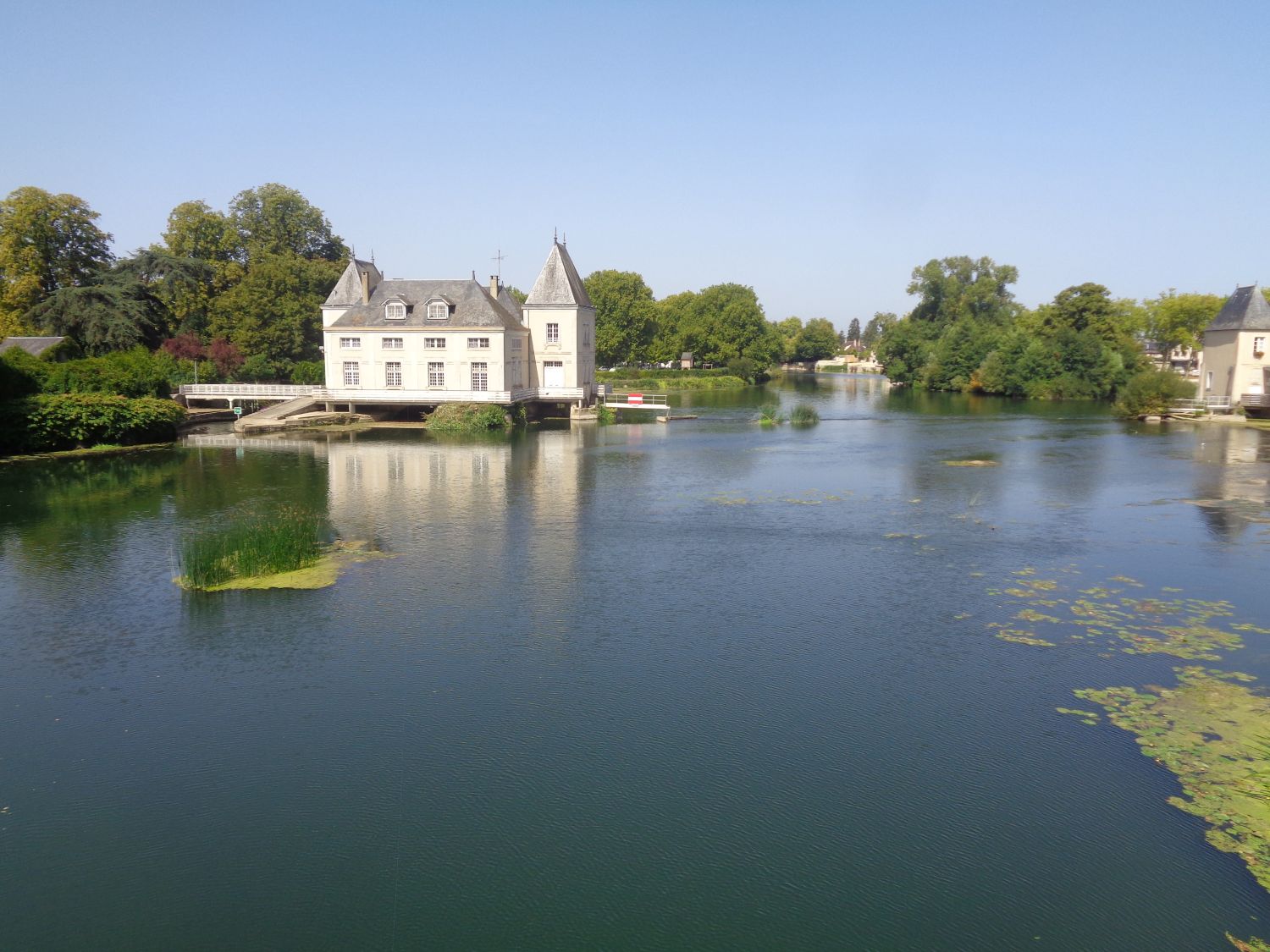
Centre d’hébergement (accommodation center) Moulin Poil de Reux, and the Moulin des 4 Saisons ,a 16C waterfront building decorated in a contemporary style for gourmet cuisine. This is a restaurant both on the Loir river.
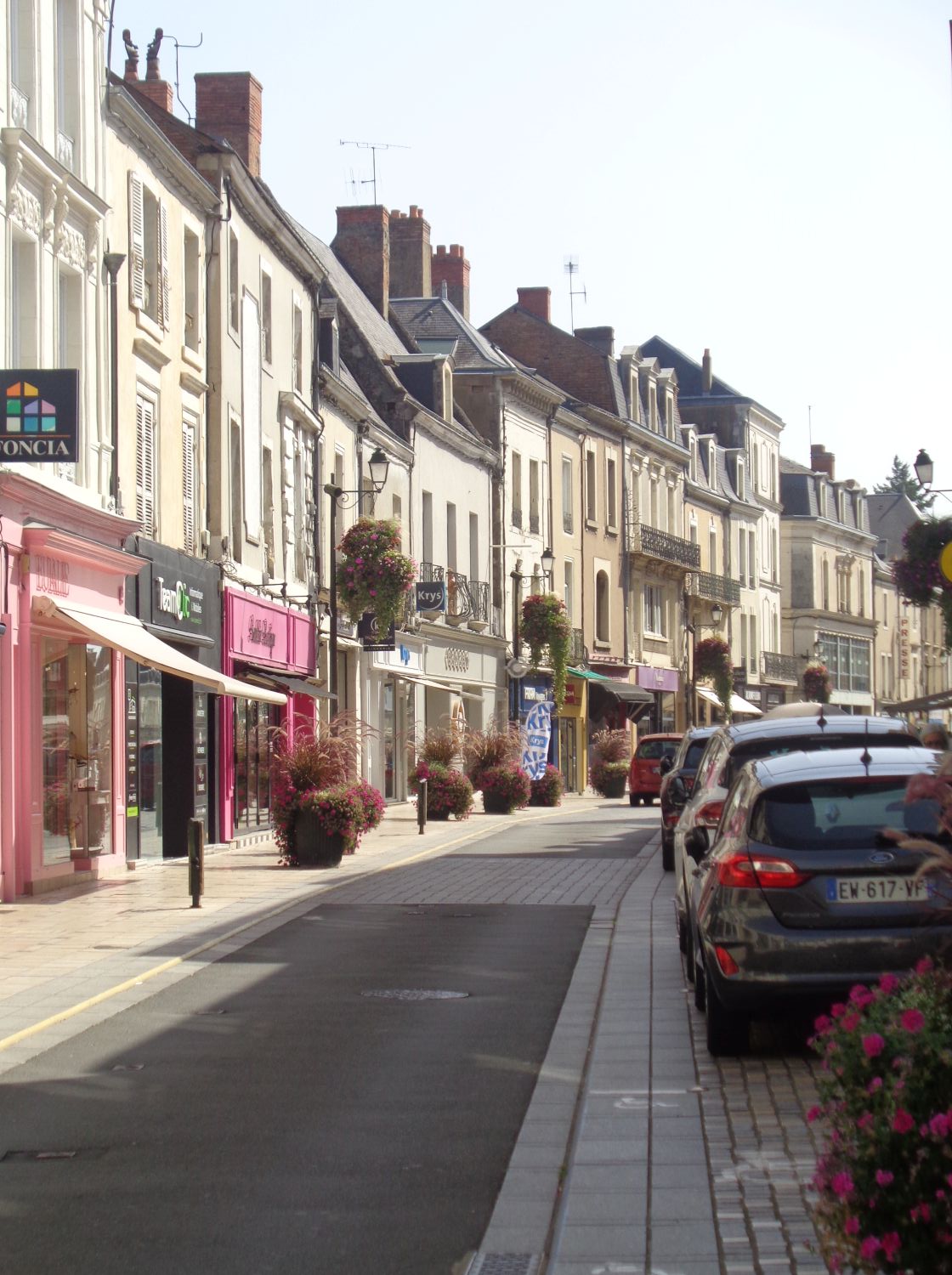
The main axis of the town, the Grande Rue (formerly the main Mançais road, which roughly follows the route of an ancient road leading to Le Mans) has remained a commercial artery. It is still lined with old houses (16-17C) but whose facades were often restored in the 19C. Note, however, some ironwork balconies from the 18C, notably at Nos 17 and 19. The most beautiful are No. 74 (a sober 18C facade), No. 78 (built in the 1820s), No. 57 (a harmonious and imposing late 18C facade), No. 80 (built in 1717, this mansion retains a very beautiful sculpted portal), No. 84 (a sober and elegant early 19C facade), and finally, the beautiful 18C mansion, between the courtyard and the garden, which today houses a bank. The Grande Rue ended with the Porte Mancelle, which opened between two towers.
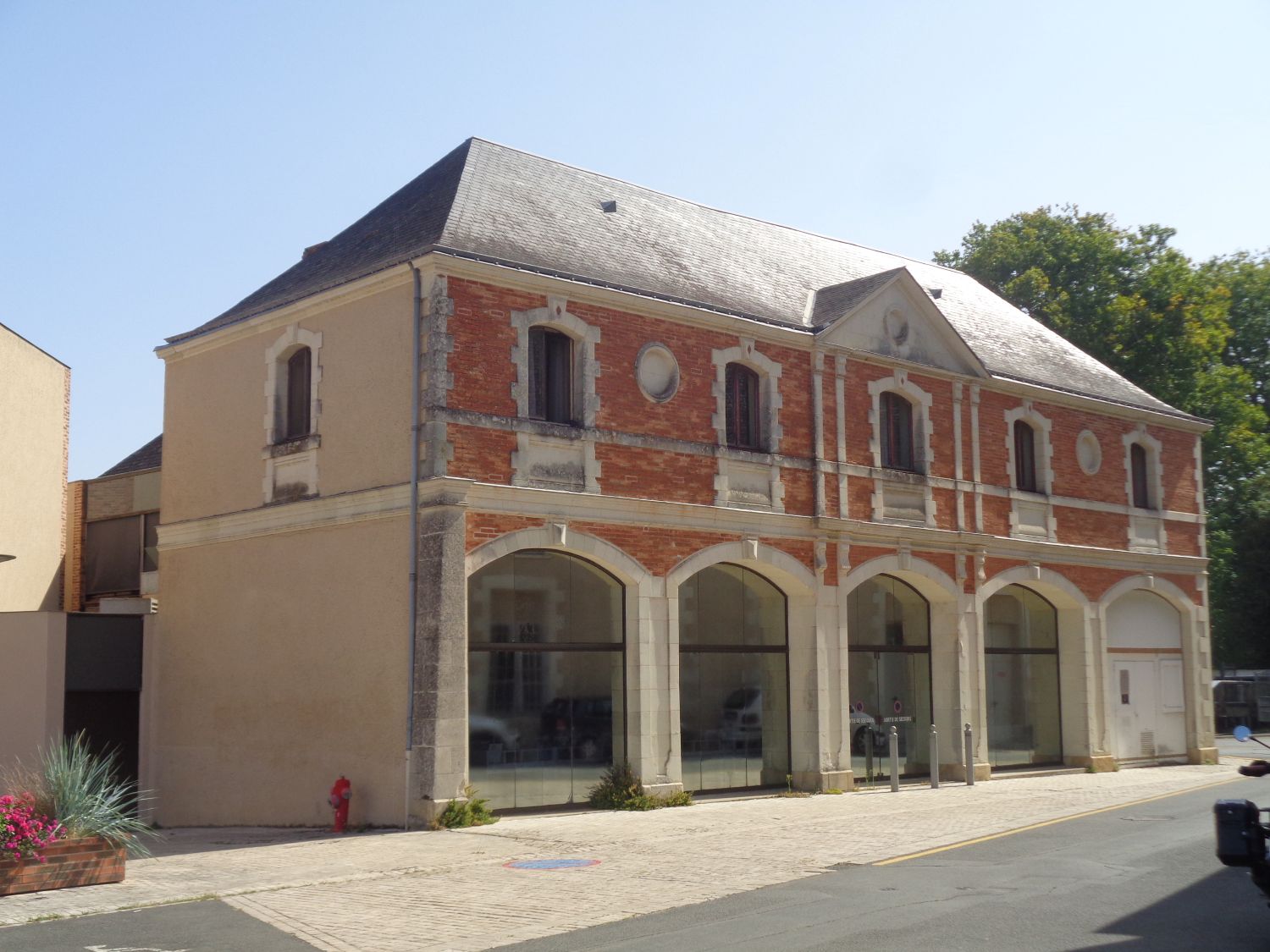
Other things to see in La Fléche are the Halle-au-Blé is a wooden market halls have existed in La Flèche since the Middle Ages. They were rebuilt in stone in 1737 and then enlarged in 1772 to house the City/town hall. In 1839, a small Italian-style theater was built on the first floor. The Cereals Market underwent extensive renovations, leading to a new inauguration in October 2012. The former Hôtel-Dieu was established in 1638, under the direction of Jérôme Le Royer de La Dauversière, near the Church of Saint-Thomas. The Hospitaller Sisters were expelled in 1793, during the French revolution. The place was then transformed into a gendarmerie, a court and a prison. Between 1937 and 1939, the premises were occupied by Spanish refugees fleeing the civil war. Reestablished during WWII, the prison was definitively abolished in 1953. The Hôtel-Dieu itself is no longer visible today, separated between housing and a district court. The old center of La Flèche contains several remarkable mansions or former dwellings such as the Hôtel Huger, located on rue Vernevelle. Of classical architecture, it was built between 1702 and 1704. The Hôtel Huger housed the nuns of Notre-Dame for a few years at the beginning of the 19C. Now privately owned, it hosts contemporary art exhibitions. Rue Grollier, the oldest of the streets in La Flèche, houses a building in the courtyard of No 17. It is a 16C square tower pierced by three mullioned windows and decorated with a corbelled pepper pot. The Hôtel Bellœuvre, located on Rue de la Dauversière, is a 17C manor house that houses numerous murals, including a fresco depicting the Judgment of Paris on the attic vaults. Also,outside of town you have the La Flèche Zoo created in 1946 on the Tertre Rouge hill by Jacques Bouillault, a naturalist, La Flèche Zoo is the oldest private park in France. It brings together 1,200 animals belonging to 150 species on 14 hectares. The Hospital of La Fléche, former Monastery of the Visitation, In March 1646, six Visitandines from the convent of Nantes settled in La Flèche. The construction of the Monastery of the Visitation began in 1650. During the French revolution, the monastery was closed, then in 1802 the Hospitaller Sisters of Saint-Joseph of La Flèche established a hospital there. The building underwent some transformations during the 19C, it was at this time that a chapel was built in the western wing of the building, in 1837. The restoration of the hospital cloister was completed in the spring of 1979,
The town of La Flèche has six churches , we visited two, and interest in two others, The Sainte-Colombe Church is in neo-Gothic style and was completely rebuilt between 1859 and 1862 on foundations from the 11C.
The town of La Fléche on its heritage : https://www.ville-lafleche.fr/loisirs/tourisme/patrimoine/
The town of La Fléche on its history: https://www.ville-lafleche.fr/la-ville/lhistoire/
The local Loir Valley tourist office on La Fléche : https://www.loir-valley.com/things-to-see-to-do/sites-to-visit/
There you go folks , a nice quant town worth a detour me think. The area is wonderfully located to visit other wonders of my belle France, Again ,hope you enjoy this post on curiosities of La Fléche !!! as I
And remember, happy travels, good health, and many cheers to all !!!


