
Once again, coming back from my road warrior trails in my belle France. This one is a special one ,as we came back for the memories for a second time to La Roche sur Yon located in the Vendée department no. 85, in the Pays de la Loire region of my belle France. Therefore, here is my take on the Church Saint Louis of La Roche sur Yon !!! Hope you enjoy the post as I.
La Roche-sur-Yon owes its current appearance to Napoleon I, who transformed a small town into a modern city, based on a regular pentagon-shaped plan and equipped with imposing public buildings (prefecture, town hall, theater, court, high school, Saint-Louis church, etc.) distributed around a vast central esplanade (Place Napoléon). The city was founded by imperial decree on May 25, 1804 (it was promoted on the same date to prefecture of Vendée, replacing Fontenay-le-Comte). It was renamed eight times: La Roche-sur-Yon, Napoleon (under the First Empire, the Hundred Days and the Second Republic), Bourbon-Vendée (under the Restoration), Napoleon-Vendée (under the Second Empire). It returned to its original name in 1870.
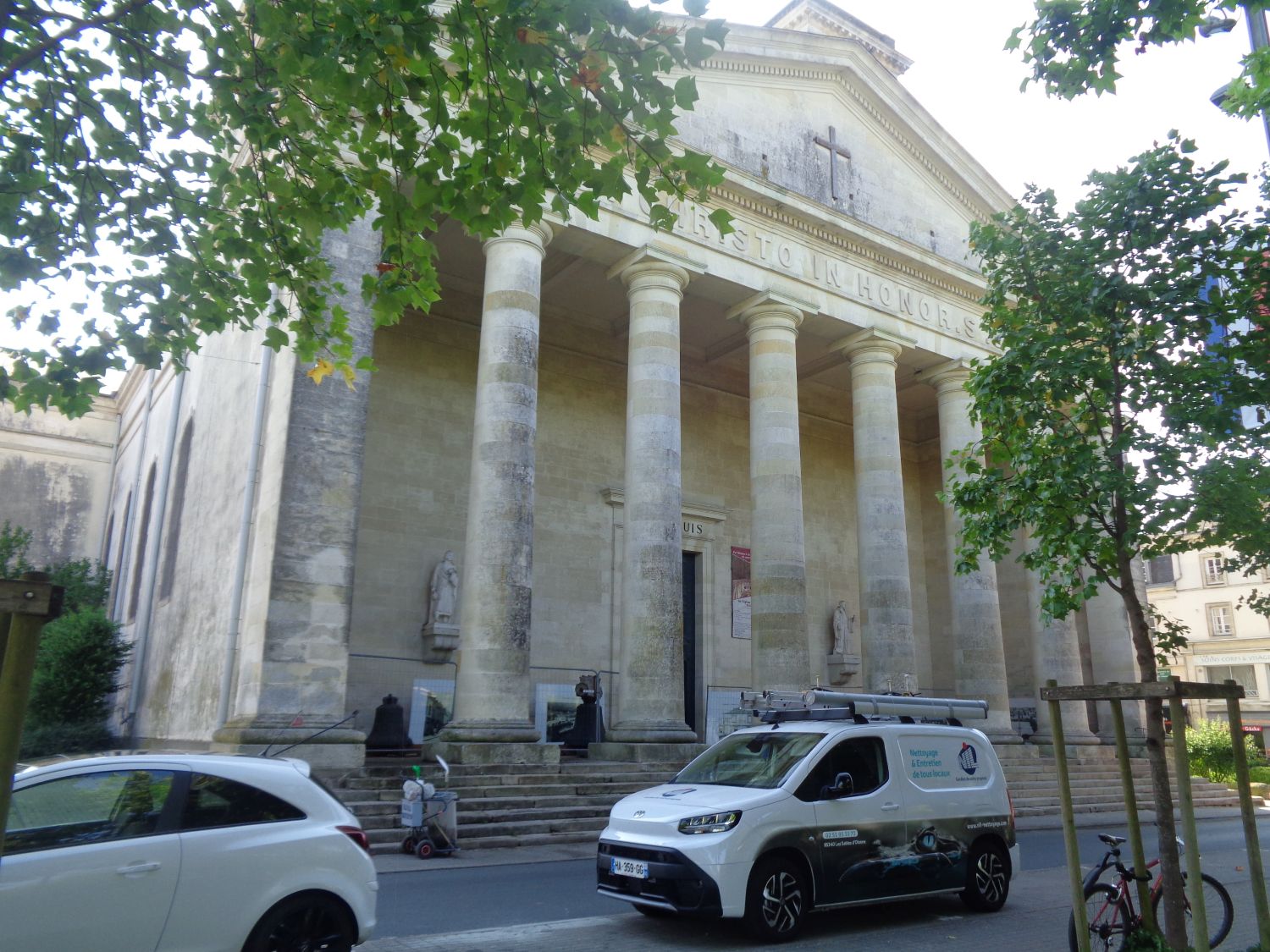
The Saint-Louis Church is located at Rue du Président de Gaulle, off Pl Napoléon, and was built in several stages from 1809 to 1829 and from 1850 to 1859, it was devoted under the term of Saint-Louis in 1830. The church was the largest religious building of Vendée. Located in the heart of the Pentagon, on the Place Napoleon, this church was built under the model of ancient basilicas with a neo-classical exterior architecture which is highlighted by its withdrawal from the Place Napoleon. In particular, it houses a Virgin and Child, a 14C polychrome statue representing Notre-Dame de la Roche. On the bays of the aisles,the forty evangelical scenes represented in a Flamboyant Renaissance style have the particularity of showing Christ dressed in blue, white, and red, a very rare color association in the iconography of the stained-glass windows. Thus, this characteristics would make the Church Saint Louis, a Republican (aka revolutionary) church!
Neoclassical in style and based on a basilica plan, the Church Saint-Louis will surprise you with its grandeur and history! , it is a must-see monument in the city center, but also typical of Napoleon’s desire to separate the Church from the State. Indeed, its location opposite the City/town hall and the courthouse reflects his strong desire to affirm that political and legal powers were no longer of divine essence. Its consecration, dated November 3, 1830, marked La Roche-sur-Yon and formalized its status as the largest church in Vendée, as provided for in the construction plan drawn up by Napoleon I’s architects twenty-two years earlier. The exterior architecture of the church is Neoclassical, with a portico of six columns and two pilasters with Tuscan capitals opening onto a pronaos in antis on the façade, surmounted by an entablature and a triangular pediment. Further back, two square bell towers with Ionic pilasters rise about thirty meters above the ground.
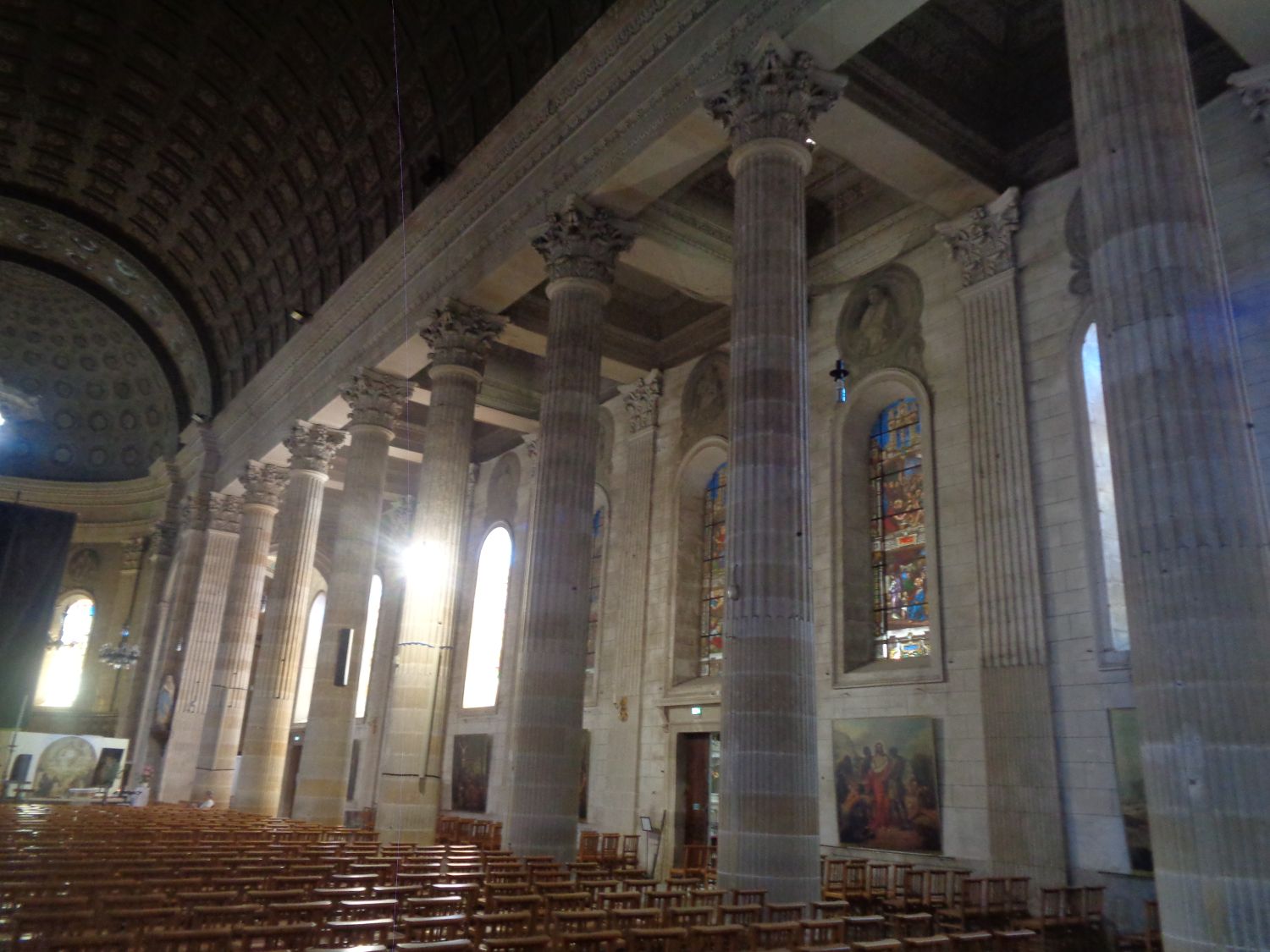
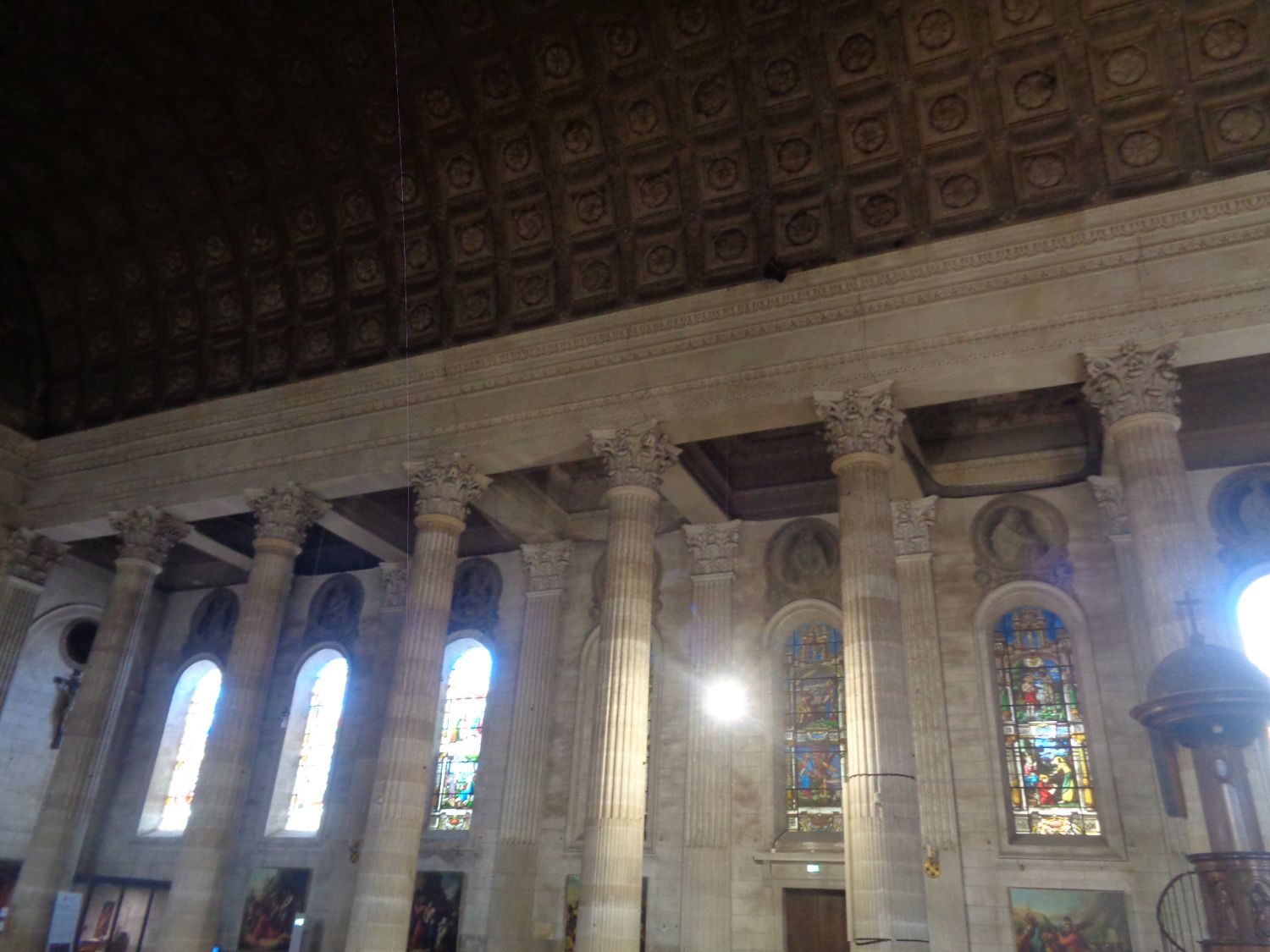
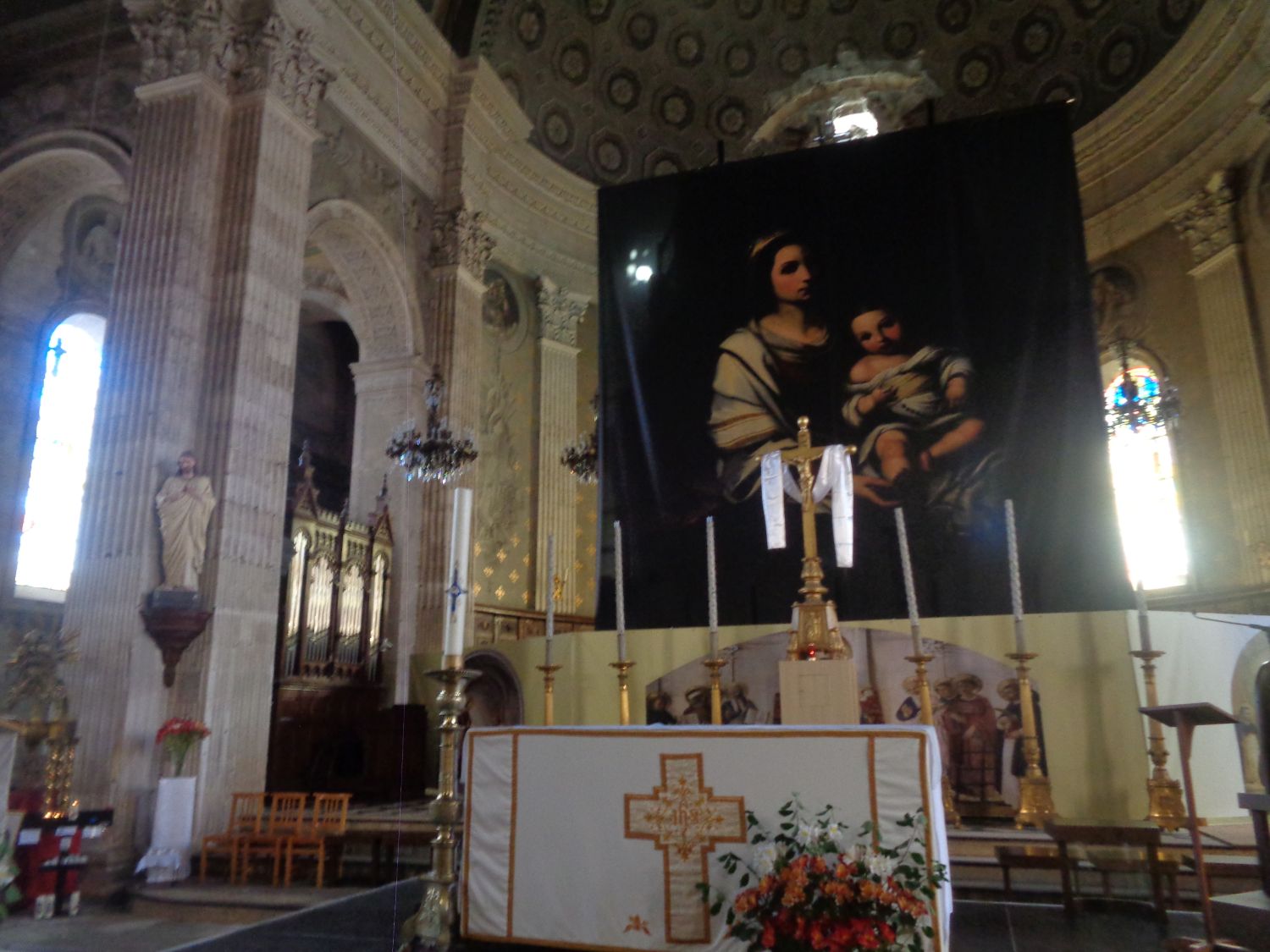
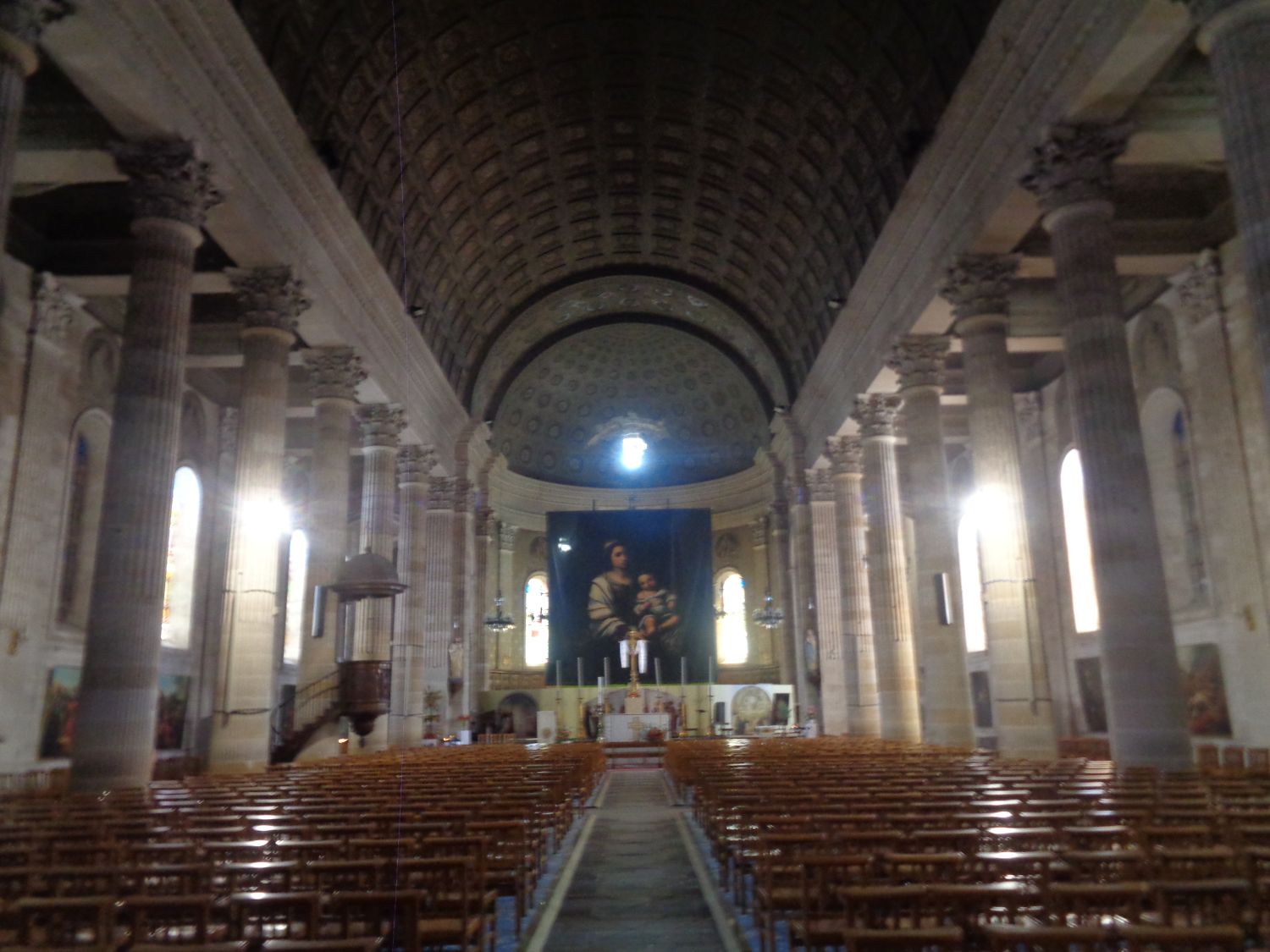
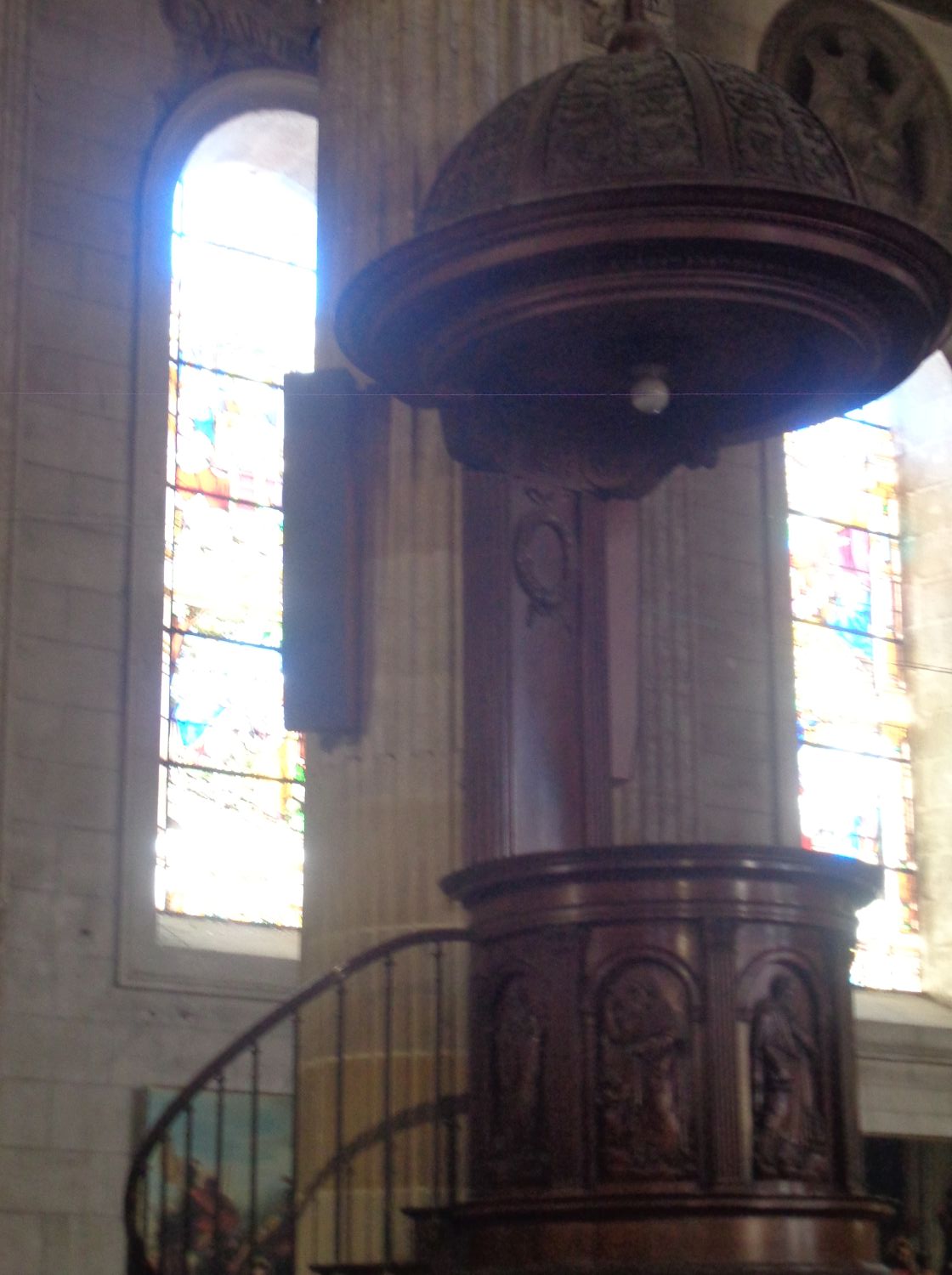
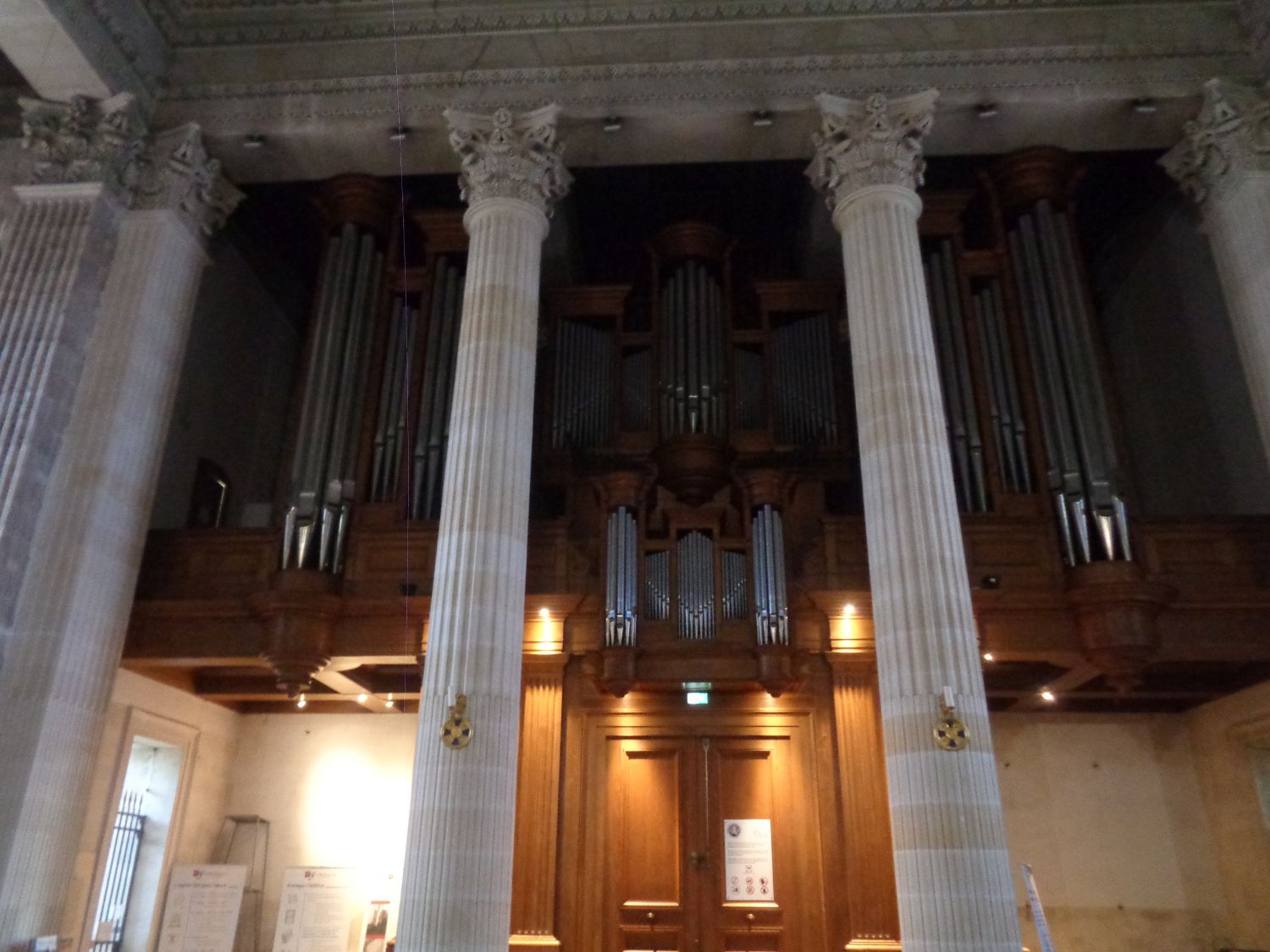
Inside, the church features a vast Neoclassical peristyle of rudentate and fluted columns with Roman Corinthian capitals. This peristyle is surmounted by an entablature and an imposing paneled barrel vault, which required two-thirds of the oaks from the Grasla forest in Les Brouzils. This vault is composed of wooden coffers enhanced with trompe-l’oeil painted rosettes. The apse’s semi-domed vault is entirely painted in trompe-l’oeil. It is adorned with a pierced glory in which the letters of the tetragrammaton appear. The church’s vault, for its part, follows the classical model of the rose window (in wooden frames nailed to the paneling, the decoration of which is painted). It is worth adding the painted coffers of the organ gallery and the side aisles, the octagonal coffers entirely in trompe-l’oeil of the apse, and the Last Supper gallery, which reproduces in grisaille the famous eponymous painting by Leonardo da Vinci. Other decorations with classical and Baroque motifs are added to the walls and pillars of the choir and the apsidal chapels. The pulpit and the tabernacle (made of walnut and gilded linden); The high altar, the baptismal font, and several holy water fonts. The furnishings are simple, with Directoire and Restoration-style ornamentation (pine cones, foliage, plant wreaths, simple shapes, etc.). In the 1870s, the choir underwent the creation of three stained-glass windows, the creation of stalls, and, above all, the creation of a Baroque stucco and marble canopy. Numerous statues are present in the church, including: Saints Bernadette, Therese of Lisieux, and Rita; Our Lady of Lourdes, Our Lady of Sorrows, the Infant Jesus of Prague, the Infant Jesus, and the Sacred Heart. The Stations of the Cross are imposing in size (approximately two meters by two meters), and the fourteen oil paintings on canvas.
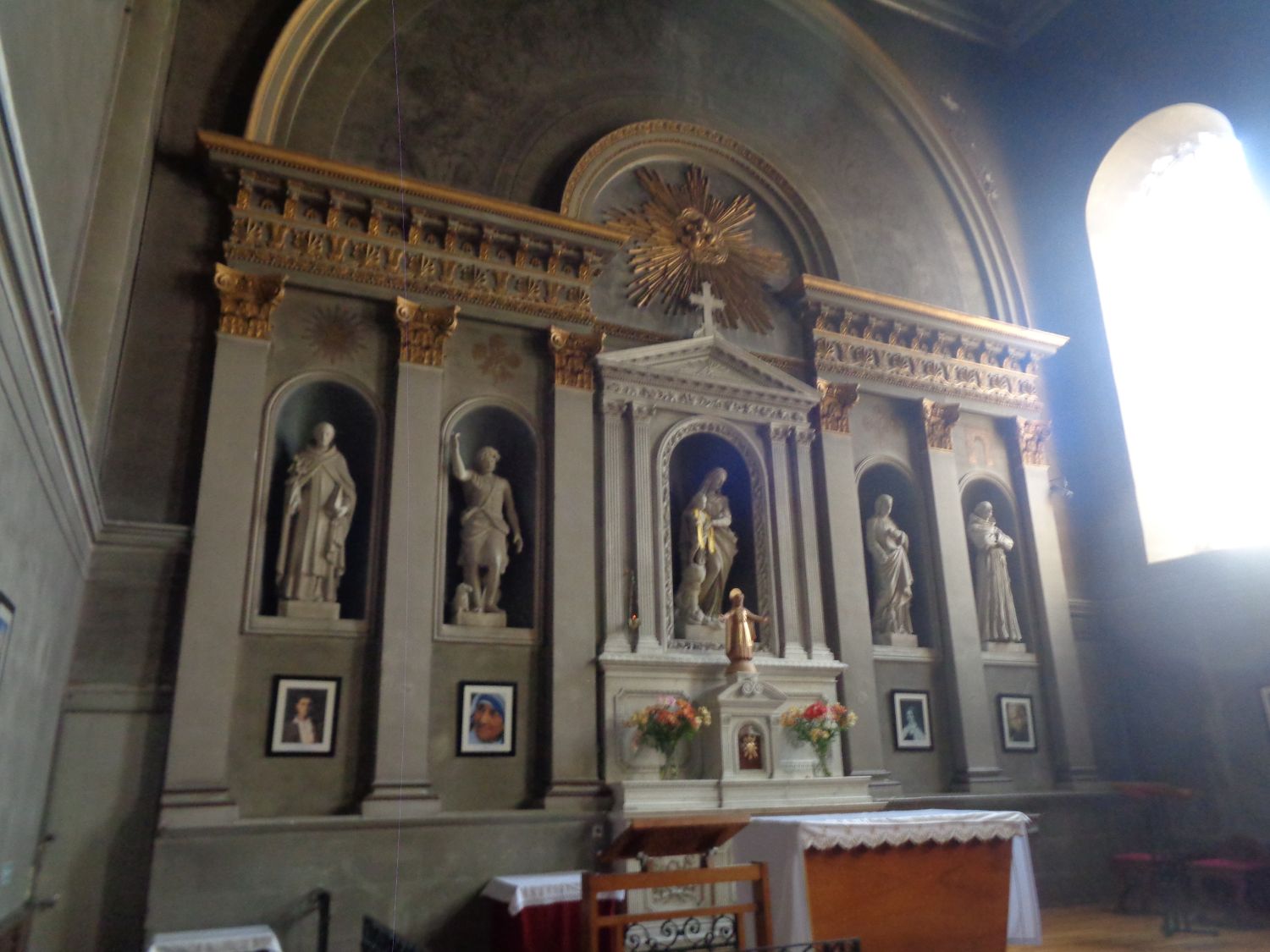
The Chapel of the Virgin houses a 14C polychrome wooden Virgin and Child. And also statues of Saints Dominic, John the Baptist, John the Evangelist and Francis of Assisi (Arthur Guéniot 1899 for this statue on either side of a statue of Our Lady of Victories. In grisaille, Saints Louis Gonzaga, Bernard, Alphonsus Liguori, Anselm, Dominic and Francis of Assisi are represented, as well as an Assumption of the Virgin. The chapel is lit by three stained glass windows, Pentecost, the Assumption and the Coronation,
The Chapel of Saint-Lienne and relics dedicated to Saint Lienne, disciple of Saint Hilary whose remains were venerated in La Roche-sur-Yon, but also to Saint Anne and Saint Philomena (statues above the altar), the chapel houses 183 relics of saints including Louis and Zélie Martin, Saint Thérèse of Lisieux, Saint Bernadette Soubirous, Saint Vincent de Paul, Saint Teresa of Avila, Saint Louis-Marie Grignion de Montfort, Saint Vivent, Saint Marie-Euphrasie Pelletier, Saint Louis de Gonzague, Saint Bénigne of Dijon, Saint Paul Kohan, Saint Thomas Tran Van Thien, Saint Jean-Marie Vianney, Saint Radegonde. The stained-glass windows of Saint Anne, the holy angels, and the consecration of the model of the Church of the Sacred Heart were created in 1925. Noteworthy in this chapel are the statues of Saint Anthony of Padua and Saint Louis-Marie Grignion de Montfort. The Saint-Lienne Chapel is one of the two holy doors of the diocese for the Jubilee of Mercy 2015/2016.
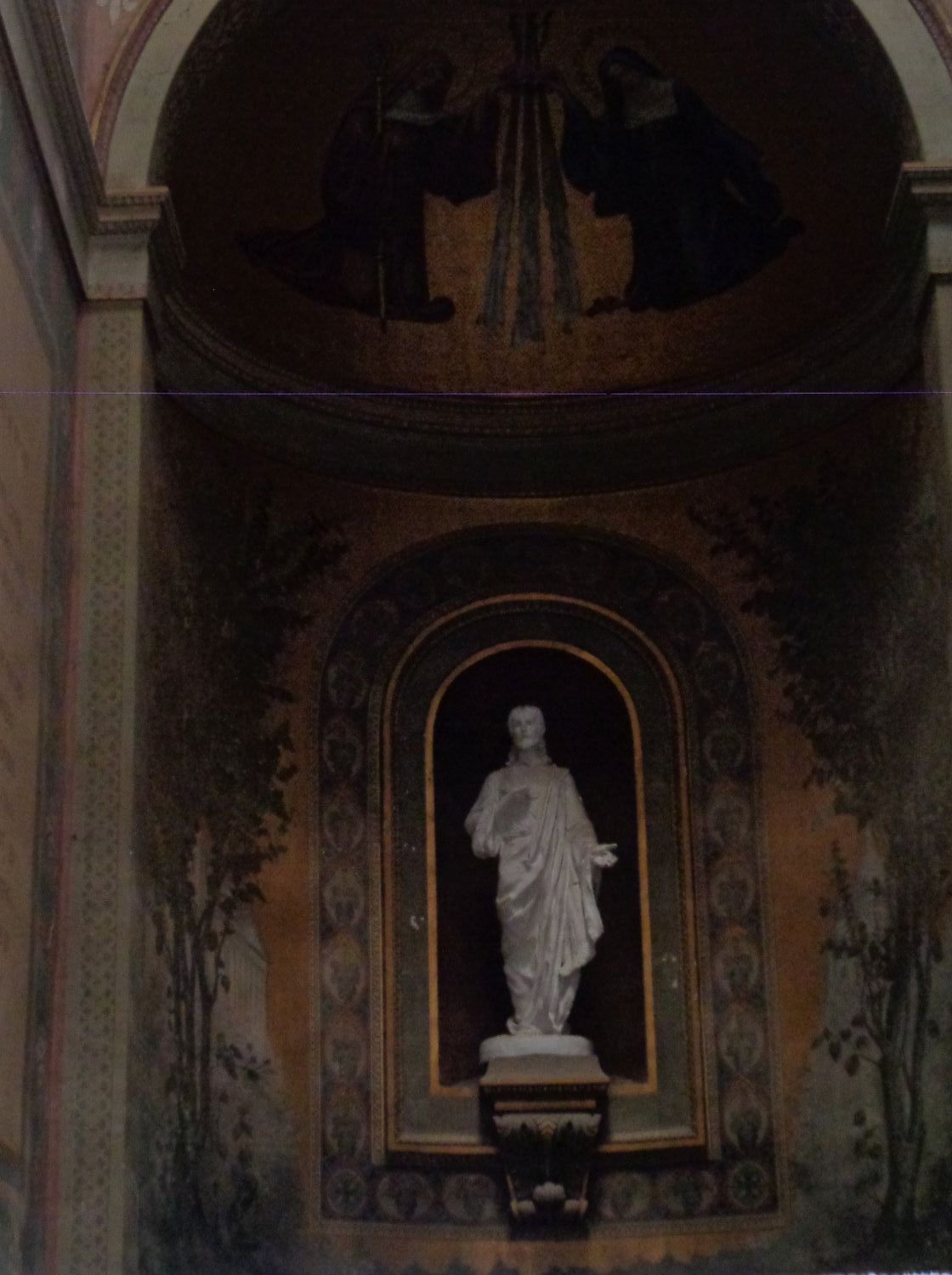
The Chapels of Saint Joseph and Sacred Heart , The two chapels dedicated to Saint Joseph and the Sacred Heart have a layout dating back to the late 19th and early 20th centuries. Until then, the two places where the altars are now placed were sacristies; the apsidal chapels already existed but were simply further forward in the church. In each of the chapels, a statue made by Arthur Guéniot is placed in a niche. To the north, the Saint-Joseph chapel has a decoration, imitating golden mosaic, in which palm trees and angels are painted. The same Byzantine inspiration is visible in the Sacré-Cœur chapel with representations of Saint Gertrude of Helfta (probably) and Saint Marguerite-Marie Alacoque (who was then blessed). In a different style, a painting representing the Church Saint-Louis ,and the Sacré-Cœur basilica in Montmartre.
The great organs are another major asset of the church, and there are two of them. The first, the choir organ, is a Cavaillé-Coll, built in 1884 in Paris. It left the gallery for the choir in 1985, a century later, when a new large organ was installed there. It ranks among the most important in the diocese. It thus required a complete overhaul of the narthex and the gallery, whose neoclassical woodwork integrates perfectly with the church.
The Notre Dame de La Roche is all the more precious as it is one of the oldest testimonies of faith in Vendée, this 14C polychrome wooden statue of the Virgin is preserved in one of the church’s chapels. Holding the Child Jesus in her arms, who himself carries the world, the Virgin is also depicted barefoot. This is usually reserved for representations of Christ and the apostles. Created in 1872 and 1875, the church’s stained-glass windows contrast sharply with the initial imperial austerity and neoclassicism. On the bays of the side aisles, the forty Gospel scenes depicted in a flamboyant Renaissance style have the particularity of showing Christ dressed in blue, white, and red, a very rare color combination in stained-glass iconography. This characteristic would thus make the Church Saint-Louis, a republican church!
The La Roche sur Yon tourist office on the Church Saint Louis : https://www.destination-larochesuryon.fr/en/la-roche-sur-yon/les-monuments-du-xixe-siecle/eglise-saint-louis/
The Catholic Parish of La Roche sur Yon on the church : https://stlouisdelaroche.fr/
The City of La Roche sur Yon on the Church Saint Louis renovations : https://larochesuryon.fr/eglise-saint-louis/
The La Roche sur Yon tourist office on its heritage : https://www.destination-larochesuryon.fr/en/the-rock-on-yon/XNUMXth-century-monuments/
The Vendée dept 85 tourist office on La Roche sur Yon : https://www.in-vendee.com/24-hours-la-roche-sur-yon
There you go folks, again, another gem of my belle France ! This is real country off the beaten path trails, Again, nice opportunity to see the town again, good for the soul and memories forever, Again, hope you enjoy the post on the Church Saint Louis of La Roche sur Yon !!! as I
And remember, happy travels, good health, and many cheers to all !!!

 Paris1972-Versailles2003