
I have come to this wonderful region of my belle France for its architecture, history, culinary delights and the wines, oh yes the wines ! , especially the wines ! As said, it is a tradition in my house and makes it a good reason to come here, I like to dwell again into one of my favorite wine region, And yes this is the southwest or sud ouest of my belle France, Therefore, here is my take on I give you the Bergerac, Monbazillac, and Pécharmant wines of the southwest !!! Hope you enjoy it as I.
The Bergerac is a wine that benefits from an AOC from the Southwest vineyard. Within the appellation, there is a more qualitative designation called Côtes-de-Bergerac, with more stringent production conditions. It is also a generic designation within the Bergerac vineyard. Certain areas are eligible for more restrictive local AOCs, such as Monbazillac, Montravel, Côtes-de-Montravel, Haut-Montravel, Pécharmant, Rosette, and Saussignac. The AOC was recognized on September 11, 1936. The Bergerac appellation is located in the southern part of the Dordogne department 24, more specifically in the Bergerac district. The Bergerac regional appellation was recognized as an Appellation d’Origine Contrôlée (AOC) in 1936. It is one of the oldest AOCs in France. The Côtes de Bergerac appellation obtained its AOC in 1995. To the west, bordering the Bordeaux vineyards, the limestone soils of Fronsadais are predominant. To the north, the soils are clayey, sandy, and limestone, and to the southeast, limestone also dominates in the form of pebbles. Five appellation wines flourish and express their typical character in a temperate climate with more or less significant oceanic influences between the westernmost villages around Saint-Méard-de-Gurçon and to the east on the lands of Issigeac or Lalinde. 40 million bottles produced per year 7,000 hectares 500 producers.
My latest tastings of Bergerac were on the Château Pique Segue Rosé ; Château Tour Saint Germain, and Domaine de Grange Neuve,

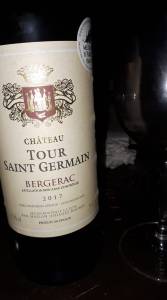
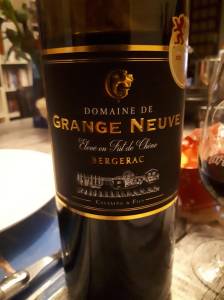
AOP Bergerac red: Grape varieties: Merlot, Cabernet Sauvignon, Cabernet Franc, Malbec. Characteristics: Made from the vineyard’s traditional grape varieties, these wines offer a balance of structure and suppleness, with vibrant aromas of red fruits. They are delicious even in their youth, and their aging potential will vary depending on the type of aging. AOP Bergerac Sec (dry): Grape varieties: Sauvignon, Sémillon, Muscadelle. Characteristics: These dry white wines are quite lively, fruity, or floral. The often predominant presence of Sauvignon enhances the fruity aromas and citrus notes, while the Sémillon makes them fuller-bodied, and the Muscadelle adds a touch of finesse. AOP Bergerac rosé: Grape varieties: Merlot, Cabernet Sauvignon, Cabernet Franc, Malbec Typicality: Made from red grape varieties, these rosé wines offer a wide variety of styles, from pale pink with subtle aromas to saignée rosés with a bright color and deep notes of red fruits. The main red grape varieties are Cabernet Franc N, Cabernet Sauvignon N, Côt N and Merlot N. The complementary grape varieties are Fer Servadou N and Mérille N, locally called “Périgord Noir”. The complementary grape varieties are limited to 25% of the vineyard and no main grape variety can exceed 65% of the vineyard. The main white grape varieties are Muscadelle B, Sauvignon Blanc B and Gris G and Sémillon B. Ugni Blanc B is complementary and Chenin B and Ondenc B are secondary. The proportion of the main grape varieties together must be at least 75% of the vineyard. Ugni Blanc is limited to 25% and must be less important than the two Sauvignons combined. Accessory grape varieties are limited to 20%
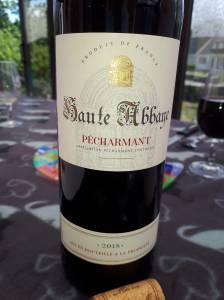
At the gates of Bergerac, from this contemplative hill, wines are born with a beautiful dark and dense red color. The Pécharmant wines are powerful, elegant and generous wines with a full and rich mouthfeel. In their style as in their wines, the winemakers of Pécharmant stand out for their elegant and charming character. But a doubt still remains today on the origin of the name Pécharmant which arouses all the curiosities: “Pech” means “hill” in Occitan, is it then a charming hill? Did the hill belong to a certain Armand? 2M Bottles produced per year ,450 Hectares, and 45 Producers , The Pécharmant appellation has been recognized as an Appellation d’Origine Contrôlée (AOC) since 1946. Production is only done in 4 villages/towns ofCreysse, Bergerac, Lembras and Saint-Sauveur. The Pécharmant vineyard extends over a succession of hills arranged in a semicircle north of Bergerac, on the right bank of the Dordogne. Its particularity comes from its soil of “Périgord sands and gravels” resulting from the transformation of the granite rocks of the Massif Central. The temperate oceanic climate favors good ripeness of the grapes and a concentration of sugars and aromas. AOP Pécharmant grape varieties: Merlot, Cabernet Sauvignon, Cabernet Franc, and Malbec, Typicality: Pécharmant produces distinguished and complex wines. These are wines for laying down. Aromatically, black fruits dominate with notes of blackberry and blackcurrant, vanilla and spicy notes if the aging is carried out in oak barrels.
My latest tastings of Pécharmant were Château de Biran, Château de Tiregand, and the Pourpre of the Domaine de l’Ancienne Curé.


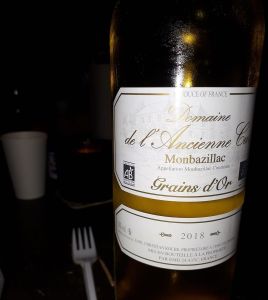
Monbazillac is the largest sweet wine appellation in the world. Harvested by successive selections, it is a very elegant sweet wine, with a golden color, taking on an amber hue as it ages. This wine exudes honeyed and candied aromas of citrus (lemon, grapefruit), flowers (acacia), fruits (apricot, fig, mirabelle plum, peach) and gingerbread. It will delight the palate of the most demanding wine lovers as it will seduce the most curious among us. 7.5M bottles produced per year ,2,320 hectares, and 120 producers , The monks of Saint Martin are to Monbazillac what the Tatin sisters are to the famous tart. Happy coincidence or deliberate imprudence, a missed opportunity resulted in the birth of the first sweet wine in this part of the vineyard. The monks, too busy and having neglected their vines, combined with the alternating action of morning mists and sunshine on the hillsides, favored the appearance of “botrytis cinerea” better known as “noble rot”. Since 1936, the date of creation of the AOC, the Monbazillac (my dear late wife Martine favorite wine) appellation area has been delimited to the north by the Dordogne valley. The vineyard starts on the first terraces of the left bank then climbs in stages the steep slopes exposed due north, facing the town of Bergerac to the small plateaus which dominate the valley. AOP Monbazillac grape varieties: Sauvignon, Sémillon, and Muscadelle, Typicality: Monbazillac is harvested by hand in successive selections, it offers wines balanced between fruit and freshness. There are two types: Classic Monbazillac whose sweetness is in the first tranche of sweet wines. It is ideal as an aperitif and during a meal with selected dishes. Monbazillac sélection de grains nobles has a sweetness of over 85 grams and is a pleasure to enjoy neat or with a dessert. It reveals notes of orange peel and candied fruit.
My latest tastings of Monbazillac (and my dear late wife Martine favorite) was the Domaine de l’Ancienne Curé Grains d’Or.
The official Bergerac Duras wines : https://www.vins-bergeracduras.fr/
There you go folks, another wonderful region of my belle France. The southwest or sud ouest wines and its many other attributes are dear to my family, and we have drank it quite a bit over the years, even from before settling in France , A region that is on my list , to revisit, eventually, Again, hope you enjoy the post ,I give you the Bergerac, Monbazillac, and Pécharmant wines of the southwest !!! as I
And remember, happy travels, good health, and many cheers to all !!!

 Paris1972-Versailles2003