
We were back on my road warrior trails in the Loire valley, and this was a must stop again from home on the N165 , A11 , A85 on exit 11 to the D31 to D764 to D760 and our parking at place de Verdun,and we continue our tour with a visit the church in the cité royale, Loches is located in the Indre-et-Loire department 37, in the Centre-Val de Loire region of my belle France, Therefore, let me tell you more on the Collegiate Church Saint-Ours of Loches !!! Hope you enjoy it as I.
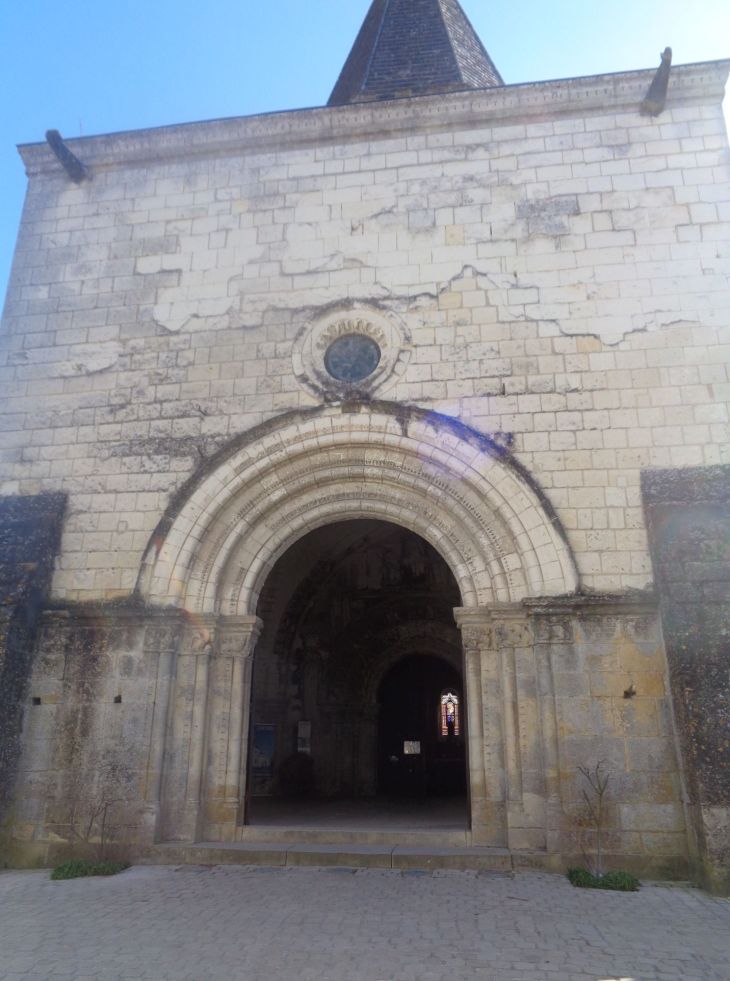
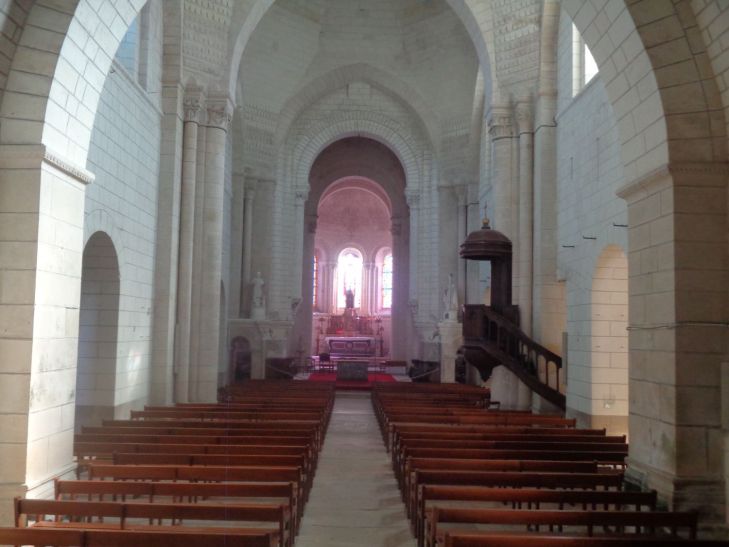
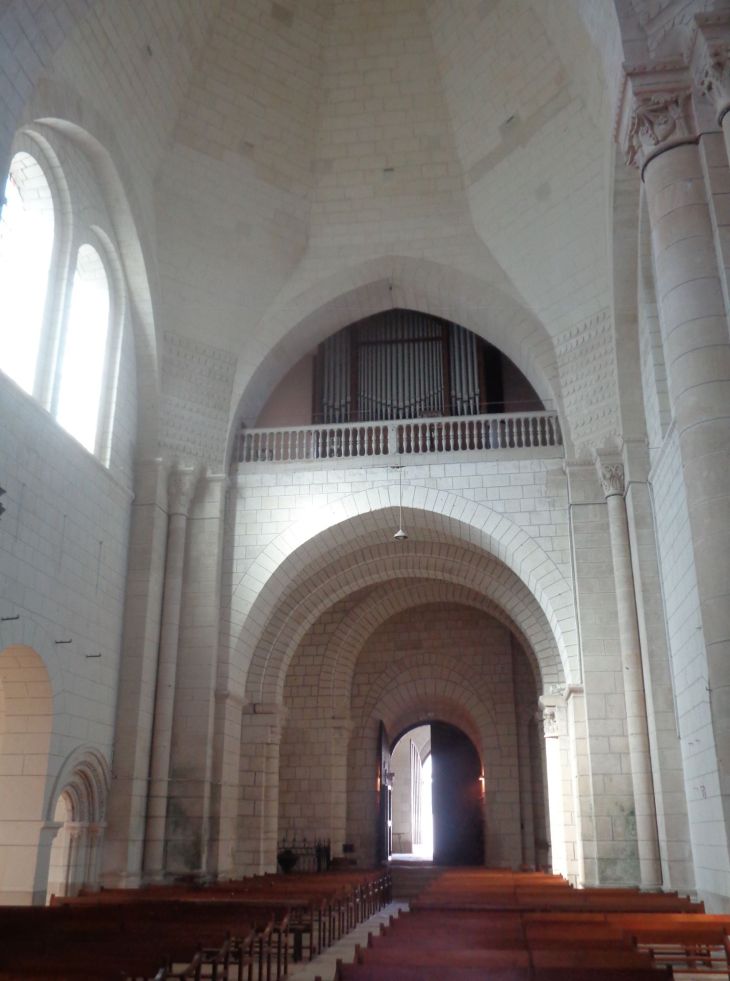
The Collegiate Church of Saint-Ours was done in Romanesque style,with numerous capitals decorated with floral motifs, fantastic animals and characters. you will discover its original silhouette with its nave topped with two octagonal pyramids called “dubes”. This profile, unique in France, can be seen from afar in the valley. You enter the church through a very richly decorated polychrome portal. This sculpted ensemble is one of the most beautiful Romanesque examples in the Loire Valley. As you enter, look up to discover the impressive volumes of the dubes overlooking you.
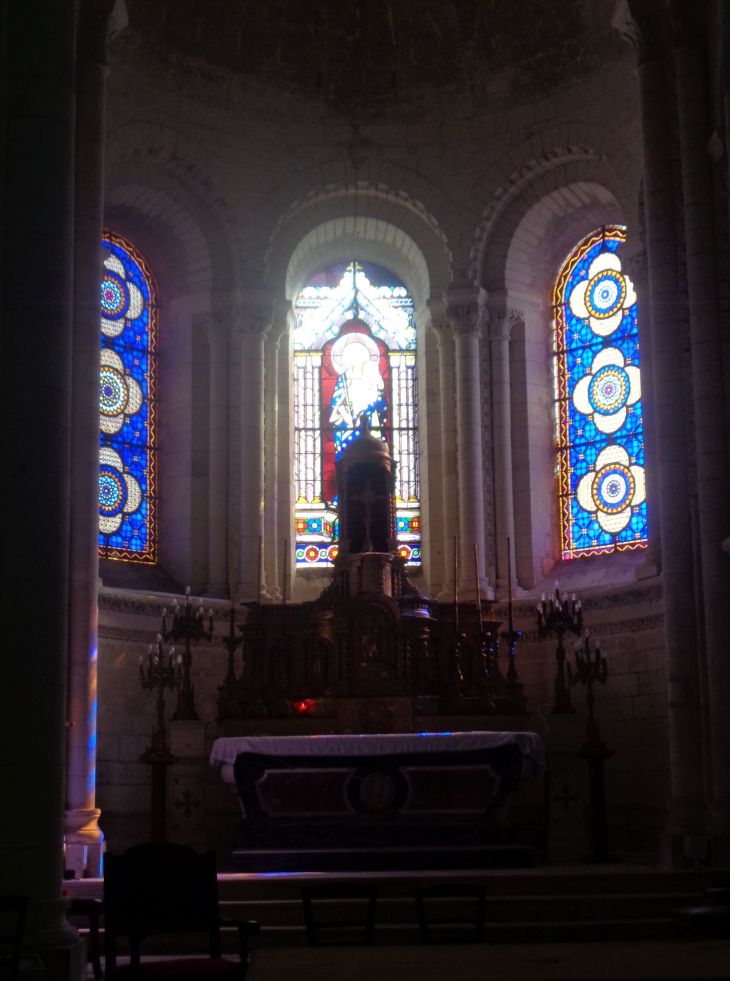
A true Romanesque splendor, the Collegiate Church Saint-Ours dates mainly from the 12C. Originally dedicated to Notre-Dame, the collegiate church of Loches was built to house a precious relic: the Virgin’s belt. It was then served by a college of twelve canons, hence the title of collegiate church. It was during the French revolution that it became the parish church of Saint-Ours. Its architecture includes two exceptional elements: a polychrome portal sculpted with fantastic characters and animals characteristic of the Romanesque bestiary, two hollow octagonal pyramids called “dubes”, which cover the nave, constituting a unique feature in France. The Collegiate Church offers a unique profile in France: the two steeple bell towers are separated by two eight-sided pyramidal domes (locally called “dubes”), rebuilt identically in the 19C. Before the Revolution, the building was called the Collegiate Church of Notre-Dame. It then became the parish church of Saint-Ours, which was the name of a destroyed church.
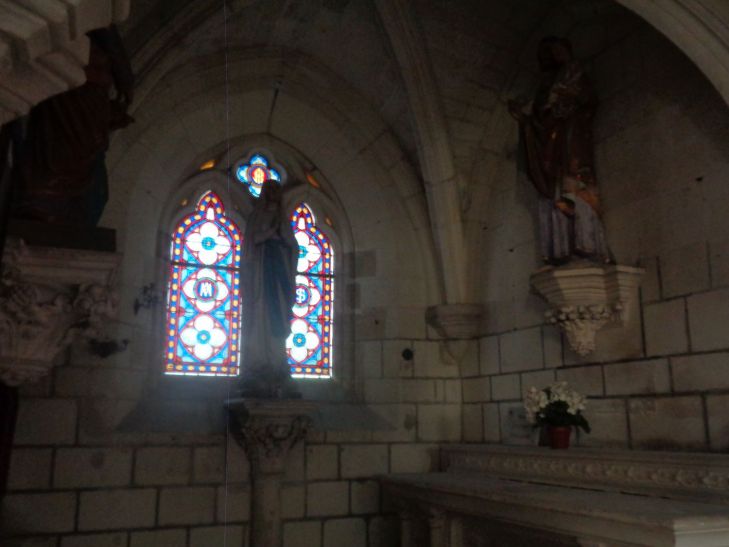
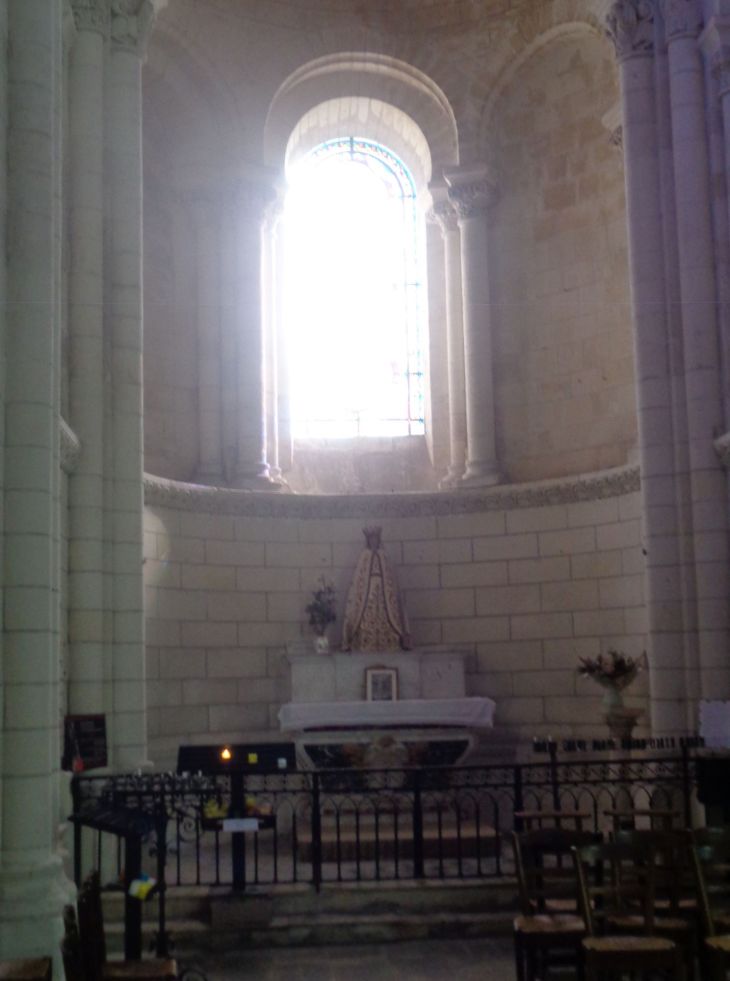
See the nice Chapelle Notre-Dame de Beautertre. A local story tells that, 900 years ago, a peasant saw one of his oxen lick a large hazel tree and no longer eat. Intrigued, the shepherd discovered a statue of the Holy Virgin carved in the thickness of the tree. He cut it up and took it home. The crowd rushed; the prayers addressed to the statue were the source of many miracles. A chapel was built, a priest was appointed. And the favors of the Virgin continued. The French revolution destroyed the sanctuary. The miraculous statue then found asylum in the Collegiate Church Saint Ours of Loches.
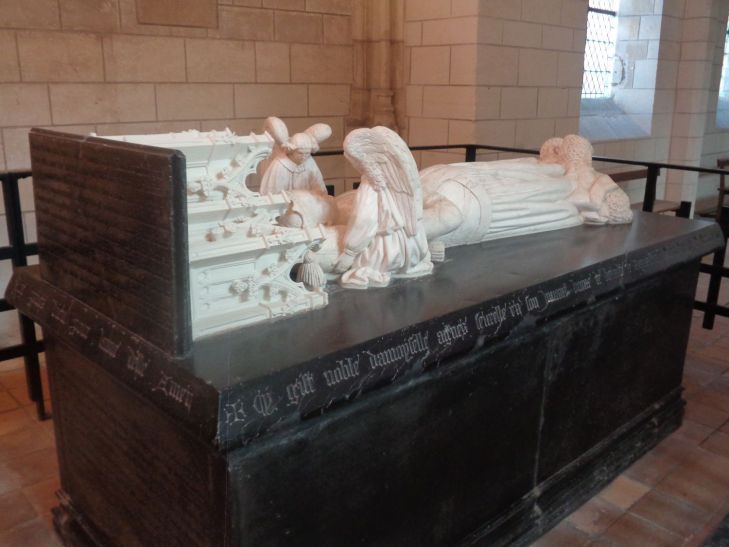
A masterpiece of late medieval art awaits you in the north aisle. The finely sculpted alabaster tomb of Agnès Sorel protects the “lady of beauty” for eternity. This tomb, worthy of a queen, demonstrates the power of Charles VII’s feelings for his favorite. It was in 1450 that the tomb of Agnès Sorel, Charles VII’s favorite, was installed in the Collegiate Church of Loches according to the wishes of the deceased. The first official favorite of a king of France, she benefited from a sumptuous tomb, undoubtedly at the initiative of Charles VII. The alabaster recumbent figure is placed on a slab and a black marble chest. It is a recumbent figure of princely quality for a simple favorite of the king, which gives this monument an exceptional character. The tomb of Agnès Sorel was moved five times in succession within the collegiate church and the royal residence before being returned to the collegiate church in 2005. During this last move, a paleopathological study was carried out on the remains of the Lady of Beauty. While doubts still remain about the precise circumstances of her death, this study made it possible to define the causes of death attributed to a mercury overdose. The hypothesis of criminal poisoning has also been put forward. In order to restore the tomb to its original layout, which had been damaged during the French revolution and then during a restoration at the beginning of the 19C, a new restoration was undertaken in 2015.
The story begins in the 5C when the hermit Ursus (Bear) founded a monastery on the rocky promontory that shelters the royal city of Loches. In 965, Geoffroy Grisonnelle, father of Foulques Nerra, had the collegiate church of Notre-Dame du Château built to house a relic: the belt of the Virgin. The current monument is the work of the prior Thomas Pactius. It mainly dates from the 12C: a timbered nave built in the 11C was consolidated.
The City of Loches on the Collegiale Saint Ours : https://www.ville-loches.fr/collegiale-saint-ours-un-edifice-en-restauration-article-3-11-109.html
The local Loches Val de Loire tourist office on the Coll Church Saint Ours: https://loches-valdeloire.com/sit/collegiale-saint-ours-pcucen0370000087/
The Val de Loire Centre Val de Loire region tourist office on the Coll Church Saint Ours: https://www.valdeloire-france.com/site-culturel/collegiale-saint-ours/
There you go folks, I came back to the magnificent Loire valley. Loches is nice worth the retour and will be back, eventually. Again, hope you enjoy the post on the Collegiate Church Saint-Ours of Loches !!! as I.
And remember, happy travels, good health, and many cheers to all !!!


