
So we came to a new town in my road warrior mode, A nice easy ride along marvelous roads, and we left early to have the most of the day, sunny cool nice. Time to see other towns in our way ,and introduce you to new ones a never ending supply of beauties of my belle France, I again found me more beauties in my cd rom vault that should be in my blog for you and me. Therefore, here is my take on the Abbey of Saint Savin in Saint Savin sur Gartempe !!! Hope you enjoy it as I.
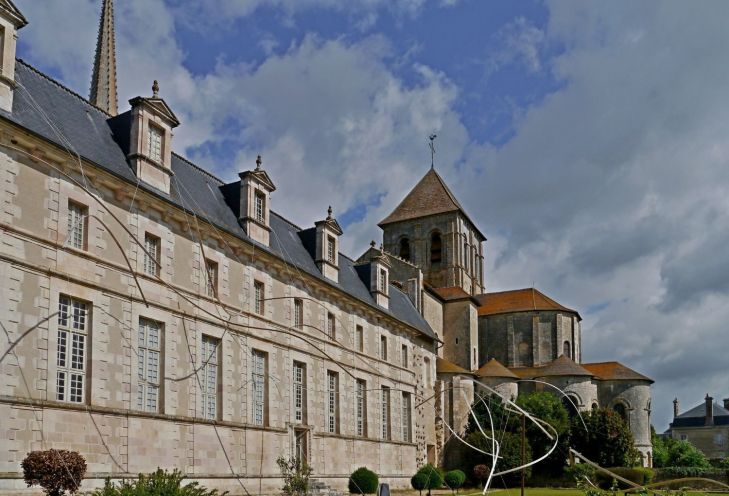
The town of Saint-Savin, aka Saint-Savin-sur-Gartempe is located in the department of Vienne, no. 86 in the Nouvelle-Aquitaine region of my belle France It is 75 km from Poitiers, 120 km from Tours, 100 km from Limoges, The Océan highway on the N151 crossesthe town directly linking Geneva to Bordeaux and La Rochelle. The N147 runs north-south through the center of the region (Poitiers – Lussac-les-Châteaux – Limoges). The D951 runs east-west in the north of the region (Poitiers – Chauvigny – Saint-Savin – Châteauroux). My current home is 475 km away, and we came on the N165 past Nantes took the A83 to connect with the A10 and on exit 29 took the N147 to the connection with the D951 around Chauvigny continue on the D951 to connect with the D11 into the abbey in Saint Savin.
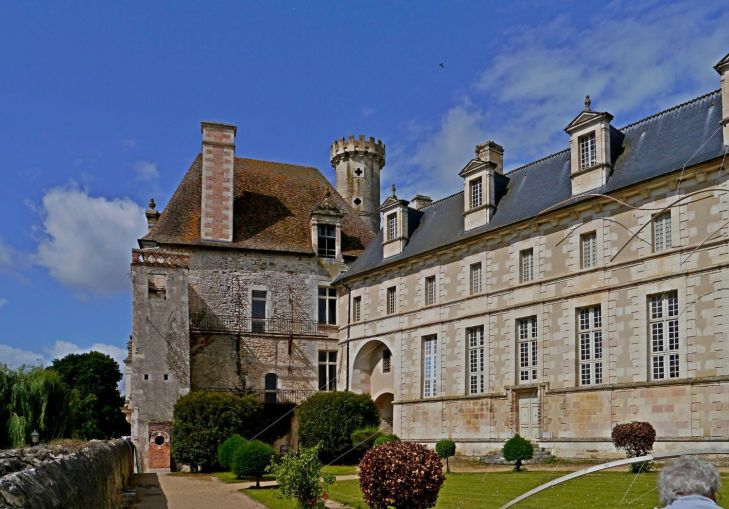
The Abbey of Saint-Savin-sur-Gartempe charter of foundation of the abbey having disappeared during the wars of religion in 1598, the date of its foundation remains imprecise but it was founded under Charlemagne at the beginning of the 9C. It was built for the SaintsSavin and Cyprien of whom much is still unknown today. The Abbey is characteristic of the maturity of the Romanesque style. The Notre-Dame abbey is known for its murals but it is also a reference in architecture with a nave aiming for magnificence. It creates a symbiosis between architecture and mural painting, capitals and altars, characteristic of Romanesque churches. Generally speaking, the construction dates from the 11C. The porch is not perpendicular to the transept. It is off-center. Indeed, the old Carolingian nave remained between them during its construction, which did not allow the distances and the construction axis to be assessed. On the tympanum above the door giving access to the nave is a large stone Christ in glory, seated on a throne, in a circular mandorla. He opens his arms as if to welcome the faithful and bless them with his right hand in the Byzantine manner, that is to say, thumb and ring finger joined. To his right, two angels present the cross, one of the instruments of the Passion of Christ. On the first arch, in groups of three, twelve adoring angels prostrate themselves before Christ and twelve apostles (six have disappeared) are represented seated on globes, holding a book. On the second arch, the iconography is read from right to left: the Virgin framed by two angels who incense her is seated on a throne. To his right are the abbot and the monastic community of Saint-Savin. To her left, from left to right, four important figures related to the history of the abbey appear before her: Charlemagne, Louis the Pious, Saint Benedict of Aniane and William V, Count of Poitou and Duke of Aquitaine. Saint John, seated on the left, sees the Ark of the Covenant appear in the sky in his sanctuary. It also sees a woman who is going to give birth to a boy. A red dragon with seven heads and ten horns waits for the child to be born to devour him, but an angel takes him and takes him to safety in the sky. To get revenge, the dragon vomits a river to drown the woman, but the earth swallows the river. To escape the dragon, the woman is equipped with the wings of the eagle and takes refuge in the desert. This scene is taken from the Apocalypse of St. John The following scene is again taken from the Apocalypse of St. John. God gives seven angels a trumpet. By playing the instrument, each angel will bring down destructive plagues on the earth. The sculpted scene represents what happens at the sound of the fifth trumpet: the angel opens the pit of the Abyss and releases the locusts or grasshoppers with the body of a horse and the head of a crowned man wearing a woman’s hair, lion’s teeth and a scorpion’s tail. These monsters will torment for five months the men who do not have the seal of God on their foreheads;In this central part, in the twelve medallions were represented the signs of the zodiac; The sixth angel of the Apocalypse sounds the trumpet. He is charged with freeing the four horsemen chained on the Euphrates River so that they can create an army that will consist of two hundred million horsemen. The strength of their mounts comes from their serpent tails that spit fire and smoke and that will destroy a third of humanity; Mounted on a white horse and accompanied by angels armed with swords, Saint Michael slays the dragon.
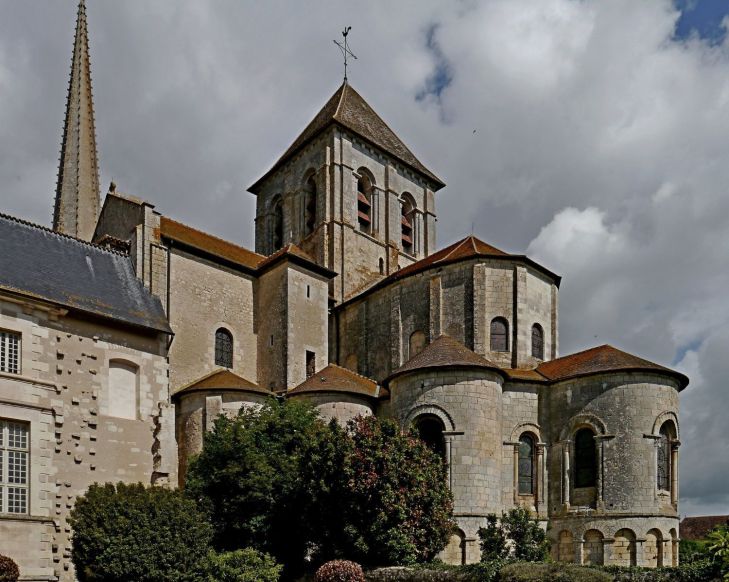
A bit of condense history I like tell us that in the 11C, a work was created, The Passion of Saint Savin and Saint Cyprien, which is mainly in the epic genre. According to tradition, it was in the 5C that two brothers, Savin and Cyprien, who were fleeing Macedonia where they were persecuted because they were Christians, were finally joined on the banks of the Gartempe. They were martyred and beheaded there. Savin was buried by priests not far from the current town, in a place called Cerisier. Three centuries later, the relics of the two martyrs having been found at the site of their massacre, Badillus, a cleric at the court of Charlemagne, decided to found an abbey church there to preserve the precious relics. Saint Benedict of Aniane, in 821, enforced the rule of Saint Benedict there and had about twenty monks installed there. He appointed Abbot Eudes I, who had the first church built
Construction and decoration lasted from 1040 to 1090. From this period dates the deposit of an extraordinary cobalt blue glass used as a reliquary, found in 1866 by Abbot Lebrun during an altar change. This precious vase is the only intact specimen known to date, of a prestigious production made somewhere in Western Europe. The blue glass of the Abbey of Saint-Savin at the Poitiers Museum, an extremely rare example of a prestigious Carolingian production in Europe. In the 13C, Count Alphonse de Poitiers, brother of Saint Louis, financed the construction of the convent buildings. For many years, Saint-Savin remained one of the most influential abbeys in France. The Hundred Years’ War sounded the death knell for the prosperity of the monastery, which changed hands several times (English, French, the Black Prince). In 1371, the Black Prince Edward of Woodstock set fire to the monastery. During the Wars of Religion, Catholics and Protestants fought over its possession. It was devastated first by the Huguenots in 1562 and 1568, who burned the medieval stalls, the two organs, the relics, the archives and the roof structure, then by the royal army in 1574. From 1611, one of these abbots, Henri de Neuchèze, chased the monks away and settled in the abbey church, which he made his home. He was, in turn, driven out on the orders of King Louis XIII in 1640. It was also in 1640 that the installation by the king of monks from the congregation of Saint-Maur who came from the abbey of Nouaillé made it possible to put an end to this long period of destruction. Between 1682 and 1692, the restoration of the abbey church and the construction of new convent buildings began. In 1792, the abbey church became a parish church and the last four monks left the abbey. The convent buildings became a teacher’s residence, a police station until 1971, and the cloister became the scene of revolutionary festivals. Prosper Mérimée, the second general inspector of historical monuments, undertook the most urgent restorations from 1836.. Thus in 1849, thanks to Mérimée, it was considered provisionally saved. From 1967 to 1974, restorations were carried out on the vault of the nave and its paintings, in the crypts, the choir and on the gallery. The abbey complex and its paintings underwent a major restoration project between 2005 and 2008 to improve the conservation of the paintings (fiber optic lighting, restoration of the paintings, repair of the stained glass windows, etc.) and the reception of visitors. A13C bridge crosses the Gartempe almost opposite the abbey. It is extended by the Grand Rue crossing the oldest part of the town. Further on, this street crosses the rue des Bans bordered by a 17C post house. The old city was surrounded by ramparts, some of which still stand on rue des Murailles and rue des Tanneries. Saint-Savin welcomed the advances of the French revolution It thus planted its tree of liberty, symbol of the Revolution The central arch of the bridge over the Gartempe was sabotaged by the FFI in the summer of 1944. In 1945, to celebrate the Liberation and the return of the Republic, a tree of liberty was planted: it was a lime tree.
The official abbey of Saint Savin : https://www.abbaye-saint-savin.fr/en
The town of Saint Savin on the abbey : https://www.saint-savin.fr/index.php/vie-locale/12-eglise-et-abbaye
The local south Vienne Poitou tourist office on the abbey : https://www.sudviennepoitou.com/en/exploring/svp-cultural-diversity/abbey-of-saint-savin-and-the-valley-of-the-frescoes
There you go folks, a nice town we should had come back earlier but there is always tomorrow and glad we finally reach it . Another star in my map of France and the world. Again, hope you enjoy this post on the Abbey of Saint Savin in Saint Savin sur Gartempe !!! as I,
And remember, happy travels, good health, and many cheers to all !!!


