
I continue my journey in and around the pink city of Toulouse, one of my favorite in my belle France. On our way back, we stop by Rocamadour , and finally was able to find me pictures in my cd rom vault to show in my blog for you and me, This is great wonderful village and great family times. Let me tell you about it bear with me on the next posts, This time let me tell you of the Château of Rocamadour !!! Hope you enjoy the post as I.
The Village of Rocamadour of about 610 inhabitants is located in the department of Lot No 46, in the Occitanie region of my belle France. It belongs to the Dordogne valley, It is about 61 km from Cahors, 53 km from Brive-la-Gaillarde, 163 km from Toulouse (from where we visit taking finally the D32), 219 km from Bordeaux, 525 km from Versailles, and 588 km from my current home, You reach it easily from the A20 highway sortie/exit 56,
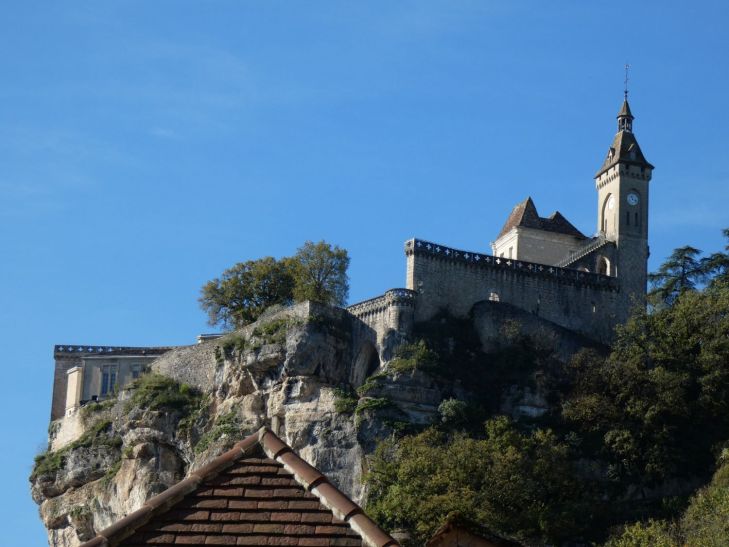
We needed to stop by the castle, this is a wonderful property in renovation, The château of Rocamadour and Belfry of 120 meters, It was here at the foot of the castle that I found free parking on a shaded area under oaks, Wonderful !
It was the former residence of the Chapelains de Rocamadour ,built on the basics of a 14C fortified castle which participated in the defense of the Rocamadour sanctuary. Located on the plateau, 70 meters above the sanctuary, the castle dominates the Alzou valley. Given you a beautiful panorama available to visitors with a 360 -degree view. The castle of Rocamadour was built against medieval ramparts in the 19C. Flanked by a bell tower equipped with a chime, this castle built in limestone, is today the emblematic symbol of the heritage of Rocamadour.
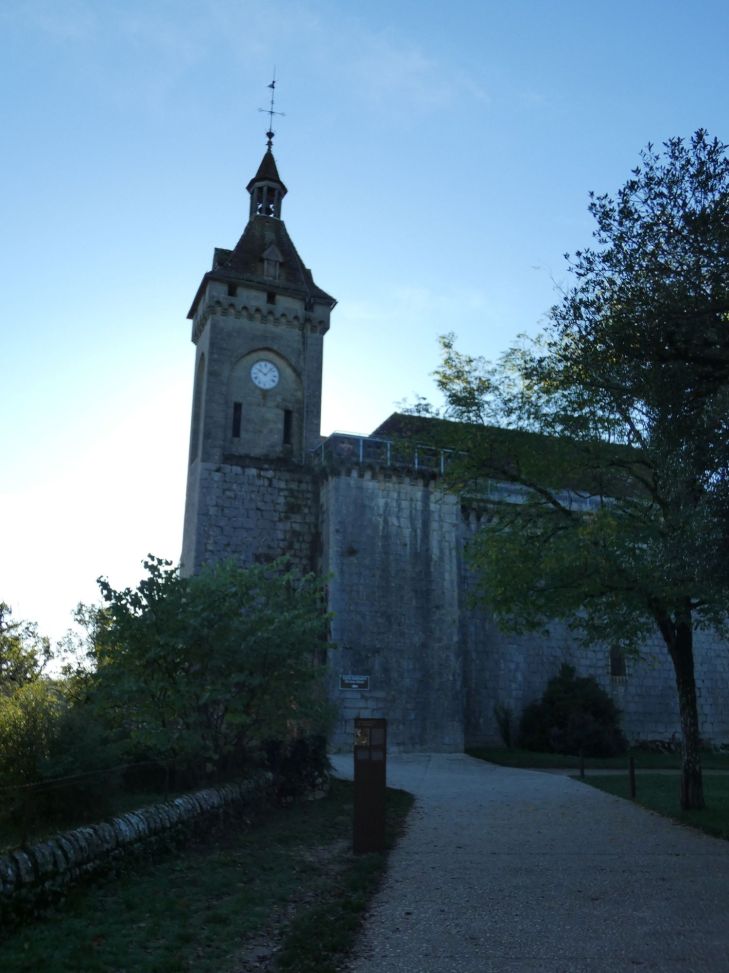
The ramparts dating from the 14C remind us that the “castle” was above all part of the Rocamadour defensive system in the Middle Ages. Its construction probably dates from the 13C. It was a question during the Hundred Years War of protecting the sanctuary and the city from the top of the plateau. These ramparts connect the northern and southern edges of the rocky spur overlooking churches and houses. A garrison lived in a “strong house”, rather than a “castle”. An eight -meter -wide ditch completed this defensive system. A secret staircase, starting from the inner courtyard allowed soldiers to return to the sanctuary as quickly as possible, or to escape from their guard room in the dungeon, the north tower backed by the Saint-Sauveur abbey.
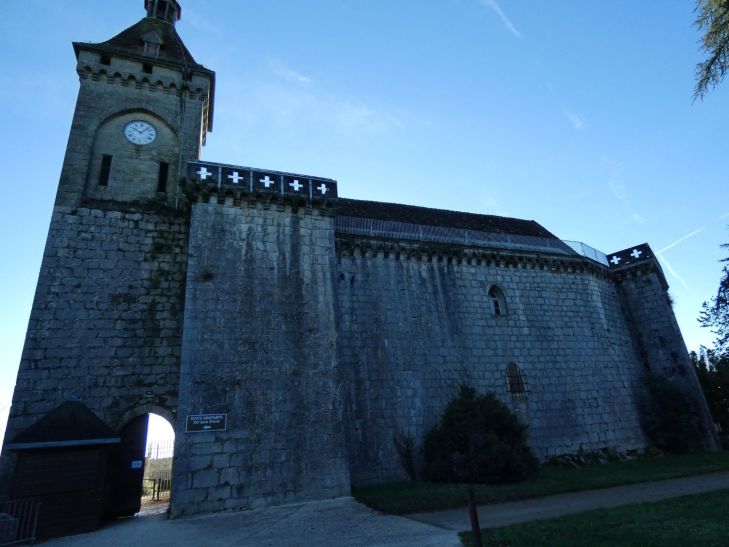
The fortress will still serve during the wars of religion so violent, but will become unnecessary during the Renaissance. In the 17C, it was no longer maintained and fell in ruins. On the advice of a friend, Father Caillau, parish priest of Sainte-Geneviève in Paris, came to rest in Rocamadour. Very sick, he celebrates Mass in Notre Dame’s Chapel and asked for help from the Black Virgin. Miracle ! He instantly finds health, and to thank Notre-Dame de Rocamadour, he buys the fortress, put on auction by the city hall, on September 11, 1836, the work was completed in 1841. Finally, Father Caillau sold the castle and all its outbuildings in the diocese on 7 May 1850. In 1895, the chaplains decided to build a belfry with a clock on the entrance tower on the north side, then a water tank under the clock the following year. The Notre Dame reception center, or relay of the pilgrim, received the pilgrims .
The town of Rocamadour on its heritage :https://mairierocamadour.fr/decouverte/histoire-et-patrimoine/
The official Sanctuary of Notre Dame of Rocamadour on the castle: https://www.sanctuairerocamadour.com/sanctuaire/lieux/chateau/
The local Dordogne valley tourist office on Rocamadour: https://www.visit-dordogne-valley.co.uk/discover/cultural-heritage/villages-to-visit/rocamadour
The Lot dept 46 tourist office on Rocamadour : https://www.tourisme-lot.com/rocamadour/visiter-rocamadour
There you go folks, you will love your walks here, we did and always looking forward to be back, eventually. Again, hope you enjoy this post on the Château of Rocamadour !!! as I.
And remember, happy travels, good health, and many cheers to all !!!

 Paris1972-Versailles2003