
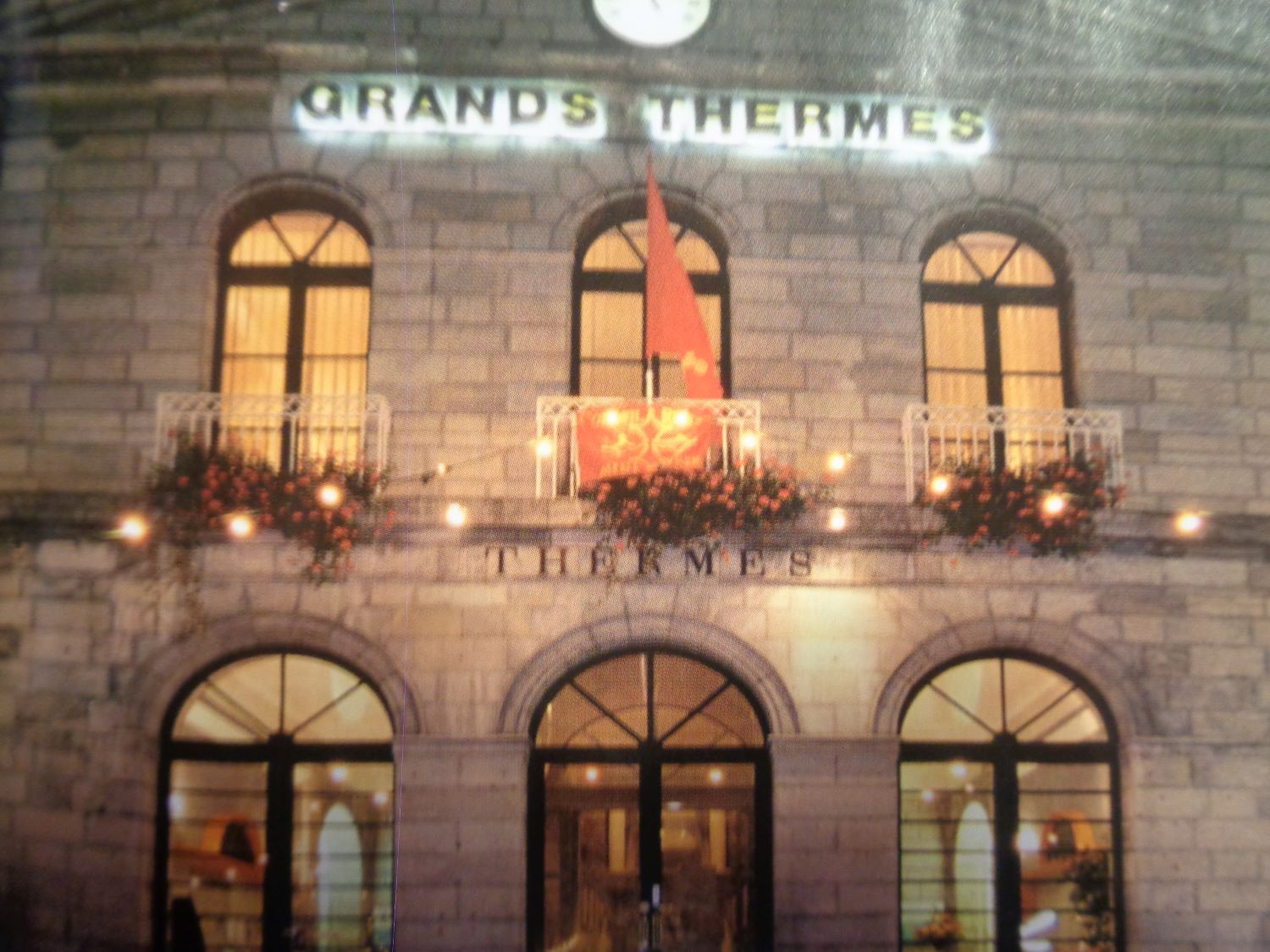
 The Allées des Coustous is the spine of life in town since the 17C by Place Achille Jubinal,,and continuation reach Place Lafayette, This urban development constituted the center of worldly animation and brought together shops and pensions, Travelers in the 19C, some houses were converted to coffee and large hotels, making esplanade a privileged place in high society of the times.
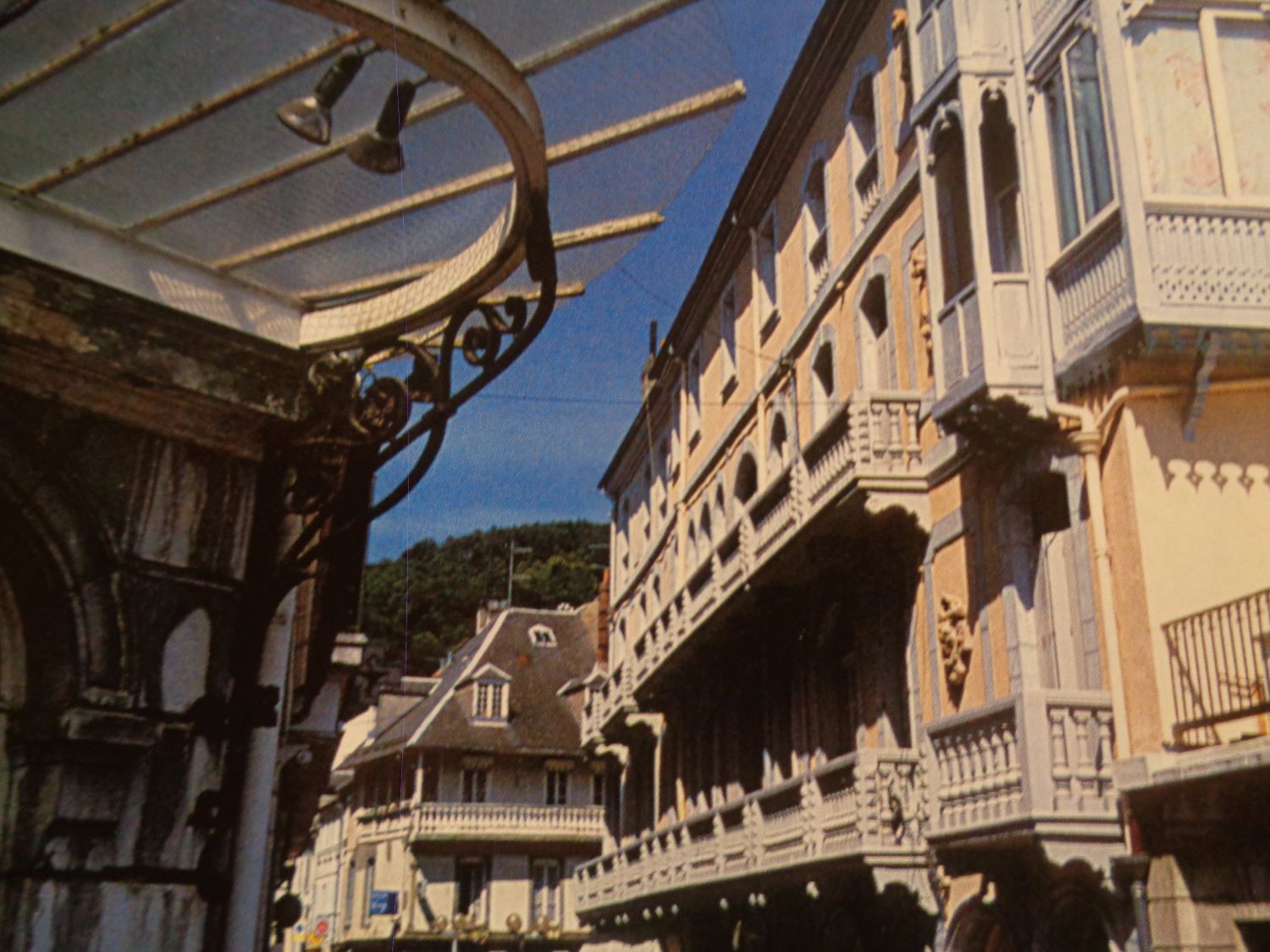 At Place de Strasbourg ,that was told before was called the place du Marché. I saw this house from 1562 call the Maison de Jeanne ; some say Jeanne Albret lived here but no documentation found,
 The Place Lafayette is the junction of roads D938 and D935, which we were on the 935, and found nice parking near the Church Saint Vincent but no time to go by it,
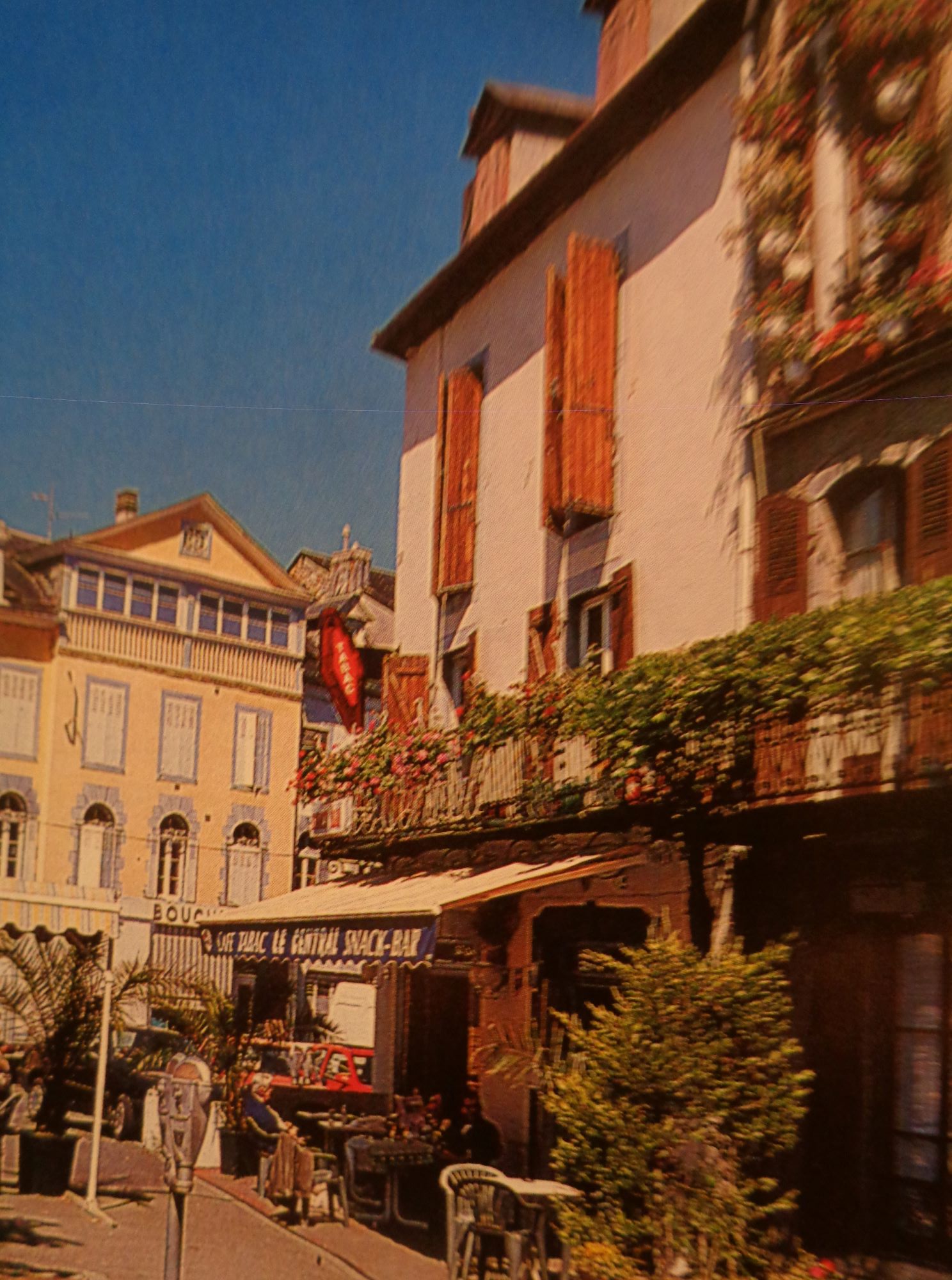 Other things to see here with more time are : The Saint-Vincent Church, dating from the 14C, was built on a sanctuary of Paleo-Christian origin, the Notre-Dame de la Mongie Chapel. The halles or covered market style Baltard. The city has three museums: the Museum of Fine Arts (Salies Museum) which is below the oldest part of the thermal baths Les Bains du Dauphin dating from 1783, the Museum of Natural History Salut, and the marble museum created in 2007. The latter presents more than 300 large samples of European marbles, The town presents remarkable dwellings including the house of Uzer whose facades, roofs and many interior elements are classified or the house of Jeanne d’Albret, remarkable for the ground floor of its facade , The town’s territory is very elongated in the mountains. It is an area made up of the western extensions of the massifs de Neouvielle and the Arbizon. Included in the Pyrenees National Park, the town has a remarkable natural heritage: four Natura 2000 sites such as the Neouvielle, the Léviste Bleu Lac, the Adour valley and Liset de Hount Blanque, A protected space ,the Adour and tributaries, and seventeen natural areas of ecological, fauna and floristic interest. The history of Bagnères is to be linked to the Winter Sports station of La Mongie, located partly on the territory of the town and attached to the Domaine du Tourmalet, the largest ski area of the French Pyrenees.
A bit of history tell us that from the end of the Roman Empire to 1171, no document or vestige brings indications on local history. From the 12C to the beginning of the 14C, the town increased population and size. Bagnères became a rich city when a plague epidemic strikes it in 1349. During the Hundred Years War, in 1360, the town became English possession, a year before a new epidemic of plague. Henri de Trastamare, allied of the King of France, plundered, ransom and burned the town in 1427, Jeanne d’Albret, Queen of Navarre and Countess of Bigorre, converted to Protestantism in 1560. The following year, she tried to impose the reform but the Bagnérais remained mainly faithful to Catholiscism, The King of France reacts militarily against the Protestants. While Jeanne d’Albret is in La Rochelle to help the Protestants who are fighting there, the French armies seize the Béarn, At the end of the wars of religion, Bagnères was ruined , In 1606, the accession of Henri de Navarre to throne of France under the name of Henri IV definitively attached the province to the kingdom of France, From 1789 to 1793, during the French revolution the “moderate suspects” come to take refuge in the town, ready to flee to Spain if the situation worsens . The Great War or WWI allows the expansion of the local industry, especially in the field of rolling rail equipment. During WWII, a punitive expedition of a company of SS in retaliation against the actions of the Resistance in the region, in June 1944, The town of Bagnères de Bigorre received the war on the order of the division medal,
The town of Bagnéres de Bigorre on its heritage : https://www.ville-bagneresdebigorre.fr/patrimoine
The local Tourmalet pic du midi tourist office on Bagnéres de Bigorre : https://www.tourmaletpicdumidi.fr/la-destination/les-lieux/bagneres-de-bigorre/
The official Grands Thermes of Bagnéres de Bigorre : https://www.thermes-bagneres.fr/
There you go folks, a dandy area to explore and enjoy with the family, Memorable moments in my belle France, driving all over in my road warrior trails brings out sublime awesome spots with nice memorable family visits of yesteryear always remember and always looking forward to be back, eventually. Again hope you enjoy the post on this is Bagnéres de Bigorre as I.
And remember, happy travels, good health, and many cheers to all !!!
Other things to see here with more time are : The Saint-Vincent Church, dating from the 14C, was built on a sanctuary of Paleo-Christian origin, the Notre-Dame de la Mongie Chapel. The halles or covered market style Baltard. The city has three museums: the Museum of Fine Arts (Salies Museum) which is below the oldest part of the thermal baths Les Bains du Dauphin dating from 1783, the Museum of Natural History Salut, and the marble museum created in 2007. The latter presents more than 300 large samples of European marbles, The town presents remarkable dwellings including the house of Uzer whose facades, roofs and many interior elements are classified or the house of Jeanne d’Albret, remarkable for the ground floor of its facade , The town’s territory is very elongated in the mountains. It is an area made up of the western extensions of the massifs de Neouvielle and the Arbizon. Included in the Pyrenees National Park, the town has a remarkable natural heritage: four Natura 2000 sites such as the Neouvielle, the Léviste Bleu Lac, the Adour valley and Liset de Hount Blanque, A protected space ,the Adour and tributaries, and seventeen natural areas of ecological, fauna and floristic interest. The history of Bagnères is to be linked to the Winter Sports station of La Mongie, located partly on the territory of the town and attached to the Domaine du Tourmalet, the largest ski area of the French Pyrenees.
A bit of history tell us that from the end of the Roman Empire to 1171, no document or vestige brings indications on local history. From the 12C to the beginning of the 14C, the town increased population and size. Bagnères became a rich city when a plague epidemic strikes it in 1349. During the Hundred Years War, in 1360, the town became English possession, a year before a new epidemic of plague. Henri de Trastamare, allied of the King of France, plundered, ransom and burned the town in 1427, Jeanne d’Albret, Queen of Navarre and Countess of Bigorre, converted to Protestantism in 1560. The following year, she tried to impose the reform but the Bagnérais remained mainly faithful to Catholiscism, The King of France reacts militarily against the Protestants. While Jeanne d’Albret is in La Rochelle to help the Protestants who are fighting there, the French armies seize the Béarn, At the end of the wars of religion, Bagnères was ruined , In 1606, the accession of Henri de Navarre to throne of France under the name of Henri IV definitively attached the province to the kingdom of France, From 1789 to 1793, during the French revolution the “moderate suspects” come to take refuge in the town, ready to flee to Spain if the situation worsens . The Great War or WWI allows the expansion of the local industry, especially in the field of rolling rail equipment. During WWII, a punitive expedition of a company of SS in retaliation against the actions of the Resistance in the region, in June 1944, The town of Bagnères de Bigorre received the war on the order of the division medal,
The town of Bagnéres de Bigorre on its heritage : https://www.ville-bagneresdebigorre.fr/patrimoine
The local Tourmalet pic du midi tourist office on Bagnéres de Bigorre : https://www.tourmaletpicdumidi.fr/la-destination/les-lieux/bagneres-de-bigorre/
The official Grands Thermes of Bagnéres de Bigorre : https://www.thermes-bagneres.fr/
There you go folks, a dandy area to explore and enjoy with the family, Memorable moments in my belle France, driving all over in my road warrior trails brings out sublime awesome spots with nice memorable family visits of yesteryear always remember and always looking forward to be back, eventually. Again hope you enjoy the post on this is Bagnéres de Bigorre as I.
And remember, happy travels, good health, and many cheers to all !!! 
 Paris1972-Versailles2003