
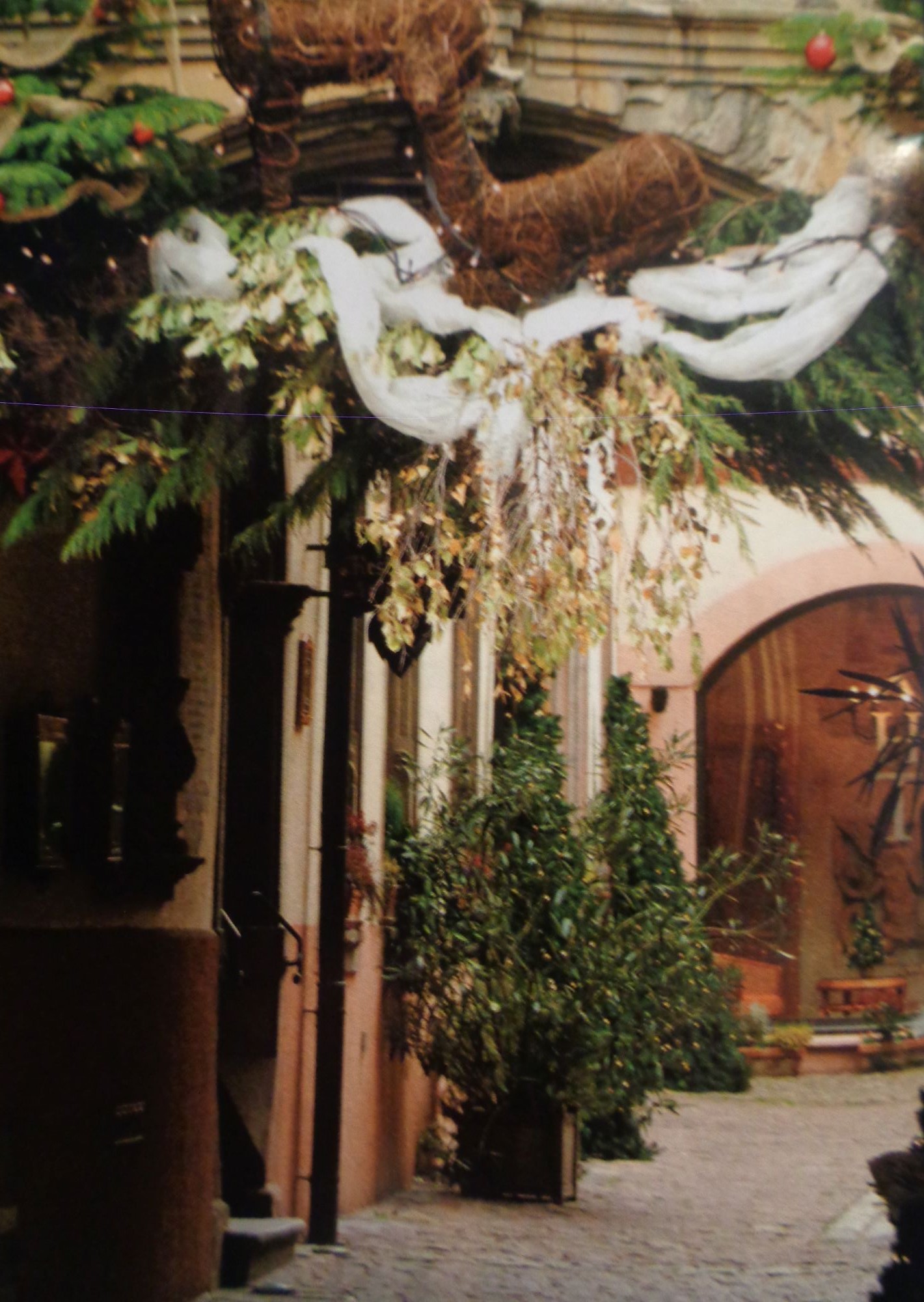
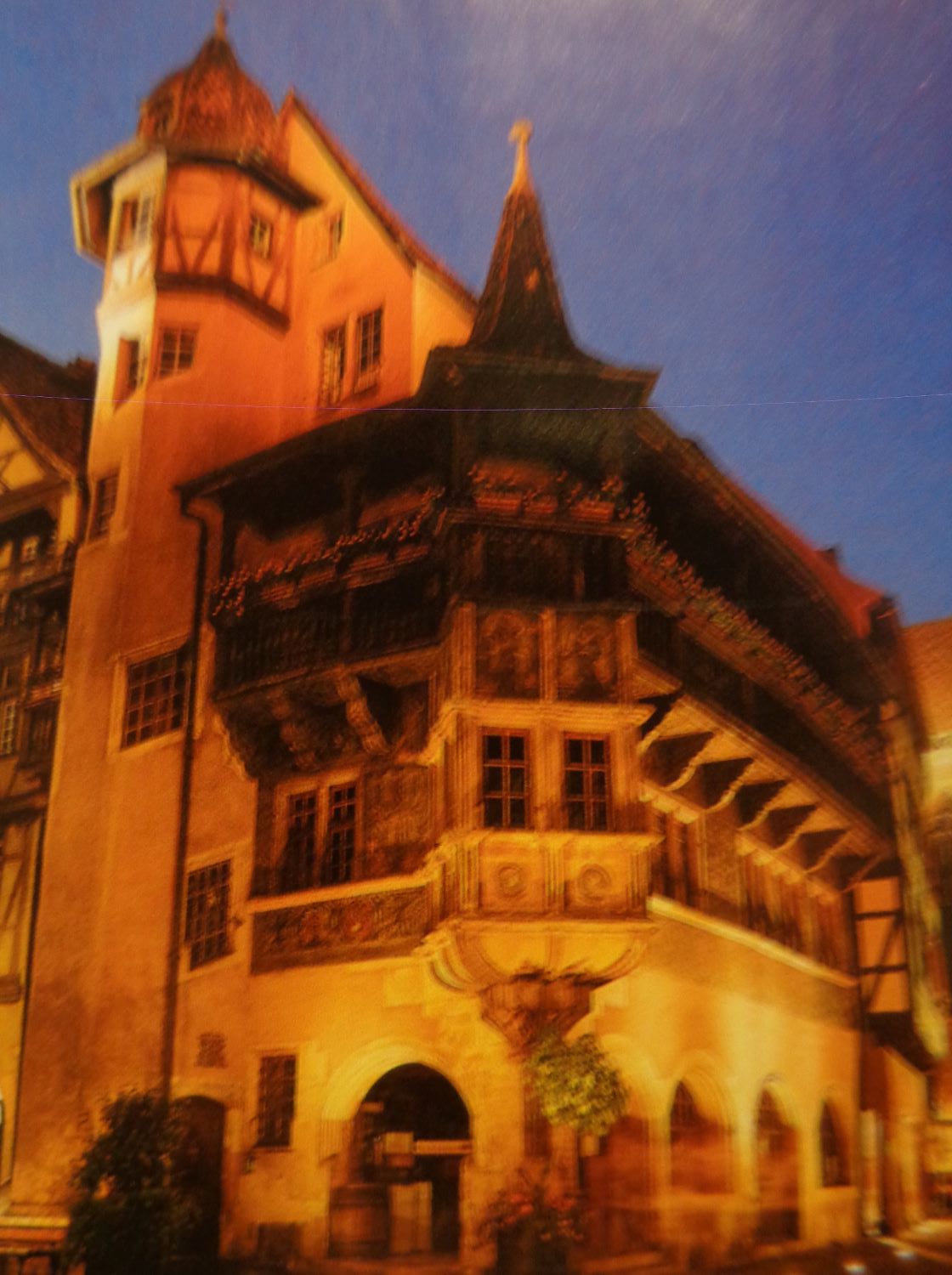
 The Quai de la Poissonnerie in the fishmonger’s neighborhood is the place where most of the professional fishermen and boatmen of Colmar lived. They were in a powerful corporation. The caught fishes were stored in fish ponds or sold in the fishmonger’s neighborhood. In 1706 a huge fire destroyed more than forty houses in the district. From 1978 to 1981, important renovation works made it possible to restore many half-timbered houses in this neighborhood which is between the neighborhoods of the Tanneurs and Little Venice. The Maison Pfister is a house built in 1537 for the hatter Ludwig Scherer, who made his fortune with money trading in the Val de Liepvre. Despite its medieval features, the house is the first example of architectural renaissance in Colmar. With its two-story corner oriel, its wood gallery, its octagonal turret and its mural paintings which represent biblical and secular scenes, the Pfister house became one of the symbols of the old Colmar. It owns its name to the family who restored it and lived there from 1841 to 1892.
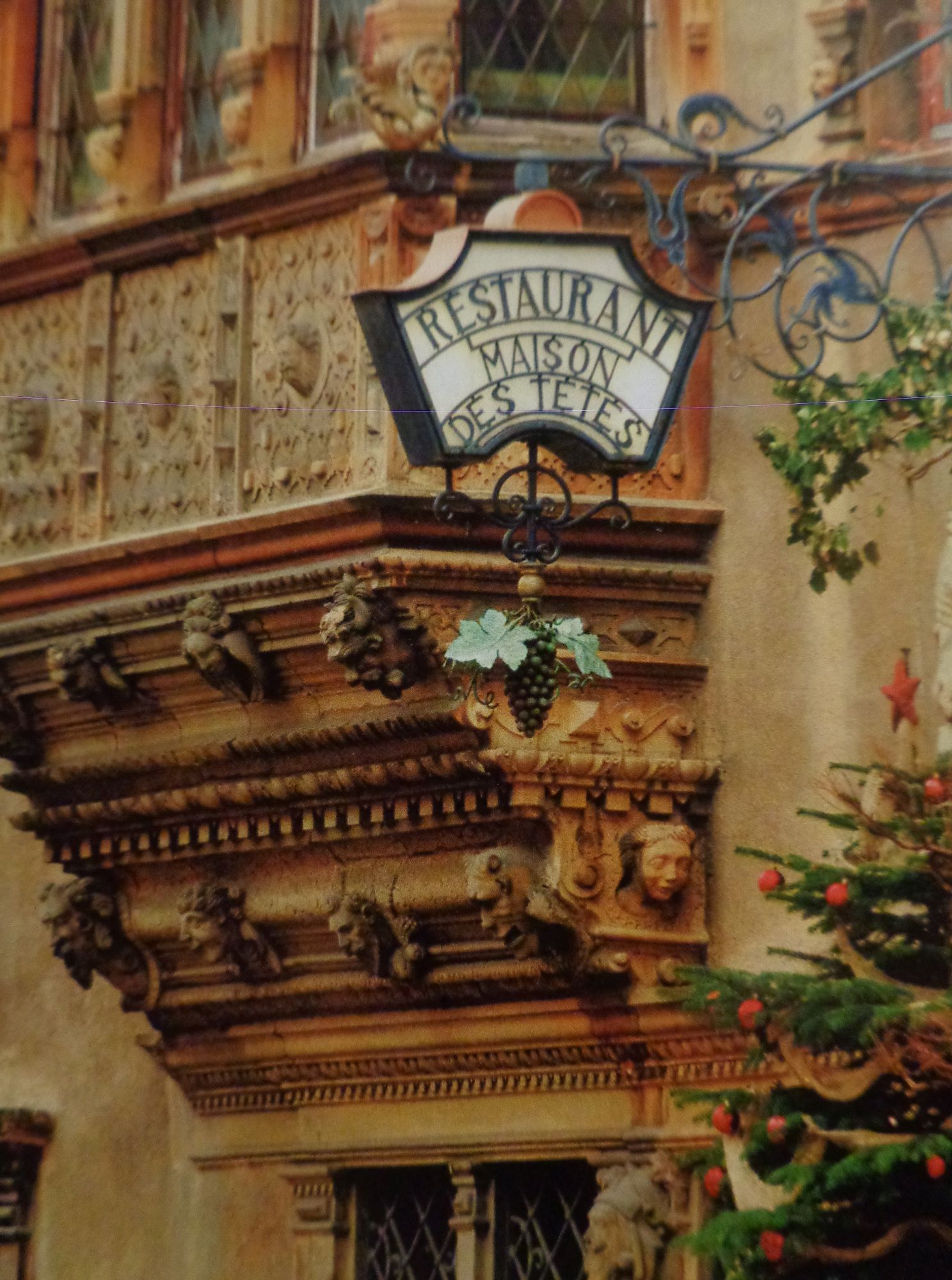
 The rue des Marchands with a length of 270 meters and a dropout of 35 meters, is in the Centre neighborhood, It can be access by the Grand-Rue, the streets of Berthe-Molly Tourneurs, Mercière, Schongauer, and Augustins , the passage between rue des Marchands and rue des Serruriers, Place de l’École and the streets of Waldner-Stephan and Trois-Cultures. This is a wonderful street to walk and see marvelous architecture such as the medieval grain attic (14C from no 12, 14 and 16 , House (1545) at No 48, House of Zum Grienen Hüs (1435) at No 34, House of Zum Krangen (1588) at No 9, House Zum Oesterreich (16C) at Nos. 23 and 25 , the beforementioned Maison Pfister (1537) at No 11, Houses Zur Feisen Henne (à la poule charnue or fleshy hen), and Zur Rose (à la Rose) at No 32 , House Zu Sankt-Christoffel at No 36 , House Schongauer (16C) at No 36, House Zum Tieffen Keller (1581) at No. 22, The Bartholdi Museum house (17C) at No. 30, The Les Grands supports du Monde (1902) at No. 30, and the Old Corporation of Tanners at No 58, sublime !!!

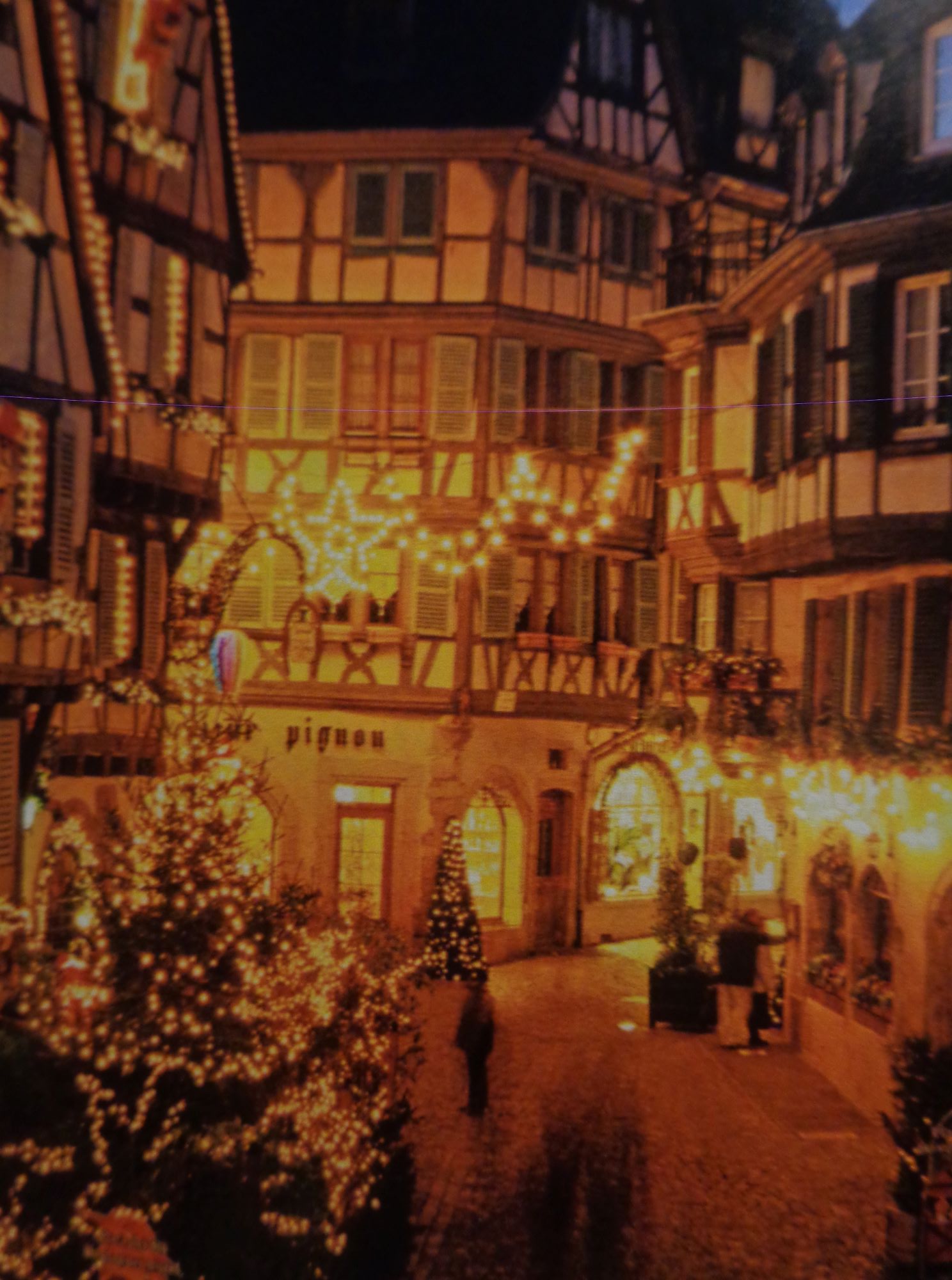 Other things to see here, me think are several remarkable religious buildings are present, such as the Saint-Martin collegiate Church (Gothic style), the Protestant Saint-Matthieu Church, the Protestant presbytery, the Sainte-Catherine convent, the Capuchin convent, the Convent of the Unterlinden (which houses the Unterlinden Museum and its Issenheim altarpiece) or the Dominican convent (which hosts the municipal library and which has more than 1,200 manuscripts and 3,000 Rhenish incunables). The municipal theater, located in the city center, dates from 1849 ,and the m useums ; Unterlinden, Bartholdi, toy and small train , municipal factories, Hansi as well as the Museum of Natural History and Ethnography.
The city of Colmar has a rich architectural heritage, including an old collegiate church, several convents, a remarkable theater, canals (Petit Venice) and houses of the Middle Ages Center of the Alsatian vineyard and close to the Vosges Piedmont, and its particular climate conducive to culture ,From the vineyard, it earned the nickname “capital of Alsace wines”. It is also a city of culture, and the hometown of the creator of the Statue of Liberty in New York, Auguste Bartholdi and Jean-Jacques Waltz, better known as Hansi.
The Petit Venice or little Venice is the name given to the course of the Lauch river. This name probably came from the original line of the houses on both sides of the river, which serves the city. This neighborhood starts behind the Koïfhus, goes through the fishmonger’s neighborhood and to the bridges of Turenne and Saint-Pierre. It is therefore at the beginning of the Krutenau, whose etymology refers to places of market gardening on the outskirts of the towns. Originally inhabited by a rural community of wine-producers, market gardeners and boatmen, the Krutenau stretches out around the Rue Turenne street that the marshal took in 1674 for his triumphant entry in the city. Boat rides are possible there. Also, the Maison de Voltaire, October 1753-54, Voltaire arrived in Colmar following his dismissal from the court of the King of Prussia Frédéric II to work on his “Annales de l’Empire” (Annals of the Empire) with the help of French advisers of the Sovereign Council and their rich libraries. He also wanted to follow the typographic operations of his work at the bookshop from J.F. Schoepflin. He found a place to live to Mrs. Gall, the mayor’s wife, in a nobiliary house dating from the 15C and rebuilt in 1609. The three-month stay from Voltaire was particularly eventful because of his problems with the Jesuit brothers, who were very influent in the town and were against the works of the enlightenment philosopher.
The Koïfhus or the former customs house had a strategic place at the confluence of the Grand’Rue and the rue des Marchands, two of the major roads in the medieval city. Imagined since 1433, the construction of the current building was ended in 1480. Two adjoining buildings were added in the 16th century. The condition of the building was in the 19C so worrying that a demolition was envisaged. But the project was cancelled and restorations took place from 1895 to 1898. The turret and the glazed tiles came from that time. The last renovation in 2002 was to repair the sandstone balustrade in a Renaissance style which was removed in 1976. The Koïfhus is the older public local building and had from its creation a double function. The ground floor was used as a warehouse and as a place of taxation for imported and exported goods. The floor was used for the meetings of the deputies of the Décapole, the federation of the 10 imperial cities of Alsace, which was created in 1534. The Magistrate also met there. The French revolution abolished commercial privileges and the building was used for other uses. Around 1840 a theatre took place there and in 1848 the first office of the discount bank. The Koïfhus was occupied by the Chamber of Commerce and Industry from 1870 to 1930 and by a catholic boy school and an Israelite school in the late 19C. Today many manifestations and public activities take place there.
Colmar is mentioned for the first time in the 9C. The town was gradually developing under the authority of the Hohenstaufen who have the duchy of Souabe and Alsace and then access the throne of the Holy Roman Empire. Emperor Frédéric Barberousse stopped in Colmar in 1153, then returned to it in 1156, 1179 and 1186, as well as Philippe de Souabe, king of Germania, in 1212, There was a Commandery erected in the 13C by the Hospitallers of the Order of Saint-Jean de Jerusalem and consecrated by Albert Le Grand in 1268. The departure of the Monks-knights in the 16C allows the use by the canons of Saint-Martin , then by the Augustins. The site was bought in 1858 by the sisters of Divine Providence of Ribeauvillé. The whole was revised in the 19C and there remains only a few elements of facades on the street and on the courtyard. It currently houses a private school establishment. An alliance between the imperial cities of the Plaine d’Alsace was born in 1342 thanks to the approval of Charles IV. It then has seven cities. Colmar joined her on August 28, 1354, to give birth to the Confederation of the ten imperial cities known as the Décapole (the Imperial City of Colmar is an ancient city-state of the Roman Holy Empire between 1278 and 1679). The City becomes an important artistic home thanks to the talent of the painters it welcomes, notably Gaspar Isenmann, Martin Schönguer, author of the Virgin in the Buisson de Roses, and Matthias Grünewald who produced the altarpiece of Issenheim in 1555, The treaty of the Peace of Augsburg officially restores the coexistence of Catholicism and Lutheranism in the Empire The Thirty Years War particularly affects Alsace and ends with the signing of the Westphalia Treaties, which devotes the victory of France and Sweden over Germanic Roman Empire. During the Holland War, Colmar tried to renew its imperial privileges. She participates in particular in the war effort of the Empire against the Turks. This effort is known as Türkenhilfe, literally “Turkish help” ,On January 5, 1675, the viscount of Turenne defeated the men of the Empire in Turckheim the Treaty of Nimègue, signed on February 5, 1679, ended the war. The Lys now replaces the Germanic eagle, the imperial city of Colmar loses its independence and becomes a French royal City, The city’s institutions continue to exist under the authority of the King until the French revolution and the end of the Old Regime (absolute monarchy) in 1789
Colmar welcomed King Charles X in 1828, as well as the Duke of Orleans and Nemours in 1831 , Beginning on July 19, 1870, the war opposed France of the Second Empire (Napoléon III) , and the Kingdom of Prussia. On September 14, Colmar was inspired by the resistance of its inhabitants at the Pont de Horbourg, an episode in which Auguste Bartholdi participates. The conflict ended on January 29, 1871 and France, defeated, signed the Treaty of Frankfurt on May 10 and gave Alsace and Moselle. Colmar becomes chief town of the Haute-Alsace district in the Reichsland of Alsace-Lorraine. The Great War or WWI began on August 3, 1914. On August 23, patrols of French horse hunters entered the city and suggests a rapid conquest. The army will fall back on the Vosges, the war ended on November 11, 1918. On the 22nd, the city acclaimed the arrival of the commander -in -chief of the East Armies, General de Castelnau. Representatives of the Clemenceau and Poincaré government arrive in town on December 10. Other personalities will follow like Joffre and Foch. The Treaty of Versailles signed on June 28, 1919 puts an end to war and returns to France its lost territories, Alsace and Lorraine.
France entered WWII on September 3, 1939 and the Nazis entered Colmar on June 17, 1940, Alsace was annexed in fact. There followed a brutal Germanization and Nazification. About 20% of street names are modified (those that could recall France) such as the “avenue de la République” which becomes the “Adolf Hitler-Straße” on August 25, a prescription makes military service compulsory, and 123,000 young people are forced to put on the Wehrmacht or Waffen-SS uniform, 40,000 will not come back , On February 1, 1945, the Nazis lines were pierced north of Colmar by the US infantry of the 21st Corps near the city. A beautiful gesture then highlights the fraternity of Franco-American cooperation, Being the last Alsatian city to be released from the Nazi occupation the colonel of the 109th US infantry regiment, on the orders of General Milburn, gives way to the entry into Colmar to General Schlesser who commands a fraction of the tanks of the 5th DB of the 1st French army. General de Gaulle will go to the city liberated on February 10 and will return to it as President of the Republic on November 20, 1959,
The Colmar Christmas festivities : https://www.noel-colmar.com/en/
The Colmar tourist office on its heritage : https://tourisme-colmar.com/en/visit/presentation/discover
The City of Colmar on its heritage : https://www.colmar.fr/patrimoine-architectural
The Alsace European Community tourist office on Colmar: https://www.visit.alsace/en/colmar/
There you go folks, a dandy area to explore and enjoy with the family, Memorable moments in my belle France, driving all over in my road warrior trails brings out sublime awesome spots with nice memorable family visits of yesteryear always remember and always looking forward to be back, eventually. Again hope you enjoy the post on this is Colmar as I.
And remember, happy travels, good health, and many cheers to all !!!
Other things to see here, me think are several remarkable religious buildings are present, such as the Saint-Martin collegiate Church (Gothic style), the Protestant Saint-Matthieu Church, the Protestant presbytery, the Sainte-Catherine convent, the Capuchin convent, the Convent of the Unterlinden (which houses the Unterlinden Museum and its Issenheim altarpiece) or the Dominican convent (which hosts the municipal library and which has more than 1,200 manuscripts and 3,000 Rhenish incunables). The municipal theater, located in the city center, dates from 1849 ,and the m useums ; Unterlinden, Bartholdi, toy and small train , municipal factories, Hansi as well as the Museum of Natural History and Ethnography.
The city of Colmar has a rich architectural heritage, including an old collegiate church, several convents, a remarkable theater, canals (Petit Venice) and houses of the Middle Ages Center of the Alsatian vineyard and close to the Vosges Piedmont, and its particular climate conducive to culture ,From the vineyard, it earned the nickname “capital of Alsace wines”. It is also a city of culture, and the hometown of the creator of the Statue of Liberty in New York, Auguste Bartholdi and Jean-Jacques Waltz, better known as Hansi.
The Petit Venice or little Venice is the name given to the course of the Lauch river. This name probably came from the original line of the houses on both sides of the river, which serves the city. This neighborhood starts behind the Koïfhus, goes through the fishmonger’s neighborhood and to the bridges of Turenne and Saint-Pierre. It is therefore at the beginning of the Krutenau, whose etymology refers to places of market gardening on the outskirts of the towns. Originally inhabited by a rural community of wine-producers, market gardeners and boatmen, the Krutenau stretches out around the Rue Turenne street that the marshal took in 1674 for his triumphant entry in the city. Boat rides are possible there. Also, the Maison de Voltaire, October 1753-54, Voltaire arrived in Colmar following his dismissal from the court of the King of Prussia Frédéric II to work on his “Annales de l’Empire” (Annals of the Empire) with the help of French advisers of the Sovereign Council and their rich libraries. He also wanted to follow the typographic operations of his work at the bookshop from J.F. Schoepflin. He found a place to live to Mrs. Gall, the mayor’s wife, in a nobiliary house dating from the 15C and rebuilt in 1609. The three-month stay from Voltaire was particularly eventful because of his problems with the Jesuit brothers, who were very influent in the town and were against the works of the enlightenment philosopher.
The Koïfhus or the former customs house had a strategic place at the confluence of the Grand’Rue and the rue des Marchands, two of the major roads in the medieval city. Imagined since 1433, the construction of the current building was ended in 1480. Two adjoining buildings were added in the 16th century. The condition of the building was in the 19C so worrying that a demolition was envisaged. But the project was cancelled and restorations took place from 1895 to 1898. The turret and the glazed tiles came from that time. The last renovation in 2002 was to repair the sandstone balustrade in a Renaissance style which was removed in 1976. The Koïfhus is the older public local building and had from its creation a double function. The ground floor was used as a warehouse and as a place of taxation for imported and exported goods. The floor was used for the meetings of the deputies of the Décapole, the federation of the 10 imperial cities of Alsace, which was created in 1534. The Magistrate also met there. The French revolution abolished commercial privileges and the building was used for other uses. Around 1840 a theatre took place there and in 1848 the first office of the discount bank. The Koïfhus was occupied by the Chamber of Commerce and Industry from 1870 to 1930 and by a catholic boy school and an Israelite school in the late 19C. Today many manifestations and public activities take place there.
Colmar is mentioned for the first time in the 9C. The town was gradually developing under the authority of the Hohenstaufen who have the duchy of Souabe and Alsace and then access the throne of the Holy Roman Empire. Emperor Frédéric Barberousse stopped in Colmar in 1153, then returned to it in 1156, 1179 and 1186, as well as Philippe de Souabe, king of Germania, in 1212, There was a Commandery erected in the 13C by the Hospitallers of the Order of Saint-Jean de Jerusalem and consecrated by Albert Le Grand in 1268. The departure of the Monks-knights in the 16C allows the use by the canons of Saint-Martin , then by the Augustins. The site was bought in 1858 by the sisters of Divine Providence of Ribeauvillé. The whole was revised in the 19C and there remains only a few elements of facades on the street and on the courtyard. It currently houses a private school establishment. An alliance between the imperial cities of the Plaine d’Alsace was born in 1342 thanks to the approval of Charles IV. It then has seven cities. Colmar joined her on August 28, 1354, to give birth to the Confederation of the ten imperial cities known as the Décapole (the Imperial City of Colmar is an ancient city-state of the Roman Holy Empire between 1278 and 1679). The City becomes an important artistic home thanks to the talent of the painters it welcomes, notably Gaspar Isenmann, Martin Schönguer, author of the Virgin in the Buisson de Roses, and Matthias Grünewald who produced the altarpiece of Issenheim in 1555, The treaty of the Peace of Augsburg officially restores the coexistence of Catholicism and Lutheranism in the Empire The Thirty Years War particularly affects Alsace and ends with the signing of the Westphalia Treaties, which devotes the victory of France and Sweden over Germanic Roman Empire. During the Holland War, Colmar tried to renew its imperial privileges. She participates in particular in the war effort of the Empire against the Turks. This effort is known as Türkenhilfe, literally “Turkish help” ,On January 5, 1675, the viscount of Turenne defeated the men of the Empire in Turckheim the Treaty of Nimègue, signed on February 5, 1679, ended the war. The Lys now replaces the Germanic eagle, the imperial city of Colmar loses its independence and becomes a French royal City, The city’s institutions continue to exist under the authority of the King until the French revolution and the end of the Old Regime (absolute monarchy) in 1789
Colmar welcomed King Charles X in 1828, as well as the Duke of Orleans and Nemours in 1831 , Beginning on July 19, 1870, the war opposed France of the Second Empire (Napoléon III) , and the Kingdom of Prussia. On September 14, Colmar was inspired by the resistance of its inhabitants at the Pont de Horbourg, an episode in which Auguste Bartholdi participates. The conflict ended on January 29, 1871 and France, defeated, signed the Treaty of Frankfurt on May 10 and gave Alsace and Moselle. Colmar becomes chief town of the Haute-Alsace district in the Reichsland of Alsace-Lorraine. The Great War or WWI began on August 3, 1914. On August 23, patrols of French horse hunters entered the city and suggests a rapid conquest. The army will fall back on the Vosges, the war ended on November 11, 1918. On the 22nd, the city acclaimed the arrival of the commander -in -chief of the East Armies, General de Castelnau. Representatives of the Clemenceau and Poincaré government arrive in town on December 10. Other personalities will follow like Joffre and Foch. The Treaty of Versailles signed on June 28, 1919 puts an end to war and returns to France its lost territories, Alsace and Lorraine.
France entered WWII on September 3, 1939 and the Nazis entered Colmar on June 17, 1940, Alsace was annexed in fact. There followed a brutal Germanization and Nazification. About 20% of street names are modified (those that could recall France) such as the “avenue de la République” which becomes the “Adolf Hitler-Straße” on August 25, a prescription makes military service compulsory, and 123,000 young people are forced to put on the Wehrmacht or Waffen-SS uniform, 40,000 will not come back , On February 1, 1945, the Nazis lines were pierced north of Colmar by the US infantry of the 21st Corps near the city. A beautiful gesture then highlights the fraternity of Franco-American cooperation, Being the last Alsatian city to be released from the Nazi occupation the colonel of the 109th US infantry regiment, on the orders of General Milburn, gives way to the entry into Colmar to General Schlesser who commands a fraction of the tanks of the 5th DB of the 1st French army. General de Gaulle will go to the city liberated on February 10 and will return to it as President of the Republic on November 20, 1959,
The Colmar Christmas festivities : https://www.noel-colmar.com/en/
The Colmar tourist office on its heritage : https://tourisme-colmar.com/en/visit/presentation/discover
The City of Colmar on its heritage : https://www.colmar.fr/patrimoine-architectural
The Alsace European Community tourist office on Colmar: https://www.visit.alsace/en/colmar/
There you go folks, a dandy area to explore and enjoy with the family, Memorable moments in my belle France, driving all over in my road warrior trails brings out sublime awesome spots with nice memorable family visits of yesteryear always remember and always looking forward to be back, eventually. Again hope you enjoy the post on this is Colmar as I.
And remember, happy travels, good health, and many cheers to all !!! 
 Paris1972-Versailles2003