
 One of the great figures and one of the actors of the Renaissance in Langres is the Cardinal de Givry. Known for his artistic patronage, in 1543 he commanded tapestries on the history of Saint-Mammès to decorate the nave of the cathedral. Eight tapestries were thus made in 1544-1545 of the eight, three were preserved, one at the Louvre in Paris, and two at the cathedral. Cardinal Givry also commanded a magnificent jube, “in the shape of a triumphal arch”. Damage during the 18C, there are very few fragments of this roodle left at the Langres History Museum. Another project is underway at the cathedral, that of the Sainte-Croix Chapel, called the Chapel of Amoncourt by the name of its sponsor. Begun in 1549, this chapel was by its decor one of the jewels of Renaissance architecture in Langres. The ornamentation of the boxes of the chapel vault recalls that of the François I gallery in Fontainebleau (see post). Likewise, the “mirror” decor of the tiles dated 1551-1552, it is made of enameled earthenware as the tradition would like.
For the little anecdotes, the legend of Saint Mammès tells how he became the patron saint of the cathedral and the diocese in place of Saint John the Evangelist. Around 755, a pilgrim brought back from Constantinople a bone from the nape of Saint Mammès. Near Langres, he wanted to rest and suspended the scholarship containing the relics to a branch. When he wanted to take it back, he could not get it from the tree, He went to find the bishop Vandier and told the prodigy to him; The prelate, accompanied by his clergy and many faithful, went to the scene. Despite his efforts, the relics refused to take down “what they only dressed in a simple silk cord”. It was then that a venerable old man challenged the bishop and suggested that he dedicate the cathedral to Saint Mammès, claiming that Saint John the Evangelist would “not bad that his beloved son is thus honored that his beloved son that ‘He engendered to the Lord by the Word of his preaching ”. The prelate applied the council and immediately dedicated this church to this saint. The ceremony was barely finished when the relics fell on their own and were reported to Langres in solemn procession. The old man was none other than Saint John the Evangelist himself ..Nice.
Other things to see in Langres with a lot more time are : The Saint-Didier Church, 4 place Saint-Didier, (current museum of art and history of Langres) 12C, modified several times, partially destroyed at the French revolution, transformed into a museum in 1841. The Convent of Ursulines, rue Tournelle, (late 17C),at rue de la Tourelle0 Demolished in 1974 for the construction of a particular home;the chapel still there, The Chapel of Oratorians dated 1676 and disused during the French revolution, converted into theater since 1838 and entirely renovated in 2000. The theater is at rue de la Comédie. The Saint-Martin Church (12C to 15C) at 5 place Jenson. The Chapel of the Annonciades, former monastery of the Nuns of the Annonciade chapel. This building houses objects of sacred art. At 2 rue Longe Porte. In 1884, the city decided to mark the hundredth anniversary of the death of Denis Diderot. The Place Chambeau is renamed place Diderot and a bronze statue of the philosopher, work of Bartholdi, is erected in its center. It was restored in 2008. Its pedestal lists the main collaborators of the encyclopedic project of Denis Diderot ; a discreet stone plaque signals the birth of Diderot on the facade of no 6 or some says no 9 (at the level of the first floor) Place Diderot, The Hôtel du Breuil de Saint-Germain: mansion built in 1576 composed of two wings perpendicular behind a large gate. After two years of renovation, it became the Maison des Lumières Denis Diderot on October 5, 2013, 300 years exactly after his birth (a museum),
The ramparts were built over 2,000 years. The fortifications, including part of the bastioned type, were reworked by the military engineering. They cover 3.6 km, going around the ancient city with its seven fortified towers, its six gates and the Gallo-Roman gate ; reminding that Langres was, in the 2C, the capital of the people of the Lingons. In the 19C, the city’s fortifications system extended to forts built at 10 and 15 km from the city, and that we can still discover buried in the forests. The citadel fort of the 19C is endowed with a bastioned architecture built at the end of the 19C headquarters of the Turenne barracks. I just name the gates here : Tour of Navarre and Orval. (1511-1519) Porte Henri IV (1604-1846), Tour Saint-Ferjeux (1472) , Tour du Petit Sault (1517-1521), Tour Saint-Jean (1540) , Porte des Moulins (1647), Porte des Terreaux also called a Porte Neuve ; Porte Boulière (old Porte Saint-Didier) end of the 14C, the oldest open gate, Tour Virot , Porte de l’Hotel de Ville by the City hall (1620). The Gallo-Roman gate ,it is the only visible part of the ornamental monuments of the Gallo-Roman era. It was built around 20 BC.
A bit of history I like tell us of the growing political influence despite the Gregorian reform, the economic development and the cultural influence of the bishopric of Langres in favor of successive medieval rebirths make Langres a powerful city of the classic Middle Ages, heiress of the civitas of the Bars. Benefiting fully from the rebirth of the 12C, the diocese of Langres became a Duchy Pair, its bishops being both dukes and peers of the crown of France, In 1179, Hugues III of Burgundy grants the title of count of Langres to his uncle Bishop Gauthier, Louis VII de France adding the Pair and Philippe-Auguste granting in 1200 the title of Duke to the bishops by confirming the latter, as the third duke and ecclesiastical peer, the bishop of Langres carries the Royal Scepter during the coronation of the King of France during this ceremony, he also presents the royal crown with the eleven other great peers of France above the royal chief before the Archbishop of Reims deposited him there. Both large vassals and great peers of France, the Dukes-Bishops of Langres are involved in the general affairs of the Kingdom of France as members of the King’s Parliament and many great lords owe them the feudal tribute. Charles IX visits Langres during his Royal tour of France (1564-1566), accompanied by the court and the great of the kingdom: his brother the Duke of Anjou, Henri de Navarre, the cardinals of Bourbon and Lorraine, In the 19C, a Citadel of Vauban extended the fortified domain. At the start of the Franco-Prussian war in 1870, Langres was a place of war which bars the road from Basel to Paris and which controls the Chalindrey rail node. A belt of strong detached forts was under construction. The defense of the square was entrusted to the Cavalry General Arbellot on September 15, 1870. During the WWII, the Haute-Marne department was invaded by the Nazis on June 15, 1940, but Langres remains away from the war.
The City of Langres on Friends of the Cathedral : https://langres.fr/les-amis-de-la-cathedrale/
The official museums of Langres on the Maison des Lumiéres dit Diderot : https://www.musees-langres.fr/maison-des-lumieres-denis-diderot/
For reference, the City of Langres : https://langres.fr/
The Haute-Marne dept 52 tourist office on the cathedral: https://www.bienvenue-hautemarne.fr/sit/langres-cathedrale-saint-mammes-pcucha052v500311/
There you go folks, another wonder to be seen, worth the detour , me think. This is wonderful beautiful town , a lot to see worth the detour in France,and even if needed more time. Again, hope you enjoy the post on this is Langres !!! as I
And remember, happy travels, good health ,and many cheers to all !!!
One of the great figures and one of the actors of the Renaissance in Langres is the Cardinal de Givry. Known for his artistic patronage, in 1543 he commanded tapestries on the history of Saint-Mammès to decorate the nave of the cathedral. Eight tapestries were thus made in 1544-1545 of the eight, three were preserved, one at the Louvre in Paris, and two at the cathedral. Cardinal Givry also commanded a magnificent jube, “in the shape of a triumphal arch”. Damage during the 18C, there are very few fragments of this roodle left at the Langres History Museum. Another project is underway at the cathedral, that of the Sainte-Croix Chapel, called the Chapel of Amoncourt by the name of its sponsor. Begun in 1549, this chapel was by its decor one of the jewels of Renaissance architecture in Langres. The ornamentation of the boxes of the chapel vault recalls that of the François I gallery in Fontainebleau (see post). Likewise, the “mirror” decor of the tiles dated 1551-1552, it is made of enameled earthenware as the tradition would like.
For the little anecdotes, the legend of Saint Mammès tells how he became the patron saint of the cathedral and the diocese in place of Saint John the Evangelist. Around 755, a pilgrim brought back from Constantinople a bone from the nape of Saint Mammès. Near Langres, he wanted to rest and suspended the scholarship containing the relics to a branch. When he wanted to take it back, he could not get it from the tree, He went to find the bishop Vandier and told the prodigy to him; The prelate, accompanied by his clergy and many faithful, went to the scene. Despite his efforts, the relics refused to take down “what they only dressed in a simple silk cord”. It was then that a venerable old man challenged the bishop and suggested that he dedicate the cathedral to Saint Mammès, claiming that Saint John the Evangelist would “not bad that his beloved son is thus honored that his beloved son that ‘He engendered to the Lord by the Word of his preaching ”. The prelate applied the council and immediately dedicated this church to this saint. The ceremony was barely finished when the relics fell on their own and were reported to Langres in solemn procession. The old man was none other than Saint John the Evangelist himself ..Nice.
Other things to see in Langres with a lot more time are : The Saint-Didier Church, 4 place Saint-Didier, (current museum of art and history of Langres) 12C, modified several times, partially destroyed at the French revolution, transformed into a museum in 1841. The Convent of Ursulines, rue Tournelle, (late 17C),at rue de la Tourelle0 Demolished in 1974 for the construction of a particular home;the chapel still there, The Chapel of Oratorians dated 1676 and disused during the French revolution, converted into theater since 1838 and entirely renovated in 2000. The theater is at rue de la Comédie. The Saint-Martin Church (12C to 15C) at 5 place Jenson. The Chapel of the Annonciades, former monastery of the Nuns of the Annonciade chapel. This building houses objects of sacred art. At 2 rue Longe Porte. In 1884, the city decided to mark the hundredth anniversary of the death of Denis Diderot. The Place Chambeau is renamed place Diderot and a bronze statue of the philosopher, work of Bartholdi, is erected in its center. It was restored in 2008. Its pedestal lists the main collaborators of the encyclopedic project of Denis Diderot ; a discreet stone plaque signals the birth of Diderot on the facade of no 6 or some says no 9 (at the level of the first floor) Place Diderot, The Hôtel du Breuil de Saint-Germain: mansion built in 1576 composed of two wings perpendicular behind a large gate. After two years of renovation, it became the Maison des Lumières Denis Diderot on October 5, 2013, 300 years exactly after his birth (a museum),
The ramparts were built over 2,000 years. The fortifications, including part of the bastioned type, were reworked by the military engineering. They cover 3.6 km, going around the ancient city with its seven fortified towers, its six gates and the Gallo-Roman gate ; reminding that Langres was, in the 2C, the capital of the people of the Lingons. In the 19C, the city’s fortifications system extended to forts built at 10 and 15 km from the city, and that we can still discover buried in the forests. The citadel fort of the 19C is endowed with a bastioned architecture built at the end of the 19C headquarters of the Turenne barracks. I just name the gates here : Tour of Navarre and Orval. (1511-1519) Porte Henri IV (1604-1846), Tour Saint-Ferjeux (1472) , Tour du Petit Sault (1517-1521), Tour Saint-Jean (1540) , Porte des Moulins (1647), Porte des Terreaux also called a Porte Neuve ; Porte Boulière (old Porte Saint-Didier) end of the 14C, the oldest open gate, Tour Virot , Porte de l’Hotel de Ville by the City hall (1620). The Gallo-Roman gate ,it is the only visible part of the ornamental monuments of the Gallo-Roman era. It was built around 20 BC.
A bit of history I like tell us of the growing political influence despite the Gregorian reform, the economic development and the cultural influence of the bishopric of Langres in favor of successive medieval rebirths make Langres a powerful city of the classic Middle Ages, heiress of the civitas of the Bars. Benefiting fully from the rebirth of the 12C, the diocese of Langres became a Duchy Pair, its bishops being both dukes and peers of the crown of France, In 1179, Hugues III of Burgundy grants the title of count of Langres to his uncle Bishop Gauthier, Louis VII de France adding the Pair and Philippe-Auguste granting in 1200 the title of Duke to the bishops by confirming the latter, as the third duke and ecclesiastical peer, the bishop of Langres carries the Royal Scepter during the coronation of the King of France during this ceremony, he also presents the royal crown with the eleven other great peers of France above the royal chief before the Archbishop of Reims deposited him there. Both large vassals and great peers of France, the Dukes-Bishops of Langres are involved in the general affairs of the Kingdom of France as members of the King’s Parliament and many great lords owe them the feudal tribute. Charles IX visits Langres during his Royal tour of France (1564-1566), accompanied by the court and the great of the kingdom: his brother the Duke of Anjou, Henri de Navarre, the cardinals of Bourbon and Lorraine, In the 19C, a Citadel of Vauban extended the fortified domain. At the start of the Franco-Prussian war in 1870, Langres was a place of war which bars the road from Basel to Paris and which controls the Chalindrey rail node. A belt of strong detached forts was under construction. The defense of the square was entrusted to the Cavalry General Arbellot on September 15, 1870. During the WWII, the Haute-Marne department was invaded by the Nazis on June 15, 1940, but Langres remains away from the war.
The City of Langres on Friends of the Cathedral : https://langres.fr/les-amis-de-la-cathedrale/
The official museums of Langres on the Maison des Lumiéres dit Diderot : https://www.musees-langres.fr/maison-des-lumieres-denis-diderot/
For reference, the City of Langres : https://langres.fr/
The Haute-Marne dept 52 tourist office on the cathedral: https://www.bienvenue-hautemarne.fr/sit/langres-cathedrale-saint-mammes-pcucha052v500311/
There you go folks, another wonder to be seen, worth the detour , me think. This is wonderful beautiful town , a lot to see worth the detour in France,and even if needed more time. Again, hope you enjoy the post on this is Langres !!! as I
And remember, happy travels, good health ,and many cheers to all !!! This is Langres !!!
This one was a while back in my road warrior tours of the architecture and historical stunning Langres of my belle France I, again, found me older paper pictures that should be in my blog, glad to have found them, I have been all over France, but sometimes just touch base ,go on the run and lucky to be able to come back to many, but still work to do. Let me tell you about this is Langres !!! Hope you enjoy the post as I.
The City of Langres is in the Haute-Marne dept 52, in the Grand Est region of my belle France, The A31 between Nancy and Dijon then Lyon. It is served by exit/sortie 6 (Langres-Sud) and 7 (Langres-Nord) of the A31. Between these two outings, the bifurcation with the A5 highway allows a direct link with Paris. It is 128 km from Troyes,197 km from Metz, 239 km from Reims ,78 km from Dijon, 141 km from Nancy, 298 km from Versailles, and 727 km from my current house,
The City of Langres gave its name to a traditional region which had the title of county or county of Langres, as well as a diocese whose holder had since the 12C the title of Duke and peer from France. The city is classified as a city of art and history, flower city and internet city. The Langres region is called the “country of the four lakes” ; these were built at the end of the 19C to supply the channel with waters, these nearby artificial lakes are the Lac de la Liez, Lac Vingeanne, Lac de la Mouche and Lac de Charmes. The Lac de la Liez, the largest and visible from the ramparts, and has been arranged for swimming and nautical leisures.
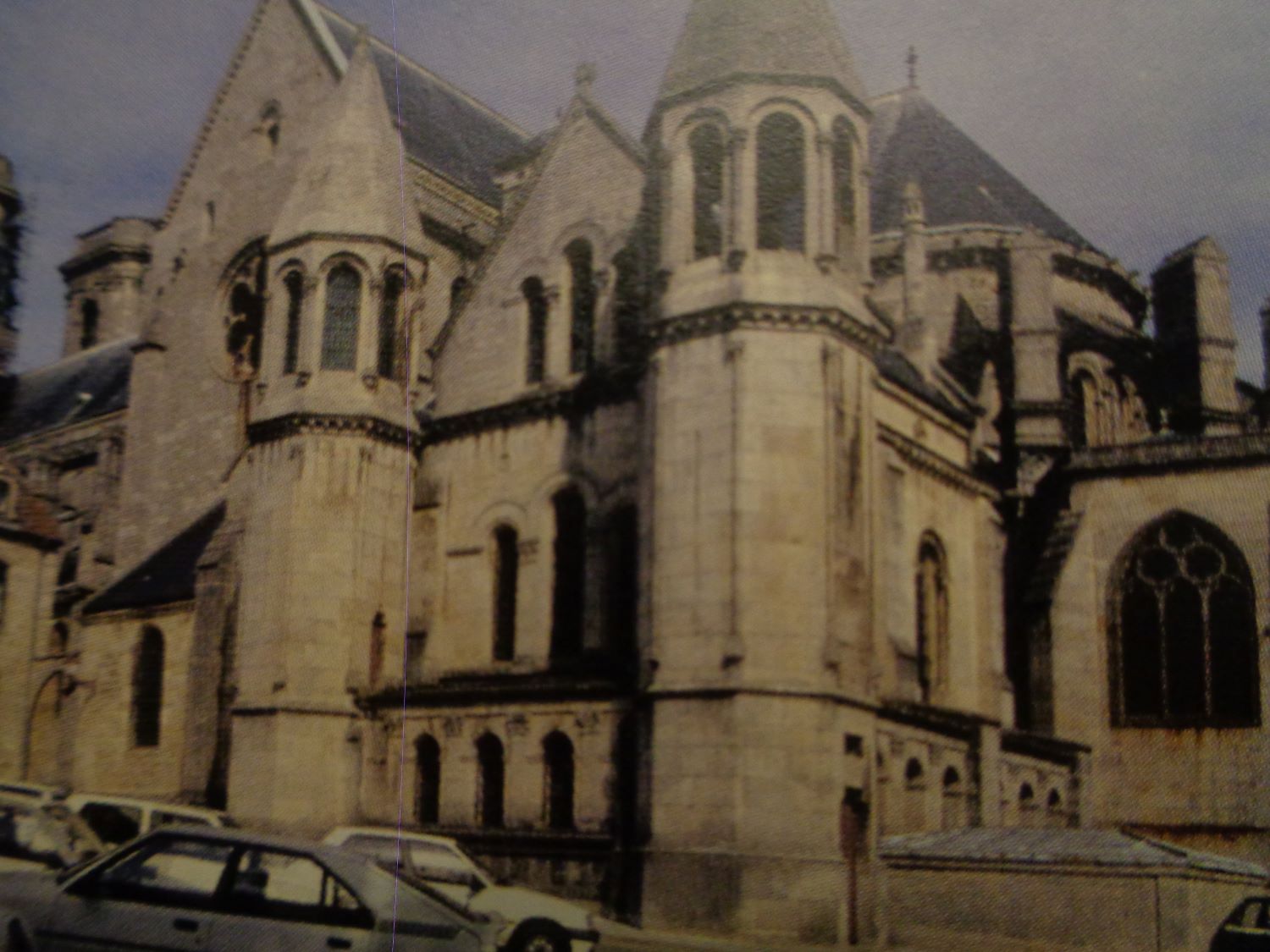
The Cathédrale Saint-Mammès at the Place Jeanne Mance, and its cloister (current municipal library) inspired by the school of Cluny and by Gallo-Roman architecture, the cathedral is one of the most remarkable works of the 12C, halfway between the Romanesque art and Gothic art. The facade was raised from 1760 to 1768. You can marvel at the chapels, tapestries, buffet of organs, woodwork, wrought iron gates, etc. Built from 1150 and completed at the end of the century, the Cathedral was that of a vast diocese located between Champagne and Burgundy. It is the last large church built in the line of the Romanesque abbey of Cluny. Located at the crossroads of various artistic influences, the Saint-Mammès Cathedral harmoniously combines a decor and novel volumes with the first Gothic innovations. The use of the vault on crosses of warheads, innovative in the region, made it possible to give the nave a larger width and lighting than in the other Clunisian churches. Rebuilt in 1768, the imposing neo-classical facade consists of two towers framing a fore-body topped with a pediment. This is surmounted by two monumental statues representing the synagogue, and the Church. Each of the three levels is chanted by columns or pilasters with Doric, Ionic and Corinthian orders. During the visit, let yourself be charmed by the shimmering roof of the 19C. Made of glazed tiles, Renaissance works like the Chapel of Amoncourt and its pavement of earthenware, the bas-relief of relics and tapestries of Saint-Mammès or the great organ of the 18C.
One of the great figures and one of the actors of the Renaissance in Langres is the Cardinal de Givry. Known for his artistic patronage, in 1543 he commanded tapestries on the history of Saint-Mammès to decorate the nave of the cathedral. Eight tapestries were thus made in 1544-1545 of the eight, three were preserved, one at the Louvre in Paris, and two at the cathedral. Cardinal Givry also commanded a magnificent jube, “in the shape of a triumphal arch”. Damage during the 18C, there are very few fragments of this roodle left at the Langres History Museum. Another project is underway at the cathedral, that of the Sainte-Croix Chapel, called the Chapel of Amoncourt by the name of its sponsor. Begun in 1549, this chapel was by its decor one of the jewels of Renaissance architecture in Langres. The ornamentation of the boxes of the chapel vault recalls that of the François I gallery in Fontainebleau (see post). Likewise, the “mirror” decor of the tiles dated 1551-1552, it is made of enameled earthenware as the tradition would like.
For the little anecdotes, the legend of Saint Mammès tells how he became the patron saint of the cathedral and the diocese in place of Saint John the Evangelist. Around 755, a pilgrim brought back from Constantinople a bone from the nape of Saint Mammès. Near Langres, he wanted to rest and suspended the scholarship containing the relics to a branch. When he wanted to take it back, he could not get it from the tree, He went to find the bishop Vandier and told the prodigy to him; The prelate, accompanied by his clergy and many faithful, went to the scene. Despite his efforts, the relics refused to take down “what they only dressed in a simple silk cord”. It was then that a venerable old man challenged the bishop and suggested that he dedicate the cathedral to Saint Mammès, claiming that Saint John the Evangelist would “not bad that his beloved son is thus honored that his beloved son that ‘He engendered to the Lord by the Word of his preaching ”. The prelate applied the council and immediately dedicated this church to this saint. The ceremony was barely finished when the relics fell on their own and were reported to Langres in solemn procession. The old man was none other than Saint John the Evangelist himself ..Nice.
Other things to see in Langres with a lot more time are : The Saint-Didier Church, 4 place Saint-Didier, (current museum of art and history of Langres) 12C, modified several times, partially destroyed at the French revolution, transformed into a museum in 1841. The Convent of Ursulines, rue Tournelle, (late 17C),at rue de la Tourelle0 Demolished in 1974 for the construction of a particular home;the chapel still there, The Chapel of Oratorians dated 1676 and disused during the French revolution, converted into theater since 1838 and entirely renovated in 2000. The theater is at rue de la Comédie. The Saint-Martin Church (12C to 15C) at 5 place Jenson. The Chapel of the Annonciades, former monastery of the Nuns of the Annonciade chapel. This building houses objects of sacred art. At 2 rue Longe Porte. In 1884, the city decided to mark the hundredth anniversary of the death of Denis Diderot. The Place Chambeau is renamed place Diderot and a bronze statue of the philosopher, work of Bartholdi, is erected in its center. It was restored in 2008. Its pedestal lists the main collaborators of the encyclopedic project of Denis Diderot ; a discreet stone plaque signals the birth of Diderot on the facade of no 6 or some says no 9 (at the level of the first floor) Place Diderot, The Hôtel du Breuil de Saint-Germain: mansion built in 1576 composed of two wings perpendicular behind a large gate. After two years of renovation, it became the Maison des Lumières Denis Diderot on October 5, 2013, 300 years exactly after his birth (a museum),
The ramparts were built over 2,000 years. The fortifications, including part of the bastioned type, were reworked by the military engineering. They cover 3.6 km, going around the ancient city with its seven fortified towers, its six gates and the Gallo-Roman gate ; reminding that Langres was, in the 2C, the capital of the people of the Lingons. In the 19C, the city’s fortifications system extended to forts built at 10 and 15 km from the city, and that we can still discover buried in the forests. The citadel fort of the 19C is endowed with a bastioned architecture built at the end of the 19C headquarters of the Turenne barracks. I just name the gates here : Tour of Navarre and Orval. (1511-1519) Porte Henri IV (1604-1846), Tour Saint-Ferjeux (1472) , Tour du Petit Sault (1517-1521), Tour Saint-Jean (1540) , Porte des Moulins (1647), Porte des Terreaux also called a Porte Neuve ; Porte Boulière (old Porte Saint-Didier) end of the 14C, the oldest open gate, Tour Virot , Porte de l’Hotel de Ville by the City hall (1620). The Gallo-Roman gate ,it is the only visible part of the ornamental monuments of the Gallo-Roman era. It was built around 20 BC.
A bit of history I like tell us of the growing political influence despite the Gregorian reform, the economic development and the cultural influence of the bishopric of Langres in favor of successive medieval rebirths make Langres a powerful city of the classic Middle Ages, heiress of the civitas of the Bars. Benefiting fully from the rebirth of the 12C, the diocese of Langres became a Duchy Pair, its bishops being both dukes and peers of the crown of France, In 1179, Hugues III of Burgundy grants the title of count of Langres to his uncle Bishop Gauthier, Louis VII de France adding the Pair and Philippe-Auguste granting in 1200 the title of Duke to the bishops by confirming the latter, as the third duke and ecclesiastical peer, the bishop of Langres carries the Royal Scepter during the coronation of the King of France during this ceremony, he also presents the royal crown with the eleven other great peers of France above the royal chief before the Archbishop of Reims deposited him there. Both large vassals and great peers of France, the Dukes-Bishops of Langres are involved in the general affairs of the Kingdom of France as members of the King’s Parliament and many great lords owe them the feudal tribute. Charles IX visits Langres during his Royal tour of France (1564-1566), accompanied by the court and the great of the kingdom: his brother the Duke of Anjou, Henri de Navarre, the cardinals of Bourbon and Lorraine, In the 19C, a Citadel of Vauban extended the fortified domain. At the start of the Franco-Prussian war in 1870, Langres was a place of war which bars the road from Basel to Paris and which controls the Chalindrey rail node. A belt of strong detached forts was under construction. The defense of the square was entrusted to the Cavalry General Arbellot on September 15, 1870. During the WWII, the Haute-Marne department was invaded by the Nazis on June 15, 1940, but Langres remains away from the war.
The City of Langres on Friends of the Cathedral : https://langres.fr/les-amis-de-la-cathedrale/
The official museums of Langres on the Maison des Lumiéres dit Diderot : https://www.musees-langres.fr/maison-des-lumieres-denis-diderot/
For reference, the City of Langres : https://langres.fr/
The Haute-Marne dept 52 tourist office on the cathedral: https://www.bienvenue-hautemarne.fr/sit/langres-cathedrale-saint-mammes-pcucha052v500311/
There you go folks, another wonder to be seen, worth the detour , me think. This is wonderful beautiful town , a lot to see worth the detour in France,and even if needed more time. Again, hope you enjoy the post on this is Langres !!! as I
And remember, happy travels, good health ,and many cheers to all !!!
One of the great figures and one of the actors of the Renaissance in Langres is the Cardinal de Givry. Known for his artistic patronage, in 1543 he commanded tapestries on the history of Saint-Mammès to decorate the nave of the cathedral. Eight tapestries were thus made in 1544-1545 of the eight, three were preserved, one at the Louvre in Paris, and two at the cathedral. Cardinal Givry also commanded a magnificent jube, “in the shape of a triumphal arch”. Damage during the 18C, there are very few fragments of this roodle left at the Langres History Museum. Another project is underway at the cathedral, that of the Sainte-Croix Chapel, called the Chapel of Amoncourt by the name of its sponsor. Begun in 1549, this chapel was by its decor one of the jewels of Renaissance architecture in Langres. The ornamentation of the boxes of the chapel vault recalls that of the François I gallery in Fontainebleau (see post). Likewise, the “mirror” decor of the tiles dated 1551-1552, it is made of enameled earthenware as the tradition would like.
For the little anecdotes, the legend of Saint Mammès tells how he became the patron saint of the cathedral and the diocese in place of Saint John the Evangelist. Around 755, a pilgrim brought back from Constantinople a bone from the nape of Saint Mammès. Near Langres, he wanted to rest and suspended the scholarship containing the relics to a branch. When he wanted to take it back, he could not get it from the tree, He went to find the bishop Vandier and told the prodigy to him; The prelate, accompanied by his clergy and many faithful, went to the scene. Despite his efforts, the relics refused to take down “what they only dressed in a simple silk cord”. It was then that a venerable old man challenged the bishop and suggested that he dedicate the cathedral to Saint Mammès, claiming that Saint John the Evangelist would “not bad that his beloved son is thus honored that his beloved son that ‘He engendered to the Lord by the Word of his preaching ”. The prelate applied the council and immediately dedicated this church to this saint. The ceremony was barely finished when the relics fell on their own and were reported to Langres in solemn procession. The old man was none other than Saint John the Evangelist himself ..Nice.
Other things to see in Langres with a lot more time are : The Saint-Didier Church, 4 place Saint-Didier, (current museum of art and history of Langres) 12C, modified several times, partially destroyed at the French revolution, transformed into a museum in 1841. The Convent of Ursulines, rue Tournelle, (late 17C),at rue de la Tourelle0 Demolished in 1974 for the construction of a particular home;the chapel still there, The Chapel of Oratorians dated 1676 and disused during the French revolution, converted into theater since 1838 and entirely renovated in 2000. The theater is at rue de la Comédie. The Saint-Martin Church (12C to 15C) at 5 place Jenson. The Chapel of the Annonciades, former monastery of the Nuns of the Annonciade chapel. This building houses objects of sacred art. At 2 rue Longe Porte. In 1884, the city decided to mark the hundredth anniversary of the death of Denis Diderot. The Place Chambeau is renamed place Diderot and a bronze statue of the philosopher, work of Bartholdi, is erected in its center. It was restored in 2008. Its pedestal lists the main collaborators of the encyclopedic project of Denis Diderot ; a discreet stone plaque signals the birth of Diderot on the facade of no 6 or some says no 9 (at the level of the first floor) Place Diderot, The Hôtel du Breuil de Saint-Germain: mansion built in 1576 composed of two wings perpendicular behind a large gate. After two years of renovation, it became the Maison des Lumières Denis Diderot on October 5, 2013, 300 years exactly after his birth (a museum),
The ramparts were built over 2,000 years. The fortifications, including part of the bastioned type, were reworked by the military engineering. They cover 3.6 km, going around the ancient city with its seven fortified towers, its six gates and the Gallo-Roman gate ; reminding that Langres was, in the 2C, the capital of the people of the Lingons. In the 19C, the city’s fortifications system extended to forts built at 10 and 15 km from the city, and that we can still discover buried in the forests. The citadel fort of the 19C is endowed with a bastioned architecture built at the end of the 19C headquarters of the Turenne barracks. I just name the gates here : Tour of Navarre and Orval. (1511-1519) Porte Henri IV (1604-1846), Tour Saint-Ferjeux (1472) , Tour du Petit Sault (1517-1521), Tour Saint-Jean (1540) , Porte des Moulins (1647), Porte des Terreaux also called a Porte Neuve ; Porte Boulière (old Porte Saint-Didier) end of the 14C, the oldest open gate, Tour Virot , Porte de l’Hotel de Ville by the City hall (1620). The Gallo-Roman gate ,it is the only visible part of the ornamental monuments of the Gallo-Roman era. It was built around 20 BC.
A bit of history I like tell us of the growing political influence despite the Gregorian reform, the economic development and the cultural influence of the bishopric of Langres in favor of successive medieval rebirths make Langres a powerful city of the classic Middle Ages, heiress of the civitas of the Bars. Benefiting fully from the rebirth of the 12C, the diocese of Langres became a Duchy Pair, its bishops being both dukes and peers of the crown of France, In 1179, Hugues III of Burgundy grants the title of count of Langres to his uncle Bishop Gauthier, Louis VII de France adding the Pair and Philippe-Auguste granting in 1200 the title of Duke to the bishops by confirming the latter, as the third duke and ecclesiastical peer, the bishop of Langres carries the Royal Scepter during the coronation of the King of France during this ceremony, he also presents the royal crown with the eleven other great peers of France above the royal chief before the Archbishop of Reims deposited him there. Both large vassals and great peers of France, the Dukes-Bishops of Langres are involved in the general affairs of the Kingdom of France as members of the King’s Parliament and many great lords owe them the feudal tribute. Charles IX visits Langres during his Royal tour of France (1564-1566), accompanied by the court and the great of the kingdom: his brother the Duke of Anjou, Henri de Navarre, the cardinals of Bourbon and Lorraine, In the 19C, a Citadel of Vauban extended the fortified domain. At the start of the Franco-Prussian war in 1870, Langres was a place of war which bars the road from Basel to Paris and which controls the Chalindrey rail node. A belt of strong detached forts was under construction. The defense of the square was entrusted to the Cavalry General Arbellot on September 15, 1870. During the WWII, the Haute-Marne department was invaded by the Nazis on June 15, 1940, but Langres remains away from the war.
The City of Langres on Friends of the Cathedral : https://langres.fr/les-amis-de-la-cathedrale/
The official museums of Langres on the Maison des Lumiéres dit Diderot : https://www.musees-langres.fr/maison-des-lumieres-denis-diderot/
For reference, the City of Langres : https://langres.fr/
The Haute-Marne dept 52 tourist office on the cathedral: https://www.bienvenue-hautemarne.fr/sit/langres-cathedrale-saint-mammes-pcucha052v500311/
There you go folks, another wonder to be seen, worth the detour , me think. This is wonderful beautiful town , a lot to see worth the detour in France,and even if needed more time. Again, hope you enjoy the post on this is Langres !!! as I
And remember, happy travels, good health ,and many cheers to all !!! 
 Paris1972-Versailles2003