
Once again, found me pictures in my cd rom vault that should be in my blog, These are all memorable moments of my family trips to Spain, This is an off the beaten path trail village that is worth the detour for the taste of the real Spain, Therefore, here is my take on this is Colmenar del Arroyo !!! Hope you enjoy this post as I
The village of Colmenar del Arroyo is located in the Community of Madrid ,of the kingdom of Spain. It is located 25 km from San Martín de Valdeiglesias, 29 km from San Lorenzo de El Escorial, 77 km from Segovia, and 60 km from Madrid from where we came from in our road warrior trails from Atocha along the Paseo de Santa Maria de la Cabeza or A42 highway becoming Calle Princesa de Austria aka Autovia de Toledo to bearing right connect with the exit/salida 27 M40 outer beltway dir Badajoz/Toledo continue to connect with the M501 road dir Madrid or Autovia de los Pantanos continue to exit/salida 37 dir Colmenar del Arroyo and bearing right connect with the M510 road or Calle las Callejas continue into village center on Calle de Chapineria bearing left on Calle del Arroyo onto parking by the Plaza de España,
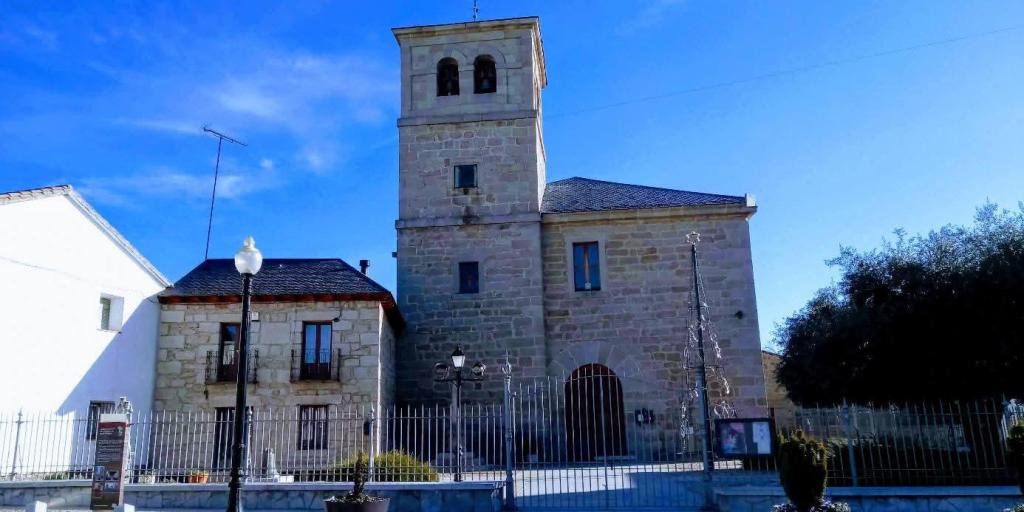
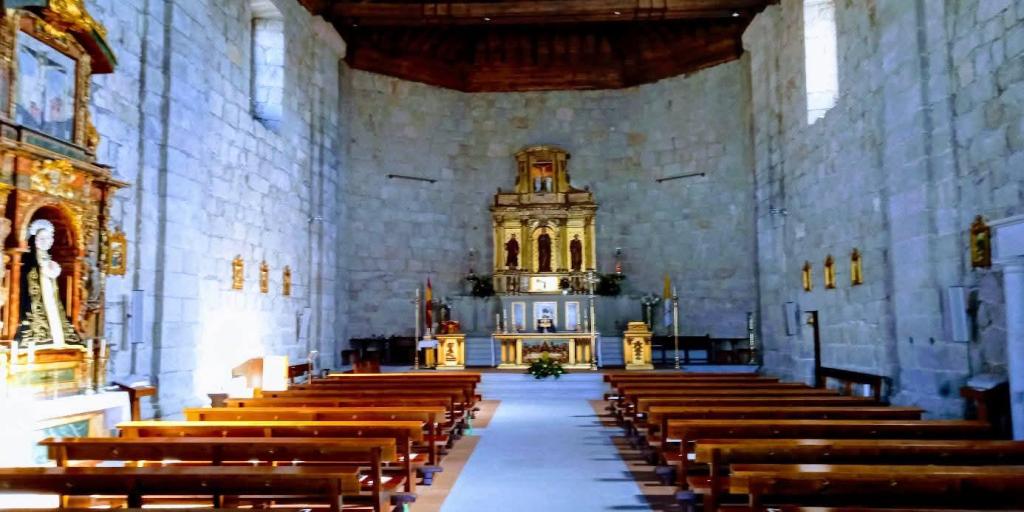
The Iglesia de la Asunción de Nuestra Señora or the Church of the Assumption of Our Lady, built in the Herrerian-Renaissance style, located in the Plaza de España, opposite the City/Town Hall. The Renaissance-style church was built between 1589 and 1615. The Blessed Sacrament was transferred there on December 8, 1615 It features a rectangular nave and a Herrerian-style tower with three decreasing sections, approximately 20 meters high. Its original 15C coffered ceiling, the Baroque altarpiece of the Virgen Dolorosa or Our Lady of Sorrows, and several wooden sculptures, such as that of Saint Vincent (which may date from the 13-14C), Virgen del Rosario or Our Lady of the Rosary (17C), and the baptismal font (17C, are noteworthy. Part of the old High Altar, which consisted of two sections, still stands. The sculptures of Saint Peter, Saint Vincent, and the Ascension are particularly noteworthy.
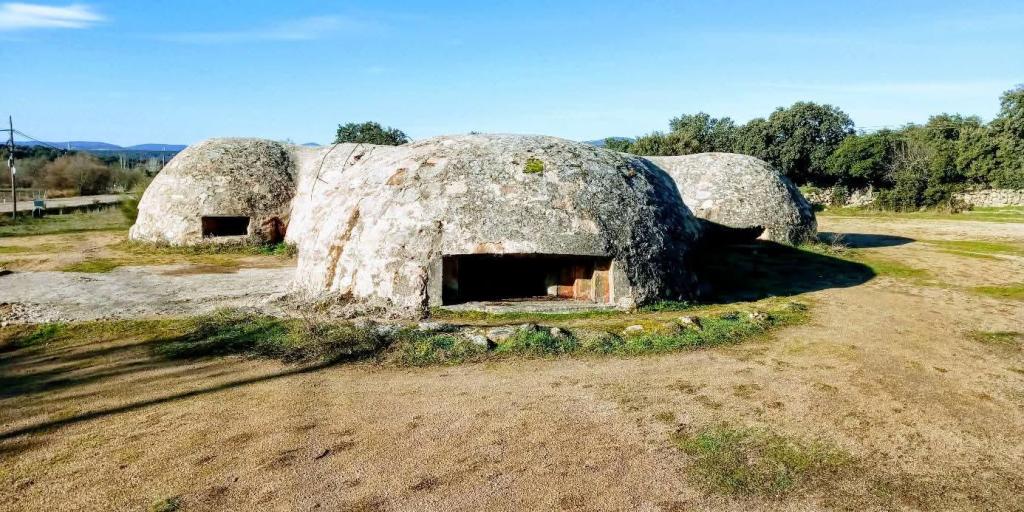
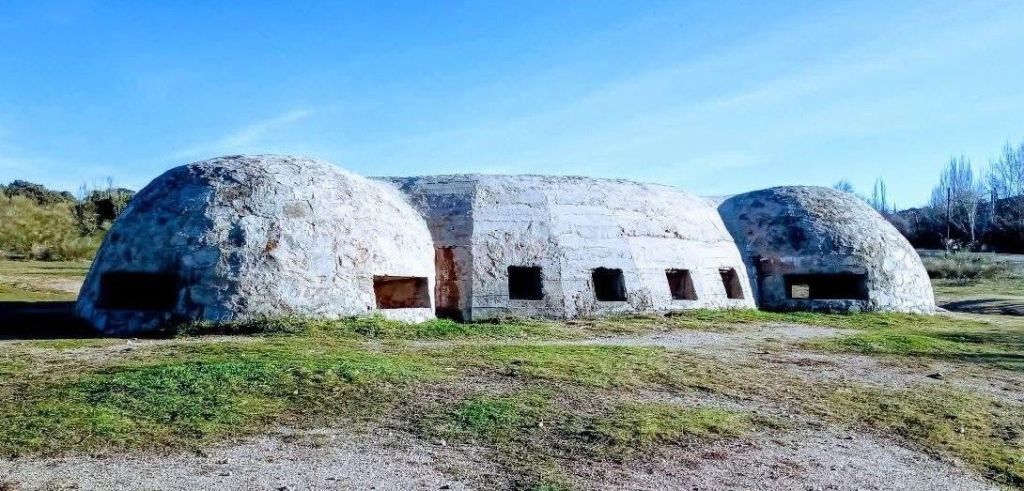
The Blockhaus No. 13 is included among the Archaeological Sites of the Community of Madrid and unique in its category, It is one of the most remarkable military constructions in the Community of Madrid. Following the bloody Battle of Brunete, General Franco’s troops had unlocked the difficult Sierra Oeste region of Madrid, an area of high strategic value during the conflict. For this reason, several rear-guard bunkers were planned very close to the battle line to provide shelter for dispersed troops and serve as fortifications to limit any possible Republican advance by road. It could withstand 155mm (45kg) projectiles. These structures were built in pairs, with only the one in Colmenar del Arroyo ever completed, and it was built in just two months. It consists of a circular walkway covered by four bunkers or pillboxes with loopholes and embrasures for riflemen and machine gunners. At the top, there is an interior courtyard with a platform for throwing hand grenades and a central circular structure to house anti-aircraft weaponry.
A bit of history I like tell us that the exact origin of the village is unknown; however, some burial sites suggest Visigothic and early medieval necropolises. What is certain is that the first settlements were established by shepherds in the 11C, occupying the current site of “Pajar Viejo,” to the west of the village boundary. The origin of Colmenar del Arroyo as an organized settlement is linked to the Reconquista and repopulation of the Castilian-Leonese Extremadura, carried out between the 12C and 13C, primarily during the reign of Ferdinand III, the Saint. Within the districts of the Tierra de Segovia south of the Central System mountain range, the village was included within that of Casarrubios. It obtained the privilege of town status, granted by Philip IV on December 19, 1626, which it eventually lost due to the high taxes it had to pay. Its lordship was awarded in 1692 to be sold it in 1693 to the Duke of Noblejas. What they did maintain over the years, right up to the present day, was their belonging to the district of Casarrubios. With the abolition of feudal estates by the Cortes of Cádiz in 1812, it regained its title of town, though not without conflict between the townspeople and the Duke, who demanded compensation for this loss. In 1833, the village severed its ties with the province of Segovia and became part of the province of Madrid;today Comunidad de Madrid..
The village of Colmenar del Arroyo on its heritage : https://www.colmenardelarroyo.es/turismo_patrimonioCultural.php
The association of Sierra del Oeste (west) on Colmenar del Arroyo : https://www.sierraoeste.org/colmenar-del-arroyo/
There you go folks, a quant small village for the memories of always, Many memories flashing my mind as we travel these lands over the years. Again, hope you enjoy the post on this is Colmenar del Arroyo !!! as I.
And remember, happy travels, good health, and many cheers to all !!!


