
This is again the wonderful opportunity to tell you about an off the beaten path area of my dear Madrid region, I am glad found these pictures that should be in my blog for you and me. It was a wonderful road warrior trail that took me here curious on the castle and darn worth it, me think, The village of Batres is located in the Comunidad de Madrid region, and in the kingdom of Spain,The town has a population of 1,976 inhabitants (INE 2025). Therefore, let me tell you my take on this is Batres !!! Hope you enjoy the post as I.
The village of Batres is located at km marker 35 on the M-404 highway (Navalcarnero-Villarejo de Salvanés). Batres is included within the parque regional del curso medio del río Guadarrama y su entorno or regional park of the middle course of the Guadarrama river and its surrounding area, to which it contributes 75% of its territory, that is, a total of 1,625.21 hectares. It is 7 km from Griñon , 44 km from Aranjuez , 59 km from Toledo, 84 km from Villarejo de Salvanés, and 41 km from Madrid from where we came along the Paseo del Prado passing by the Prado museum and Botanical Gardens bearing right onto the Plaza del Emperador Carlos V continue same road Paseo de Santa Maria de la Cabeza crossing over the M30 inner beltway of Madrid becoming the A42 highway bear right onto the M40 outer beltway dir Toledo then get off at exit/Salida 27 dir Toledo on the R5 radial road or Autovia Radial 5 continue then bear right onto exit/salida 15 dir Toledo to connect with the AP41 highway or Autopista Madrid-Toledo continue to get off exit/salida 8 see toll booth ahead to connect with the M404 road dir Griñon but at next roundabout bear right onto the Avenida de la Fuente del Chorro past this fountain bear right onto Calle del Castillo to castle,Av.enida de la Fuente del Chorro, 1,
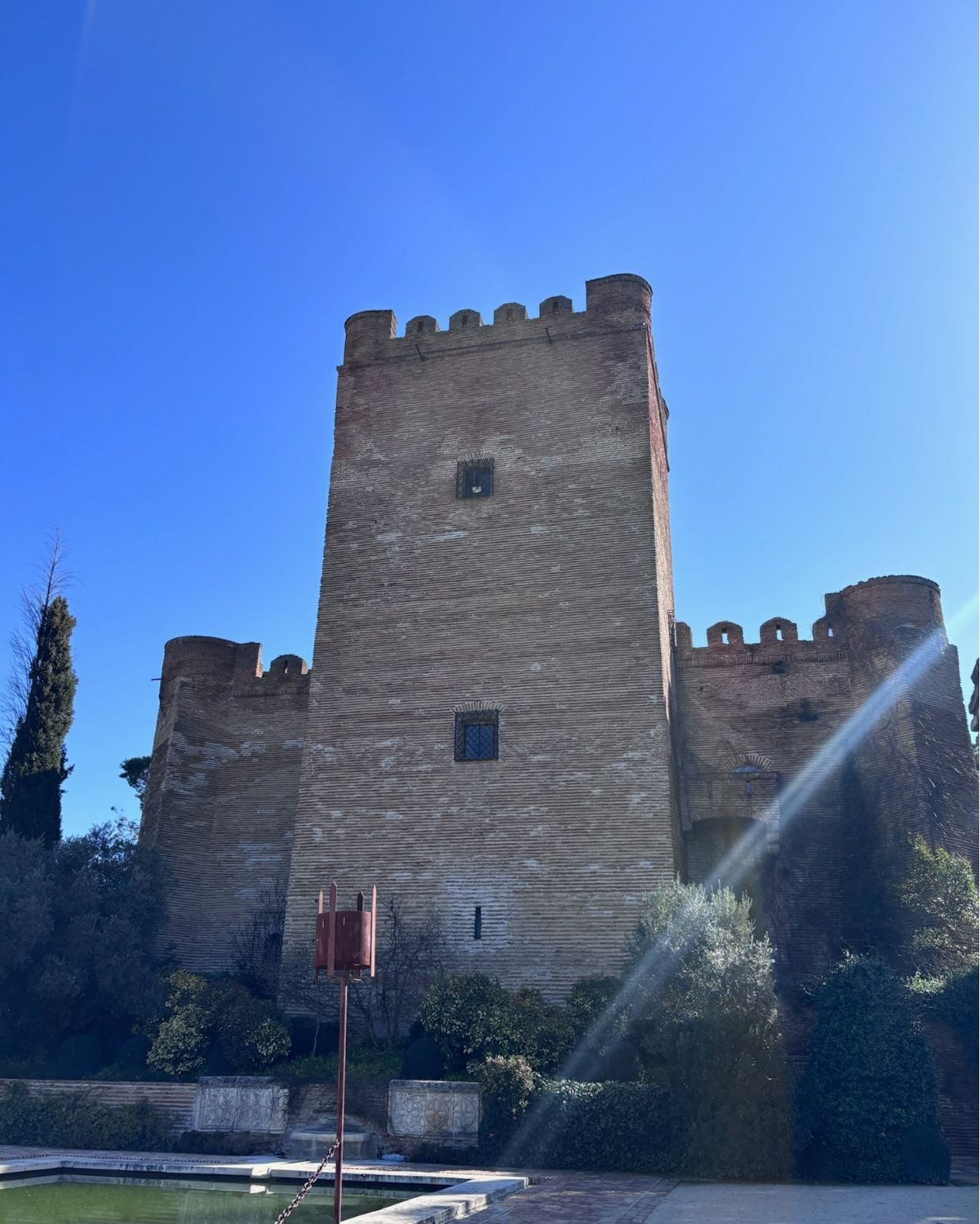
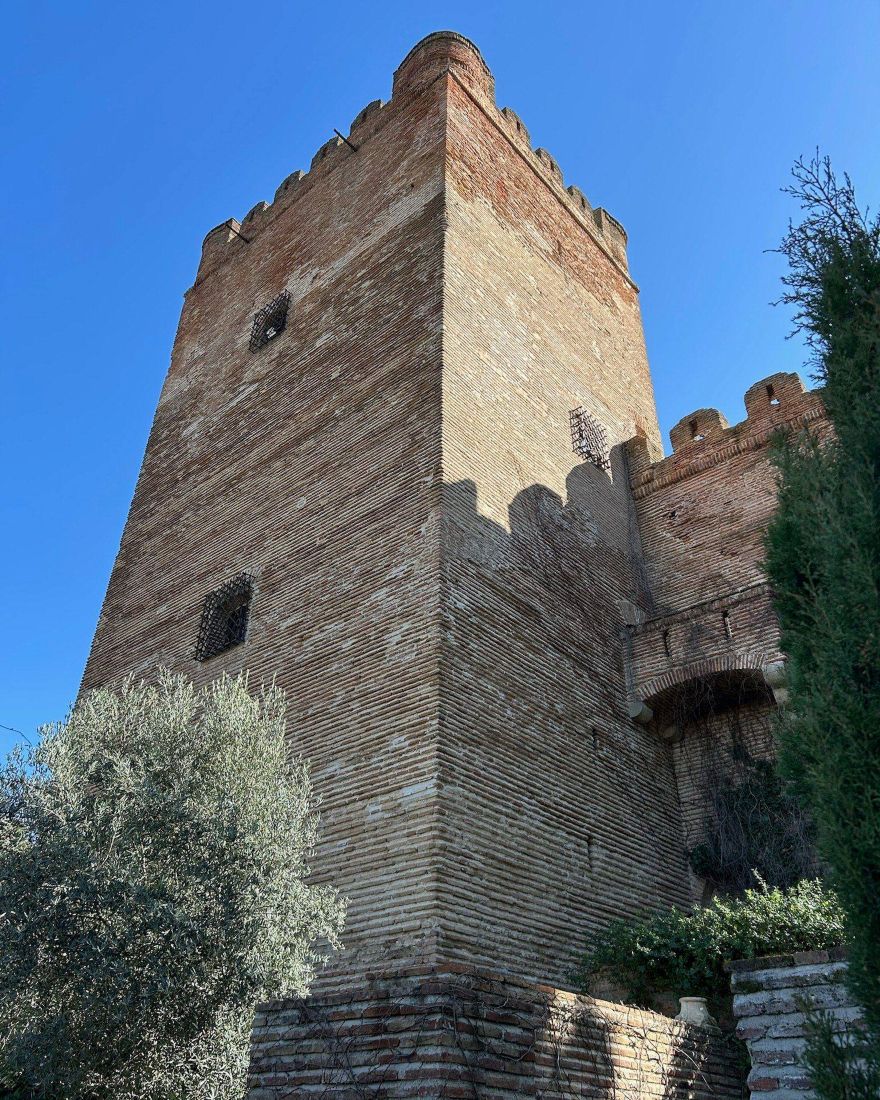
The historical and artistic complex of the “Batres fortified house, the Garcilaso Fountain and surrounding area” was acquired and restored by Luis Moreno de Cala between 1959 and 1970. It includes the castle, built between the 15C and 16C as a fortified palace. It has been historically linked to the Lords of Batres, who used it as their residence. Now the Moreno de Cala family uses it as a country house and retreat. It incorporates different architectural styles, most notably Isabelline Gothic and Plateresque. Today, it is one of the best-preserved privately owned castles, still belonging to the Moreno de Cala family. This fortification was historically linked to the poet Garcilaso de la Vega, who resided there. Points of interest include the Garcilaso Fountain, the Mirador Orchard, the parish church of Our Lady of the Assumption, the underground wine cellar, the bridge over the Sotillo stream, the Chorro Fountain, the castle walls, the warehouse, the Gardener’s House, and the water dam. The castle is now use for events and cultural activities,it is not visited,
A bit of history tell us that Batres has a long history, dating back to pre-Roman times, when it stood out as an important Carpetani settlement. Since then, it has been located in several places. In the Roman period, the settlement was known as Gran Watria, whose exact location is unknown. The first written references to Batres appear in the year 150, from the Roman Emperor Antoninus Pius, who mentioned Gran Watria in one of his writings. The town achieved some importance, as evidenced by the fact that Maternus Cynegius, ordinary consul of Rome in Constantinople and uncle of Emperor Theodosius, chose the site to build a Roman villa. During the Christian repopulation, which began after the Reconquista, a new settlement emerged near the original Roman settlement, which was destroyed by the Almoravids (muslims). The town was then known as Gran Villa de Batres and its main center was the monastery of Santa María de Batres, built around an old Christian basilica, whose remains are also located in Carranque. The third location corresponds to the current town center. Batres, eventually came into the hands of the Cluniac monk Master Hugo through a donation from Alfonso VII of Castile, was the origin of the Monastery of Santa María de Batres, belonging to the Cluniac Order, whose community survived until the 13C. In the 14C, a lordship was established around Batres, which was home to important political, military, and cultural figures. The most prominent of these was undoubtedly the Toledo-born poet Garcilaso de la Vega who resided in Batres Castle by 1501 or 1503-1536, A man with significant political activity like other members of the powerful Mendoza family in the provisional government that followed the death of Felipe el Hermoso (Philip the Handsome) and during the regency of Fernando II el Catolico (Ferdinand II the Catholic). His mother was Sancha de Guzmán, Lady of Batres, granddaughter of Fernán Pérez de Guzmán, author of the work *Generaciones y Semblanzas* (Generations and Portraits). With the Disentailment of the 18C, the lands of Batres were divided and distributed among the current villages of Batres, Casarrubios del Monte and Carranque, the latter two in the province of Toledo.
The village of Batres on its heritage : https://www.batres.es/tu-ciudad/lugares-de-interes/el-castillo
The official Castillo de Batres castle : https://castillodebatres.es/en/el-castillo
The Comunidad de Madrid region tourist office on Batres : https://www.visitmadrid.es/en/where-to-go/metropolitan-area/batres
The Spain National Tourist Office on Batres : https://www.spain.info/en/destination/batres/
There you go folks, a lovely quant village off the beaten path on our road warrior ways in south of Madrid, Batres is a nice village in real countryside of my dear Spain. Again, hope you enjoy this post on this is Batres !!! as I.
And remember, happy travels, good health, and many cheers to all !!!


