
This one was visited on a long walk warrior trail of my dear Madrid, and glad I did, we call it the Church San Antonio de los Alemanes or Saint Anthony of the Germans Church. I found me newer pictures in my cd rom vault that should be in my blog for you and me. Therefore, I like to tell you about the Church San Antonio de los Alemanes of Madrid !!! Hope you enjoy the post as I.
The Church San Antonio de los Alemanes is located at the intersection of Calle de la Puebla and Corredera Baja de San Pablo. A prime example of Madrid Baroque architecture, its most striking feature is its elliptical floor plan, one of the few of its kind in Spain, as well as the fact that it is entirely frescoed, including the dome and walls. Its main façade, crowned by a statue of the patron saint, is in a restrained, post-Herrerian style. Like many Baroque churches in Madrid, it is relatively small in size. However, this fact does not detract from the building’s spectacular nature, as it is compensated for by the large ellipsoidal dome that covers it and its unity with the walls, in addition to the superficial painted decoration that covers the entire interior surface of the church.
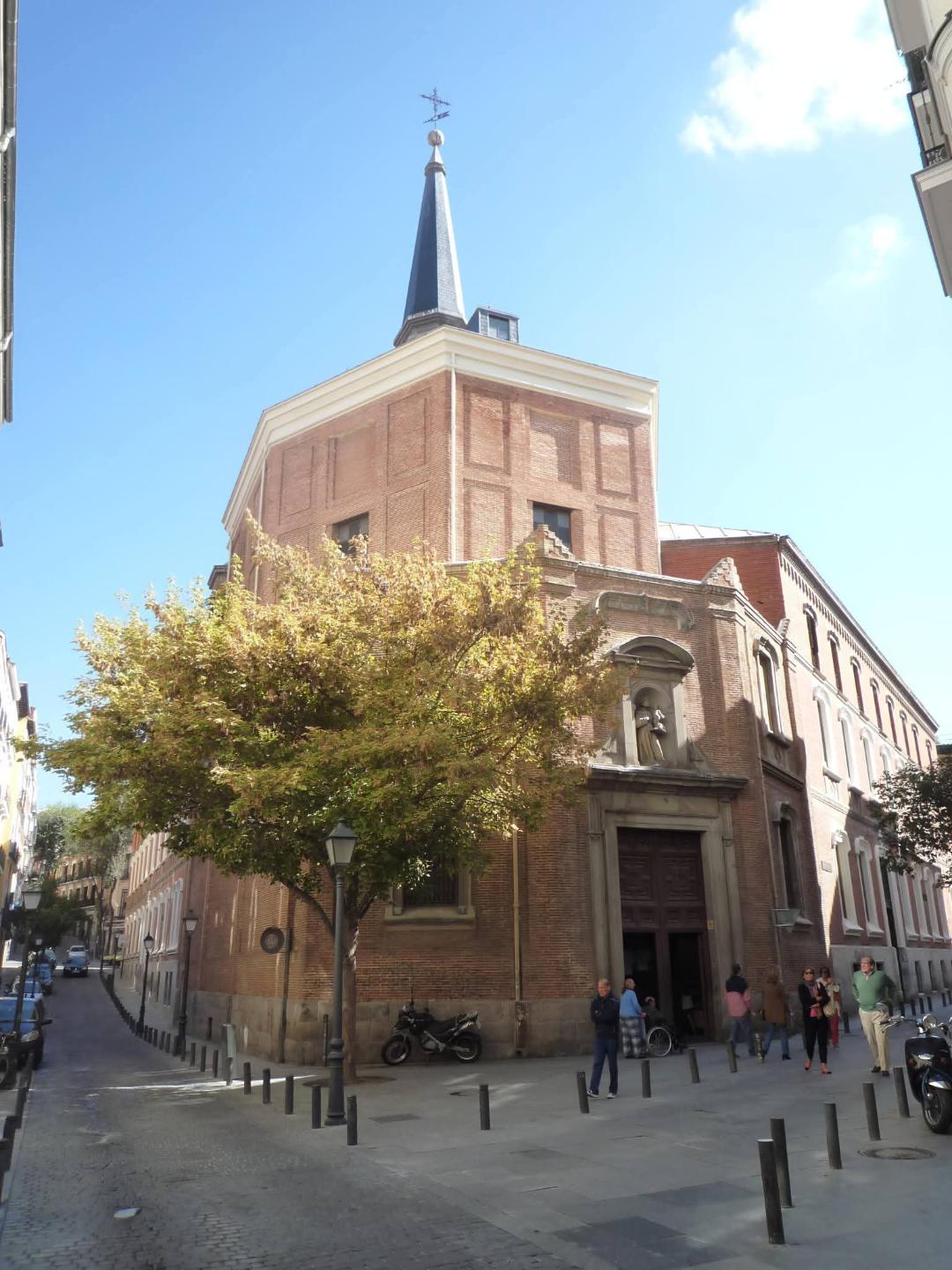
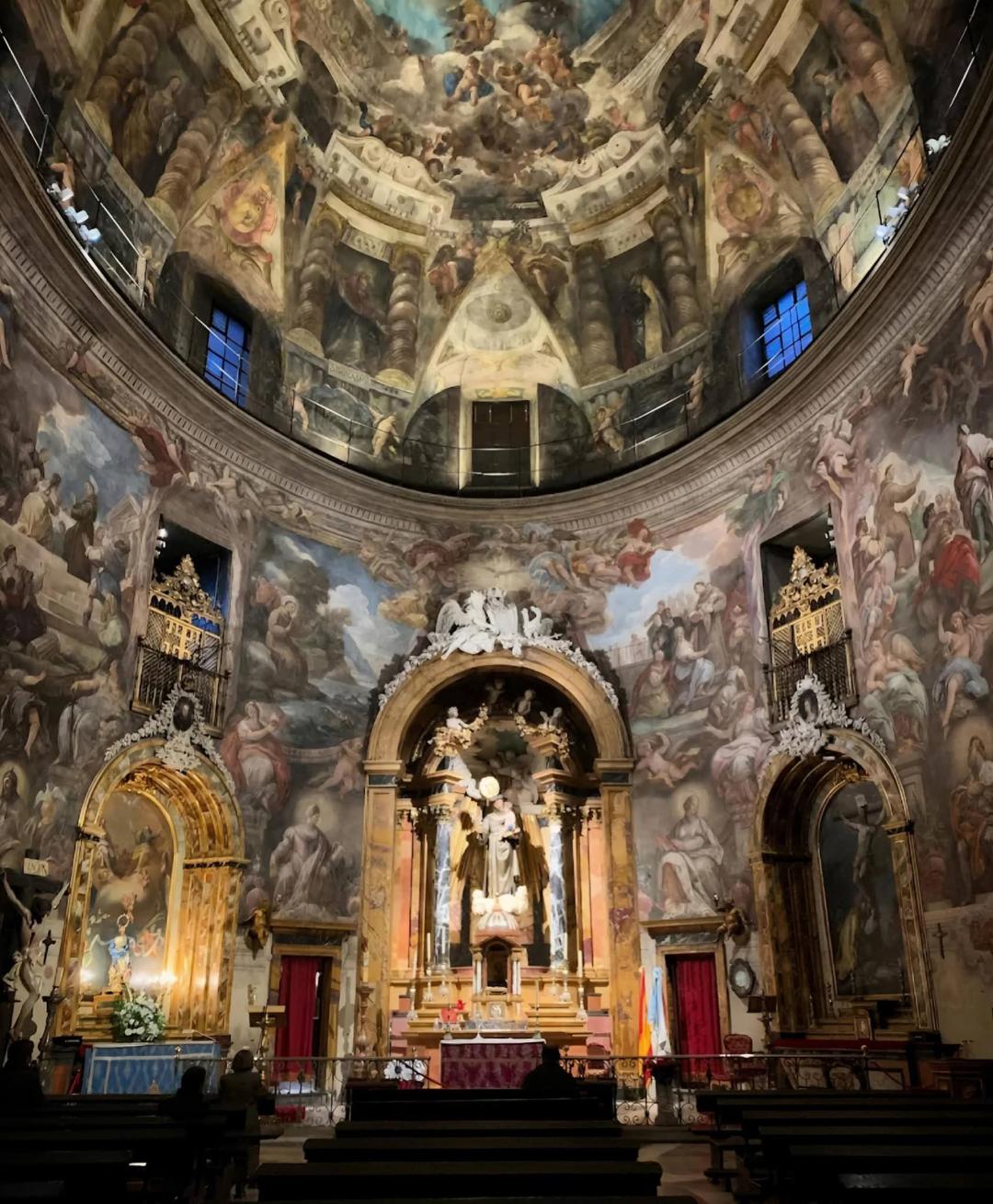
The interior of the Church San Antonio de los Alemanes, is a perfect example of Baroque illusionism, in which fresco painting blends with the architecture and the sculptures of the altarpieces to create an effect of luxury, movement, and color. The paintings in the center of the dome depict the Apotheosis of Saint Anthony, with the Portuguese saint ascending to heaven surrounded by angels. The mural paintings that cover the entire surface of the church, from the vault to the floor, are later than the architectural structure. For almost thirty years, the building remained with no interior decoration other than some moldings. It wasn’t until the second half of the 17C, with the Baroque style already well developed, that the painting work began. Thus, the paintings were completed sixty-eight years after the building’s construction. Subsequently, the only noteworthy modifications are the interventions of the late 19C and other restorations throughout the 20C. The frescoes depict several miracles of the Saint, such as the Miracle of the Mule or Saint Anthony healing the leg that a young man had lost after kicking his mother, and a series of saintly kings, including Emperor Henry II of Germany, Louis IX of France, and Saint Stephen of Hungary. In addition, there are portraits of Hispanic saints, Saint Hermenegild and Saint Ferdinand (Ferdinand III of Castile). The six altars, set in semicircular arched niches, were created by various artists. The altar dedicated to Calvary is that of Saint Engracia, dating from 1702. Portraits of kings, from Philip III to Philip V, as well as queens Maria Anna of Neuburg and Maria Luisa Gabriela of Savoy, are located above the altar niches in Baroque oval frames. A portrait of Queen Mariana of Austria is also included.
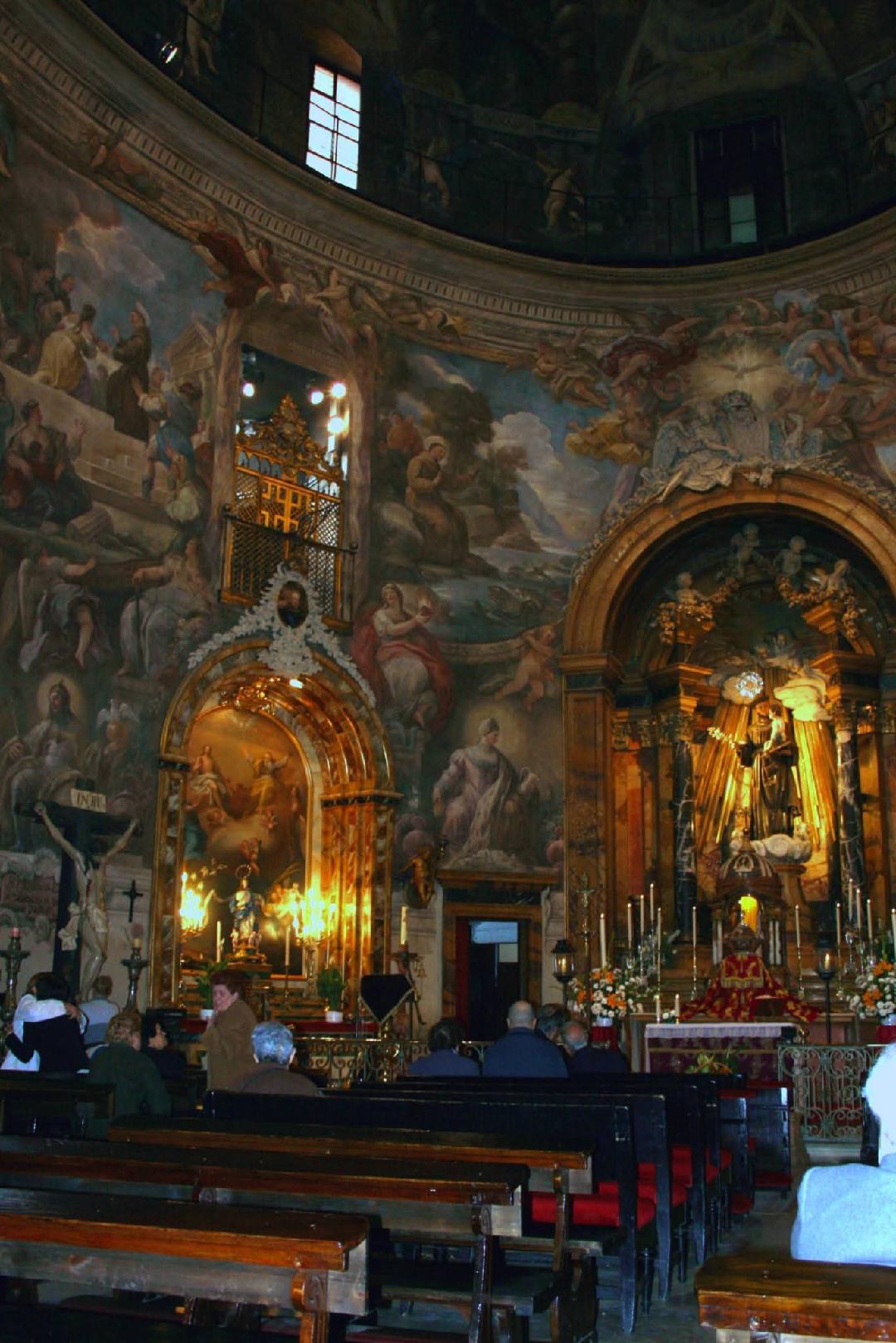
You see frescos of Saint Fructuosus. A male figure in ecclesiastical vestments, holding a book and a crosier; depicted in foreshortening, he gazes upwards. This is Bishop Fructuosus of Braga or Bierzo, a Visigothic cleric of the 7C. Saint Julia. A female figure in tunics; she holds a palm frond and points her finger towards the lower left corner, likely representing Saint Julia of Carthage. Saint Beatrice of Silva y Meneses. An image of the 15C Portuguese nun and founder of the Order of the Immaculate Conception. Her canonization was not official until the 20C, but she was venerated after her death. She is depicted wearing the habit of the order and holding a lily branch as her attribute. Blessed Amadeus of Portugal. This is another representation of a 15C Portuguese religious figure, Amadeus of Silva, reformer of the Franciscan Order in Italy. He is depicted hunched over and dressed in the dark habit of the Franciscans. Saint Gonzalo of Amarante. Male figure in a white tunic and black cloak : an 11C Portuguese friar of the Order of Preachers; officially canonized as a blessed, but de facto treated as a saint. Saint Sabina. Female figure dressed in tunics with her arm across her chest; she is a 2C Roman martyr. Saint Irenaeus. Male figure with a staff and cross. Saint Irenaeus of Lyons, 2C bishop. Saint Damasus. The male figure wears a papal habit of a white chasuble and short red cloak, looking upwards and raising his arms. He is Pope Damasus I, a 4C Pope born in Portugal.
You see scenes from the Life of Saint Anthony of Padua: The Preaching to the Fishes in Rimini. A depiction of his journey to the Italian city to evangelize the Cathars; he convinced the Cathars to return to the bosom of the Church by preaching among the fish. The Restoration of the Severed Foot. The scene recreates classical-style steps next to a church. Saint Anthony restores the severed foot of a boy who, repentant for having kicked his mother, had cut it off. The Donkey Kneeling Before the Host, Recognizing the Body of Christ. Saint Anthony caused a donkey to recognize the presence of Christ in the Host and kneel before it. The miracle is depicted with the saint raising the Host while the donkey kneels and the men surrounding him look on in disbelief. The Dead Man in the Cart. Saint Anthony asks for help from a peasant who approaches in a cart; He excuses himself by saying he is transporting his son’s body to the cemetery. When he tells his son about the deception, he discovers he is actually dead; repentant, he returns to the saint, who resurrects him. In the painting, we see the cart with a body lying in the background, while two men implore Saint Anthony. The Pretending Blind Man. A man is bribed to pretend to have lost his sight, is blindfolded, and taken before Saint Anthony. Trusting him, the saint lays his hands on him and removes the blindfold with the intention of healing him, but the man’s eyes remain stuck to it. The heretics, repentant, converted, and the saint restored the man’s sight. The painting depicts the moment the blindfold is removed. The Healing of a Crippled Boy. In the image, Saint Anthony, another Franciscan, and a woman supporting a boy are depicted. The Franciscan friar Lucas asks Saint Anthony to attend to the pleas of the mother of a boy crippled in his hands and feet; finally, the saint restores his lost limbs. The storm that didn’t wet the attendees at a sermon. While Saint Anthony was preaching, a storm broke out. He promised the faithful they wouldn’t get wet, and once it subsided, the rain hadn’t fallen for them. In the painting, the saint calms the attendees; in the background, a dark, moving sky is dotted with cherubs. The newborn who names his father. This depicts the story of the child who correctly answers the question about his father’s name during his baptism, dispelling the father’s doubts after he accuses his wife of adultery. In the image, the saint holds the child before those attending the baptism.
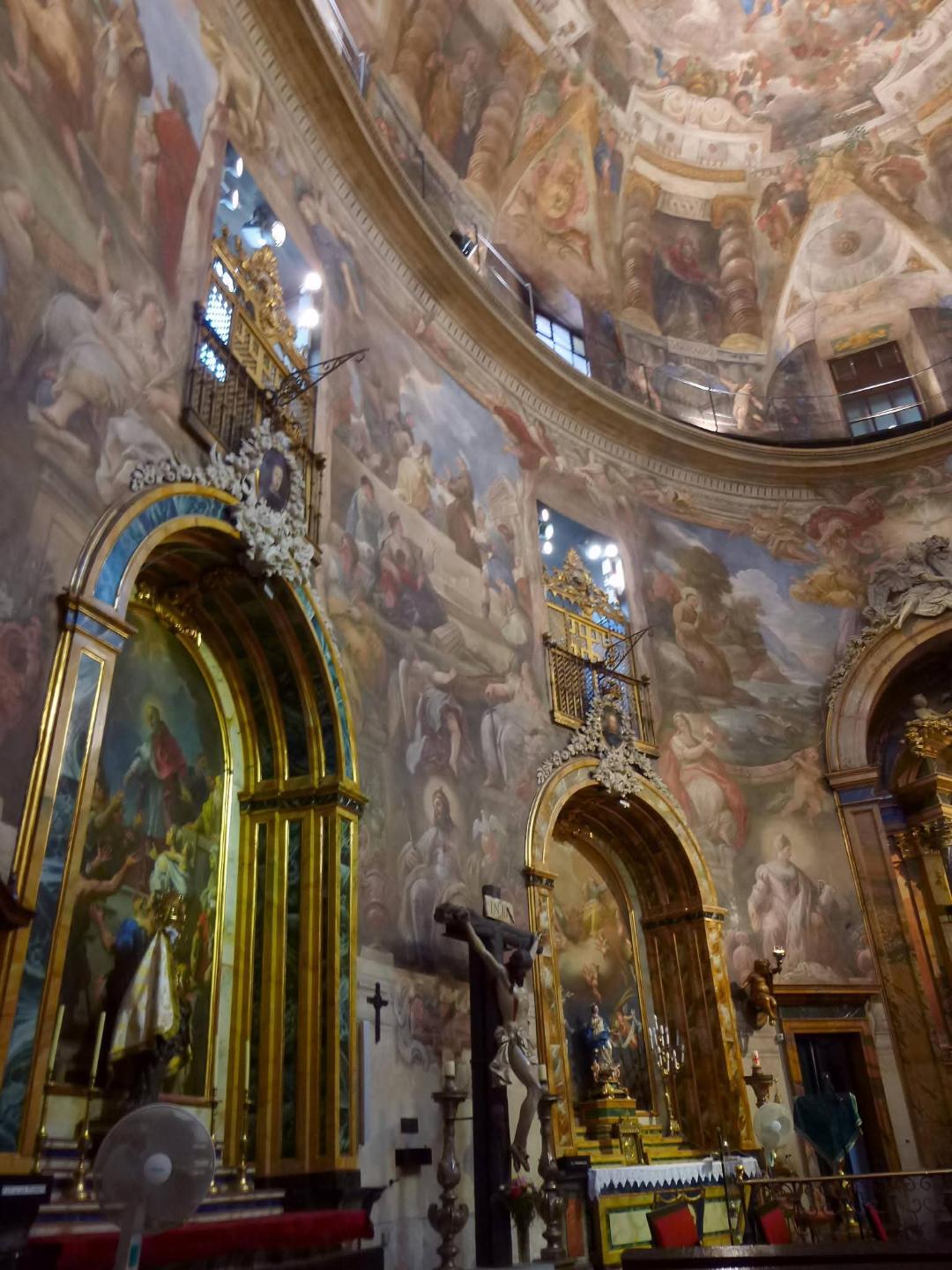
Beneath the paintings depicting the saint’s life are allegorical female figures representing the virtues attributed to Saint Anthony of Padua, as well as other female representations of more uncertain meaning. Christian Charity: An image of a woman in a white tunic, covered by red cloths, holding the Sacred Heart in her hand. Peace and Penance, This figure, carrying a cornucopia and a sword, has been interpreted as an allegory of Peace. The figure to her left, carrying a dry branch and a fish, symbols of fasting, is associated with Penance. Truth and Experience: Both allegories are identified by name in the sketches. Truth holds an open book and a palm frond; Experience, wrinkled by time, also carries a book and stands on an armillary sphere. Meekness: Represented by a woman holding a lamb, wearing a yellow tunic and covering her head with a blue cloth. Imitation. It is not definitively identified, but the mask at her feet and the paintbrushes in her hand are associated with imitative arts . The Catholic Faith and Charity: The former, in the lower right corner, is dressed in white and holds a chalice; the latter, located on the left, breastfeeds a child ,and looks upwards, where a flame appears. Woman stepping on a seven-headed monster and Desire.
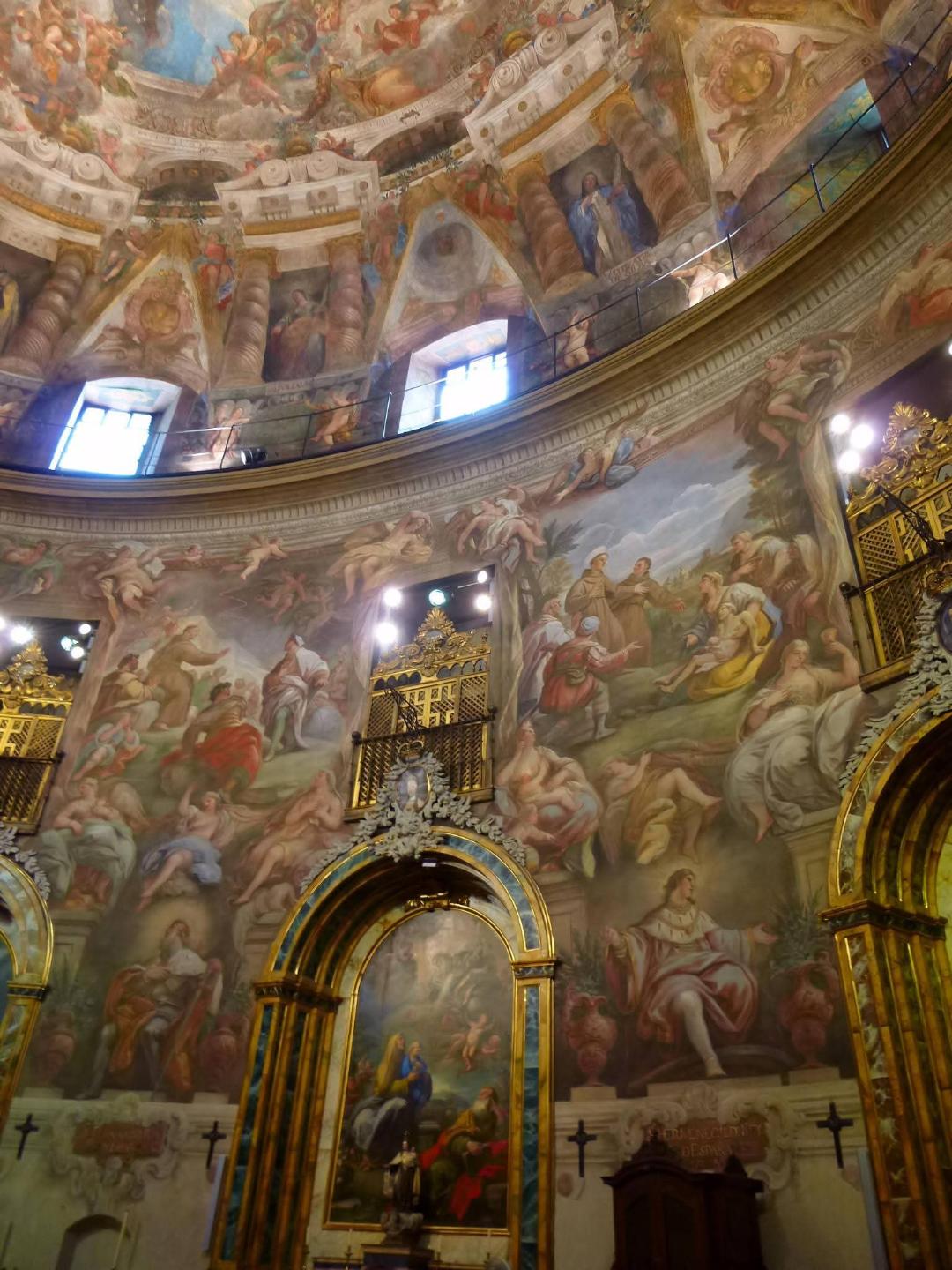
Finally, six medieval kings and queens canonized as saints are represented. These are monarchs who actively contributed to the spread of the Christian faith throughout Europe. Saint Edith of England. In her left hand she holds a jug and in her right she grasps a loaf of bread, alluding to the charitable vocation of the saint, a 10th-century princess who abandoned royal life and became a nun, dedicating her life to the poor. Saint Henry, Holy Roman Emperor. Henry II (973-1024), Holy Roman Emperor. He appears with various imperial attributes: a scepter, a globe with the Holy Spirit, and a crown; he wears armor, recalling the warrior nature of his reign. Saint Louis, King of France. Louis IX of France (1214-1270), depicted with a crown, sword, and royal mantle; the only French king to be canonized. Saint Stephen, Prince of Hungary (975-1038), the first Hungarian monarch to convert to Christianity. In the image, he carries a scepter and three nails. Saint Hermeric, Prince of Hungary (1000-1031), son of Saint Stephen of Hungary and Gisela of Bavaria (all canonized in 1083). He holds a small scepter; at his feet is a vessel with a child, but there is no iconographic reference to infer its meaning. Saint Hermenegild, King of Spain (564-585), son of Leovigild and brother of Reccared; he converted from Arianism to Catholicism, clashing with his father, who stripped him of his royal regalia, and he died in the conflict. Saint Ferdinand, King of Spain (Ferdinand III “The Saint”). Circa 1200-1252, unifier of the kingdoms of León and Castile under his crown and renowned for his conquests against the Muslims, is depicted wearing armor. Saint Cunigunde, Empress of the Holy Roman Empire. Wife of Emperor Henry II, according to tradition, she was accused of adultery and, to prove her purity, walked on red-hot plowshares without being burned. In the painting, she holds the plowshare in her hands.
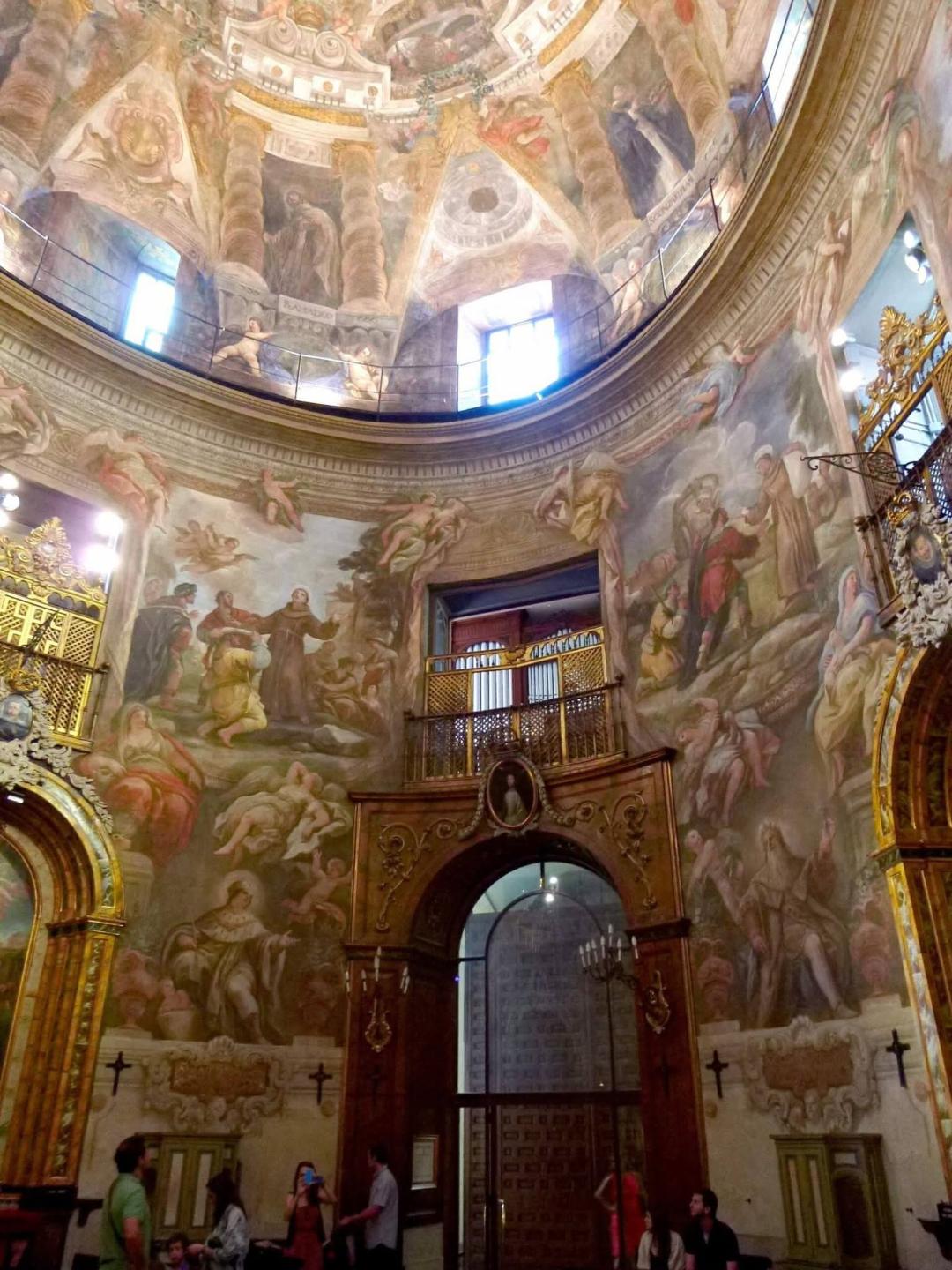
The dome is the area where the greatest concentration of paintings is found. In the central and highest part is the Apotheosis of Saint Anthony, depicting the ascension of Saint Anthony of Padua into heaven surrounded by angels. This scene is complemented by a lower frieze,with trompe-l’œil architecture of two levels: the upper level with coffered arches and the lower level creating a false drum alternating windows with painted pendentives and faux chapels with pediments and Solomonic columns containing saints, five of them Portuguese. At the foot of the altar, in line with the church entrance, is the coat of arms of Portugal.Simulated drums are located above the windows at the head and foot as well as smaller in size between the images of Saint Sabina and Saint Irenaeus and Saint Beatrice of Silva and Saint Julia The walls enclosing the church also feature trompe-l’œil architecture, with celestial figures disrupting the architectural structure and enhancing the illusion. The works depicting the saint’s miracles take center stage. Just below these scenes, flanking them, are allegorical figures representing the virtues attributed to Saint Anthony of Padua. Positioned in the spaces between the chapels are portraits of significant monarchs from the great European monarchies that had served as pillars of Catholicism but, at the time these paintings were created, were part of the Protestant movement.
The six chapels located on either side of the church each contain a painting and a small sculpture. These include Saint Isabel of Portugal, Saint Charles Borromeo, Saint Anne, Saint Joachim, and the Virgin Mary as a child and Calvary; the authorship of the painting of the Trinity is unknown. Accompanying the paintings are six 18C sculptures: the Immaculate Conception, the Archangel Saint Raphael with the fish, Saint Andrew with his cross, Saint Joseph with the child, Our Lady of Mount Carmel, and Our Lady of Sorrows dressed as a widow. The remains of two Castilian princesses rest in the crypt of the Church of San Antonio de los Alemanes. Their remains were transferred to the Church of San Antonio in 1869 from the Convent of Santo Domingo el Real in Madrid, which had been demolished that same year. The two princesses whose remains lie in the crypt are Berenguela of Castile, daughter of Alfonso X the Wise and Violante of Aragon, and Constance of Castile, daughter of Ferdinand IV of Castile and Constance of Portugal. A bronze statue of Saint Pedro Poveda has also been placed in the crypt since 2006.
The church is open Tuesday through Saturday, excluding public holidays, from 10h to 18h, with visits ending at 18h. On Sundays, visits are from 13h to 16h. There are two types of visits: guided with admission, and self-guided free,
A bit of history tell us that the construction of the Church San Antonio de los Alemanes began in 1624 and continued until 1633. It was built as a chapel for the Hospital of San Antonio de los Portugueses, founded in 1606 by King Philip III. When the church was completed, it served as the center of religious devotion for the Portuguese community in Madrid, although its reach extended to the entire city population. Once Portugal gained independence from the Spanish kingdoms, Queen Mariana of Austria, second wife of Philip IV, ceded it in 1668 to the German Catholic community, which had been numerous at Court since their arrival. It was then that the name of the hospital and church changed to San Antonio de los Alemanes, but it retained the dedication to Saint Anthony of Padua, of Portuguese origin. From 1701, the church and hospital belonged to the Brotherhood of the Refuge. This institution was committed to providing aid to the needy of Madrid. A priest and two lay members of the brotherhood went out into the streets to offer water, white bread, and a hard-boiled egg to the beggars.
The Madrid tourist office on the Church San Antonio de los Alemanes : https://www.esmadrid.com/en/tourist-information/church-san-antonio-alemanes
The official Hermandad del Refugio on the Church : https://realhermandaddelrefugio.org/san-antonio-de-los-alemanes/
There you go folks, you should make the trek to see this wonderful beautiful church and great areas to see around. The church is worth the detour and of course to admire the paintings frescos is tops anytime ! as is Madrid ! Again, hope you enjoy this post on the Church San Antonio de los Alemanes of Madrid !!! as I,
And remember, happy travels, good health, and many cheers to all !!!


