
A wonderful memorable road warrior trails of us between France and Spain, we passed by it and once took a cut to visit it, Gladly found me again pictures in my cd rom vault that should be in my blog for you and me. This was a while back and passed close by it several times, Another spot in my world map and of my dear Spain, Therefore, here is my take on this is Ayllón !!! Hope you enjoy it as I.
The town of Ayllón is located in the province of Segovia, in the autonomous community of Castilla y León, and in the kingdom of Spain. It is situated in the northeastern part of the province of Segovia, bordering the provinces of Guadalajara and Soria, 93 km from Segovia, 44 km from Aranda de Duero, 97 km from Soria,154 km from Madrid, and 154 km from Burgos from where we came on our way to Madrid, The town is crossed by the N-110 highway between km markers 91 and 105, as well as by the provincial roads SG-145, which connects to Campisábalos, and SG-945, which leads to Aranda de Duero. We came here from Burgos getting on the A1 autovia del Norte continue dir Madrid past Cogollos continue past Lerma then on exit/salida 113 bear right into circle ramp bearing right onto the A11 Autovia del Duero for a short traject and bear right onto the N 1 dir Aranda de Duero quickly bear right onto the BU 945 road thru City center Fuentespina continue same road to Fuentelcésped continue to get around dam or embalse de Linares del Arroyo across is the town of Maderuelo continue on the BU 945 road continue into the Plaza Mayor de Ayllon,
The Plaza Mayor has at one end the sober and elegant City/Town Hall building, originally the first palace of the Marquises of Villena in the 16C, and to its left is the Romanesque Church San Miguel. In the center of the square is a four-spout fountain, built in 1892 to commemorate the 400th anniversary of the discovery of America as it appears that Juan de Ayllón, a native of the town, was among those who accompanied Christopher Columbus on his expeditions. From the Plaza Mayor, one can see the tower of La Martina atop the hill overlooking the town and the bell gable of the Church Santa María la Mayor.
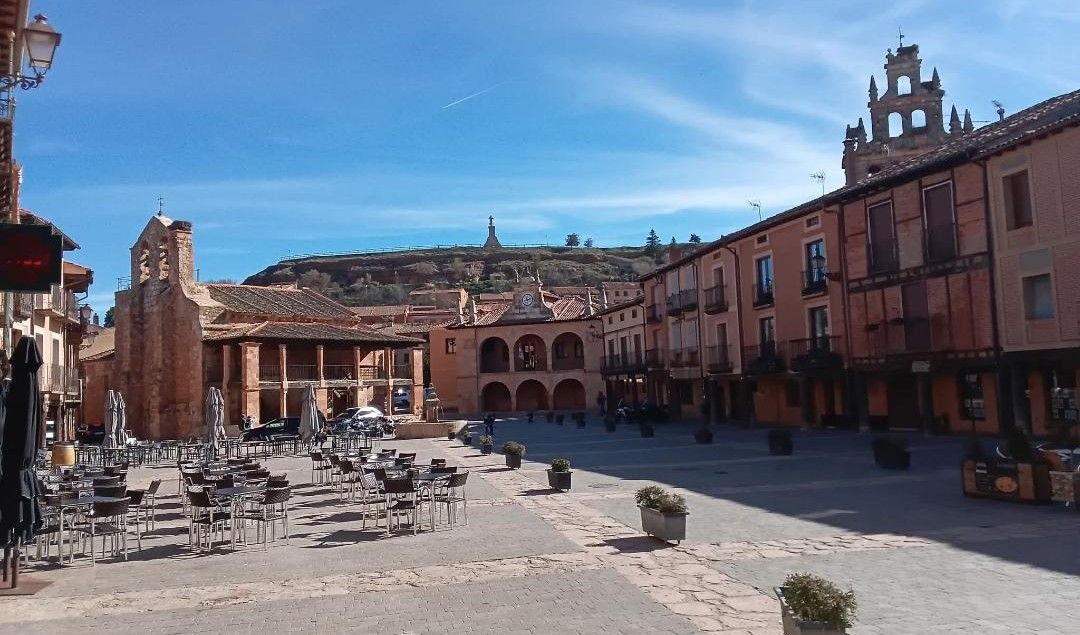
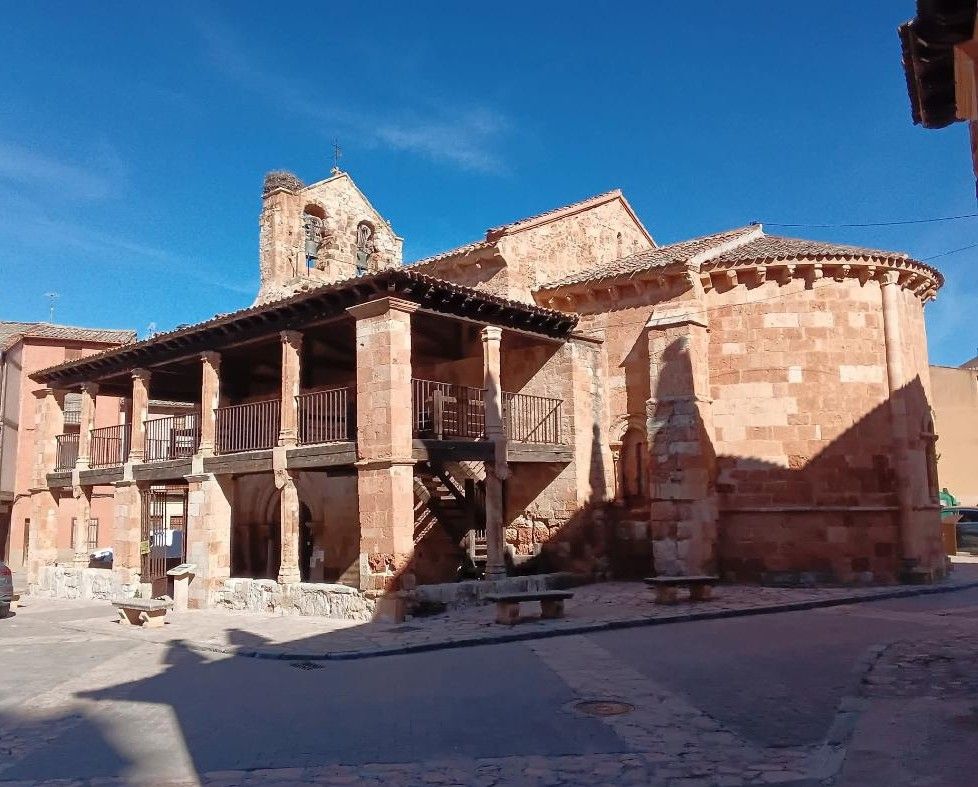
The church San Miguel has the oldest remains dating back to the 12C, although additions and modifications were made until the 18C. The result is a balanced ensemble with a very special charm and magic. Until 1993, it was the parish priest’s house, but then its last restoration was carried out, giving the building its current appearance. Today it houses the Tourist Office and is a must-see for anyone wanting to discover the secrets of Ayllón. Its interior is also used as an incomparable setting for theatrical performances, concerts, exhibitions, and all kinds of cultural and artistic activities. The church features a semicircular apse. Its entrance is partially obscured by the atrium balcony, which served as a viewing platform for members of the ecclesiastical council to watch the bullfights held in the square.
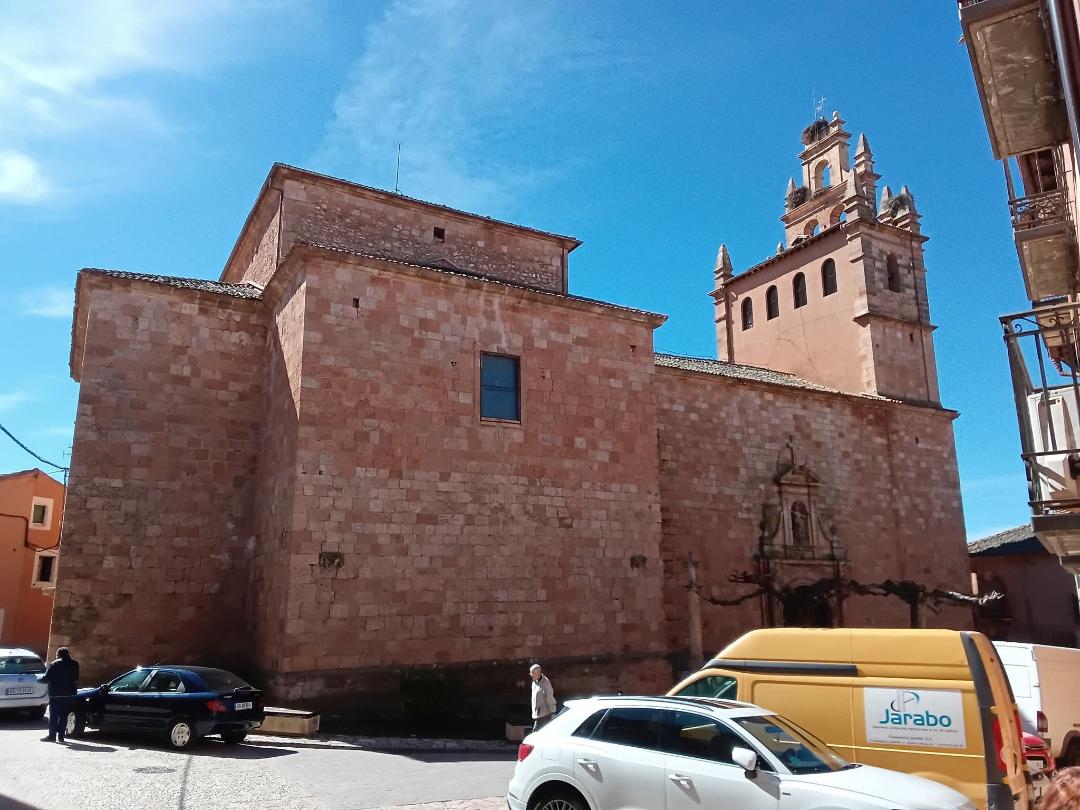
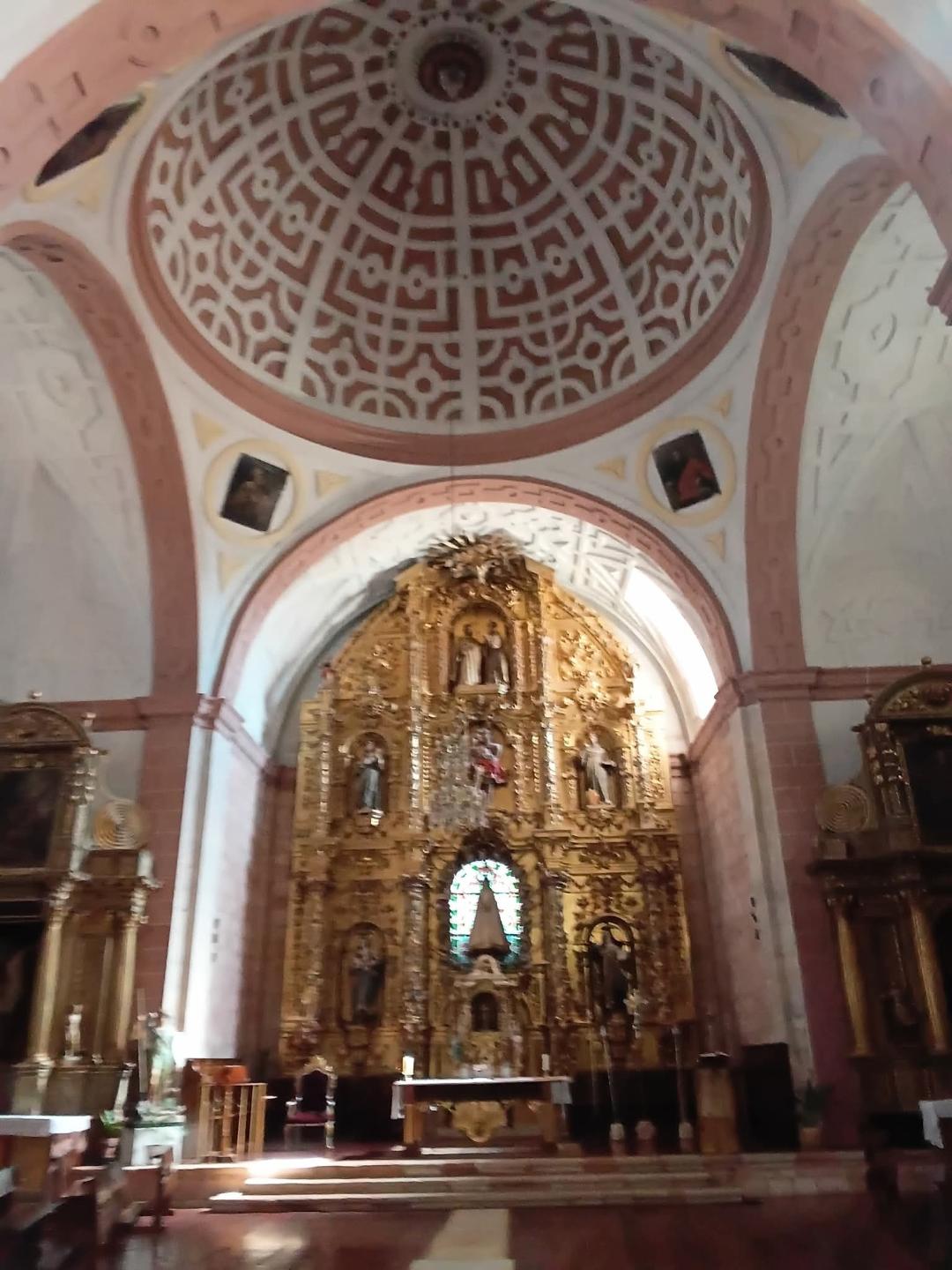
The Church Santa María la Mayor shows a majestic ensemble standing on the site of a former parish church that collapsed in the early hours of March 4, 1697. The new church was erected in just four years; construction was completed on October 20, 1701. The new church is Neoclassical in style, with a Latin cross floor plan and a dome at the crossing. The entire ceiling is decorated with plaster moldings. It also features a choir and a rectangular tower on the facade. The altarpiece of the main altar belonged to the Convent of San Francisco, from where it was moved after the confiscation of church property in 1840. In the choir area, there is a small baptismal font carved in stone, a true gem. Inside, one can admire the beautiful Romanesque apse with foliate capitals and corbels supporting a braided cornice. Also located inside is the tomb of Don Pedro Gutiérrez de César and his second wife, Doña Juana Enríquez, Marquesses of Villena, and he was treasurer and secretary to Don Diego I López Pacheco. The most distinctive feature of this church is its imposing bell tower, 40 meters high. In the upper section, six arches open to house six bells: four in front and one on each side. Above the bell tower rises the belfry with three openings for the bells.The Church Santa María la Mayor is the only parish church in Ayllón where services are still held; the town once boasted seven. Access is through a semicircular arched doorway flanked by fluted columns. Above the arch is a niche containing an image of the Virgin Mary. Medieval sculptures, possibly from the old parish church, can be seen on some of its walls.
Other things to see here are after crossing the Puente Romano or Roman Bridge over the Aguisejo river, you’ll find the medieval Arch, one of the town’s three original gates. This is the main entrance, above which rest four coats of arms belonging to the four most illustrious families of Ayllón. Palacio de los Contreras was commissioned by Juan de Contreras in 1497. Its façade is framed by a Franciscan cord and three coats of arms. However, the coffered ceiling found inside indicates that some parts of the building predate that date. Commonly known as the Palacio de Don Álvaro de Luna, it is in the Isabelline Gothic style. The Casa del Aguila or House of the Eagle, or the Renaissance Palace of Bishop Vellosillo, was built in the mid-16C by order of Fernando de Vellosillo, a prominent son of Ayllón who became Bishop and Lord of Lugo. The building was purchased by a private individual until, in the mid-20C, the City Council reclaimed it as public property. Currently, the building houses the municipal library and the Museum of Contemporary Art of Ayllón, which boasts a valuable art collection by artists such as Barjola, Lucio Muñoz, Genovés, and others. The Convento de las Monjas Concepcionistas or the Convent of the Conceptionist Nuns ia another convent in private hands. The church has a Greco-Roman floor plan and is Romanesque in style with a four-section vault. It passed into private hands in 2007 and is currently a guesthouse whose rooms were the nuns’ cells for more than five centuries. The so call “El Castillo” is home to La Martina, a tower of Arab origin offering a beautiful panoramic view of the village and the nearby Sierra de Ayllón mountain range. Nearby is the Romanesque Church of San Juan. Built in the 12C, Romanesque church, only an apse with three semicircular arches and three archivolts remains of the original structure. In the 16C, a Gothic chapel was erected on the same site by the Marquises of Villena. Inside, a Gothic-style tomb belonging to Álvaro Núñez de Daza is preserved. The apses and gardens have been restored. Part of the church houses a museum, with a particularly interesting exhibition of ‘art brut’ art, which can be viewed on weekends. The building was sold to a private individual in the mid-1960s. On the outskirts of the village, towards Aranda de Duero, stands the Romanesque portal of the former hermitage of San Nicolás. The hermitage no longer exists, and the old cemetery occupies its site. This portal is one of the most important examples of Romanesque architecture in Ayllón. Just under a km away, lies another of the area’s gems: the Convent of San Francisco, or what remains of it. Founded in 1214 by Saint Francis of Assisi, it suffered a fire and was rebuilt between 1733 and 1738. Its most striking features are its imposing bell tower ,its ashlar facade, and three semicircular arches.
A bit of history I like tell us that Ayllón is probably of Arevaci origin. The Celtiberians are the first inhabitants of Ayllón of whom there is record, according to abundant remains found on the hill where the Torre de La Martina now stands. Later came the Goths, Visigoths, and Muslims. It was destroyed by the Romans under Marcus Fulvius Nobilior in the year 190 BC. A Visigothic necropolis exists in the Estebanvela area. Repopulated during the Arab occupation in the 10C, it is first mentioned as Aellon in 1076. Later came the Christians. Alfonso VI, Alfonso VII, Fernando III, and Fernando IV, María de Molina, and El Cid Campeador all passed through the town. Saints such as Saint Francis of Assisi, Saint Vincent Ferrer, and Saint Teresa of Ávila also visited. John II granted the lordship of the town of Ayllón to Álvaro de Luna, who in 1423 would be appointed Constable of Castile, an event that is currently celebrated on the last Saturday of July. On October 31, 1411, during the regency of Catherine of Lancaster, the Treaty of Ayllón was signed between Spain and Portugal to end the crisis of 1383–1385 in Portugal and recognize Juan (John) I of Aviz as King of Portugal. On January 2, 1412, the so-called Laws of Ayllón (or Second Ordinance of Valladolid), discriminatory measures against Jews and Mudéjars (Muslims living under Christian rule), were approved. Shortly thereafter, it became the residence of Constable Álvaro de Luna during the reign of Juan (John) II of Castile.
The town of Ayllon on its heritage : https://www.ayllon.es/patrimonio
The province of Segovia tourist office on Ayllon : https://www.segoviaturismo.es/lugares/ayllon
The Castilla y Léon region tourist office on Ayllon : https://www.turismocastillayleon.com/en/heritage-culture/ayllon
The most beautiful towns of Spain on Ayllon : https://lospueblosmasbonitosdeespana.org/ficha-pueblo/?id_lugar=22
The Spain National Tourist Office on Ayllon : https://www.spain.info/en/destination/ayllon/
There you go folks, another gem in my dear Spain, Ayllón, was a surprise road warrior ride that was worth it for a pleasant quant architecturally stunning City center. Again, hope you enjoy this post on this is Ayllón !!! as I.
And remember, happy travels, good health, and many cheers to all !!!


