
And I am going back to a wonderful far away land in my beloved Spain. The City of Mérida is located in the province of Badajoz, capital of the autonomous community of Extremadura, and in the kingdom of Spain, It is 62 km from Badajoz, 75 km from Càceres, 83 km from Trujillo, 126 km from Guadalupe, and 342 km from Madrid,See my other post on the City as I came here in my road warrior mode from Guadalupe, I have found me again pictures in my cd rom vault that made me do this post for you and me. Therefore, here is my take on the Basilica Santa Eulalia y Hornito of Mérida !!! Hope you enjoy it as I.
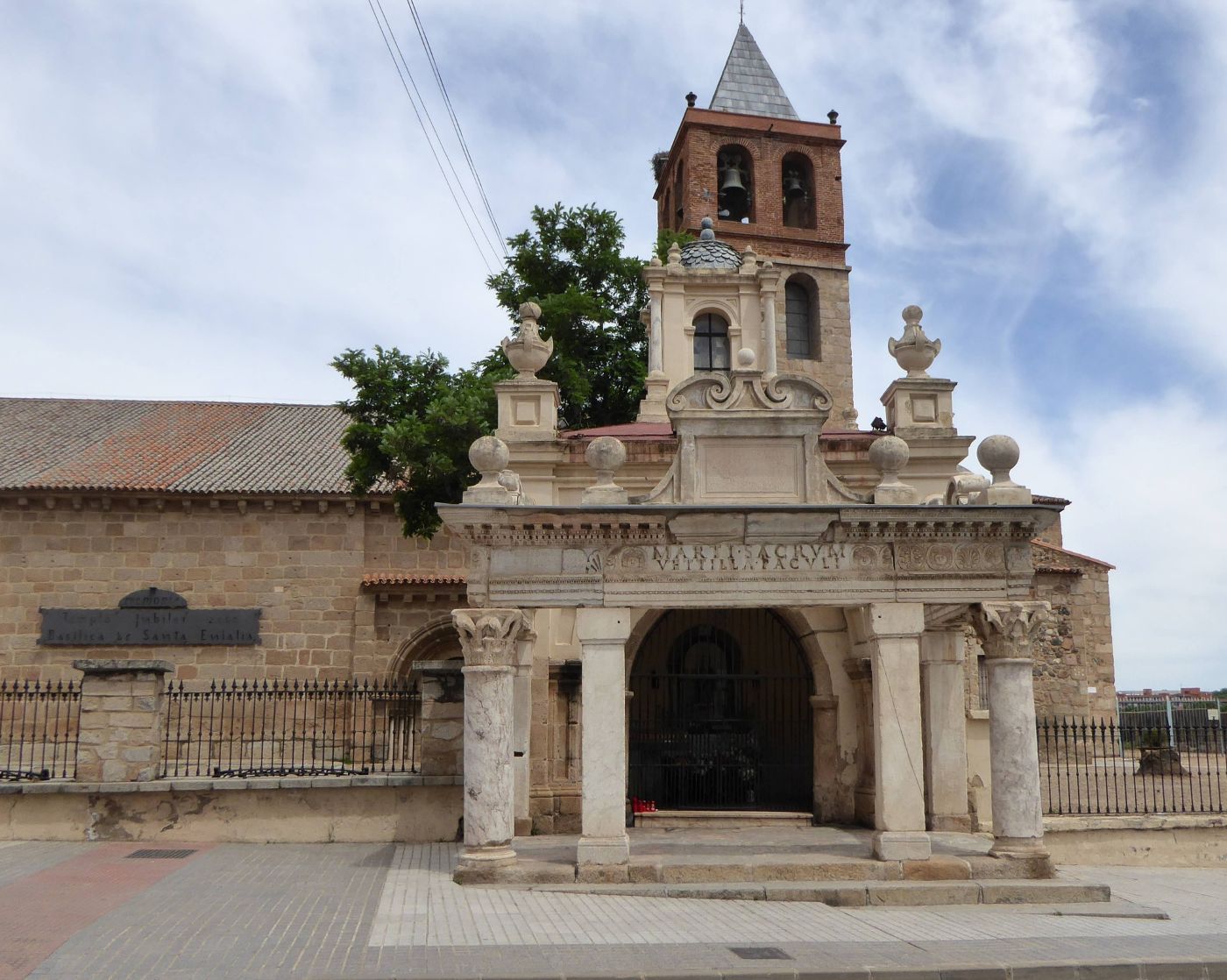
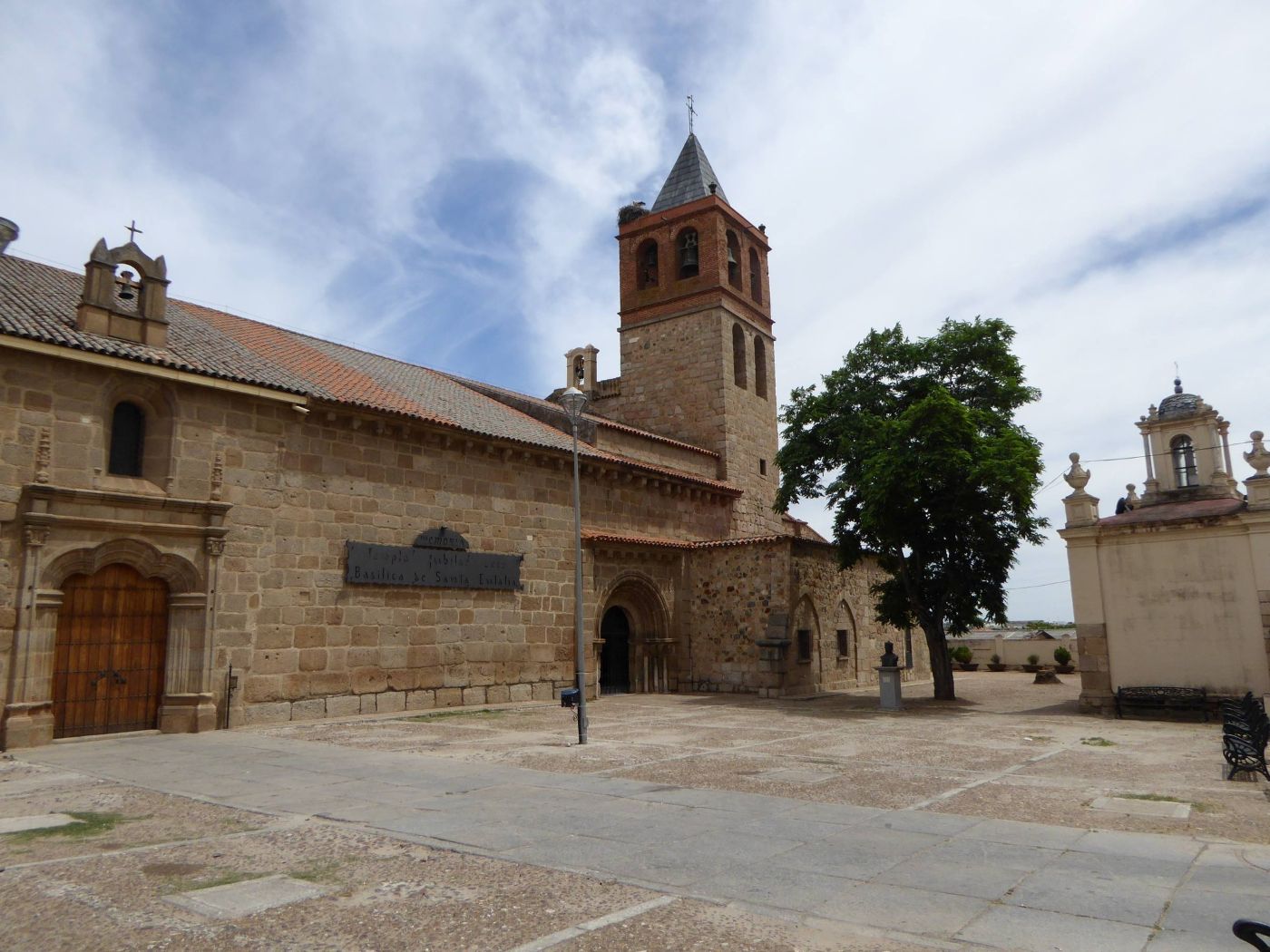
The Basilica of Santa Eulalia is a beautiful church with a long and complex history, evident both in its walls and its subsoil, which can be explored in its entirety as if it were a crypt. It is built on the site of an ancient 5C basilica, destroyed by the Almohads. The current structure is Romanesque in style. It is built on a three-aisled basilica plan with a hemispherical apse inside and a straight apse outside. The apsidal chapels incorporate Visigothic and Gothic elements. Remains of Roman dwellings and a Christian necropolis have been found in the basilica’s basement. It has been possible to interpret the historical and archaeological sequence of occupation of the site, starting with a domestic space within a sacred place. This sequence can be summarized as follows: According to researchers, it was the first Christian temple erected in Hispania (Roman Spain) after the Peace of Constantine. This church was therefore built as a martyrial basilica in memory of Eulalia of Mérida. For this reason, during the early Middle Ages, it became a place of pilgrimage for people arriving from Western Europe and North Africa. At the same time, news of the martyrdom of its patron saint spread throughout the Roman Empire, and numerous churches, especially in Western Europe, were built using her relics. After the city’s recovery, the lost Christian worship was restored once the church was rebuilt. Part of the apse walls was used for the new church. The nave walls were rebuilt in 1230 from the foundations, with slight changes in orientation compared to the Visigothic version, while retaining the basilica structure of the previous one. The three large naves are separated by interesting pointed arches supported by composite pillars, terminating in two projecting sections, the central one much more developed than the side ones. The south and north portals, with their pronounced flare, exhibit a structure typical of late Romanesque buildings. The north opening eventually became the entrance to the Chapel of the Miraculous, built in the 16C.
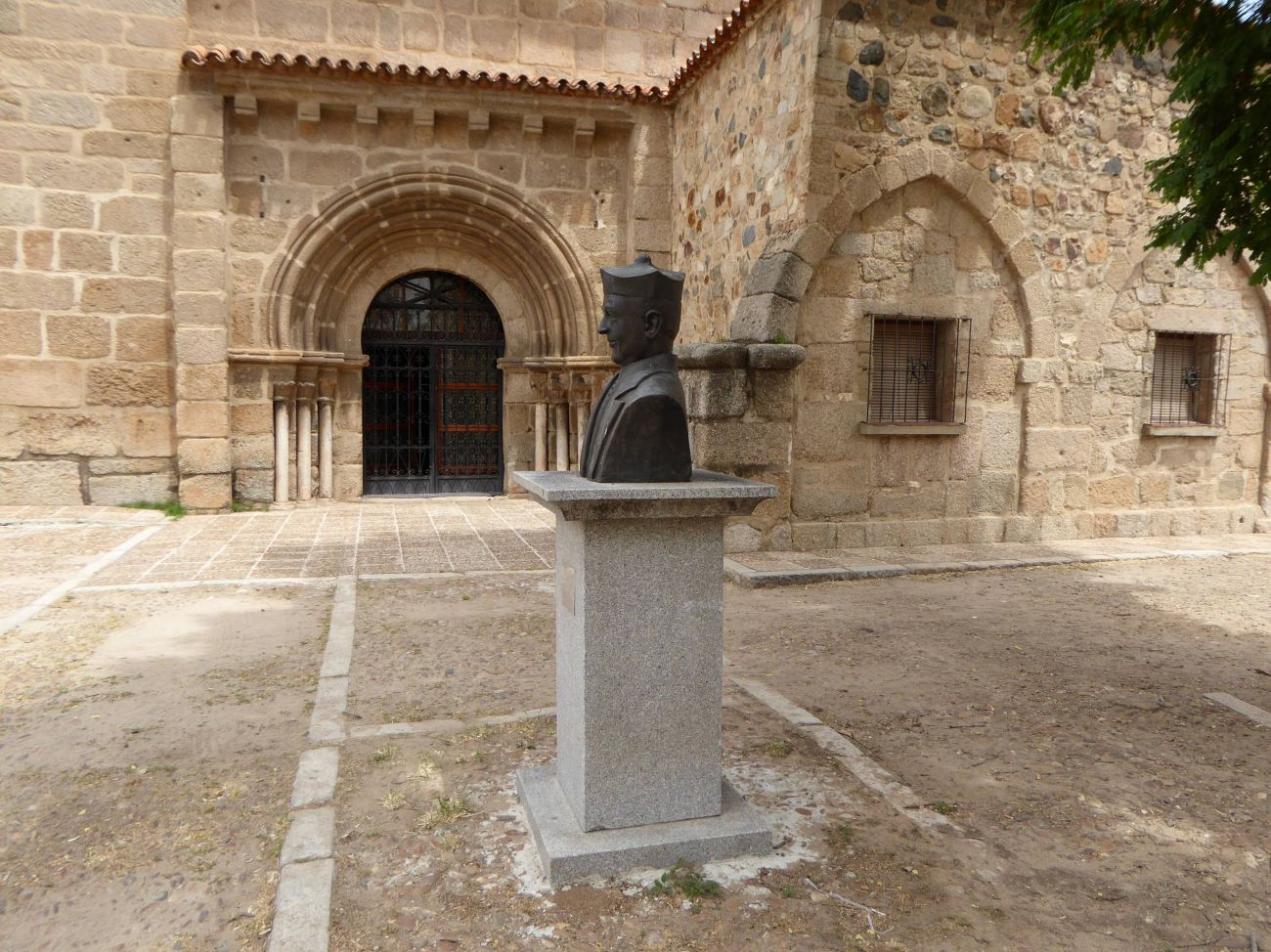
The Basilica Santa Eulalia served as a burial place for the eminent since the 13C, initially outside and, from the 16C onward, inside. The leading families laid their deceased to rest in the temple well into the 20C: funerary chapels and mausoleums occupied part of the space, some of which have been identified through archaeological excavations. In the 15C, a major renovation of the interior took place, notably altering the roof of the church during the period of repopulation. The pulpit and the altarpiece are works of remarkable artistic quality and are well worth seeing. Between the 1C and 3C, a Roman suburban house was built and occupied. The house underwent numerous renovations over three centuries. From the 4C onward, the site was used as a necropolis. Distinguished Christians were buried in simple tombs and luxurious mausoleums. Among them, beneath the apse of the church, stands the one erected in memory of Saint Eulalia. In the 5C, the basilica dedicated to the Martyr was built, preserving its burial mound beneath the front wall. From 875 onward, the building remained deserted, given the departure of the Christians of Meritense to Badajoz. Once the town was reclaimed for Christianity, the church was rebuilt with late Romanesque and Gothic elements. Numerous renovations took place during the 15C, 16C, and 18C.
Inside the Basilica of Santa Eulalia and Hornito ,we can see a collection of tombs of very distinct periods. For example the considerably big, late-Roman mausoleums, like the one that is redecorated with 16C paintings that represent Stations of the Cross, Saint John, Saint Anne and Saint Martin; or the tomb sealed with a mosaic showing the deceased standing between curtains; tombs from the Visigothic period sealed with a marble tombstone like the one from the Distinguished Son Gregory which was re-used later on to bury Eleuterio and Perpetua; funeral crypts like the bishops’ ones… all these including even tombs of local agrarian families of the 16-17C like the Moscoso or Mejía tombs.
Next to the basilica is the Humilladero,or calvary, a pedestal of marble raised on a bleachers and in which, in turn, a column that ends in a cross rests. Made with alms from the town, it symbolizes the column in which the Martyr was beaten during her martyrdom and indicated the place of the events. Here we will also find the Temple of Mars, a smaller building which is a chapel devoted to Eulalia, popularly known as the Hornito or little oven. It is to the south side of the basilica , greatly venerated by the citizens. It is a small chapel, already standing in the 15C, but transformed in the 17C. It is a quadrangular building on the exterior and semicircular on the interior. A dome with a lantern rises above the vault. A marble portico from the Roman temple dedicated to Mars completes the structure. Its portico is made out of marble pieces extracted at the beginning of the 17C from an undetermined location in the city. They all belonged to the Temple that the Roman colony devoted to the God Mars.(see post)
The City of Merida on its history: https://merida.es/la-ciudad/breve-historia/
The Merida tourist office on the Basilica: https://turismomerida.org/what-to-see/basilica-of-santa-eulalia/
The Province of Badajoz tourist office on the Basilica: https://www.turismobadajoz.es/que-ver-en-merida/#Basilica_de_Santa_Eulalia_y_sus_catacumbas
The official Extremadura tourist office on the Basilica: https://www.turismoextremadura.com/es/explora/extremadura-imprescindible/
The Consorcio Monumental de Merida cultural site on the Basilica: https://www.consorciomerida.org/conjunto/monumentos/iglesiasantaeulalia
The Spain National Tourist Office on the Basilica: https://www.spain.info/en/places-of-interest/santa-eulalia-basilica/
There you go, another dandy in my beloved Spain, and the needs as usual to come back to these beautiful places, eventually, Mérida is worth the detour indeed. Again, hope you enjoy the post on the Basilica Santa Eulalia y Hornito of Mérida !!! as I
And remember, happy travels, good health, and many cheers to all !!!

 Paris1972-Versailles2003
the greatest is St. Peter’s basilica in Rome. An interesting annd informative share. All basilicas are special.❤️
LikeLiked by 1 person
That is a good one too being there also see post ,but they are all special for their architecture and history. Thanks for stopping by Cheers
LikeLike