
And while walking the narrow old streets of the Barrio de las Letras (neighborhood of muses or letters) ,I came upon a building had heard but never bothered to stop by. Nevertheless, it is interesting piece of architecture and history of my beloved Spain and my dear Madrid. I like to update this older post with new text and links for you and me, Therefore, here is my take on the Museo de Historia of Madrid !! Hope you enjoy it as I
The Museo de Historia of Madrid or Museum of the History, main entrance is considered one of the most representative works of Spanish civil baroque. The museum started in 1929 as a Municipal Museum , and renamed the Museum of the History of Madrid in 2007, the museum documents the life of the capital from the 16C to the early 20C. It was housed in the part of the Real Hospicio del Ave María y Santo Rey Don Fernando, an 18C building, that was saved from demolition and restored. It was presented to the public as a museum of the city’s history. The collections comprised a diverse array of objects belonging to the City Council, some on loan from other institutions like the National Library, the Prado Museum, the Royal Academy of Fine Arts, and the National Archaeological Museum in addition to generous private donations from art lovers and residents of the city. Paintings, drawings, prints, photographs, postcards, porcelain, fans, maps, coins, medals ,countless pieces evoked the past of Madrid and its people at a time when the city was transforming into a modern metropolis, on par with other European capitals.
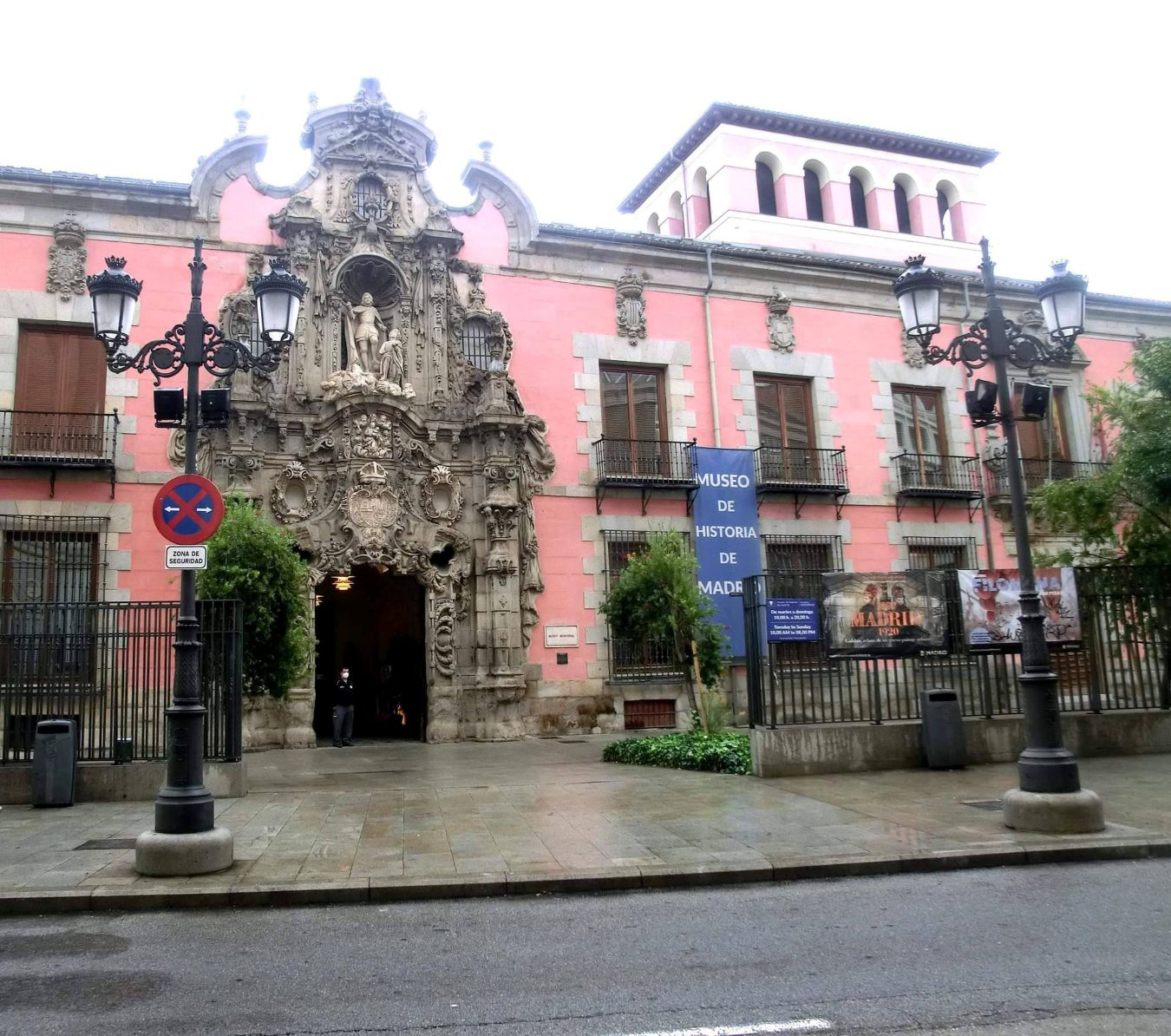
The journey through the history of Madrid offered by the museum is based on its collections. The most important pieces prints, paintings, photographs, postcards, drawings, porcelain, and fans show the historical and urban evolution of the city. The arts, daily life, and customs of Madrid’s inhabitants are depicted from the Habsburg era to the first decades of the 20C. They showcase views, landscapes, buildings, monuments, streets, and squares of Madrid, as well as a diverse iconography of figures: kings, politicians, artists, and members of the nobility. Genre scenes, genre scenes, satirical scenes, and mythological subjects populate oil paintings and prints, fan landscapes, and delicate porcelain figures. The museum boasts a number of key pieces, exceptional works renowned for their high artistic quality, documentary value, and uniqueness. Among these are Francisco de Goya’s Allegory of the City of Madrid, León Gil de Palacio’s Model of Madrid, the porcelain collection from the Royal Factory of Buen Retiro, and collections of postcards, photographs, and historical maps.
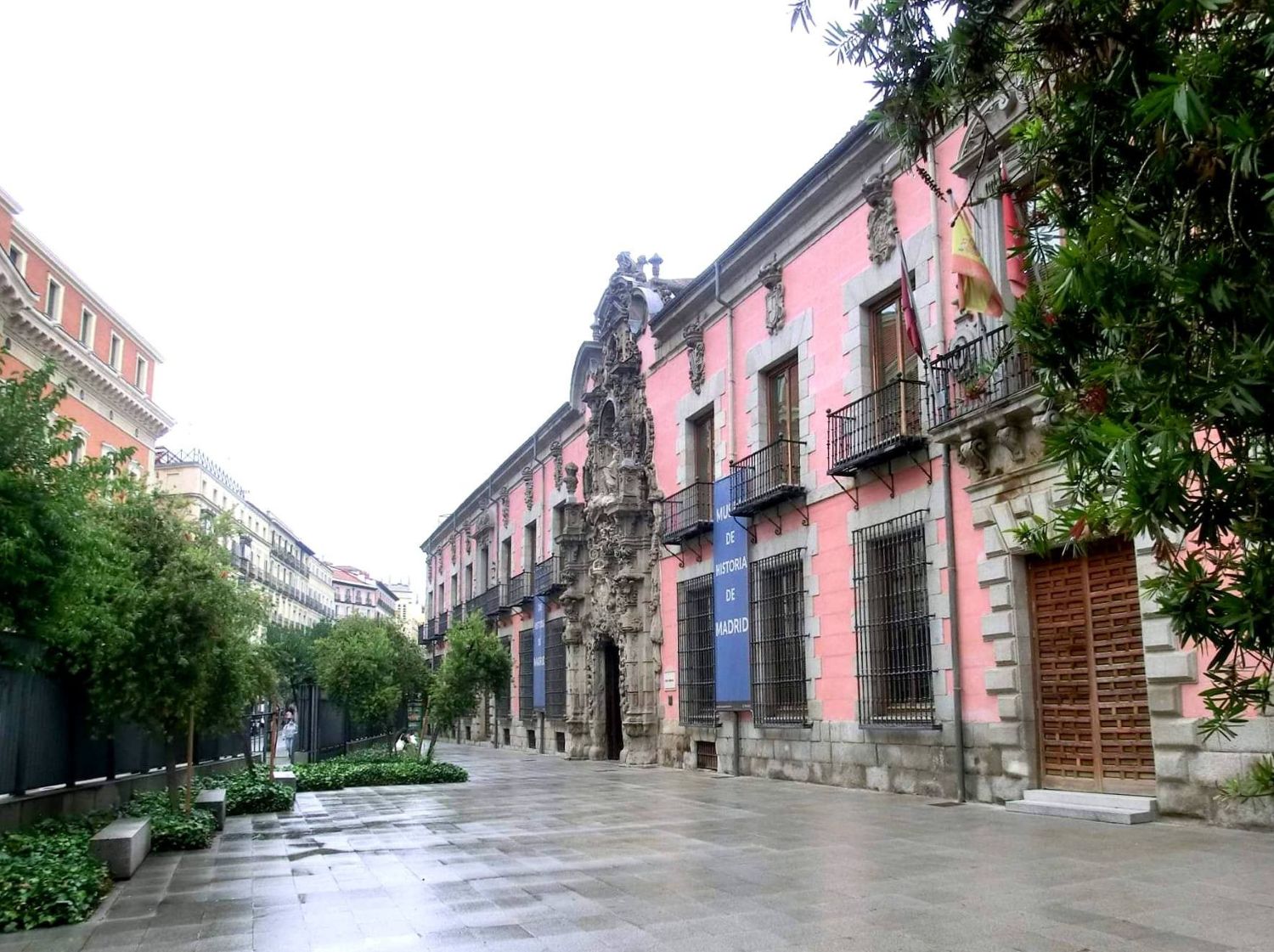
Located within the Real Hospicio del Ave María y Santo Rey Don Fernando or the Royal Hospice of Ave María and Saint King Ferdinand, the chapel has always been linked to the history of this charitable institution, from its founding and relocation to the land near the Pozos de la Nieve or Snow Wells in 1673. It is, therefore, the oldest surviving part of the complex, which was built starting in 1721. In 1924, the City Council purchased and fully restored the building to host the Exhibition of Old Madrid in 1926, where the chapel was used as an additional exhibition space. In 1929, the chapel was incorporated into the Municipal Library and Museum complex , today the Museum of the History of Madrid, initially used as a reading room and later as a book depository. The Museum of the History of Madrid presents a permanent exhibition of religious art in the chapel space. Free admission. The History Museum of Madrid is located at Calle Fuencarral, 78 you get here on metro Tribunal,lines 1 and 10 , Bilbao lines 1 and 4 as well as Alonso Martínez on lines 4,5 and 10.
A bit of history I like tell us that the immediate precursor to the museum’s founding was the Exhibition of Old Madrid, held in the same Hospicio building in 1926 and promoted by the Society of Friends of Art, in which the genesis of an institution with a vocation for permanence was already evident. In 1955 the museum closed to the public to renovate a building full of deficiencies and did not reopen until 1978 to present another major anthological exhibition of Madrid’s history: Madrid until 1875: Testimonies of its History, which would initiate a new vital phase for the museum, coinciding with the cultural effervescence of the city in these years. In 1992, following another memorable exhibition, “Madrid in Painted,” a new phase in the museum’s history began. In 2000 and 2001, the San Isidro Museum and the Museum of Contemporary Art were created, housing part of the collections of the Museum of the History of Madrid: the archaeology and medieval history collections in the former, and the contemporary art collections in the latter. From then on, new chronological boundaries were established for the museum with the city’s narrative beginning with the establishment of Madrid as the capital in 1561 and ending in the early years of the 20C. In 2014, the Museum of the History of Madrid was reborn with a modern layout, updated collections, and a program of activities and services that met the expectations of a broad public eager to learn about and appreciate the cultural heritage of their city.
The Madrid tourist office on the History Museum : https://www.esmadrid.com/en/tourist-information/museo-de-historia
The Community of Madrid regional tourist office on the History Museum of Madrid :https://www.visitmadrid.es/en/what-to-do/culture/museums/museums-of-history-and-archaeology/madrid-history-museum
There you go folks, another off the beaten path architecture and historical spot in my old lovely Madrid. Worth the detour if only to see the quant streets of this neighborhood. Again, hope you enjoy this post on the Museo de Historia of Madrid as I
And remember, happy travels good health, and many cheers to all !!!


Fabulous entrance
LikeLiked by 1 person
Yes its all historical! Thanks for stopping by Cheers
LikeLiked by 1 person