
We write never enough of my dear Madrid ,again !! love it !! We have come mostly by car from France but also by plane from the USA and France, and always took time to see old repeat as well as new monument such as this time, I came again with my boys and dog Rex, and it was a thrill as usual! I like to tell you a bit on El Pardo of Madrid, Therefore, let me take you more of the Parroquia de la Inmaculada Concepción of El Pardo !!! Hope you enjoy the post as I.
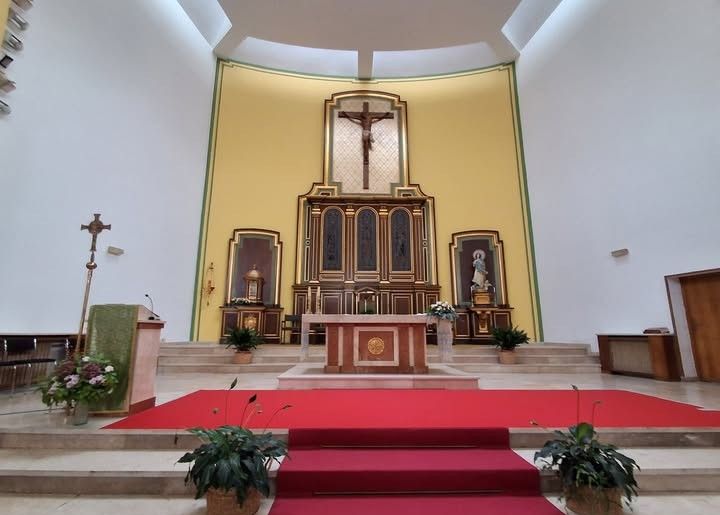
The Parish of the Immaculate Conception of El Pardo, located on Avenida de la Guardia, s/n at El Pardo-Madrid, aka Church de la Virgen del Carmen or Lady of Mount Carmel, is a church of modest and serene charm. The austere decoration and simple architecture in the heart of a busy area, this parish stands as an oasis of peace for those seeking a more intimate experience of faith. The crucifix it houses is especially prized for its beauty, and it is a recommended place to celebrate significant moments in one’s spiritual life.
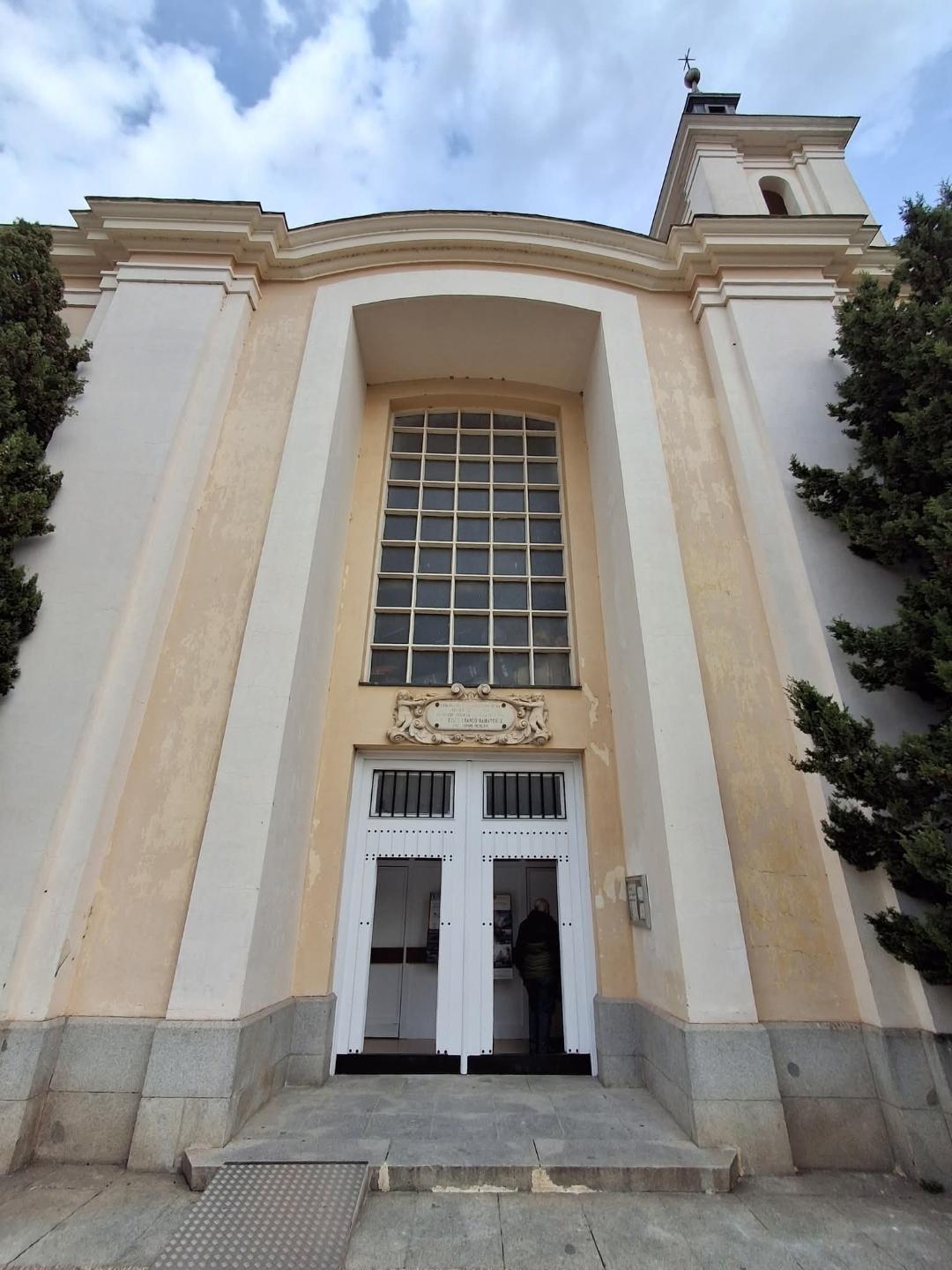
The Church de la Virgen del Carmen is located practically at the entrance to the Royal Palace of El Pardo, one of the residences of the Spanish royal family, which was originally a hunting lodge of the Habsburgs. Later, it served as one of the winter quarters of the Bourbons, and after the Spanish Civil War, Gen/dictator Francisco Franco established his residence there. It was he who ordered the church to be built in 1966, although the town already had a religious presence thanks to the royal chapel of the palace, the convent of the Conceptionist nuns, and the Capuchin monastery. When the monarchy was established, the royal family moved to the Zarzuela Palace, another palace that territorially also belongs to the parish. In fact, the baptismal records of both Felipe VI and the Infantas are preserved in the archives. The parish church built by Gen Franco counts among its parishioners the royal family and employees of the Zarzuela Palace.
Today, El Pardo is just another of Madrid’s municipal districts, but until 1950 it was an independent village, and in some ways, it still is. Located 15 km from Madrid, 41 km from San Lorenzo de El Escorial, 73 km from Segovia, and 65 km from the Real Sitio de San Ildefonso(La Granja), It is nestled in the natural setting of the mountains that give it its name, El Pardo now has fewer than 3,000 inhabitants, many of whom have gained access to places restricted to the rest of Spain.
One of the best-preserved Mediterranean forests in Europe , this is the Pardo Forest, a place linked to Spanish history since the mid-15C when Enrique (Henry) III of Castilla made it one of his favorite hunting grounds. Later, Carlos (Charles) V built a palace here, and from the reign of Felipe (Philip) V onwards, it became the court’s regular residence during January, February, and March, between Epiphany and Palm Sunday. After the Spanish Civil War and until 1975, it was the official residence of general/dictator Francisco Franco, and today it is one of the Royal Sites managed by Patrimonio Nacional (National Heritage). Among the many wonders to visit are the tapestries designed by Goya that decorate many of its rooms and the neighboring House of Prince Don Carlos, designed by Juan de Villanueva.
Other things to see here are the Zarzuela Palace, the official residence of the royal family, while the Royal Palace of El Pardo, in addition to being a museum, has served as a residence for visiting heads of state since 1983. Other palaces, such as the Casita del Príncipe Don Carlos located next to the Royal Palace of this Royal Site. Built in the Neoclassical style, it was once again constructed by Villanueva during the reign of Carlos (Charles) III for the Prince and Princess of Asturias, Carlos and Maria Luisa, to use as a place for celebrations and relaxation. Its interior is unique, as it retains its original 18C decoration, based primarily on silk hangings, woven or embroidered, which complement its furnishings. At about 1.3 km away (within the El Pardo forest) is the Franciscan Convent of Cristo, aka the Convent of the Capuchin Fathers, popularly called Cristo del Pardo because it houses a valuable early 17C Baroque sculpture carved in polychrome wood by Gregorio Fernández. It was founded in the early 17C and has been run by the Order of Friars Minor Capuchin ever since. Currently, in addition to housing a Capuchin friary, it is a House of Spirituality and the headquarters of the School of Franciscan Studies (ESEF). On the outskirts of the town at about 7 km towards Madrid, the Quinta del Duque del Arco, aka the Quinta de El Pardo, is the former residence of the Dukes of Arco, later donated to the royal family. Its gardens were created by order of the Duke of Arco between 1726 and 1737 and represent the finest example of late Baroque formal design in Spain.
I have come here by car getting around Atocha train station on Paseo de Santa Maria de la Cabeza taking exit Salida 2A onto the beltway M30 dir Badajoz to exit/salida 25 El Pardo onto the M605 road bear right on Avenida de Palacio on same M605 road that becomes Avenida de la Guardia where there is free parking on your right hand side and walk over about 210 meters to the church, However, you can make it in public transport for about 30 minutes from Plaza de Moncloa bus stop taking bus 164 to El Pardo ,getting off at Avenida de La Guardia and walk about 220 meters to the church, At the Moncloa bus stop you can get there on metro lines 3 and 6,
The local district of El Pardo on the church : https://www.elpardo.net/2011/12/21/iglesia/
The Madrid tourist office on the district of El Pardo : https://www.esmadrid.com/en/tourist-information/pardo
There you go folks , another wonderful nostalgic, sentimental trip to my dear Madrid , always words cannot describe it ! This is a vibrant cosmopolitan city of friendly faces and smiles to share in long conversations about life and more ; I love it, We will be back ,eventually!, Again, hope you enjoy this post on the Parroquia de la Inmaculada Concepción of El Pardo !!! as I
And remember, happy travels, good health, and many cheers to all !!!


