
I was on my walk warrior mode in Valencia and passed by this building left unnoticed , I came back to the area and this time ring a bell to see a bit of it , It is worth the detour , me think. I found pictures in my cd rom vault that were left untouch and should be in my blog for you and me, Therefore, here is my take on the Lonja de la Seda of Valencia !!! Hope you enjoy as I.
The Lonja de la Seda de Valencia, aka Lonja de los Mercaderes or the Silk Exchange of Valencia, aka the Merchants’ Exchange, is a representative example of Valencian civil Gothic architecture located in the historic center of Valencia. The building is situated at No, 31 Plaza del Mercado, opposite the Church of San Juan and the Mercado Central (see posts). The rectangular facades of hewn stone, the sumptuous Renaissance medallions, the artistic sculptures and gargoyles, the perfect proportions of the doors and windows, the coats of arms, and the merlons, recall the splendor of late Valencian Gothic architecture. The name of the Lonja de la Seda or Silk Exchange building derives from the fact that silk weaving was the city’s most powerful industry from the 14C to the 18C. In the 14C, there were already local silk weavers, mostly Jews, and later converts, who in 1465 formed the Cofradía de la Virgen de la Misericordia or the Confraternity of Our Lady of Mercy, under whose patronage there is a chapel in the Silk Exchange built between 1484 and 1486.
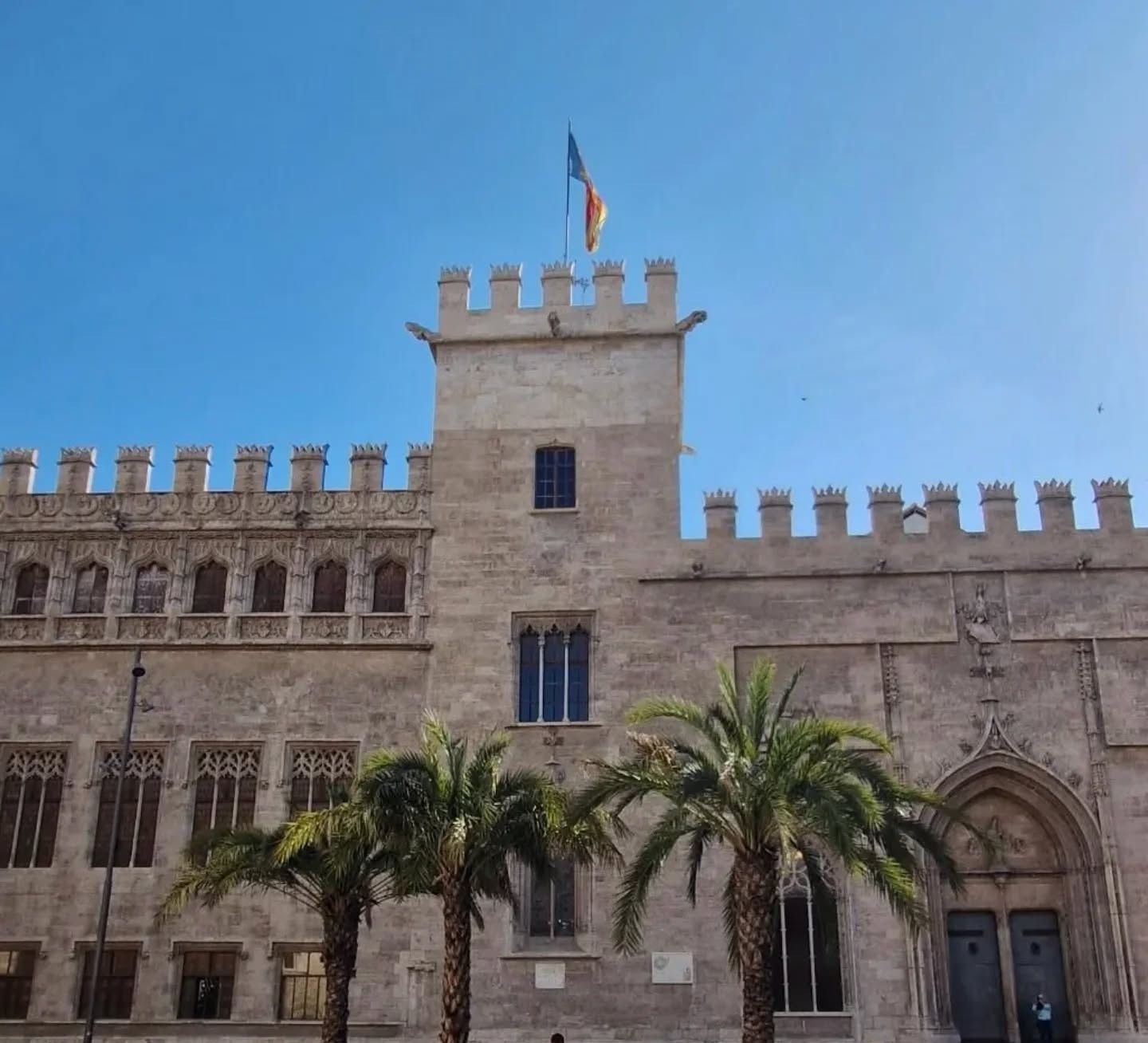
Francesc Baldomar was the author of the original design for the Silk Exchange of Valencia, which he began developing between 1470 and 1471. In 1481, five years after his death (1476), his disciples Joan Ivarra and Pere Compte were commissioned to finish its construction according to the magnificent original plans he had drawn in his final years. It has been interpreted as the result of the commercial prosperity achieved by Valencia in the 15C, and as a symbol of the city’s power to attract merchants, at a time when difficult times were already looming for the local economy, aggravated by the discovery of America and the consequent shift of trade from the Mediterranean to the Atlantic. The Kingdom of Valencia established itself as the cultural and economic capital of the Crown of Aragon, becoming one of the most important cities in Europe during that century. The Lonja was a symbol of the city’s power and wealth during its Golden Age. Regarding political influence, from the late 14C onward, Valencia’s influence within the Crown of Aragon steadily increased with figures like Saint Vincent Ferrer, and even more so throughout the 15C. This influence was so strong that the only two times a Hispanic bishop became Pope were Valencian bishops: Calixtus III and his nephew Alexander VI, both natives of Játiva and members of the Borgia family.
Its construction resembles that of medieval castles, with its thick walls, battlements, tower, and overall fortress-like appearance. The Lonja de la Seda is comprised of four parts: the Torre (Tower), which houses a dungeon where silk thieves and dishonest merchants were held until the appropriate authorities arrived; the Sala del Consulado del Mar (Consulate of the Sea Hall), formerly the city hall; the Orange Tree Courtyard; and the Contract Hall or Columned Hall. The Lonja’s garden, called Patio de los Naranjos ( Orange Tree Courtyard) , is accessed through the door of the Sala de Contratación or Salón Columnario (Contract Hall ), which is adorned with sculptural details. The Patio de los Naranjos a tranquil and relaxing space features various orange and cypress trees and a central fountain in the shape of an eight-pointed star. Around it, there are stone benches to rest while observing the satirical gargoyles, the details of the western facade of the Contract Hall and those of the door of the Consulate of the Sea, which can be accessed from the same courtyard through a wide open-air stone staircase.
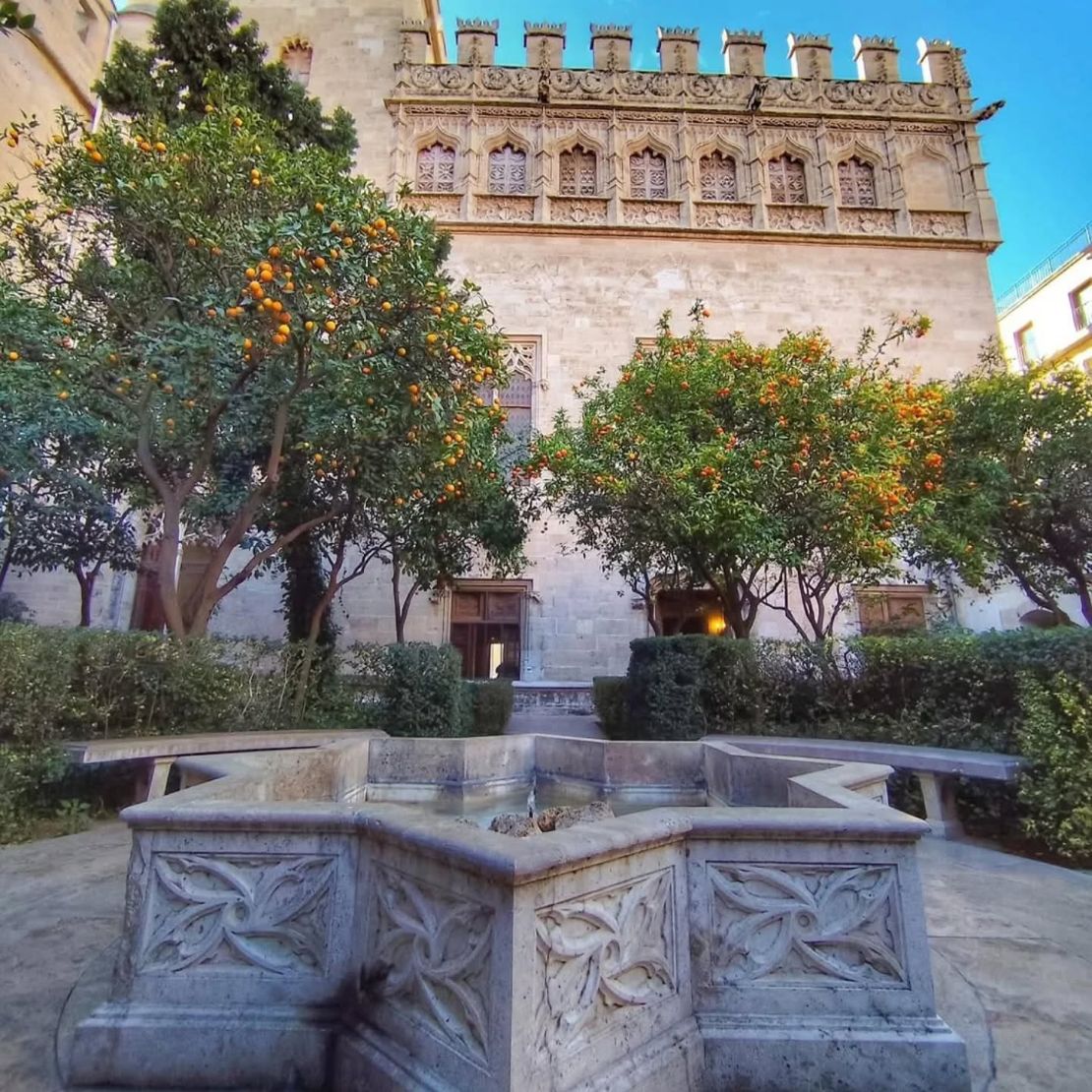
It was named a National Monument in 1931, and UNESCO declared the Silk Exchange a World Heritage Site on December 5, 1996, considering it one of the most brilliant examples of European civil Gothic architecture.
The Valencia tourist office on the Lonja de la Seda : https://www.visitvalencia.com/en/what-to-do-valencia/valencian-culture/monuments-in-valencia/lonja-silk-exchange
Unesco on the Lonja de la Seda of Valencia : https://whc.unesco.org/en/list/782/
The Comunitat Valenciana region tourist office on the Lonja de la Seda : https://www.comunitatvalenciana.com/en/valencia/valencia/monuments/lonja-de-la-seda-1
There you go folks, another dandy and worth the detour in Valencia. The Lonja de la Seda is one interesting place to see, and we will be back for more, eventually. Again, hope you enjoy the post on the Lonja de la Seda of Valencia !!! as I
And remember, happy travels, good health, and many cheers to all !!!


I absolutely love Valencia – … dare I say even more tha Barcelona
LikeLiked by 2 people
Many nice cities in my Spain indeed. Choices choices I do like Valencia better than Barcelona ::) Thanks for stopping by Cheers
LikeLike