
Oh yes another wonderful old little village of my dear Castilla La Mancha region; this is deep country and our road warrior trips at its best. There are so many towns that will take you a life time to see them all, and each is unique. I found me ,again, pictures in my cd rom vault that should be in my blog for you and me, The town of Mota del Cuervo is located in the province of Cuenca, in the autonomous community of Castilla-La Mancha, and in the kingdom of Spain,Therefore, here is my take on curiosities of Mota del Cuervo !!! Hope you enjoy it as I.
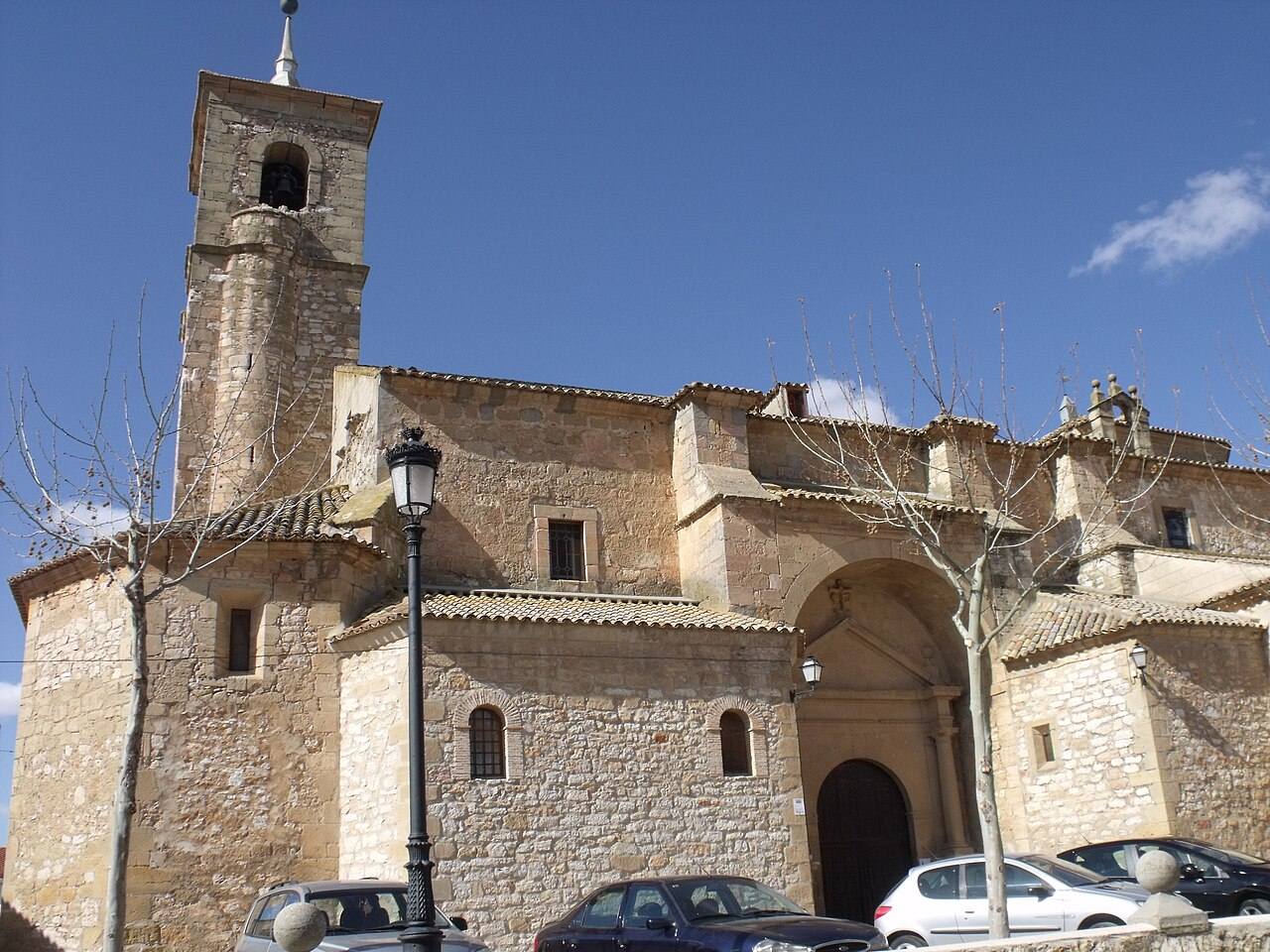
The Church San Miguel Arcángel,(St Michael the Archangel) located at no 21 Calle de la Iglesia The church’s construction began in the late 15C and continued throughout the 16-17C. The exterior consists of two doorways. One of them, the northern one, is in the Plateresque style and is protected by two large buttresses. It features a semicircular arch flanked by paired Corinthian columns on a plinth, topping a continuous entablature crowned by a large scallop shell with molded pinnacles on the sides. The doorway features the symbols of the Order of Santiago, which collaborated in the construction of the temple and the repopulation of the area. The southern doorway is more sober, in the Doric style with a pediment and typical Herrerian balls. The tower at the foot is square and divided into two sections separated by a cornice. Inside it consists of a floor plan with three naves, each with three sections, a choir, towers at the foot, and side chapels. It has several chapels, including the Baptism Chapel, the Blessed Sacrament Chapel, the Solitude Chapel, the Jesus of Nazareth Chapel, and the Christ of the Column Chapel.
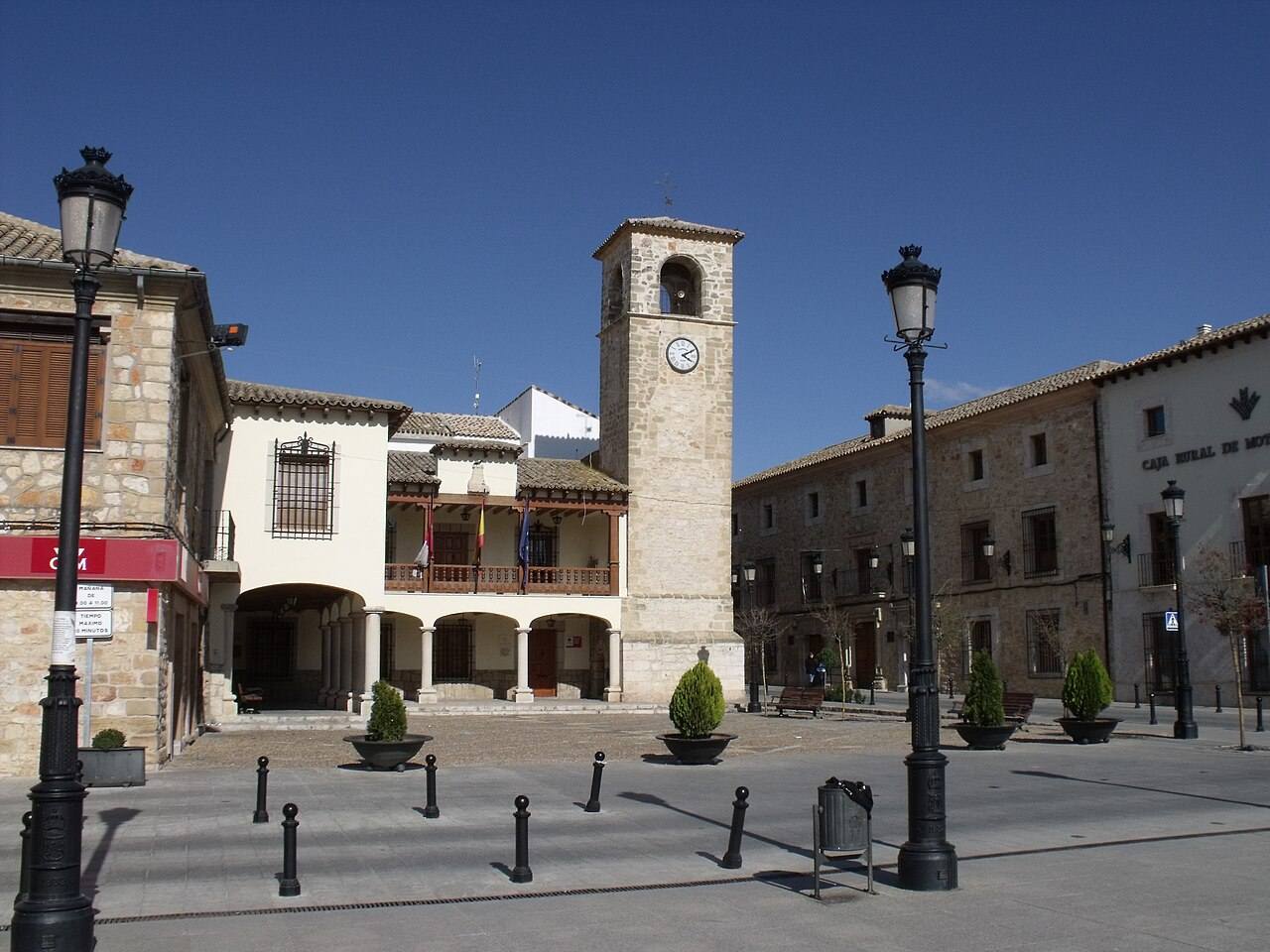
What is now known as the Plaza Mayor. was called Plaza de la Constitución (1870), Plaza de la República (Republic Square), Plaza del Caudillo (Chairman’s Square), before finally adopting its original name. Some of the surrounding buildings are notable, such as the City/Town Hall and the Justice of the Peace Court. It is said that the building was originally a monastery and that the current City/Town Hall is located on the site of its church, although no source has been found to confirm this. The part of the building currently occupied by the Cultural Center was formerly the prison. The lowered half-orange dome on pendentives with 18C polychrome decoration that covers the Mayor’s office is notable for its elegance. The tower, restored in late 1999, is made of masonry with ashlars at the angles of the bodies, and the upper tower has semicircular arches on each side. It has an inscription on the side facing the square, about three meters from the ground, bearing the date 1731.
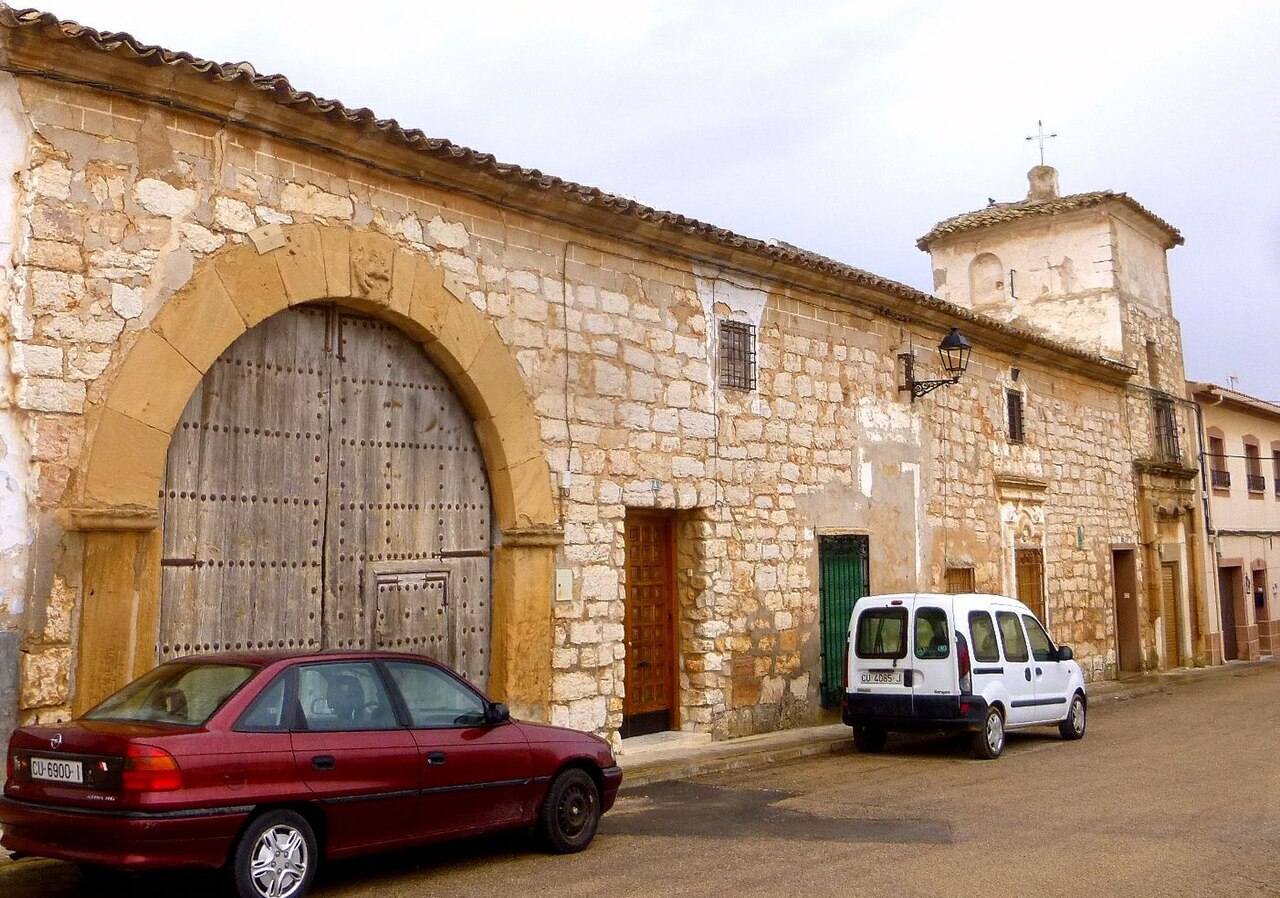
The Plaza del Verdinal is another square, and it houses the so-called Convent of the Trinitarians, of which little is known. Currently, the building is divided into two private residences, so its original structure has been greatly altered. Although it is claimed to be an old Trinitarian Convent dating from the 16C and 18C, and that Cervantes even stayed there for some time, documentary sources from the 16C and 18C deny the existence of any convent in this town. However, it is striking that in 1752, in addition to the parish priest, there were twenty-two clerics in Mota: eighteen priests, two of them Gospel priests, and two Minor Ordained Priests. The latest research leads us to hypothesize that this building was not a convent, but rather a hospital, possibly the one cited in the Relations of Felipe II and in the Cadastre of Ensenada, as the Hospital of San Sebastián, whose purpose was to accommodate foreign clergy and friars who came begging.
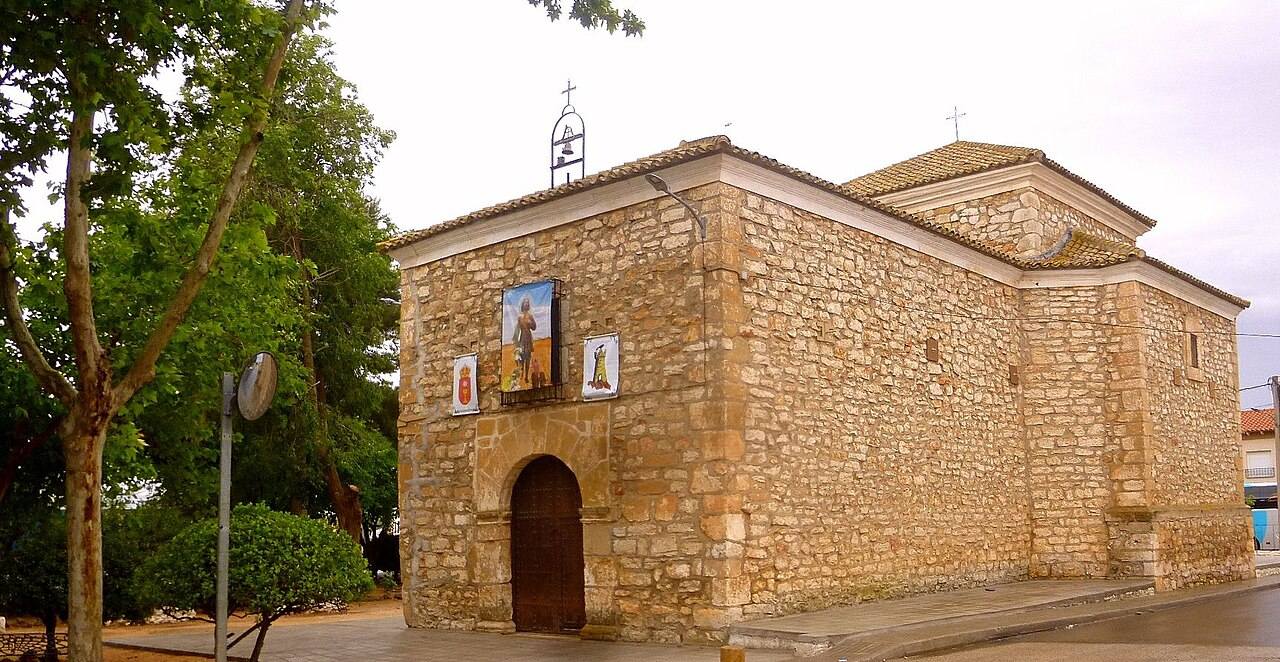
I was on my road warrior trails and along the N420 road past Mota del Cuervo ,and 3 km direction the town of Pedro Muñoz came upon this hermitage ; the Ermita de San Isidro Labrador
Other things to see here is to walk the entire town center/downtown dotted with stately homes from the 17-19C, with traditional La Mancha floor layouts and noble coats of arms on the entrance doors, demonstrating the importance of Mota del Cuervo throughout its history. Some of the most notable houses are found on Calle Mayor Baja as the Casa or House of the Counts of Campillos, on Calle Ramón y Cajal see nos 2 and 4, in the Plaza Mayor and in the Plaza de Cervantes. The Plaza del Mercado was formerly the Plaza del Toril or del Coso. In 1922 it was renamed Plaza de Cervantes. Mota del Cuervo was crowned by a group of 23 windmills, of which only seven remain today, of which 3 can be visited. “El Gigante” is now the Tourist Information Office. At “El Goethe” you can enjoy clay crafts; at “El Piqueras” it houses an agricultural museum, its three floors equipped to display objects related to the traditional La Mancha way of life linked to the countryside.
The town of Mota del Cuervo on its heritage : https://www.motadelcuervo.es/municipio/patrimonio-arquitectonico
The Castilla La Mancha region tourist office on Mota del Cuervo : https://en.www.turismocastillalamancha.es/patrimonio/mota-del-cuervo-23831/descripcion/
There you go folks, another dandy in the wonderful region of Castilla La Mancha, in country Spain from its foundations. Enjoy Mota del Cuervo, the quant town and nice monuments worth the detour, me think. Again, hope you enjoy this post on curiosities of Mota del Cuervo !!! as I
And remember, happy travels, good health, and many cheers to all !!!


