
Walking around towns I got to know the intricate history of each place visited. More so in my beloved Spain, walking and visiting is not enough, you might want to get to know the people and the places, monuments, statues you see , Several of them caught our attention in lovely Segovia, and I like to tell you more using new pictures found in my cd rom vault that should be in my blog for you and me. Therefore, let me tell you about the curiosities of Segovia, part II !!! Hope you enjoy it as I.
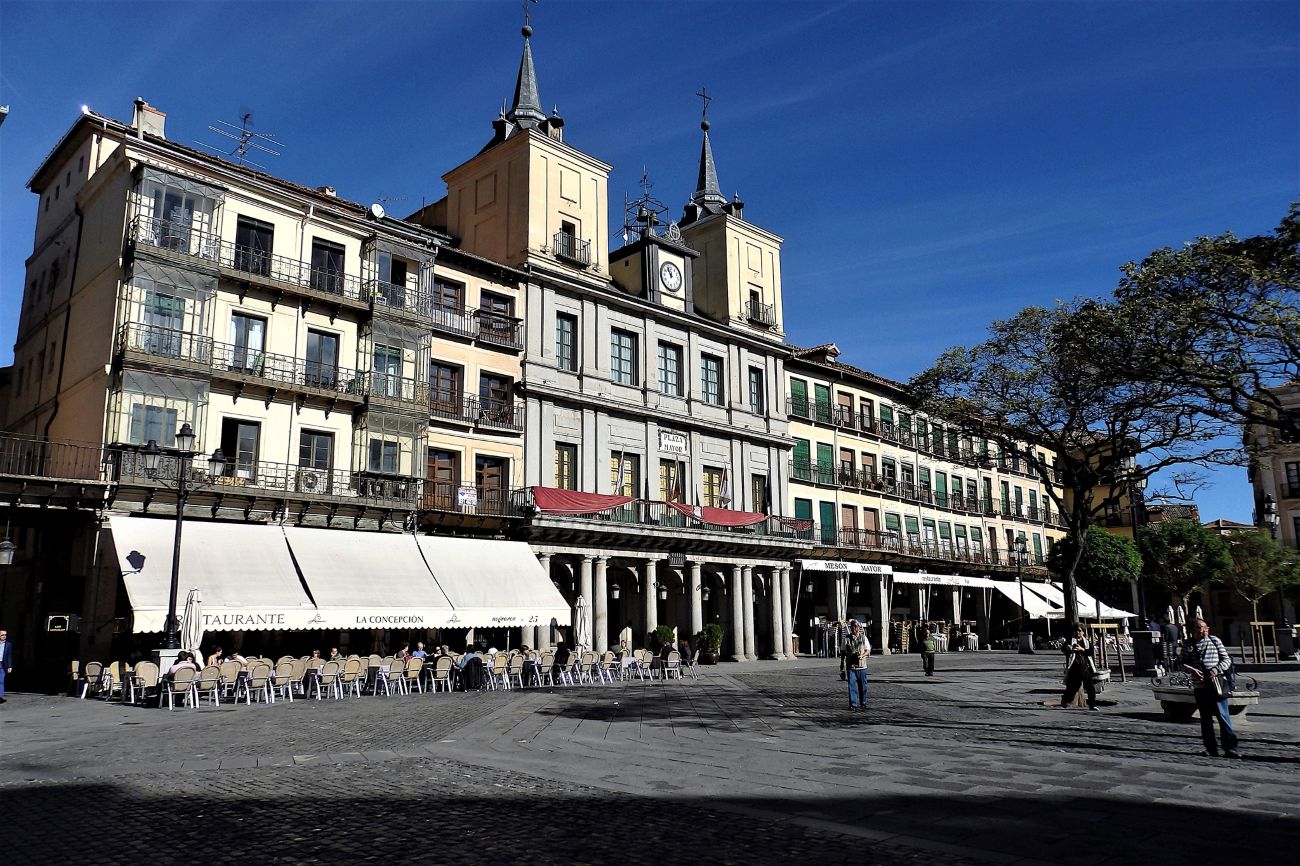
The urban space has all the characteristics of a typical Spanish main square or Plaza Mayor, and on which are located some important monuments such as the abside of the Cathedral , The theater Juan Bravo (b. 1917) or the city/town hall of Segovia (1610),. (See posts). The square has an almost rectangular shape and near the center you will see a music kiosk ,designed in 1896 of iron work ,where music concerts are held today. For much of the 20C it was retired on several occasions and spared on this site again, until in 1986 it was definitively anchored. One day a year, during the festivity of Santa Barbara,(there is a permanent chapel inside the Cathedral and my native town patron Saint) the kiosk was transformed into a chapel.
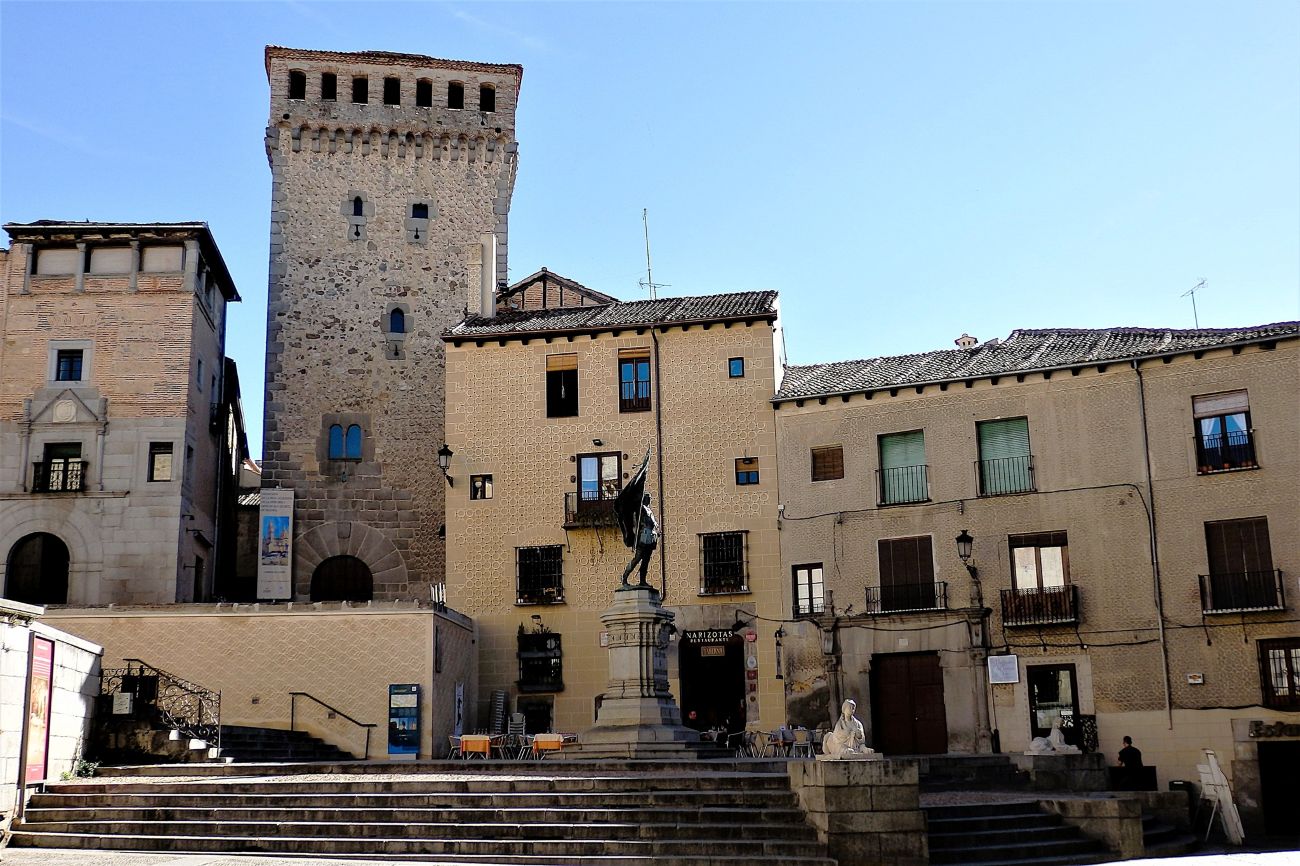
The Plaza San Martin is one of the most captivating small plazas in Segovia. The square is presided over by a statue of Juan Bravo, and the Church Saint Martin (see posts),The square is located between the streets of José Canalejas and Juan Bravo. It owes its name to the church of the same name, enclosed in the space formed by this square, Medina del Campo and those two streets. The 14C Torréon de Lozoya, a Romanesque jewel with a Mudéjar tower and arched gallery. This was a palace complex with two towers, a courtyard and a garden with a porticoed gallery. A turreted fortified house, very common in Segovia between the 13C and 15C. The great tower, with its 8 by 9 meters floor plan and 25 meters high, is called “de Lozoya” after the name of the last Segovian ancestral family that lived there. The Torreón de Lozoya Foundation has an assembly hall with capacity for 90 people for conferences, presentations, award ceremonies, and various events. The Hay Festival and Titirimundi are held in its interior garden, in addition to being used for concerts, shows and parades. There is a shop-bookstore in its Renaissance courtyard where you can find more than 13,000 items including books, music, works of art, numismatics, antiques and furniture.
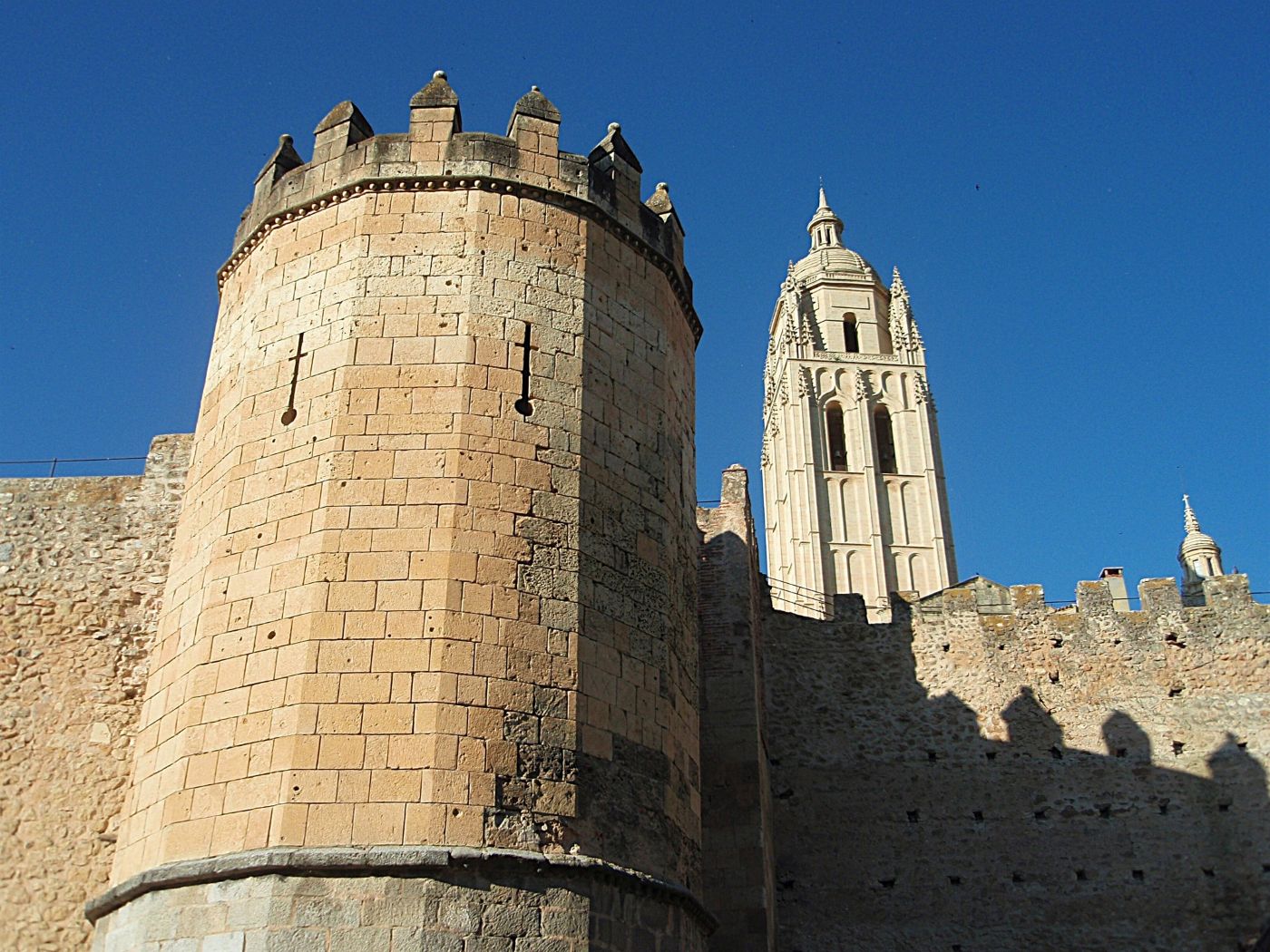
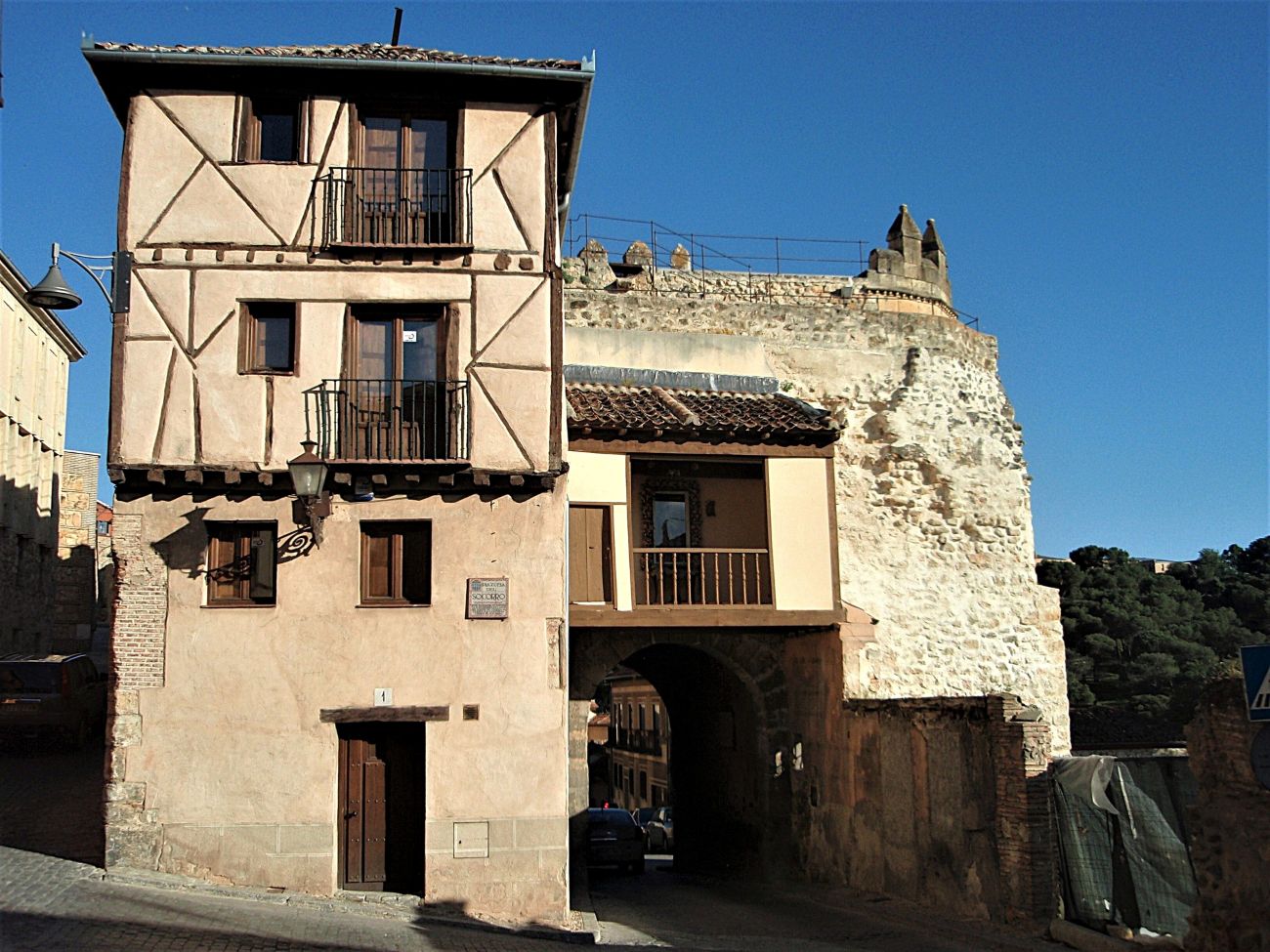
The muralla or walls of Segovia are a medieval fortification that surrounds the historic center of the city, completing a circuit of about 3,400 meters in length, 9 meters in average height and 2.50 meters in thickness. Most of its construction is said to date from the 11-12C, with major renovations in later centuries. From the fortress to the Puerta de Santiago, there are two circular towers and a cube. The Puerta de Santiago, with a rectangular floor plan, has a horseshoe arch and a padded arch. The wall continues along the north of the historic center, dominating the Eresma river, to the Puerta de San Cebrián, which has a transept at its entrance. From this point, the wall, built on the rock, continues in an easterly direction until it reaches where the Puerta de San Juan was located, demolished in 1888 for urban planning needs; it was an ornamental arch from the 16C. The wall continues south and then west, in a section that included the Postigo del Consuelo, the Portillo de la Canaleja, and the San Martín, Luna, and Sol gates. This section contains numerous towers, most of which served as foundations for the city’s houses. Continuing west, you reach the Puerta de San Andrés gate (see pic), which has two towers, one square and the other polygonal. From there, the wall continues to enclose its perimeter at the Alcazar fortress.
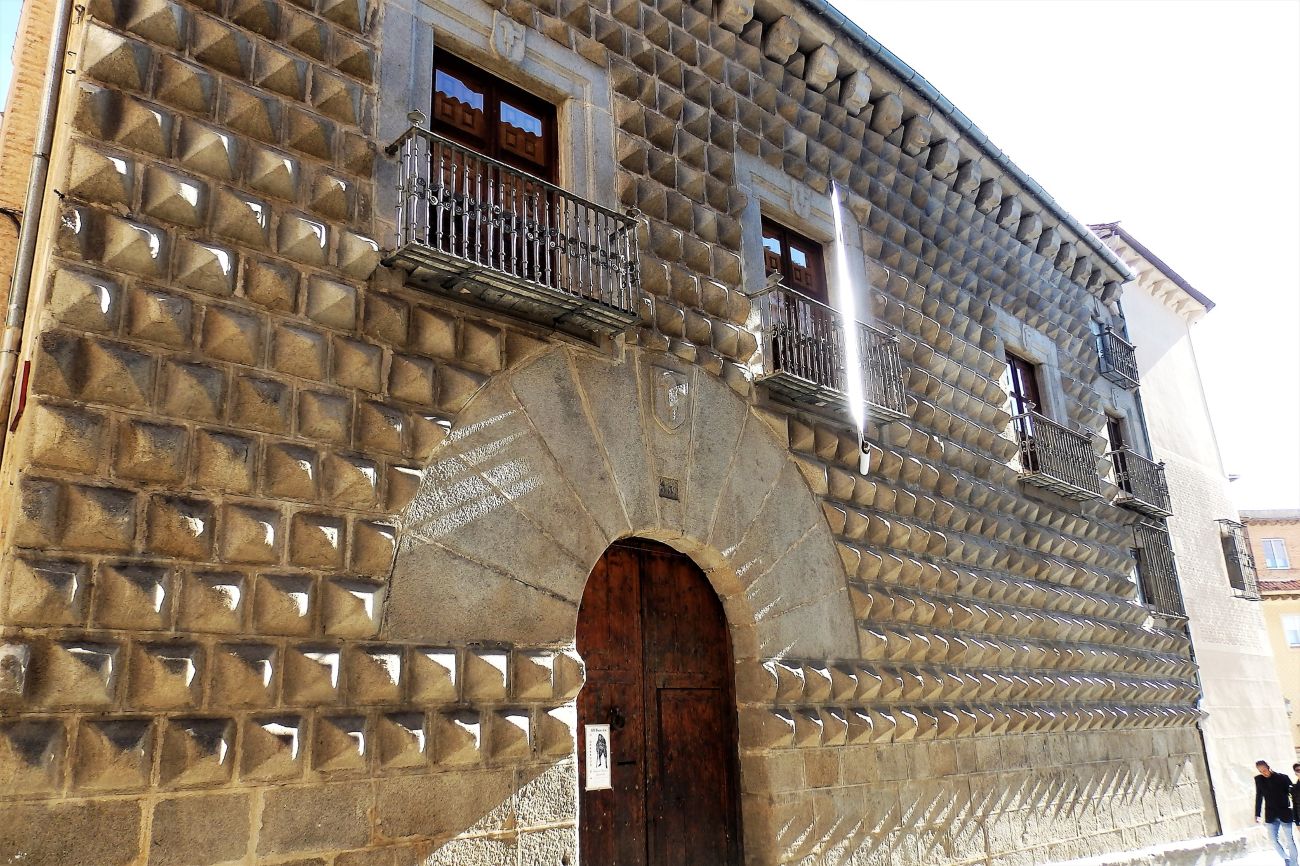
Just down the hill from the plaza San Martin is the Casa de los Picos, located on Calle Juan Bravo It was built in the last third of the 15C as a fortified house by Don Pedro López de Ayala to defend the Puerta San Martín, which was demolished in 1883. The house was later acquired by Alonso González de la Hoz, Chief Accountant of the Kingdom, and passed on by inheritance to his son, Juan de la Hoz, Councilor of Segovia. It is known for its façade, with 617 granite peaks, and its Renaissance courtyard. The heraldry of the de la Hoz family can be seen on the lintels of the five balconies and on the entrance door. The entrance hall and courtyard are decorated with Talavera tiles depicting various Segovia buildings. It is today ,the headquarters of the Segovia School of Art and Design, which began operating in 1977.
The Plazuela del Socorro is enclosed by the street with which it shares its name, that of the Juderia Nueva (New Jewish Quarter), that of Martínez Campos and that of San Valentín, The square and the adjacent street are named after the back of the artistic Puerta San Andrés, which has a chapel above its entrance where the Virgin of Socorro (Our Lady of Perpetual Help) is venerated. The chapel was moved from the Atezana Hospital, which was located on what is now Calle Juan Bravo. There is a stone fountain and modest-looking houses in the square.
The City of Segovia : https://segovia.es
The Segovia tourist office on its heritage :https://www.turismodesegovia.com/en/what-see
The Castilla y Léon region tourist office on Segovia : https://www.turismocastillayleon.com/en/heritage-culture/segovia
The Spain National Tourist Office on Segovia : https://www.spain.info/en/destination/segovia/
There you go folks ,another round in my beautiful Segovia, These monuments are on the off the beaten paths and they should be seen , me think. Again, hope you enjoy this post on the curiosities of Segovia, part II !!! as I
And remember, happy travels, good health, and many cheers to all !!!

 Paris1972-Versailles2003
Siempre es agradable encontrarme con tu blog. Un gran abrazo desde buenos aires!
LikeLiked by 1 person
Muchas gracias por sus bonitas palabras. Me dan ganas de hacer mas. Saludos de Bretaña Francia.
LikeLiked by 1 person