
Well back to my dear Madrid again !! love it !! We came by car once by plane I like to continue the saga of our new road warrior experiences even if now with less in our family, This post is on my dear streets of Madrid of wonderful sublime Spain. I have these strays in my cd rom vault and they should be in my blog for you and me. Therefore, let me tell you about the streets of Madrid, part XIII !!! Hope you enjoy the post as I.
The Plazuela de San Ginés is directly link with the Pasadizo de San Ginés much more written on in my blog, The passageway leaves from Calle del Arenal between the Church of San Ginés de Arles ,and the Joy Eslava nightclub. At its beginning, there are stalls selling used books at the foot of the church, where you can find some old editions. To your left is the nightclub Teatro Eslava, founded on September 30, 1871, as the Salon Eslava was inaugurated at no, 3, Pasadizo de San Ginés. The building was a beautiful theater with two floors, a stalls and a main auditorium, and offered special acoustic and perspective conditions. Beautifully decorated, it was initially a concert hall.(see post), and in the background is the famous Chocolateria de San Ginés (see post). The square is accessed through a large arcade and in it we find the rear façade of the Church of San Ginés de Arles (see post). Located between Calle de Bordadores and Calle de Coloreros, this Plazuela de San Ginés is, also accessed through a large arcade of the pasadizo de San Ginés, which increases the charm of its traditional appearance.
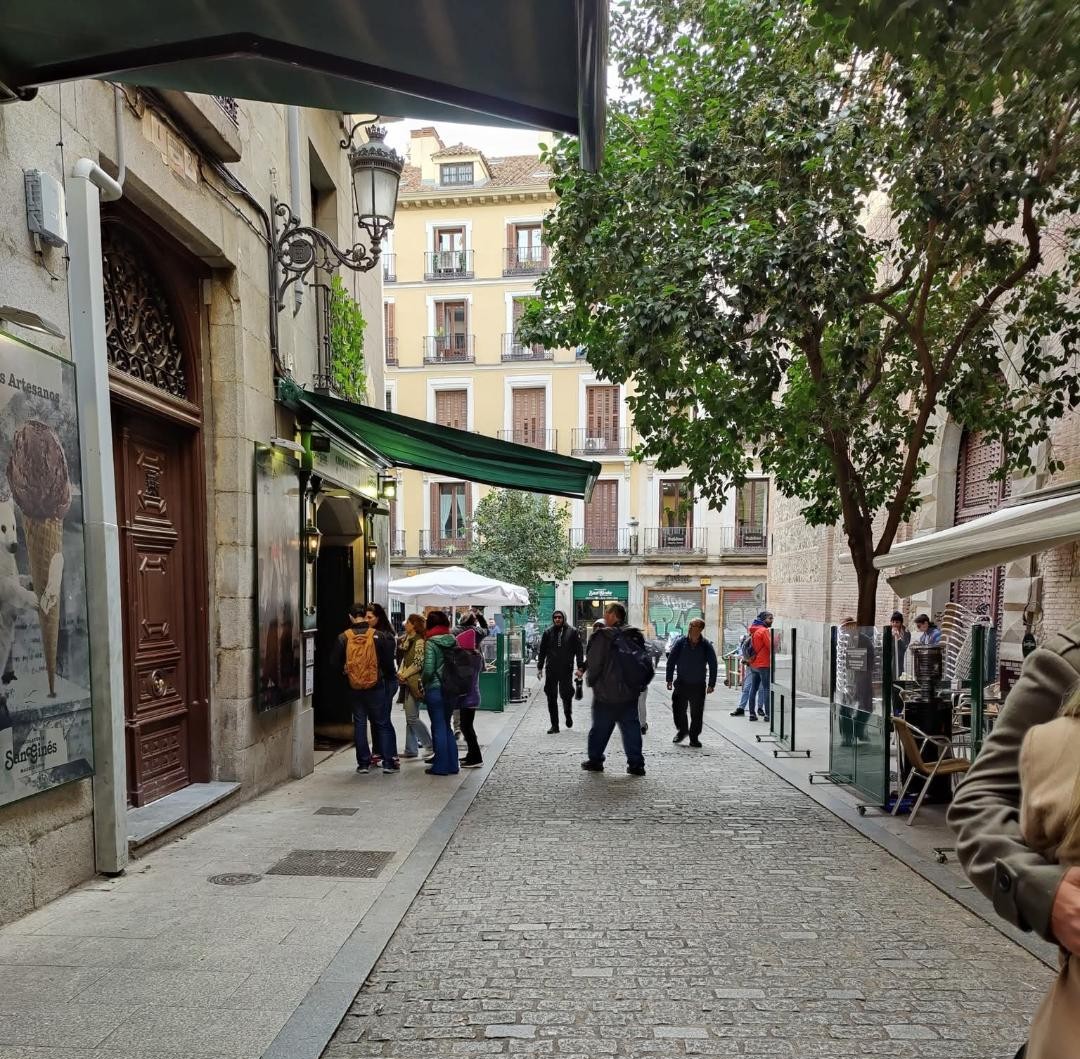
This narrow alley, the scene of duels and revenge in the 17C, between noblemen and knights, where honor was defended with the sword, In this corner of San Ginés, the soldier and adventurer Frey Alfonso de Contreras, Captain Contreras, lived and was imprisoned in 1608. The alley passage has survived the times, becoming a silent witness to the evolution of Madrid. The Pasadizo de San Ginés, with its layout that runs from Calle del Arenal to the Plazuela de San Ginés, encloses more than four centuries of stories. This passage has also been home to the famous Chocolateria San Ginés (see post) since 1890, an establishment that has served hot chocolate with churros to generations of Madrid residents and visitors, becoming one of the most representative icons of the city. The Libreria San Ginés bookstore is another treasure of the Pasadizo de San Ginés is its emblematic bookstore, a time capsule that transports visitors back to the mid-19C. (sadly read from Madrid it has closed). Attached to the Church of San Ginés in Arles,(see post) this small bookstore offers a selection of old and secondhand books, making it a paradise for collectors and book lovers. The Pasadizo de San Ginés is more than just an alley in Madrid; it’s a space where history, literature, and tradition intertwine to create a unique atmosphere. Also in this passageway were the looms and the first calender press in Madrid in the holandillas or silk weaving factory, to give them luster (shine) back in the first decade of the 18C.
The Madrid tourist office on the Chocolateria San Ginés : https://www.esmadrid.com/en/nightlife/chocolateria-de-san-gines
The Madrid tourist office on the Libreria San Ginés : https://www.esmadrid.com/en/shopping/san-gines-bookshop
The Madrid tourist office on shopping Mayor/Arenal : https://www.esmadrid.com/en/mayor-arenal-shopping
The Calle Felipe III is a small street of barely 30 meters, which leaves the Plaza Mayor, from one of its many arches, and leads to Calle Mayor. This is the old Calle de Boteros, name that it took from the guild that was established here. to the makers of wineskins and butts who had their establishments in this place. Because important feats were carried out in the Boteros arch on July 7, 1822, the street was renamed Calle de la Milicia Nacional, and later renamed Calle de Felipe III, at the initiative of Mesoneros Romanos, it was renamed, from 1851, in memory of the son of Felipe II, who, as his father had planned, allowed himself to be governed by his favorites, the Duke of Lerma and his son, the Duke of Uceda. The Calle de Felipe III, a name it retains today. Among the businesses that still have survived and once on this street are the La Favorita and Casa Yustas (see posts).
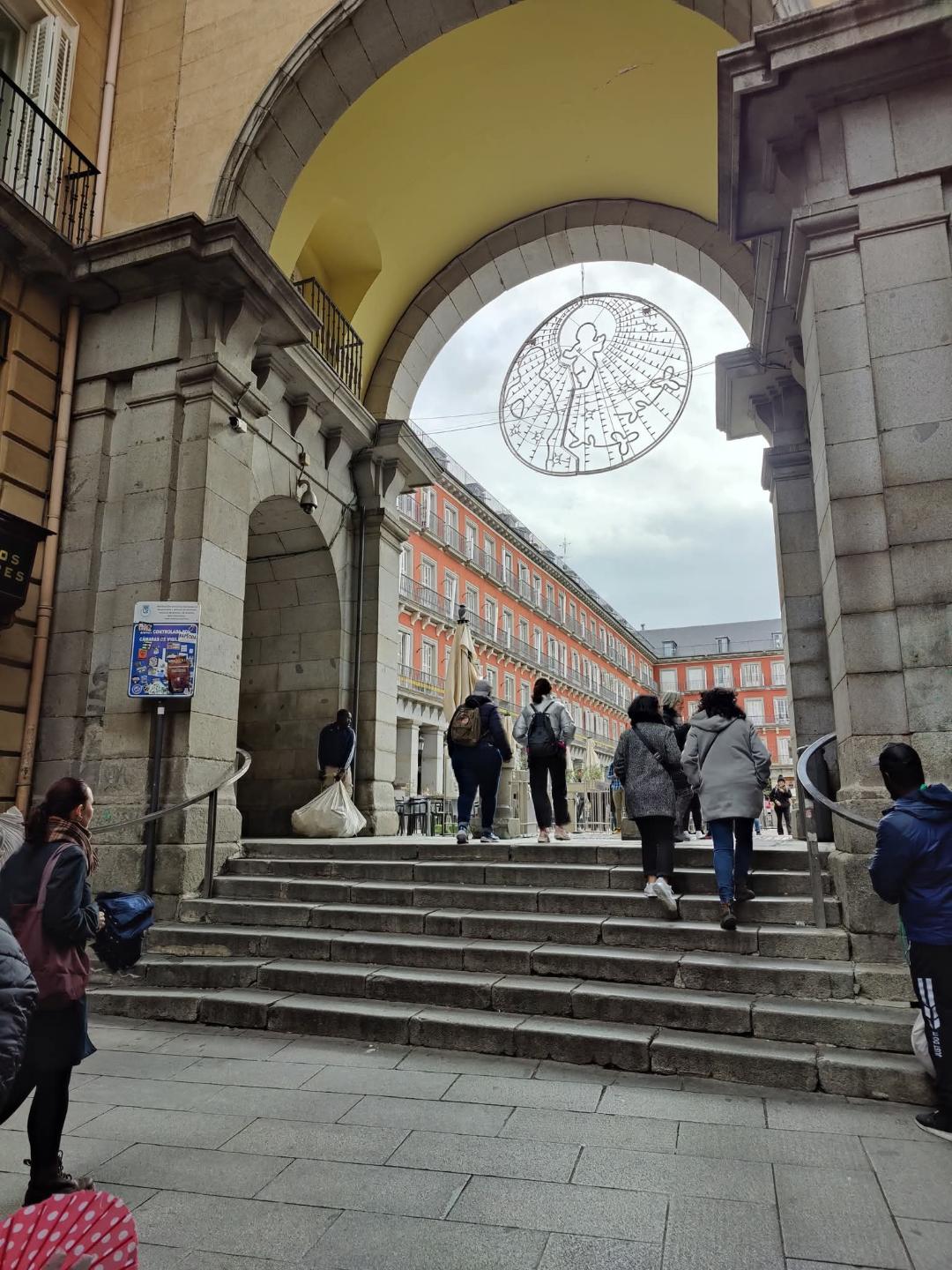
King Felipe III was the first monarch to be born in Madrid, in 1578. Son of Felipe II and Anne of Austria, he married his cousin Margaret of Austria. Under his reign, which began in 1598, Spain experienced a period of peace and expansion. It also marked the beginning of the heyday of the favourites, such as the Dukes of Lerma and Uceda, who misled Spanish politics in pursuit of their own gain. However, it was also a time of cultural splendor, the dawn of the Golden Age of literature, the arts, and theater. Felipe III died in 1621 of fever and erysipelas. The equestrian statue of the king, was initially placed in the Jardín del Reservado de la Casa de Campo , and in 1847, at the initiative of Mesonero Romanos, it was moved to the center of the Plaza Mayor (see post). It is striking that the first monarch of Madrid was not a good king for his hometown. Following the advice of his favorite, the Duke of Lerma, he briefly moved the court to Valladolid, returning it to Madrid in 1606. Despite all this, he is commemorated in Madrid, not only with the street that bears his name, but also with an equestrian statue that presides over the center of the Plaza Mayor. This statue holds a morbid history: on the occasion of the proclamation of the Second Republic in 1931, some fervent anti-monarchists smashed it to pieces, revealing that the horse’s mouth had been a lethal trap for thousands of sparrows for over three hundred years. After the Spanish Civil War, the statue was restored and the horse’s mouth sealed. It depicts the equestrian statue of the king from the viewer’s point of view, at a somewhat low angle due to the height granted by the Isabelline-era pedestal. Behind the sculpture, the emblematic buildings of the Plaza Mayor appear in the background. The sculpture was installed in the gardens of the Palace of the Casa de Campo and remained there until March 22, 1848, when, again at the initiative of Mesonero Romanos, Isabel II ordered its relocation to the center of the emblematic square, which at that time featured lush gardens.
The Madrid tourist office on the La Favorita shop : https://www.esmadrid.com/en/shopping/la-favorita_15
The Madrid tourist office on the Casa Yustas shop : https://www.esmadrid.com/en/shopping/casa-yustas
The Madrid tourist office on the Plaza Mayor : https://www.esmadrid.com/en/tourist-information/plaza-mayor-madrid
The Calle del Pez descends from Corredera Baja de San Pablo to Calle San Bernardo, creating a fundamental axis in the heart of Malasaña. This vibrant Madrid neighborhood is roughly bordered by the streets of Princesa, Gran Vía, Fuencarral, Carranza, and Alberto Aguilera. Calle del Pez is in the Universidad neighborhood strategically located between the Chueca and Conde Duque neighborhoods, forming part of what was formerly known as Barrio de Maravillas. Its privileged location places it within walking distance of several emblematic sites, such as Plaza del Dos de Mayo, considered one of Malasaña’s centers of social and cultural activity. Furthermore, its central location places it just a few minutes’ walk from Gran Vía, Madrid’s main artery, making it easily accessible from anywhere in the city. Between the legend of its name and the last chapters of its past on the edge of the traditional and the underground, some chroniclers have wanted to see it as one of the streets with the most flavor of the old Barrio de Maravillas ,which became Malasaña because of the Movida Madrileña (1980’s). Its brief journey has been recorded in the pages of Galdós and Baroja Madrid, the cinema of Alejandro Amenábar, and some scores of the “seismic” music of 20C.
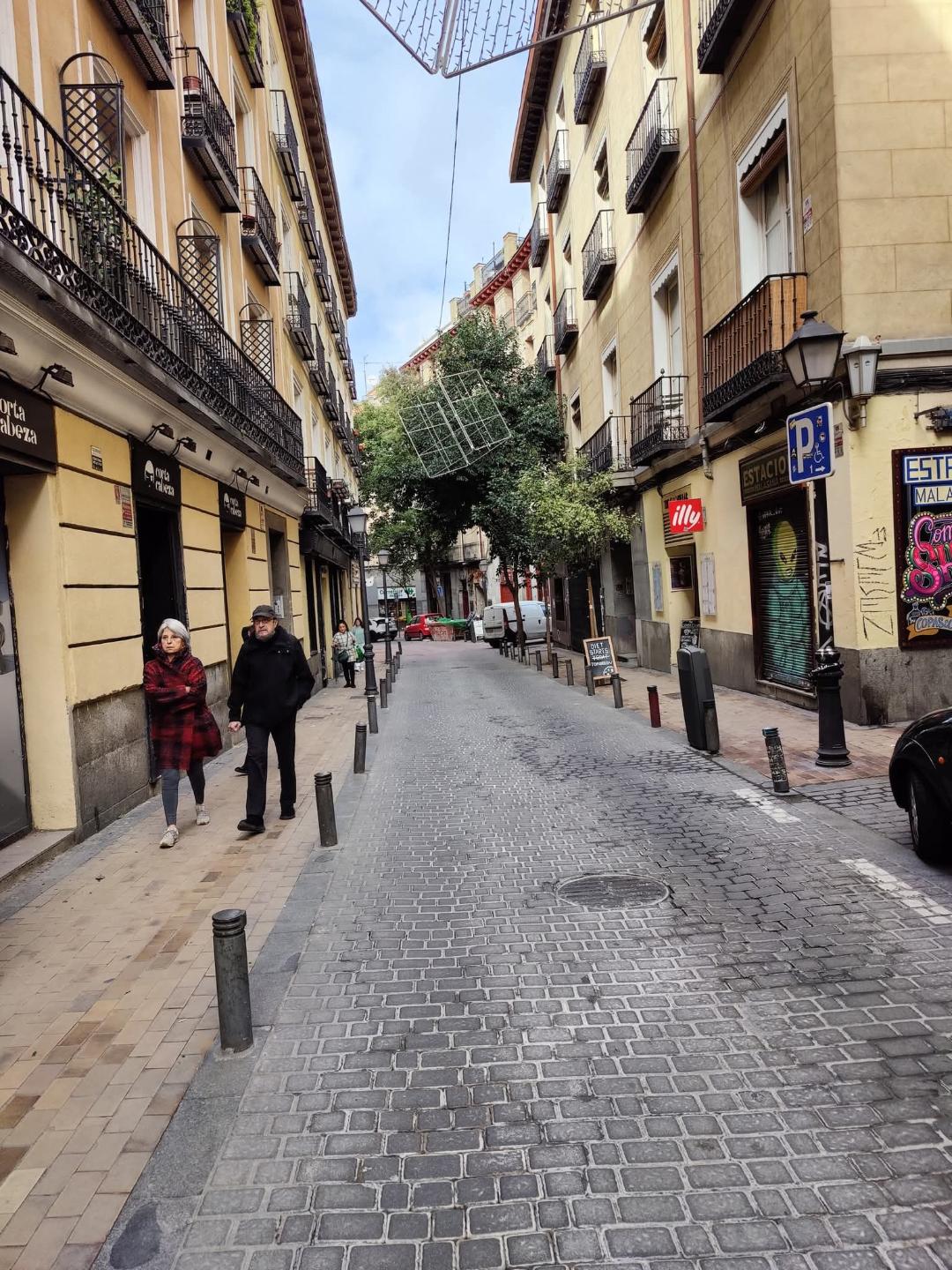
The Calle del Pez hides a fascinating legend that dates back to a girl named Blanca Coronel and a mysterious fish pond, a story that gave its name to this iconic 400-meter long street in the heart of Madrid. From its origins as one of the most aristocratic streets of the 19C to becoming the epicenter of Madrid’s movida, The origin of this first name is Don Diego Henríquez, a priest of noble lineage who owned a large estate here. His grounds featured five pools and a fountain of exquisite water with various jets. According to various chronicles, when Felipe II moved the court to Madrid, the city council purchased part of the estate from Father Henríquez for the purpose of building homes. However, the other part of the property was acquired by Juan Coronel, who would have been entitled to the land containing one of the ponds. During the construction of Juan Coronel’s new residence, the builders began using the water from the pond for the works. Consequently, the water became increasingly cloudy and depleted, causing the death of most of the fish that lived there. Blanca Coronel, Juan’s daughter, sadly watched as only one fish remained in the increasingly dirty waters. Moved by her love for the animal, she decided to rescue it and place it in a glass fish tank where she lovingly cared for it for some time. Despite her efforts, the last fish also died, causing the young woman deep grief. To console his grieving daughter, Juan Coronel ordered a stone fish carved on the facade of his house, which stood on the corner of what is now Calle del Pez and Calle del Marqués de Santa Ana. He also had a sign placed there reading “Casa del Pez.” This symbol has been respected over time, gaining such importance that the entire street eventually took on its current name. Today, the figure of the fish can still be seen carved on the facade of the building located at No 30 Calle del Pez ; and is one of the most sought-after photographic spots by visitors. Despite this, Blanca Coronel became a nun in the convent of San Plácido, later becoming involved in the mysterious events that occurred there.
At the end of the Calle del Pez on the corner of Calle de San Bernardo, stands the majestic Palacio Bauer, one of the finest examples of a 19C palace in Madrid. Built in the 18C for the Marquises of Guadalcázar, it was acquired in the mid-19C by the Bauer banking family, of Hungarian origin. After being declared a Historic-Artistic Monument, the Escuela Superior de Canto was installed there in 1872 ,a singing school. Leaning against the façade of the Bauer Palace, you’ll discover Julia, a charming life-size bronze sculpture installed on April 12, 2003. The statue represents a student carrying books in her arm, paying homage to those women who in the 19C had to disguise themselves as men to enter the Central University, which was located in this same building. The sculpture, officially titled “Tras Julia,” has become a symbol of the neighborhood. The building at No 3 Calle del Pez acquired legendary charisma thanks to Sergio Oksman’s documentary “A Story for the Modlins,” which won a Goya Award in 2013. This film tells the extraordinary story of the Modlin family, an American family who settled in Spain fleeing the Vietnam War, lived in one of its upper floors between the beginning of the 1970s and 2003 until the death of its last member. At No 10 Calle del Pez on the corner of Calle de la Madera, is the Teatro Alfil. This iconic cultural space opened in 1948 as a morning movie theater (Cine Pez) and was converted into a theater in 1971. Since 1996, it has been managed by the Yllana company, which has positioned it as a benchmark for comedy and humor in Madrid. It is the only theater in Madrid with a bar inside the theater. The Palacio del Marqués de Escalona y de Bornos located at No 12 Calle del Pez on the corner of Calle de la Madera. It was built between 1860 and 1862 for the Countess of Bornos by one of the most elegant architects of Isabelline in the late-neoclassical tradition of the mid-19C,it was renovated and converted into a residential building between 1986 and 1987. Also nearby is the Teatro Victoria at No 17, another space that enriches the cultural offerings of this lively street. Another romantic building that still exists at Nos 38-40 Calle del Pez, on the corner of Calle Pozas, is the former palacio del duque de Baena,1860.
In the chapter on the ancient cartography of Ramón de Mesonero Romanos it can be added that it already appears in the Teixeira map of 1656, although at that time two sections with different names are shown, that of Pez, from its beginning in the Corredera to the intersection with the Calle de las Pozas, and with the sign of Calle de la Fuente del Cura from Pozas to the “wide street of San Bernardo” Almost at the beginning of the street, in the widening formed by Calle del Pez with Calle del Molino de Viento (a space that from the second decade of the 20C took the name of Plaza de Carlos Cambronero, stood the mansion that housed the Royal Pestalozzian Institution, whose creation is attributed to Manuel Godoy. Some 19C newspapers, such as La Prensa and the Carlist newspaper La Esperanza (published between 1844 and 1874), had their editorial offices in this same house. The Convent of San Plácido is of the Benedictine order located on Calle del Pez, between Calle San Roque and Calle Madera. Its main entrance is at No 9 Calle de San Roque. Between 1628 and 1808, Velázquez’s Christ, painted by the master for this church, was in the sacristy. It then passed into the private collection of Manuel Godoy. After passing through many owners, it was bequeathed to the Prado Museum. A finely crafted copy is found in the lower choir stalls of the church.
The Madrid tourist office on the Barrio Malasañas or neighborhood : https://www.esmadrid.com/en/madrid-neighbourhoods/malasana
There you go folks , another wonderful nostalgic, sentimental trip to my dear Spain, A love affairs with my Madrid, as do not know when we will be back, we sure will have it in our hearts foever Again, hope you enjoy this post on the streets of Madrid, part XIII !!! as I
And remember, happy travels, good health, and many cheers to all !!!

 Paris1972-Versailles2003
Beautiful!✨️ I miss Spain. Have you visited Valladolid? A long time ago, I visited with my friend. I don’t have photos (I didn’t bring a camera), but I remember Valladolid was a beautiful city as well. 🇪🇸😊
LikeLiked by 1 person
Thanks. Yes of course plenty on Valladolid in blog. Thanks for stopping by Cheers
LikeLiked by 1 person
OK, I will read later. Thank you!😉
LikeLiked by 1 person
You are welcome
LikeLike