
A wonderful city of Guadalajara, we have passed by in our road warrior trails over the years, Really needs more than a passing thru city center in my runs France-Spain trips way back during our many stays in Madrid, and it remains a must return eventually, I am glad to find me these pictures in my cd rom vault to show it in my blog for you and me, Therefore, here is my take on this is Guadalajara, Spain !!! Hope you enjoy it as I.
The city of Guadalajara is a city in the province of Guadalajara, in the autonomous community of Castilla-La Mancha, and in the kingdom of Spain, It is located in the center of the Iberian Peninsula, 30 km from Alcalá de Henares, 135 km from Cuenca, 129 km from Toledo, 393 km from Valencia, and 61 km from Madrid from where we came from around the Retiro park on Calle de O’Donnell over the beltway M30 road and continue on the M23 road bear right dir Vicàlvaro M40 beltway road continue to exit/salida 9a to connect with the M14 continue and bear right into the A2 or Autovia del Norte dir Zaragoza it becomes Autovia del Nordeste or northeast same road continue to exit/salida 53 dir Guadalajara continue Avenida del Ejercito towards city center bear right on Plaza de España continue to Plaza Mayor and find on street parking,
Guadalajara’s geographical location is close to the capital of Spain, its location on the Madrid-Zaragoza-Barcelona route, and its inclusion in the Henares Corridor A-2 E-90. Autovia del Nordeste or Northeast Highway; the main communication artery with the Henares Corridor, Madrid, and northeast Spain, and the road supporting the main access links to the city such as the R-2 radial road Madrid-Guadalajara: a toll-free alternative to the A-2. The N-320. La Gineta-Venturada: crosses Guadalajara. Together with the A-2 or Autovia del Norte , these are the two axes that structure the municipal area.
The current Ayuntamiento or City/Town Hall building dates from 1906, and is located in the Plaza Mayor. The current plasterwork accentuates the eclectic style of its façade and contrasts with the wrought iron of its bell tower. Inside the City/Town Hall, coats of arms and emblems from various sources have been collected, and the panels of Saint Ginés, from the 15C, are housed. One of them features perhaps the finest portrait of the famous Pedro González de Mendoza, Grand Cardinal of Spain during the reign of the Catholic Monarchs.
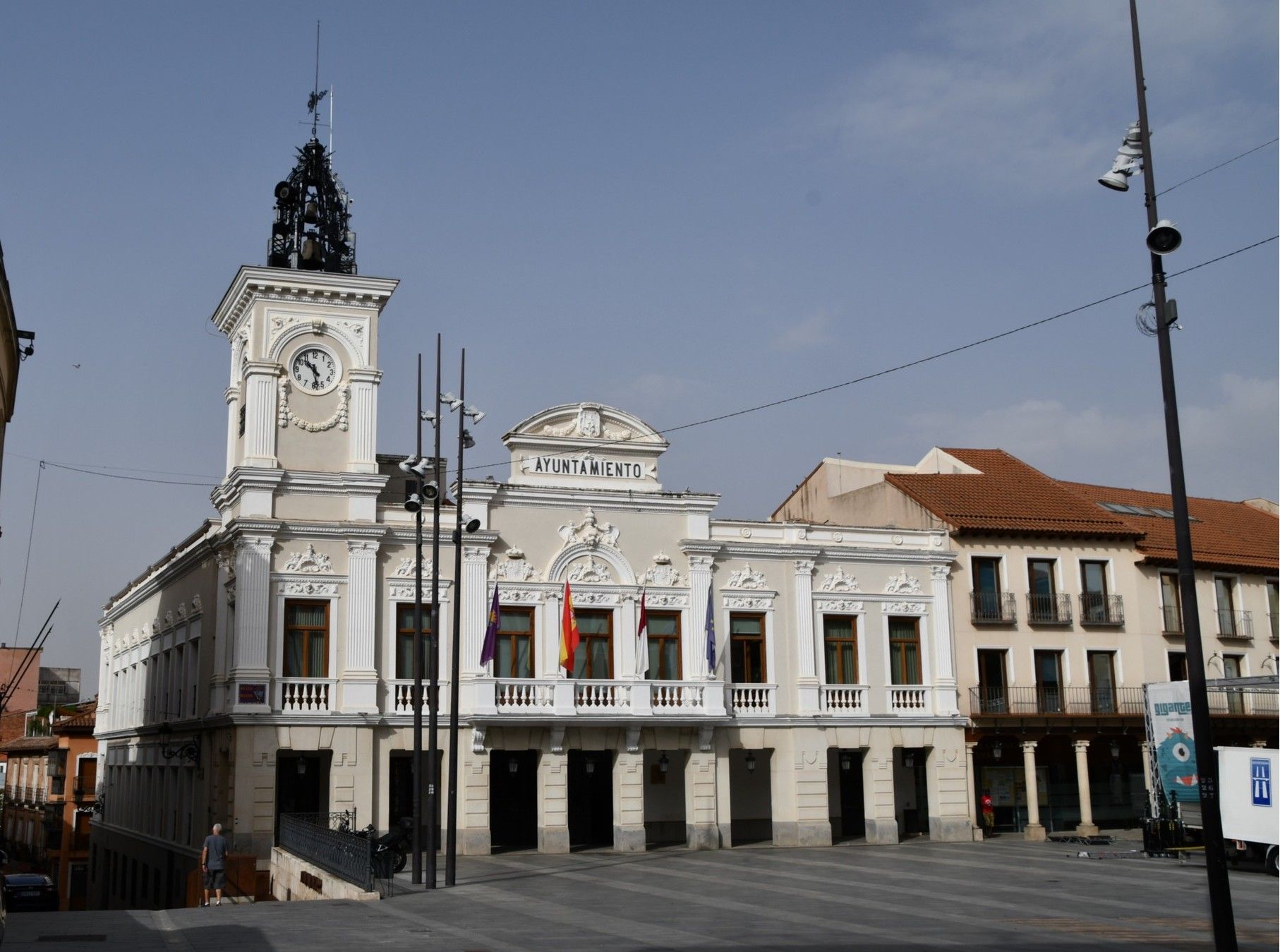
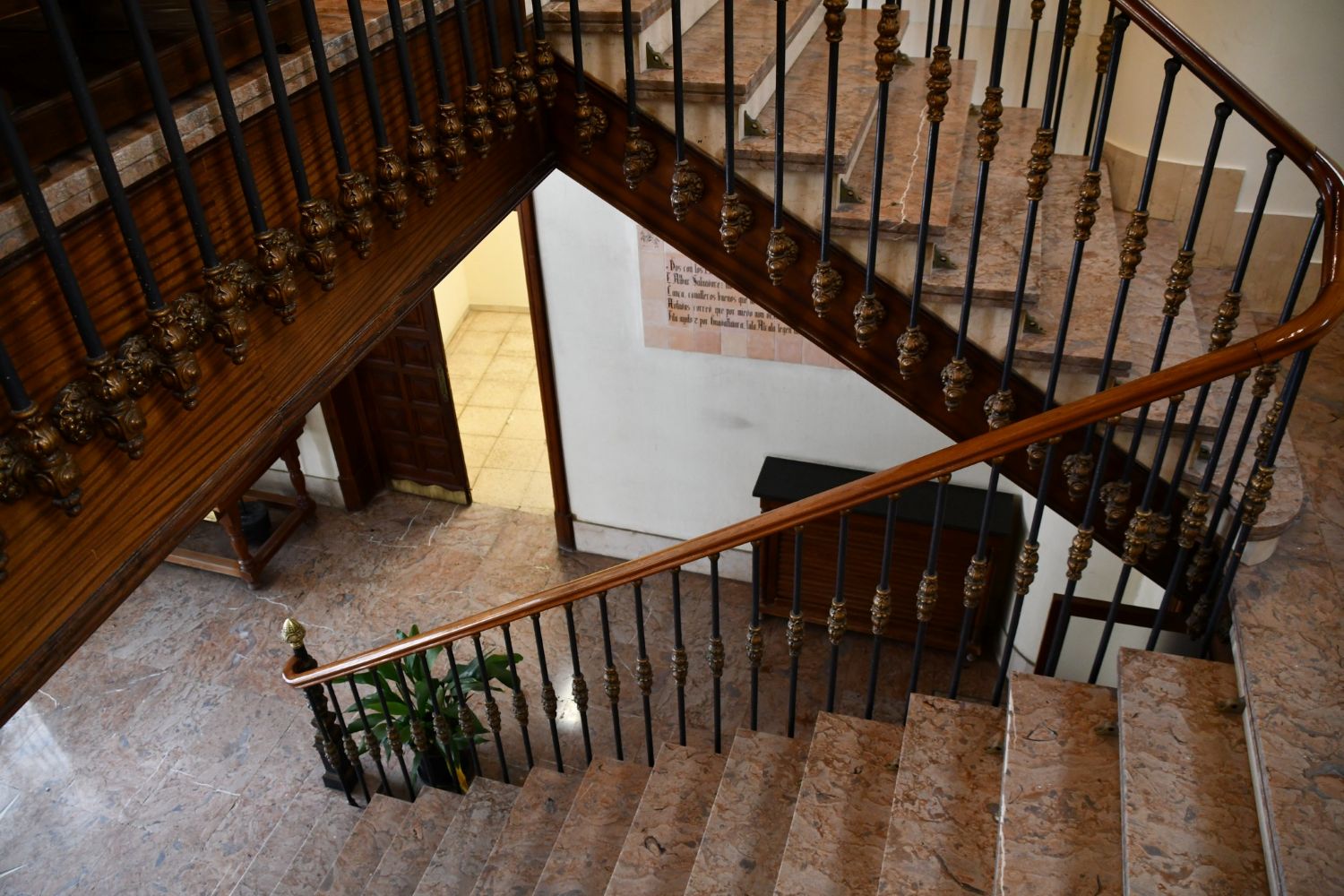
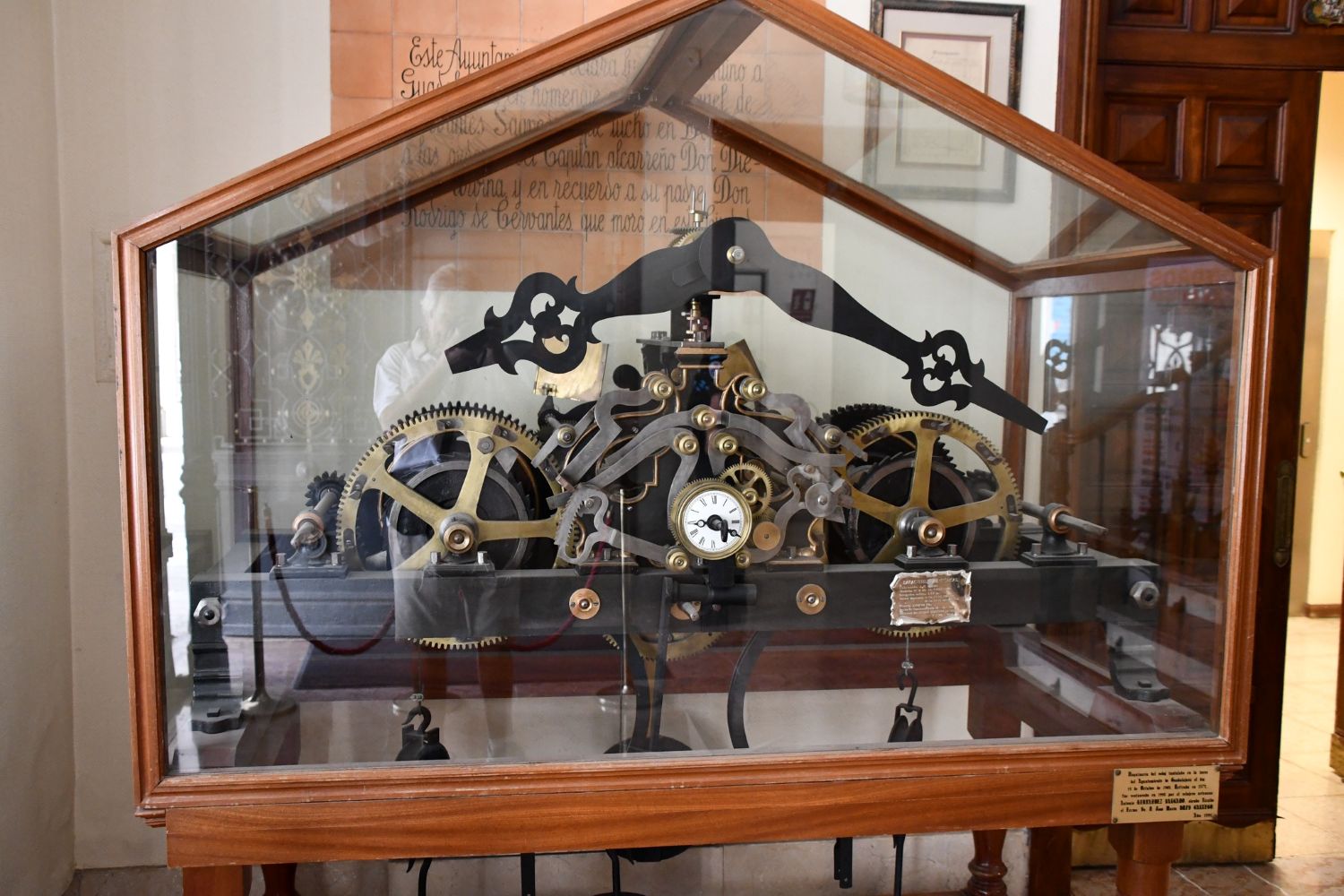
So many things to see and sadly even if many times passed by not yet much to be seen, it is my plans for next year a more in depth look, For now the other things to see here are The remains of the Royal Alcázar dating back to the 9C. Over time, it was used as a military citadel, a royal citadel, a sergeant factory, and headquarters for the Military Aerostation Service. It was almost completely destroyed during the Peninsular War and the Spanish Civil War. Since 1998 archaeological excavations have been carried out where different elements from all periods in which the fortress building has had a function have been found. The vestiges of the wall that have survived are scarce, but the Bejanque gate, the Alamín tower next to the Infantas bridge and the Álvar Fáñez tower have remained standing, although they were not the only ones that the city wall originally had. The most recent fortress in the city is the San Francisco fort, built in the 19C taking advantage of the old San Francisco convent, from the 14C. The palace of the Dukes of Infantado, a civil work of the pinnacle of European late Gothic and finished in Renaissance style. It was built by the Marquis of Santillana in the 15C and renovated in the 1580s. Inside the palace, the Courtyard of the Lions and the Duke’s halls stand out, and next to it, the gardens. Another notable palace is that of Antonio de Mendoza, built in the early 16C and later extended into a Franciscan convent under the direction of Alonso de Covarrubias. The Cotilla Palace was originally from the 17C, although it was renovated in the 19C by the Marquises of Villamejor, parents of the Count of Romanones. They left inside the so-called Chinese Hall, whose walls are decorated with Chinese wallpaper. And from the 19C is the last great palace in the city, that of the Countess of Vega del Pozo, on top of an old 16C convent, and which is characterized by its eclecticism and the yellowish color of its exterior walls. The Dávalos Palace, from the 16C and completely restored at the end of the 20C to house the headquarters of the public library, or the Palace of the Counts of Coruña, also from the 16C and attached to the Church of San Nicolás el Real. In the 14C, the Church of Santiago el Mayor was built next to the now disappeared convent of Santa Clara, which mixes the Mudejar and late Gothic styles. The co-cathedral of Santa María, built on an old mosque from the late 13C and the 16C, combining three architectural styles: Mudejar, Renaissance and Baroque. Slightly older than all these is the sanctuary of the Virgen de la Antigua, from the 13C, although greatly transformed in later centuries, the Church of San Ginés from the 16C, the Church of San Miguel ,also 16C, of which only the Chapel of Luis de Lucena remains standing, or the Church of los Remedios 16C, part of an old convent and current classroom building of the University of Alcalá de Henares. Also from this period are the convents of San Francisco 14C, later a strong rifleman and which houses the Mendoza pantheon, The Guadalajara Museum, also known as the Provincial Museum of Guadalajara, is the oldest provincial museum in Spain, it was founded in 1838 , The State Public Library, historically located in the Infantado Palace until 2004 when it moved to the renovated Dávalos Palace. It was founded in 1837 and opened four years later. The Provincial Historical Archive of Guadalajara, preserves documentation from the Middle Ages to the present day related to the province of Guadalajara. It was founded in 1931 and is located in a new building on Calle Julián Besteiro. The Parque de la Concordia is a large green area in the City center. It is located at the start of an axis of green areas of approximately one km which also includes the parks of San Roque, Las Adoratrices and Fuente de la Niña.
A bit of history I like tell us that it was founded by the Arabs between the 8C and 9C. It is believed that its name originates from that period, from the Andalusian Arabic Wād al-Ḥajarah, given to the Henares river. There had once been a Roman settlement nearby, whose name, Arriaca, may have the same meaning. The city reached a certain splendor in the 10C, despite its location in a territory that was almost always on a war footing. In 1085, Guadalajara was conquered by Alfonso VI of León. From that moment until the Battle of Las Navas de Tolosa in 1212, the history of the city reflects the course of the wars against the Almoravids and Almohads. In 1133, King Alfonso VII granted the first charter to the population to regulate the life of its community, establishing a set of rules, rights and privileges and in 1219, Ferdinand III expanded it by granting the long charter to the city. In 1460, King Henry IV granted the population the title of city. Of note are the two royal weddings that took place in the city. The first between Philip II and Isabella of Valois in 1559 and the second between Philip V and Isabella of Farnese in 1714, both took place in the Palace of Infantado, At the beginning of the 18C and after being sacked during the War of Succession, the city lived its worst moment. In 1808 Guadalajara was taken by the French army under the command of General Joseph Léopold Sigisbert Hugo, father of the writer Victor Hugo, during the Peninsular War and was partially destroyed in 1813; King Philip V established the Royal Cloth Factory in the city, which ensured population growth until the beginning of the 19C. The damage caused by the War of Independence and the closure of the Royal Cloth Factory in 1822 caused a new decline in the city, The province of Guadalajara, which in 1840 definitively established the provincial capital during the Spanish Civil War (1936-1939), with significant damage to the city,
The city of Guadalajara on its heritage: https://www.guadalajara.es/es/ciudad/
The Guadalajara tourist office on its heritage: https://turismoenguadalajara.es/reportajes/patrimonio-en-guadalajara
The Castilla La Mancha regional tourist office on Guadalajara: https://en.www.turismocastillalamancha.es/patrimonio/guadalajara-28531/descripcion/
The Spain national tourist office on Guadalajara: https://www.spain.info/en/destination/guadalajara/
There you go folks, another gem in my dear Spain, Guadalajara, an easy ride by car ,and again, should be there eventually for more, worth it me think, One of my road warrior trails between France and Spain. Again, hope you enjoy this post on this is Guadalajara, Spain !!! as I.
And remember, happy travels, good health, and many cheers to all !!!

 Paris1972-Versailles2003
💙
LikeLiked by 1 person
Thanks for stopping by Cheers
LikeLike