
A wonderful memorable town, we have visited in our road warrior trails over the years, Gladly found me again pictures in my cd rom vault that should be in my blog for you and me. I stop by on one of my road warrior trips way back during our stays in the region of Castilla La Mancha, and it remains a nostalgic spot in my life, Therefore, here is my take on this is Yepes !!! Hope you enjoy it as I.
The town of Yepes is located in the province of Toledo, in the autonomous community of Castilla La Mancha of my kingdom of Spain. It is 63 km from Madrid, 39 km from Toledo, 14 km from Aranjuez ,11 km from Ocaña,The access to the town is done from about 11 km from Yepes, cross the autovia A-4 highway, the R-4 highway and the N-400 national road (lot of parallel the A40). Also, regional route CM-4005 from Mora and Madrid), CM-4014 from Ocaña, CM-4004 from the La Sagra and Toledo. It is anticipated that the autovía de la Meseta Sur or A-40 highway by Ávila-Toledo-Cuenca-Teruel will pass through municipal routes while construction continues. We came here from Madrid, out of the exit/salida 15 of the betlway road M30 to connect with the A4 or Autovia del Sur dir Aranjuez by exit/salida 32 connect with the CM 4005 road continue and bear right onto the CM 4004 to center of Yepes.
As in most if not all towns of Spain, the Plaza Mayor is always a must to visit and we did, Here it has its origins as a Gothic square of triangular form, where the Colegiata de San Benito Church, and the Palacio Arzobispal, and administrative building at the base. In the 16C it serves as a spectacle. This current rectangular square is the result of the reformation of the Palacio Arzobispal into the 17C. The Palacio Arzobispal is in fact, the one that falsified the papal bula that permitted the marriage between the Catholic Kings: Isabel I of Castilla and Fernando II of Aragón.
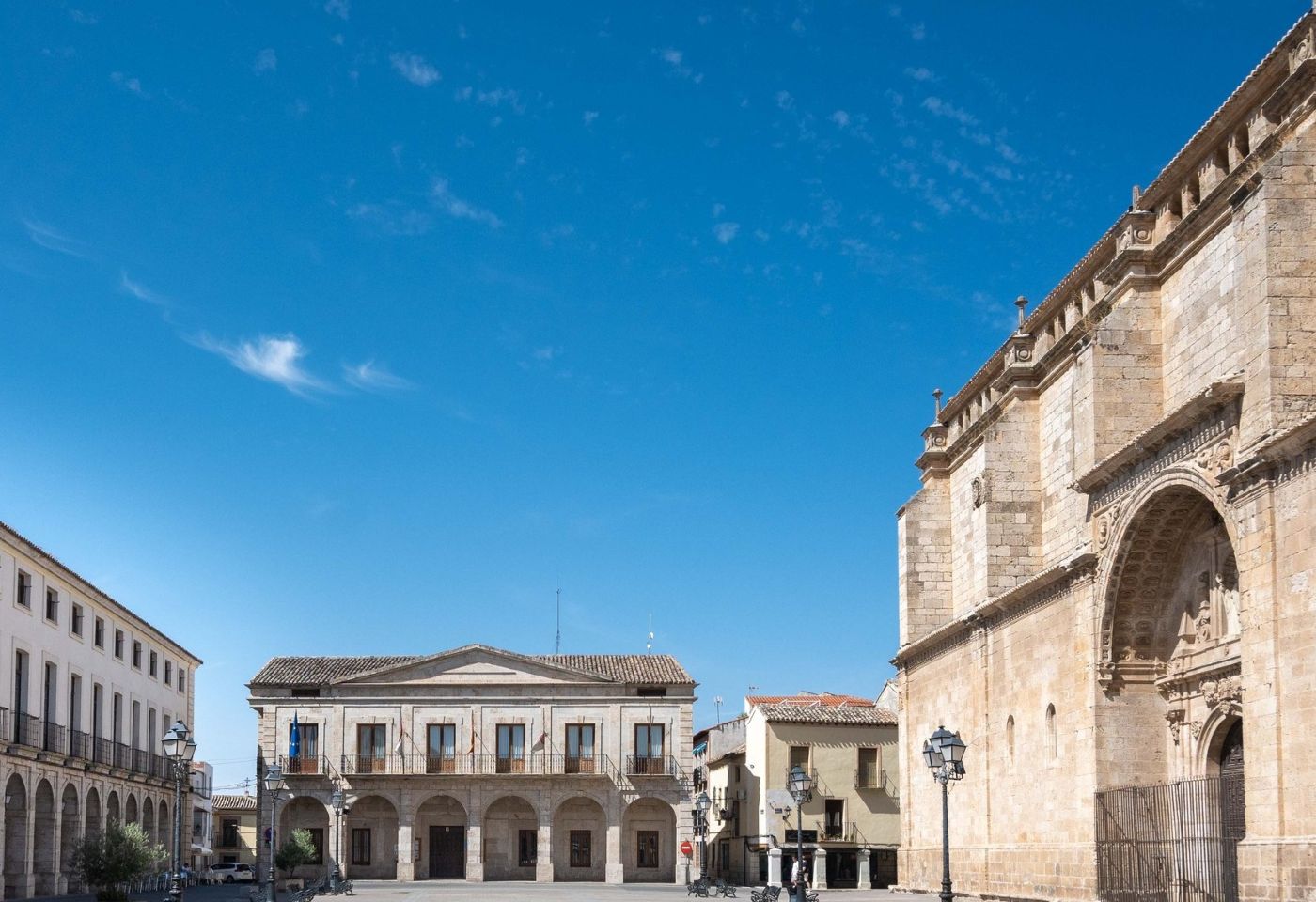
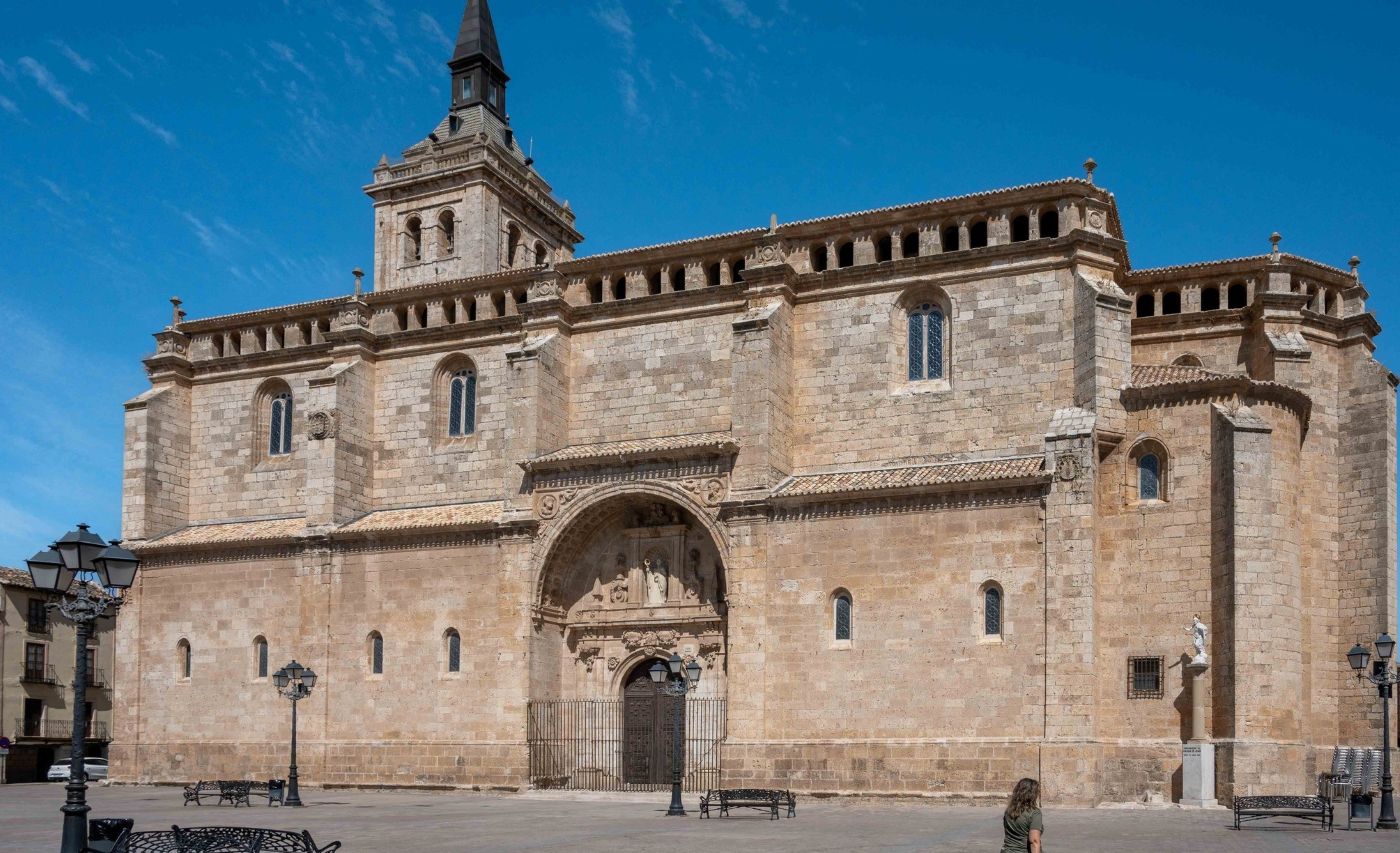
The Colegiata de San Benito Abad Church was done by Alonso de Covarrubias (who also did the Cathedral of Toledo -see post) between 1534 and 1570. It is a church of white stone of end Gothic and beginning of the Renaissance style with three naves and tow of lateral chapels with at the foot a nice tower of three bodies of 70 meters high. It is decorated with decorative pilasters, Renaissance elements and the Cardenal Tavera shield. Also with the porches: the Asuncion and the dedication of the patron saint of the villa, San Benito Abad, with a relief from the castle of Santa Barbara , You should see the barroque Chapel of the Saint Christ of the True Cross from the 18C. In the Spanish Civil War the statues of Saints from the altarpieces were destroyed, which were lost, but the lost links were then repaired in the Museo del Prado, and were returned in 1942. This museum could contemplate the statues of Santa Monica and Santa Magdalena, which was all like a payment. A small museum of goldsmiths from the 15C to 19C, showing the municipal coat of arms, paintings by Luis Carvajal and a baroque carving of Saint Francis of Assisi from one of the convents in the town that has now disappeared.
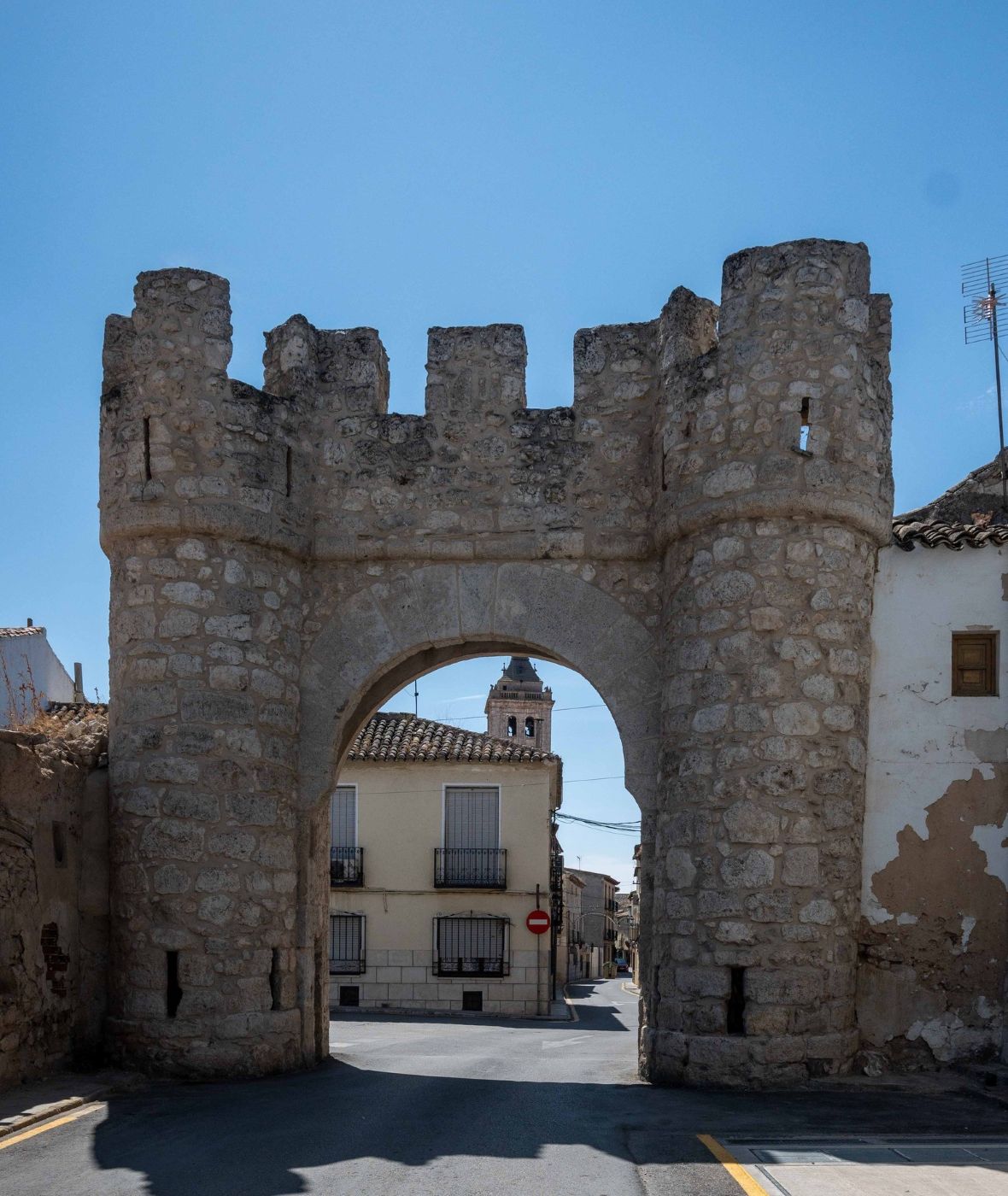
The town of Yepes conserve remains of the two walled enclosures that the town had in medieval times such as the Puerta de Ocaña Gate, with a wooden niche with a carving of Saint Christopher; the Puerta de Madrid Gate (see pic), which bears a painting of Saint Michael and is the highest point of the enclosure; the Puerta de Toledo Gate, located next to the convent of San José and San Ildefonso and which has an altar to the Virgin of Carmen; the Puerta Nueva Gate, known as “the lettuce gate” because it looks towards the orchards of the valley; and the Puerta de Hondón Gate, the only one that has disappeared today, looked towards the valley.
Other things to see , me think, are : The four convents and a monastery such as the Convent of San José and San Ildefonso of the order of the Discalced Carmelites, from the 17C and Baroque style, Convent of the nuns of San Bernardo ; Convent of San Antonio of the preachers of Santo Domingo, and Convent of the Discalced Franciscans ,It has two hermitages such as those of San José from the 17C and San Sebastián also, 17C, The Hospital of San Nicolás from the 16C, and the Hospital of the Concepción founded in 1600, The Rollo or Jurisdictional Roll ,popularly known as pillory, it is from the 15C, Gothic style and is adorned with Isabelline pearls. The Inquisition used it as an instrument of punishment. The fuente de los Tres Caños or three spurs, Along the streets of the historic center of Yepes you can see manor houses of noble families that display their emblazoned doorways, decorated grilles, large balconies and windows, and the buildings are topped with attics. These houses, among which the Herrerian style of the 17C stands out, show the influence of the Golden Age in the town.
A bit of history I like tell us that the ancient Hippo or Hippona of the Carpetani, in Roman times, where the Celtiberians defeated the troops of the Romans Quintius and Calpurnius, took its current name under the Muslim domination of the peninsula, when the Christians who lived under Muslim territory called it Hepes, which would give Hiepes, Iepes, Yepes. In 1145, under the reign of Alfonso VII, the title of council was ceded to San Nicolás Yepes and its castle. In 1212, it was mentioned appearing as a small village. A year later, in 1213, King Alfonso VIII gave the Toledo archbishop Rodrigo Jiménez de Rada the mortuary of the villages of Hepes and Fontes and, in 1223, gave Yepes a population charter. In 1576, King Felipe II sold the town of Yepes to its town council. Important figures in the arts and literature were either natives of the town or linked to it: Juan de Yepes Álvarez, better known as Saint John of the Cross, Fray Diego de Yepes (confessor of Philip II, Philip III, and Saint Teresa of Jesus), Luis Tristán (a disciple of El Greco), and Calderón de la Barca, from whom the town commissioned the sacramental play El mágico prodigioso in 1637, to be performed on Corpus Christi. In the year 1600, Diego de Yepes, a Hieronymite bishop of Tarazona, was presented with the Holy Mystery and requested and obtained from the father prior a small piece of the Holy Corporal which he took with him to his palace in Tarazona, also donating it to his hometown, Yepes, on July 29, 1601, and arriving in the town on June 5 of the following year. When the Holy Relic of the Blood of Christ disappeared during the Spanish Civil War (1936-1939), the then bishop of Tarazona granted the town of Yepes a new small piece of the Holy Mystery of Cimballa, which would make its solemn entry into the town on June 26, 1940.
The town of Yepes on its heritage : https://www.yepes.es/turismo/monumentos
The site magical towns of Spain on Yepes : https://www.pueblosmagicos.es/yepes/
The province of Toledo tourist office on Yepes : https://turismoprovinciatoledo.es/localidades/yepes/
The Castilla La Mancha region tourist office on Yepes : https://en.www.turismocastillalamancha.es/patrimonio/yepes-51331/descripcion/
There you go folks , another wonderful nostalgic, sentimental trip to my dear Spain, Do not know when we will be back, we sure will have this trip in our hearts forever, Again, hope you enjoy this post on this is Yepes !!! as I
And remember, happy travels, good health, and many cheers to all !!!

 Paris1972-Versailles2003