
This time took my road warrior skills to go again to jolly England with the Le Shuttle train service (see post), and my Ford ; towing along my good boys and wonderful Rex! It was a very nice trip going into the countryside and seeing several towns of wonderul architecture and history, This one is a must and one of our highlights of the trip, we will be back, eventually, Therefore, let me tell you about curiosities of Oxford !!! Hope you enjoy the post as I.
The Sheldonian Theatre is one of the earliest works of the English architect Christopher Wren. Its construction lasted from 1664 to 1668. The building is named after Gilbert Sheldon, Warden of All Souls College and later chancellor of the university.. Handel conducted the first performance of his third oratorio Athalia here in 1733. Although the word “theatre” appears in its name, it did not host its first play, Arthur Miller’s *The Crucible*, until 2015. Originally conceived as a functional building for the University of Oxford, hosting artistic and musical performances, it is also the site of university ceremonies, where students receive their degrees in black gowns. Furthermore, its dome offers panoramic views of the city. The Sheldonian Theatre has a prominent eight-sided cupola in the centre of the roof, which is accessible via a staircase leading to the dome above the main ceiling. The cupola has large windows on all sides, providing views across central Oxford, and is open to visitors. The theater is used for music recitals, lectures (such as the annual Romanes Lecture), conferences, and for various ceremonies held by the University (such as graduation and matriculation) Today, the theater is home to regular performances by local groups, including the Oxford Philomusica and Stornoway. The theatre seats up to 700 people and is on the grounds of part of the Bodleian Library adjacent to Broad street. To the left at the front is the Clarendon Building and to the right is the Old Ashmolean building. Behind the Sheldonian is the Divinity School.
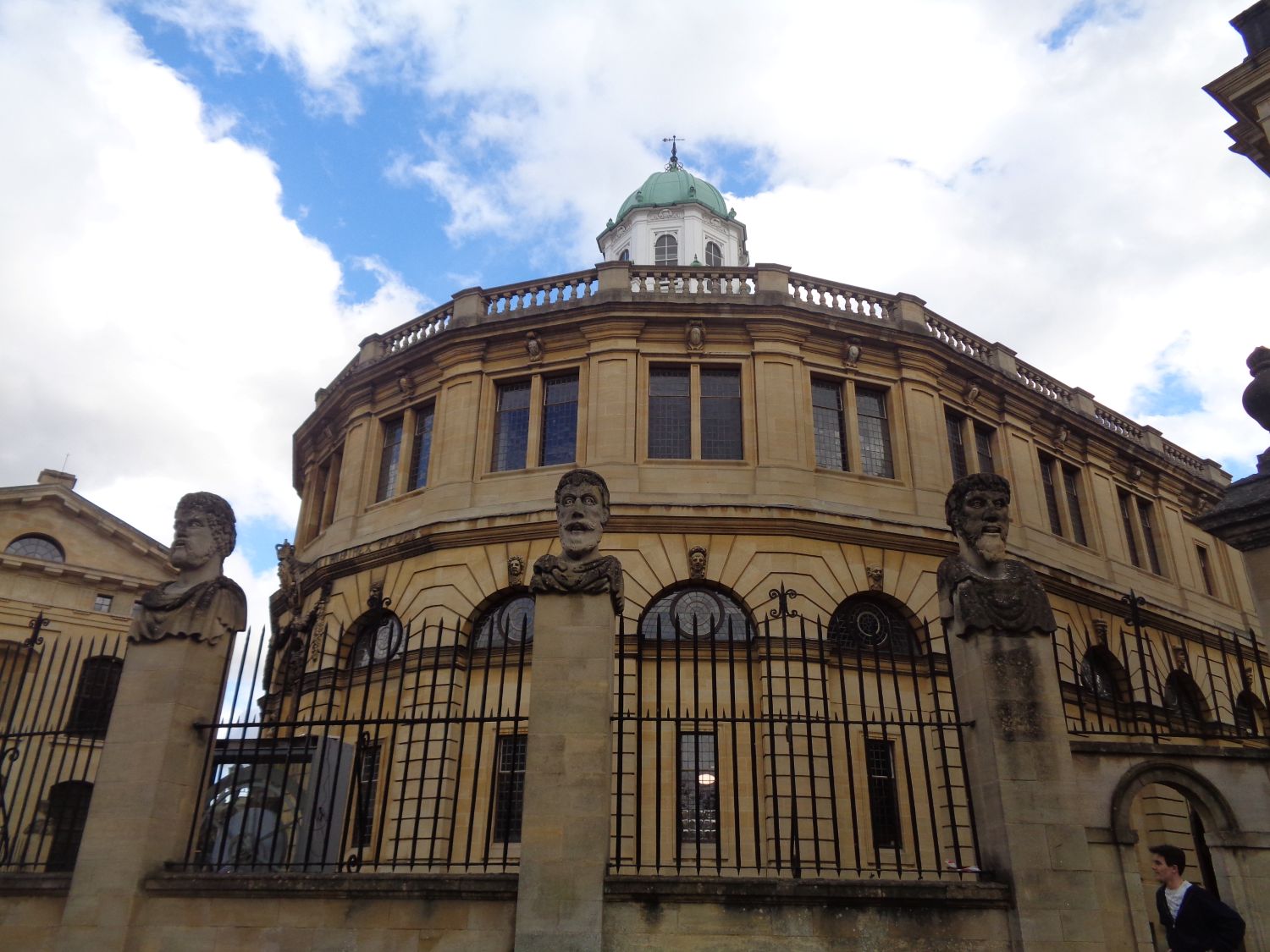
The official Sheldonian Theatre : https://www.sheldonian.ox.ac.uk/
The Martyrs’ Memorial is a stone monument positioned at the intersection of St Giles’, Magdalen and Beaumont Streets, to the west of Balliol College. It commemorates the 16C Oxford Martyrs.The monument was built 300 years after the events of the English Reformation and commemorates the Bishop of Worcester, Hugh Latimer, and Bishop of London, Nicholas Ridley, who were burned nearby on 16 October 1555 after having been convicted for heresy because of their Protestant beliefs after a quick trial. It also commemorates the former archbishop of Canterbury Thomas Cranmer, who was similarly executed on 21 March 1556. The Rev. Charles Pourtales Golightly and other Anglican clergy raised the funds to erect the monument during the Victorian era. They opposed the 19C Oxford Movement(to bring both churches closer anglican and catholic) led by John Keble, John Henry Newman and others. Golightly and his colleagues were alarmed at the Anglo-Catholic realignment the movement was bringing into the Church of England, and wanted the memorial to reflect the university’s Protestant profession and anti-Catholic tradition. The monument was completed in 1843. The Victorian Gothic memorial, whose design dates from 1838, has been likened to the steeple of a cathedral, though it was consciously patterned on the Eleanor crosses erected by King Edward I between 1290 and 1294 to the memory of his wife, Queen Eleanor of Castile . Henry Weekes sculpted the three statues of Cranmer, Latimer and Ridley
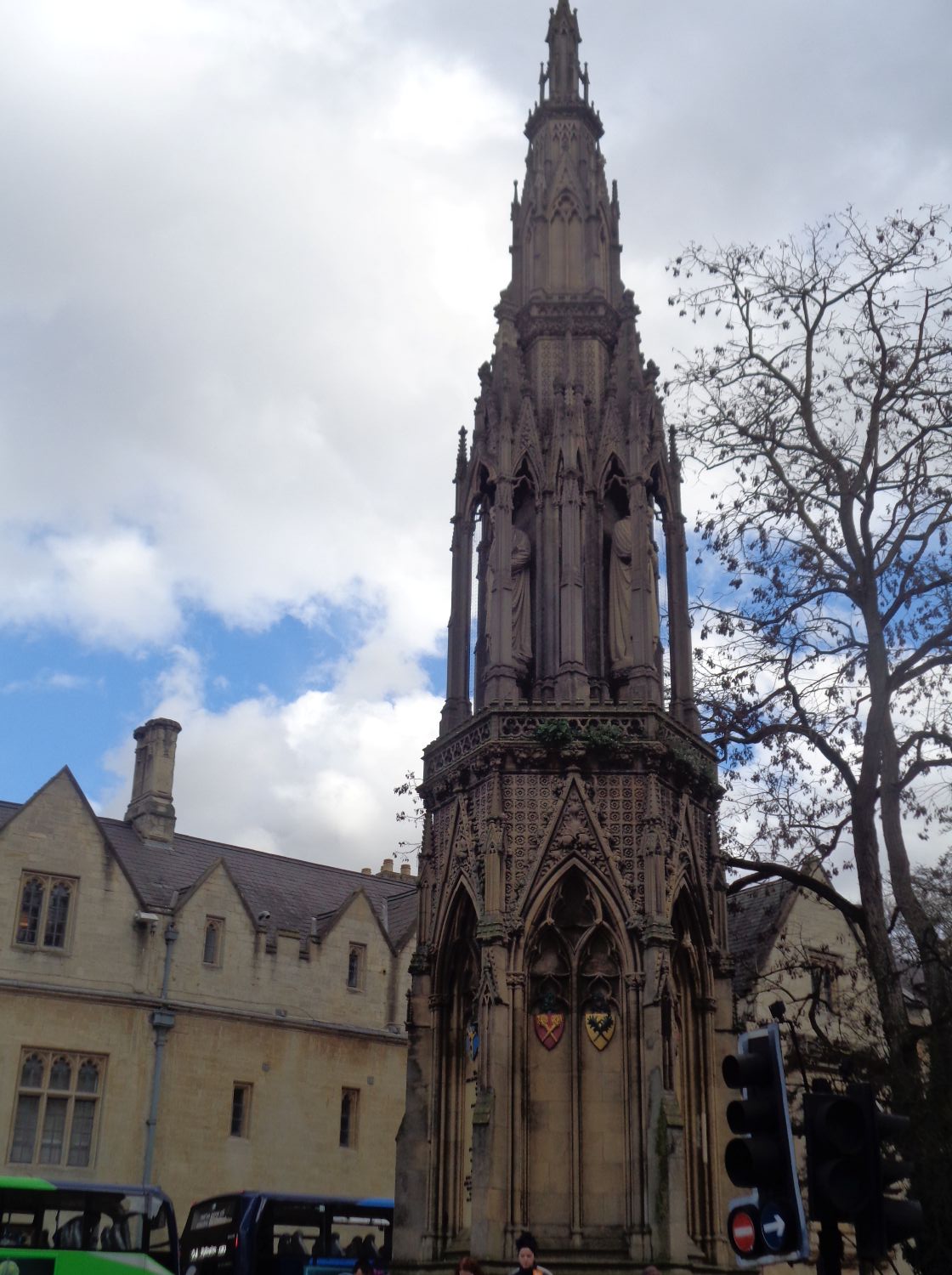
The Oxford Preservation Org on the Martyrs memorial :https://www.oxfordpreservation.org.uk/martyrs-memorial
The Oxford University Cricket Club Pavilion was designed in 1880 and was built in 1880-81. It was founded as the pavilion for the Oxford University Cricket Club and continues to serve this function today. Other buildings attached to the Parks include the two lodges. North Lodge was built in 1866. South Lodge, constructed as a house for the Parks Superintendent, was completed in 1893. The Tentorium was constructed in 2002. This building is the administrative and operational centre for the Parks team. The University Observatory, built in 1874, which originally occupied an isolated position in the centre of the Parks, is now adjoined by buildings of the Science Area. A bridge across the Cherwell river and the rollerway which allows punts to circumnavigate the weir was built nearby in 1887. The High Bridge was done in 1923-24. Its shape, which has led to it being sometimes referred to as Rainbow Bridge The Cherwell river, which flows of Oxford city centre, is a tributary of the Thames river which it joins south of Christchurch Meadows. The University Parks, College grounds and sports fields and the University Botanic Gardens are features of the Cherwell floodplain close to the centre of Oxford. The Oxford Natural and Landscape History Walk provides a route to explore this peaceful, semi-rural landscape dominated by meadow and pasture with some playing fields and gardens close to the city centre. Mesopotamia ‘between the rivers’ is a narrow island that extends for over 700 meters between two branches of the Cherwell river. Today Parson’s Pleasure is a pleasant, open area of park, popular with students and local residents wanting somewhere quiet to read or picnic, Our Rex really love it here !
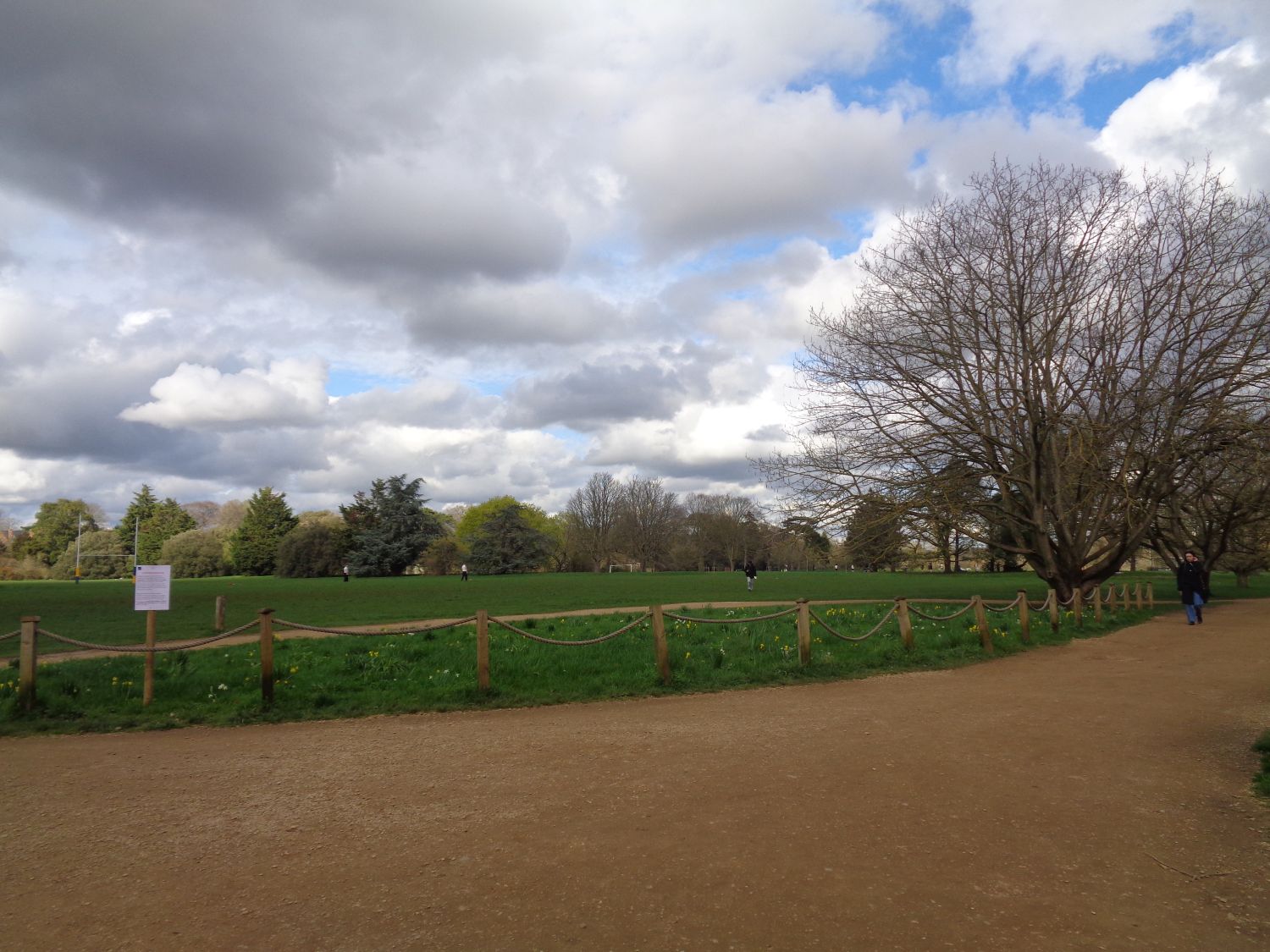
The University of Oxford on University Parks : https://www.parks.ox.ac.uk/home
The New Theatre Oxford ,formerly the Apollo Theatre Oxford and the Apollo, from 1977 to 2003 is the main commercial theatre in Oxford. It has a capacity of 1,785 people; is on George Street, in the centre of the city; and puts on a wide variety of shows, including musical theatre, stand-up comedy, and concerts. The first “New Theatre” on this site opened in 1836 and presented music hall entertainment. This was replaced in 1886 by new premises, which were the home of Oxford University Dramatic Society. The theatre was damaged by fire in 1892 and enlarged in 1908, from which time it was continuously under the management of the Dorrill family until 1972.The present building dates from 1933. After a refurbishment in 2003 the theatre reverted to its original name of the New Theatre, with Clear Channel Entertainment’s theatre division becoming Live Nation two years later. The Ambassador Theatre Group bought the theatre in 2009.
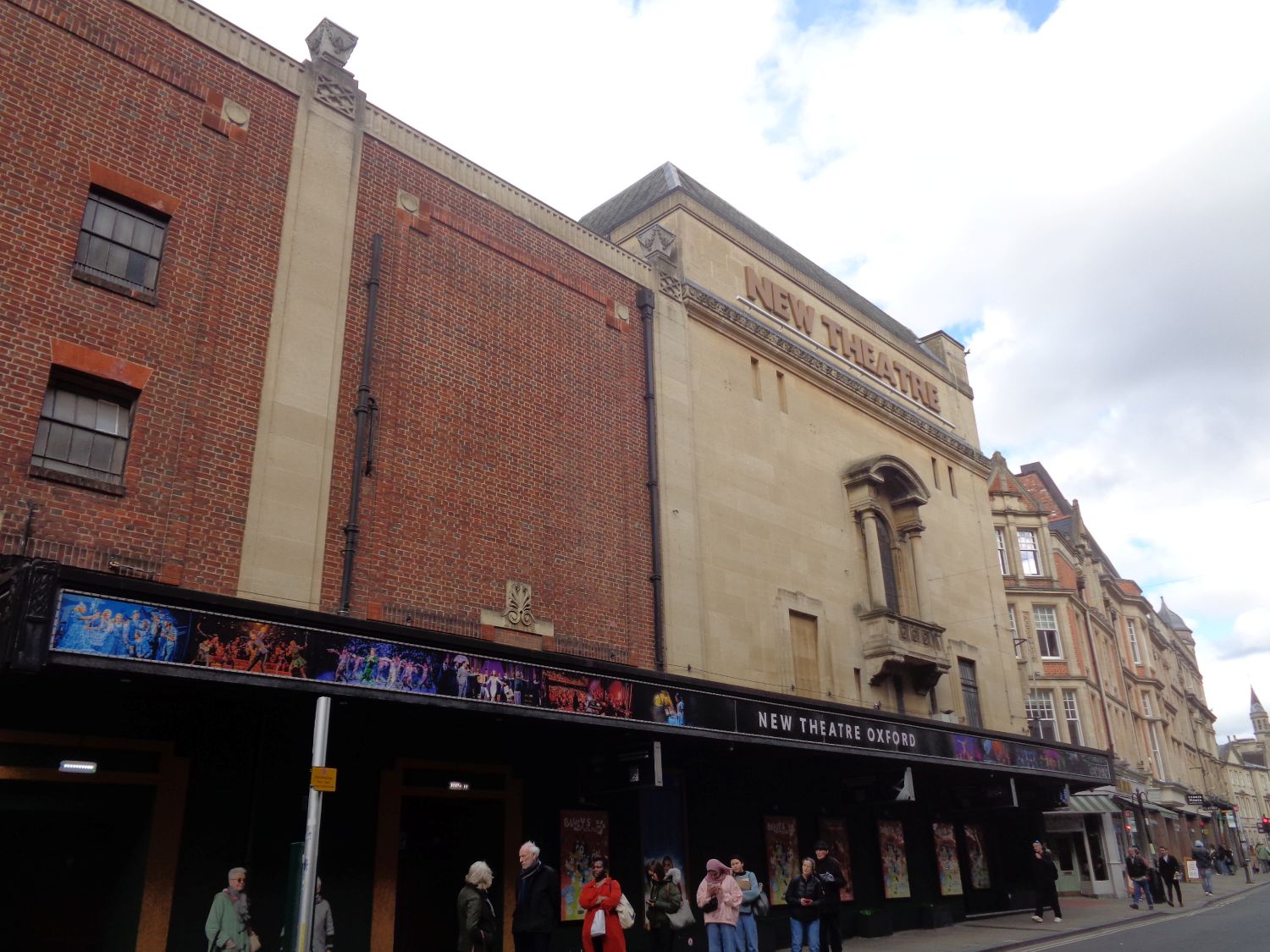
The ATG New Theatre of Oxford : https://www.atgentertainment.com/aka_venues/new-theatre/
The St Mary Magdalen’s Church is in central Oxford. A vibrant all-age and inclusive community, offering worship and witness in the Catholic tradition. The church is located in Magdalen Street, dedicated to Jesus’ companion Mary Magdalene. It is one of the city’s ancient parish churches, A Saxon wooden church was built outside the Saxon walls of the city of Oxford, just beyond the North Gate. In 1194 Saint Hugh, Bishop of Lincoln, had the church rebuilt. Work of that period survives in the east wall of the chancel wall and in the south aisle, and the altar dedicated to St Thomas Becket. By 1235 the church had an altar dedicated to the Virgin Mary. The chancel was rebuilt late in the 13C. A century later the scholars of newly founded Balliol College had an oratory dedicated to St Catherine in the present north aisle. In 1320 the Carmelites founded a chapel in the south aisle, which survives as the present Lady Chapel. The west tower was built between 1511 and 1531. The south porch, with a room above it, was also added around this time.I n 1874–75 the 13C chancel was altered by raising the floor before the altar and adding a screen, the windows of the west tower were opened into the church and the bells were re-hung.The church holds an early 14C carved wooden chest known as the “Jewel Chest” The Oxford University Society of Change Ringers has rung the bells since the 1930s (founded in 1872, is the official society dedicated to change ringing in Oxford University. Its objects are to promote the art of change ringing in the university and to ring for Sunday services in Oxford during full term)
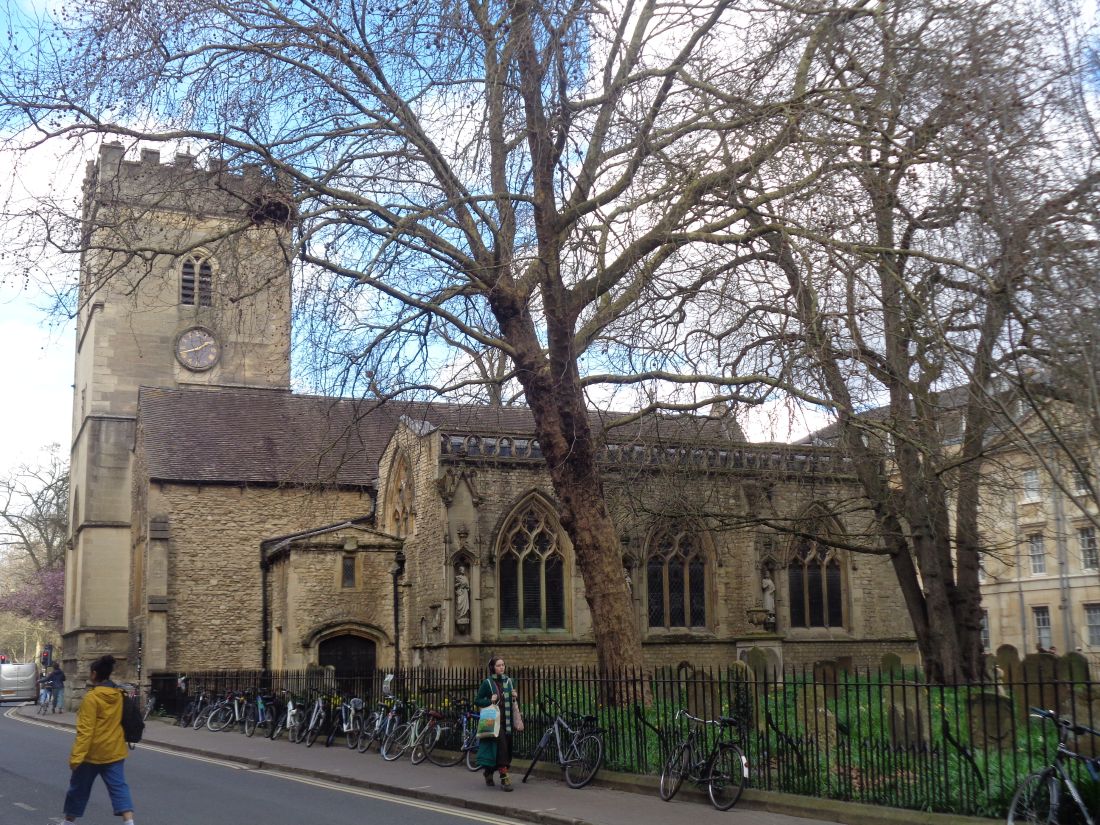
The official Church St Mary Magdalen of Oxford : https://stmarymagdalenoxford.org.uk/
The Wesley Memorial Church is a Methodist church. John and Charles Wesley studied in Oxford, and the congregation was founded in 1783. The present church building was completed in 1878. The church is now a focus for various social activities as well as Christian worship.Oxford’s first Methodist meeting house was a building on the east side of New Inn Hall Street. It is now nos 32–34 and is part of Brasenose College (formally The Principal and Scholars of the King’s Hall and College of Brasenose in Oxford, or BNC, is one of the constituent colleges of the University of Oxford) . A plaque on the wall commemorates the fact that John Wesley preached there on 4 July 1783.The present Gothic Revival church was started in 1877 and opened in October 1878. The design in a revival of Decorated Gothic. The church has carved the capitals of the columns, which portray twelve different kinds of English plants
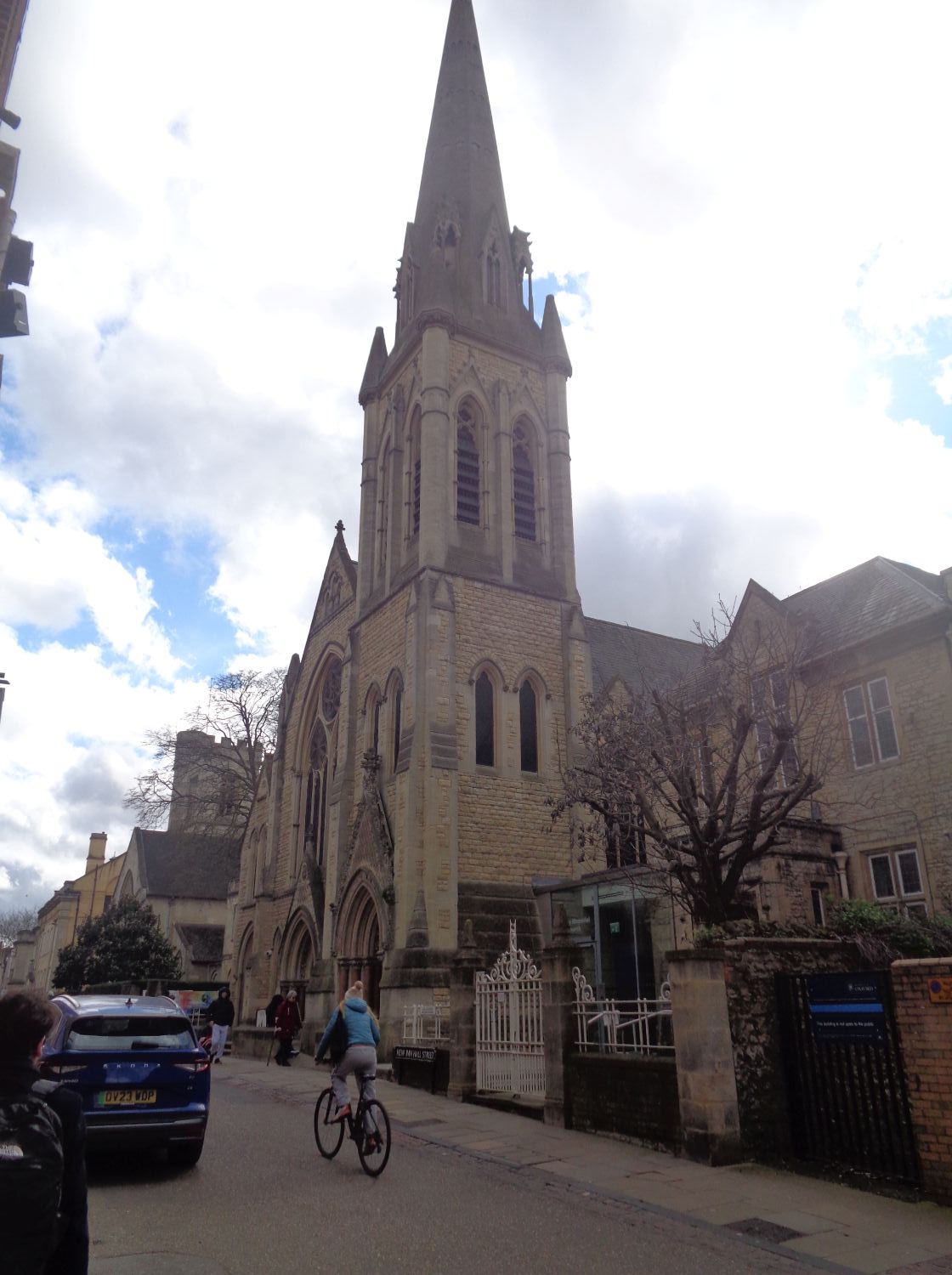
The official Wesley Memorial Church of Oxford: https://www.wesleymem.org.uk/
Other things to see here is one of Oxford’s many charms is its covered market, open since November 1, 1774. It still houses numerous shops, primarily food retailers such as greengrocers for fruits and vegetables, butchers producing Oxford sausage, and more.
The City of Oxford on its heritage : https://www.oxford.gov.uk/visit-oxford
The Oxford University on sights of Oxford : https://www.ox.ac.uk/visitors/visiting-oxford
The Oxford tourist office on its heritage : https://www.experienceoxfordshire.org/
There you go folks , do dare drive in jolly England, it’s an adventure of a lifetime, and you will be back !!! as we have lol! Until another round chasing Sherlock we will be saying elementary my dear Watson to you all. Again, hope you enjoy this post on curiosities of Oxford !!! as I
And remember, happy travels, good health, and many cheers to all !!!

 Paris1972-Versailles2003