
This time took my road warrior skills to go again to jolly England with the Le Shuttle train service (see post), and my Ford ; towing along my good boys and wonderful Rex! It was a very nice trip going into the countryside and seeing several towns of wonderul architecture and history, This one is a must and one of our highlights of the trip, we will be back, eventually, Therefore, let me tell you about this is St Albans, England !!! Hope you enjoy the post as I.
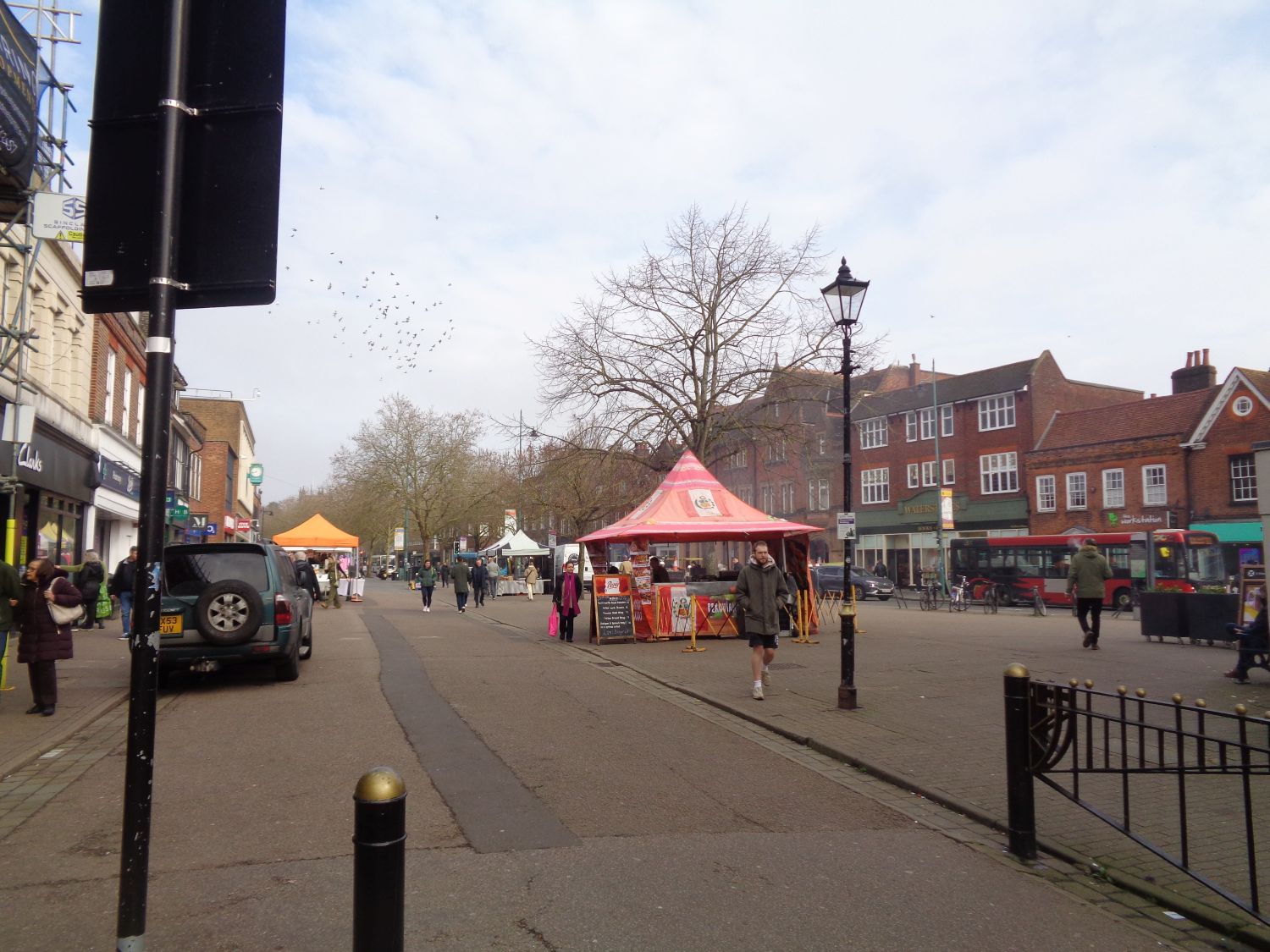
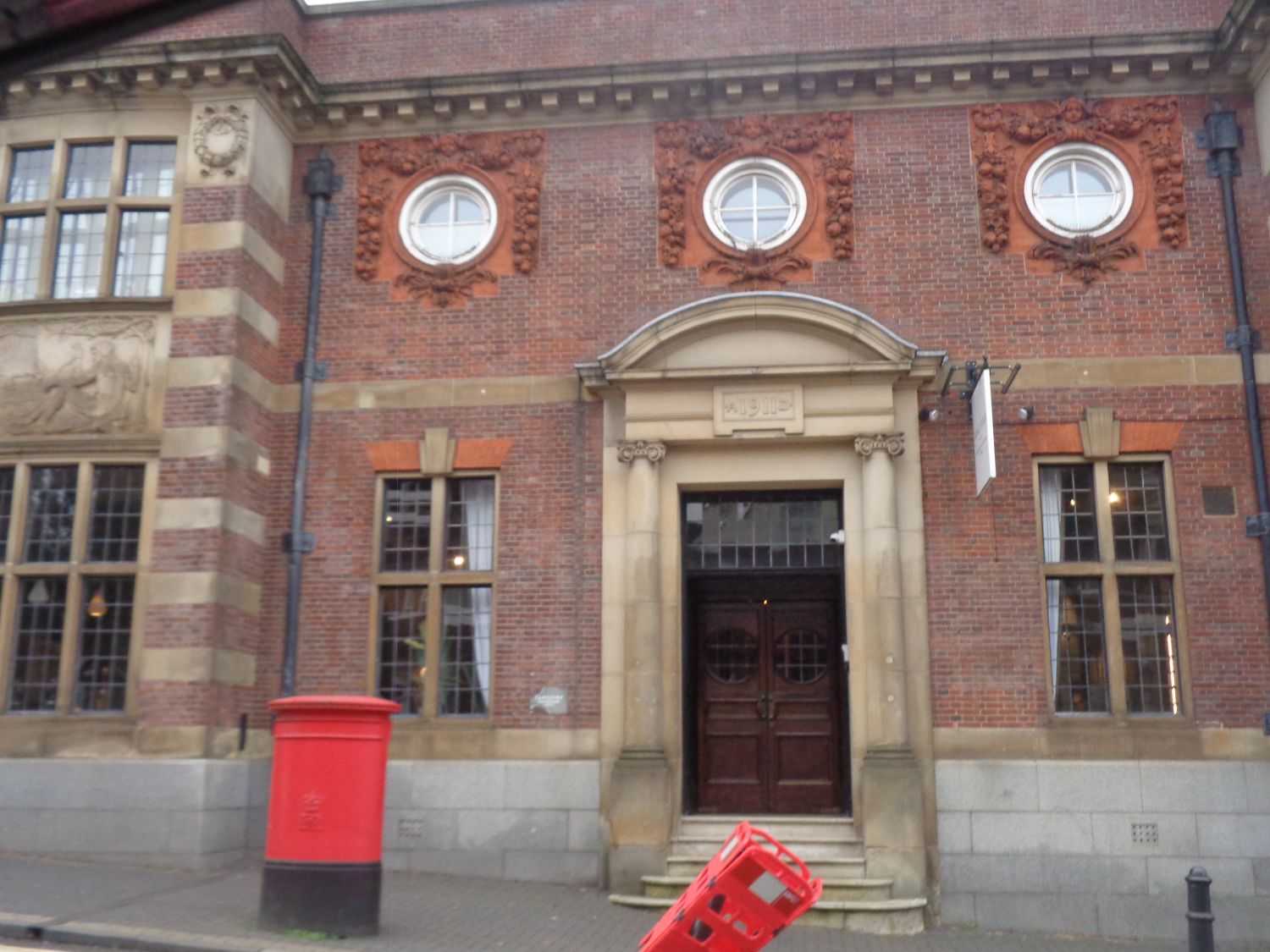
The City of St Albans is a cathedral city in Hertfordshire, England, It is 8 miles (13 km) from Hemel Hempstead, 6 miles (11 km) from Hatfield, 25 miles (40 km) from London, and 11 miles (18 km) from Luton. St Albans was the first major town on the old Roman road of Watling Street for travellers heading north and became the city of Verulamium We came to the City from our base in Hemel Hempstead along St Albans Road becoming Breakspear Way making the loop to connect with the A414 road bearing left on the Parks street roundabout continue on Watlings street continue then right on St Stephen’s Hill becoming Holywel Hill or A5183 road continue bear left on Sumpter Way and the Cathedral, Below is the The Samuel Ryder Hotel St. Albans, Tapestry Collection by Hilton at 27 Holywell Hill and above is the St Peter’s St market.
St Albans is at the intersection between the M1 and M25 motorways. On the M1, its northern, central and southern junctions are 9, 7 and 6, respectively; on the M25, its western and eastern junctions are 21A and 22 respectively. Notable A-roads serving the city include: The A414, which runs directly south of St Albans between Hemel Hempstead and Hatfield and links to M1 Junction 7/8; The A405, which provides a direct link to Watford via M25 junction 21A and M1 junction 6; The A5183 which runs north-west towards M1 junction 9 and Dunstable and south towards Edgware in north London; it forms the detrunked section of the London-Holyhead A5 road.
A bit of history tell us that St Albans takes its name from the first British saint, Alban leyend tell us he lived in Verulamium, sometime during the 3rd or 4th century, when Christians were suffering persecution. Alban met a Christian priest fleeing from his persecutors and sheltered him in his house, where he became so impressed with the priest’s piety that he converted to Christianity. When the authorities searched Alban’s house, he put on the priest’s cloak and presented himself in place of his guest. Consequently, he was sentenced to endure the punishments that were to be inflicted upon the priest, unless he renounced Christianity. Alban refused and was taken for execution The Roman city of Verulamium, the second-largest town in Roman Britain after Londinium, developed from the Iron Age settlement and was granted the rank of municipium around AD 50, meaning that its citizens had what were known as “Latin Rights”, a lesser citizenship status than a colonia possessed. The body of St Alban was probably buried outside the city walls in a Roman cemetery near the present cathedral. His hillside grave became a place of pilgrimage. Recent investigation has uncovered a basilica there, indicating the oldest continuous site of Christian worship in Great Britain. In 429 Germanus of Auxerre visited the church and subsequently promoted the cult of St Alban After the Roman withdrawal the town became the centre of the territory or regio of the Anglo-Saxon Waeclingas tribe The medieval town grew on the hill to the east of Wæclingacaester where the Benedictine Abbey of St Albans was founded by Ulsinus in 793 Two battles of the Wars of the Roses took place in or near the town. The First Battle of St Albans was fought on 22 May 1455 within the town, and the Second Battle of St Albans was fought on 17 February 1461, just to the north Before the 20th century St Albans was a rural market town, a Christian pilgrimage site, and the first coaching stop of the route to and from London, accounting for its numerous old inns. In 1877, in response to a public petition, Queen Victoria issued the second royal charter, which granted city status to the borough and Cathedral status to the former Abbey Church.
The St Albans tourist office on its heritage : https://www.enjoystalbans.com/things-to-do/
The Herfordshire area tourit office on St Albans : https://www.visitherts.co.uk/see-and-do/destinations/st-albans/
There you go folks , do dare drive in jolly England, it’s an adventure of a lifetime, and you will be back !!! as we have lol! Until another round chasing Sherlock we will be saying elementary my dear Watson to you all. Again, hope you enjoy this post on this is St Albans, England !!! as I
And remember, happy travels, good health, and many cheers to all !!!

 Paris1972-Versailles2003