
In my history we got to know Vietnam well and one of the cities we listen often was Hanoi. After the war and the country coming out as a whole, the city was kept as the capital. And then , I finally arrived on an adventurous flight from Da Nang ! Many friends and some still in touch. We will see when our roads crossed again. Therefore, here is my take on this is Hanoi in Vietnam !!! Hope you enjoy the post as I
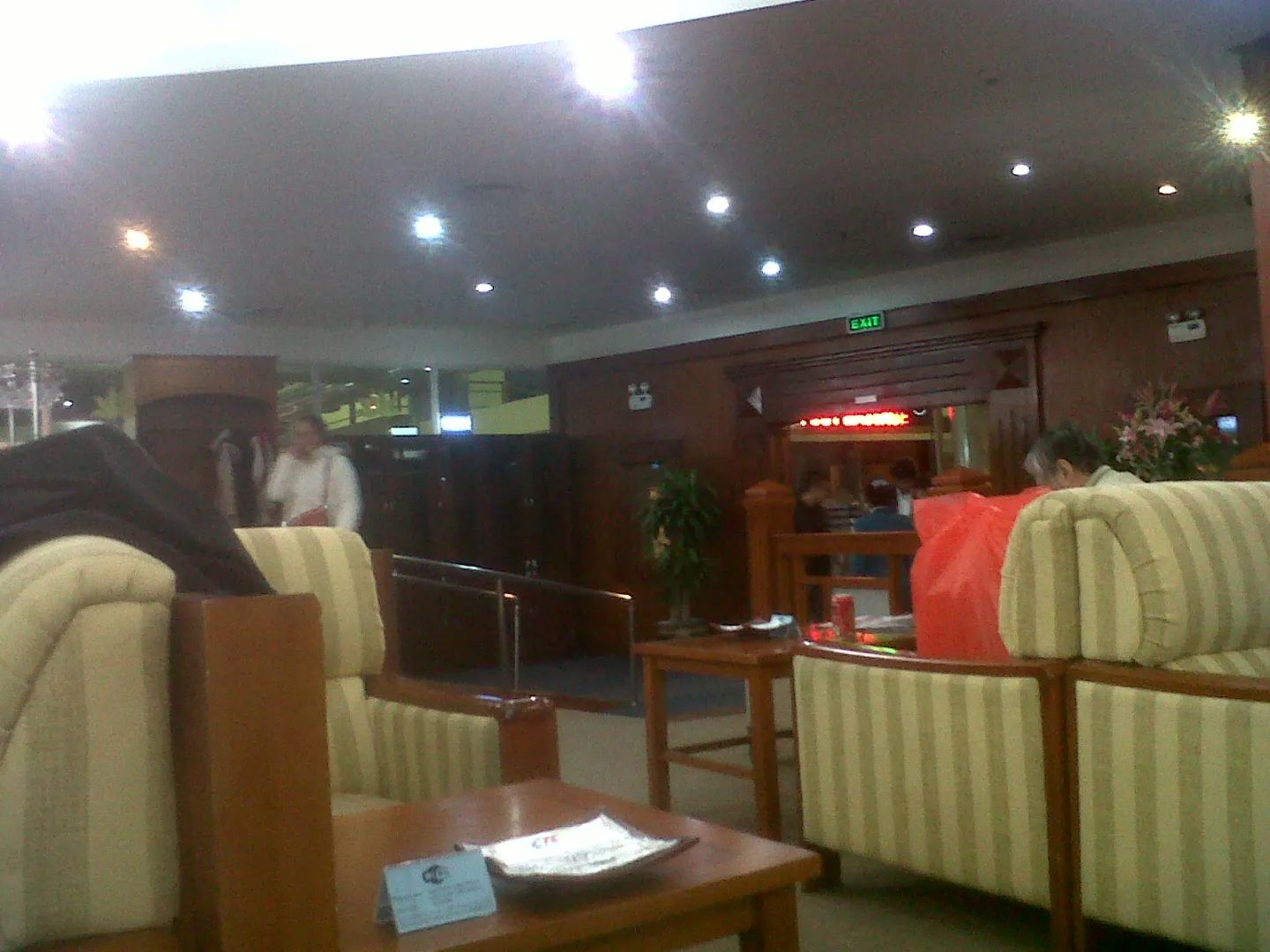
The City of Hanoi,aka the city between the rivers, is the capital of Vietnam. A conglomeration of small artisan villages, Hanoi is served by Noi Bai International Airport, which has two terminals: one for international flights and the other for domestic flights. Terminal 2 (T2) is located approximately 15–20 minutes from the city center and has been operational since 2015. Hanoi can be accessed via the Hanoi–Hoa Binh Expressway, the Hanoi–Lang Son Expressway, or the Hanoi–Hai Phong Expressway. National Route CT01 runs the length of the country. I came by plane from Da Nang after a long road warrior marvelous trip to it with local friends on the CT01 highway, I finally took my flight back to Paris at Hanoi, by midnite, the flight was smooth,and on time. This is a nice size airport spacious and easy to navigate. I was at the VN airlines business lounge so that made it easier me think (see pic).
I saw very little on my trip but will dwell on many for the memories and force me to be back, eventually, Hanoi is one city in Vietnam that have preserved its ancient urban center. The Old Quarter (called phố cổ in Vietnamese) forms the core of the merchant district of the thousand-year-old capital, “Thang Long.” Nestled south of the old water tower (Hàng Đậu) and north of Hoan Kiem Lake (Lake of the Restored Sword), the 36 Streets district takes its name from a book, “Vu Trung Tuy But,” by the poet Đīnh Hồ Phạm, published at the end of the 18C. The number thirty-six was preferred as it was considered auspicious. Each of these streets had a gate, an emblem of its independence. Some streets have maintained their original activities for centuries. These are Hàng Bạc Street (Silver Street), Hàng Thiếc Street (Tin Street), and Lãn Ông and Thuốc Bắc Streets (Northern Medicine Streets), where the sale of remedies prescribed by traditional medicine continues. Others slightly modified their activities compared to their centuries-old past: Hàng Mã Street (Votive Paper Street), Hàng Đồng Street (Bronze Street), Hàng Mành Street (Curtain Street), and Hàng Chiếu Street (Mat Street). The Ba Đình district is an urban district located south of Truc Bach lake, and west of the 36 Streets district.
Other things to see which I like to see more are the Jade Mountain Temple, located on an island in Hoàn Kiếm Lake, dates back to the 15C and is dedicated to Confucian and Taoist deities, as well as the national hero Trần Hưng Đạo. The Hàng Đậu Water Tower, built by the French in 1894, was the city’s first water tower. The Long Bien Bridge is a major structure built during the French occupation. It allowed the Trans-Indochinese Railway to cross the Red River and travel towards Haiphong and Yunnan in China, the State Guest House or Tonkin Palace built between 1918 and 1919, was the former residence of the Supreme Governor of Tonkin. The Đồng Xuân Market is the city’s former covered market. Still call the “French Quarter” or Khu phố Pháp, it is located on both sides of the shores of Hoan Kiem Lake, as well as to the south of it. It is distinguished from the above district of 36 streets and corporations, by streets and wide rectilinear avenues, punctuated with squares and squares: Cathedral square, Ly Thai To garden Hang Trong Square , Opera Square, etc. The Hanoi Opera House , which overlooks August Revolution Square and Tràng Tiền Avenue (formerly Rue Paul Bert and Rue de France), is a modest replica of the Palais Garnier in Paris. Completed in 1910, it seats 598. Hanoi is the seat of the Archdiocese of Hanoi, founded in 1960, successor to the Apostolic Vicariate of Tonkin, established in 1659. Saint Joseph’s Cathedral, built in 1886 on the site of the Bao Thien Pagoda, is a Neo-Gothic style, a modest replica of Notre-Dame Cathedral in Paris. Masses in French are held at 9h30. and 11h The Church of the Martyrs, Saint Anthony of Padua Church dating from 1934. The Vietnam National Museum of History located behind the Hanoi Opera House designed by the French architect Ernest Hébrard in 1932. Aka the Louis Finot Museum, after its first director, and housed in a building with eclectic Indochinese architecture, this museum presents a collection ranging from prehistory to the imperial dynasties, including Cham sculpture. Among the notable pieces are a very old wooden Buddha statue dating from the 4C/6C and an Avalokitesvara (Kuan Yin) with many eyes and arms, dating from 1656, made of crimson and gilded wood. The rear of the museum features a square with a beautiful bonsai collection.
A bit of history I like (condense as much as possible) tell us that between the 2C BC and the 8C , Hanoi was integrated into the Chinese empire under the name of the Jiaozhi Governorate. The settlement remained under Chinese control until 939. In 544 , Ly Nam De declared himself “Emperor of Nam Viet.” It was during his reign that the site of Hanoi was first mentioned in historical records. At the beginning of the 9C, the city found its definitive location. It is described as winding like a dragon between the Red River, the Tô Lịch River, and the citadel. Between the 9C and 10C, Hanoi took the name “Đại La,” meaning “the great outer enclosure,” which flourished under the reign of Gao Pian, known for introducing geomancy to Vietnam. The true thousand-year history of Hanoi began in 1010, under the impetus of King Ly Thai To. In 1054, the kingdom had taken the name “Đại Việt,” meaning “Great Viet.” To consolidate the kingdom’s independence, the emperor had a monument dedicated to Confucius built in 1070. Initially called the “Sanctuary of the Prince Propagator of Letters,” it is now known as the Temple of Literature. The Tran dynasty (1225-1400) proved strong and allowed Hanoi to expand and flourish. A martial arts school was opened in 1253 in Giảng Võ, and the Temple of Literature became a center for the study of Confucian philosophy. In 1397, Ho Quy Ly changed the name of the capital to “Đông Đô” (“Eastern Capital”) and built another in Thanh Hoa province (150 km south of Hanoi) called “Tây Đô” (“Western Capital”). In 1400, Ho Quy Ly definitively seized power and reigned as emperor for seven years before being dethroned and exiled to China with his son by the Ming dynasty. Under the rule of the Ho dynasty, the Dai Viet kingdom and Hanoi once again became vassals of their Chinese neighbor. In 1418, after six years of fighting, Lam Son’s troops succeeded in liberating Dai Viet. Loi proclaimed himself king in 1428 and established the Le dynasty (1428-1788). He re-established himself in Hanoi, which took the name “Dong Kinh,” “the Eastern Kinh capital,” in 1430. The 15C was Hanoi’s golden age. Dong Kinh became the capital of an expanded kingdom, ruled by a powerful cohort of scholars (the Confucian monarchy) and, above all, by the influence of the Le dynasty. It was during this period that the first map of the city was drawn. The city, which had lost its splendor, fell under the control of the Mac dynasty (1527-1592), which usurped the throne of the Le dynasty, and was then placed under the tutelage of the Trinh lords, who restored the legitimate dynasty. Like the Jade Mountain Temple located on an islet in Hoan Kiem Lake, a large wall was built by Lord Trinh Doanh, encompassing the entire city and flanked by eight gates, increased to sixteen in 1831. Freed from their tutelage, Emperor Le Chieu Thong destroyed the Trinh lords’ palace in 1786. After this date and until the beginning of the 19C, Hanoi experienced a slow decline. After his elder brother decided to proclaim himself sovereign of southern Vietnam, he left the conquest of the rest of the country to his other brother, Nguyễn Huệ. From province to province, the latter reached and succeeded in seizing Thang Long, taken from the Chinese Qing dynasty, during the victorious battle of Ngọc Hồi-Đống Đa. Becoming Emperor Quang Trung in December 1788, he established himself in Phú Xuân, the former name of Huế. Following this, Thang Long was renamed “Bắc Thành,” meaning “The Northern City.” Taking advantage of King Quang Trung’s death in 1792, the third of the Tây Sơn brothers, Nguyễn Phúc Ánh, led his forces from the south to occupy Huế in 1801 and Thang Long in 1802, before proclaiming himself emperor under the name Gia Long. During the Nguyễn dynasty, the city of Hanoi was eclipsed by Huế, the new imperial capital. Emperor Gia Long replaced the imperial city of Hanoi with a citadel featuring numerous gates, moats, and bastions. The plans were drawn up by French officers in the emperor’s service, drawing inspiration from Vauban’s citadel designs.
French explorer Francis Garnier captured the citadel of Hanoi in 1873, defended by General Nguyen Tri Phuong. But Garnier died in a skirmish instigated by the Black Flags on December 21, 1873, at Paper Bridge (Cầu Giấy). This group of Chinese irregular soldiers, who were active in Indochina, primarily targeted the French. The latter were defeated by the French during the capture of Sontay in December 1883. In 1875, the Empire of Annam granted land where the first French concession was established, with housing, a consulate, and military buildings. In March 1882, the Freycinet cabinet sent Commander Henri Rivière to Hanoi with the mission of enforcing the 1875 treaty. The Hanoi citadel fell a second time in less than ten years to the French, despite the heroism of Hoang Dieu. By a royal decree of October 3, 1888, Hanoi was ceded in full ownership to France, By becoming the capital of French Indochina ( Vietnam, Laos, and Cambodia, as well as a portion of Chinese territory located in what is now Guangdong province.) from 1902 to 1953, and thanks to the impetus of two governors-general, Paul Bert and Paul Doumer, Hanoi acquired a network of roads, railways, a tramway network, a sewer system, and an electricity network, a first in East Asia. Hanoi played a pioneering role in challenging the colonial regime from the very first years of colonization with Hoàng Hoa Thám, nicknamed “the Tiger of Yên Thế.” Then, in November 1927, a group of young North Vietnamese from the radical intelligentsia, led by Nguyễn Thái Học, founded the Việt Nam Quốc Dân Đảng (VNQDD), or Vietnamese Nationalist Party. But it was especially from the 1930s onward, following the creation of the Vietnamese Communist Party, that popular uprisings became increasingly frequent. After March 9, 1945, Hanoi was seized by Japanese troops in a coup, ushering in a brief period of Japanese occupation in Indochina. The French community in Hanoi had no choice but to accept the election of a pro-Japanese Vietnamese mayor, Trần Văn Lai. On August 14, 1945, Emperor Hirohito announced the Japanese surrender, leading to the fall of pro-Japanese governments throughout the empire. Following the Japanese capitulation, September 2, 1945, marked a historic date in Hanoi’s history. In Ba Dinh Square, President Hô Chi Minh proclaimed the declaration of independence, marking the birth of the Democratic Republic of Vietnam or North Vietnam. In 1946, during its first session, the National Assembly made Hanoi the capital of the country. The Battle of Hanoi marked the beginning of the Indochina War, fought from December 19, 1946 to February 18, 1947 following the bombing of Haiphong by the French in November. After eight years of long struggle during the Indochina War and the French defeat at the Battle of Dien Bien Phu against the Viet Minh troops, Hanoi was liberated from the French occupation on October 10, 1954. During the Vietnam War, the Americans bombed the capital for the first time in February 1965, following the Gulf of Tonkin incident of August 1964. Finally, on April 30, 1975, Ho Chi Minh’s military campaign ended successfully, fully liberating South Vietnam before called Republic of Vietnam and reunifying the country. In April 1976, the National Assembly decided to reaffirm Hanoi as the capital of the Socialist Republic of Vietnam
The official Hanoi International Airport: https://acv.vn/noibaiairport/en/
The official Vietnam Airlines :https://www.vietnamairlines.com/gb/en/
The official Vietnam tourist office on Hanoi activities : https://vietnamtourism.gov.vn/en/tags/Hanoi
The unofficial Vietnam travel guide on Hanoi : https://vietnam.travel/places-to-go/northern-vietnam/ha-noi
The official City of Hanoi : https://hanoi.gov.vn
There you go folks, another dandy spot in my world map. This was an adventure glad to have done it and always looking forward to be back, eventually, This one spot to visit Hanoi in Vietnam. Again, hope you enjoy this post on this is Hanoi in Vietnam !!! as I
And remember, happy travels , good health, and many cheers to all !!!

 Paris1972-Versailles2003