
In my road warrior ways of my belle France, I have come to meet many small towns that really makes France, the best, In one of my favorite regions, let me bring out more visible the city of Saintes. Therefore, this is my take on this is Saintes !!! Hope you enjoy it as I.
The city of Saintes is located in the Charente-Maritime department 17 of the Nouvelle-Aquitaine region of my belle France. Watered by the Charente river ,where the city originally developed on the left bank of the river, it became the capital of the province of Saintonge under the Ancien Régime (monarchy) before being designated prefecture of the department of Charente-Inférieure during the territorial reorganization of 1790. Finally supplanted by La Rochelle in 1810, it is relegated to the rank of sub-prefecture of the department, but retains by compensation its role of departmental judicial capital. Saintes has also become, thanks to an important Gallo-Roman, medieval and classical heritage set, a frequented tourist town, affiliated to the national network of towns and counties of art and history since 1990.
Saintes belonging to the south of France, we speak more precisely of “atlantic midday”, in the heart of the Atlantic arc, it can be attached to two large geographical areas, the French Great West and the French Great Southwest. The city stretches on either side of a loop of the Charente river , 75 km from La Rochelle,117 km from Bordeaux, 469 km from Versailles, and 382 km from my current home. The A10 highway crosses the town in its western part, along a north-south axis. Accessible via the 35 interchange. The A837 highway is a junction of the A10 linking Saintes to Rochefort, the third city of the department.The Saintes train station is located at the point of convergence of five railway lines linking the agglomeration to the cities of Nantes (via La Rochelle), Bordeaux, Angoulême, Niort and Royan. It mainly accommodates trains from the TER Nouvelle-Aquitaine network and Intercity trains.
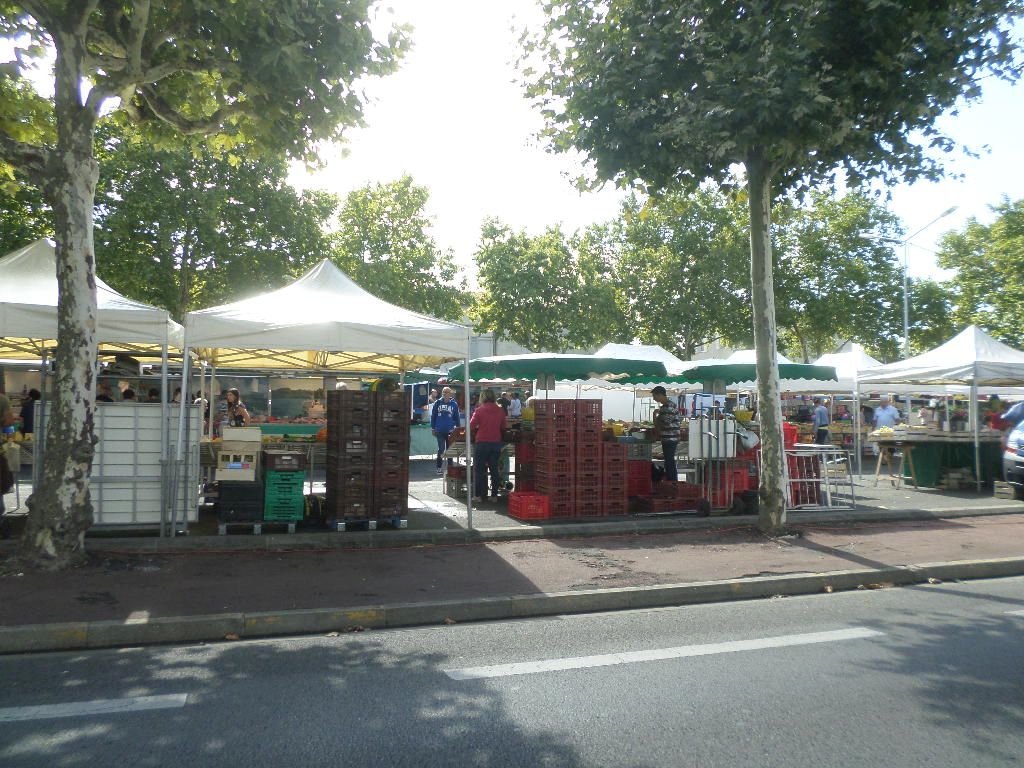
The picturesque Saint-Eutrope district has developed around a rocky outcrop bounded by two valleys perpendicular to the river. Dominated since the Middle Ages by the silhouette of the Saint-Eutrope Basilica, the district also preserves the remains of a Cluniac priory and some old houses on the hillside. Alleys lead to the Arènes valley extending below. The latter houses the remains of the Roman amphitheater, a promenade and a park called Parc des Arènes, We were by there to see a wonderful Fair or flea market the Saintes Fair, The times may vary depending on the weather and the season. Located at Avenue Gambetta and Place Bassompierre on the first Monday of the month,We love it !!!
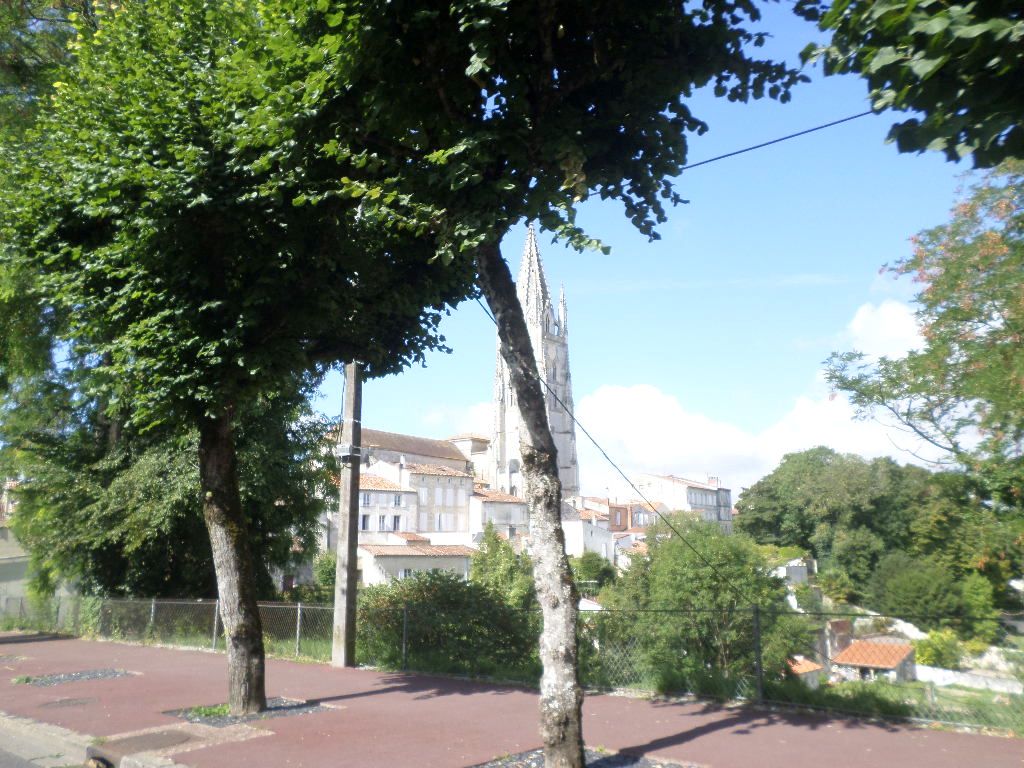
Some of the other things to see here and we should be back for more are the Basilica Saint Eutrope,(see post) christianized in the course of the 3C, Reaching episcopal dignity in 573, Palladius promotes the cult of Eutrope, evangelizer of the city of Santons. He had a first basilica erected in his honor in the valley of the Arenes. Built in 1081, it was then a stopover for pilgrims on their way to Santiago de Compostela in Spain. Its bell tower topped by a flaming spire dates from the 15C and is due to the donations of King Louis XI. Its crypt or lower church is one of the largest Romanesque crypts in Europe. Since 1999, the basilica has been classified as a World Heritage Site under the Routes of Santiago de Compostela in France.
The most visited museum ,the Presidial Museum, which features a collection of paintings spanning a period from the 16C to the 18C. Among the major works to be exhibited there, an Allegory of the Earth by Jan Brueghel de Velours or an Allegory of Peace of Amiens by Pierre Lacour. The museum also houses Saintonge ceramics, a tribute to the master Bernard Palissy who discovered the secret of enamels and other “rustic figulines” in his Saintais workshop around 1540. Another museum devoted to the fine arts,musée de l’échevinage or the aldermen museum presents works of art. 19-20C romantic or regionalist artists. In addition to the works of Gustave Courbet and Joseph Bail, there is an important collection of porcelain from Sèvres. The Gallia Theater is one of the main public buildings dating from the period of the Second Empire (Napoleon III). Its neo-classical facade features a loggia with antique entablature and allegorical sculptures, while the rest of the building was completely modernized in 2002, The Italian-style theater, which also houses an art and theater cinema.hosting around 85 performances per year.
A testimony to Roman times, the amphitheater was completed at the start of the reign of Emperor Claudius (41-54 AD). Measuring 126 by 102 meters, it is recognizable by its particular structure, the cavea being supported on two slopes of the “Vallon des Arènes” and on an embankment. Wild animals and gladiators entered the arena through two vomitoria established to the west and east. Today it is one of the best-preserved amphitheatres in what was once the province of Gaul in Aquitaine.The thermal baths of Saint-Saloine it seems to date from the second half of the first century. Only part of the walls of the caldarium remain today, inscribed in the ruins of an early Christian church which gave its name to the monument. The Arch of Germanicus is the oldest monuments in the city were erected during the High Roman Empire, a prosperous period which saw the city’s consecration as the political capital of the Roman province of Aquitaine. The arch of Germanicus was built around the year 18 or 19, under the principate of Tiberius, by a notable santon named Caius Iulius Rufus. This votive arch owes its name to the dedication inscribed on the frieze of the entablature, which honors the imperial family: the emperor Tiberius, his son Drusus and his adopted son General Germanicus. Originally located at the entrance of the ancient bridge.
The Saint-Pallais Church campaigns spanning the 12C to the 15C. The historic center of the city concentrates several medieval religious buildings. It is dominated by the massive silhouette of Saint-Pierre Cathedral, place du Synode Square, whose bell tower topped with a copper dome rises to 58 meters. The main park in the city is the Fernand Chapsal public garden. Established on the right bank of the Charente river, completed in 1925. Since then, the tree-lined paths of the park have been the link between Place Bassompierre, and the prairie de la Palu. A three-arched pedestrian bridge was built over the river in 1927 to facilitate access to the park from the city center. Decorated with statues of antique inspiration, the public garden also hosts a musical kiosk Inaugurated in 1928.
A bit of history as it is long but in 1360, with the Treaty of Brétigny, the city, like all of the northern Saintonge, returned to the hands of the English.The city was definitively attached to France in 1404.
The city of Saintes on its heritage : https://www.ville-saintes.fr/decouvrir-sortir/les-incontournables/edifices-religieux/
The Saintes tourist office on its heritage: https://en.saintes-tourisme.fr/thematique/must-see-sites/
There you go folks, a dandy town of my belle France that needs more time. It is on my list to come back! Saintes has a lot of great architecture and history to spent at least two days. Again, hope you enjoy the post on this is Saintes !!! as I
And remember, happy travels, good health, and many cheers to all !!!

 Paris1972-Versailles2003
Many cheers, I love Paris and your stories.
LikeLiked by 1 person
Thanks so much glad you like it. Thanks for stopping by Cheers
LikeLiked by 1 person