
The town of Chauvigny is full of beautiful architecture, wonderful history, and just plain beautiful facades to enjoy it for long. Another jewel of my belle France, We were on our road warrior trails and passed by briefly by the church, Therefore, let me tell you on this is Chauvigny !!! Hope you enjoy the post as I,
The town of Chauvigny is located in the Vienne department no 86 of the Nouvelle-Aquitaine region of my belle France. The town is crossed by the D951, which connects Déols to Auxerre, Poitiers, and Châteauroux, and the D749, which runs from Château-la-Vallière to Lussac-les-Châteaux via Chinon and Châtellerault. It is 24 km from Poitiers, 91 km from Châteauroux, 196 km from Nantes, 301 km from Versailles, and 332 km from my current town. I passed by it in my road warrior trails around Poitiers but definitively need to be back, eventually,
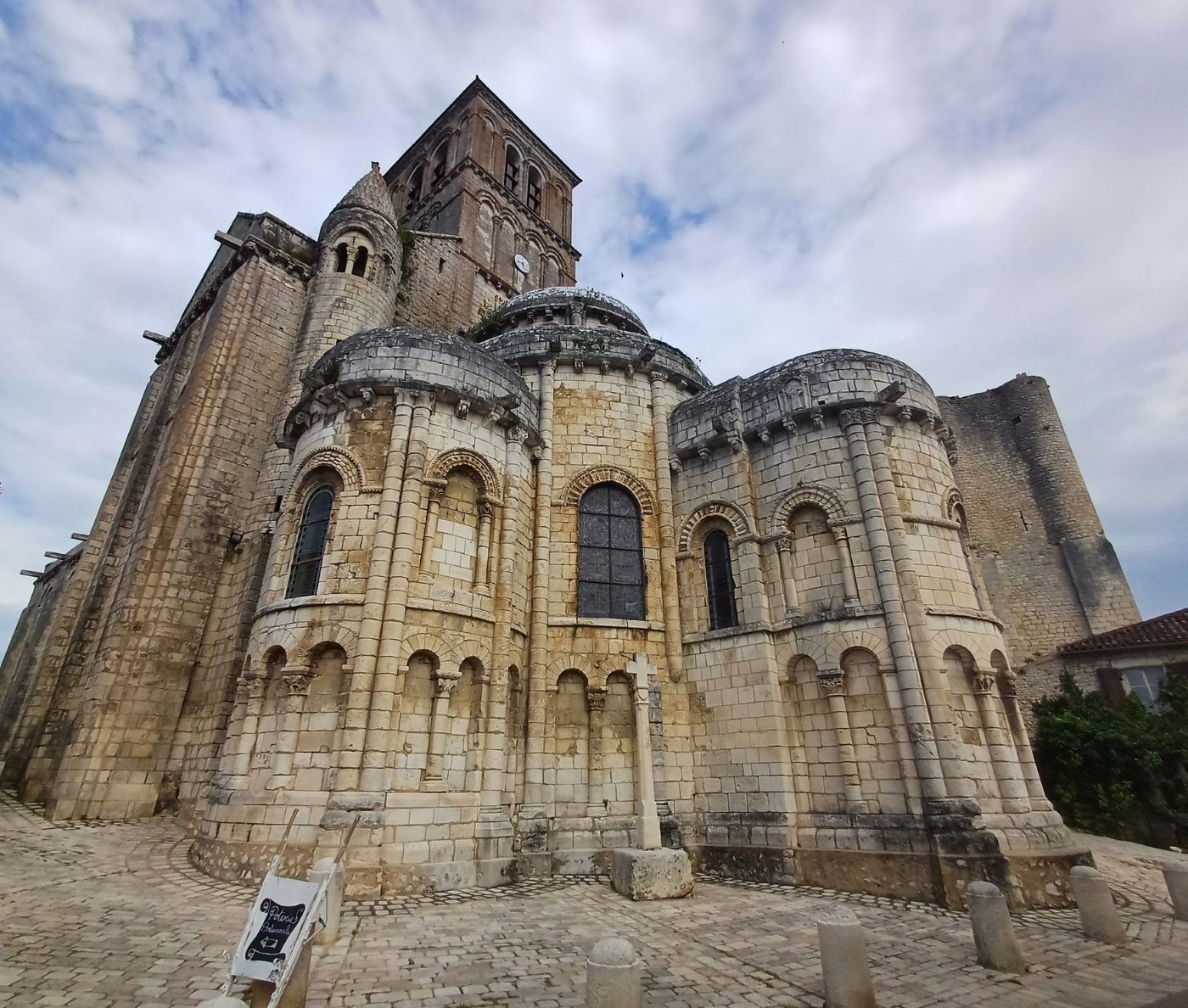
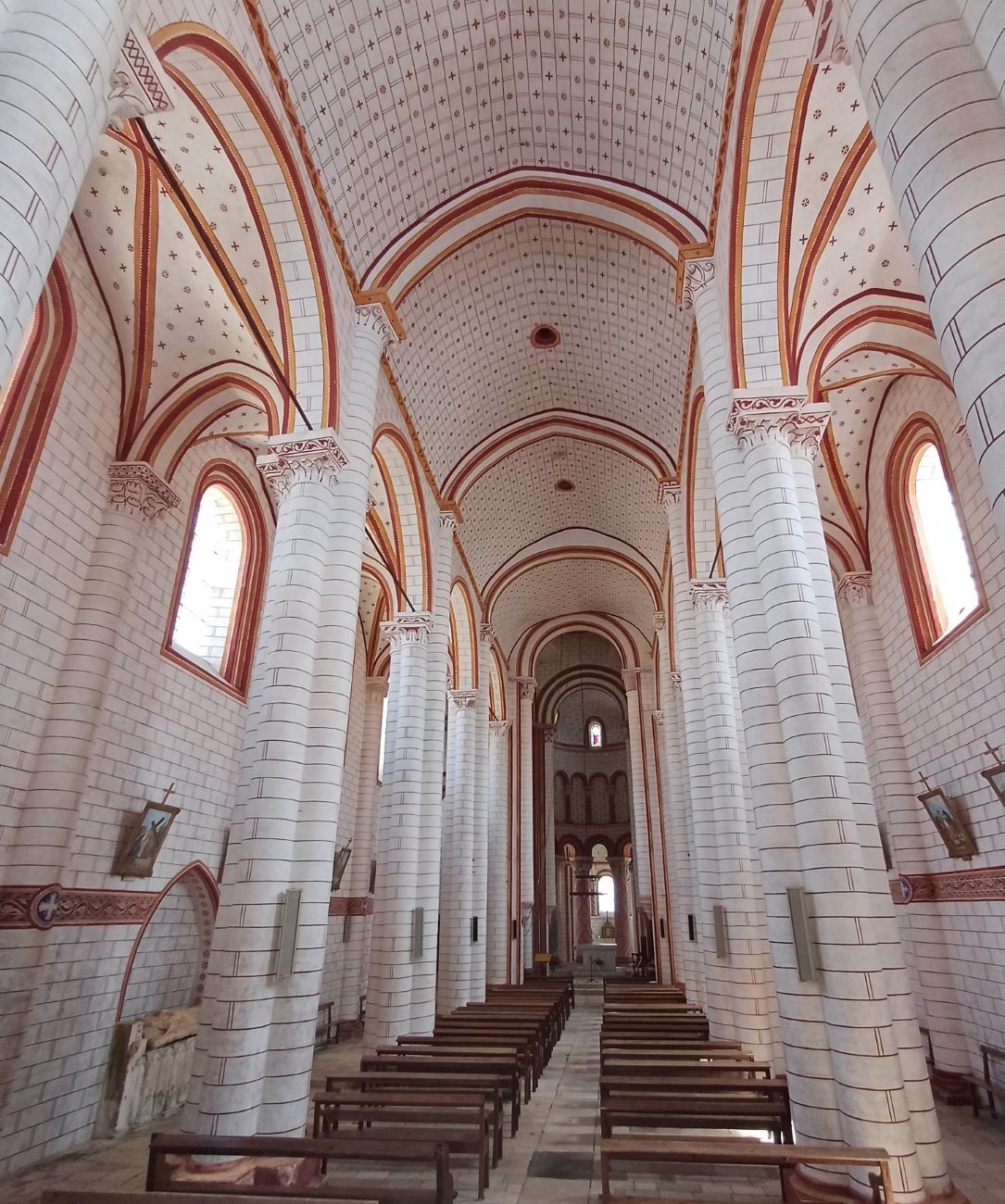
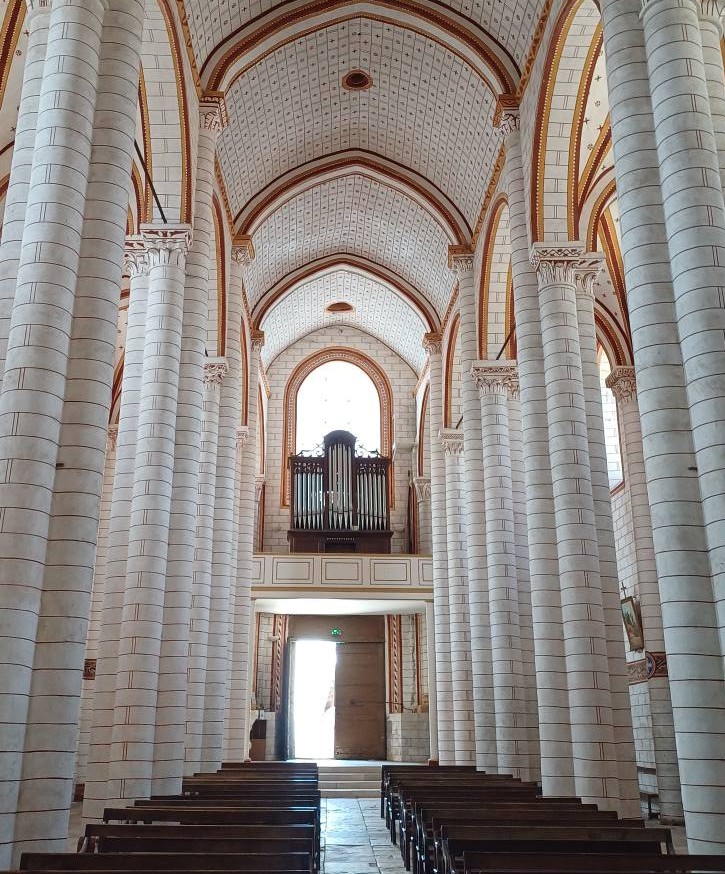
In the heart of the historic center, the Collegiate Church Saint-Pierre, features sculptures characteristic of the Poitevin school, as well as a painted interior. The church is from the 11-12C and is a hall church with three naves. Begun with the apse, it was completed a hundred years later with the nave. On the outside, there is a square bell tower with two bays and a superb, richly sculpted chevet. The interior of the church was repainted in the 19C. The capitals of the choir with ambulatory and radiating chapels have a rich sculpted decoration (monsters, allegories of Babylon, etc.) Its origins are poorly understood. The existence of a chapter of 10 canons is attested there in the first quarter of the 11C. Therefore, a first church existed at that time, some of whose carved stones were reused in the apse of the current church.
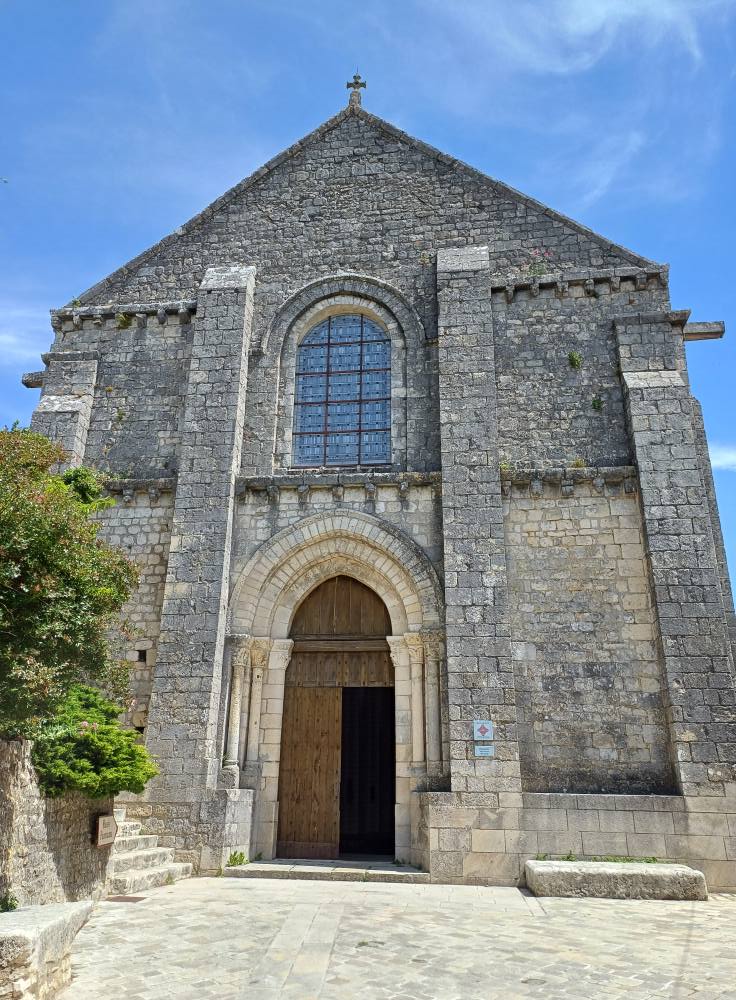
The Collegiate Church Saint-Pierre was built beginning with the choir. It was the seat of an archpriest under the Ancien Régime (monarchy). Abandoned during the French revolution, it was returned to worship in 1804. The apse is visible from Rue Saint-Pierre. It is striking for its harmonious tiered volumes and the richness of its carved decoration. The curved-topped walls crowning the apse and the radiating chapels are not domes, but simple soffit walls that conceal the tiled roof. The 13C bell tower is located above the transept crossing. It is square in shape and has three levels.
The interior is striking for the elevation of the vaults, which lends light and airiness. The central nave with its high side aisles dates from the second half of the 12C. The nave has five bays. The projecting transept dates from the first half of the 12C. Its barrel vault, with a semicircular arch, rests on columns with capitals. The choir, dating from the first half of the 12C, does not have a straight bay. It consists of an apse surrounded by an ambulatory and three apsidioles or radiating chapels, forming a trefoil. This type of plan is rare in Poitou. The Collegiate Church Saint-Pierre owes its reputation to the capitals of the choir. The columns separating the sanctuary from the ambulatory are richly adorned with sculptures. The capital of the Adoration of the Magi provides one of the very rare examples of an artist’s signature that has survived to this day.
Other things to see with more time are the Church of Saint-Pierre-les-Églises, located 2 km from the town, very close to the Vienne river. It is a church of modest proportions. It preserves frescoes dating back to before the year 1000. The Church of Notre-Dame was built at the beginning of the 11C by the Bishop of Poitiers, Isembert I, Lord of Chauvigny. The baronial castle or bishops’ castle was built in the 11C by the bishops of Poitiers, a quadrangular keep from the middle of the 11C, then Lords of Chauvigny. The Château de Harcourt, built between the 13C and 15C, is the best preserved of the Chauvigny castles. The dungeon of Gouzon is a vestige of the château de Gouzon. A first building, neat, with rectangular buttresses from the 12C was built and extended in the 13C towards the west. Going up the rue Saint-Pierre, on the left, it is possible to see remains of the château de Montléon , still occupied in 1372, the castle seems to have been abandoned from the middle of the 15C. The tower of Flins dates from the 1215C, it was part of a small castle which completed the defense of the town of Chauvigny. The gate of Gouzon dates from the 12C. It is one of the twelve gates of the town. The gate of the Pillars is one of the fortified works which multiplied from the beginning of the 11C on the spur. The gate of the Rampes is protected by gun ports from the 15-16C. They were shooting along a ditch that has now been filled in. The house known as “des Templiers” by the route de Châtellerault is lit on the first floor by a series of twin openings topped with polylobed arches characteristic of the 14C. The house, wrongly called King John’s house, is a hostelry from the early 17C. It is located at the end of Rue du Moulin-Saint-Just.
A bit of history I like tell us that a city developed from the 11C, it hosted five fortified castles: Baronial or Bishops’ Castle, Harcourt Castle, Gouzon dungeon, Montléon Castle and Flin Tower, as well as the Collegiate Church Saint-Pierre built during the 12C. The city is surrounded by ramparts whose accesses are protected by fortified gates. Shortly after the year 1000, the bishops of Poitiers of the Isembert family, succeeding a family bearing the name of Chauvigny, became lords of Chauvigny, then barons from the 14C. In the 10-11C, they built a castle there. André I is one of the descendants of the Chauvigny mentioned in texts from the 11-12C. Prince of Déols and Lord of Châteauroux by his marriage around 1189 to the ward and goddaughter of King Richard of England, Denyse de Châteauroux, he distinguished himself during the Third Crusade in 1190. His courage earned him the nickname “Preux des Preux” or brave of the brave. During the Hundred Years’ War, Chauvigny was ravaged by the troops of the Earl of Derby in 1346. Ten years later, the troops of the Black Prince, followed by those of John the Good, passed through Chauvigny before going to fight at Nouaillé-Maupertuis where John the Good was taken prisoner. In 1372, Du Guesclin and John of Berry drove out the English but, in 1412, Chauvigny fell into the hands of the English troops of the Duke of Clarence. In 1562, the Huguenots occupied Chauvigny, then were driven out by royal troops. They returned in 1569 with Admiral de Coligny at their head before the Battle of Moncontour. The castle, the town and the church of Saint-Pierre were pillaged and burned. During the French revolution, the ruins became a “public quarry”, the inhabitants worsened the damage by tearing out the interesting stones. In 1906, Fernand Deshoulières, a former student of the École nationale de Sèvres and inspector of technical education, created the hard porcelain industry there and then, in the 1920s, that of artistic stoneware; In his 7,000 m2 factory, employing 140 workers, he designed artistic pottery under the name of “Poitou flamed stoneware”, a ceramic specialty obtained by iridescence of the enamel during wood firing in a reducing atmosphere.
The town of Chauvigny on the coll church St Pierre : https://www.chauvigny.fr/index.php/tourisme-patrimoine/les-eglises/104-collegiale-saint-pierre
The Chauvigny heritage site on its monuments: https://www.chauvigny-patrimoine.fr/Decouvrir/decouvrir.php
The Vienne dept 86 tourist office on the coll church : https://www.tourisme-vienne.com/en/offres/toutes-offres-patrimoine-culture/collegiale-saint-pierre/
There you go folks, another wonder in my belle France indeed. Many memories of my road warrior trails and countless magnificent towns to tell stories about, This is one of them that would need to be back eventually, Chauvigny is packed ,worth the detour, Again, hope you enjoy the post on this is Chauvigny !!! as I.
And remember, happy travels, good health, and many cheers to all !!!

 Paris1972-Versailles2003