
As usual lately, digging into my cd rom vault of memories found me new pictures that should be in my blog for you and me. The town of Jouars-Pontchartrain like all in the Yvelines is worth the detour to see in detail ,I was just passing by as several times ! Therefore, this is my take on this is Jouars-Pontchartrain !!! Hope you enjoy this new find as I.
The town of Jouars-Pontchartrain is located in the Yvelines department no, 78, in the Île-de-France region of my belle France. It is 20 km from Versailles, 20 km from Rambouillet, 27 km from Saint Germain en Laye, and 448 km from my current town. The access is mainly provided by the N12 road. The town is also crossed by the D15 (Neauphle-le-Château – hamlet of Mousseaux); the D 23 (Trappes – Bazoches-sur-Guyonne); in the hamlet of Mousseaux by the D13 (Chevreuse – Montfort-l’Amaury); At the level of the Sainte-Apolline forest, the D134 (Neauphle-le-Château to the N12) serves as the municipal boundary between Jouars-Pontchartrain and Plaisir. The avenue du Château which connects the D15 to the D912 is numbered D25.
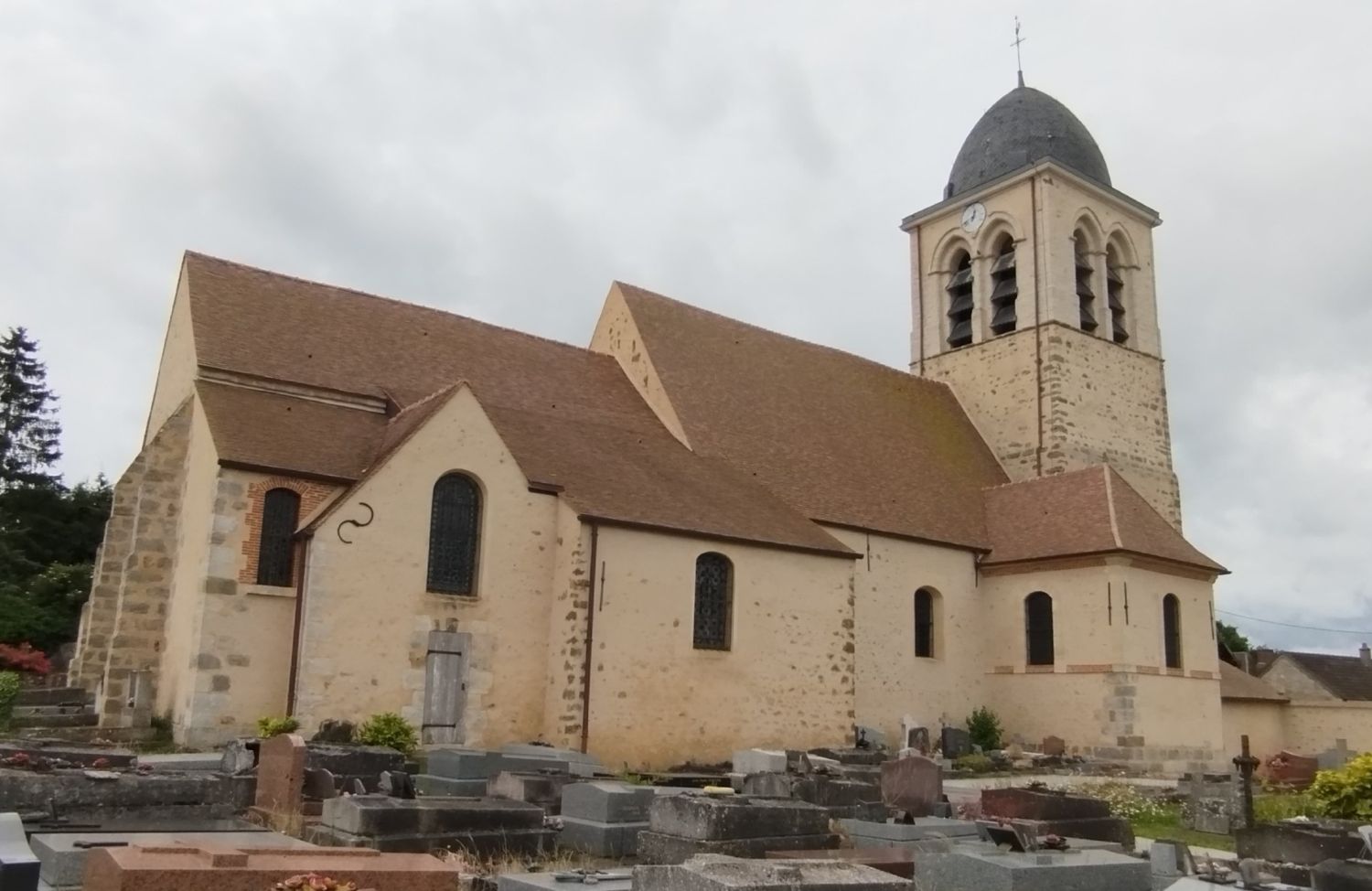
The Church Saint-Martin, located in the hamlet of Jouars, located south of the main town, at the intersection of the D15 (Pontchartrain to Maurepas) and 23 (Élancourt) departmental roads. The bell tower has been covered with a dome since the 17C.
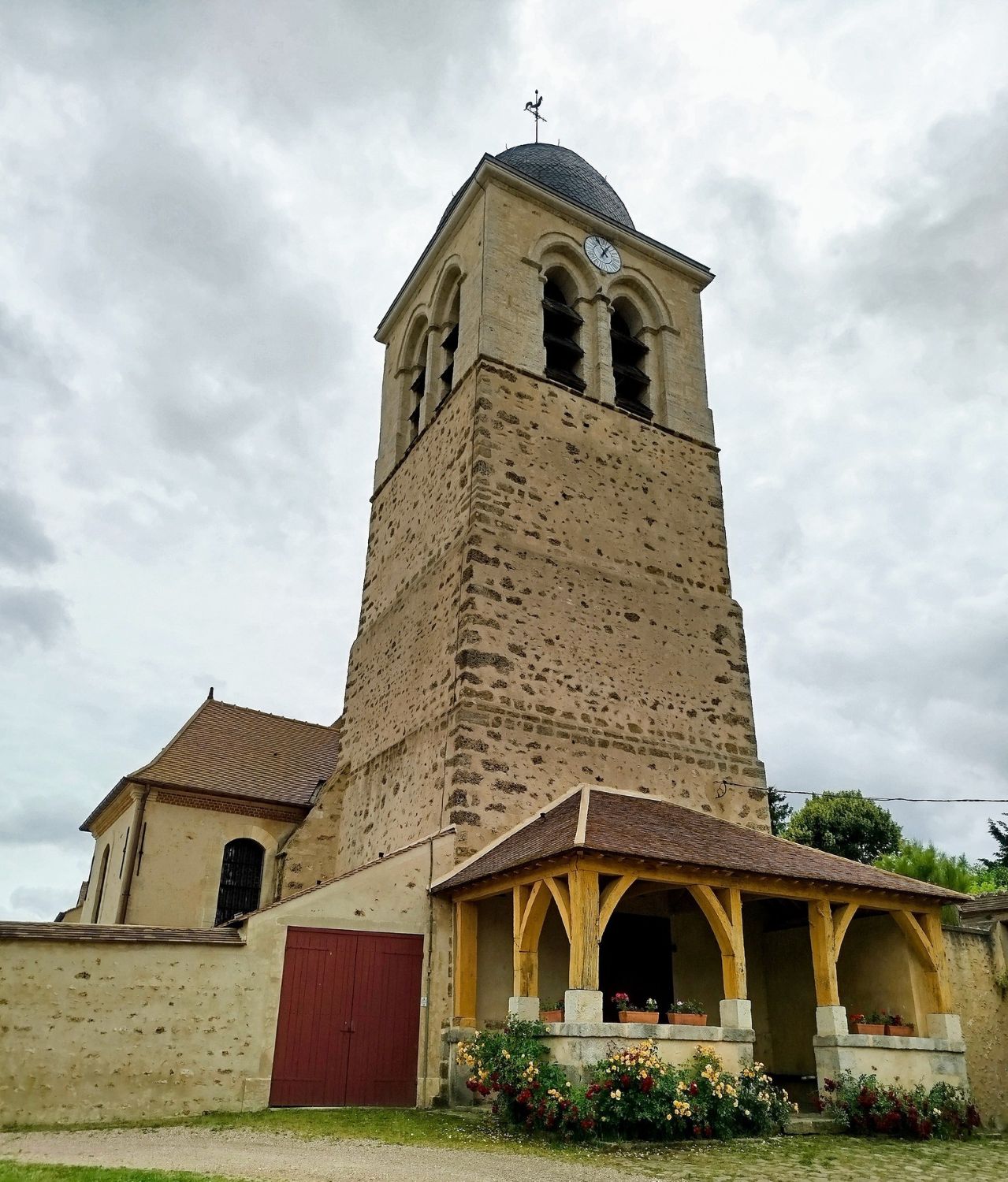
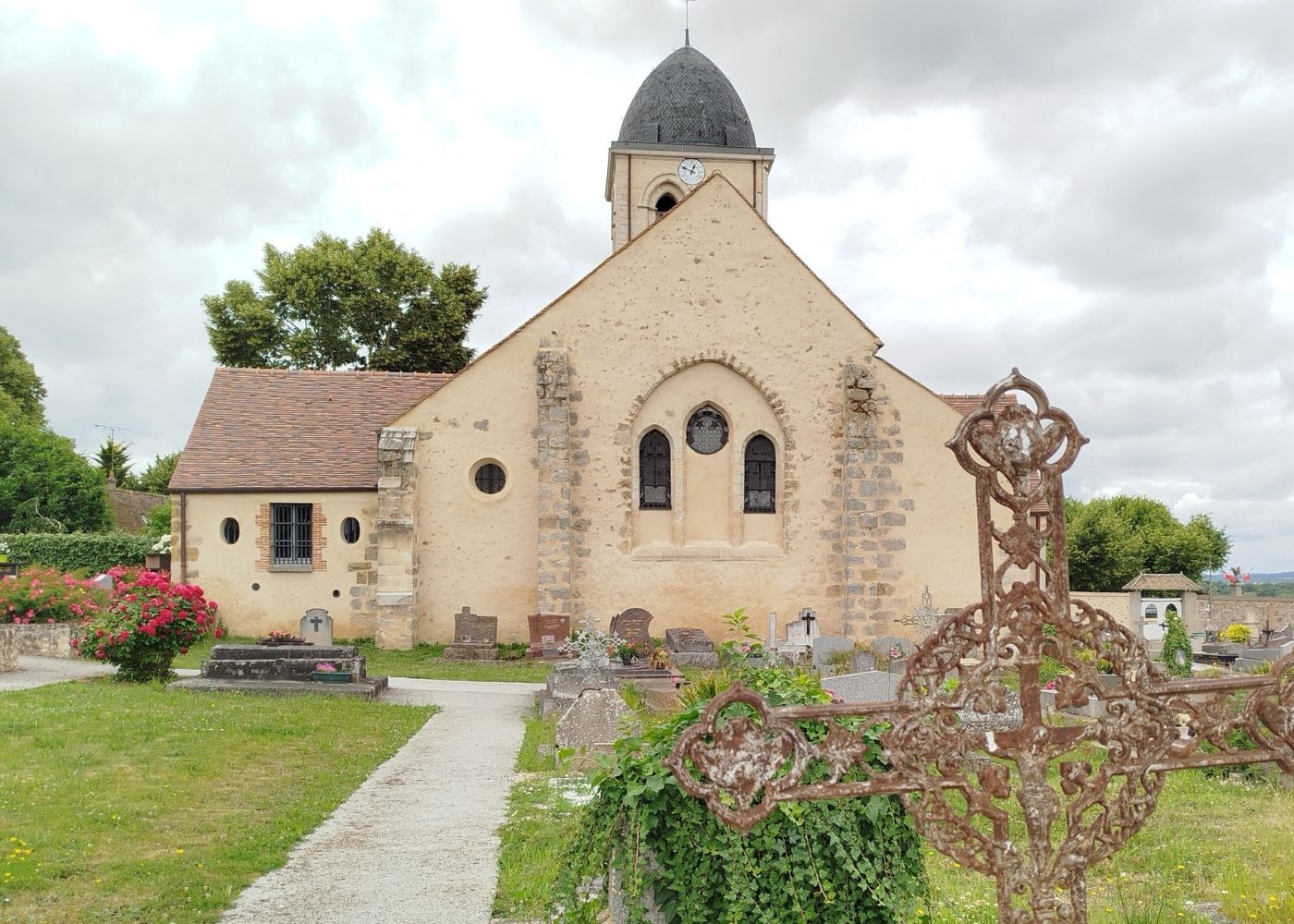
With its bulbous roof surmounting the bell tower, the Church Saint-Martin stands out. It is the most visible witness to its eventful history, marked by a succession of alterations and modifications. It dates back to the 12-13C, and only the choir and the lower part of the bell tower date from this period. The onion dome that crowns it dates from the 17C. It is also one of the few churches in the Yvelines dept78 that has retained its medieval layout, adjoining a cemetery. The entrance portal is sheltered by a canopy, which also distinguishes it. To the left of the choir is a small chapel, closed by a wooden grille with openwork, which reveals an altarpiece. Another chapel located at the end of the nave houses the baptismal font composed of two carved stone blocks.
The choir altarpiece is said to date from 1741 ,the altar crowns dates from the 19C. Before 1789, the Church Saint-Martin housed numerous works of art, paintings and statues, furniture, and woodwork. Some were brought back after the French revolution, which transformed the church into a temple of Reason in 1793. In addition to several paintings, including the altarpiece depicting Saint Martin, there are beautiful armorial woodwork, a pulpit and a very beautiful triptych.
Other things to see here , me think are : The Château de Pontchartrain was built in the 17C for the Phélypeaux family, but extensively remodeled in the 18-19C. The French revolution shook Jouars-Pontchartrain. The lord of the castle, the Duke of Cossé-Brissac, was massacred by a mob at Versailles. The ruined Duchess sold the château in 1801. Subsequently, the owners succeeded one another during the 19C such as Claude Carvillon Destillières, the Marquis d’Osmont, the Prussian Count Henckel von Donnersmarck (husband of the courtesan and spy La Païva), Auguste Dreyfus and his wife, the Marquise de Villahermosa. Upon her death in 1934, the château was sold to the Lagasse family. Also, the Le Gai Relais, an 18C building on Place du Maréchal-Foch.
A bit of history I like tell us that the name Pontchartrain comes from Pontem Carnotensem: the bridge on the road to Chartres. This place, a fief belonging to the lord of Pontchartrain and on which a manor house and a Cistercian barn, attached to the Vaux de Cernay Abbey, now stand, is the subject of archaeological excavations and development projects. The town developed in the Mauldre Valley, at the crossroads of several roads leading to other Gallo-Roman settlements: Le Vieil-Évreux, Dreux, Chartres, Orléans, Sens, Paris, and Beauvais via Les Mureaux. A communication hub located on the edge of the territory of the Carnutes (celtic tribe), near Gaul Belgium and possessing pre-urban characteristics, this vicus is one of the candidates to be the consecrated place of the assembly of the druids mentioned by Caesar. The development of the town of Pontchartrain is linked to the diversion in the 17C of the road from Paris to Dreux which previously passed through Neauphle-le-Château, which was decided by the Count of Maurepas, then owner of the castle and aimed to facilitate traffic by avoiding the dangerous climb to the hill of Neauphle. Subsequently, the town prospered according to the traffic on this important road of the kingdom.
The town of Jouars Pontchartrain on its history : https://jouars-pontchartrain.fr/ma-ville/cadre-de-vie/histoire-de-la-commune/
The community of towns of the Coeur d’Yvelines on Jouars Pontchartrain : https://www.coeur-yvelines.fr/patrimoine/nos-communes/chateau-de-pontchartrain/
There you go folks, a nice short and sassy visit to nice Jouars-Pontchartrain, for the memories of my road warrior trails. Looking forward to be back, eventually, worth the detour. Again, hope you enjoy the post on this is Jouars-Pontchartrain !!! as I.
And remember, happy travels, good health, and many cheers to all !!!

 Paris1972-Versailles2003