
I came into some pictures found in my cd rom vault on this quant village in my road warrior trails, and they should be in my blog for you and me. The village of Usseau is located in the department of the Vienne no 86 of the region of Nouvelle Aquitaine, and in my belle France. It is 40 km from Loudun, 44 km from Poitiers, 45 km from Chinon, 299 km from Versailles, from I came on the A10 to exit/sortie 26 then D9 to Usseau, and 331 km from my current home, This is another road warrior trail on a village of about 682 inhabitants,., Therefore, here is my take on this is Usseau !!! Hope you enjoy the post as I.
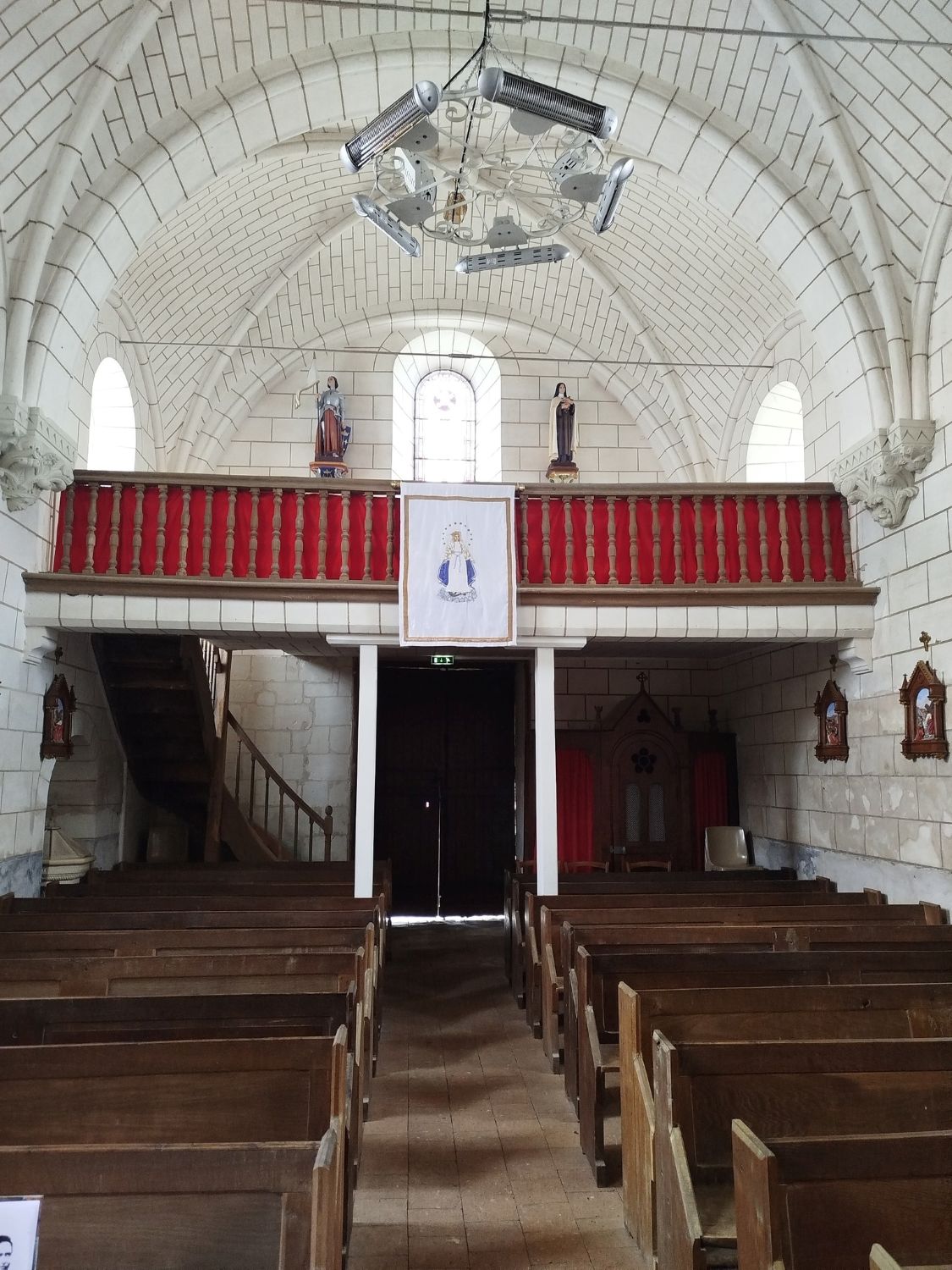
The Church Saint-Hilaire has a high altar is adorned, on the front, with a plant from which a child springs, a reference to Isaiah’s prophecy to the Trinity of Poitiers. Dated 1683, it was donated by Abbess Jeanne-Marie de Kersalion. The other, dated 1733, comes from the church of Remeneuil. The statuary reflects devotions widespread in the 19C early 20C. In the sanctuary, on either side of the altar: the Sacred Heart and Peter. Opposite: Anne with Mary and the Virgin in prayer. In the nave, the Virgin of Lourdes and Anthony of Padua. As well as Joseph and Radegonde. In the gallery: Thérèse of the Child Jesus and Joan of Arc. The Stations of the Cross, erected.

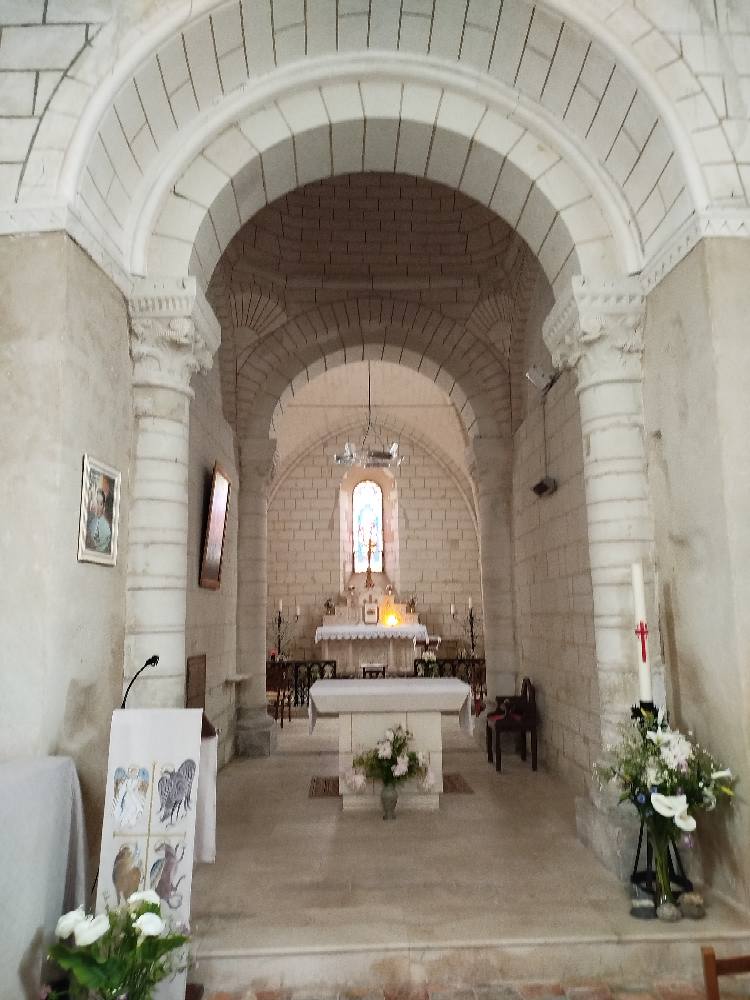
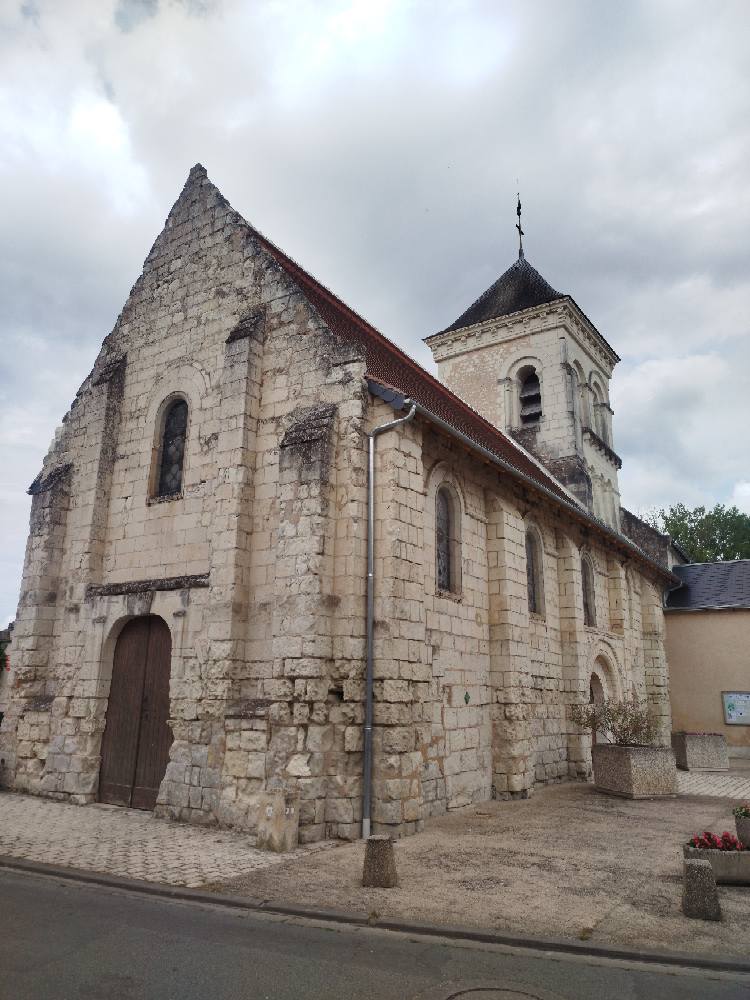
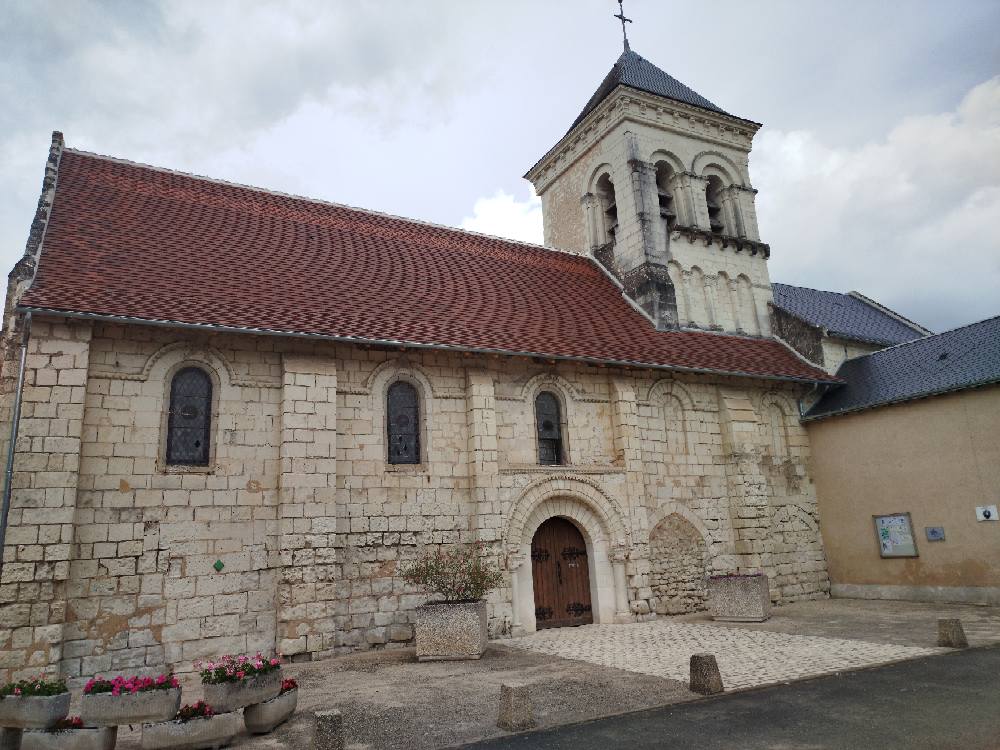
The Church Saint-Hilaire is a simple rectangular church with a flat chevet, its bell tower rising over the narrow bay that separates the nave from the sanctuary. The west facade is framed by two corner buttresses. The door , rebuilt, and the bay above it are also enclosed between two other buttresses. Access, however, is rather through the open portal on the south side. Two buttresses frame the semicircular doorway while the southern lateral elevation of the nave is punctuated by bays decorated with a stringcourse bearing saw teeth and diamond points. The difference lies in the absence of buttresses for the nave while a single buttress, massive and unsightly, supports the bell tower and shelters the staircase that serves it. The open bays in the two side walls make the single-aisle nave a well-lit space for the congregation of the faithful. Its brick vault, which has ribbed vaults with large ribs, dates from 1869.
Between the 2nd and 3rd bays, the bases that receive the ribs are sculpted with angels, each holding a phylactery bearing an inscription: to the north, “Teach all nations” (Matthew 28:19), Christ’s last instruction before his Ascension, to the “Hail, O Cross”, an expression found in a stanza added in the Carolingian period to the Vexilla regis. The nave ends, before the bay under the bell tower, The cult of the Holy Family, which expanded considerably during the 19C, was thus manifested, as in many churches, by a very assertive layout of the interior space. Father Pierre Coudrin, ordained in 1792, was hidden for a time during the French revolution in the outbuildings of the Château de la Motte. This holy priest founded the Congregation of the Sacred Hearts of Jesus and Mary with Henriette Aymer de La Chevalerie on December 25, 1800, at the Grand’maison, now rue Théophraste Renaudot, in Poitiers. The new parish, of which Usseau is a part, took the name of Saint-Damien en Châtelleraudais. This patron saint, Damien de Veuster, was a monk of this congregation.
Other things to see here with more time are the Château de la Motte, This is a castle dating from the 15C and 19C. It was built in 1452 by Guillaume de Bec, on the borders of Touraine and Poitou on a very old fortified site whose remains of a mound adjoining the castle are still very visible, the current high courtyard on which stood a first castle in the 12C. The castle is accessed by a path lined with cherry trees leading to a small park of lime trees several centuries old. The castle houses a beautiful educational garden of medieval inspiration which presents, from historical and ethnobotanical aspects, a large variety of food plants from the Middle Ages and some botanical curiosities. The Château de Remeneuil is one of the oldest noble fiefdoms in the Aquitaine region. The first lord of Remeneuil dates back to 1037. The Remeneuils belonged to the oldest families in Poitou and Touraine and were among the direct vassals of the powerful Châtellerault and Harcourt families. The castle dates from the 14–15C, but was subsequently remodeled throughout its history until the 19C. Abandoned since 1962, it was finally purchased in 2018. It is now private property, which can only be visited during European Heritage Days. The Church of Remeneuil, rebuilt in the 15C by the powerful Fougères family, patron saint of the parish. The Remeneuil priory-cure dates back to the year 1037. A parish created in 1789 and attached to the parish of Usseau in 1818 by decree, it has today become private property.
Briefly, a bit of history I like tell us that the name Usseau denotes an ancient origin since it is a Celtic toponym meaning “high”. From the 15C to the 18C, the town was called La Mothe d’Usseau, a probable reference to the nearby height on which the Château de la Motte was built. Usseau welcomed the advances of the French revolution. It thus planted its tree of liberty, symbol of the revolution. It became the rallying point for all the festivals and major revolutionary events, but was cut down during the royalist reaction.
The Village of Usseau on its heritage : https://www.usseau86.fr/categorie/decouvrir-usseau/
The local Châteaurault tourist office on the heritage of Usseau :https://www.tourisme-chatellerault.fr/?s=Usseau
The Poitiers Catholic heritage see Usseau : https://www.poitiers.catholique.fr/patrimoine/
There you go folks, another dandy off the beaten path village of my belle France, All in my glorious road warrior trails with a nice church and more to see in its castles, and worth a detour, me think. Again, hope you enjoy this post on this is Usseau !!! as I
And remember, happy travels, good health, and many cheers to all !!!

 Paris1972-Versailles2003