
I came into new pictures found in my cd rom vault on this wonderful abbey, and they should be in my blog for you and me. I have come by this area a lot over the years as family is close by and glad stop by here, The village of Les Rues des Vignes is in the department 59 of Nord in the region of Hauts de France of my belle France. Therefore, let me tell you about the abbaye de Vaucelles of Les Rues des Vignes !!! Hope you enjoy the post as I.
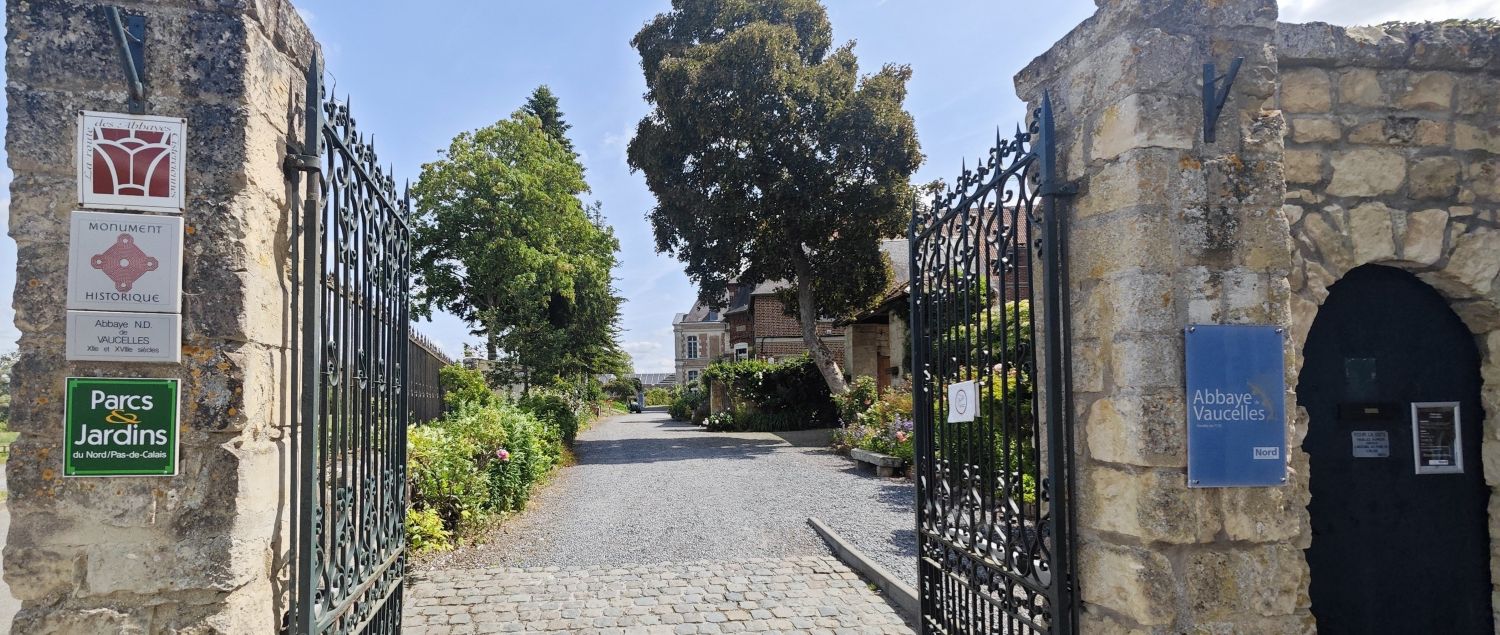
The village of Les Rues des Vignes is close to the D644 road which connects Cambrai to Saint-Quentin. It can be reached via the A26 autoroute or highway, exit/sortie 9, located just over 7 km to the south, It is 13 km from Cambrai, 50 km from Arras, 80 km from Lille ; 20 km from Caudry, 202 km from Versailles, and 670 km from my current home, I came from Caudry on the D16 dir Ligny en Cabrésis, then D15 dir Esnes continue to Vaucelles and read panels to abbey.
The hamlet of Vaucelles is home to a Cistercian abbey built in 1145. It was the thirteenth foundation of Saint Bernard. Much of this abbey was destroyed during the French revolution. The largest Cistercian chapter house in Europe remains intact. The abbey regularly hosts cultural events ; every year in March, Vaucelles hosts an international orchid exhibition. The park is home to several remarkable trees. The gardens are made up of different areas: the vegetable garden and its patches of old vegetables (butternut squash, patisson, patidou, pumpkin and squash), the orchard (apple trees, pear trees, cherry trees), the rose garden and its different varieties of old roses, climbing or shrub roses, aromatic plants, perennials, etc. The bookstore offers books on history, architecture, nature, birds, gardens, as well as various products such as sweet groceries (honey, jam, candy, etc.), personal care products (soaps, cologne), and souvenirs. Self-guided tour is done with the help of a visitor’s guide. This tool allows you to discover the history of the abbey from its foundation. Everyone can explore the site at their own pace and in complete freedom: the monks’ wing (12C) and its different rooms (the scriptorium and the cellar, the oratory, the chapter house, the sacred passage, the chapel), the park and the disappeared buildings, and the gardens.
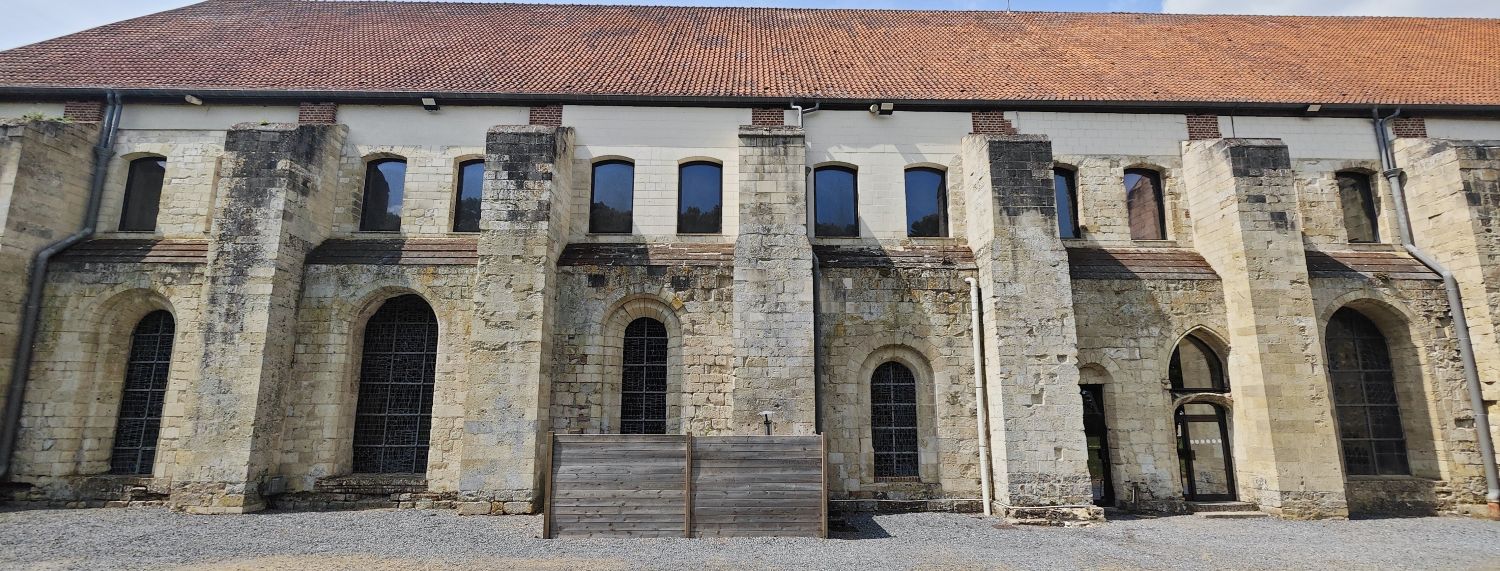
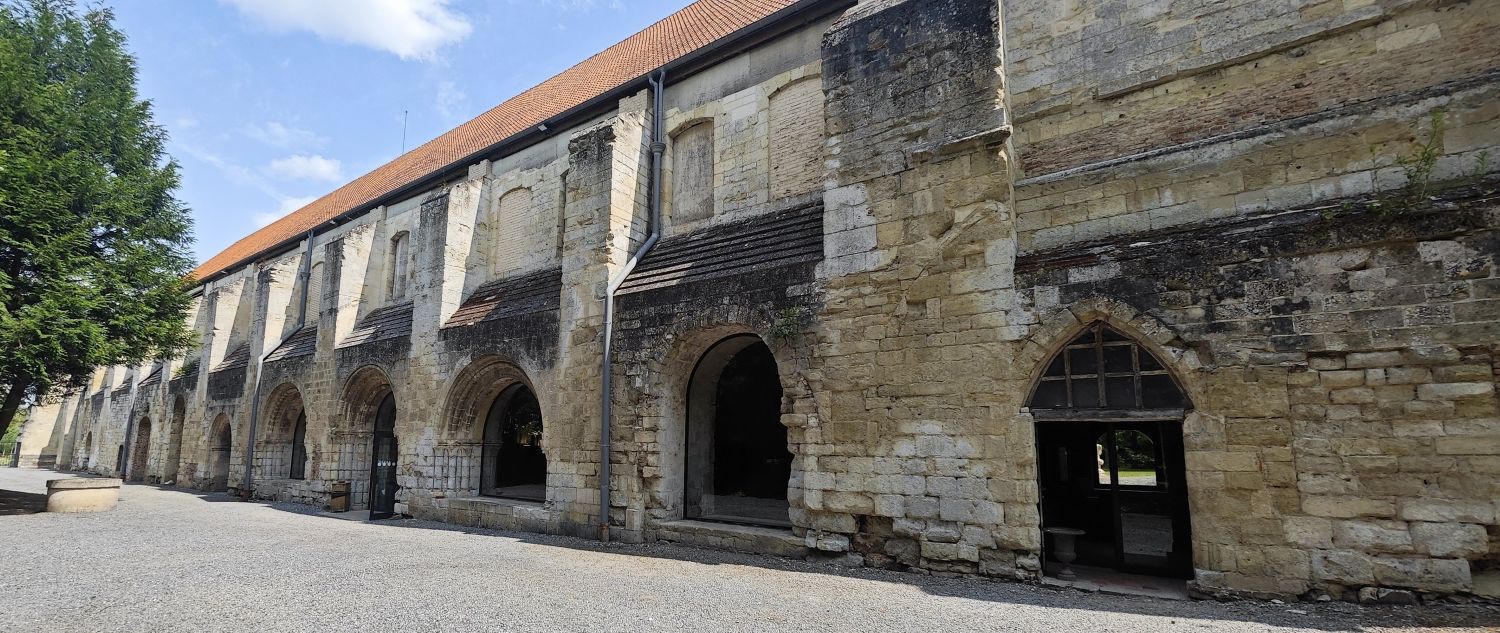
A bit of history on the abbey tell us that in early August 1132, Saint Bernard, the first abbot of Clairvaux, and a dozen companions founded a new abbey on the banks of the Scheldt, on land donated by Hugh of Oisy, castellan of Cambrai. Vallis cella or the valley monastery was the 11th daughter of Clairvaux and the 58th of Citeaux, the monastic order that was expanding rapidly in the 12C. Vaucelles Abbey enjoyed remarkable prosperity. By the time of Saint Bernard’s death in 1153, it had 103 monks and some 300 lay brothers (religious men responsible for domestic work). By the end of the 13C, the abbey, placed under the protection of the popes and kings of France, had acquired a monumental new church, two cloisters, and numerous other buildings. It houses a precious relic of Christianity, a thorn from the Crown of Christ, offered by Saint Louis. It had 140 monks, 300 lay brothers, and owns 3,000 hectares of land, woods, and vineyards, within a 200-km radius. In the 16C, the abbey hosted, twenty-seven years apart, two important episodes in European diplomacy. In the summer of 1529, Louise of Savoy, mother of Francis I, was received there before going to Cambrai to sign the so-called Peace of the Ladies with Margaret of Austria, Regent of the Netherlands and aunt of Charles V. From 1556, delegations from King Henry II of France and King Felipe II of Spain negotiated the Truce of Vaucelles there for several weeks. Two years later, in the autumn of 1558, new negotiations resulted in the Treaty of Cateau-Cambrésis, signed on April 2 and 3, 1559.
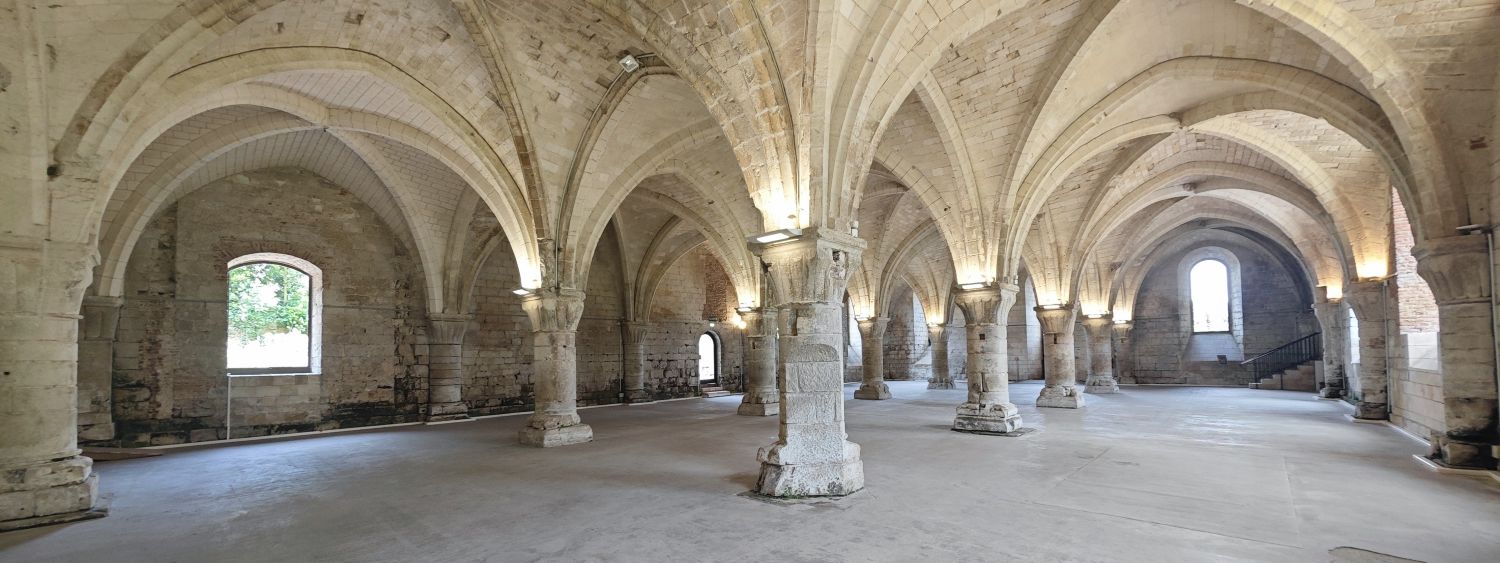

During the French revolution, the abbey was declared national property; the monastic orders were abolished. In April 1790, the last monks left the premises. The abbey was vandalized and left abandoned. For a century, the site served as a warehouse, a stone quarry, and a farmyard: the church, cloisters, infirmary, kitchens, and refectory were destroyed. A spinning mill was installed in the monks’ wing. The abbey palace was purchased by a woman who used it as her residence. When Alain and Marie-Maxellende Lagoutte bought it in 1971, the stones could barely be seen emerging from waves of trees and brushwood. For fifty years, they dedicated themselves to its rescue, beautification, and enhancement. The Nord Department acquired it in December 2017, with the ambition of continuing the work undertaken and expanding its artistic and cultural programming.
Other things to see here with more time are from archaeological excavations, conducted from 1978 to 1986, uncovered Gallo-Roman structures (extraction shafts, cellars, potter’s workshop, hypocausts, burial tombs and villa), Merovingian (a vast necropolis) and Carolingian (hut bottoms, storage silos). The objects unearthed during these excavations are preserved at the Cambrai Museum. An archaeological activity park, called Archéo’site, was opened in 1986. It has an amphitheater, an interpretive trail and offers activities on archaeological excavation, pottery, metallurgy and traditional kiln firing. The work of potters, weavers and other craftsmen is thus recreated. Regular demonstrations bring the site back to life. The archaeosite summarizes ten centuries of history, from the Gallo-Roman period to the beginning of the Middle Ages.
A bit of history on the village I like tell us the village has been populated since the Gallo-Roman period. During the Merovingian era, the village was called Vinchy. It was the scene of the Battle of Vinchy between Charles Martel and Rainfroi, mayor of the palace of Chilpéric II, King of Neustria. Charles Martel won the victory on March 20 or 27, 717. After this battle, power passed definitively from the hands of the Merovingians to those of the Carolingians. The hamlet of Vaucelles was formed around the Cistercian abbey of Vaucelles, founded in 1132 by Bernard of Clairvaux. The village of Les Rues-des-Vignes was detached from Crèvecœur-sur-l’Escaut and established as a sole village on January 8, 1930.
The Village of Les Rues des Vignes on the Abbey of Vaucelles : https://www.lesruesdesvignes.fr/decouverte/abbaye-de-vaucelles
The Village of Les Rues des Vignes on the L’Archéo’site : https://www.lesruesdesvignes.fr/decouverte/archeosite
The official Abbey of Vaucelles : https://abbayedevaucelles.fr/
The local Cambresis tourist office on Les Rues des Vignes : https://www.tourisme-cambresis.fr/commune-60-Les-Rues-des-Vignes.html
There you go folks, this is indeed a site worth the detour, me think. Very nicely done and great architectural and historical value indeed, The abbey is an integral part of the village. Again, hope you enjoy this post on the Abbaye de Vaucelles of Les Rues de Vignes !!! as I
And remember, happy travels, good health, and many cheers to all !!!

 Paris1972-Versailles2003