
I take you to Vaux sur Mer with older new pictures from my cd rom vault that should be in my blog for you and me, The town of Vaux-sur-Mer is located in the Charente-Maritime department no, 17 in the Nouvelle-Aquitaine region of my belle France. It is in the heart of the Royannais region, on the Arvert peninsula, at the mouth of the Gironde estuary, This seaside resort on the Côte de Beauté is part of the western suburbs of Royan. It boasts four beaches alternating with towering cliffs, connected by a pedestrian promenade and cycle paths ,and the Vélodyssée,Therefore , let me introduce you to this is Vaux sur Mer !!! Hope you enjoy the post as I.
The town is 3 km from Royan , 6 km from Saint-Sulpice-de-Royan, 78 km from La Rochelle and 134 km from Bordeaux, 507 km from Versailles and 351 km from my current home, The town is bordered in its northern part by the Royan ring road, which encircles the main towns of the metropolitan area. This communication axis is connected to several important roads, allowing access to the main cities of the region. Thus, the D 733 allows access to the cities of Rochefort and La Rochelle . As for the RN 150, it allows access to the city of Saintes and the A10 autoroute, gateway to Bordeaux or Paris. We have come on the N165, N444/N844 beltway of Nantes, to the A83 exit/sortie 7 take the D137 .N137 dir Rochefort, the D733/D25 to Vaux sur Mer.
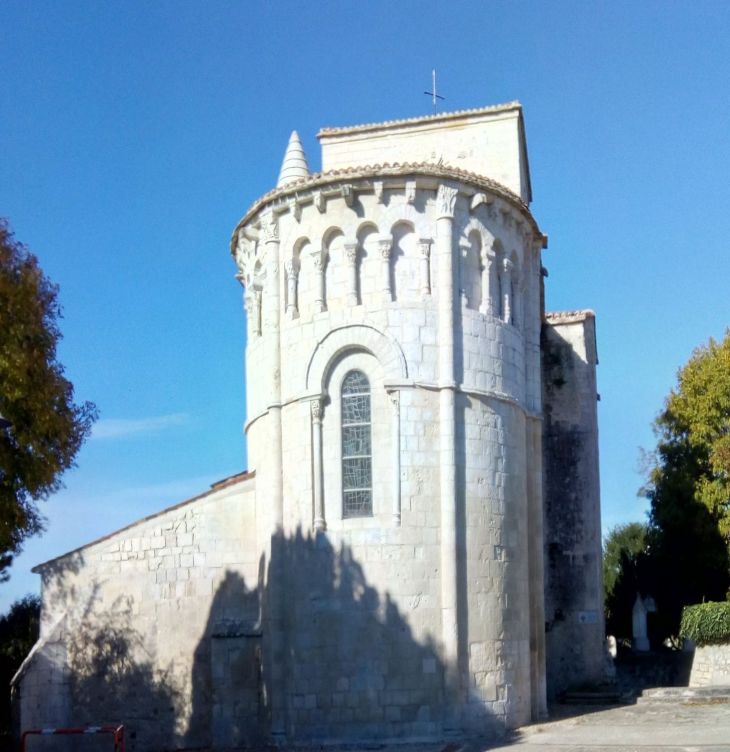
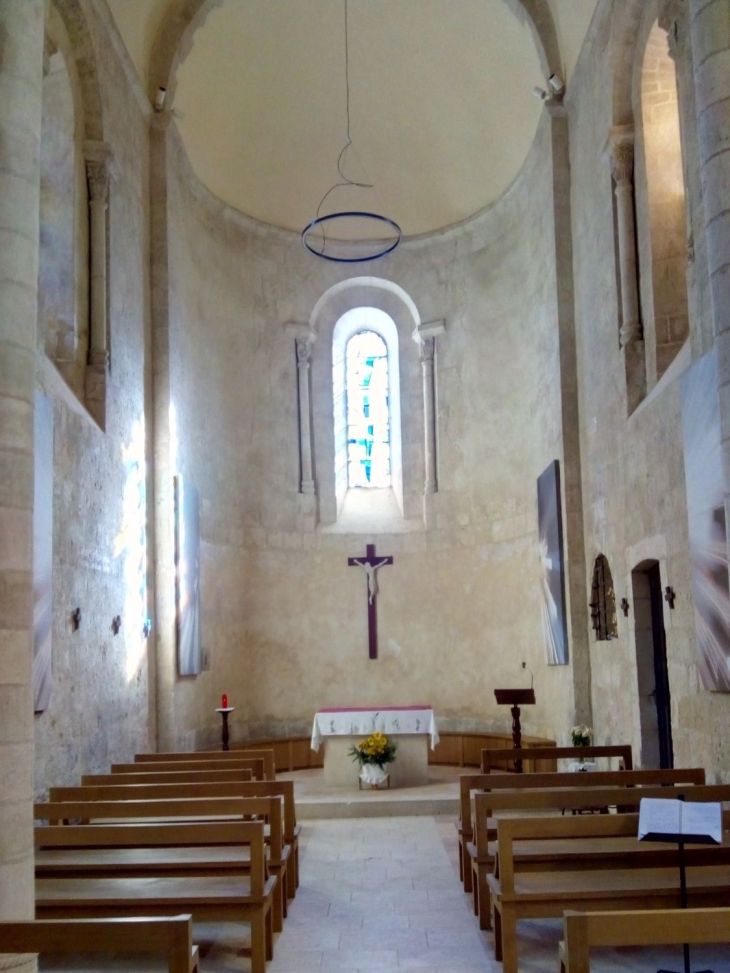
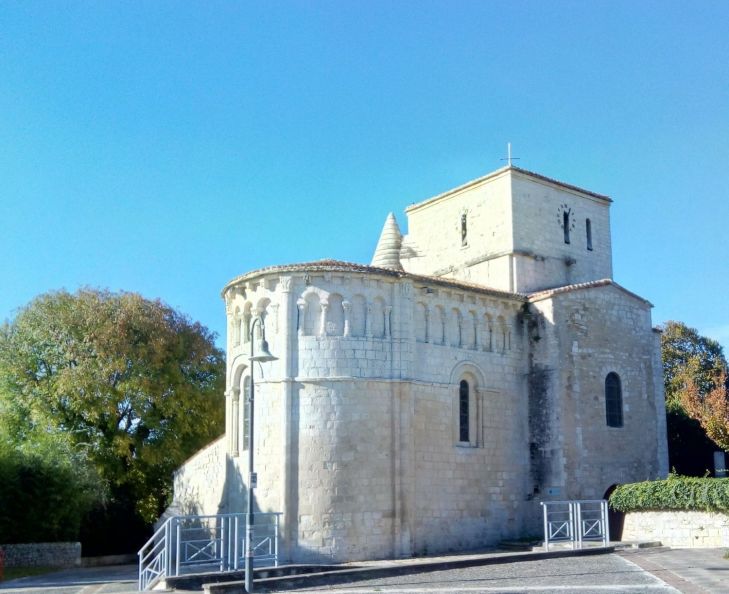
The Church Saint-Étienne (St Stephens) is one of the rare remains of an ancient Benedictine abbey founded in the 11C. Typical of the Saintonge Romanesque style, it owes its modest appearance to significant destruction during the Wars of Religion . A cemetery, some of whose tombs date back to the 17C, was created around the sanctuary. Located in the town center on a hill, it overlooks the former marshes that have now become the Parc de l’Hôtel de Ville or City hall park. It is the last vestige of a Benedictine abbey founded in 1075. Martin, the first abbot, came from the abbey of Maillezais (Vendée dept 85). The Abbey of Vaux had priories at Saint-Sordelin, Saint-Palais, Saint-Augustin, Saint-Sulpice, Thaims, Arces, Grayan, Langoiran, as attested by the Cartulary of Vaux, a manuscript preserved at the BNF (National Library of France). Prosperous in the 13C, with 3000 gold florins (about 360,000 euros) of income, the abbey was ruined by the Black Death of 1348, the Hundred Years’ War and the War of Religion, but an abbot was appointed by the king until the French revolution.
Other things to see here with more time are the old castle (now the City/town hall) is located a few dozen meters from the church. Although it includes some elements dating from the 17C, the oldest parts of the building are not earlier than the end of the 18C, and only took on its current appearance during the 19C. Many seaside villas were built on the seafront ; these include the Villa Marpa, the Villa Le Charme, and the Villa Les Fées which housed literary and political circles, frequented in particular by Aristide Briand. Seaside villas diversified during the 20C, including samples of all styles. This included the Villa Etchola,and the Villa Mélusine. Located on the northern cliff of Pontaillac, the Chapel of the Assumption of Our Lady is characteristic of the Neo-Gothic style of the 19C, The cliffs between the coves of Pontaillac and Nauzan are also home to a characteristic feature of the Charente and Gironde coasts: the carrelet huts. Built on stilts, they are used (among other things) for shrimp and elver fishing. The market is held on Place François-Courtot every Tuesday and Saturday from 8h to noon during the low season and every day from 7h30 to 13h during July and August. A night market offering traditional products, clothing, and crafts is held every Monday from 20h to midnight on the Nauzan seafront during July and August.
A bit of history tell us that it was during the Middle Ages that the town began to truly develop, with the founding in 1075 by Benedictine monks of the Abbey of Saint-Étienne (see above). during the Wars of Religion, a period during which it was occupied by the Protestants, before finally being ceded to Catherine de Bourbon, sister of Henry IV. During the 19C, Vaux began to benefit from the sea bathing craze, and the first chalets and villas began to appear, particularly near the beaches of Nauzan and the North Corniche of Pontaillac. During WWII, Vaux-sur-Mer was occupied by nazis troops, who integrated it into their defensive system of the Royan pocket. The liberation battles, initiated on April 14 and 15, 1945, were incredibly violent and the resulting damage was particularly significant. Integrated into the Royan pocket during WWII, Vaux-sur-Mer suffered terribly from the bombings of the Liberation, without however suffering the tragic fate of Royan, almost entirely destroyed by the Allied bombings. The town was mentioned in the order of the Regiment with the Croix de Guerre or War Cross.
The town of Vaux sur Mer on its heritage : https://www.vaux-sur-mer.fr/listes/histoire-patrimoine/
The local Royan Atlantique tourist office on Vaux sur Mer : https://www.royanatlantique.fr/destination-royan-atlantique/balneaire-et-sauvage/vaux-sur-mer/
There you go folks, another dandy beachside town in a gorgeous area of my belle France, Another spot in our world map, and one to consider coming back. You too will be enchanted by this seafarer town of Vaux sur Mer. Again, hope you enjoy this post on this is Vaux sur Mer as I.
And remember, happy travels, good health, and many cheers to all !!!

 Paris1972-Versailles2003