
The town of Paray le Monial is worth the detour to see the historical ownders of my belle France, I was passing in my road warrior trails and glad stop by briefly to see the Saint Nicolas tower, and sadly no time to see more, we will be back, eventually. And course, glad found me these older pictures in my cd rom vault to show in my blog for you and me, The town of Paray-le-Monial is located in Saône-et-Loire deparment no 71 of the Bourgogne Franche-Comté region of my belle France. Therefore, this is my take on this is Paray le Monial !!! Hope you enjoy the post as I.
The town is nicknamed the “City of the Sacred Heart.” It is, also, classified as a City of Art and History, and Ville Fleurie (Flower Town) awarded four flowers. You have roads coming from the east the now call Central Europe Atlantic Road or N 79 in the Mâcon-Moulins axis with the first signs to Geneva appears in Paray-le-Monial coming from the west , When coming from the north, via the N 70 from Chalon-sur-Saône; and coming from the south, via the D 352 from Roanne or the D 34 from Brionnais. The Volesvres viaduct, used by the N 79 and crossing the Canal du Centre, is located to the east of the town. The town is located 68 km from Mâcon, 69 km from Moulins, 81 km from Chalon-sur-Saône,373 km from Versailles, and 747 km from my current home, I came here on the A86 ,A6, A77 after Nevers took the N7 when around Moulins took the D53 to connect with the A79 same road becomes the N79 to Paray le Monial.
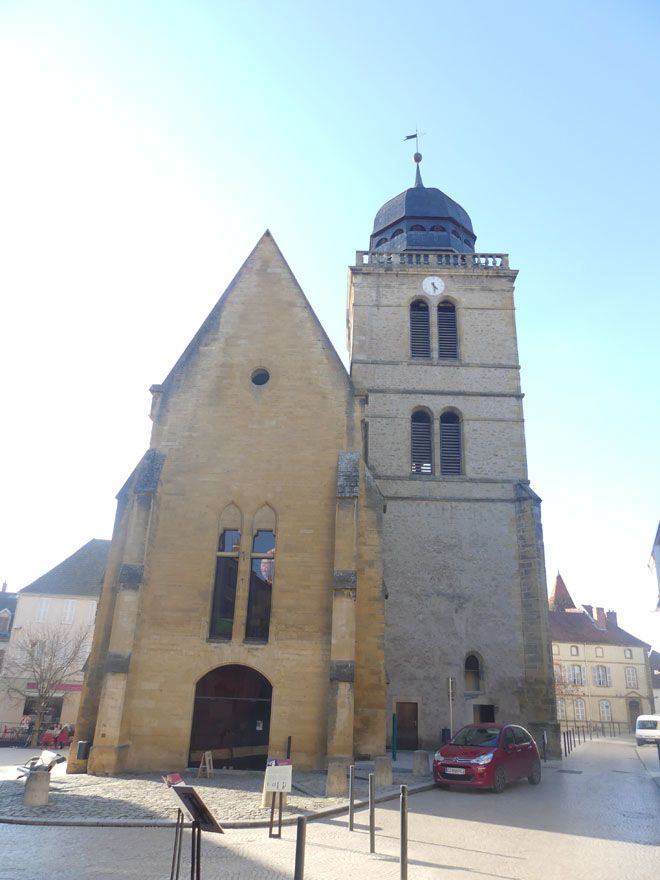
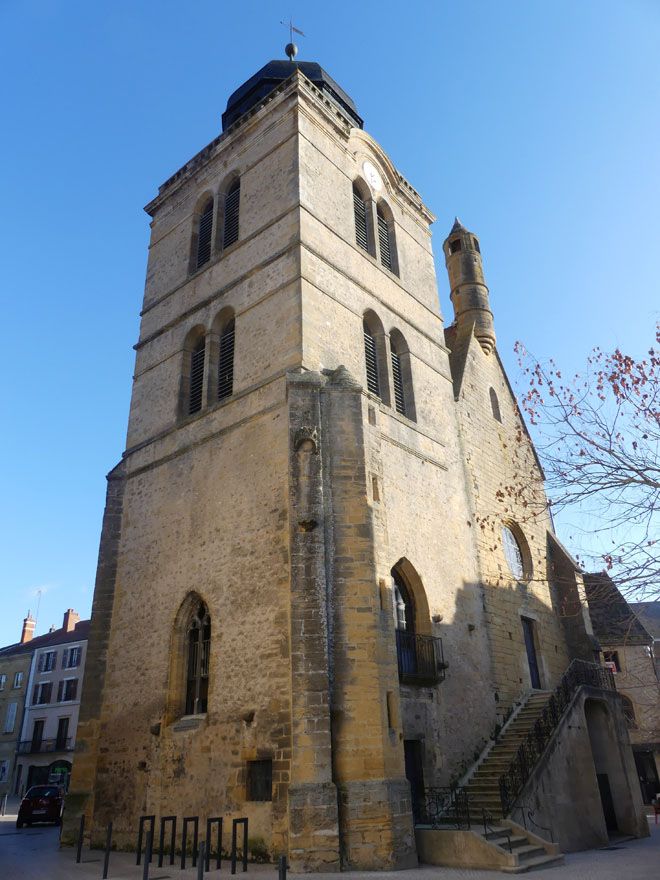
Passing thru town saw the nice Tour Saint Nicholas tower,at the place du Hôtel de Ville. Inspired by 16C Gothic architecture, it consisted of a single nave and side chapels. The current tower is the bell tower, a Franche-Comté-style belfry. In 1792, worship was abolished during the French revolution. Two levels: ground floor (1fl) : Surface area: 80 m² Capacity: 90 people seated maximum, 1st floor (2nd fl): Surface area: 70 m² Capacity: 70 people seated maximum, This was the former parish church consecrated in 1535. A massive bell tower was added around 1549. The turret, perched corbelled on the gable, bears the date 1658. It was reduced to its current size in the 19C. Over time, it has had various functions such as a prison, guardhouse or city/town hall during the French revolution, until 1858,It is now used as a hall for exhibitions, meetings, and conferences. And one big exhibition every year where ceramists from all over the world present their works.
Huge inventory of things to see with more time and always trying to be back, eventually, A magnificent Basilica of the Sacred Heart, The narthex dates from the end of the 11C, and the church dates from the 12-14C, a masterpiece of Romanesque art, is the best-preserved model of Cluniac architecture in Burgundy , The city/town hall, housed in the old Jayet house, has a Renaissance-style facade built between 1525 and 1528 and placed on older structures, The Chapel of the monastery of the Visitation, built in 1633, known as the Chapel of the Apparitions. It was here that the Visitandine Saint Margaret Mary received the apparitions of the Heart of Jesus between 1673 and 1675 , The Eucharistic Museum of Hieron, this museum is the oldest museum of sacred art in France. It was built in the 19C at the initiative of the Jesuit Victor Drevon and Baron Alexis de Sarachaga. The covered market or halle, a monument dating from the beginning of the 20C was transformed into a shopping mall. The construction of the covered market, completed in 1901, The market is 37 meters long and 11 meters wide. It consists of eight metal trusses resting on cast iron columns. The La Colombière Chapel: this Jesuit chapel houses the relics of Saint Claude La Colombière, spiritual director of Saint Margaret Mary. It was erected in 1929 by the Jesuits shortly after the beatification of Father La Colombière. The Paul-Charnoz museum, known as the “ceramics museum”, brings together the remains and testimonies of the industrial ceramics activity of Paray-le-Monial. The House of Contemporary Mosaic: a cultural venue open to all, with exhibitions held throughout the year. A video “La Mosaïque.!” retraces the history of mosaics, explains tools, materials and techniques, and describes the various aspects of contemporary mosaics. The Moulin-Liron Park: located between the Canal du Centre and the Bourbince, the park takes its name from an old mill known since the 16C. In the 18C, it became a renowned “hostellerie”, destroyed during the construction of the Canal du Centre. The 15-hectare park was created for the visit of Pope John Paul II in 1986. The Chapelains Park: in 1889, the Chapelains House was built on the foundations of the former castle of the abbots of Cluny. The park was created to welcome pilgrims since the bicentenary of the Apparitions in 1875.
And something for me to be back, In the 17C, Christ appeared to a nun, Saint Margaret Mary Alacoque, born in a nearby village and a nun in the Monastery of the Visitation. During three great apparitions, He presented His heart to her: “Here is this heart which has loved men so much that it has spared nothing, even to the point of exhausting and consuming itself to show them its love; and in gratitude I receive from most of them only ingratitude, through their irreverence and sacrileges, and through the coldness and contempt they have for me in this Sacrament of love.” Very quickly, Margaret Mary received the support and spiritual guidance of a Jesuit, Claude La Colombière. From Paray-le-Monial, an immense devotion was born, called the cult of the Sacred Heart. Pilgrimages began in Paray-le-Monial and sanctuaries were built all over the world, the most famous in France being the Basilica of the Sacred Heart of Montmartre (Paris).
The Sanctuary of the Sacred Heart of Paray le Monial: https://sacrecoeur-paray.org/
A bit of history I like tell us that when in 973 Count Lambert of Chalon, in thanksgiving for God’s blessings, came to explore the location of a monastery in the company of Mayeul, Abbot of Cluny, he chose the site of Val d’Or on the banks of the Bourbince near a ford on the old Roman road from Mâcon to Digoin, on a slight rise sheltered from floods. The official consecration took place in 977, in the presence of the bishops of Chalon, Mâcon and Autun. When in 999 Count Hugues de Chalon donated the monastery and the property he was struggling to control it to the Abbot of Cluny Odilon de Mercœur, Paray took on the rank of priory and remained so until the French revolution. The first church, quickly destroyed, gave way to Paray II in 1004 and it was on the ruins of this church that the larger basilica known as Paray III was built by Abbot Saint Hugues around 1100, at the same time as Cluny III. The buildings have undergone few alterations for over a millennium. It was from Geneva, where Calvin had settled in 1541, that Protestant ideas, more radical than those of Luther, spread to Paray-le-Monial. It is estimated that between 40 and 50 families converted to this doctrine towards the end of the 16C, or a tenth of the population. But their influence is not only measured by their numbers, as they held important positions in commerce, industry (textiles and tanning), and even as doctors. The fight against Protestantism, which was given the name of the Counter-Reformation. The Jesuits were masters in this field: this was the goal assigned to them by their founder Ignatius of Loyola. They established a permanent mission in Paray in 1618. The Visitandines were to be introduced into the city. This Visitation order had been founded in Annecy in 1610 by Jeanne de Chantal with the support of Bishop François de Sales. Seven sisters, therefore, founded a convent opposite the Jayet house. It was there that a young girl, born in 1647 in Vérosvres, 25 km east of Paray, was to have the privilege of the apparitions of Christ on three occasions in 1673, 1675 and 1675, in the hazel grove in the garden. Thus the cult of the Sacred Heart with a global destiny was discreetly born. The fate of Protestantism was sealed negatively by the will of King Louis XIV. In 1685, the Edict of Nantes was revoked. Part of the Calvinist community chose exile, mainly in Switzerland. On the religious level, Catholicism triumphed over Protestantism , Neither the Great War (WWI) of 1914-18 nor the economic crisis of the 1930s resulted in a demographic decline. Very far from the combat zone of 1914 to 1918, the city was well placed as a railway hub to collect the wounded evacuated from the front, During WWII, the city was occupied on June 18, 1940. The Canal du Centre being a convenient landmark was chosen in this sector to mark the boundary between the free zone and the occupied zone. The city of Paray was decorated with the Croix de Guerre (War Cross ) in 1948.
The Paray le Monial tourist office on the tour Saint Nicolas: https://www.tourisme-paraylemonial.fr/en/le-coeur-de-ville/tour-saint-nicolas.html
The official Sanctuary towns of France on Paray le Monial: https://www.villes-sanctuaires.com/en/villes-sanctuaires/paray-monial
The town of Paray le Monial on the Tour Saint Nicolas: https://www.paraylemonial.fr/la-tour-saint-nicolas
The local Charolais Brionnais area of Paray le Monial tourist office on its heritage: https://www.tourismecharolaisbrionnais.fr/visiter.html
There you go folks, another wonder in my belle France indeed. It was a long road warrior trip and glad we stop by even if briefly in Paray le Monial , a nice hugely historical town worth the re visit, Again, hope you enjoy the post on this is Paray le Monial !!! as I.
And remember, happy travels, good health, and many cheers to all !!!

 Paris1972-Versailles2003