
I was on my by now monthly road warrior trails of my belle France, I was out with my boys and my good dog Rex riding into the wonderful regions near me. This even if passed by before, is my first time in the town of Le Lude, full of architecture and history monuments.The town of Le Lude is located in the Sarthe department 72 in the Pays de la Loire region of my belle France , Therefore, here is my take on curiosities of Le Lude !!! Hope you enjoy the post as I.
The town of Le Lude is located 20 km from La Flèche, 46 km from Le Mans, 65 km from Angers, 56 km from Tours, 252 km from Paris, and 290 km from my current home, We came here from La Fléche along the D306 road bearing left upon entering Le Lude on the Avenue de la Liberation continue on Rue de la Boule d’Or turn right onto the Rue de l’Image , then turn left into Rue du Château then left onto Rue d’Orée and quick left into Rue du Marché au Fil right next to our rental gîte, The castle is across the street ! The town is located at the intersection of several major roads. The D 307 departmental road, which connects Le Mans to Saumur, crosses the town. The D 305, which connects Baugé to Vendôme, arrives from Savigné-sous-le-Lude and heads towards Vaas and Château-du-Loir. The D 306, which connects Laval to Tours via La Flèche, crosses the town. Other less important roads serve the town such as the D 48 towards Dissé-sous-le-Lude and the D 257 towards Genneteil, the D 141 towards La Chapelle-aux-Choux, and the D 54 towards Luché-Pringé.
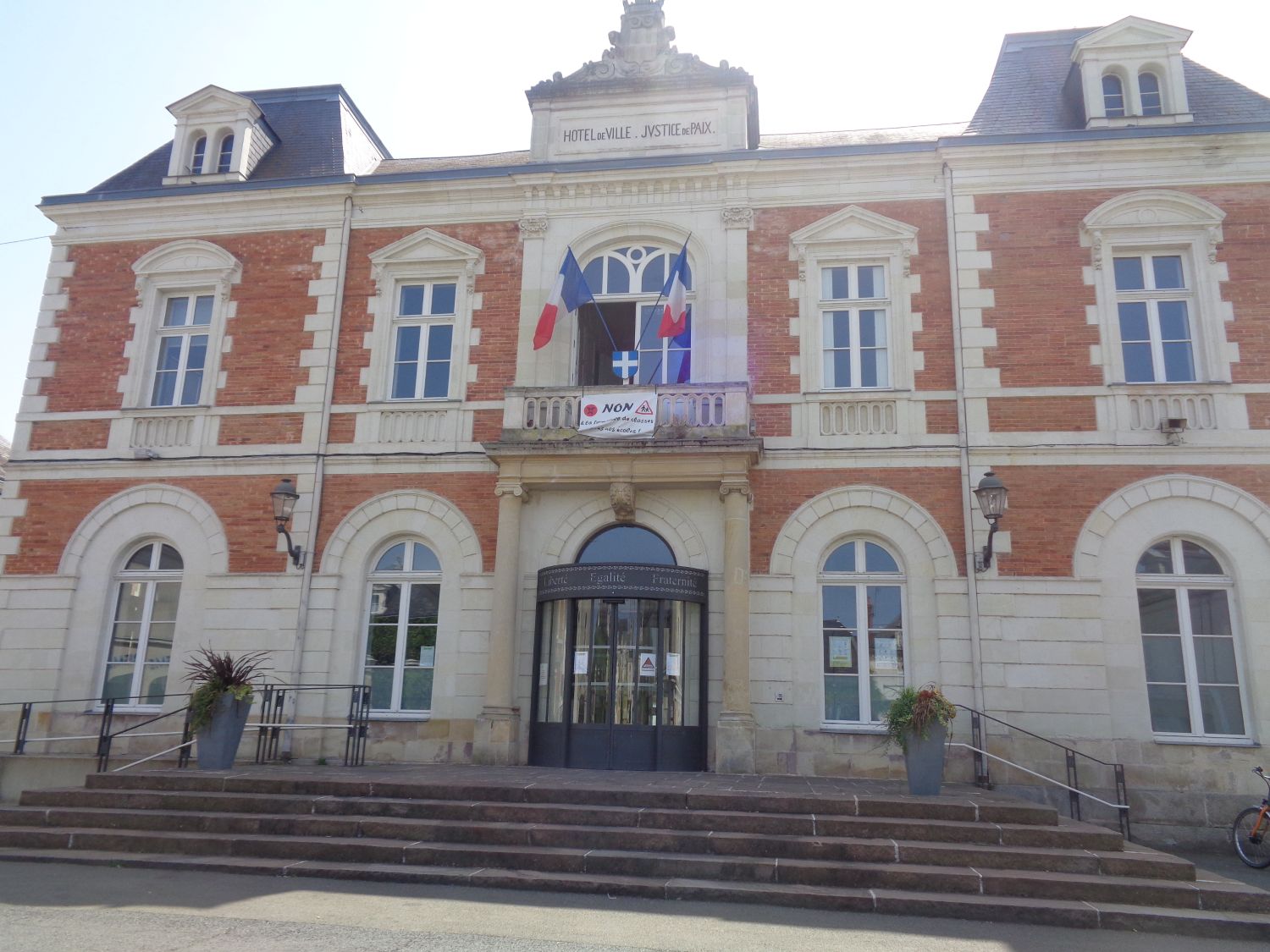
The new Hôtel de Ville or City/town hall building has been the grain market, justice of the peace and City hall of Le Lude built with a compact, solid plan, flanked by pavilions. It was designed to emphasize the municipal presence in the town . Standing alone, it has four facades. The largest is to the north and led to the later creation of a place de l’Hôtel de Ville or city hall square, to give the building some perspective. The City/town hall and market hall functions are back-to-back. The ordered brick and stone facades are in the neo-Louis XIII style. The eastern bank of the building was regularized by a curtain of facades reminiscent of this style. The bell tower, present on many 19C public buildings, was removed. The first known auditorium was installed above the old market hall. In 1703, it moved to the site of the Captain of the Hunt’s lodgings near the Church Saint-Vincent. It then consisted of a tall building containing a courtroom and a council chamber, then a tower containing a laundry room and a cellar, and finally a low building to house a guard. In August 1763, the old market halls were demolished , In November 1763, the farmers of the Vaunaval, Aubevoies, Sablonnets, and Petit Malidor farms hauled sand and stone for the new market halls in town. These halls were later deemed poorly constructed because they were on either side of the street. It was then recommended that they be combined and the Rue des Halles covered. In 1846, the City/town hall was located on the site of the former Sainte-Anne hospital, on the Grand-Rue, then renamed rue de la mairie. In 1856, faced with the dilapidated state of the old premises, the town of Le Lude decided to build a new city hall. The preferred location was the former Place du Marché aux blés, in the commercial center of the town. The new building would combine three functions: City/ town hall, grain exchange, and justice of the peace or court. This project required the destruction of a first block located between rue du Château, rue de Guigne-Folle, and place du Marché-aux-blés. Work began the same year with the widening of the streets adjoining the square. The new Hôtel de Ville was built between 1857 and 1863.
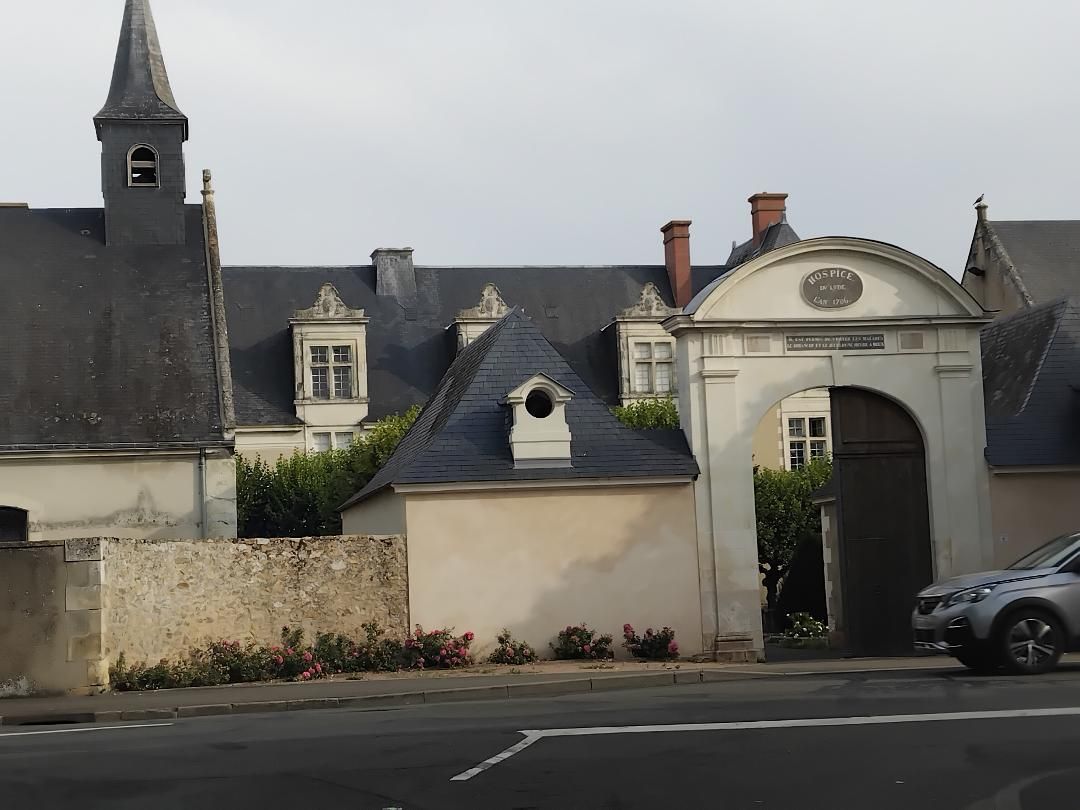
The Notre-Dame-de-la-Miséricorde Chapel is an integral part of the former hospice, established at the very beginning of the 18C by René-François de La Cochinière. He founded a hospital there for orphaned girls from Lude and the surrounding area under the name Notre-Dame-de-la-Miséricorde. Opposite the chapel, in perfect symmetry, he built a building housing two girls’ schools. The history of the chapel is linked to that of its founder…The Notre-Dame-de-la-Miséricorde Chapel in the late 1690s, René-François de La Cochinière took the ecclesiastical habit. He founded a hospital for the poor in Le Lude. In 1703, he bought a large and beautiful house, the current Hospice du Lude, built in the 17C. In 1705, he founded a hospital there, under the name of Notre-Dame-de-la-Miséricorde, for the little orphan girls of Le Lude and the surrounding area, and had a large and vast chapel built at the entrance to the courtyard, which he dedicated to the Child Jesus. Upon his death, René-François de La Cochinière was buried behind the high altar, at the current entrance to the chapel. In gratitude to the Talhouet family, who made donations and bequests in 1708, he had a small extension of the chapel, the current sacristy, dedicated to the hospital during the 19C, and the administrators granted them the right to use it as their burial place. The elongated dwelling is flanked by two pavilions. The monumental horseshoe-shaped staircase is off-center, and the apparently symmetrical layout is homothetic. In 1854, they modified the central bay of the building, which corresponds to the entrance to the staircase, and reversed the direction of the chapel. The person who commissioned this “Grand Logis” is unknown. In 1637, Charles Prudhommeau, Lord of Chaumineau, and Charlotte de Villais sold “the house that serves as a community for the Ladies of Mercy” to Renée Éléonore de Moussy and Jean-Baptiste Robin, Lord of La Tremblaye, to establish the nuns of Sainte-Claire there. In 1705, the main building was divided between two owners and several tenants when it was sold to François Fontaine de la Crochinière. He founded a charity house modeled on the House of Mercy in Paris At the end of the 18C, the chapel was equipped with a sacristy. In the 19C, the Sainte-Anne hospital or Hôtel-Dieu was transformed into a City/town hall and then into a girls’ school. The hospital was transferred to the House of Mercy.
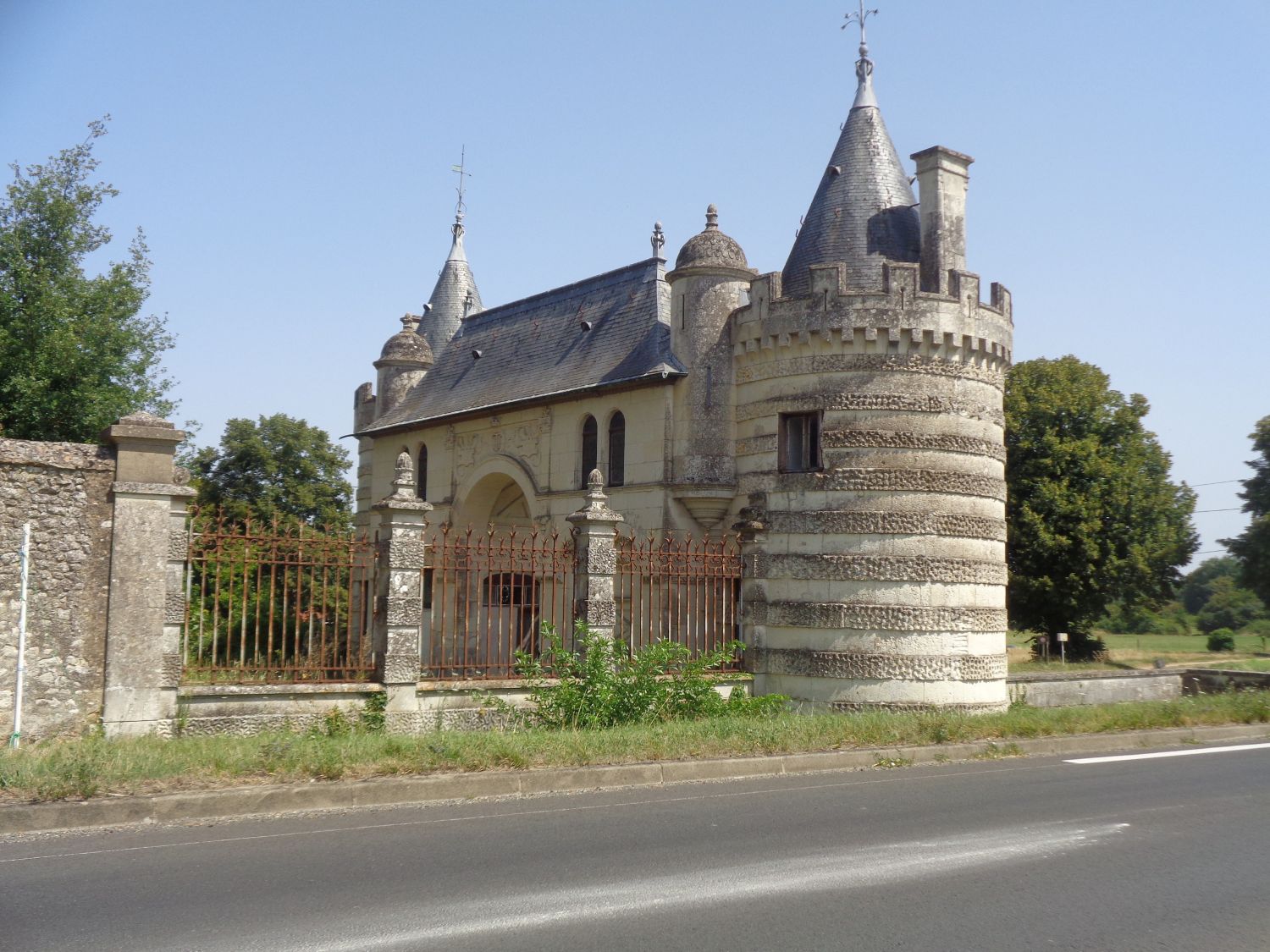
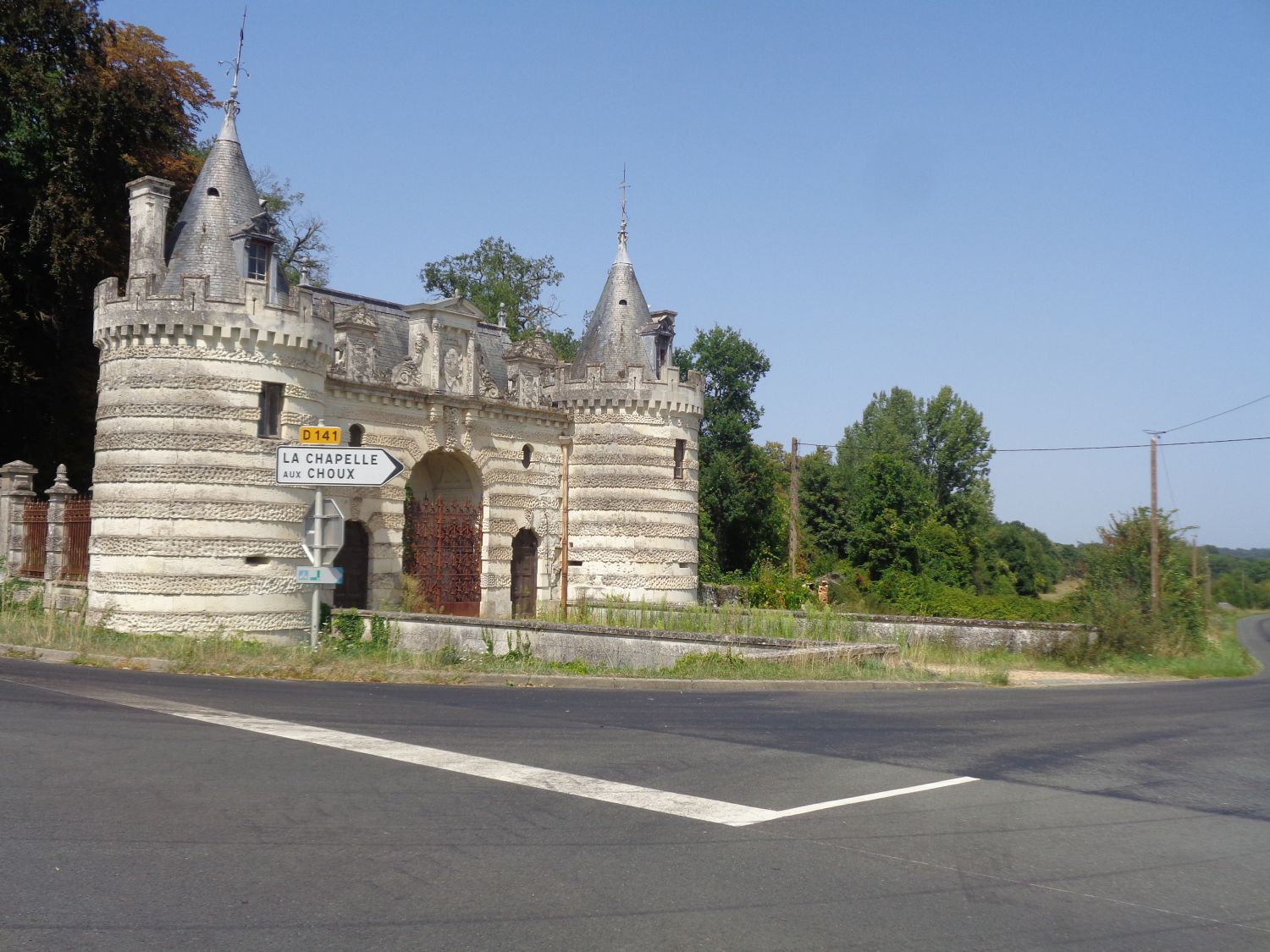
The Ferme des Tourelles farm was built in the second half of the 19C in front of the gate to the castle park that bears the name of les Tourelles. This is in the park of what was part of the Château de Lude on the corner of the road D306 and D141 that goes into the village of Chapelle aux Choux, This park leads to the back of the gardens of the castle.
Other things to see here me think are the Maison des contremaîtres or House of the Foremen, from the 16C, where the foremen moved in during the transformation of the castle. Maison des Architectes or House of the Architects, where Jean Gendrot moved in 1479, the architect responsible for the transformation of the medieval castle of Lude into a pleasure lodge ,The jumenterie or stud farm was built between 1846 and 1860 by the castle’s owner, Marquis Auguste de Talhouët-Roy. Built during a period of great enthusiasm for racehorse breeding, the stud farm housed thoroughbred mares intended for gallop racing. A racecourse, which no longer exists today, faced the stud farm. In 2020, restoration work began with the association Chantiers Histoire et Architecture Médiévales (C.H.A.M.). This training site helped save the Lude stud farm, which was in a worrying state of disrepair. The oldest equestrian establishment still in operation is the Sablonnets stud farm, founded in 1854 by Auguste de Talhouët-Roy. The town grew denser within the walls, which quickly disappeared, but where the city gates (the Montruchon, Image, and Château gates) still stand. Within the old town center, large 16-17C mansions bear witness to the town’s power. Recognizable by their imposing tiled porches, these mansions are numerous on Rue du Bœuf, Grande Rue, and Rue d’Orée. At the intersection of Rue d’Orée and Rue Basse, the mansion belonged to the president of the salt granary. The entrance pavilion could be the remains of the Montruchon gate. The House of Mercy and the Chapel of Our Lady of Mercy. In 1705, based on the Parisian model of the House of Mercy, François Fontaine de la Crochinière founded a charity house and turned it into an orphanage for young girls from good families. He also had the chapel built at the entrance to the courtyard. A school was built. In the 19C, the Sainte-Anne Hospital and the Sainte-Catherine Hospital were transferred there. As the city expanded, new boulevards were opened in the 19C. From the 1850s onward, and under the influence of Auguste de Talhouët, the new owner of the château, Le Lude was transformed. Major traffic routes were created, notably the Boulevard Fisson and the Boulevard de l’Hospice. Once the work was completed, the 1870s saw the advent of important mansions on these same boulevards. The house at no 57, was built by a certain Joly, a tanner in Le Lude at the end of the 19C. The arrival of the railway at the same time prompted elected officials to extend the Boulevard Fisson to the station.
The town of Le Lude on its heritage : https://www.ville-lelude.fr/ma-ville/histoire-et-patrimoine/
The local Loir Valley tourist office on Le Lude : https://www.loir-valley.com/things-to-see-to-do/sites-to-visit/
The Sarthe dept 72 tourist office on small towns of character of France such as Le Lude : https://www.sarthetourism.com/essentials/the-petites-cites-de-caractere/
There you go folks , a nice quant town worth a detour me think. The area is wonderfully located to visit other wonders of my belle France, Again ,hope you enjoy this post on curiosities of Le Lude !!! as I
And remember, happy travels, good health, and many cheers to all !!!

 Paris1972-Versailles2003