
Once again, coming back from my road warrior trails in my belle France. This one is a special one ,first time here and by lodging in town to break down our road warrior trails with a rest stop Par chance of the draw I picked to stay in Cerizay located in the Deux-Sèvres department no. 79 in the Nouvelle-Aquitaine region of my belle France. The village of Cerizay is located 235 km from my current town, However, we came here from Bressuire (see posts) on the D38 road to connect left on the D960BIS road dir Ciriéres continue to Avenue du Général Marigny in Cerizay, Most of the text is taken translated by yours truly from the Catholic Diocese of Poitiers of which the church belongs, Therefore, here is my take on the Church Saint Pierre of Cerizay !!! Hope you enjoy the post as I.
The Church Saint Pierre façade, with a porch bell tower, punctuated by four pinnacles, has three doors whose tympanums were decorated in 1966 with beautiful ceramic compositions, donated by an anonymous parishioner. They represent: Mary and the Child Jesus. the resurrected Jesus, with on the right, in the night, the destruction of Cerizay by the nazis on August 25, 1944, the Baptism of Jesus by John the Baptist. On the gables above the tympanums are the statues of Jesus, with, on the book, an alpha and an omega, the first and last letters of the Greek alphabet: “I am the Alpha and the Omega, the Beginning and the End”, between the apostles Peter on the left, and Paul on the right with the sword of his martyrdom.
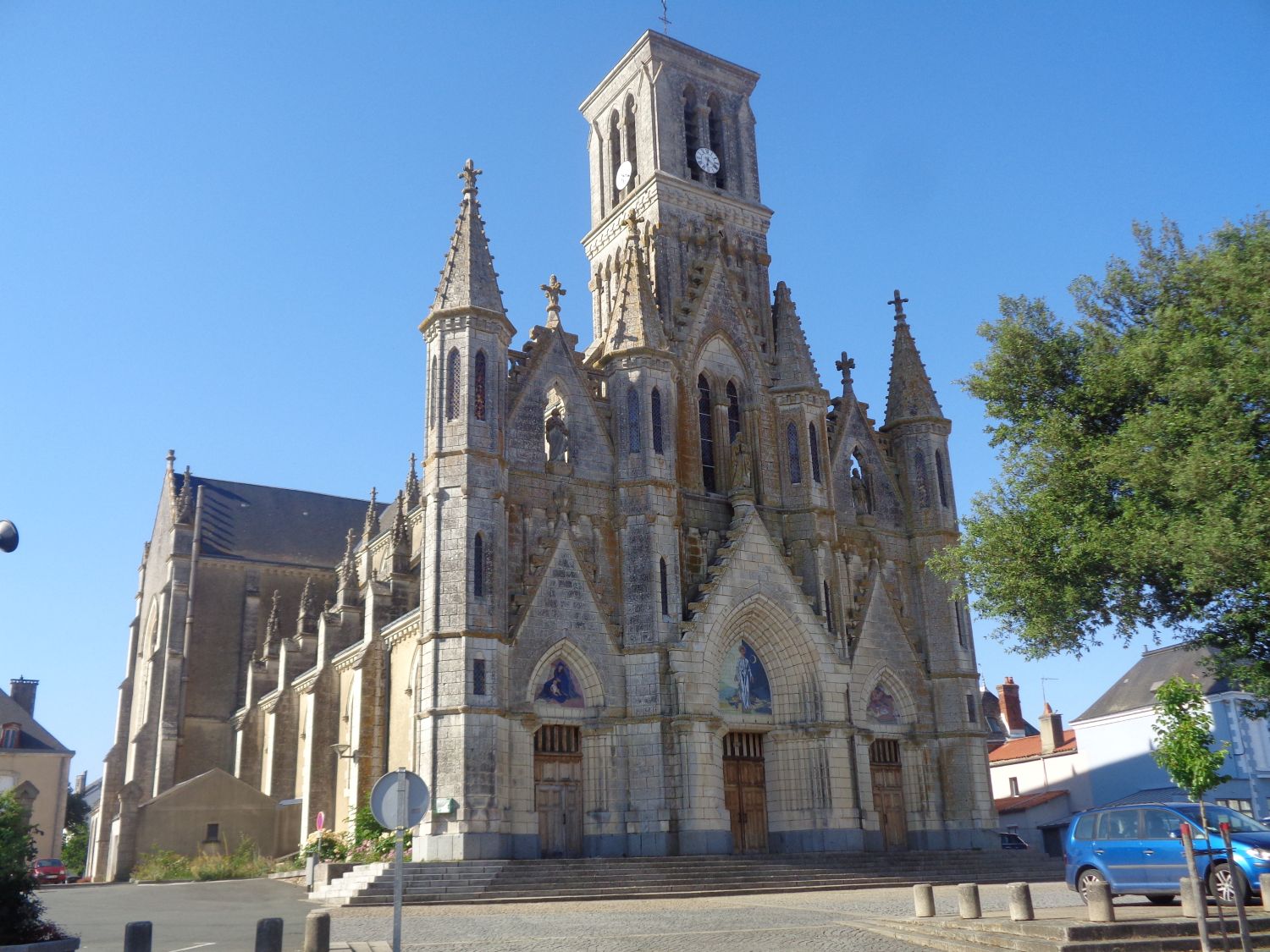
The Church Saint-Pierre, built from 1892 to 1896 ,and consecrated in 1930. Neo-Gothic in style, this large stone nave is based on a Latin cross plan. The three tympanums of the façade are decorated with ceramics made in 1966. The coat of arms or belt of arms of the chapel’s choir displayed the coats of arms of 17C lords, including that of Marshal Urbain de Maillé, Marquis de Brézé, Baron de Trèves, and Lord of Milly. The old church was built in the 12C or early 13C. The entrance door, with a pointed arch, was placed under an archivolt. To access the sanctuary, one had to descend a few steps. The bell tower, an enormous square tower, rose in the middle of the church. The choir, very small, was raised above a crypt. The church was placed under the patronage of Saint Peter. The parish priest, until the French revolution, was appointed by the abbot of Saint-Jouin-de-Marnes. A reconstruction was undertaken under the direction of Father Charruyer, senior priest from 1883 to 1916. The first stone was blessed on May 19, 1889. During the construction of the new church, the existence of a Merovingian cemetery near the chapel was discovered, as shell-like sarcophagi were unearthed.
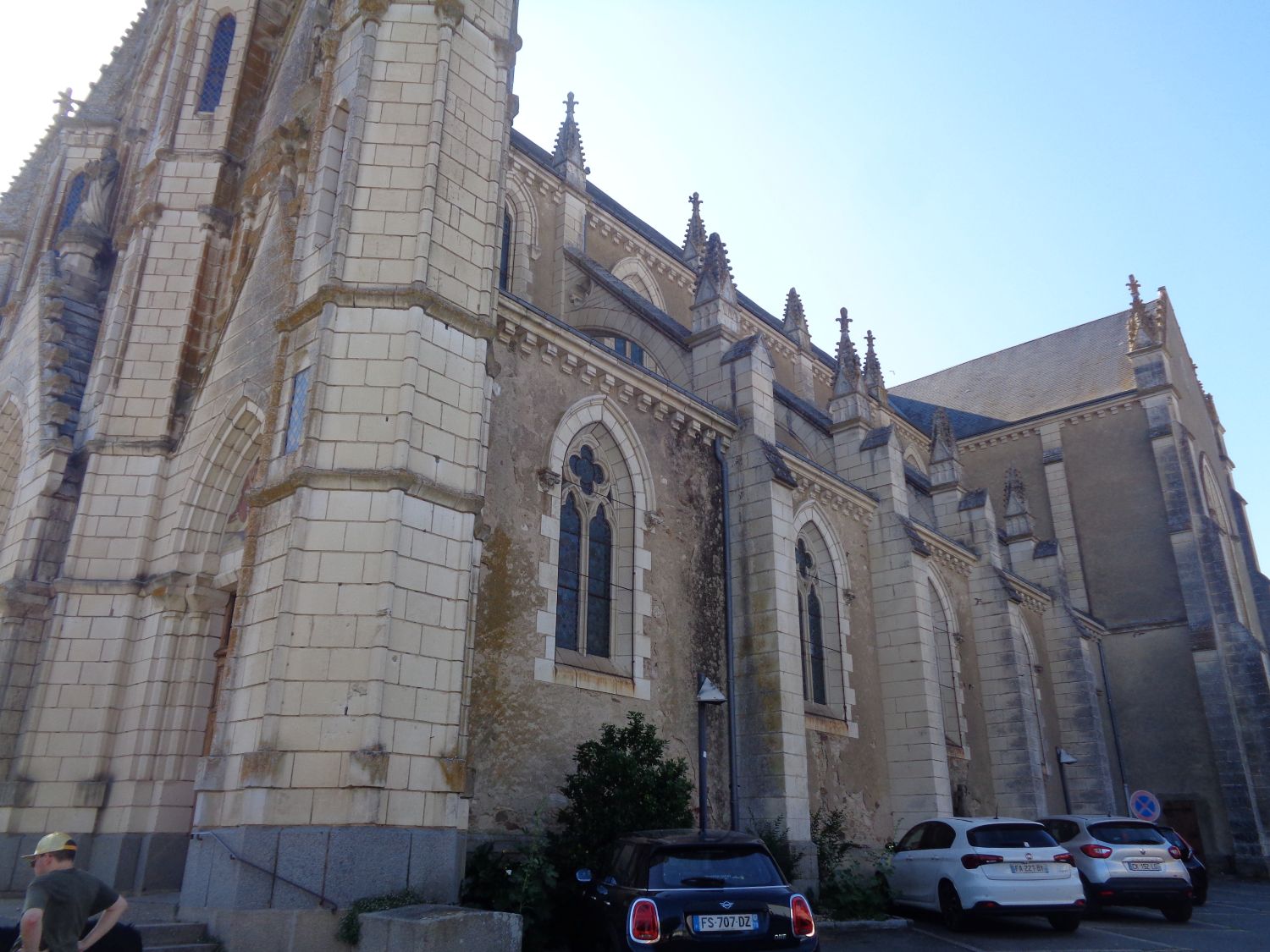
The square bell tower has two floors, one solid with arcades, the other with bays, but the originally planned spire was never built. The bell tower roof was redone in 2002. The central nave is reinforced on the outside with flying buttresses. The central nave, lit by tall windows, is flanked by lower side naves also with windows. The naves are approximately 40 meters long and 20 meters wide. At the front, the Last Supper, between an unidentified saint accompanied by a bird and John the Baptist. The tabernacle, whose door is decorated with the Lamb (Christ), is surrounded by a Nativity and a Deposition from the Cross, and on the wings by Saints Peter and Paul. Above, a metal cross between two angels is flanked by three saints on each side: Our Lady of the Seven Sorrows, Saint Henry, a bishop, a pope, Saint Expeditus, Saint Radegonde. At the very top, more angels. The altars of the transept are preceded by a stone communion table. On the left, on the front of the first altar, Mary appears between her parents Anne and Joachim. On the front of the second altar, we have the Death of Mary; above the and on the wings by Saints Peter and Paul. Above, a metal cross between two angels is flanked by three saints on each side: Our Lady of the Seven Sorrows, Saint Henry, a bishop, a pope, Saint Expeditus, and Saint Radegonde. At the very top, more angels. The altars in the transept are preceded by a stone communion table. On the left, on the front of the first altar, Mary appears between her parents Anne and Joachim. On the front of the second altar, we have the Death of Mary; above it, the Apparitions of Mary at Lourdes and La Salette. In the right arm of the transept, on the front of the first altar, Jesus shows his Heart to the apostles, between an angel holding a chalice and an angel holding a cross. The tabernacle with a Heart is flanked by the Apparition of Jesus to Marguerite-Marie Alacoque, and Jesus and the Samaritan Woman. On the upper floor, a Sacred Heart is placed between angels carrying the instruments of the Passion. On the front of the last altar: the Holy Family. Following the Second Vatican Council (1962-1965), to allow celebrations facing the people, which was already practiced during the first Christian millennium, a wooden altar was installed in 1967 at the entrance to the choir. Statuettes of the four evangelists with their symbols decorate the front. Jesus is depicted in front of the ambo. This is probably the reuse of panels from the pulpit. The communion table of this facade, with a porch bell tower, punctuated by four pinnacles, has three doors whose tympanums were decorated in 1966 with beautiful ceramic compositions, donated by an anonymous parishioner, They represent: Mary and the Child Jesus. the resurrected Jesus, with on the right, in the night, the destruction of Cerizay by the nazis on August 25, 1944, the Baptism of Jesus by John the Baptist. On the gables above the tympanums are the statues of Jesus, with, on the book, an alpha and an omega, the first and last letters of the Greek alphabet: “I am the Alpha and the Omega, the Beginning and the End”, between the apostles Peter on the left, and Paul on the right with the sword of his martyrdom. The square bell tower has two floors, one solid with arcades, the other with bays, but the originally planned spire was never built. The bell tower roof was redone in 2002.
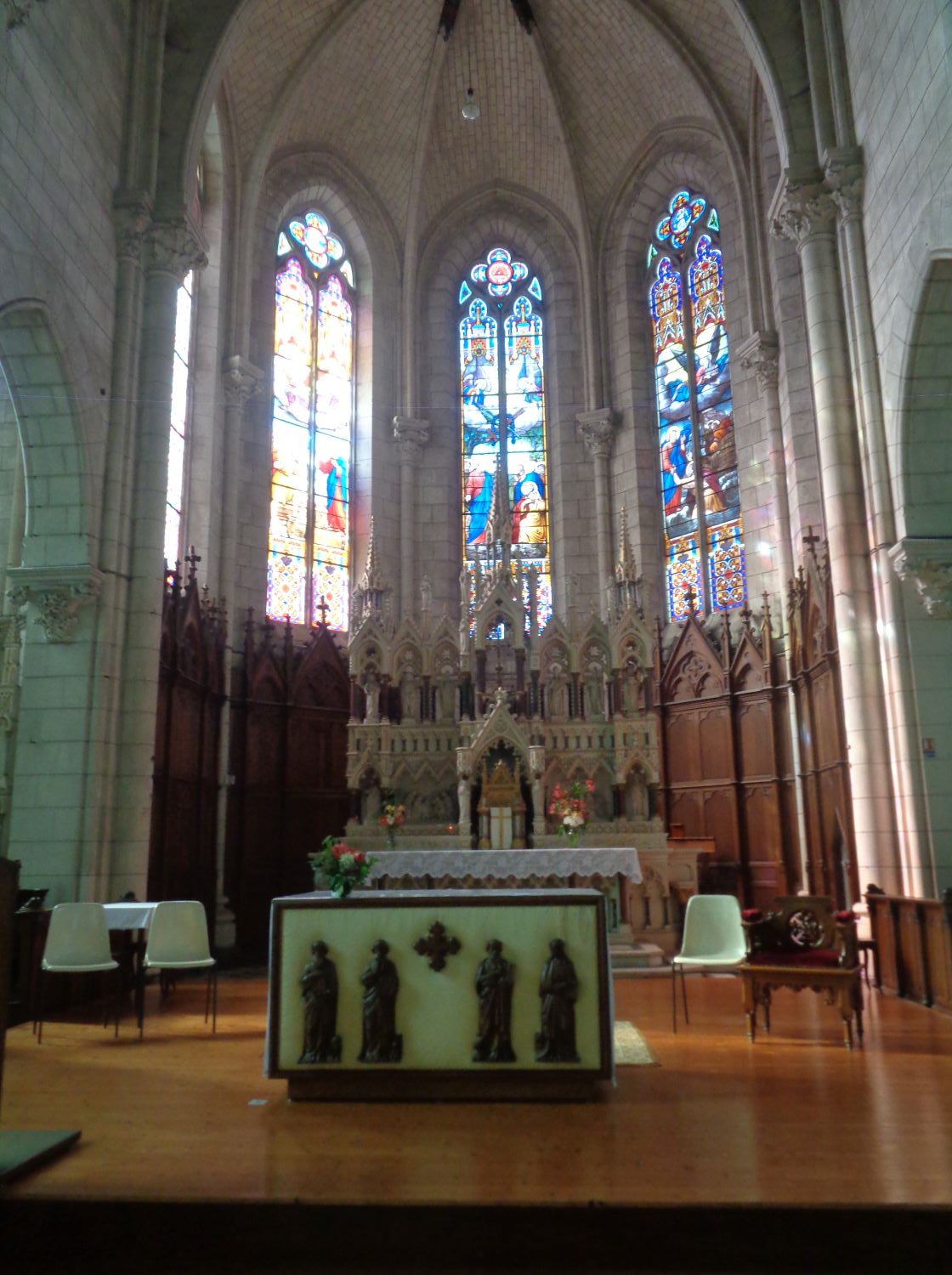
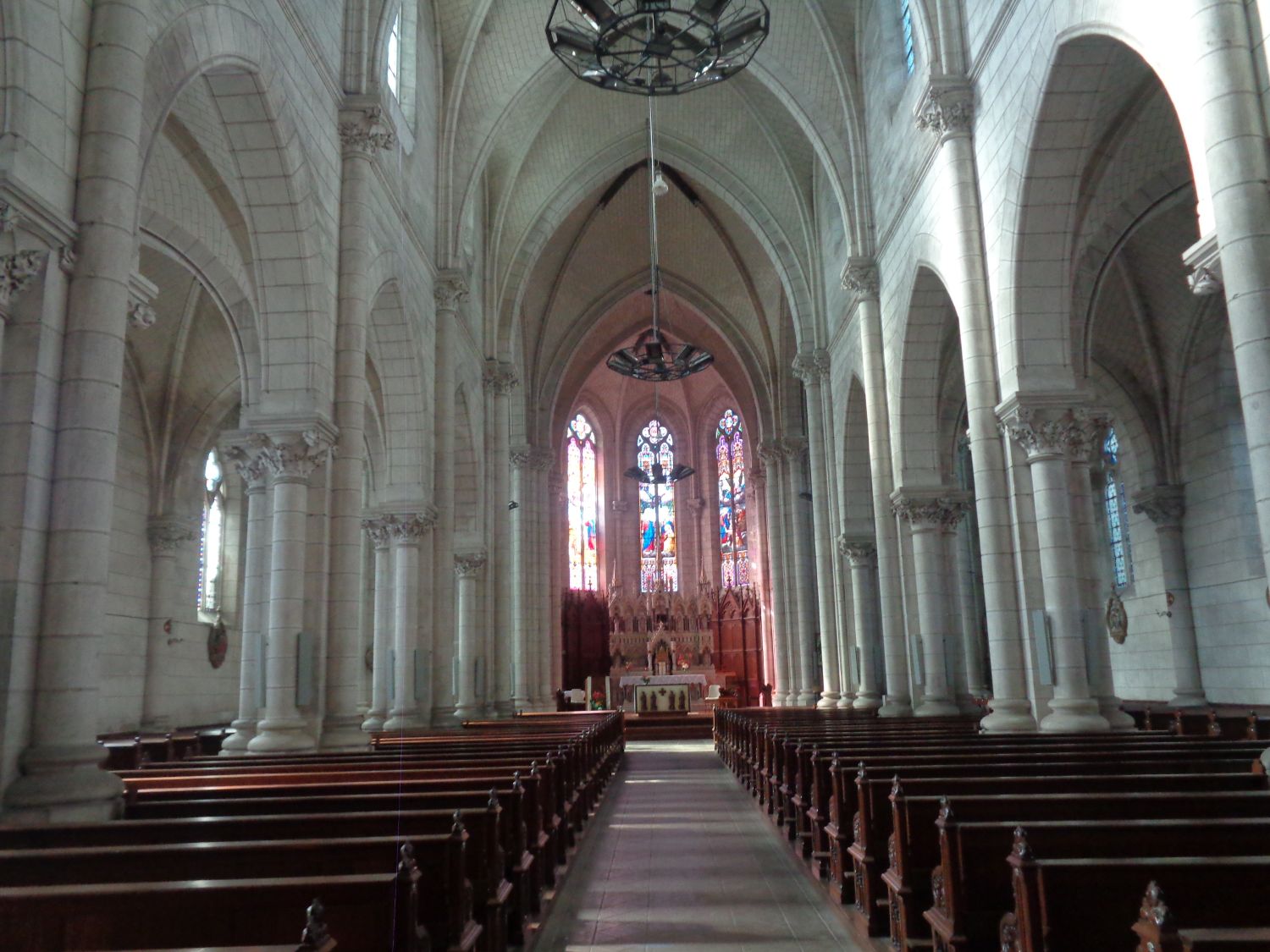
The Church of Saint Pierre on its stained glass windows ! On the left ,1st apse stained glass window offered by Christian mothers, from bottom to top, Nativity of Mary, Anne teaches Mary to read, Presentation of Mary at the temple. 2nd apse: stained glass window on the left, from top to bottom, Visitation, Apparition of Mary at Lourdes, Annunciation; stained glass window on the axis, Flight into Egypt, Mary seated with the Child, Presentation of Jesus at the temple; stained glass window on the right, the Holy Family, Apparition of Mary at La Salette, Jesus among the doctors. On the right. 1st apse: stained glass window on the left, from bottom to top, Jesus crowned with thorns, Jesus in the Garden of Olives, Jesus carrying his cross meets his mother; stained glass window on the axis, Adoration of the Shepherds, Last Supper (Jesus shows his Heart to John), Crucifixion; Right stained-glass window, Jesus falls under the weight of the cross and Veronica wipes his face, Christ appears to Marguerite-Marie Alacoque, Entombment. 2nd apse, from bottom to top: Marriage of Joseph, Joseph and the Child Jesus, Death of Joseph. Most of the stained-glass windows, executed between 1890 and 1892.
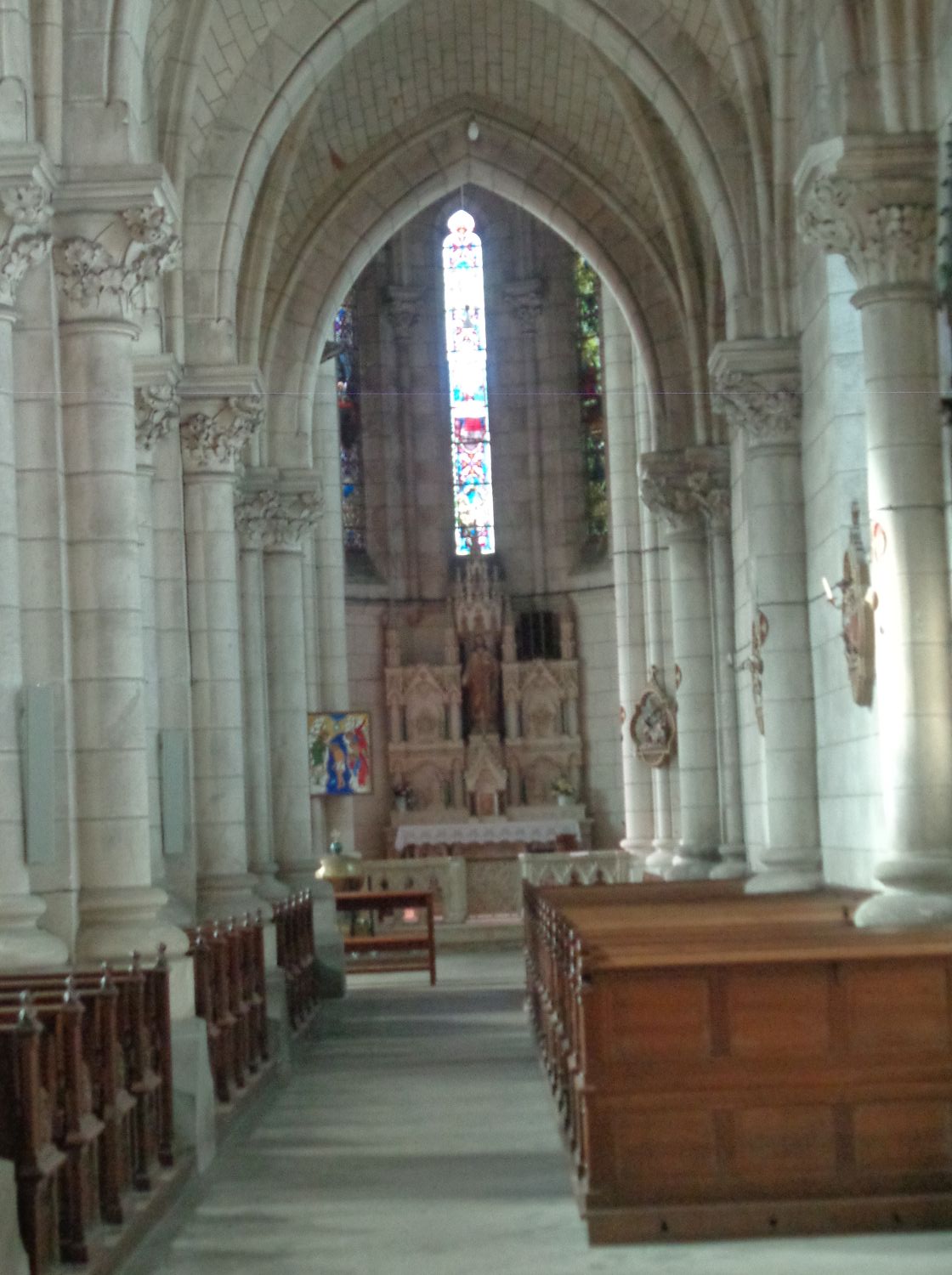
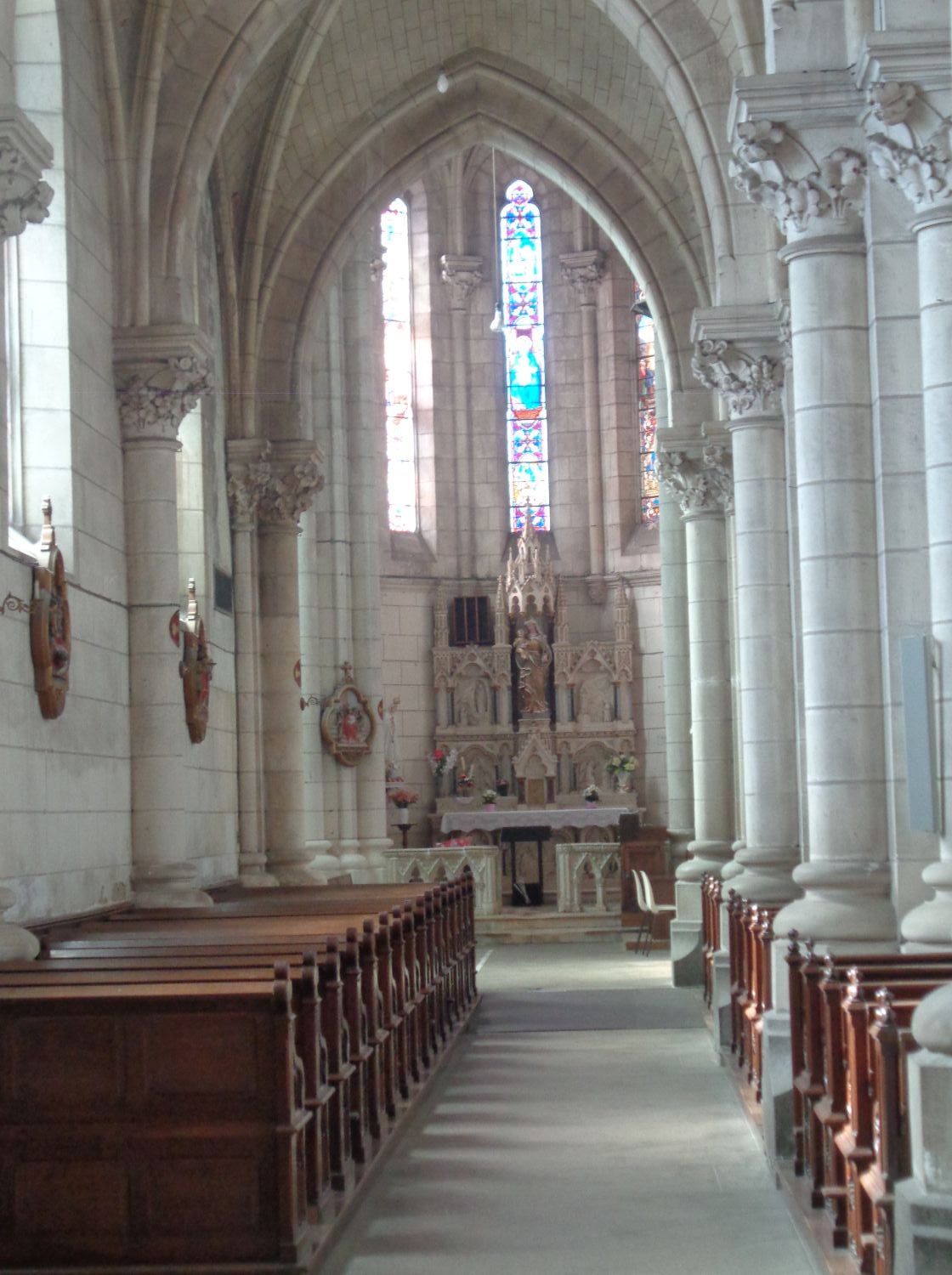
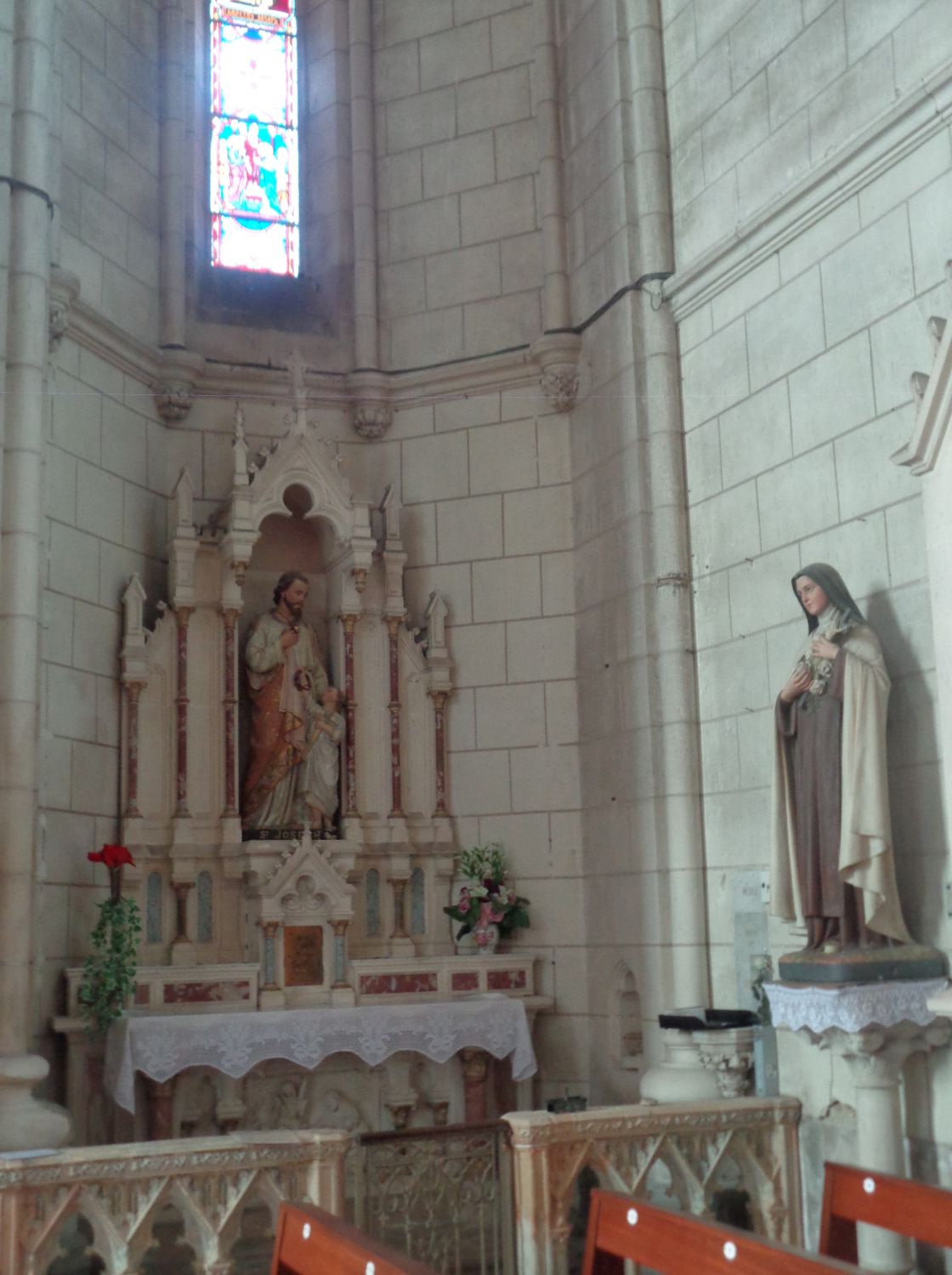
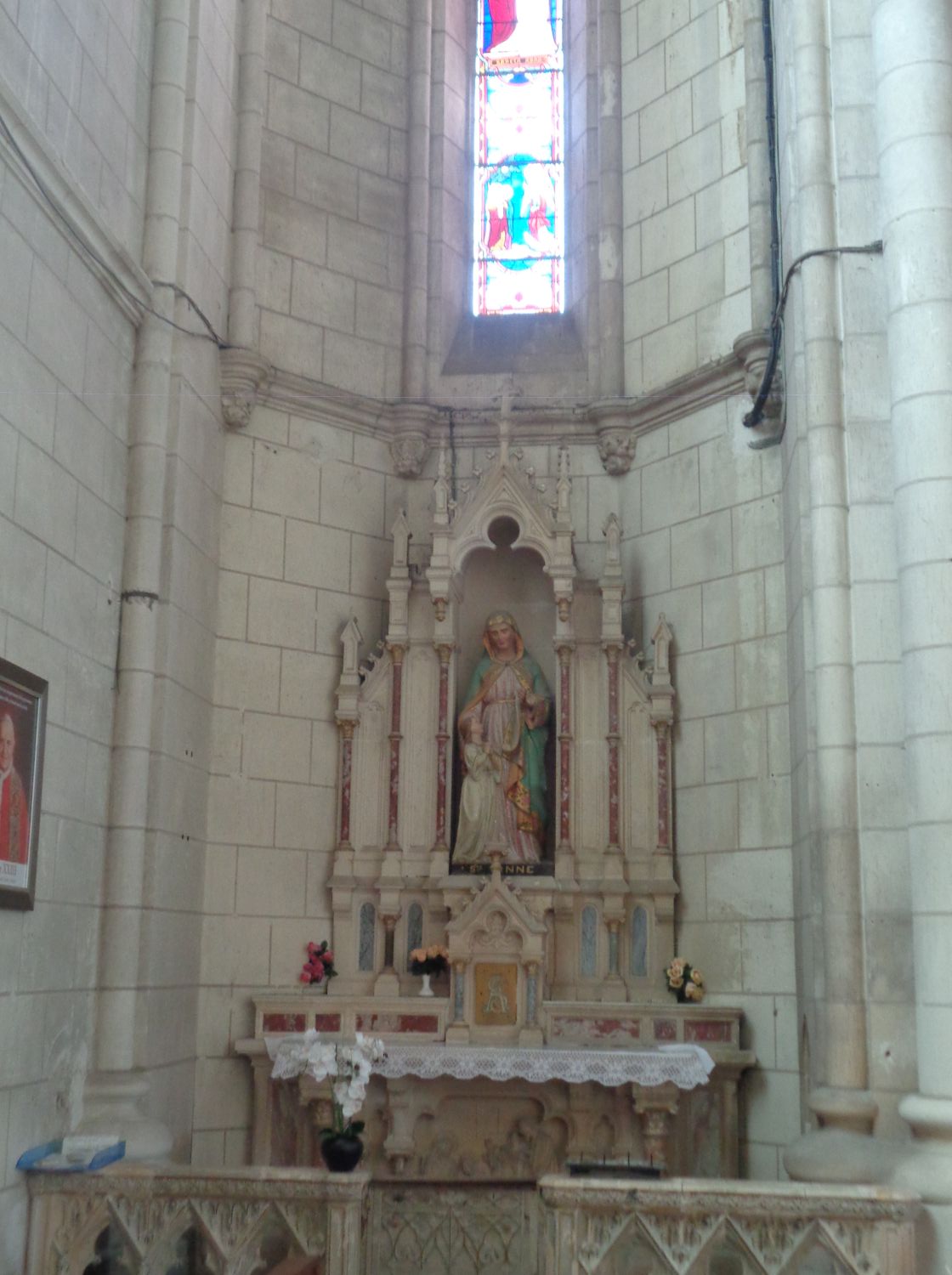
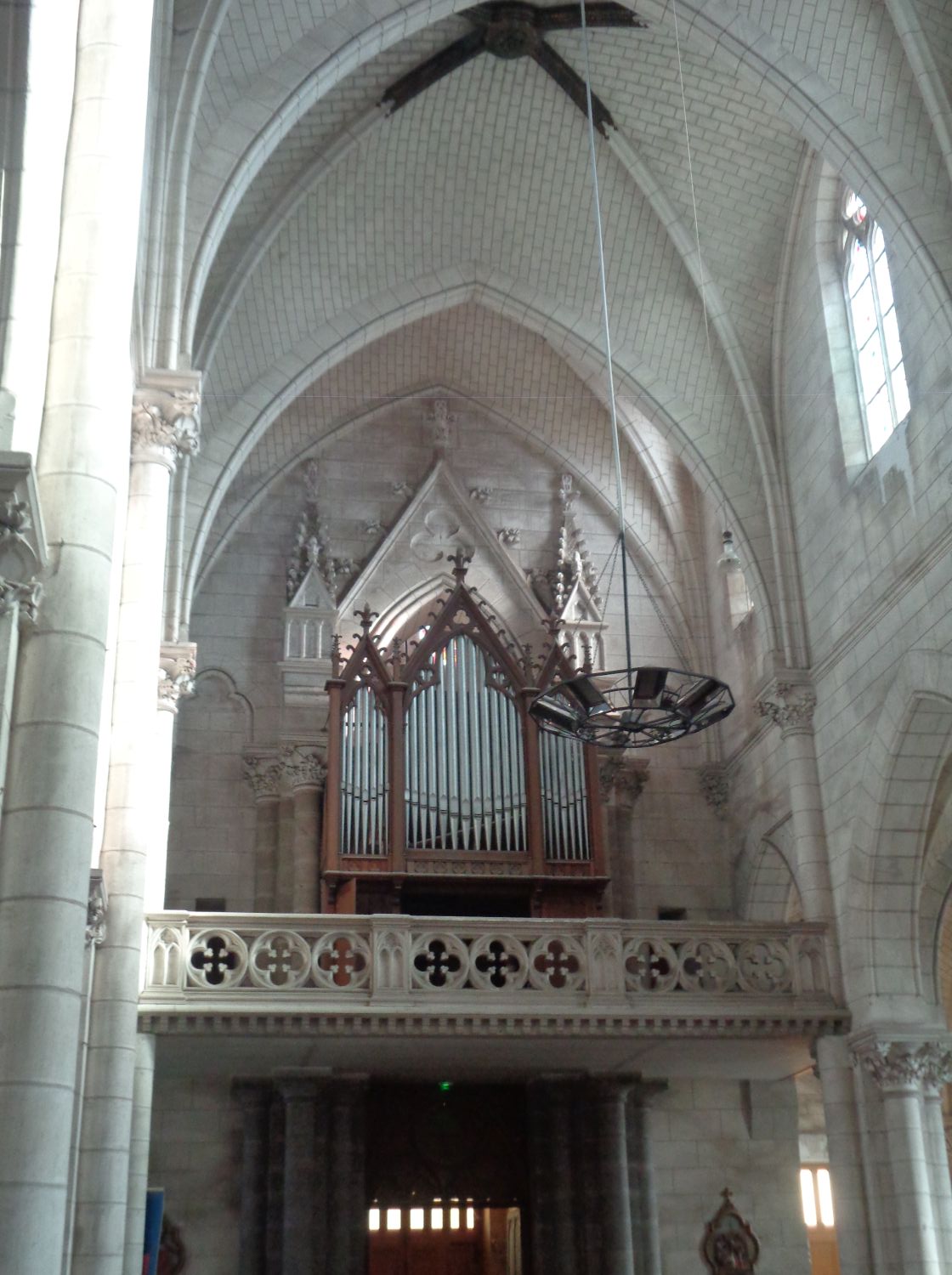
The Church of Saint Pierre on its statues : On the right: Anne and Mary as a child, the Virgin and Child, the Sacred Heart, Joseph and the Child. On the walls: in the left arm of the transept, Our Lady of Lourdes (1954); in the right arm, Thérèse of the Child Jesus , Joan of Arc, beatified in 1909. At the two entrances to the church, two statues that have just been restored: Hilary (1925 model) and Peter. Near the entrance, in the side aisles, two confessionals have been preserved. The Stations of the Cross are made of polychrome bas-reliefs. A large crucifix is located at the end of the nave, on the right, at the entrance to the crossing of the transept, probably opposite the location of the pulpit Three bells were baptized in 1896 (Louise Emilienne-Alfred, Jeanne-Marie-Augustine, Henriette Joséphine-Madeleine). Another was blessed by Bishop Vion in June 1950 (Paule-Thérèse). The organs were blessed by the bishop in 1939. They were rebuilt in 1959. In 1978, an electronic organ was purchased. And in 2014, a new batistery, made of repoussé metal, was blessed.
The village of Cerizay on its history : https://www.cerizay.fr/index.php/decouvrez-et-bougez/tourisme/historique
The Poitiers Catholique see Cerizay Church Saint Pierre (in pdf) : https://www.poitiers.catholique.fr/parvis/
There you go folks, again, another gem of my belle France ! This is real country off the beaten path trails, Again, nice opportunity to see the town as we were right in City center, Again, hope you enjoy the post on the Church Saint Pierre of Cerizay !!! as I
And remember, happy travels, good health, and many cheers to all !!!

 Paris1972-Versailles2003