
Once again, coming back from my road warrior trails in my belle France. This one after many passing finally went in City center of Thouars, with great architecture and history to boot. You will see plenty in next posts stay tune, Therefore, here is my take on this is Thouars !!! Hope you enjoy the post as I.
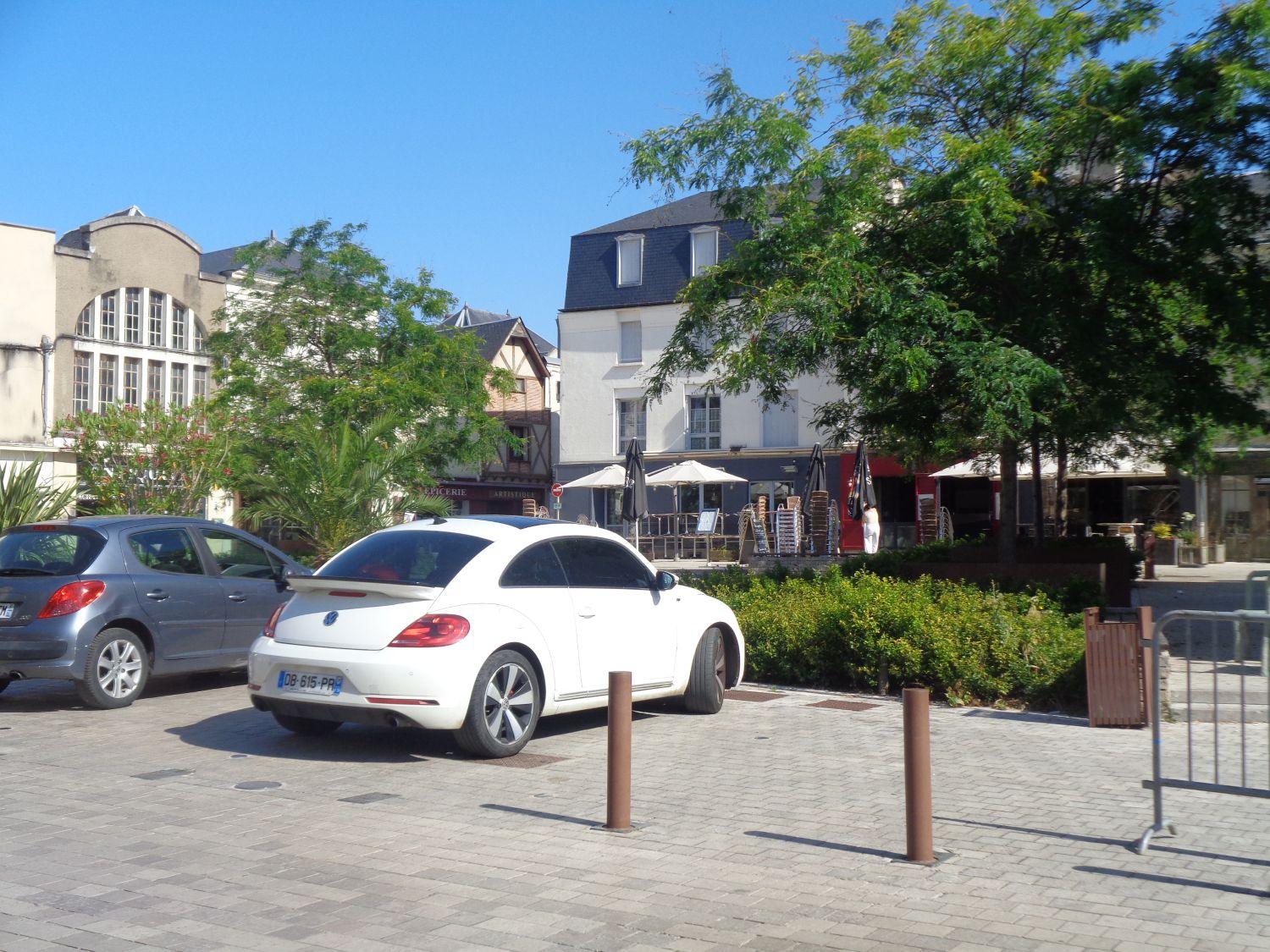
The City of Thouars is located in the Deux-Sèvres department no. 79 in the Nouvelle-Aquitaine region of my belle France. Thouars has been awarded the 4-flower flower town label and the Town of Art and History label, The nearest towns are Bressuire 30 km, Parthenay 40 km, Saumur 35 km , and Loudun 26 km. Niort, Poitiers, and Angers are also nearby. The town is 263 km from my current home, We came down on the N165 dir Nantes ,and by the rocade N844 connected with the N249 road dir Cholet at exit 14 by Mauléon and took the D759 road dir Nueil-les-Aubiers and continue on same road to the D39 and City center Thouars, parking right on Place Saint Médard !
Some other things you can see here other than my posts on Thouars are:
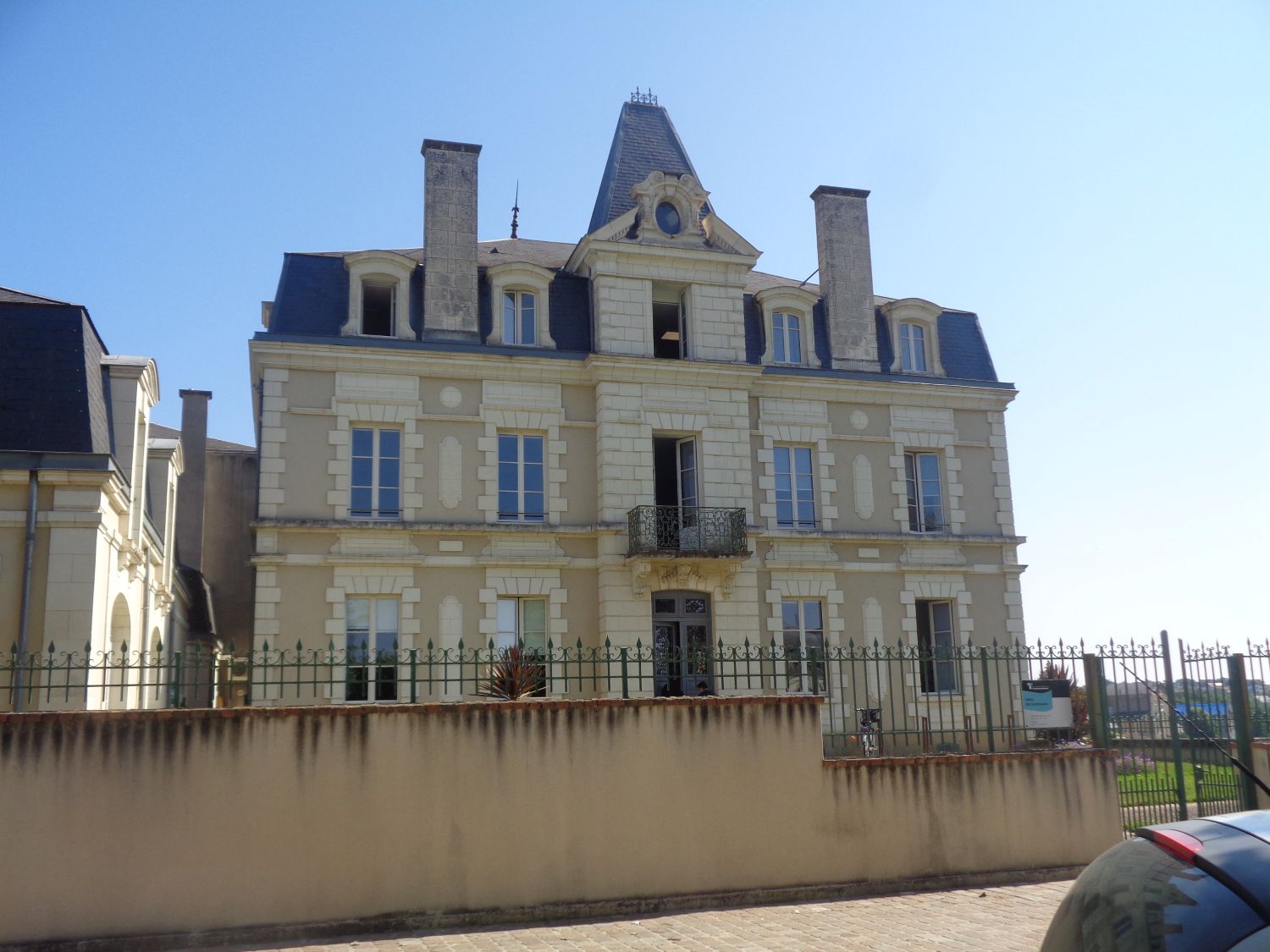
The Hôtel des Trois-Rois is a former 15C inn. King Louis XI stayed several times at this inn located at 11 rue du Château. The Bathhouse, finally constructed between 1927 and 1929, stands on the site of a medieval tower. Since its closure in 1994, this Art Deco-style building has retained its bathtubs, shower stalls, hourglass doors, and blue and white tiles. It is one of the last preserved public baths in the Great West. Discover the life of this building and its neighborhood, through its facades and shower stalls, which have retained all their Art Deco charm. Visible as part of the summer guided tours program. The Chouans Bridge aka New Bridge or Saint-Jean Bridge, Built in the 13C, this bridge was fortified in the 15C and completed with a gate tower in its center called the Maillot Gate. The building was finally renamed the “Chouans Bridge” following the passage of the Vendée armies during the Battle of Thouars in May 1793 against the French revolution. The Joan of Arc Chapel is today the last remaining architectural example of a larger block dating from the 19C. Built in 1889 by a teaching community from Angers, the “Sœurs de la Retraite,” Built in a neo-Gothic style, its choir faces north. Today, the chapel still features a beautiful set of stained-glass windows from 1892 to 1897. The chapel is no longer used for worship and is now used to host cultural events and exhibitions, primarily contemporary art, under the auspices of the City of Thouars’ visual arts department. Developing an ambitious cultural project, which takes into account both its geographical location and its architectural envelope, the art center strives to create a constantly renewed and enriched encounter between a wide and open public, artists and current plastic creation. In the 1970s ,it was bought and protected by the city. The Art Center La Chapelle Jeanne d’Arc is a member of the French Association for the Development of Art Centers
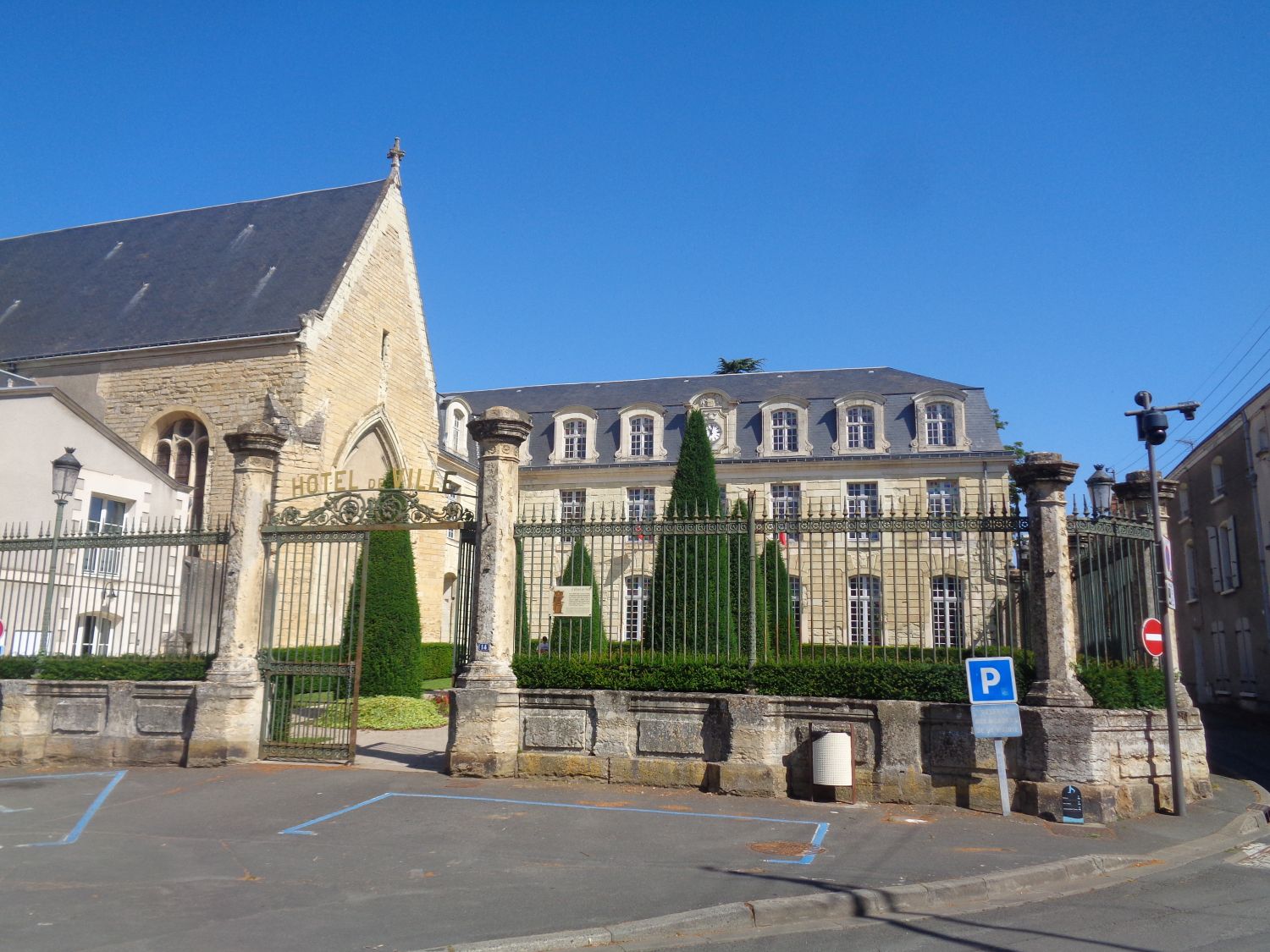
The City/Town Hall was built for the Congregation of Canons Regular of Saint Augustine in 1667, the building was originally a convent before becoming a college in 1806 and then the current town hall in 1847, located on Place Saint-Laon. Built for the Congregation of Canons Regular of Saint Augustine, abandoned during the French revolution, this former abbey has housed the City/Town Hall since the mid-19C. Guided tours are available by reservation from the Architecture and Heritage Department. The Hôtel des Communes or agglo or metro area City hall located at 4 rue de la Tremoille This inter-communities is made up of 24 member towns.
A bit of history I like tell us that it was only in the 8C that the town entered history. In the 760s, Thouars was in Aquitaine. It was the strongest fortress in the entire region according to the chroniclers of the time. This was a warlike era since Duke Waïfre fought for the independence of Aquitaine against the Frankish king Pepin the Short, who intended to seize it. In 762, accompanied by his son, the future Charlemagne, Pepin the Short arrived in front of Thouars, destroyed the city of Gallo-Roman origin and burned down the castle. From the 9C onwards, a line of viscounts would establish themselves and administer this fiefdom for more than five centuries. The first viscount known to date is Geoffrey I. He founded the Thouars dynasty, which would rule the Thouars region until the end of the 14C.
Upon his accession to the Viscountcy of Thouars in 1151, Geoffrey IV of Thouars was a loyal ally of Henry Plantagenet, Count of Anjou and Maine. But in 1154, when the latter became King of England under the name Henry II, he decided to ally himself with King Louis VII of France. In 1152, Eleanor married Henry Plantagenet. Through this marriage, Aquitaine linked its destiny to the Kingdom of England , the viscountcy of Thouars thus found itself wedged into the middle of what would later be called the “Plantagenet Empire,” a collection of territories linked in one way or another to the English crown. In the 13C, to cope with the various conflicts between the Capetians and the Plantagenets, the city modified its architecture. A nine-meter-high wall was built, its length approaching 4.5 km. It was reinforced with 37 towers and three large gates allowing surveillance and ensuring access to the north and east of the medieval city. Today, only the Prince of Wales Tower and the Porte au Prévôt Tower remain. King Charles V then appointed Bertrand Du Guesclin Constable of France, and put him at the head of an army of 30,000 men to undertake the reconquest of the lost territories. The city of Thouars was besieged in June 1372 and it was only five months later and after heavy losses that the Viscount consort of Thouars, Amaury IV de Craon, capitulated. He opens the Porte au Prévost and hands over the keys to the city to du Guesclin’s armies. The town of Thouars was thus definitively annexed to France by Bertrand du Guesclin on November 30, 1372.
With the Thouars line gone, the town passed to the Amboise family, but for a very short time, since after a series of intrigues, Viscount Louis d’Amboise was dispossessed of his lands by Louis XI. Louis XI often resided in Plessis-lez-Tours and enjoyed coming to Thouars, where he stayed regularly, preferring the Hôtel des Trois-Rois to the lordship castle. Directly administered by King Louis XI from 1476, the town began a period of renewal and prosperity. Before his death, King Louis XI decided to return the land of Thouars to its rightful owners, and thus Louis II de La Trémoille, grandson of Louis XI, was the successor. of Louis d’Amboise, who recovered the viscounty. In 1563, the viscounty of Thouars was established as a duchy in favor of the La Trémoille by King Charles IX. At the foot of the castle, the Pont-Neuf was renamed Pont des Chouans because it was through it that the royalist armies of Vendée triumphantly entered Thouars during the Battle of Thouars on May 5, 1793. They left the town in September 1793,
The town of Thouars on its heritage : https://thouars.fr/ville-dhistoire/patrimoine-et-musee/
The Thouars tourist office on Thouars: https://www.maisonduthouarsais.com/decouvrir/patrimoine.html
The Community of Thouars: https://www.thouars-communaute.fr/le-territoire-thouarsais
There you go folks, again, another gem of my belle France ! This is in wonderful City to be seen by all , rather staying in the off the beaten path trails, Again, great architecture and history as always, Again, hope you enjoy the post on this is Thouars !!! as I
And remember, happy travels, good health, and many cheers to all !!!

 Paris1972-Versailles2003