
I take you back to Cheverny. We have been here before, see posts, but many years ago. It took me great strength to be back with the rest of my family, my 3 boys, my Dad, and our dog Rex; sadly only boys this time. Cheverny is a memorable spot and there will be more to come, eventually. Therefore, here is my take on the Church Saint Etienne of Cheverny !!! Hope you enjoy it as I.
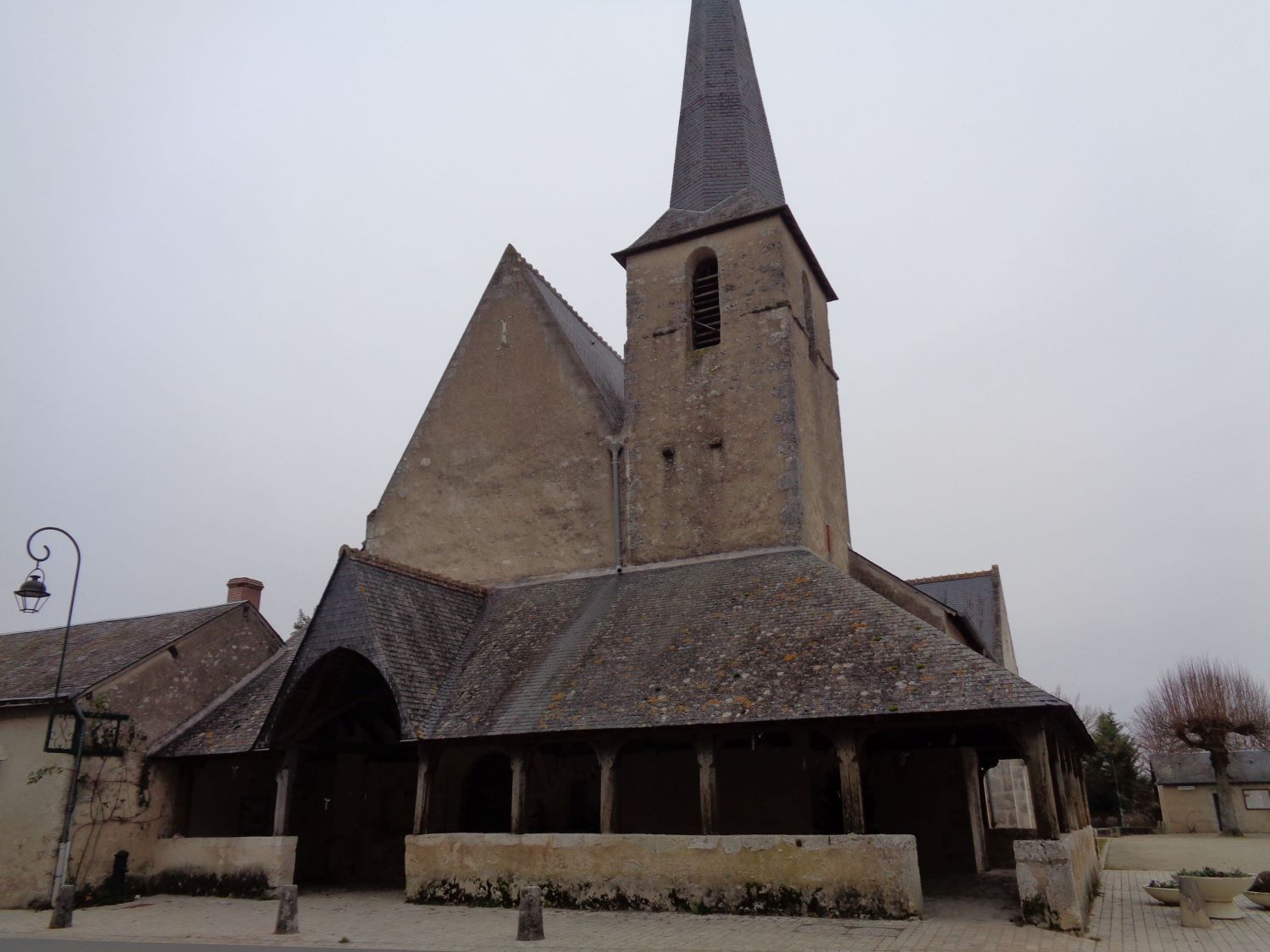
The town of Cheverny is located in the department of Loir-et-Cher, 41 in the Centre-Val de Loire region. The architectural heritage of the town includes wonderful buildings included in the inventory of historical monuments: the castle of Cheverny (see post), the castle of Troussay, and the Church of Saint-Étienne. Cheverny is about 14 km from Blois , and only 1 km from Cour-Cheverny (see posts) The Cheverny forest, with an area of 2,502 ha; it extends over 4 towns, Cheverny, Cour-Cheverny, Contres and Fontaines-en-Sologne. The Jazzin’Cheverny festival is a jazz music festival. It has been held every year since 2008 within the walls of the Château de Cheverny.
The Church Saint-Étienne, built in the 12C, was joined in the 16C by a wooden porch and a side aisle between the bell tower and a seigneurial chapel. The church’s exterior has a remarkable covered gallery which partly surrounds the church and shelters, with its gray slate roof, the entrance to the magnificently flowered church. The current church was built on the site of an old pre-Romanesque church, You see the masonry of the base of the bell tower and especially a small blocked bay clearly visible in the part of the facade, in fact, as the remains of pre-Romanesque constructions. The portal is from the 12C, semicircular, adorned with sawtooths, rafters and a torus. The bell tower also seems to be from the same period, at least in its first part. Originally, most churches had only one nave with a mud vault with exposed beams and punches.
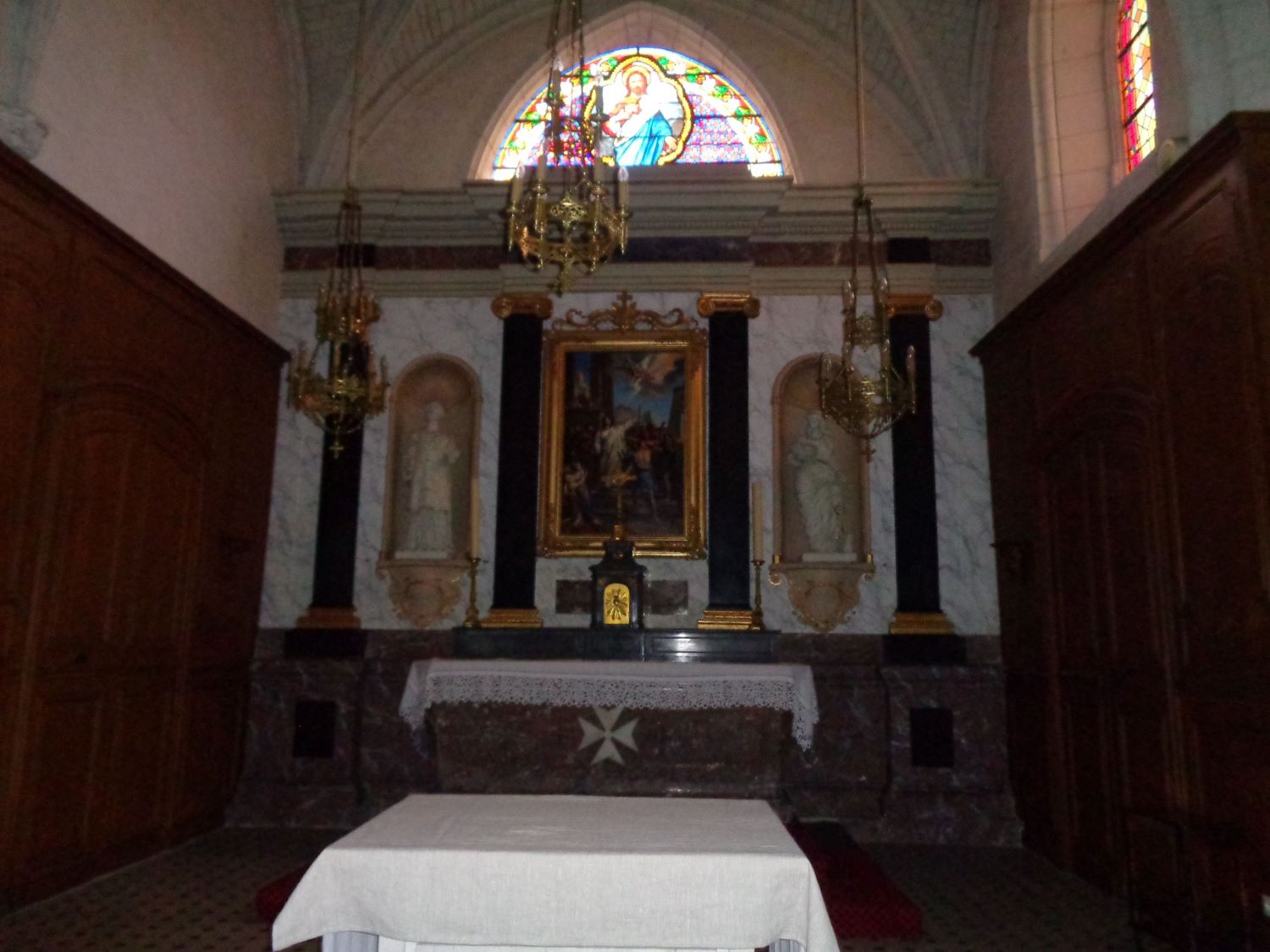 The statue located to the left of the master altar represents Saint-Vincent, Spanish deacon, The painting located in the center represents Saint Etienne, patron of the church and first Christian martyr. To the right of the pulpit, a large painting represents a virgin of pain, accompanied by Saint John. This painting, offered in 1855 to the parish of Cheverny by Napoleon III, is one of the many copies of Italian or Spanish masters that the emperor offered to the parishes of France, In the second half of the 19C, Father Cholet offers the Baptism group of Christ which is above the baptismal font and the stained glass window of the Annunciation executed in 1886, like all of the southern and east stained glass. The baptismal bottoms in black marble are from the 18C. The southern stained glass window representing the arms of Cheverny offered by the town in 1995. Finally we can see, on the left of the choir, and at the level of the ceiling, a window composed of wooden braces which allowed the cloister Sisters to assist to Mass without being seen.
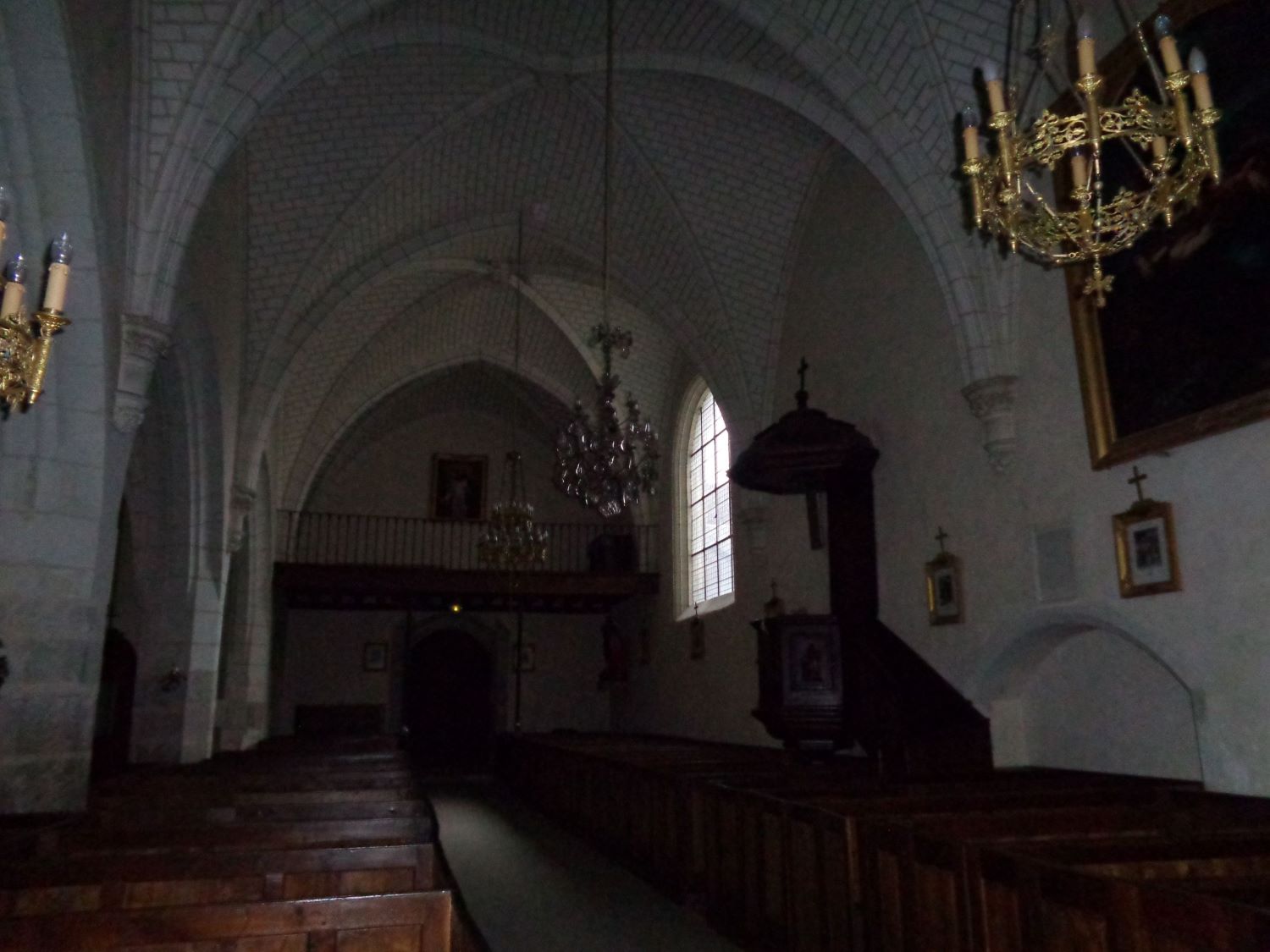
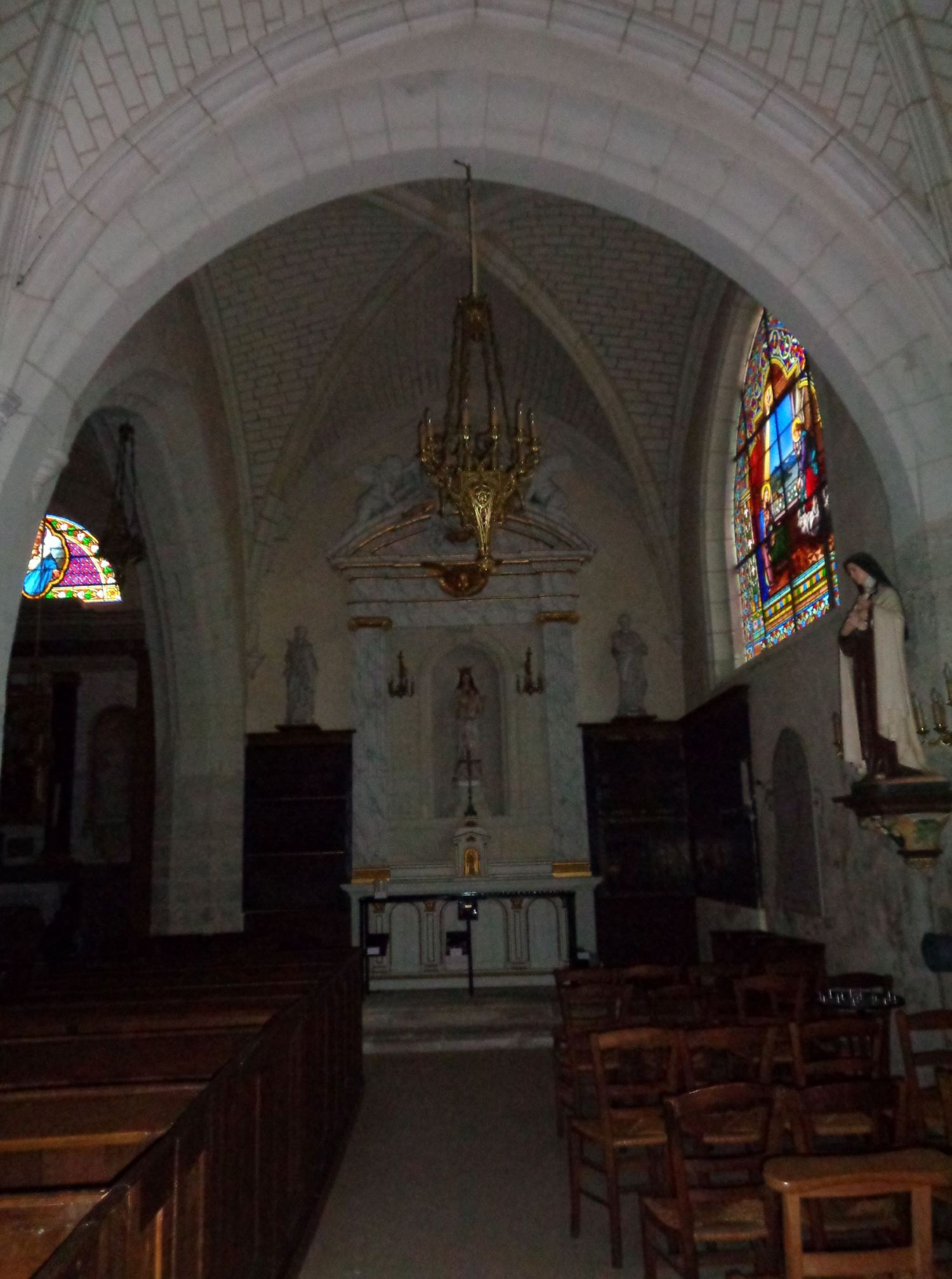
It was in the 16C, as towns developed around royal towns and the number of parishioners increased,that many churches were transformed and enlarged. It was also at this time that a stately chapel was built on the side of the choir, on the site of the current sacristy. During the French revolution, the Convention ordered, in May 1792, the systematic destruction of all the symbols of the Ancien Régime(monarchy), and it was in 1793 that they were destroyed, the funeral plaques and the graves broken and the scattered bones Chapel of the Virgin preserves, on both sides of a 18C altarpiece, the black marble epitaphs of members of the Hurault family, including that of Henri Hurault, lord and builder of the Château de Cheverny. It was not until 1825, after the return of the castle to the family, that Anne-Victor Hurault gathered the scattered pieces of the funeral plaques and had them placed around the chapel where they are still today (on the right of the choir,on the aisle). In the last months of the 19C, major works appeared necessary. They concern the wall and the roof of the nave. Among the last major works carried out on the church were the repair of the facade, and the replacement of the slates of the bell tower. It was in November 1976 and early 1977 that the work was carried out.
The masonry of the base of the bell tower and above all a small clogged bay clearly visible partly west of the north facade appear, in fact, such as the remains of preroman constructions. The portal is, in the 12C, in the semicircular, adorned with sawtre, rafters and a torus. The bell tower also seems to be from the same time, at least in its first part. Access to the mezzanine on the first floor could be done by a staircase and a door open to the left side of the porch of the 12C. Under the caquetoire. an enclosed space had indeed been arranged in this part of the caquetoire and the walled door is still visible outside. It was in this gallery on the first floor that the organ was in the past. The current access of the gallery is done by the interior of the bell tower which probably dates from the construction of the church in the 12C.
The town of Cheverny on the church: https://mairie-cheverny.com/patrimoine/leglise-et-son-caquetoire/
The Blois Chambord tourist office on Cheverny : https://www.bloischambord.com/planifier/nos-villes-villages/nos-villes-villages/cheverny-1538108
There you go folks, another memorable visit to wonderful little Cheverny, part of the valley of the kings and rightfully royal and grand indeed. Again,hope you enjoy the post on the Church Saint Etienne of Cheverny !!! as I.
And remember, happy travels, good health, and many cheers to all !!!

 Paris1972-Versailles2003