
I have come to this wonderful region of my belle France for its architecture, history, culinary delights and the wines, oh yes the wines ! , especially the wines ! As said, it is a tradition in my house and makes it a good reason to come here, I like to dwell again into one of my favorite wine region, And yes this is Burgundy of my belle France, Therefore, here is my take on I give you Beaune, Givry, Mercurey,Montagny, Saint Veran, and Chablis of Burgundy !!! Hope you enjoy it as I,
I have been drinking Burgundy wines since 1988 when I had the opportunity to meet Pierre-Henri Gagey then President of Maison Jadot, Beaune (see post) who was stopping by for a tastings in Crown Wine Liquiors store in North Miami Beach Florida USA. The store is no longer feature in their site,but it does has one other I have visited in Coral Gables ,I have a certificate from SOPEXA, the French food and wine export organization in knowledge of French wines, and proven articles in different magazines such as Decanter, Wine Spectator, Wine Enthusiasts etc, , and ICEX Spain food and wine organization, the Gourmet Madrid group who was base in Miami at Sunset Liquors, as well as living in France from the Boutin Gourmand , a former critic member.
The region is long and narrow, starting in the north with Chablis and Yonne and coming down thru Côte de Nuits, Côtes de Beaune, Côte Chalonnaise, Maçonnais, long of 250 km all 28 715 hectares representing 6,5% of the French AOC wine production! 84 appellations areas or more than 200 million bottles!!! The main areas are Chablis and Grand Auxerrois, Côtes de Nuits, and Hautes Côtes de Nuits, Côtes de Beaune and Hautes Côtes de Beaune, Côte Chalonnaise and Couchois, Macônnais, Châtillonnais, and Crémant de Bourgogne. The towns for touristic reference as well as the wines, tops are: -Montrachet, Santenay, and Beaune , Chambertin, Morey Saint Denis, Chambolle-Musigny, Vougeot Vosne-Romanée, Nuits Saint Georges , Aloxe-Corton, Savigny, Pommard, Meursault, Chassagne. Also, Givry, Buxy, Mercurey, and Pouilly-Fuissé.
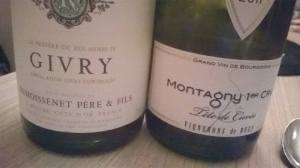
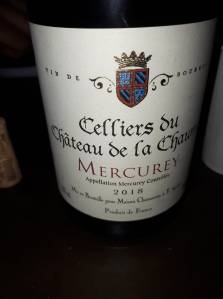
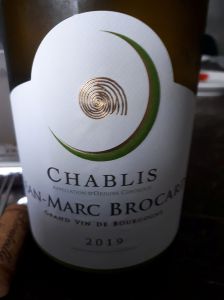
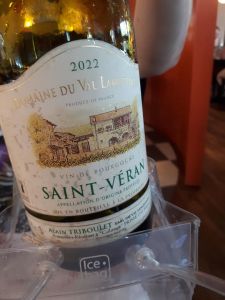
I like to tell my latest tastings from Burgundy : Beaune, Bouchard Pére et Fils ,Bouchard Aîné et Fils, Givry, Remoissenet pére et fils, Montagny 1er cru vignerons de Buxy, Mercurey celliers du château de la Chaume Saint Veràn Domaine du Val Lamartinien and Chablis Jean Marc Brocard chablis,And the below text comes directly from their respective wine info sites.
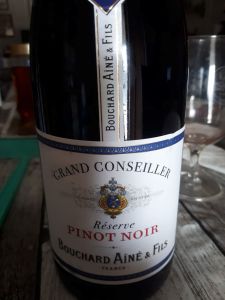
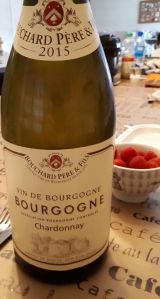
The Côte de Beaune vineyard: Red wines, Pinot Noir grape variety. White wines, Chardonnay grape variety. Reds: 333.41 ha (including 257.99 ha Premier Cru) Whites: 66.36 ha (including 42.21 ha Premier Cru) Reds: 11,648 hl (including 9,020 hl Premier Cru) Whites: 2,220 hl (including 1,484 hl Premier Cru) , Appellation Village of the Côte de Beaune, in Côte-d’Or (AOC). This appellation includes 42 Climats classified as Premier Cru. Production town: Beaune. The appellations Beaune and Beaune Premier Cru may or may not be followed by the name of their Climat of origin. Red: a bright, vivid, luminous, scarlet color. This flame announces aromas of black fruits (blackcurrant, blackberry), red fruits (cherry, redcurrant), humus and undergrowth. Truffle, leather, spices with age. Young, the Beaune appellation offers the palate the crisp charm of fresh grapes. Firm, frank, full of sap, it then blossoms, asserting a well-structured and perfectly convincing structure. White: the tenderness of gold with green highlights. A bouquet of almonds, dried fruits, ferns and white flowers. Honey and cinnamon are its usual notes. The Beaune appellation can be enjoyed either quite young on the fruit, or a little more mature for its fat and softness. Red serving temperature: 15 to 16 °C. White serving temperature: 12 to 14 °C. The very image of Burgundy and capital of its wine, Beaune attracts the attention of the whole world during the sale of the wines of its Hospices. The flamboyant Hôtel-Dieu, the immense and silent cellars of the trading houses and the wine estates welcome countless visitors. Beaune also has one of the most extensive vineyards on the Côte. This is the “Pinot Vermeil” of the Dukes of Burgundy, a red wine renowned since the High Middle Ages for its youthful temperament, full of fire and bouquet. Fairly rare, the whites highlight terroirs favorable to Chardonnay. The Appellation d’Origine Contrôlée was established in 1936. In the Volnay syncline, the Comblanchien limestone disappears in depth and lets the Rauracian limestones of the summit express themselves, quite steep (thin brown soils, black rendzinas from scree). Descending the hillside: the Aargau marls on thick soils, white, gray or yellow, shaded with red by the ferruginous Oxfordian. At the bottom of the hillside: limestone mixed with clay. Exposure: east to due south between 220 and 300 meters above sea level.
The Vineyards of the Côte Chalonnaise and Côtes du Couchois: (Givry): Mainly red wines, Pinot Noir grape variety. White wines, Chardonnay grape variety. Reds: 250.30 ha (including 126.21 ha in Premier Cru) Whites: 58.86 ha (including 18.44 ha in Premier Cru Reds: 9,483 hl (including 4,594 hl in Premier Cru) Whites: 2,439 hl (including 811 hl in Premier Cru) Appellation Village de la Côte Chalonnaise, in Saône-et-Loire (AOC). This appellation includes 38 Climats classified as Premier Cru. Production towns: Givry, Dracy-le-Fort and Jambles. The Givry and Givry Premier Cru appellations may or may not be followed by the name of their Climat of origin. Givry is primarily a red wine made from Pinot Noir. It offers a brilliant, carmine or purple color, enhanced with purple highlights. Its bouquet generally evokes violet, strawberry, blackberry, with variations of liquorice, gamey accents, spices (clove). Quite tannic in its early youth, the Givry appellation wine softens and becomes round after 3 to 5 years in the bottle. The structure is firm. In white (Chardonnay), a light gold wine, limpid and lively, honeyed or lemony, with nuances of lime blossom and lily then dried fruits, often grilled, after a few years. Its palate is fine, shared between the mellowness and the acidity which ensure the Givry appellation a good aging potential and a good length in the mouth. Red serving temperature: around 15 °C White serving temperature: 11 to 13 °C. The favorite Burgundy wine of Henri IV is one of the crus of the Côte Chalonnaise. Produced in the towns of Givry and its hamlets of Poncey, Cortiambles and Russilly, Dracy-le-Fort and Jambles. A small paradise for the vine, recognized under its appellation since 1946, around the fortified village since the Middle Ages.
The Vineyards of the Côte Chalonnaise and Côtes du Couchois (Mercurey): Reds: 530.06 ha (including 145 ha Premier Cru) Whites: 115.59 ha (including 20.22 ha Premier Cru) Reds: 19,884 hl (including 5,370 hl Premier Cru) Whites: 4,345 hl (including 715 hl Premier Cru) Appellation Village de la Côte Chalonnaise (AOC). This appellation includes 32 Climats classified as Premier Cru. Production communes: Mercurey and Saint-Martin-sous-Montaigu. The appellations Mercurey and Mercurey Premier Cru may or may not be followed by the name of their Climat of origin. Red: often deep and ruby red in color, this wine evokes raspberry, strawberry, cherry, a crisp fruit. Age gives it accents of undergrowth, with spicy aromas of tobacco and cocoa beans. On the palate, a full-bodied wine, rich in body and fruit. The tannins can sometimes bring a mineral firmness in their early youth. Lovely fleshy roundness when mature. White: adorned with green reflections, it is the golden Chardonnay that brings aromas of white flowers (hawthorn, acacia), hazelnuts and almonds, spices (cinnamon, pepper). A mineral touch contributes to its typicity. It is tasty. In a word, delicious. Red serving temperatures: 14 to 15 °C (young wine), 15 to 16 °C (at maturity). White serving temperature: 11 to 13 °C. In the heart of the Côte Chalonnaise (12 km from Chalon-sur-Saône), Mercurey is one of the most important wine appellations in Burgundy. Protected from the humid winds by its hillsides reminiscent of the aptly named Val d’Or, the vineyard also extends to the village of Saint-Martin-sous-Montaigu. The Appellation d’Origine Contrôlée was established in 1937. Gathered around the Chanteflûte brotherhood (created in 1971), the winegrowers promote and celebrate Mercurey around the world. The vines are located between 230 and 320 meters above sea level. They extend over marl and marl-limestone soils of the Oxfordian period. To the east, limestone and marl. To the west, a Jurassic structure and a crystalline base covered with sandstone. A large part of the vineyard belongs to the Bathonian period. On these white and limestone, or red and clayey soils, the vines find warm affinities.
The Vineyards of the Côte Chalonnaise and Côtes du Couchois (Montagny) White wines exclusively, Chardonnay grape variety. 362.09 ha (including 219.81 ha Premier Cru) 15,541 hl (including 9,002 hl Premier Cru) Appellation Village of the Côte Chalonnaise, in Saône-et-Loire (AOC). This appellation includes 49 Climats classified as Premier Cru. Production towns: Montagny, Buxy, Saint-Vallerin and Jully-lès-Buxy. The appellations Montagny and Montagny Premier Cru may or may not be followed by the name of their Climat of origin. Montagny, exclusively white, presents itself to the eye with the classic traits of Burgundy Chardonnay: clear, golden, discreet with green highlights, then buttercup with age. Its usual aromas evoke acacia, hawthorn, honeysuckle, bramble flower, sometimes violet and fern. From a more lively angle, lemongrass and flint are added. Hazelnut and honey are not surprising, nor are white peach or pear. On the palate, a fresh, young wine with character, lively and pleasant, rich in spicy aromas. The finesse of the taste and the delicacy are combined with a structured and lasting structure. White serving temperature: 10 to 12 °C. At the southern tip of the Côte Chalonnaise, in Saône-et-Loire, four villages (Buxy, Montagny-lès-Buxy, Jully-lès-Buxy and Saint-Vallerin) have been working together since this Appellation d’Origine Contrôlée was recognized in 1936. As in Côte de Nuits or Chassagne-Montrachet, wine and marble find good common ground here. Fortified in the 12C, Buxy (we have stayed here in a gîte!) preserves an important monumental heritage and an independent temperament. Made from the sole Chardonnay grape variety, this white wine gives fresh breath and clear ideas. The monks of Cluny preferred it to any other. Facing east and southeast, the slopes of the Bajocian hillsides accommodate the vines between 250 and 400 meters above sea level. An ideal terroir made up of marl, or limestone and marl, soils from the Lias (Jurassic) and Triassic (older, around 200 million years ago). The Lower Triassic sandstone that outcrops in Buxy is in contact with the Kimmeridgian, the geological stage of Chablis wines.
The Mâconnais Vineyard (Saint Véran) White wine, Chardonnay grape variety 735.38 ha 28,886 hl Appellation Village of the Mâconnais vineyard in Saône-et-Loire. This appellation can be followed by the name of the Climat where the wine comes from. Production towns: Chânes, Chasselas, Davayé, Leynes, Prissé, Saint-Vérand, and Solutré-Pouilly. The name of the commune of Saint-Vérand is written with a d, while the name of the appellation is written without a d. Its color is a very light yellow, brilliant, crystalline, pale gold. On the nose, subtle aromas of fruit (peach, pear) or acacia, honeysuckle, fern develop, with frequent notes of fresh almond, hazelnut, cinnamon, butter and sometimes honey. Exotic fruit appears from time to time, as do citrus fruits (orange peel). On the palate, a dry and round wine, often mineral (flint, flint), lively in ardor from the start. The acidity and fat then complement each other in a crescendo: a harmonious and fresh structure, round and vinous. Serving temperatures: 9 to 11 °C for a young wine, 11 to 13 °C for a more mature wine. At the southern tip of the Mâconnais vineyard, the Saint Véran Appellation d’Origine Contrôlée (recognized in 1971) surrounds Pouilly-Fuissé with a golden belt. As is often the case in Burgundy, the AOC unites several villages: to the north of La Roche de Solutré, Prissé and Davayé; to the south, Leynes, Chasselas, Chânes, part of Solutré-Pouilly and of course Saint-Vérand. This land, so well suited to Chardonnay, only produces white wine. The Saint-Véran cru is divided into two islands separated by its brother Pouilly-Fuissé. They both occupy the slopes of the Solutré chain. The skeleton of this ridge is formed of entroque limestone from the Middle Jurassic. On the western slope of these rocks, in older terrain (lias), the steep slopes are made of gray marl (vineyards exposed to the south and west of Chasselas and Leynes). On the gentle slopes of the eastern side of the rocks, marly limestone dominates (vineyards exposed to the east of Prissé and Davayé). At Chânes and Prissé, on the left bank of the Petite Grosne, the vines are planted on entroque limestone often covered with a layer of chailles clay (a type of flint).
The Chablis vineyard is located in the north of Burgundy, in the Yonne department no, 89, between Paris and Beaune, a stone’s throw from Champagne. Chablis appears simple to understand, a single color, a single grape variety, only dry white wines produced in the north of Burgundy. This apparent simplicity hides a great diversity, each appellation, from Petit Chablis to Chablis Grand Cru, asserting its own personality. White Burgundy wines with exceptional qualities, Chablis wines are made from a single grape variety, Chardonnay. They are available under several appellations: Petit Chablis, Chablis and Chablis Premier Cru, Chablis Grand Cru, These are distinguished by precisely defined production areas as well as specific production conditions. Logically, the higher you go in the hierarchy, the higher the requirements. Chablis wines are dry white wines distinguished by their purity, freshness, finesse and minerality. The Chardonnay grape variety expresses itself in Chablis like nowhere else. It draws its personality and character from a 150 million year old subsoil and matures in ideal conditions, in a semi-continental climate, allowing it to achieve a beautiful balance between its sugar content and its freshness. The Chablis vineyard has 47 Climats that can be mentioned on the wine label, 40 for Chablis Prémiere Cru and 7 for Chablis Grand Cru. These are all on the right bank of the Serein. As for the Climats of Chablis Premier Cru, they are distributed on both sides of the river, 24 on the left bank, 16 on the right bank. Surface area in production in 2023: 5,866 ha 19% of the volume of wines produced in Burgundy 364 wine estates 1 cooperative which ensures 1/4 of the production, More than 67% of sales made in exports The societies or brotherhoods of Saint Vincent are at the origin of associations based on solidarity and mutual aid. The first appeared in Burgundy in the 18C, but developed especially in the 19C in the Burgundian villages. Vincent, a man of the church and martyr, quickly became the object of worship after his death. His body and relics traveled throughout Europe. In order to glorify the tunic of Saint Vincent and a golden cross of Toledo, relics brought back from Zaragoza following an expedition in 542, King Childebert I, son of Clovis, had a basilica built under the dual name of Saint Vincent and the Holy Cross. This abbey was called Sainte-Croix-Saint-Vincent. From the 7C onwards, the name Saint-Germain was associated with that of Saint Vincent. This abbey later became that of Saint-Germain des Prés in Paris.
The official Burgundy wines: http://www.bourgogne-wines.com/
The Beaune tourist office on wines visits/tastings,,, : https://www.beaune-tourism.com/explore/surprising-burgundy-wines/meet-the-winemakers/
The memorable Côte Chalonnaise wines : https://www.achalon.com/en/homepage-tourism/discover-grand-chalon/on-the-burgundy-wine-trail/
The Burgundy France Comte region tourist office on wines of Burgundy : https://www.burgundy-tourism.com/discover-burgundy/vines-and-vineyards-of-burgundy/burgundy-wines-for-dummies/
There you go folks, another wonderful village of my belle France. The Burgundy wines and its many other attributes are dear to my family, and we have drank it quite a bit over the years, even from before settling in France , A region that is on my list , to revisit, eventually, Again, hope you enjoy the post I give you Beaune, Givry, Mercurey,Montagny, Saint Veran, and Chablis of Burgundy !!! as I.
And remember, happy travels, good health, and many cheers to all !!!

 Paris1972-Versailles2003