
I have found older paper pictures new to my blog from this wonderful region, I like to include these in my blog even if quality will not be tops. We were on my road warrior trip in the region and these were memorable towns indeed ; some we have revisited, My belle France is an inmense mouvable feast ! Therefore, let me put them together in a curiosities of Hauts de France, part I !!! Hope you enjoy the post as I.
The town of Saint-Amand-les-Eaux is located in the Nord dept no. 59, in the region of Hauts-de-France, It is 10 km from Valenciennes, 35 km from Lille, 46 km from Caudry, 21 km from Tournai,(Belgium), 237 km from Versailles, and 692 km from my current home,
Its abbey, rebuilt in the middle of the 17C, subsisted until the French revolution ; The church was partly rebuilt in 1634; You can still admire the slender tower today, which serves as a public clock, belfry and museum. It is built in sandstone and white stone, carved from the base to the peak; Its height is about 100 meters, and you arrive at the top by a narrow staircase of 450 steps. The city has Elnon abbey, now dismantled, but of which there remains the priory and the tower of the old abbey church currently a museum dedicated to the art of ceramics and to religious art.
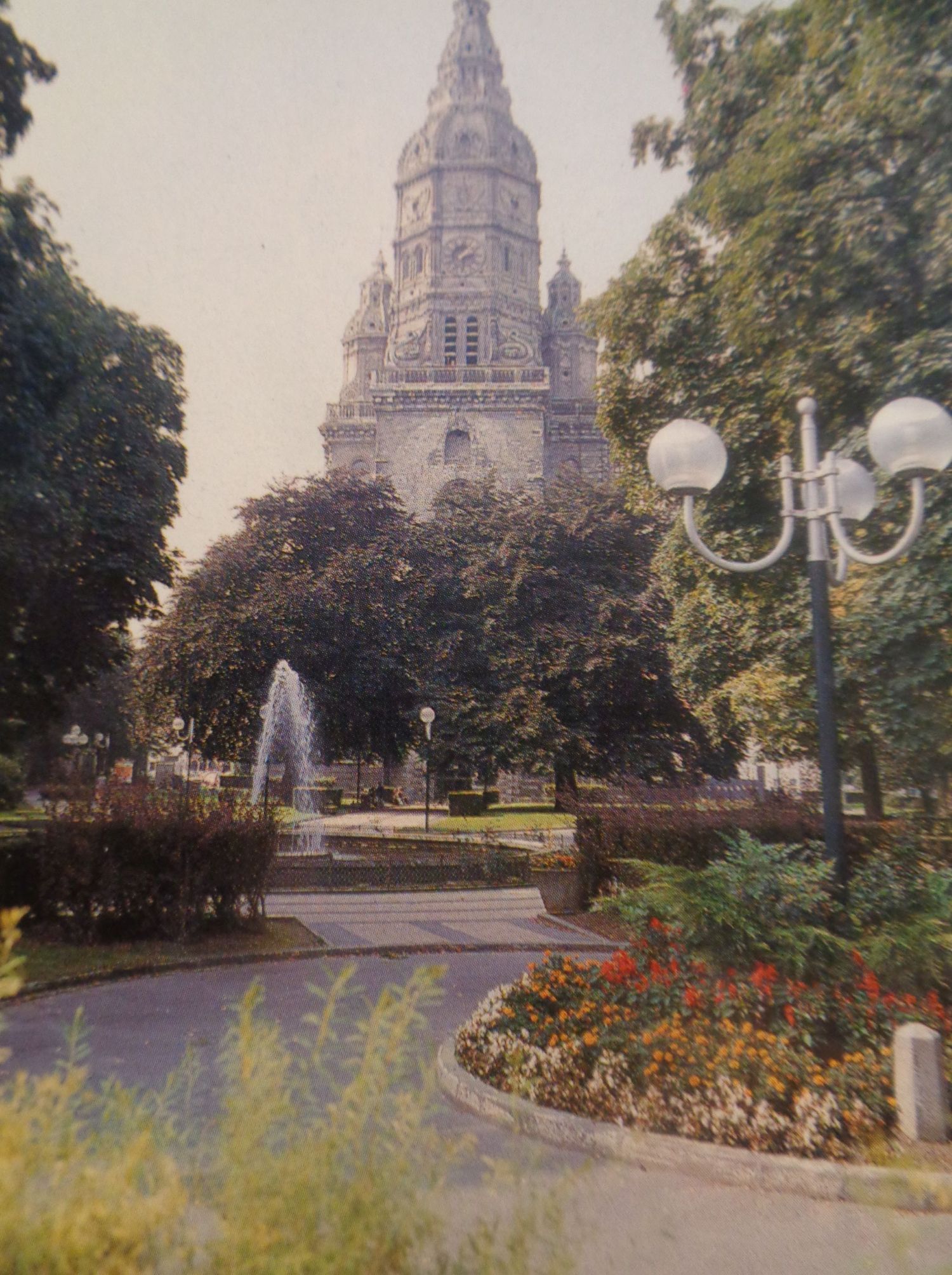
A bit of history I like tell us that in the 7C, it was only a village known as Elnon. Dagobert, this Merovingian King Grand Friend of the Clergy, donated it to Saint Amand. This one, to conquer the Christian faith the peoples still scattered in the vast forests of Flanders, founded a monastery there; He was the first abbot and gave it his name. Thus was formed, from the village and the monastery, the small town of Saint-Amand. The body of Saint Amand of one of the first and most famous apostles of Belgium was the object of a deep veneration in 1477, the city having declared prematurely, on the death of Charles the Bold, for Louis XI, the Duchess Marie de Burgundy had her investing and ransacking. Having become French, the Prince de Ligne took it, in 1521, on behalf of the happy rival of François I, the emperor Charles-Quint; The French went to master of it again under Louis XIII; Finally, in 1667, it was definitively ceded to France by the Treaty of Utrecht. The Thermes of Saint-Amand-les-Eaux have been a hydrothermal center since the 17C
The town of Saint Armand les Eaux on its heritage: https://www.saint-amand-les-eaux.fr/musee-de-la-tour-abbatiale
The City of Laon is a prefecture of the Dept of Aisne no. 02, located in the region of Hauts-de-France, It is a fortified city on a plateau, benefiting from the largest safeguarded sector in France, 370 ha (3.7 km2 Laon has many medieval monuments, Particular hotels and houses of the 16-17-18C in large numbers, especially in the seruer, Saint-Jean, Saint-Cyr or Vinchon streets, real urban museums. Preservation is one of the current heritage issues. It is 57 km from Reims, 47 km from Saint Quentin, 155 km from Versailles, and 630 km from my current home,
The City of Laon contains the cathedral, rebuilt in the first third of the 9C, Notre-Dame Cathedral, of Gothic style, dominates the hill, the city and its ramparts. With a length of 110 meters, it served as a model for Notre-Dame de Chartres cathedral and that of Paris. It was built between 1150 and 1180, it was one of the first Gothic cathedrals, but the choir, too small in 1200, was rebuilt in the early 13C. It includes in particular: four towers, campaniles or bell towers of which was said to be the “most beautiful in the world”; a lantern tower; Life -size carved animals – oxen installed on the tours of the towers !
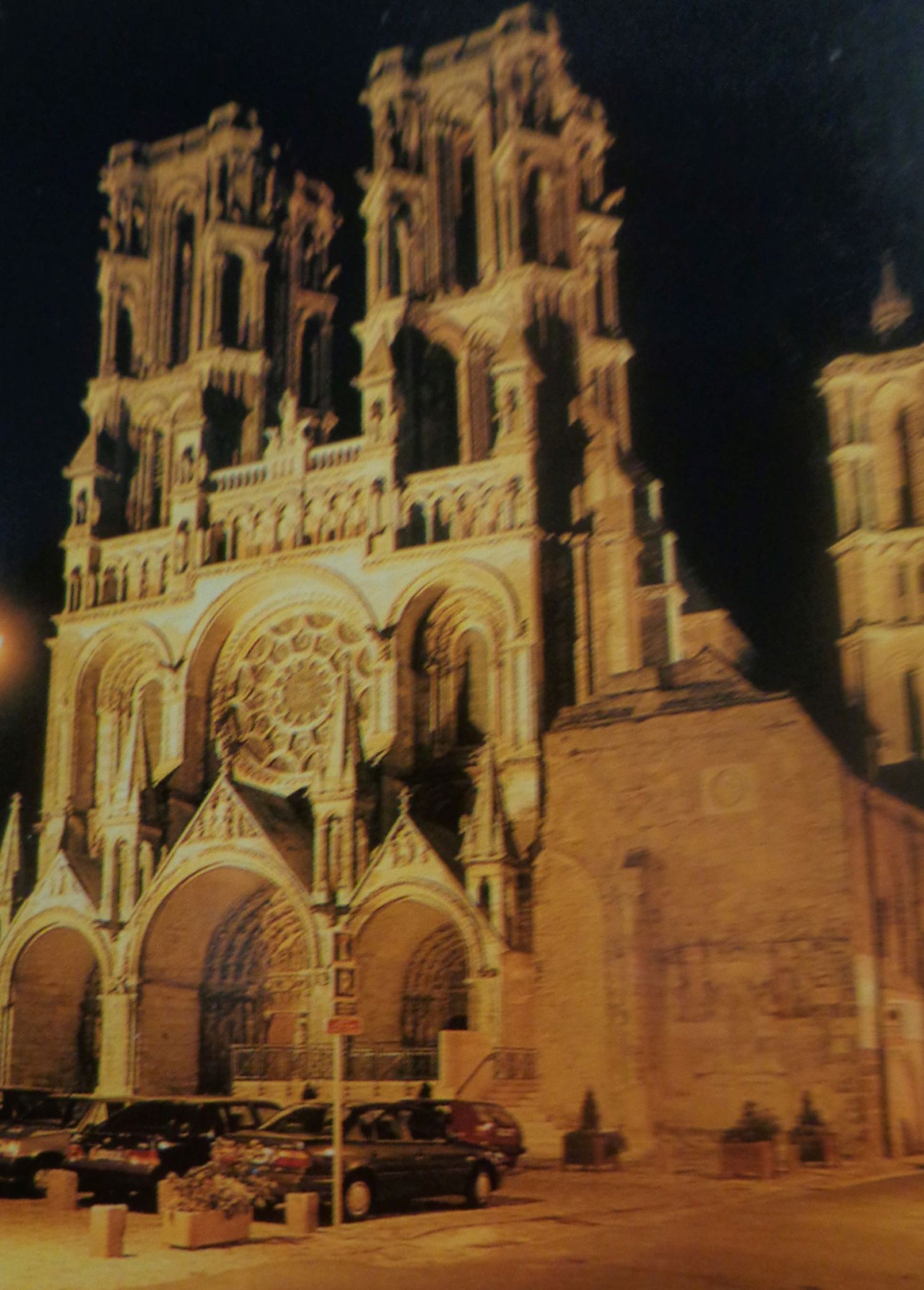
A bit of history I like tell us that between 497 and 513, Saint Remi, native of the Laonnoise region, pupil Laon raise the dignity of the city by the creation of a bishopric dismembered from that of Reims. In the 10C, to the episcopal power added royal power, Laon being a frequent place of residence of the last Carolingian kings. It was King Louis of Outremer who around 940-950 erected a fortified tower in Laon in September 1411, the city, favorable to the Armagnacs, went to Jean Sans Peur, Duke of Burgundy, after a few days of siege. While Jean Sans Peur was declared enemy of the State, King Charles VI took over the city from him in June 1414. In 1418, It felled to the hands of the Burgundians. The following year, Philippe le Bon, son of Jean Sans Peur, delivers the city to the English who kept it until 1429, the day after the coronation of Charles VII. During the wars of religion, the city which took the side of the league is besieged. The Spanish garrison commissioned by Captain Mansfeld capitulates ahead of Henri IV on July 22, 1594. During this siége, the Spaniards tried to relieve the city during the battle of Cerny , At the start of the Great War or WWI on August 29, 1914, the 5th French army establishes its HQ in the town. Laon fell on September 2, and remains until the end of the war one of the main German support points, one of the closest in Paris. On October 13, 1918, the 10th French army, commanded by General Mangin, relieves Laon.
The local Pays de Laon tourist office on the ND Cathedral : https://www.tourisme-paysdelaon.com/la-cathedrale-notre-dame-10/
There you go folks, I come to the gorgeous historical even if the region is vast, the towns were visited at different times, This is a wonderful region in my road warrior tour of my belle France. The towns here are wonderful full of great architecture and history, that should be visited and more ! . Again, hope you enjoy this post on curiosities of Hauts de France ,part I as I.
And remember, happy travels, good health, and many cheers to all !!!

 Paris1972-Versailles2003