
And we came back to mighty beautiful Chambord ! It has been said that the stretch of land on both sides of the Loire river passing by several famous towns for its castles was referred to as the valley of the kings. Well Chambord is the king of the valley! Chambord is a small village with a huge castle and even bigger forest in dept Loir-et- Cher,no 41 of the Centre-Val de Loire region of my belle France. As usual , I have written plenty but never enough when you consider the magnificent of Chambord. Therefore, here is my take on the Domaine National de Chambord ,part VI !!! Hope you enjoy the post as I.
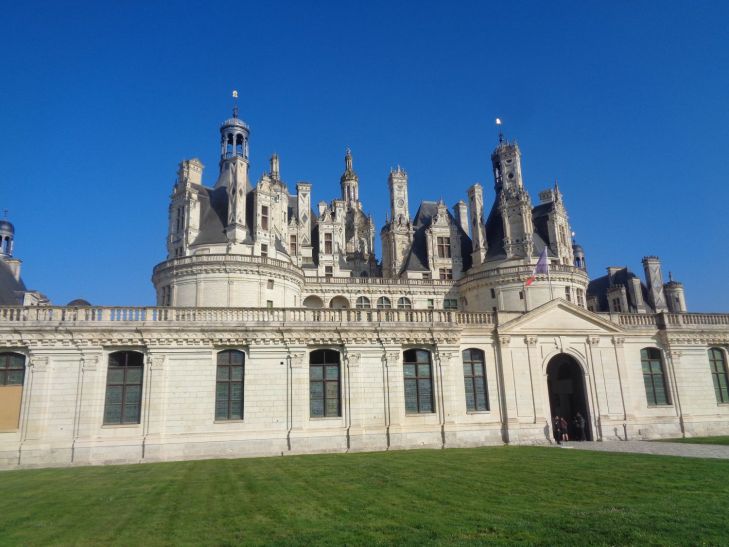
The village of Chambord is famous for its castle and its fully enclosed park, a national hunting reserve where presidential hunts once took place. The village and the entire territory are the property of the French State, administered in the form of a public industrial and commercial establishment called the Domaine national de Chambord.

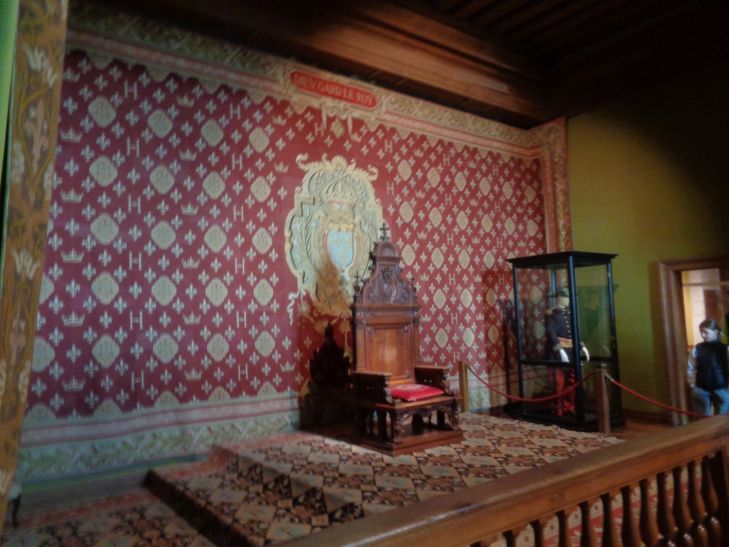
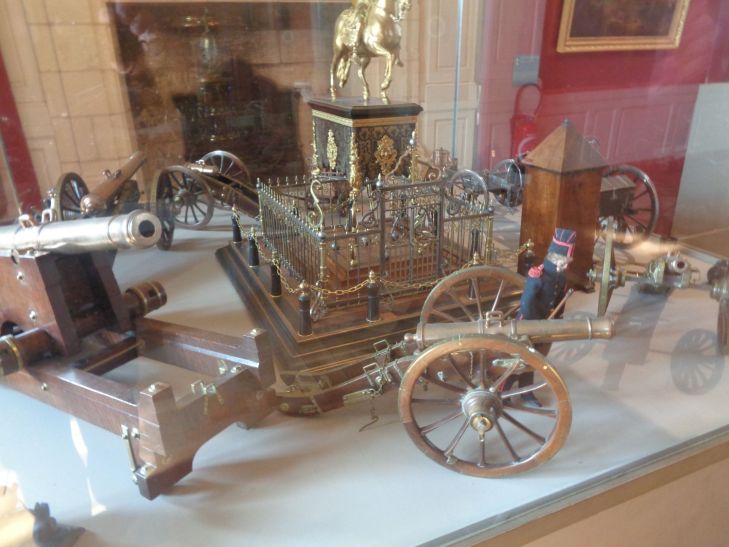
The Salle des Bourbon or Bourbon Room was formerly a room in a 16C dwelling, used in later centuries as a kitchen, bedroom, and even a storage room, this room has been converted into a reception room since the 1970s. It displays a collection of portraits and busts of members of the Bourbon family, seven of whom ruled France between 1589 and 1830. Most of the works on display come from the former collection of Henri, Count of Chambord owner of the château in the 19C and last heir of the senior Bourbon branch. From his residences in exile, the Count acquired numerous works through a Parisian art dealer to furnish the Château de Chambord. These are mainly copies of paintings and sculptures by great masters from national collections (particularly the Louvre Museum), and depicting the Bourbons or their principal officers. He thus established in Chambord, open to the public since 1821, a sort of museum to the glory of his family, thus recalling his legitimacy as a pretender to the throne of France. A museum dedicated to the Count of Chambord on the first floor with seven rooms that make up this “museum” . Having become the owner of the château and its park thanks to a national subscription launched at his birth, Henri de Bourbon spent most of his life in exile. However, he devoted his fortune to restoring, maintaining and enriching Chambord, open to the public since 1821. The hundreds of objects gathered in this space tell the story of the life of the prince and the monument at the heart of a troubled century but committed to the preservation of historical heritage, The wonderful historical museum of the Count of Chambord that were once his bedrooms. The Count own the castle from 1821 to his death in 1883 but spent only 3 days here. The last of the Bourbon Kings heirs of France, he died in exile in Frohsdorf, Austria August 24 1883 . Many items here some belonging to his mother the Duchess of Berry. One area of the castle has been designed to display various objects belonging to the Count of Chambord. It includes his collection of military toys, his crockery and silverware, a state bed, engravings, and portraits.
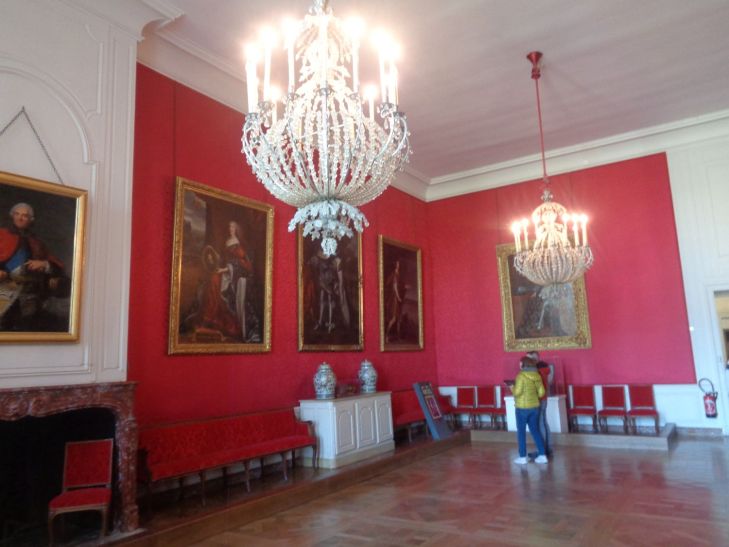
The Chambre de la princesse de Conti or Bedroom of the Princess of Conti is a bedroom, located in the south tower of the keep, housed important courtiers in the 16-17C, probably members of the royal family. During Louis XIV’s last stay, this room was occupied by Marie-Anne de Bourbon-Conti, the legitimized daughter of the king and Louise de La Vallière. Her husband, the Prince of Conti, stayed in the neighboring apartment (see also hôtel de ville of Versailles palace of Conti). In the 18C, the room served as a storage room before being refurbished to accommodate the guests of Maurice de Saxe. In 2010-2012, the room underwent a major restoration. Thanks to inventories of antique furniture, the textiles and furnishings were accurately restored. The room thus presents itself as an 18C woman’s bedroom. At the time, the small adjoining rooms served as an antechamber, wardrobe, or study.
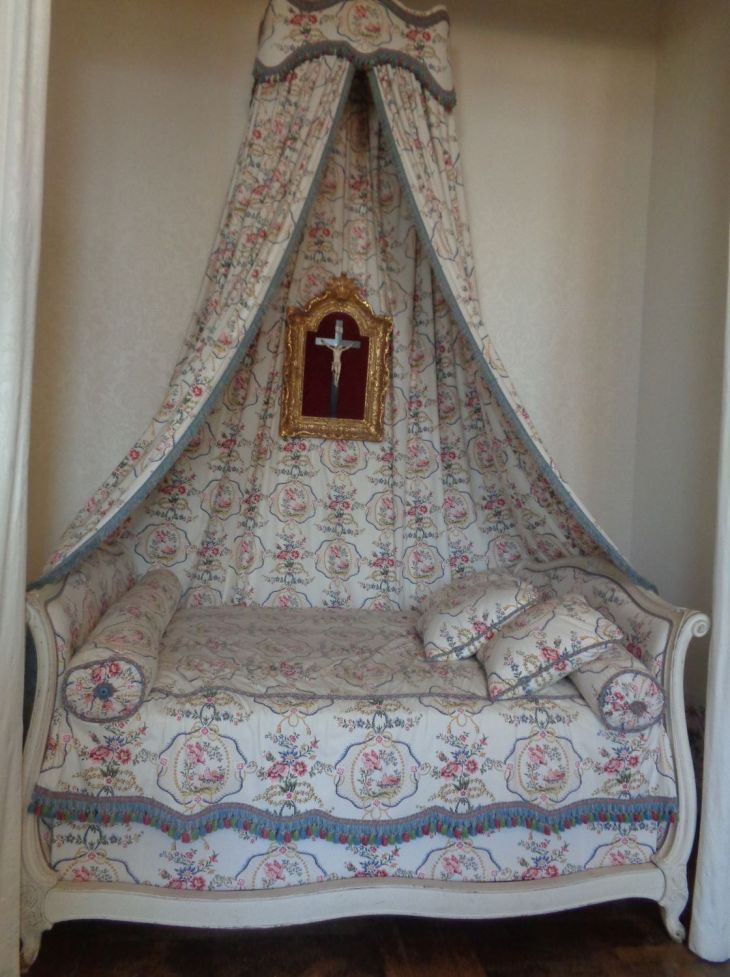
The chambre aux lauriers or the Laurel Room illustrates the renovations undertaken in the 18C to bring privacy, refinement, and comfort to the home. The original 120 m² large bedroom is divided by interior partitions clad in paneling, fabrics, and/or wallpaper, creating small secondary rooms for washing, storage, or servants’ quarters. The room’s height is lowered by a plastered canvas ceiling. The imposing 16C fireplace is reduced in size and clad with a marble doorframe. Parquet flooring replaces the terracotta floor. Finally, the creation of an alcove enclosed by curtains helps retain warmth around the bed during the night. The room has undergone several restoration projects since the 1960s to restore the period woodwork and also to evoke the 18C atmosphere through the recreation of textile decor and the acquisition of antique furniture.
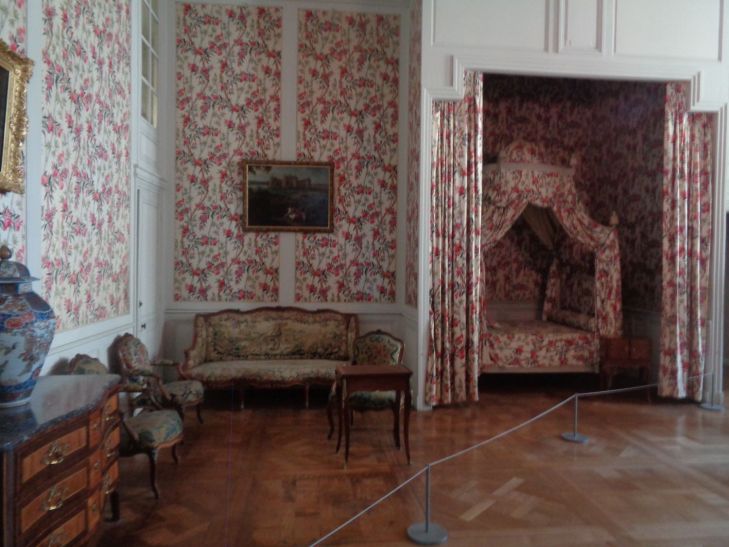
The appartement de parade or state apartment were done in order to comply with the rules of etiquette in force during his reign, Louis XIV united the two apartments located along the north facade in 1680 by having the north vestibule closed. The apartment later became a state apartment. It can be visited today as it was decorated for Marshal de Saxe. Located on the first floor of the keep, in the center of the great facade, the state apartment of Louis XIV, fitted out around 1680-1682, is inspired by the Palace of Versailles, whose succession of adjoining rooms it reproduces. It comprises nine rooms: a guard room, a first antechamber giving access to two storage rooms, a second antechamber, a state room and, finally, three private rooms. This ensemble allowed the king to live according to “etiquette”: each room had its uses and strict conditions of access. As in the Renaissance, Chambord did not benefit from permanent furnishings at this time. Shortly before the arrival of the sovereign, the officers of the Garde-meuble were therefore responsible for preparing the apartments with the furniture, tapestries and objects necessary for a stay of several weeks. Then, after the excitement of a trip devoted to pleasures and entertainment, the court left Chambord for another residence. In the 18C, Louis XV hardly enjoyed Chambord. However, he offered its use to relatives: firstly his father-in-law, Stanislas Leszczynski, former King of Poland in exile (from 1725 to 1733), then Marshal Maurice, Count of Saxony, who had just returned triumphantly from the Battle of Fontenoy (1745-1750). Both occupied the former state apartment of Louis XIV. The Marshal had major improvements made there: opening of new access doors, laying of “Versailles” parquet floors, installation of earthenware stoves, marble fireplaces and woodwork, durable furnishings, etc. Chambord was transformed into a sumptuous and more comfortable permanent residence. It is in this configuration that the state apartment is presented to the public today.
The Galerie des Trophées or Trophy Gallery is one of the most luminous rooms in the castle, with large windows. In this dreamlike setting, this room offers a space that honors the forest surrounding the château and displays part of the Marion Schuster collection. At the beginning of the 20C, Marion Schuster, wife of Baron Rothschild, offered the estate all the carcasses displayed in the gallery. In gratitude, the gallery took her name. On the second floor, you can see the hunting tradition of the castle. All kinds of artifacts and tools used for hunting in the 16C are displayed here.

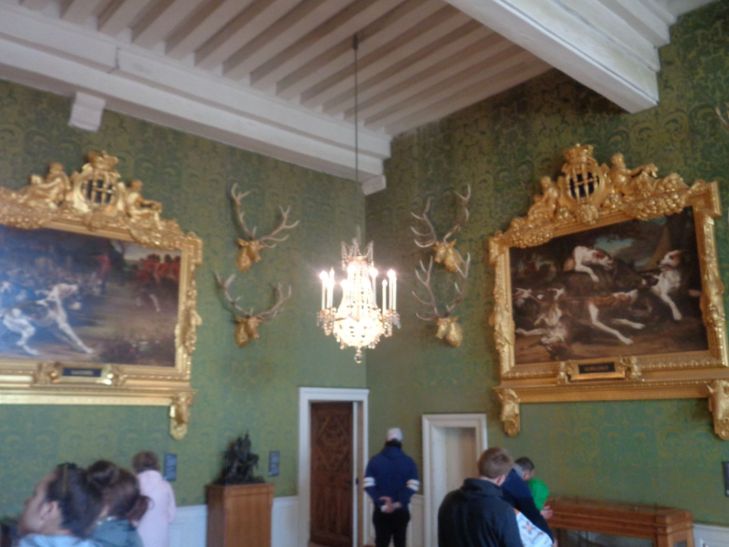
The Salle des Chasses or Hunting Room , This vast room, decorated with deer trophies, stuffed animals, and paintings depicting hunting scenes, recalls Chambord’s long hunting tradition. Featuring green and gold embroidered tapestries, a legacy of President Pompidou, the room offers a subdued and convivial atmosphere, ideal for hosting cocktail parties and small dinners, or for setting up a lounge. The Hunting Room also features a fireplace and underfloor heating. What characterizes this room is, above all, its many uses. It has been the main room for courtiers, a bedroom under Louis XIV, and even served as an auction room in the 1930s.
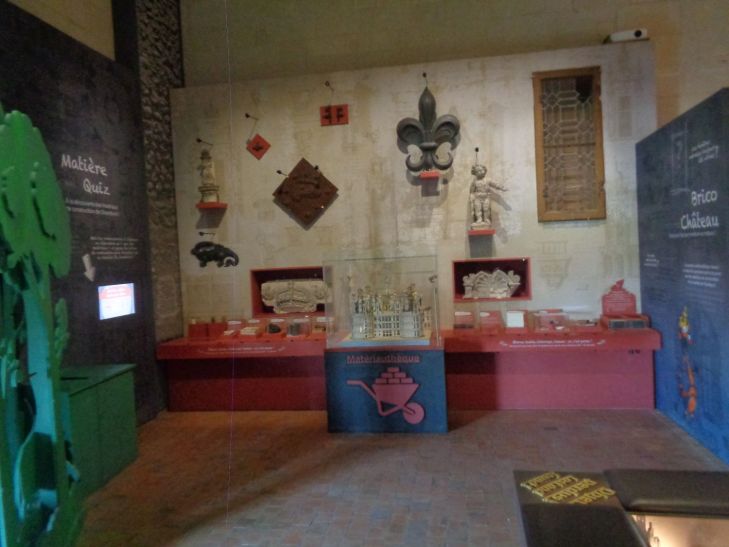
The logis des enfants or the Children’s Lodge: Nineteen discovery and experimentation activities. Sound experience, touchscreen terminals, manipulative installations, grandiose settings, etc. A space for awakening and relaxation for little ones. Following the significant experience of the Discovery Cabinets designed for the 500th anniversary exhibition (2019), the Domaine National de Chambord wanted to create a new permanent mediation space dedicated to families and young children in the castle to better understand Chambord. The Children’s Lodge is a place of curiosity, experimentation, questioning, and dialogue. It offers numerous fun activities, some of which call upon observation, deduction, and imitation skills. Others invite free construction, sensory exploration, or relaxation. Some “games” include digital technology, while others offer direct discovery. Each child will find activities adapted to their desires, both entertaining and educational, within this space.
The official Domaine National of Chambord on the castle: https://www.chambord.org/en/discovering/the-castle-visit/
The local Blois-Chambord tourist office on the castle: https://www.bloischambord.co.uk/discover-the-destination/the-loire-valley-castles/chateau-de-chambord/
The Loire Valley Centre Val de Loire region tourist office on the domaine de Chambord : https://www.loirevalley-france.co.uk/discover/loire-chateaux/national-domain-chambord/
There you go folks, I say the king of the valley of the kings, Chambord, undescribable. A must to visit while in France. We had come back, and will again. We were there even during Christmas magical, and concerts awesome. Again, hope you enjoy this post on the Domaine National de Chambord ,part VI !!! as I.
And remember, happy travels , good health, and many cheers to all !!!

 Paris1972-Versailles2003
Very interesting.
Gwen.
LikeLiked by 1 person
Thanks for stopping by Cheers
LikeLike