
We have driven in the area and stop by finally, and a great surprise indeed, This was a surprise as passing by we saw notice a castle so of course we went for it, This is the village of Talcy is located in the Loir et Cher department no, 41 in the Centre-Val de Loire region of my belle France, Nice quant small town indeed! It is located 27 km from Blois, 17 km from Beaugency, 23 km from Meung sur Loire, 45 km from Orléans, and 436 km from my current home, We got there from Meung sur Loire on the D2152 to D719/D918 to D917 same road at Josnes take dir Concriers to the D70A and castle, Therefore, here is my take on this is Talcy !!! Hope you enjoy it as I.

The château de Talcy is a Renaissance castle managed by the Centre des Monuments Nationaux of France. The current château comprises a porch tower, missing its northwest corner turret, and an east wing, which connects to it via a covered gallery, delimiting a main courtyard. A domed well decorates the latter and is the building’s emblematic feature. The porch tower was built during the 15C. The defensive elements were probably added by Bernard Salviati in the 16C. More decorative than defensive, they serve to assert the power of their owner. The large windows on the first floor were opened in the 18C. Next to the tower, the gallery, also dating from the 16C, bears witness to the art of living during the first French Renaissance. With four basket-handle arches and topped with a floor, it is inspired by the Louis XII gallery of the Château de Blois. The east wing, modified in the 17C, consists of a ground floor and two floors. On the ground floor, there is a kitchen, an antechamber and the so-called Charles IX bedroom. On the first floor, there is a series of lounges and apartments served by a corridor. The interiors have evolved according to the periods and the owners. The gardens, delimited by low walls, cover approximately 6 hectares and offer a view from the porch tower. The spaces are divided between a pleasure garden, a vegetable garden and its orchard. The estate includes a barn with a wine press dating from 1808, and a dovecote. The dovecote, a symbol of the owner’s power, is a circular tower dating from the end of the 15C. It houses nearly 1,400 nest boxes, making it one of the largest in the region. It is equipped with a pivot ladder allowing access to all the cavities to collect the eggs. A windmill is attached to the estate. It was razed in 1956 and rebuilt in 1976.
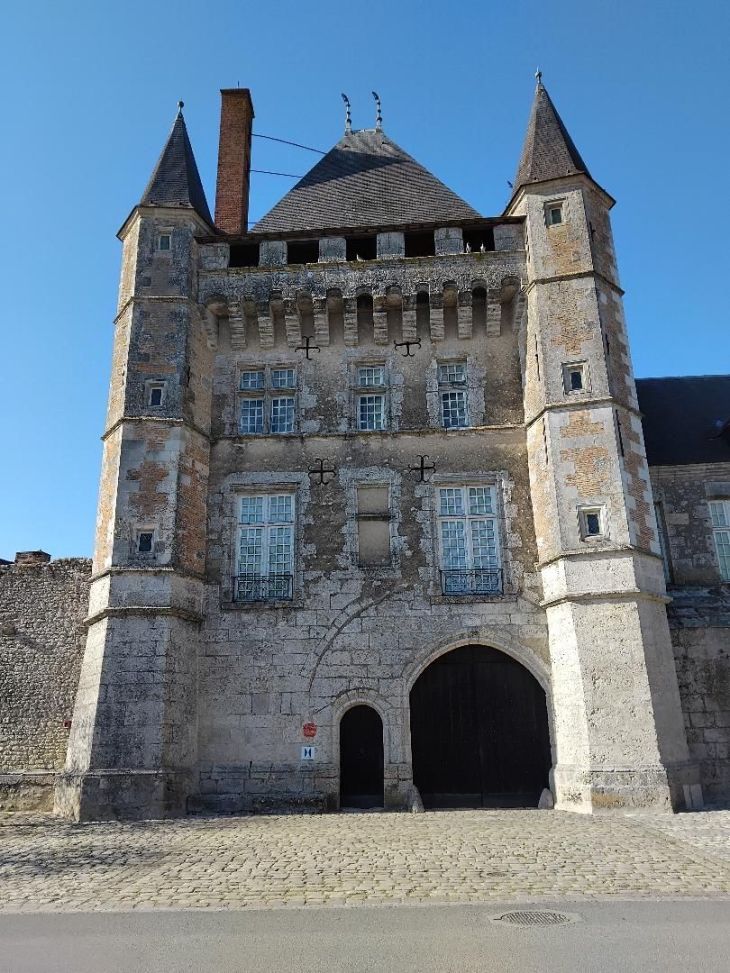
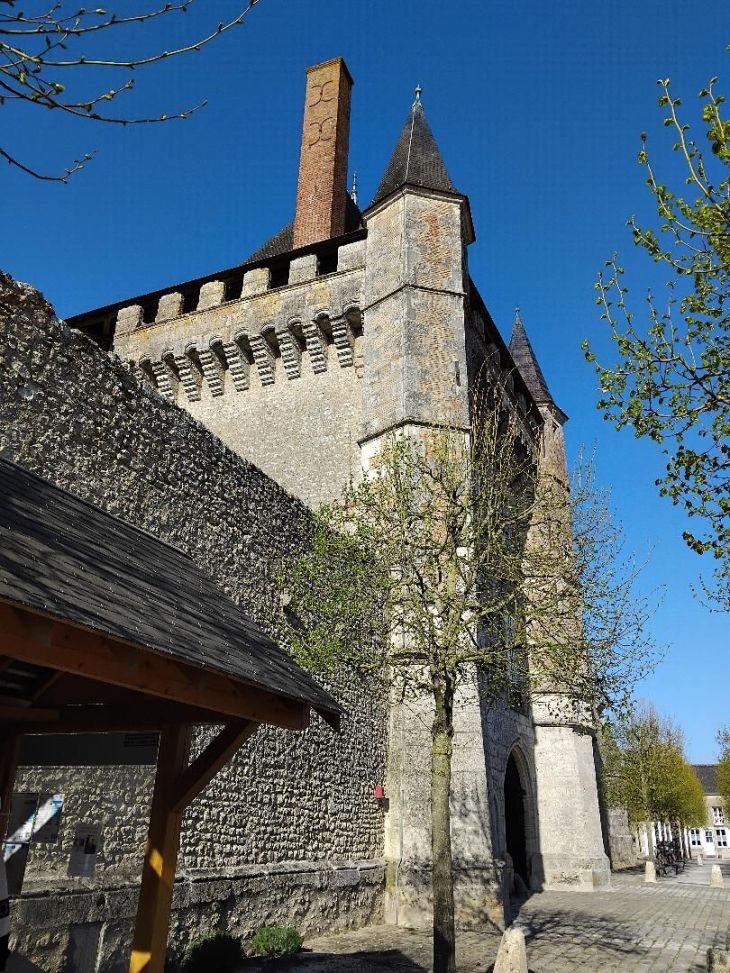
A bit of history tell us that it was purchased in 1517, the castle was rebuilt from 1520 by a Florentine banker in the service of King Francis I, Bernard Salviati. He obtained permission from the king to fortify the castle. In 1638, Isabelle Salviati, great-granddaughter of Bernard Salviati, had the east wing extended. The interior was extensively renovated by the Burgeat family during the 18C. The estate was purchased by Elisabeth Gastebois and survived the French revolution without too much trouble. The castle was owned by Philipp Albert Stapfer, Minister of the Helvetic Republic, a reformer of Swiss education. The Stapfers transformed a ground floor room into a worship hall. In 1892, Albert Stapfer died at the castle. He was known for having translated Goethe’s Faust (1828) into French, published in an edition illustrated by Delacroix, and for having made early daguerreotypes of the castle in the early 1840s. Stendhal gave him a copy of his Charterhouse of Parma (1839), which was sold in 1931, along with the castle library, and passed into the library of Sacha Guitry. The castle still houses some of the Stapfer collections, including Philipp Albert Stapfer’s Swiss ministerial uniform, and portraits of several members of the family, including some 18C pastors. Its garden was reorganized in 1996 by the landscapers of the Atelier de Paysages Bruel-Delmar, in association with J. Weill, to become a conservatory of fruit trees. It has been labeled “Remarkable Garden”
Some of the historical anecdotes I like tell us that Pierre de Ronsard’s poem Mignonne, allons voir si la rose is inspired by the romance between Ronsard and Cassandre, daughter of Salviati. It was during a party given at the Château de Blois on April 21, 1545 that the poet met Cassandre. He also composed 184 sonnets for her which form “Les Amours de Cassandre” in the first book of Amours. During the Wars of Religion, the poet Théodore Agrippa d’Aubigné, a Protestant, found refuge at the Château de Talcy in 1572. He fell in love with Diane Salviati, Cassandre’s niece. However, she rejected him. Agrippa d’Aubigné refers to this castle in some of the verses of his Tragiques. In 1562, during the Wars of Religion, the castle hosted Catherine de Medici and Charles IX for the Conference of Talcy. It brought together Catholic and Protestant representatives for the last time. The so-called Catherine de Medici and Charles IX rooms were named in memory of this event in the 19C. During the Franco-Prussian War of 1870, General Chanzy established his headquarters there in December but was driven out by the Prussians.
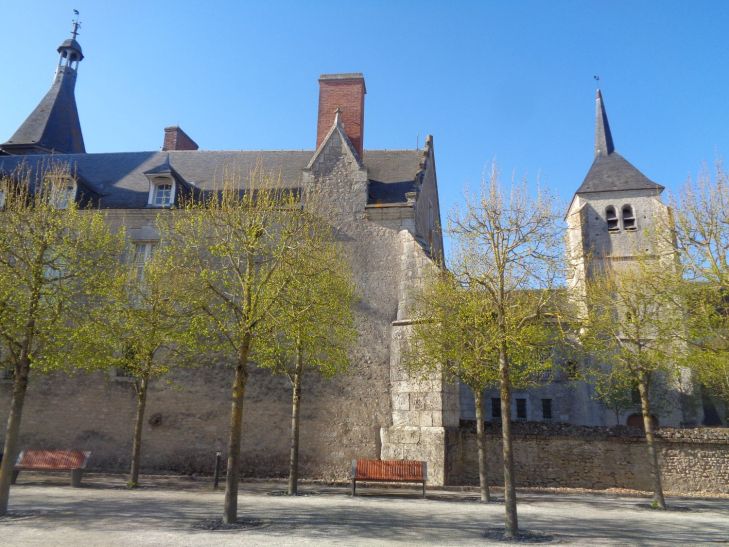
Other things to see here with more time are the Saint-Martin Church. The Talcy mill is in fact the Châtenay windmill (Eure-et-Loir no 28), the original having been demolished in 1956, bought, dismantled and rebuilt in Talcy in 1978. and has been rebuilt since the storm of 2003. It operates regularly and can be visited
A bit of history on Talcy ,I like tell us that the decree of the National Convention of October 31, 1793 that the parish of Talcy formally becomes the town of Talcy, Finally, under the Consulate, reduces the number of cantons in Loir-et-Cher from 33 to 24. Talcy is then attached to the canton of Marchenoir and to the district of Blois by decree of September 26, 1801. This organization will remain unchanged for nearly 150 years. With 243 inhabitants as of 2017, the village is one of the 60 most sparsely populated of Loir-et-Cher. Since January 1, 2016 the Community of towns Beauce Val de Loire with a territory composed of 30 towns, therefore Talcy.
The official Château de Talcy : https://www.chateau-talcy.fr/
The Blois-Chambord tourist office on the château de Talcy : https://www.bloischambord.co.uk/discover-the-destination/the-loire-valley-castles/talcy-castle/
There you go folks, a dandy area to explore and enjoy with the family, Memorable moments in my belle France, going all over in my road warrior trails brings out sublime awesome spots with nice memorable family visits of always remember and always looking forward to be back, eventually. Again hope you enjoy the post on this is Talcy !!! as I.
And remember, happy travels, good health, and many cheers to all !!!

 Paris1972-Versailles2003