
We have driven in the area and stop by finally, and a great surprise indeed, This is the nice City of Meung-sur-Loire located in the Loiret department no. 45 in the Centre-Val de Loire region of my belle France, There is so much to see , and did see more for you and me, So close by it many times and finally in ,a great surprise, nice town indeed! Therefore, here is my take on the Collegiate Church Saint-Liphard of Meung sur Loire, part I !!! Hope you enjoy it as I.
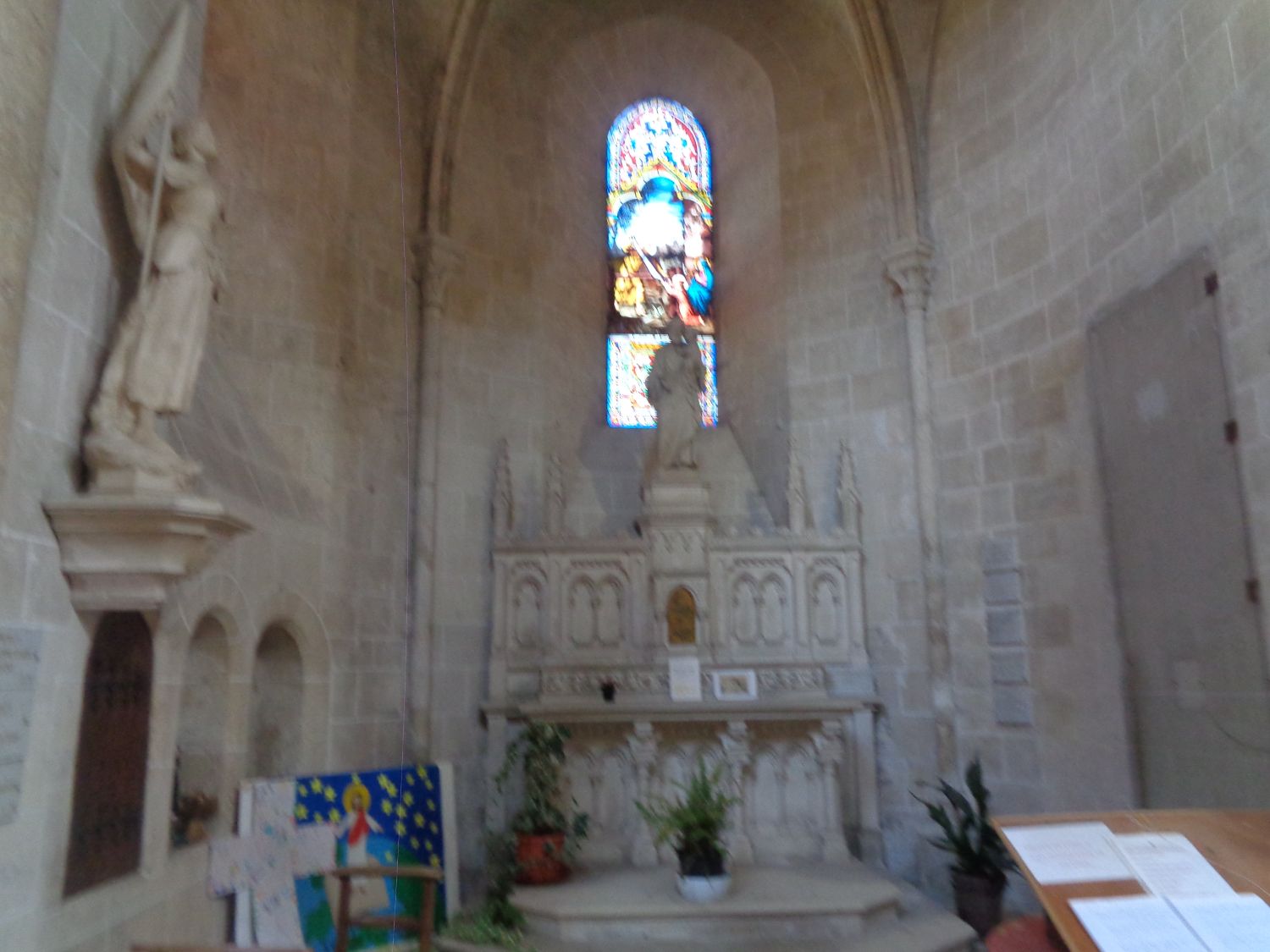
The Collegiate Church Saint-Liphard, built from the 11C to the 13C, on the tomb of the saint, is a building with Romanesque parts. The bell tower is backed by a fortified tower, called Manassès de Garlande. The plan of the church is in a “trefoil” or with three semi-circular apses which is not usual in the region. It contains an organ rebuilt by Haerpfer-Erman in 1971. It boasts beautiful capitals and a 6C sarcophagus. The Chapel of the Virgin dates from the 12C, a painted wooden altar from the 17C, and an altarpiece from the 18C.


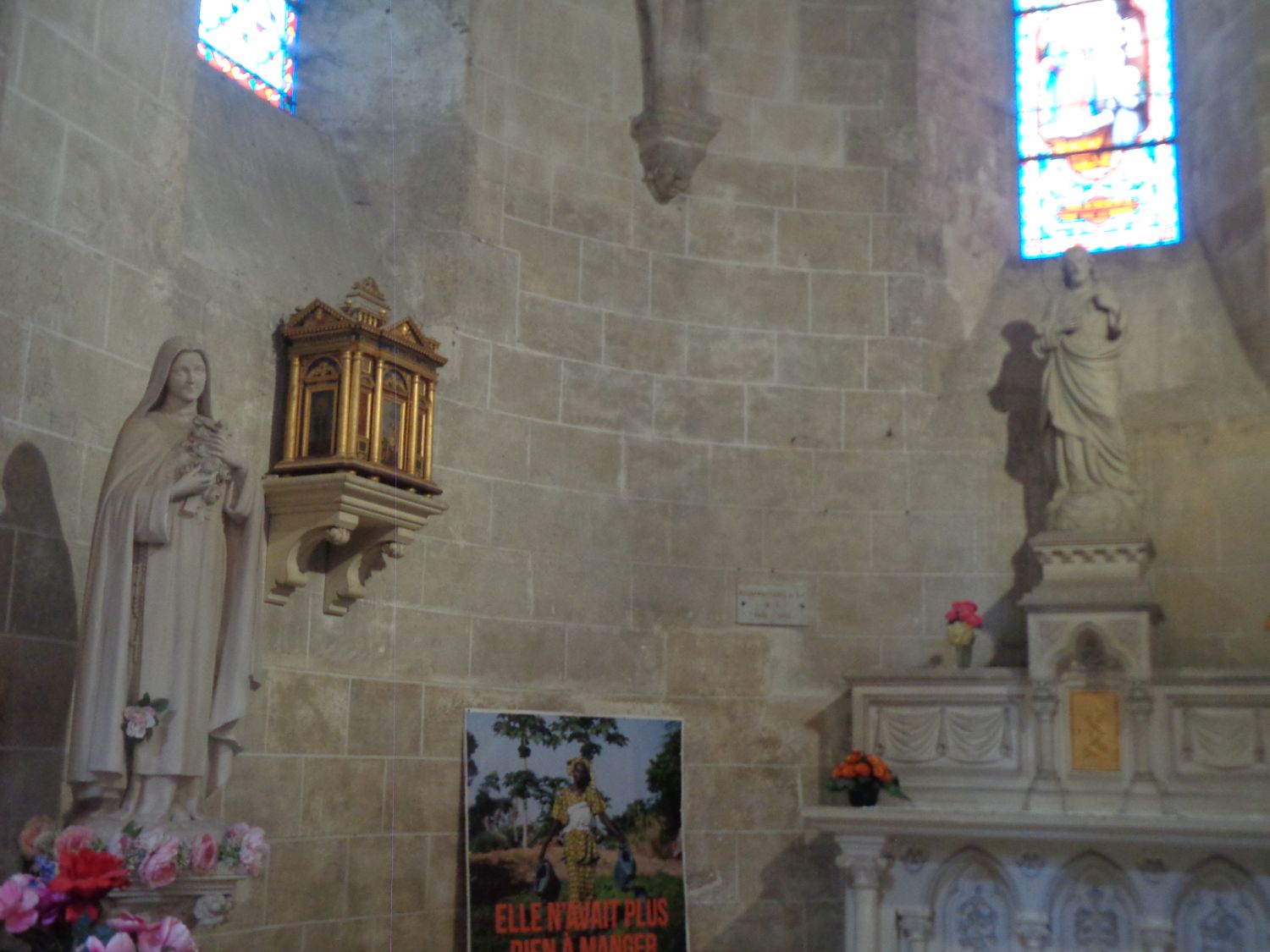
The Collegiate Church of Saint-Liphard contains treasures! During your visit, you can admire the largest holy water font of the churches in the department, two 17C reliquaries made of gilded wood from the old church, and two 17C statues, also discovered buried in 1970. We can also mention a sarcophagus dating from the second half of the 6C, a wooden altar carved entirely from solid wood, without any nails or pegs! But also a chandelier named “crown of light” , a still functioning organ and of course… the relics of Saint-Liphard in their gilded wooden shrine.
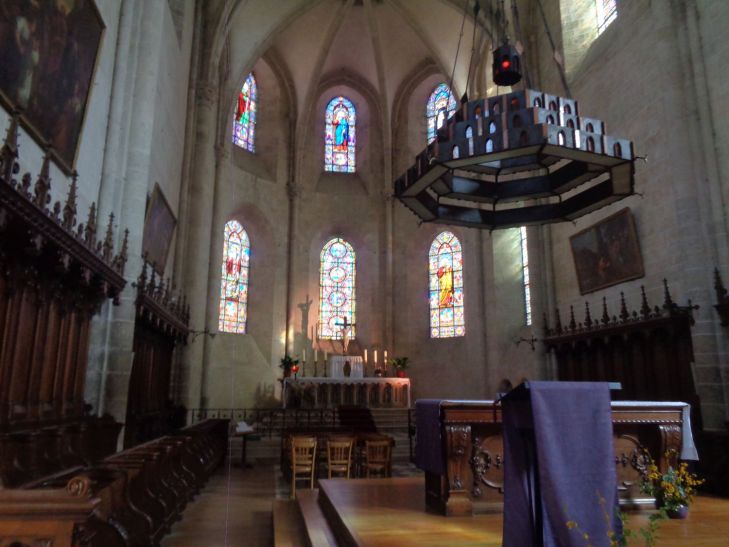
In 520, Liphard, Clovis’s cousin, judge and governor of Orléans, retired as a hermit in Meung-sur-Loire. Upon his death, his companions built a monastery around the Bishop of Orléans, Marc. The monks cleared the Mauves and planted vines. In 1068, the monastery became a collegiate chapter. In the 12C, Bishop Manasseh had a fortified residence built adjoining the bell tower. After the Wars of Religion, the church was restored in 1570. Meung-sur-Loire remained the “City of Bishops” for 12 centuries. Saint-Liphard is a Benedictine abbey, founded in the 6C by Lifard of Orléans, in Meung-sur-Loire. Saint Lifard was a cousin of Clovis and governor of Orléans. Around 798, Emperor Charlemagne entrusted the collegiate church to Theodulf when the latter invested him Bishop of Orléans. By 990, it had possessions in various remote regions: Ponthieu, Pays de Caux, Touraine, Berry, Pincerais, etc. Its largest extension dates from the 9C. Towards the end of the 11C, it became the collegiate church of Meung.

The Collegiate Church of Saint Liphard Its history dates back to the death of Saint Liphard in the 6C, when the canons decided to build a monastery on his tomb. In the 9C, the Norman invasions led to the destruction of the monastery, and thus an abbey church was rebuilt on the ruins at the end of the century. The monastery was secularized and became a collegiate church by a charter of Philip I. It then remained under episcopal jurisdiction. At the end of the 11C, the collegiate church was destroyed by fire by the future Louis XI the Fat. The reason? A desecration of the place! Philip I, King of France, had instructed his son Louis to have the clergymen return the property that the rapacious lords had taken from them. However, Lord Leon II of Meung did not wish to return to the bishop the castle he owned in this town. Louis decided to attack the lord’s castle, who, under duress, withdrew with his 60 men-at-arms to the tower adjoining the church. He defended himself so well that Louis had a large number of spears piled at the foot of the tower before setting it on fire. Driven out by the flames, Leo and his men threw themselves from the tower onto the besiegers’ pikes. Hence the need for a new consecration, in a church desecrated by desecration and where worship could therefore not take place. A new church was therefore rebuilt on the ruins of the previous one. On October 14, 1104, John II consecrated it to Saint Liphard. On the same day, the relics of Liphard, Urbice, and Theodemir were returned to their original position and remained on display for the veneration of the faithful. In the 13C, the condition of the collegiate church deteriorated significantly, which is why an almost complete reconstruction in the Gothic architectural style was necessary for the interior. The choir was enlarged, as well as the elevation of the nave and stone vaults, the widening of the side aisles, and the development of circular transepts, unique in the Loire Valley. Unfortunately, the vaults and roofs were destroyed during the Wars of Religion.

The town of Meung sur Loire on its history/heritage : https://meung-sur-loire.com/ma-ville/histoire-et-patrimoine/
The local Terres du Val de Loire tourist office on Meung sur Loire : https://en.tourisme-terresduvaldeloire.fr/meung-sur-loire/
The Loiret dept 45 tourist office on Coll Church Saint Liphard: https://www.tourismeloiret.com/fr/diffusio/visites/collegiale-saint-liphard-meung-sur-loire_TFOPCUCEN045V501K13
There you go folks, a dandy area to explore and enjoy with the family, Memorable moments in my belle France, going all over in my road warrior trails brings out sublime awesome spots with nice memorable family visits of yesteryear always remember and always looking forward to be back, eventually. Again hope you enjoy the post on the Collegiate Church Saint-Liphard of Meung sur Loire,part I !!! as I.
And remember, happy travels, good health, and many cheers to all !!!

 Paris1972-Versailles2003